WRLD

Search

#Grant
Ilie Bolojan 29m

PNL President Ilie Bolojan stated on Thursday that he had informed the Prime Minister-designate that the Liberals would not participate in the future government but were open to granting it their vote of investiture. #Politică #Guvern #PSD (translated)

Luca Niculescu: My preference is for a political government
www.mediafax.ro
1272
Luciano Magaldi Sardella (PhD) 6h

LETTERE MERIDIANE — “TEATRO-EDICOLA” OF SAN SEVERO CONQUERS THE WORLD SOURCE: https://www.letteremeridiane.org/2026/10/il-teatro-edicola-di-san-severo-conquista-il-mondo/?fbclid=IwY2xjawU4oqFleHRuA2FlbQIxMQBwZG9mAXNydGMGYXBwX2lkEDIyMjAzOTE3ODgyMDA4OTIAAR5rVEwYs6UUXg7v-P0SyIQ_DRb_F6ZiY58OcseYoV4J7atcTiERnhWaqKM2pw_aem_Njle1jq1XLzHr93KLBUcVA After “Broadway World”, the “Los Angeles Journal”, “The Psychologist (British Psychological Association)” and Hollywood Beat Magazine, its “academic consecration” has now arrived courtesy of Stanford University. As I have already emphasised in my article on the revival of the GIO Festival in Foggia, celebrated by BroadwayWorld for the world stage premiere of the Giordano’s opera Marina (1888), the province of Foggia has long ceased to be peripheral. It happens when it finds an idea that shifts the coordinates: well, in San Severo, 40 kilometres from Foggia, it has happened again. Only this time an orchestra was not needed; six chairs were enough. The celebrated Teatro-Edicola of San Severo artistic director Francesco Gravino of the theatre company Foyer ’97 has been featured in the academic journal “Stanford Social Innovation Review (SSIR)” as an academic case study. The news, relayed on 19 September 2026 by ANSA Nazionale, looked like a misprint. Then it became clear that it was not. SSIR, an award-winning publication covering multisectoral solutions to global problems, included the project in its Dispatches section with the reportage “The Six-Seat Revolution”. It is the inverse trajectory to that of the GIO Festival: not a forgotten opera returning to a grand historic Italian horseshoe theatre, but an entire theatre reborn inside a disused place, forgotten by man. There are moments when past and future intertwine to create something visionary, innovative, artistically “revolutionary”: San Severo experienced one of those moments on the morning of 27 March 2026, during World Theatre Day, when the shutter of a newsstand closed for six years in Via Matteo Tondi was reopened “not to sell newspapers, but to offer stirring stories”, to quote Gravino’s motto. The idea of the visionary Francesco Gravino, artistic director, stage director and actor of the San Severo company Foyer ’97, active for at least 30 years in Capitanata, centred on the kiosk, hexagonal in metal and glass, granted free of charge by its owner Pino Frau, by now an urban relic created by the publishing crisis of the early 2000s: today in Italy active newsstands have fallen from about 35,000 in 2005 to about 20,000 in 2024, a decline of 42.8%. Gravino and eleven other actors restructured it in two weeks of work, without institutional funding, and transformed it into what is now under examination by the London commission of Guinness World Records as the “world’s smallest theatre”. The formula is deliberately austere: six spectators at a time outside, actors inside at less than a metre’s distance, 15-minute performances, continuous rotation from 11:00 to 20:45, texts ranging from Goldoni to Chekhov, from Ibsen to Dacia Maraini. On the door a QR code with an original theatrical warning: “Warning! This QR code transforms passers-by into actors. Scan only if ready.” The numbers immediately showed that it was no boutade: more than 60 people in a single afternoon, three inaugural days that sold out. But above all a positive echo that went beyond the borders of San Severo. “Broadway World” (just as in the previous case of the GIO Festival), the world’s most influential theatre criticism outlet with over 5.5 million monthly views, devoted exclusive coverage to it on 27 April 2026: “An Abandoned Italian Newsstand Just Became the World’s Smallest Theatre”. Not a mere listing, but an analysis: “There is no foyer, there is no balcony, there is no grid. There is barely a wing. What there is is something almost unrecognisable as an evening at the theatre, and for that very reason it is all the more powerful.” “Broadway World” captured Gravino’s manifesto idea: “This is a theatre of proximity. In an era of digital distance, we are putting human contact back at the centre,” framing it as “More than a clever exercise in site-specific theatre. It is a reappropriation.” All of this, in a Mezzogiorno of Italy often narrated only in terms of organised crime and marginalisation. To that seal of approval was added another, even more disorienting for a newsstand in San Severo: the “Los Angeles Journal”, one of the most influential publications on the West Coast for the performing arts. On 12 May 2026, it headlined thus: “San Severo’s Teatro-Edicola as an Innovative Model for Los Angeles Theaters?” opening as follows: “In a city in southern Italy that Hollywood has never heard of, a theatre director has just built the smallest stage in the world: six seats, fifteen minutes, zero distance. Los Angeles should pay attention.” The “Los Angeles Journal” does not indulge in folklore, but places the kiosk in Via Matteo Tondi alongside the prestigious 1,600-seat Ahmanson Theatre in Los Angeles, the Pantages of Broadway in Hollywood, the 99-seat plan of Rogue Machine, the Odyssey, the Victory Theatre and the Hollywood Fringe. It even recalls Ethan Marks’s Electrical Box Theatre, a veritable electrical box lined with red velvet in downtown Los Angeles, to argue that Gravino has taken to the extreme the question Los Angeles has been asking itself for decades: How small can a stage become before it ceases to be a stage? And it recognizes the San Severo urban model: almost zero cost, two weeks of work and six chairs, in return for immediate provincial, regional and national media coverage, recognition by the San Severo’s Municipal Administration, and a format exportable anywhere. Then, the third American piece came from “Hollywood Beat Magazine” on 20 April 2026: Six seats. Fifteen minutes. One actor. No stage. The magazine recounts the kiosk in Via Tondi left disused for almost six years, the contemporary six-seat cultural outpost, placing Francesco Gravino in a distinguished genealogy: Richard Schechner and environmental theatre, Jerzy Grotowski and poor theatre, Nicolas Bourriaud and relational aesthetics. But it closes with pragmatism: it is not a thesis, it is fixing a street corner, that is, repairing an urban street corner by asking not how large a theatre can become, but how small it must become again to recover its original power. And finally, the celebrated London-based “The Psychologist”, the journal of the “British Psychological Society (BPS)”, the oldest psychological society in the world, transformed the Teatro-Edicola into a scientific case study: on 30 July 2026 it published “The world’s smallest theatre — and Psychologists’ next act”, starting from the same detail, the morning of 27 March when the metal shutter of the hexagonal kiosk in Via Tondi reopened after six years, six people inside, an actor at less than a metre’s distance beginning Chekhov. It describes the formula: six spectators, 15 minutes, 11 actors over 10 hours, from Goldoni to Euripides, inside a kiosk where the fourth wall does not break because architecturally it never existed. But the BPS goes a step further: it cites the 2025 studies by Damien Gabriel in IBRO Neuroscience Reports, that live performance generates measurably stronger emotional and physiological activation than video, and introduces Edward Hall’s proxemics: below one metre is intimate space, reserved for doctors, close friends, lovers. In that one-square-metre space, the actor’s breath is audible, micro-expressions legible, the self-other boundary becomes permeable. The Teatro-Edicola “does not make theatre better, it makes it inevitable”. And it is here that one understands why Stanford is studying it as an academic case study in social innovation, not as a case of artistic originality. In Italy, meanwhile, the national media circuit had already picked up the phenomenon: RaiNews — TG2 Storie brought it to RaiDue at midnight on 19 April. RTL 102.5 devoted space to the format conceived by Gravino and developed by Foyer ’97 in the heart of San Severo in Via Tondi, defining it as a permanent micro-stage capable of bringing theatre into public space. ANSA.it, Gazzetta del Mezzogiorno, La Repubblica, TG2000, Radio Capital, Swiss RSI, ANSA Brazil and many others followed. And for the record: Fiorello praised it in La Pennicanza as an artistic case inspired by his Edicola Fiore, and Biagio Antonacci, on his tour in the Augustan amphitheatre of Lucera, made a “fact-finding” stop at the Teatro-Edicola singing the celebrated and nostalgic Iris in front of an audience certainly larger than the “six seats”. Francesco Gravino’s theatre company Foyer ’97 was not born yesterday: behind it lie the Teatro-Cantina of 2016, the underground theatre, and in 2011 a performance on the bell tower of a church in the centre of San Severo at 45 metres high. The Teatro-Edicola completes, in Gravino’s words, “the entire vertical extension of theatre: underground, street level, rooftop”. And it is preparing for its thirtieth anniversary in 2027 aiming to purchase the kiosk to make it permanent, exporting the “San Severo Model” to Rome, Lucca, and to the festivals of Santarcangelo and Todi. As with the GIO Festival, someone might dare to claim that it is merely a stunt, but when BroadwayWorld places you alongside the Los Angeles Opera House, the “Los Angeles Journa”l proposes you as a model for Hollywood, “Hollywood Beat Magazine” reads you through Grotowski and the “British Psychological Society” uses you to explain mirror neurones, it is no longer a stunt but an excellent artistic and academic positioning. To those who still whisper that Foggia and Capitanata are provincial, the answer is now written on two opposite and complementary fronts: on 5 June in Foggia a 138-year-old opera found the stage again at the Giordano ending up on BroadwayWorld; on 27 March in San Severo a 4-square-metre kiosk invented a stage that did not exist, ending up at Stanford, in Los Angeles, in Hollywood and in London. The periphery, when it has a precise idea, becomes the centre. Even with six chairs. Luciano Magaldi Sardella

www.letteremeridiane.org
Il teatro-edicola di San Severo conquista il mondo
65
E
EL MUNDO 15h

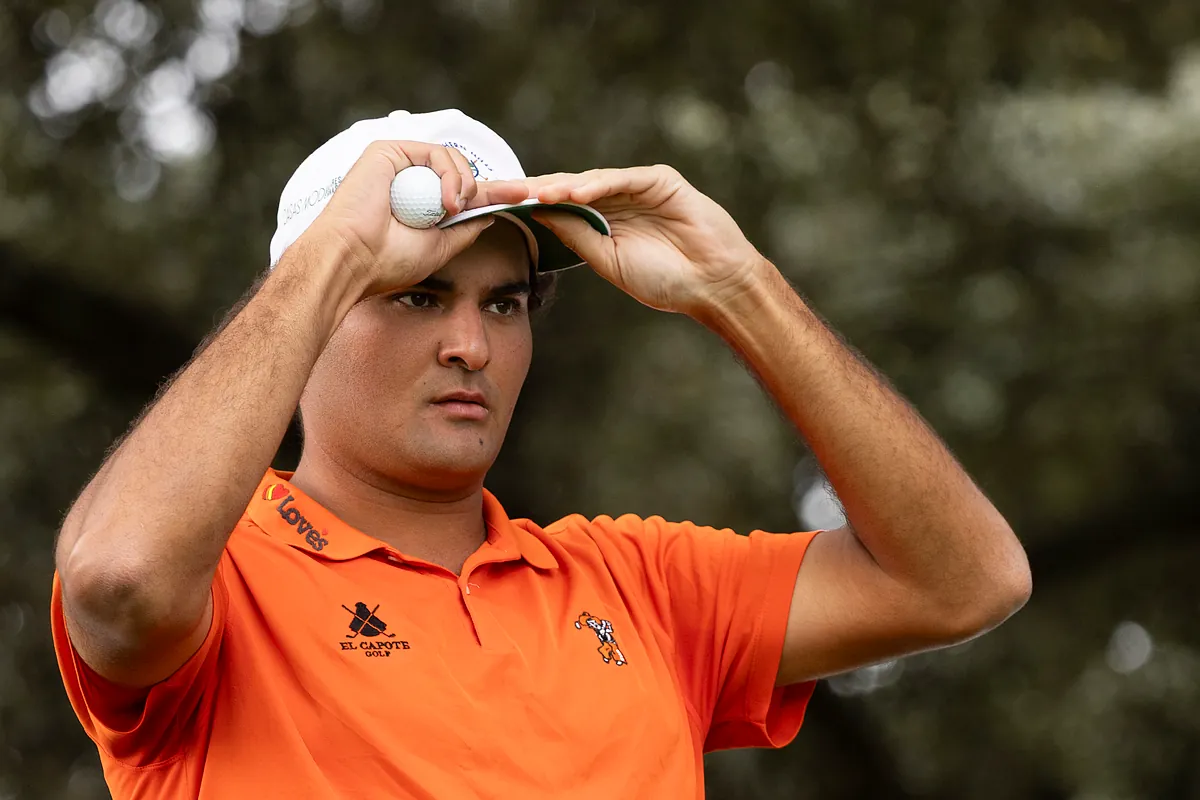
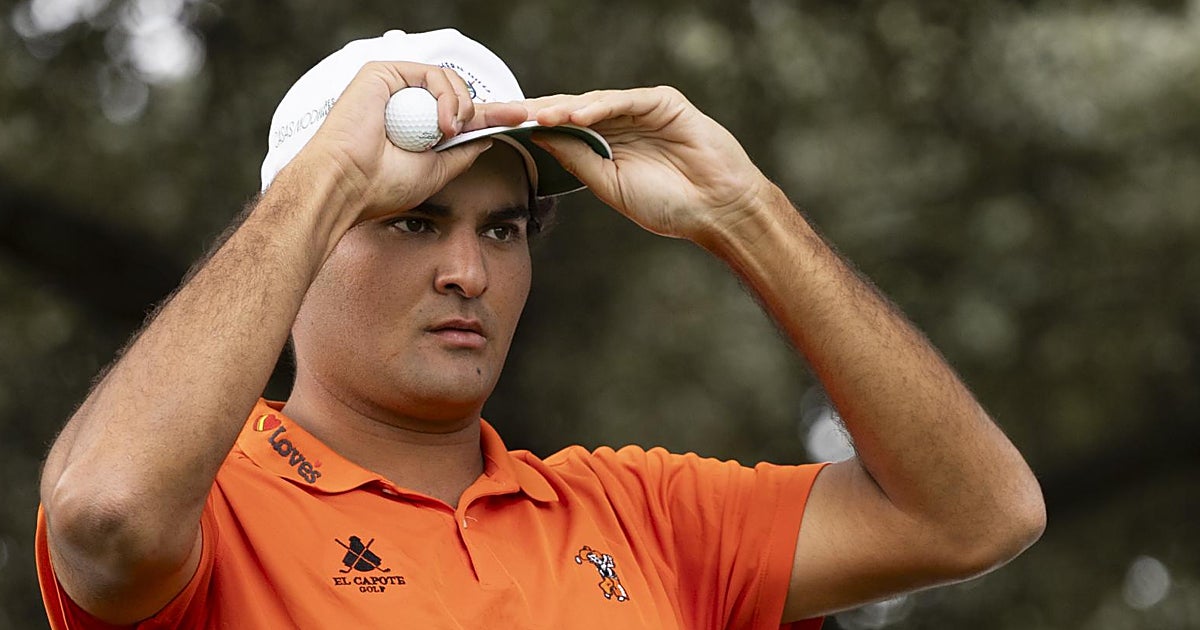
Eugenio Chacarra established himself as a prominent runner-up in the Open de España, after an exciting comeback in which he finished just one shot behind the winner Grant Forrest, while his performance captivated the crowd and propelled him into the top 50 of the world ranking despite playing with a fractured toe. #OpenDeEspaña #EugenioChacarra #GrantForrest (translated)

www.elmundo.es
Eugenio Chacarra, el subcampeón consagrado en ocho hoyos de épica y locura de Open de España
1997
ABC TU DIARIO EN ESPAÑOL 18h

Eugenio López-Chacarra was just one stroke away from winning the Open de España at the Club de Campo in Madrid, where the Scotsman Grant Forrest took the victory, frustrating the hopes of the fans cheering for the player from Madrid. #OpenDeEspaña #Golf #EugenioChacarra (translated)

www.abc.es
Chacarra se queda a un golpe del triunfo en Madrid
2074
LaVanguardia 19h

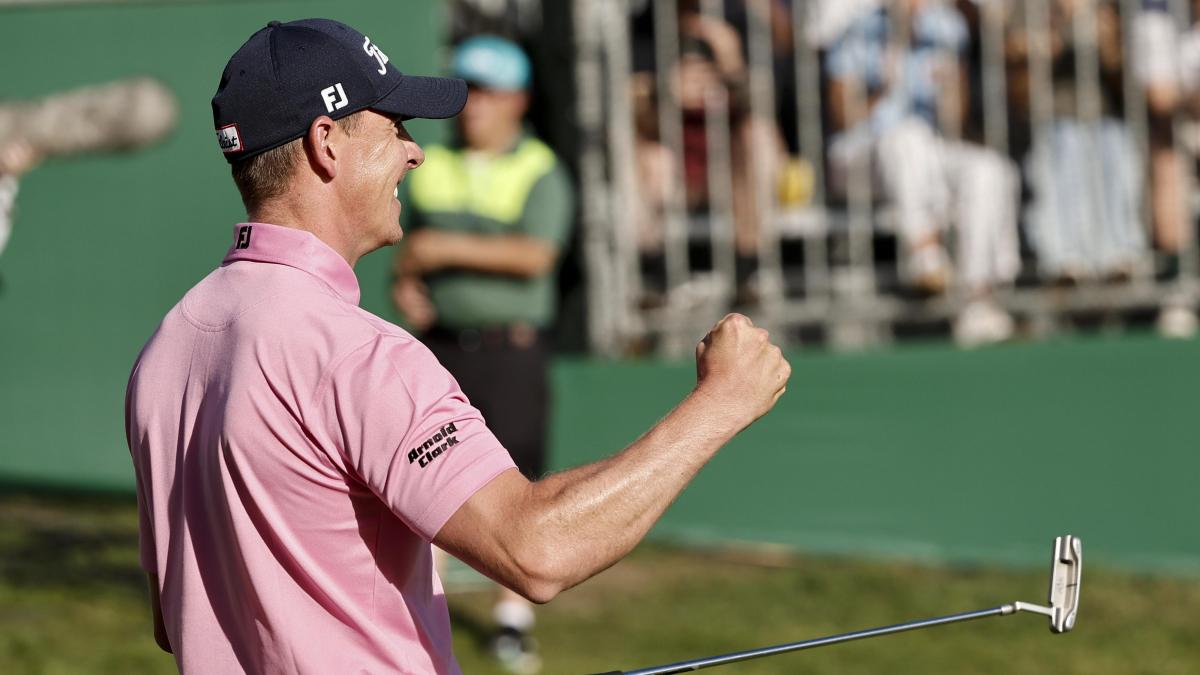
Grant Forrest was crowned champion of the Spain Open after an exciting final, leaving Eugenio López-Chacarra in second place, while the Scot celebrates his first title and the opportunity to participate in the Masters and the British Open. #OpenDeEspaña #Golf #GrantForrest (translated)

www.lavanguardia.com
Chacarra se queda sin gasolina y abre las puertas a Forrest en Madrid
2105
E
EL MUNDO 1d

Ángel Ayora, a 22-year-old golfer from Málaga, faces a crucial Sunday in the Open de España after 66 tournaments, where he has shown patience and effectiveness, sitting three strokes behind leaders Joe Dean and Grant Forrest. #OpenDeEspaña #Golf #ÁngelAyora (translated)

www.elmundo.es
El momento que Ángel Ayora llevaba esperando 66 torneos
2425
S
Simon Straudi 2d

"If you hold the 1:0 until the 87th minute, you also have to see it through." grumbled Simon Straudi, who played this time as a left-back. #DynamoDresden #2Bundesliga #Krise (translated)

Beängstigender Trend - So kriegt Dynamo Dresden die Kurve nicht!
www.bild.de
2359
Colum Eastwood 2d

The author said the DUP had known the march could not go ahead but had pushed for it anyway. They stated that 93% of the marches applied for by the Orange Order were approved, including many through nationalist areas, and said a New Ireland would be based on respect and accommodation. #Ireland #Respect #Community #IE #GB

2889
Noticias PlayStation 3d

PlayStation News reported that Kazunori Yamauchi had attributed the constant updates of Gran Turismo 7 to it being the most successful game in the franchise. According to the publication, Yamauchi also said that they had not anticipated it would achieve such sales success. https://t.co/kA9dV6PTmA #GranTurismo #GT7 #Videojuegos (translated)

2899
Alexandru Nazare 3d

Romania has collected over 301 million euros today from the National Recovery and Resilience Plan (PNRR), funds related to payment request no. 3, which had been suspended by the European Commission. "Romania has collected over 301 million euros today from the PNRR, funds related to payment request no. 3, which had been suspended by the European Commission. Of this amount, 298.6 million euros represent non-reimbursable grants, while approximately 2.6 million euros represent loans. These funds have been recovered following institutional efforts and dialogue with the European Commission to fulfill the commitments undertaken by Romania," wrote the interim Minister of Finance, Alexandru Nazare, on Facebook on Friday. #PNRR #FinanțePublice #România (translated)

Alexandru Nazare anunţă că România a încasat peste 300 de milioane de euro, restanţă din Cererea de plată 3 din PNRR
stirileprotv.ro
3126
Alexandru Nazare 3d

Romania received over 301 million euros today from the PNRR, funds corresponding to payment request no. 3, which had been suspended by the European Commission. "Romania received over 301 million euros today from the PNRR, funds corresponding to payment request no. 3, which had been suspended by the European Commission. Of this amount, 298.6 million euros represents non-repayable grants, while approximately 2.6 million euros represents loans. These are funds recovered as a result of institutional efforts and dialogue with the European Commission to fulfill the commitments made by Romania,” wrote the interim Minister of Finance, Alexandru Nazare, on Facebook on Friday, as cited by News.ro. #PNRR #România #fondurieuropene (translated)

România a încasat o tranșă restantă din PNRR. Ministrul Nazare anunță cum vor fi folosiți banii
hotnews.ro
3127
HotNews.ro 3d

Romania received a tranche of over 300 million euros from the PNRR, composed mainly of non-repayable grants, and Minister Nazare highlights the importance of reforms in the use of these funds for improving administration and the economy. #PNRR #România #fondurieuropene (translated)

hotnews.ro
România a încasat o tranșă restantă din PNRR. Ministrul Nazare anunță cum vor fi folosiți banii
3127

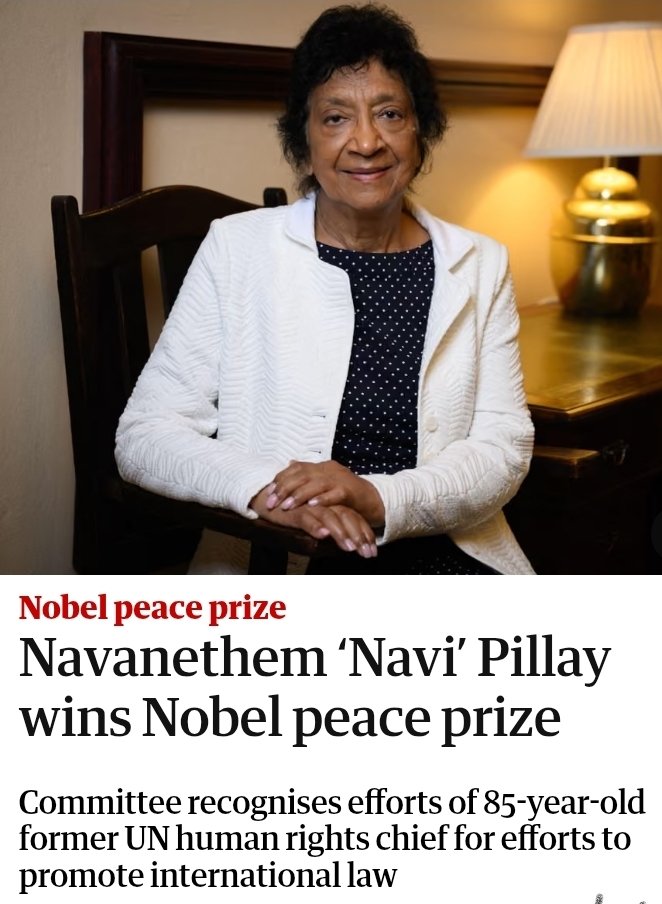
The author congratulated Justice Pillay on receiving the Nobel Peace Prize, saying the committee had described accountability for war crimes and justice for victims of abuse as prerequisites for a peaceful world. The author added that they hoped justice would begin in Palestine. https://t.co/Vs5rpvly6J #NobelPrize #Justice #Peace #PS

2684
Onet.pl 4d

Michał Braun announced the initiation of an audit of the foundation associated with the PiS MP Michał Moskal, which, after receiving over 1.4 million PLN for the development and promotion of the brand, changed its name and business profile after the grants ended. #Fundacja #Polityka #KontrolaFinansowa (translated)

www.onet.pl
Michał Braun sprawdzi Michała Moskala. Jest decyzja o kontroli fundacji posła PiS
2807
Leszek Milewski 7d

Leszek Milewski described De Biasi calling Avram Grant to ask if he had seen the results of the Polish national team. https://t.co/vfbhYQ1456 #Polska #reprezentacja #football (translated)

3174
Ekaterina Zaharieva 7d

The author congratulated Karl Deisseroth, Peter Hegemann and Georg Nagel on the 2026 Nobel Prize in Physiology or Medicine. They said Hegemann’s work had been supported by two ERC grants and a Horizon project, and wrote that Europe invested in frontier science that could transform the future. #NobelPrize #FrontierScience #MedicalResearch #EU

3858
Lemingopedia 7d

Lemingopedia mentioned that in 2008, when he was 19 years old, youth unemployment in Poland was nearly 20 percent, and the minimum wage was around 850–900 zlotys net. He described going abroad as a result of a lack of prospects and noted that many emigrants did not return to the country. He argued that Eldo's song "Nie pytaj o nią" gave young people hope for a change in Poland's fate. The author stated that his generation worked hard to make the country a source of pride and achieved success at a high cost and out of love for their homeland. He also recalled the year 2023 when Wini interviewed Rafał Trzaskowski in his car during the election campaign. Lemingopedia assessed the conversation as artificial and stated that Poles did not support Trzaskowski. Referring to Wini's statements from 2026, the author wrote that he criticized rappers for legitimizing politicians instead of criticizing them, and he considered Eldo's performance at President Karol Nawrocki's event and photos of other rappers with the president as unsuccessful. Lemingopedia accused Wini of previously promoting Trzaskowski during the campaign. He also quoted Eldo's explanation that he interpreted the invitation as a call from the Republic, not from Karol Nawrocki. Lemingopedia expressed respect for Eldo, writing that the artist had not changed his understanding of the Republic. He called on parents to speak to their children about Poland as a country that can be strong, wise, and beautiful, and to encourage them to work and build its future with pride. He criticized what he referred to as the expulsion of names from textbooks in the name of "modernity" and "pedagogy of shame" as well as grants from the Batory Foundation. https://t.co/8NPL5yAO8g #Polska #Rzeczypospolita #Młodzież (translated)

12493
Óðinn 1w

Óðinn compared Sloukas's management with that of other players, writing that in the past Sloukas even played against Lianokladi, while "in the end he did not live." He mentioned that Moraitis and Toliopoulos were substituted after five seconds and only competed when Grant was visibly limited. He contrasted this by noting that another player received 10 assists from Moraitis and described the development as a return to reason, using profanity as well. #PAOBC #Μπάσκετ #Αθλητισμός #Λογική (translated)

12398
Vincze Loránt 1w

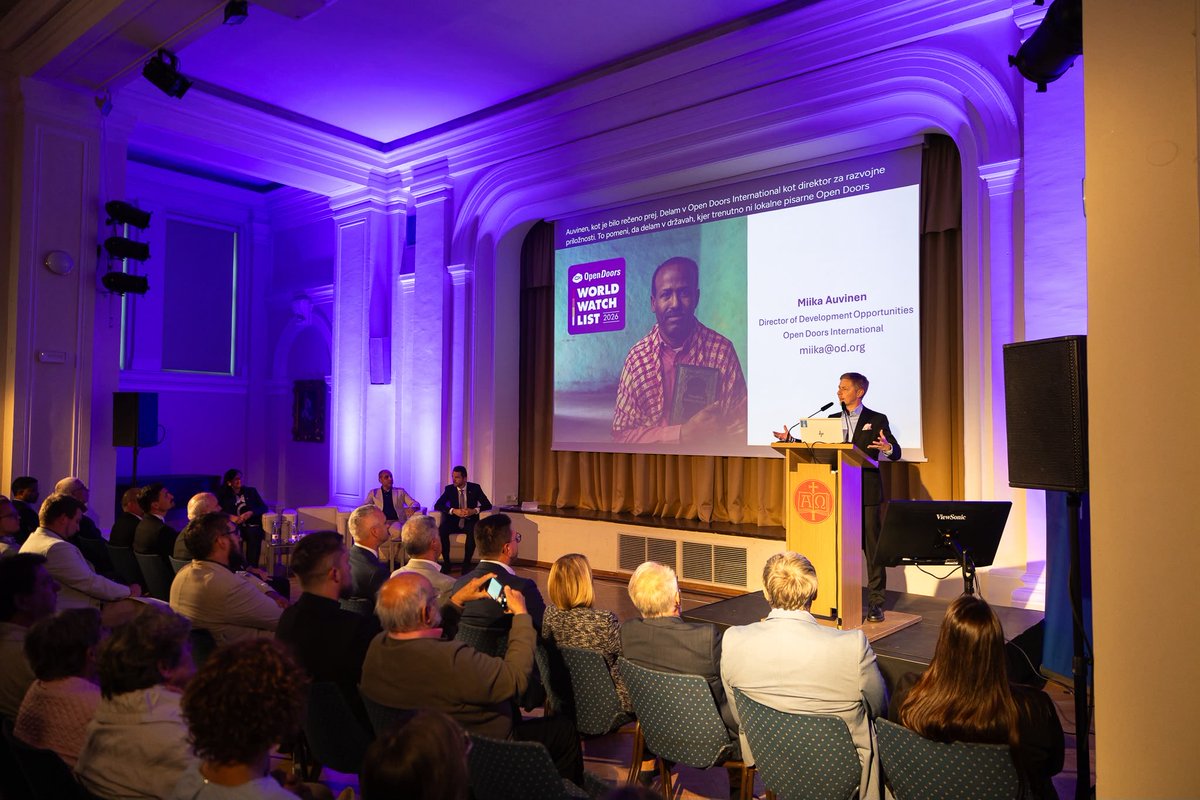
The author said religious freedom was often taken for granted in Europe while millions suffered for their faith. They described testimonies from Iranian and Eritrean Christians in Ljubljana as moving, called on the EU to support persecuted Christians worldwide and thanked Matej Tonin and Nova Slovenija for hosting the event. https://t.co/xgZp6s9Q3I #ReligiousFreedom #Persecution #HumanRights #IR #ER #SI

Bartosz Lewandowski 1w

Bartosz Lewandowski accused Senator Adam Bodnar of hypocrisy and asked how much he received for editing and writing an article in a book published by the German legal publisher Nomos Verlag, with the participation of the Max Planck Society, funded by the German budget. He referred to Bodnar’s text on the judiciary after the power takeover, in which—he wrote—Bodnar advocated for “transitional justice.” Lewandowski described this as consent to lawlessness and the omission of legal principles. He also asked how much Bodnar earned from numerous articles, including those published on the German website while he was a lawyer for the opposition. He accused him of violating the principles he had previously set when he later became the Minister of Justice in Donald Tusk's government. Lewandowski wrote that Bodnar had accused lawyers and academics of participating in the research project of the University of Miskolc, which was supposed to result in a monograph, several dozen scientific articles, and two conferences. He asked whether Bodnar would disclose other international grants he received for his activities in support of the rule of law before— as Lewandowski put it—he boasted about prosecuting the Polish opposition. #hipokryzja #praworządność #polityka (translated)

12655