WRLD

Search

#Truce
WarTranslated (Dmitri) 3h

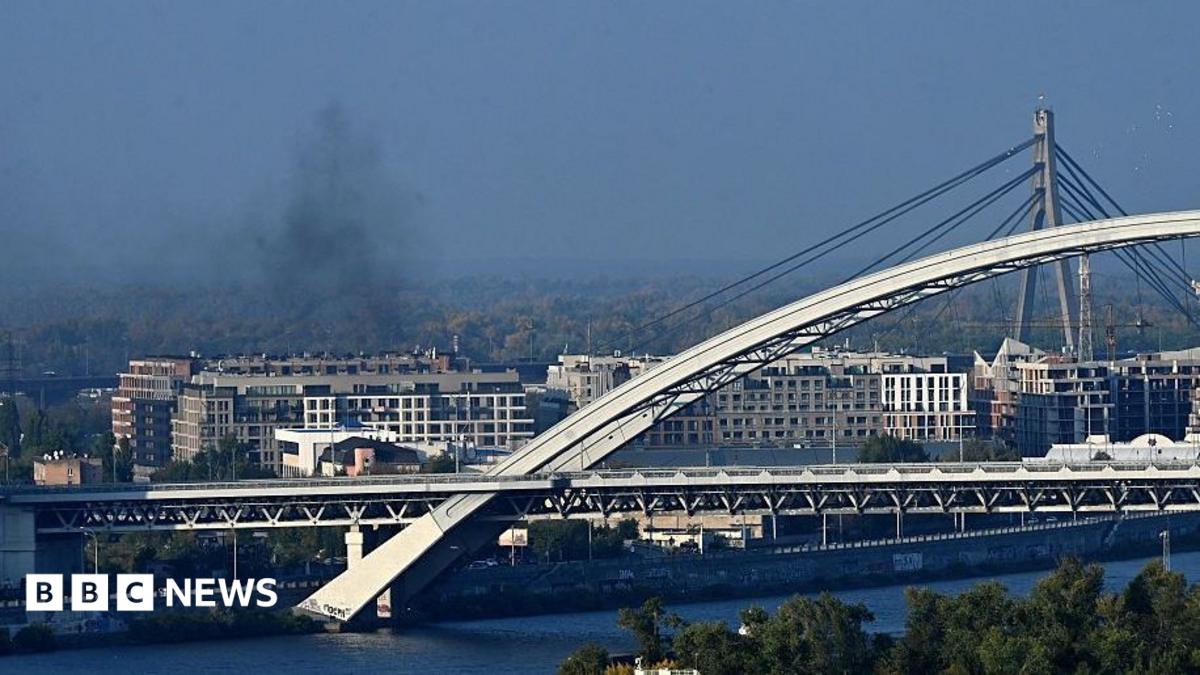
Zelenskyy stated that Russia had responded to Trump’s energy truce with a targeted strike on a power plant in Kharkiv. According to the President, Russia was daily attacking Ukrainian energy and other infrastructure in an attempt to weaponize winter, and Ukraine would respond to such strikes.

1702
BBC 16h

Zelensky says Kyiv would support such a truce. Moscow has yet to comment. #EnergyCeasefire #Trump #UkraineRussiaConflict

www.bbc.co.uk
Trump's 'energy ceasefire' claim welcomed by Zelensky but Russia silent
2446
Vatnik Soup 1d

The author said Kyiv Post had reported that Witkoff and Kushner offered Putin frozen Russian assets held in Europe and sanctions relief in exchange for a limited energy and maritime truce. The author added that the proposal would have involved funds belonging to others. https://t.co/AX8TTKEqP9 #Kyiv #Putin #Sanctions #UA #RU

2735
BBC 2w

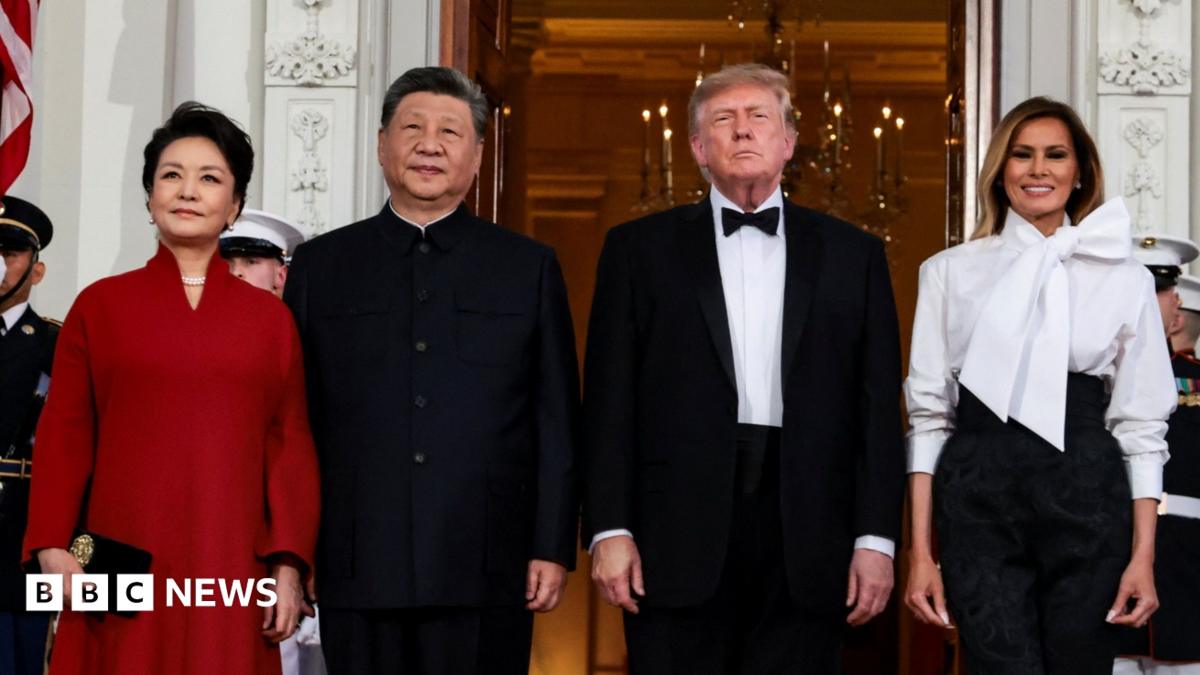
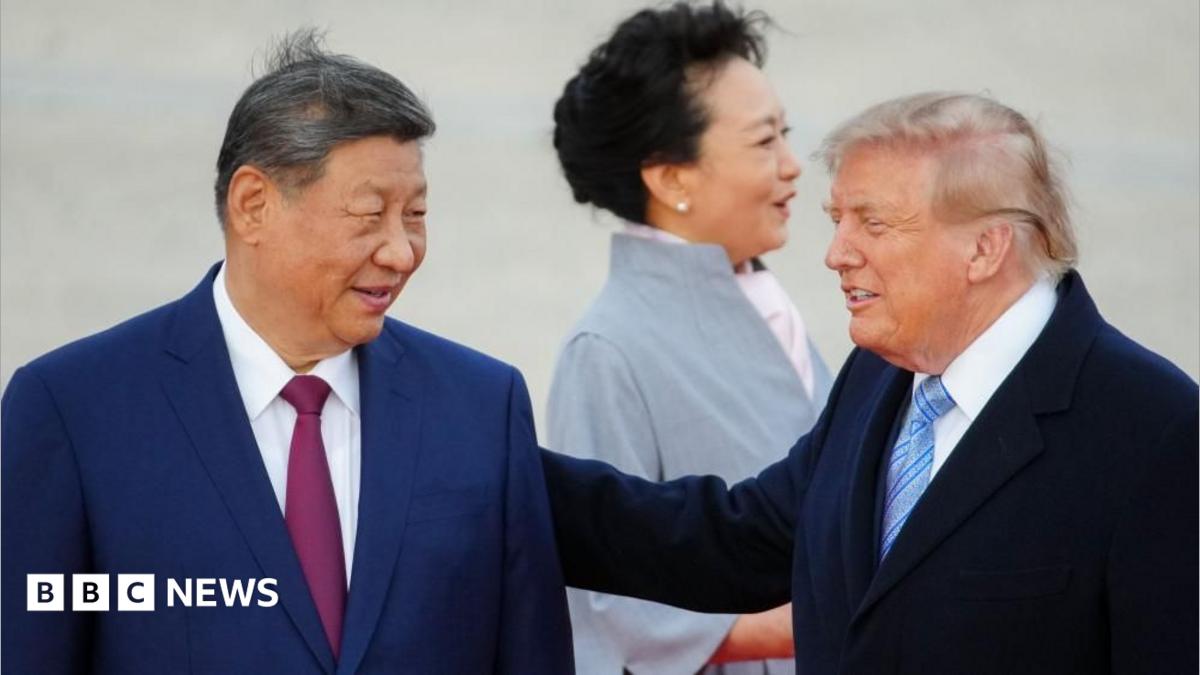
Xi’s first visit to Washington in a decade was a display of pomp and pageantry, with Trump offering his guest a two-month truce on the brewing tariff war. #Trump #XiJinping #ChinaUSRelations

www.bbc.co.uk
Pomp and toasts: Day 2 of Trump and Xi in DC
1730
Christophe Barraud🛢🐳 2w

⚠ Friday Brief⚠️ 🇺🇸🇨🇳 Trump-Xi Summit: No Deal, But a Fragile Truce 🇺🇸 U.S.-Iran Seek Phased Hormuz Deal 🇩🇪 Rhine Sinks to Record Low in Blow for Shipping ... https://t.co/8337RSvnC3 #TrumpXiSummit #IranDeal #ShippingCrisis #US #CN #DE #IR

115
BBC 3w

The US treasury secretary said that the US and China had reached an agreement to extend a trade truce as Xi began his visit. #USChinaRelations #Diplomacy #TradeSummit

www.bbc.co.uk
Trump offers warm welcome as China's Xi arrives for US visit
1731
Christophe Barraud🛢🐳 3w

⚠ Thursday Brief⚠️ 🇺🇲 U.S. Bond-Market Slide Deepens 🇺🇲 🇨🇳 U.S., China Agreed To Extend Trade Truce 🇦🇺 Australian Unemployment Climbs ... https://t.co/qFBuloh8Ld #BondMarket #TradeTruce #Unemployment #U.S. #🇨🇳 #🇦🇺

231
Simone Pillon 3w

No cari repubblichi. Non serve mettere la foto della Meloni con la faccia truce. Non è lei che attacca Mattarella... È il presidente Mattarella che attacca il ministro dell'istruzione Mattarella secondo cui "L’assegnazione alle classi è effettuata, ove possibile, raggruppando alunni dello stesso gruppo linguistico che, comunque, non devono superare il numero di cinque per ogni classe. Al riguardo sembra opportuno ripartire gli alunni stranieri in ragione di qualche unità soltanto per classe, al fine di agevolarne la naturale integrazione linguistica con gli alunni italiani, mentre può essere utile costituire gruppi anche superiori alle cinque unità nei momenti di specifiche attività linguistiche". Parole sante. Mettiamole in pratica. #istruzione #integrazione #politica

13056
Maurits Vande Reyde Aug 9

De groei in ons land is compleet stilgevallen. Wordt daarbij amper vernoemd als oorzaak: de op hol geslagen uitgaven van de overheid en de exploderende schuld. Ter illustratie: de Vlaamse schuld steeg de laatste jaren telkens fel méér dan ... het ergste coronajaar 2020. Dat zou nooit iemand voor mogelijk hebben gehouden. 2020 was destijds uitzonderlijk en zou "nog jaren afbetaald moeten worden". Nu zijn grote schuldtoenames voor de Vlaamse regering de normaalste zaak ter wereld. Dit is onhoudbaar. De Vlaamse regering is intussen kampioen in het vervormen, verbergen en rooskleuriger voorstellen van de cijfers. Ze hebben de definitie van de schuld al proberen te truceren (plots daalde die naar 15%). Nu willen ze ook nog een nieuwe schuldnorm invoeren "die beter aansluit bij de realiteit". Niveau Griekenland jaren 2000. Er is helaas één ding dat je niet kan wegmoffelen: het volledig stilvallen van economische groei. We verliezen aan een rotvaart welvaart. De uitgavendrift van de overheid is de hoofdoorzaak. #Economie #Schuld #Overheid

13798
Barry Malone Aug 9

If Tigray descends into war again, it will be a disaster for the civilian population. Last time, they were massacred, they were raped, they were starved and they were victims of genocidal acts. Despite an ostensible truce in 2022, they've never had a let up. They deserve one. #Tigray #HumanRights #PeaceForTigray #ET

354
Adham Hasanin Jul 21

| JULY 2026 | The Guard State How the largest Arab nation became a security contractor at the gates of its own people By Adham Hasanin Egyptian journalist and political writer, based in the Netherlands In June 2025, hundreds of activists from forty countries landed at Cairo airport. Doctors from France, lawyers from Australia, students from the United States, pensioners from the Netherlands. They carried no weapons and no banned slogans; they carried backpacks, walking shoes, and a single intention: to march from Arish to the Rafah crossing — entirely on Egyptian soil — to demand that food be allowed through to a people starving behind the gate. Not one of them reached Rafah. More than two hundred were detained before the march could begin. Around five hundred foreign nationals were deported from airports, hotels, and checkpoints. Passports were confiscated, activists were pulled out of downtown Cairo cafés, and the Global March to Gaza was cancelled on 16 June without taking its first step. And the world watched. This was no secret operation in a dark basement; it happened in the open, documented by the deportees’ own phone cameras, carried by every international news agency. The world watched an Arab state arrest Europeans, Americans, and Africans for wanting to walk towards Palestine. A state guarding the gate of a siege — from the side that was supposed to be the side of rescue. Hold that image, because it is the key to everything that follows. This was not an aberration in Egyptian policy, nor an isolated security decision. It is the function — the complete function around which the Egyptian state has been redefined over the past decade, and which it is time to call by its proper name: the Guard State. I. The Name — What Do We Mean by the Guard State? Political economy has long described states that live off the rent of their location rather than the production of their people. But what has crystallised in Egypt over the past decade goes beyond traditional geographic rent — the Suez Canal, say — into something far graver: the conversion of sovereignty itself into a commodity for hire. The Guard State does not sell its location; it sells its function. It collects its wages not for what it produces, but for what it prevents: it prevents the refugee from reaching Europe, the activist from reaching Gaza, its own people from reaching politics, and the resistance’s weapons from reaching their destination. Four gates, guarded by a single machine, whose wages are paid in loans, deposits, and perpetually renewed rescue packages. This is not a rhetorical metaphor; it is an economic structure with numbers attached. When the Egyptian economy collapsed in 2024, it was rescued not by productive reform but by a single deal whose subject was location: Ras el-Hekma — thirty-five billion dollars for a stretch of coastline. And whenever negotiations with the IMF stall, the tranches are unlocked by explicit European pressure whose subject is migration: nine billion euros from the European Union in the 2024 “Strategic Partnership,” whose own documents place “migration management” at its core. Europe does not pay Egypt to prosper. It pays Egypt to guard. Thus the model is complete: income in exchange for prevention, external legitimacy in exchange for guarding, and international silence about domestic tyranny in exchange for keeping the gates controlled. To see how the model works on the ground, consider the bloodiest gate of all: the gate of Gaza. II. The Gaza Gate — The Guard Who Is Himself Searched The first paradox must be nailed down with facts: Egypt is not a sovereign guard of its own crossing; it is a searched guard. Egyptian relief trucks — ninety-two thousand food parcels in a single convoy this month — are subject to Israeli inspection before entering the Strip: from Egyptian soil, through a crossing that bears an Egyptian name. The state that guards the gate does not hold its key. It owns the threshold, but not the door. Then the October 2025 truce added a new layer to the function. Under the fifteen-point roadmap sponsored by the international envoy together with the “guarantor states” — Egypt foremost among them — Cairo is to train the civilian police force that will replace Hamas in administering the Strip, under the slogan of “one authority, one law, one weapon.” Let us call things by their names: the state that could not — or would not — deliver a loaf of bread without Israeli permission is now qualifying to graduate the security apparatus that will oversee the disarming of the resistance. From guarding the siege to administering what comes after the siege — a promotion within the same project. And meanwhile, what is happening behind the guarded gate? Since the truce, more than one thousand one hundred Palestinians have been killed by Israeli fire — the latest, just two days ago, a ten-year-old boy named Motaz Abu Shaar, carried to his grave in Khan Younis by his mother, Warda. A United Nations commission of inquiry has concluded that Israel is “deliberately targeting children in an ongoing genocide.” This is what the guarantors’ official language calls a “ceasefire.” What meaning is left in the word “guarantor”? A guarantor that the gate stays firmly shut — however high the dead pile up behind it. III. The Mediterranean Gate — The Guard Europe Pays For The second gate faces north. Since 2016, Cairo has boasted — through its officials at every European forum — that “not a single irregular migration boat has departed from Egyptian shores.” This is very nearly true. But the forbidden question is: at what political price has this “efficiency” become an instrument of mutual blackmail? Europe — which condemns Egypt’s human rights record in its parliamentary resolutions — is the same Europe that signed the nine-billion-euro partnership, and the same Europe that stays silent about sixty thousand political prisoners because the alternative, in its calculations, is boats that never stop. And Cairo understands the game and has mastered it: whenever human rights pressure intensifies, the official discourse turns up the volume on “Egypt hosts millions of refugees” and “the last line of defence.” The result is a perfect structure of mutual blackmail: Europe buys its conscience’s silence, the regime sells its location, and the people — Egyptian and refugee alike — are the commodity in the transaction. The democracies that lecture on values are financing the guard who keeps the victims from knocking on their doors. This is not passing hypocrisy; it is a structural partnership in the Guard State model — one that makes Brussels and Berlin shareholders in everything this state produces, from domestic repression to external siege. IV. The Interior Gate — Guarding the People Against Politics But the most dangerous gate is not on any border; it is inside. The Guard State cannot perform its external function unless it first guards an internal gate: the people’s gate to politics. The function requires a people that does not ask: why are we guarding the siege of our brothers? Why are our trucks searched on our own soil? Why are guests deported for coming to walk in peace? To guarantee the question is never asked, the largest silencing machine in the country’s history was built: sixty thousand prisoners of opinion, a press ranked 166th out of 180 worldwide, and a state security case number waiting for anyone who writes. I write these lines from experience, not from reading reports. When I continued writing from my Dutch exile, the machine reached me across continents: accounts shut down by coordinated mass-reporting campaigns, documented threats, a family harassed inside Egypt as leverage — and my name entered into Case 1282 of 2024, not for any act I committed, but for opinions written from free European soil. This is not a personal complaint; it is a job description: the Guard State guards even beyond its borders, because the free word — wherever it is written — threatens the entire contract of guardianship. The logic is perfectly self-consistent: a regime that sells “stability” abroad cannot tolerate a voice revealing that the stability on offer is the stillness of graveyards. This is why the arrest of the foreign activists in June 2025 was inevitable, not incidental: a peaceful march reaching Rafah would have revealed, before the world’s cameras, that the gate opens when it is wanted open — and that the one keeping it shut is a partner, not a mediator. V. What Has Egypt Lost? — The Guard’s Bill An apologist might argue: what is the harm? A state monetising its location as Norway monetises its oil. The answer lies in the essential difference: Norway sells a resource; Egypt leases its will. And the difference between the two is the difference between trade and bondage. Let us tally what Egypt has paid for this model, in bare facts. It lost its water sovereignty: the Renaissance Dam was completed and filled without the state — owner of “the largest defence headquarters in the world” — daring anything beyond statements of concern; for the guard does not make trouble for the international order that employs him. It lost its regional standing: in the Iran–America war halted just weeks ago, Cairo was neither party nor mediator nor even consultant — Pakistan brokered the deal, while Egypt absorbed the economic shrapnel of Hormuz’s closure like a bystander caught in a battle whose parties it does not know. It lost its place in the conscience of its nation: the state that liberated its land in 1973 and led the Arab world for a century has become, in the eyes of the Arab street from the Atlantic to the Gulf, the gatekeeper of the siege. This loss, specifically, no loan or deposit can repay — because it is the only capital that cannot be printed. And it lost — here is the crux — the very national security in whose name the guarding is justified. The model proved its fragility at the moment of testing: when Israel feared an Iranian response last year, it cut off Egypt’s gas by unilateral decision within hours. The guard who believed himself a partner discovered he was merely a hireling whose wages stop the moment danger arrives. VI. The Alternative Is Not a Slogan — It Is the Recovery of the Original Function I will not close with an essay on “the solution lies in Arab unity”; worn-out words kill more surely than silence. The alternative is specific, and it begins with redefining the function. The state is not a guard; the state is the agent of its people’s will. Every foreign policy not derived from that will is — by definition — functional servitude, however it is wrapped in the language of wisdom and moderation. And the Egyptian will is known and needs no referendum: no people in this region accepts that its country serve as warden of the siege of Gaza, or as Europe’s border post. Practically, the recovery begins with three measurable steps. Open the Rafah crossing fully and sovereignly, by purely Egyptian decision — that alone would overturn the equation of the siege. Break the negotiating bondage by linking any cooperation on migration to concrete European positions on Palestine, not statements of concern. And open the interior gate — release the prisoners and lift the hand from the written word — because a state that fears an article will never dare face an occupier. I know the current regime will do none of this; guarding is its founding contract and its financial artery. But this article is not written for the regime. It is written for memory, and for the generation that will inherit the gates — so that it knows that what is presented to it today as “the fate of geography” is no fate at all. It is an employment contract, signed by a regime without a mandate from its people. And contracts, however long they run, end when one of their parties does. And the world — I return to where I began — is a witness that requires no further proof. It watched the deportees at Cairo airport; it watched the searched trucks; it watched Warda Abu Shaar carry her son to his grave behind a firmly guarded gate. The question is no longer: what is happening? The only question left is: who dares to name it? This article is a naming. Adham Hasanin is an Egyptian journalist and political writer based in the Netherlands, covering Arab and European political affairs.

474
Euronews English Jun 22

Lower-level technical talks will continue following the conclusion of the first round of direct US-Iran negotiations in Switzerland, where progress was made towards establishing a de-confliction cell to address the ongoing conflict in Lebanon amidst a fragile truce, as both sides consider the next steps in a broader diplomatic effort to end hostilities. #USIranNegotiations #LebanonWar #DiplomaticEfforts

www.euronews.com
Lower-level technical talks to continue as first round of direct US-Iran negotiations wrap up
8929
BBC Jun 16

Following the announcement of a US-Iran ceasefire that includes Lebanon, displaced families cautiously returned to their communities, amidst ongoing doubts about the truce's stability and the broader implications of the conflict between Israel and Hezbollah, which has resulted in significant destruction and a humanitarian crisis in the region. #LebanonCrisis #Hezbollah #USIranTruce

www.bbc.com
Fragile quiet in Lebanon as US-Iran truce leaves unanswered questions
10128
Euronews English Jun 14

Israeli airstrikes targeted Hezbollah infrastructure in Beirut's Dahiyeh district amid escalating tensions that threaten a potential US-Iran truce, as Tehran demands an end to Israeli attacks on Lebanon before any agreement is finalized. #Israel #Hezbollah #USIranDeal

www.euronews.com
Israeli strikes hit Beirut as US-Iran talks near completion
10250
BBC Jun 7

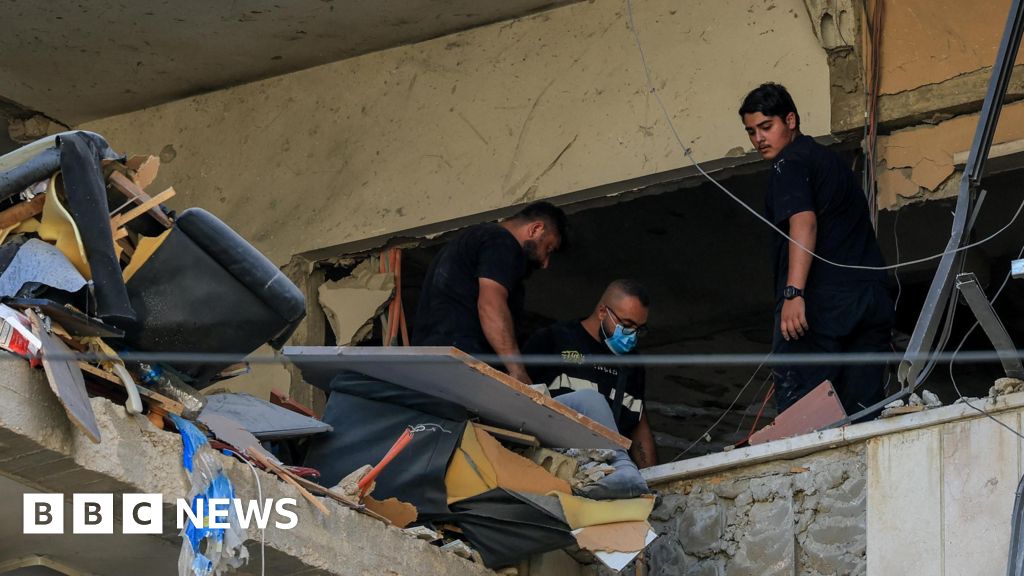
Israel conducted air strikes on southern Beirut, targeting Hezbollah strongholds just days after a US-brokered truce, resulting in two fatalities and numerous injuries, amidst escalating tensions following retaliatory missile launches by Iran. #Israel #Hezbollah #MiddleEastConflict

www.bbc.com
Israel strikes Beirut suburb days after US-brokered truce
10140
BBC Jun 7

Israel conducted airstrikes on a Hezbollah stronghold in southern Beirut just days after a US-brokered truce, killing two people and wounding at least 17, amid ongoing tensions and violations of the ceasefire between Israel and Hezbollah. #MiddleEastConflict #IsraelHezbollah #CeasefireViolations

www.bbc.com
Israel strikes Beirut suburb days after US-brokered truce
10141
Latvian public media Jun 7

Sudānas pilsoņu karš, kas aizsākās 2023. gada aprīlī un ir izraisījis vienu no lielākajām humānajām krīzēm pasaulē ar 59 000 bojāgājušiem un 30 miljoniem cilvēku, kam nepieciešama palīdzība, ir saistīts ar dziļām vēsturiskām etniskajām un rasu konfliktu saknēm, un citu valstu iejaukšanās trūcē tiek apšaubīta, ņemot vērā korupcijas un ekonomisko interešu aspektus. #Sudāna #pilsoņuKarš #humānāKrīze

www.lsm.lv
Viena no lielākajām humānajām krīzēm: Kāpēc Sudānas pilsoņu karu joprojām nav izdevies izbeigt
12527
BBC Jun 4

Hezbollah has rejected a US-backed ceasefire agreement between Israel and Lebanon, arguing that it is a humiliating surrender that does not align with the sentiments of the Lebanese people, while ongoing Israeli strikes in southern Lebanon cast doubt on the viability of the truce. #Hezbollah #Ceasefire #MiddleEastConflict

www.bbc.com
Hezbollah rejects renewed ceasefire agreed by Israel and Lebanon
10264
BBC Jun 3

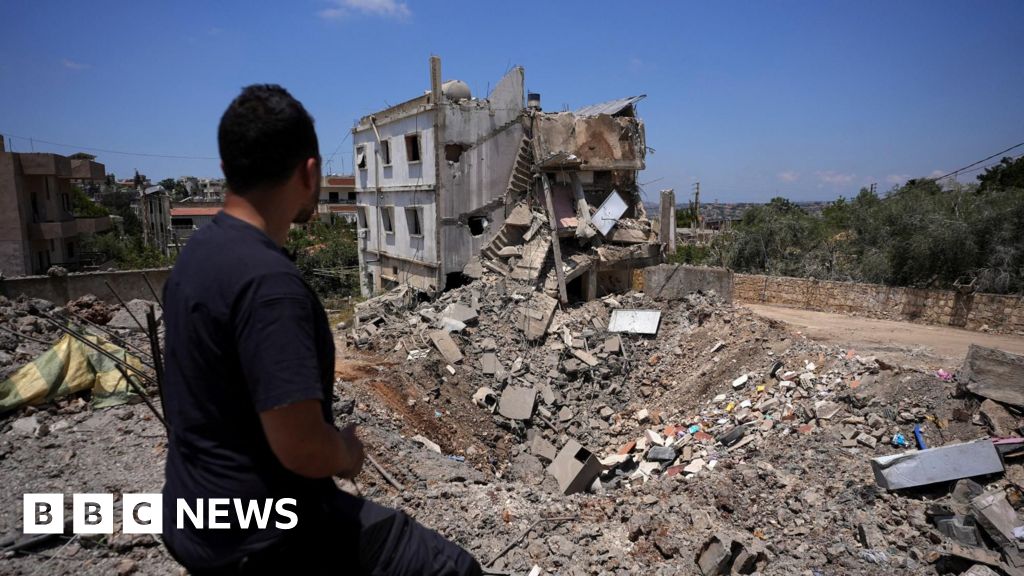
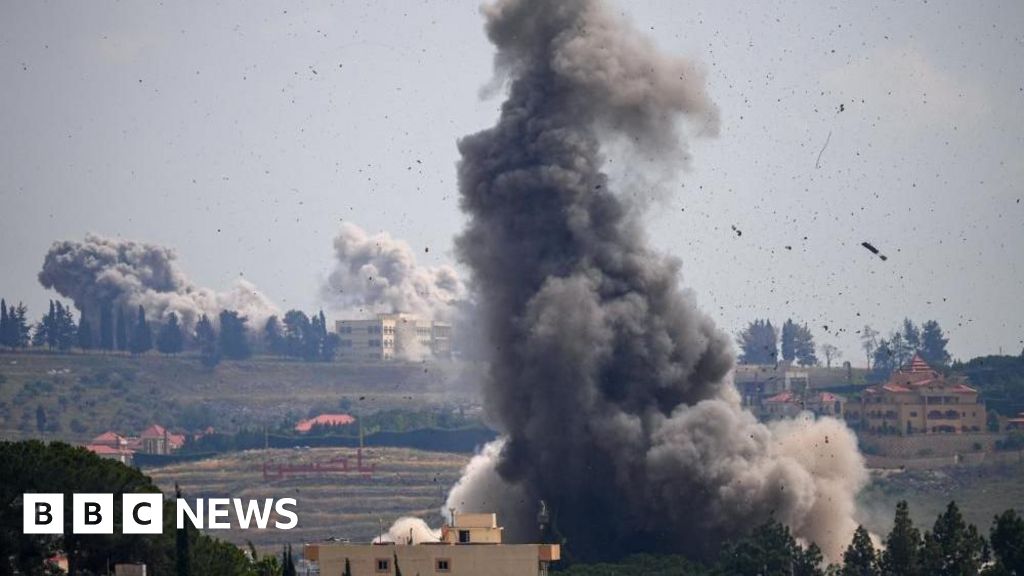
Israel conducted airstrikes in southern Lebanon, targeting areas near the city of Tyre, despite a partial truce with Hezbollah, which was agreed upon under a U.S. initiative; the strikes resulted in casualties and damage to civilian infrastructure, eliciting accusations from Lebanon that Israel was targeting non-combatants. #Israel #Hezbollah #MiddleEast

www.bbc.com
Israel strikes southern Lebanon but partial truce with Hezbollah appears to hold
10146