WRLD

Search

#distres
Jim Ferguson 5d

Jim Ferguson wrote that Cristela Georgescu had told reporters her husband, Călin Georgescu, had not cheated but had been wronged. Ferguson said she was distressed that photographs of their children had appeared as part of the investigation and believed the case against her husband had been planned long in advance. According to Ferguson, Cristela Georgescu believed the truth would emerge if the investigation were handled by a fair and independent justice system, and maintained that her husband was innocent. Ferguson also argued that the detention and investigation of a former presidential candidate, and measures that his family considered politically motivated, warranted international scrutiny. https://t.co/s1RQfa1Uhh #Justiție #Inocent #Transparență (translated)


3721
Christophe Barraud🛢🐳 6d

The author shared a Bloomberg headline saying JPMorgan had reported that deeply distressed US loans had risen to their highest level since the pandemic. https://t.co/HbcsS0Xz5H #USLoans #Economy #Finance #US

3165
Luciano Magaldi Sardella (PhD) 7d

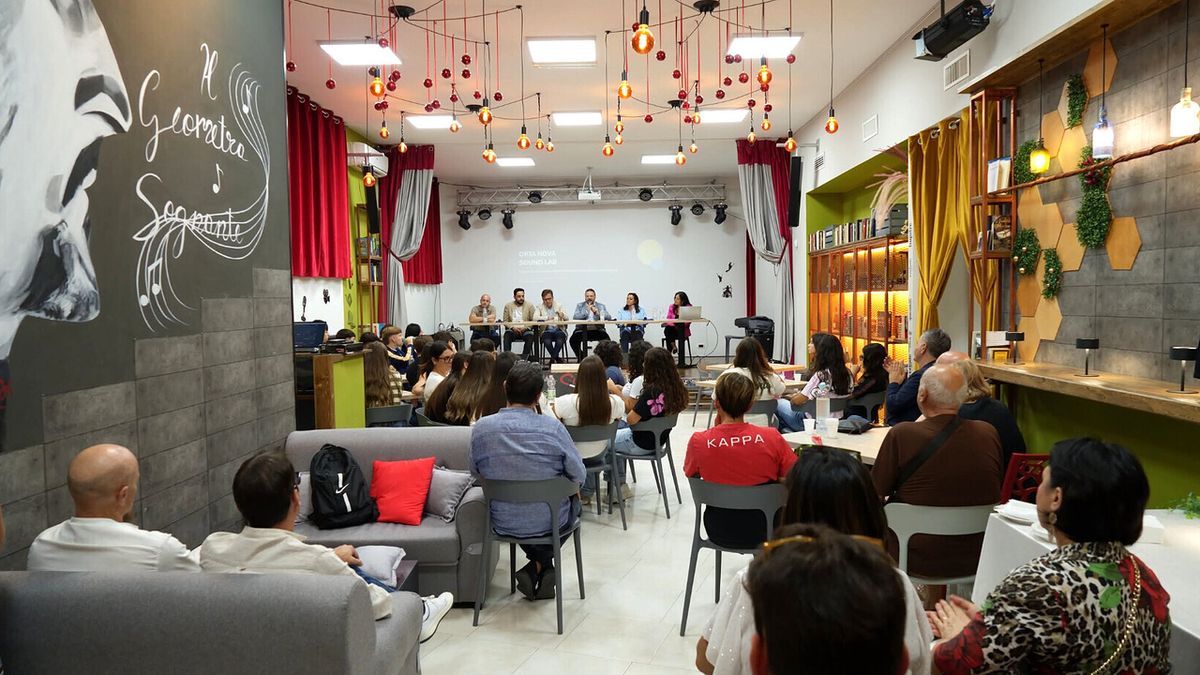
CIVICO 33 — “ORTA NOVA SOUND LAB”: FROM CAPITANATA TO “BROADWAYWORLD”, THE “COMMUNITY BAND” PROJECT CONQUERS NEW YORK SOURCE: https://www.civico93.it/orta-nova-sound-laab-dalla-capitanata-a-broadwayworld-il-progetto-banda-di-comunita-conquista-new-york/ The social laboratory promoted by ANBG and the Ministry of Culture has landed on the world’s largest theatre network, thanks to the article co-authored by Chris Rabinowitz and the Orta Nova-born author Luciano Magaldi Sardella. There is a brass thread linking Piazza Mario Frasca to Broadway. It is called “Orta Nova Sound Lab” — the Community and Social Regeneration Band through Music — the project officially presented on 21 September last at the C-Lab MAO FM 19.77 of brothers Luca and Erminio Ferrandina, which is enjoying unprecedented media coverage for a band-cultural initiative born in the Province of Foggia. Its journalistic success was sealed on 28 September last by its arrival on BroadwayWorld, the world’s most authoritative portal dedicated to theatre and live performance, based in New York with over 1.5 million global monthly visits. A result that was by no means a foregone conclusion, which projects a story from the Apulian periphery into the international cultural news circuit. The article, entitled Orta Nova Sound Lab Launches Youth Community Band in Southern Italy, is jointly by-lined by New York editor Chris Rabinowitz, journalist for the American publication, and his Italian co-author Luciano Magaldi Sardella, an international author originally from Orta Nova, engineer, academic journalist, and researcher active between Italy and abroad. The dual Italo-American by-line symbolises how a “local good practice” can become global news when it is recounted with expertise and rootedness. The Project: The Band as Social Regeneration “Orta Nova Sound Lab” is promoted by the Associazione Nazionale Bande da Giro (ANBG), chaired by Benedetto Grillo, and was admitted for funding under the public call of the Ministry of Culture pursuant to Director General Decree of 7 April 2026, reg. no. 149, aimed at the “Strengthening of research activities and dissemination of musical practices in peripheries and in areas of high social vulnerability”. It is realized with the support of the Comune di Orta Nova and with the collaboration of a solid civic network: A.P.S. MAO FM 19.77, the Istituto di Istruzione Superiore “A. Olivetti”, the Istituto Comprensivo “Sandro Pertini”, the Music Art association, and the C.I.S.A. of Foggia. As BroadwayWorld itself emphasised, this is the first initiative in Italy to reinterpret the distinctive tradition of touring bands (bande da giro) and youth orchestras within a ministerial call dedicated to urban peripheries and social vulnerability. A model that dialogues explicitly with the spirit of the so-called “Caivano Decree” (Law Decree 123/2023) for combating youth distress, educational poverty, and juvenile crime. The idea, in its disarming simplicity, was summarised by the project director for ANBG, Antonella Spagnoletti: “The band is aggregation! The band is cohesion. Bringing these youngsters together, educating them, and enabling them to live in a manner different from the social-media world is among the primary objectives of our association.” A concept reiterated by the Mayor of Orta Nova, Eng. Domenico Di Vito: “This is an important project that can certainly make a difference compared with the past, because all the ingredients are there to network the entire cultural and social world that exists in Orta Nova and that must be valorised. The administration’s commitment is to ensure sustainability, structure, and continuity over time.” Taking part in the launch press conference, moderated by journalist Giuseppe Di Bisceglie, in addition to President Grillo, Director Spagnoletti, and Mayor Di Vito, were Regional Councillor Grazia Maria Starace, Councillor for relations with the third sector Sebastiano Battista, Councillor for Culture Vittoria Mastrogiacomo, and educational professor Alfredo Coppola, contact person for the Olivetti Institute. Why the Story Went International The “Orta Nova Sound Lab” band project demonstrates that when a project has anti-mafia roots, pedagogical value, and a credible institutional network, the press responds. From local and national titles such as Cassa Armonica, Ansa Puglia, TGNorba, Corriere della Sera Bari, RaiNews TGR Puglia, La Gazzetta del Mezzogiorno, Amica9TV, Brindisi In, Blasting News Italia, TRM Network, Secolo XIX, FoggiaToday, PlayNews24, Stato Quotidiano, and many others, which thoroughly documented the conference, the coverage reached “Broadway World”, which read the Orta Nova experience as a “social laboratory” capable of answering the mafia with music. This change of scale derives from joint work and also from the liaison work carried out by Luciano Magaldi Sardella, who, together with New York editor Chris Rabinowitz, succeeded in translating for an Anglophone audience the profound meaning of a town band which, in Apulia, is not folklore, but a civil garrison, a concrete alternative to the screen and to social disintegration. In a South often narrated only for its emergencies, Orta Nova chooses to be recounted for its capacity to generate community. And this time, the news has travelled around the world, starting from a piazza in the Daunia. The Calendar The pathway, which is entirely free of charge, provides instrumental workshops for wind and percussion, ensemble music lessons, and collective rehearsals with qualified teachers and conductors, open to aspiring musicians, families, schools, and citizens. The programme that has attracted the attention of the national and now international press is structured as follows: October 2026: parade of marching bands through the streets and public spaces of Orta Nova, to recover the historic value of the band as a popular and identity-based expression. November–December 2026: high-profile concert season with the Gran Concerto Bandistico di Conversano and the Gran Concerto Bandistico “Biagio Abbate” Città di Bisceglie, an artistic training ground for young pupils. Inclusion Focus: a special evening dedicated to women in music with the Orchestra Note di Puglia, an ensemble composed entirely of professional women musicians, to reinforce the values of equal opportunities. January 2027: first official concert of the newborn Community Band of Orta Nova, a foundational act and public restitution of the work accomplished. (translated)

www.civico93.it
"ORTA NOVA SOUND LaAB": DALLA CAPITANATA A "BROADWAYWORLD", IL PROGETTO “BANDA DI COMUNITA’ CONQUISTA NEW YORK - Civico93 | Be original
909
Luciano Magaldi Sardella (PhD) 1w

“PUGLIA IN”: “ORTA NOVA SOUND LAB” CONQUERS NEW YORK: THE “COMMUNITY BAND” LANDS ON “BROADWAY WORLD” SOURCE: https://www.pugliain.net/303862-orta-nova-sound-lab-new-york-banda/ I am delighted that my article submitted to editor Chloe Rabinowitz has been accepted and published. In any case, we are not talking about just any website, but the largest theatre website in the world on the internet, the one that covers Broadway, the West End and beyond, with over 6 million visitors per month, present in 100 US cities, 45 countries and in 12 languages worldwide. __________________________________________________________________________ Orta Nova (FG) — The social and musical project “Orta Nova Sound Lab” debuted last week on the prestigious US portal BroadwayWorld, an international live performance network based in New York. The initiative, born in Orta Nova in the heart of Capitanata, nothern Puglia region in South Italy, to create a youth community band, was presented overseas as an innovative model of inclusion and urban regeneration for the Mezzogiorno. The Pulgian model of social regeneration through music, promoted by the “Associazione Nazionale Bande da Giro (ANBG)” chaired by Benedetto Grillo and supported by the Municipality of Orta Nova, has been admitted for funding by the Ministry of Culture under the call for strengthening music in suburbs and vulnerable areas. The project follows in the wake of interventions to counter youth distress and educational poverty envisaged in the spirit of the “Caivano Decree”. The article published in the American outlet is co-authored by New York editor Chris Rabinowitz and by Orta Nova author and researcher Luciano Magaldi Sardella. The text illustrates how the centuries-old Puglian wind-band tradition has been reinterpreted as an instrument of prevention and civic cohesion, thanks to collaboration between the MAO FM 19.77 association, the Olivetti Institute, the Pertini Institute, Music Art and the C.I.S.A. of Foggia. Why the News Went International The “Orta Nova Sound Lab” band project demonstrates that when a project has anti-mafia roots, pedagogical value, and a credible institutional network, the press responds. From local and national outlets such as Cassarmonica, Ansa Puglia, TGNorba, Corriere della Sera Bari, RaiNews TGR Puglia, La Gazzetta del Mezzogiorno, Amica9TV, Brindisi In, Puglia IN, Blasting News Italia, TRM Network, Secolo XIX, FoggiaToday, PlayNews24, Stato Quotidiano, and many others, which thoroughly documented the press conference, coverage has now reached “Broadway World”, which has interpreted the Orta Nova experience as a “social laboratory” capable of answering the mafia with music. This leap in scale derives from joint work and from the liaison work carried out by Luciano Magaldi Sardella, who, together with New York editor Chris Rabinowitz, succeeded in translating for an Anglophone audience the profound meaning of a town band that in Puglia is not folklore, but a civic garrison, a concrete alternative to young people’s dependence on electronic screens and to social disintegration. In a southern Italy often narrated solely through its emergencies, Orta Nova chooses to be narrated for its capacity to generate community. And this time, the news has travelled around the world, starting from a square in the Basso Tavoliere. The Stages of the Programme and the Major Concerts in Capitanata The programme, entirely free of charge for participants, offers training courses for wind and percussion instruments alongside ensemble music lessons. During October 2026, the streets of Orta Nova will host band parades and processions, whilst between November and December the area will see performances by the prestigious Gran Concerti Bandistici of Conversano and Bisceglie. The bill will reserve a specific space for equal opportunities with the all-female performance of the Orchestra Note di Puglia. The journey will culminate in January 2027 with the first official concert of the newly formed Banda di Comunità of Orta Nova, the culmination of a training itinerary that projects the social redemption of the Province of Foggia onto the global cultural scene.

www.pugliain.net
Orta Nova Sound Lab conquista New York: la banda di comunità approda su BroadwayWorld
1028
Helen Joyce 1w

The author described sterilising surgeries on people aged 20 to 30 for mental distress as a grotesque human-rights abuse and said it made them want to weep and scream.

114
Sam van Rooy MP 2w

The author wrote that they had watched *77 Hours* in Brussels, describing it as a harrowing film about what they called the jihadist mass slaughter in Iran on January 8 and 9. https://t.co/pv5NPBO1gf #Iran #IranMassacre #Film #IR

114
Luciano Magaldi Sardella (PhD) 2w

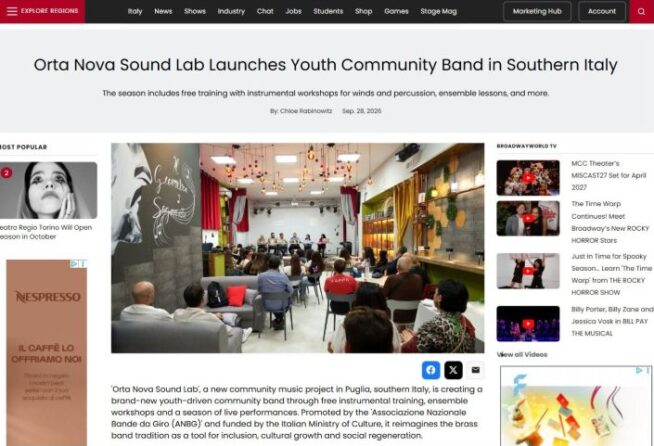
“ORTA NOVA SOUND LAB” FROM ORTA NOVA (PUGLIA) ON “BROADWAY WORLD,” NEW YORK, by LUCIANO MAGALDI SARDELLA SOURCE: https://www.broadwayworld.com/italy/article/Orta-Nova-Sound-Lab-Launches-Youth-Community-Band-in-Southern-Italy-20260928?fbclid=IwY2xjawUnzKtleHRuA2FlbQIxMABwZG9mAWJyaWQRMHZzU2xWWTdTNU5UMDFNY1lzcnRjBmFwcF9pZBAyMjIwMzkxNzg4MjAwODkyAAEeKFYDfacdBYHnYGZu4M9ZmxOT_wnVa7M53_p_1yfAmpSZSvn3ZDHF-BXqMr4_aem_Jd46xeSFwcUn5qapLvtu8w “Orta Nova Sound Lab Launches Youth Community Band in Southern Italy” The season includes free training with instrumental workshops for winds and percussion, ensemble lessons, and more. By: Chloe Rabinowitz ‘Orta Nova Sound Lab’, a new community music project in Puglia, southern Italy, is creating a brand-new youth-driven community band through free instrumental training, ensemble workshops and a season of live performances. Promoted by the ‘Associazione Nazionale Bande da Giro (ANBG)’ and funded by the Italian Ministry of Culture, it reimagines the brass band tradition as a tool for inclusion, cultural growth and social regeneration. Since the Italian government’s 2023 “Caivano Decree” (Decree-Law 123/2023), which targeted youth distress, educational poverty and juvenile crime, attention has turned to communities in Southern Italy where culture, education and public space can be rebuilt together. Orta Nova, in the Puglia region, is part of that broader conversation as ‘Orta Nova Sound Lab’ replying to local Mafia with music: a “social laboratory” that connects young people, schools, associations and institutions around a shared, tangible goal, a band of their own. It is the first initiative of its kind in Italy, to repurpose the distinctive tradition of the ‘touring brass bands’ and youth orchestra within a ministerial call devoted to urban peripheries and social vulnerability. Its explicit aim is to offer young people a real alternative to the screen and to the youth disenfranchisement associated with the anti-mafia “Caivano model”. The project was presented on September 21 at Luca ed Erminio Ferrandina C-Lab MAO facility and is funded under the Ministry of Culture’s public call for the promotion of musical practices in suburban and socially Mafia-rooted vulnerable areas, and it is supported by the Municipality of Orta Nova. Project partners include the cultural association APS MAO FM 19.77, the “A. Olivetti” secondary school, the “Sandro Pertini” comprehensive school, the Music Art association and C.I.S.A. Foggia. At the heart of the project is a simple idea: give young people a reason to be together, in person, making something real. “A music band is aggregation!,” said Antonella Spagnoletti, ANBG project director. She explained that the band means cohesion, and that bringing young people together to train and live differently from the social-media world is among the association’s primary goals. Mayor Domenico Di Vito called it an important project that can make a real difference, with all the ingredients to connect the town’s cultural and social networks with anti-mafia roots. He added that the administration is committed to making the initiative sustainable, structured and lasting. The presentation also involved Benedetto Grillo, president of ANBG; Grazia Maria Starace, regional councillor; Sebastiano Battista, councillor for relations with third-sector organizations; Vittoria Mastrogiacomo, councillor for culture; and Alfredo Coppola, representing the Olivetti school. Journalist Giuseppe Di Bisceglie moderated. The season ahead: Free training: instrumental workshops for winds and percussion, ensemble lessons and rehearsals led by qualified teachers and conductors, open to aspiring musicians, families, schools and citizens. October: a parade of marching bands and youth orchestra through the streets of Orta Nova, Puglia, southern Italy. November-December: concerts by the Gran Concerto Bandistico di Conversano and the Gran Concerto Bandistico “Biagio Abbate” of Bisceglie, giving the young musicians a chance to learn from professional ensembles. A special evening of women’s music with the all-female Orchestra Note di Puglia, reinforcing the project’s values of inclusion and equal opportunity. January 2027: the first concert of the new Orta Nova community band. In particular, ‘Orta Nova Sound Lab (Community Band and Social Regeneration through Music)’ is a project of the ‘Associazione Nazionale Bande da Giro (ANBG),’ a national association of bands active across south-Italians regions like Abruzzo, Basilicata, Calabria, Campania, Molise and Puglia. Funded by the Italian Ministry of Culture and supported by the Municipality of Orta Nova, it offers free music education and live performance opportunities to strengthen inclusion, cultural growth and community cohesion.

www.broadwayworld.com
Orta Nova Sound Lab Launches Youth Community Band in Southern Italy
574
Luciano Magaldi Sardella (PhD) 2w

“ORTA NOVA SOUND LAB” DA ORTA NOVA (PUGLIA) SUL “BROADWAY WORLD” DI NEW YORK by LUCIANO MAGALDI SARDELLA SOURCE: https://www.broadwayworld.com/italy/article/Orta-Nova-Sound-Lab-Launches-Youth-Community-Band-in-Southern-Italy-20260928?fbclid=IwY2xjawUnzKtleHRuA2FlbQIxMABwZG9mAWJyaWQRMHZzU2xWWTdTNU5UMDFNY1lzcnRjBmFwcF9pZBAyMjIwMzkxNzg4MjAwODkyAAEeKFYDfacdBYHnYGZu4M9ZmxOT_wnVa7M53_p_1yfAmpSZSvn3ZDHF-BXqMr4_aem_Jd46xeSFwcUn5qapLvtu8w “Orta Nova Sound Lab Launches Youth Community Band in Southern Italy” The season includes free training with instrumental workshops for winds and percussion, ensemble lessons, and more. By: Chloe Rabinowitz ‘Orta Nova Sound Lab’, a new community music project in Puglia, southern Italy, is creating a brand-new youth-driven community band through free instrumental training, ensemble workshops and a season of live performances. Promoted by the ‘Associazione Nazionale Bande da Giro (ANBG)’ and funded by the Italian Ministry of Culture, it reimagines the brass band tradition as a tool for inclusion, cultural growth and social regeneration. Since the Italian government’s 2023 “Caivano Decree” (Decree-Law 123/2023), which targeted youth distress, educational poverty and juvenile crime, attention has turned to communities in Southern Italy where culture, education and public space can be rebuilt together. Orta Nova, in the Puglia region, is part of that broader conversation as ‘Orta Nova Sound Lab’ replying to local Mafia with music: a “social laboratory” that connects young people, schools, associations and institutions around a shared, tangible goal, a band of their own. It is the first initiative of its kind in Italy, to repurpose the distinctive tradition of the ‘touring brass bands’ and youth orchestra within a ministerial call devoted to urban peripheries and social vulnerability. Its explicit aim is to offer young people a real alternative to the screen and to the youth disenfranchisement associated with the anti-mafia “Caivano model”. The project was presented on September 21 at Luca ed Erminio Ferrandina C-Lab MAO facility and is funded under the Ministry of Culture’s public call for the promotion of musical practices in suburban and socially Mafia-rooted vulnerable areas, and it is supported by the Municipality of Orta Nova. Project partners include the cultural association APS MAO FM 19.77, the “A. Olivetti” secondary school, the “Sandro Pertini” comprehensive school, the Music Art association and C.I.S.A. Foggia. At the heart of the project is a simple idea: give young people a reason to be together, in person, making something real. “A music band is aggregation!,” said Antonella Spagnoletti, ANBG project director. She explained that the band means cohesion, and that bringing young people together to train and live differently from the social-media world is among the association’s primary goals. Mayor Domenico Di Vito called it an important project that can make a real difference, with all the ingredients to connect the town’s cultural and social networks with anti-mafia roots. He added that the administration is committed to making the initiative sustainable, structured and lasting. The presentation also involved Benedetto Grillo, president of ANBG; Grazia Maria Starace, regional councillor; Sebastiano Battista, councillor for relations with third-sector organizations; Vittoria Mastrogiacomo, councillor for culture; and Alfredo Coppola, representing the Olivetti school. Journalist Giuseppe Di Bisceglie moderated. The season ahead: Free training: instrumental workshops for winds and percussion, ensemble lessons and rehearsals led by qualified teachers and conductors, open to aspiring musicians, families, schools and citizens. October: a parade of marching bands and youth orchestra through the streets of Orta Nova, Puglia, southern Italy. November-December: concerts by the Gran Concerto Bandistico di Conversano and the Gran Concerto Bandistico “Biagio Abbate” of Bisceglie, giving the young musicians a chance to learn from professional ensembles. A special evening of women’s music with the all-female Orchestra Note di Puglia, reinforcing the project’s values of inclusion and equal opportunity. January 2027: the first concert of the new Orta Nova community band. In particular, ‘Orta Nova Sound Lab (Community Band and Social Regeneration through Music)’ is a project of the ‘Associazione Nazionale Bande da Giro (ANBG),’ a national association of bands active across south-Italians regions like Abruzzo, Basilicata, Calabria, Campania, Molise and Puglia. Funded by the Italian Ministry of Culture and supported by the Municipality of Orta Nova, it offers free music education and live performance opportunities to strengthen inclusion, cultural growth and community cohesion.

www.broadwayworld.com
Orta Nova Sound Lab Launches Youth Community Band in Southern Italy
1492
António Guterres Sep 8

I am deeply concerned by the escalation of Israeli military operations in southern Lebanon. I condemn the mounting civilian casualties, the distress & displacement caused by the evacuation orders, and the scenes of massive destruction & devastation. Civilians & civilian objects #Israel #Lebanon #CiviliansMatter #IL #LB

3383
Luciano Magaldi Sardella (PhD) Sep 5

The Psychologist – The British Psychological Society – When Walls Become Wellness SOURCE: https://www.linkedin.com/pulse/psychologist-british-psychological-society-when-walls-sardella-ph-d--pu8sf/ Dr Luciano Magaldi Sardella and Professor Matteo Mantuano on how ‘Stramurales Participatory Street Art’ transforms urban mental health. Link: https://www.bps.org.uk/psychologist/when-walls-become-wellness The Psychologist, The British Psychological Society by esteemed Dr. Joe Sutton, Head of Science Communication at BPS Contenuto dell’articolo On a sweltering afternoon in June 2018, we stood in the central square of Stornara, a small agricultural town in Puglia, Southern Italy, watching something extraordinary unfold. Local artist Lino Lombardi was facilitating a heated discussion among residents about which mural designs should adorn their town's crumbling walls. What struck us wasn't the art itself, but the transformation we witnessed in the eyes of people who, just months before, had described their hometown as a place to escape. These were individuals reclaiming their narrative, voting on their future, literally painting over decades of decline. We are environmental and community psychologists who have spent over a decade studying how built environments shape mental health outcomes. Dr Luciano Magaldi Sardella's research focuses on participatory arts interventions in declining rural communities, while Professor Matteo Mantuano specialises in the psychological mechanisms of community empowerment and collective agency. When we first learned about the Stramurales festival in early 2018, we recognised it as a rare opportunity to observe participatory urban art as a potential tool for addressing the mental health crisis plaguing Southern Italy's depopulating towns. Over the past seven years, we have conducted extensive fieldwork in Stornara – interviewing residents, documenting the festival's evolution, and analysing its psychological and social impacts. What we found in Stornara was something far more significant than an innovative community-led arts initiative. It was environmental psychology in action – reshaping how we understand the relationship between built environments, participatory arts, and mental health. The Crisis Hiding in Plain Sight Recent research reveals an alarming convergence of environmental and mental health crises that remains curiously underexamined in psychological discourse. Mental health research receives a mere 2.3 per cent of overall National Institute of Health funding. We cannot know how much of that concerns our environments – both natural and built – which fundamentally shape our psychological wellbeing. The newly proposed field of 'EnvironMental Health' emphasises that deteriorating built environments correlate significantly with elevated stress, social isolation, and worsening mental health outcomes. Southern Italy's rural communities embody this crisis. Between 2002 and 2017, South Italy region lost approximately two million residents to migration, predominantly young adults aged 15-34. This exodus created what Johan Galtung described as 'structural violence' – systematic arrangements preventing communities from realising their potential. The mental health toll manifests not just in individual diagnoses, but in collective despair, eroded social capital, and communities watching their futures literally emigrate. Stornara exemplified this trajectory. By 2017, this municipality of 6,000 residents faced the familiar spiral: economic contraction precipitating youth emigration, accelerating infrastructure deterioration, driving further decline. Walls crumbled. Businesses shuttered. Hope evaporated. Then something changed. The Stramurales Revolution: Democracy through Design What emerged in Stornara transcends conventional cultural tourism. The Stramurales International Street Art Festivalworks through three foundational democratic mechanisms that distinguish it from superficial beautification projects. Organised through Stornara Life APS – an open-membership association founded by Maestro Lino Lombardi – the festival prevents elite capture through voluntary property owner participation ensuring no coercion; democratic content selection through annual community voting on festival themes and mural proposals; and transparent, inclusive governance that gives all residents a voice in the festival's direction. This participatory architecture facilitates what the World Health Organization describes as 'community empowerment' – processes enabling communities to increase control over determinants affecting their health. Recent field studies in Vienna demonstrate that urban art interventions reduce stress and anxiety while improving mood states, but Stramuralesgoes further by embedding art creation within democratic decision-making structures. When residents voluntarily offer walls and vote on content, they perform acts of material and psychological investment. This restoration of collective agency – the belief that residents can shape their hometown's future rather than merely witnessing decline – directly addresses the structural violence that erodes mental health. Between 2020 and 2025, Stornara experienced a huge increase in tourism revenue despite pandemic disruption. New businesses opened. A Stornara-born emigrant who returned reluctantly in 2017 to provide parental care, now works as a tour guide and describes Stornara as 'the coolest town in Italy'. These aren't just economic indicators. They're mental health outcomes. The Science behind the Transformation Contemporary research across multiple disciplines validates what Stornara residents experience viscerally. A 2024 systematic review examining 79 peer-reviewed articles identified how arts places – from permanent museums to temporary public installations – stimulate community engagement, enhance cultural identity, and foster social cohesion. Community-driven mural projects specifically strengthen local identity and pride, creating new routines for individuals to interact and build relationships. Recent experimental research in Berlin found that sidewalk-level art exhibitions significantly altered visitors' connection to and satisfaction with their neighbourhoods, improving overall wellbeing. This aligns with emerging theories on art viewing's impact on mental health, which identifies five key mechanisms: affective processes regulating emotions and stress; cognitive processes providing sensory stimulation and learning; social processes creating shared experiences; self-transformation through reflection; and resilience building for coping with challenges. Environmental psychology research demonstrates that built environments operate as therapeutic interventions. Studies on mental health inpatient facilities reveal that design elements affecting privacy, control, daylight access, and particularly the inclusion of artwork significantly impact patient outcomes. If hospital walls matter therapeutically, how much more do the walls we encounter daily in our communities? The Stramurales model harnesses these mechanisms through the recent concept of 'visual health activism'. Several murals explicitly engage health and human rights themes: Alaniz Niz's 'Refuge for All Migrants' represents exploited African agricultural workers; Sabotaje al Montaje's 'Turning Our Backs on Migration' challenges exclusionary policies; Devil Art Design's 'African Child at Sunset' portrays migrant youth seeking dignified futures. These works address social determinants of health through human rights advocacy. Migration policies denying basic rights create health vulnerabilities – including restricted healthcare access, hazardous working conditions, and psychological trauma from discrimination. The murals perform dual public health functions, in addressing residents' mental health while advocating for populations whose health rights face systematic violation. Place Attachment and Community Resilience The relationship between environmental perception, cultural identity, and community resilience has received substantial scholarly attention in 2024-2025. Research in rural China demonstrates that environmental perception of public spaces influences community resilience through chain mediating effects of cultural identity and place attachment. When communities transform their physical environments through participatory processes, they simultaneously strengthen the psychological bonds that underpin resilience. This explains why Stramurales succeeds where traditional economic development approaches falter. The festival doesn't just create economic value – though over 150 murals by international artists now attract thousands of visitors annually. It fundamentally reshapes residents' relationship with their environment, transforming narratives of decline into evidence of vitality. Each democratically selected mural becomes what resilience researchers call an 'anchor of hope' – tangible proof contradicting despair. Contemporary resilience theory emphasises that strength resides not merely in physical infrastructure but in social cohesion. A recent analysis of resilient urban design in marginalised American neighbourhoods found that residents' message – 'We like our neighbours, we like the character of where we live' – revealed that resilience is fundamentally about people and community. Design interventions succeed when they preserve and strengthen these social bonds, rather than imposing external visions. Stramurales embodies this principle. The democratic voting mechanisms ensure art reflects genuine community values rather than artist or curator preferences. This prevents the cultural displacement often accompanying urban regeneration, where improvements benefit newcomers while alienating existing residents. By centering resident agency, Stramuralesbuilds what researchers describe as 'critical resilience' – capacity addressing underlying inequalities rather than merely adapting to them. The Participation Gap and Universal Access These findings resonate profoundly with longstanding concerns about arts accessibility. The 2015 Warwick Commission documented that the wealthiest, most educated 8 per cent of the UK population accounted for 44 per cent of live music attendance and 28 per cent of visual art visits. This participation gap particularly affects communities that would benefit most from arts engagement for health and wellbeing. But Stramurales challenges this narrative. Street art as public health infrastructure requires no admission fees, no advance booking, no cultural capital to appreciate. It exists where people live, transforming daily commutes into encounters with beauty and meaning. The democratic selection process ensures accessibility extends beyond consumption to co-creation – residents don't just view art, they determine what appears on their walls. Recent research on participatory arts and social cohesion emphasises that successful interventions share common features: delivery in local communities, non-stigmatising approaches, flexibility, promoting social engagement, involvement of exhibitions, and delivery within specific timeframes. Stramurales incorporates all these elements while adding genuine democratic governance. This matters urgently. Mental health conditions among young people globally are rising, and traditional mental health services remain chronically underfunded. If we cannot scale clinical interventions to meet demand, we must invest in preventive public health approaches targeting social determinants. From Stornara to the World: Implications for Practice The Stramurales model offers a replicable template requiring modest financial investment but substantial community participation. Essential elements include voluntary engagement, democratic decision-making, strategic social media use for marketing, and integration of local narratives with global artistic practices. Several cities have implemented variations with promising results. Research on artistic interventions in urban spaces across Europe and Asia demonstrates that participatory art projects can serve as 'social prescribing', improving psychological resilience and enhancing public engagement. Tactical urbanism approaches – small-scale, low-cost interventions improving public spaces – increasingly incorporate art as core rather than supplementary elements. The implications extend beyond individual communities. International frameworks including the International Covenant on Economic, Social and Cultural Rights enshrine rights to health and cultural participation. State obligations to conserve, develop and diffuse culture should support community-driven cultural initiatives demonstrably impacting health outcomes. As pandemic governance analyses emphasise, future health policy reforms must address not only biomedical preparedness but underlying vulnerabilities in community resilience and social cohesion. Street art operating through participatory structures directly strengthens these dimensions. What Psychologists Can Do We have roles to play at multiple levels. First, we must conduct research documenting the mental health impacts of participatory arts interventions. While promising evidence exists, methodologically rigorous studies with adequate sample sizes and long-term follow-up remain scarce. We need experimental designs, not just observational studies, examining mechanisms through which environmental transformations affect psychological outcomes. Second, we should advocate for policy recognising arts engagement as health intervention. This means supporting public health funding for community arts initiatives, particularly in economically deprived areas where traditional development approaches have failed. We should work with urban planners, architects, and artists to integrate participatory arts into neighbourhood regeneration from inception, not as afterthoughts. Third, we must ensure interventions embody genuine participation rather than tokenistic consultation. The Stramuralesmodel succeeds because residents hold real power. Without this, arts interventions risk replicating existing power structures and potentially accelerating gentrification that displaces the communities they ostensibly serve. Fourth, we should employ arts-based research methods that centre community voices. Collaborative approaches like participatory theatre, photovoice, and collaborative poetics enable communities to articulate their experiences and aspirations in ways traditional psychological assessments cannot capture. These methods acknowledge that communities possess expertise about their own needs and potential solutions. Finally, we must situate arts interventions within broader frameworks addressing social justice. Art should not function as a 'sticking plaster' masking underlying inequalities. Instead, we should harness arts' disruptive potential to promote what researchers term 'critical resilience' – capacity challenging systemic injustices rather than merely helping people adapt to them. This means addressing not just symptoms (mental distress) but causes (structural violence, economic abandonment, policy failures). Reimagining Health Infrastructure The Stramurales case compels fundamental reconsideration of what constitutes health infrastructure. We typically envision clinics, hospitals, pharmacies – biomedical institutions delivering treatments for diagnosed conditions. But what if the most effective mental health intervention for a declining community isn't a new psychiatric facility, but democratic processes enabling residents to transform their visual environment? Walls covered with democratically selected art, created through genuine community participation, demonstrably improve community mental health while operationalising cultural rights described in international law. The modest financial investment required pales beside costs of clinical services treating preventable distress. For communities experiencing decline where traditional economic development has failed, participatory street art may offer the most cost-effective, accessible, and sustainable mental health intervention available. This isn't about romanticising art or dismissing serious mental illness requiring clinical care. It's about acknowledging that population mental health requires addressing social determinants – and that participatory arts targeting built environments, social capital, and collective agency directly address these determinants. The question facing psychology isn't whether art can function as health intervention – Stramurales and growing evidence demonstrate it can. Rather, the question is whether we possess imagination to rethink health infrastructure, recognising that effective mental health promotion may require democratic decision-making and community participation as much as clinical expertise. As we watched Stornara residents voting on murals that June afternoon, we witnessed people exercising a fundamental human capacity too often denied in our field: the power to shape their own environments and, through that shaping, to heal. Perhaps that's the most vital lesson Stramurales offers psychology – that sometimes the most therapeutic intervention isn't administered by professionals, but created by communities reclaiming their agency… one democratically selected wall at a time. Dr Luciano Magaldi Sardella holds a PhD in Cognitive Leadership at Aspire Institute, Harvard Business School. Professor Matteo Mantuano is Professor of Social Sciences and Psychoeducational Health, Unitré University of Milan, Italy. Photo: 'Kid trapped in a box' mural by Leticia Mandragora References: All-Party Parliamentary Group on Arts, Health and Wellbeing (2017). Creative Health: The Arts for Health and Wellbeing (2nd ed.). Belfiore, E. & Bennett, O. (2024). The social impact of the arts: An intellectual history. London: Palgrave Macmillan. Bone, J.K., Bu, F., Fluharty, M.E., Paul, E., Sonke, J.K. & Fancourt, D. (2024). Who engages in the arts in the United States? A comparison of several types of engagement using data from The General Social Survey. PLOS ONE, 19(1), e0296743. doi:10.1371/journal.pone.0296743 Chatterjee, H.J. & Noble, G. (2024). Museums, health and well-being: A preliminary report for Phase I. UCL Museums & Public Health Research Group. Cohen, G.D., Perlstein, S., Chapline, J., Kelly, J., Firth, K.M. & Simmens, S. (2006). The impact of professionally conducted cultural programs on the physical health, mental health, and social functioning of older adults. The Gerontologist, 46(6), 726–734. Daykin, N., Mansfield, L., Meads, C., Julier, G., Tomlinson, A., Payne, A., Grigsby Duffy, L., Lane, J., D'Innocenzo, G., Burnett, A., Kay, T., Dolan, P., Testoni, S. & Victor, C. (2024). What works for wellbeing? A systematic review of wellbeing outcomes for music and singing in adults. Perspectives in Public Health, 138(1), 39–46. doi:10.1177/1757913917740391 Fancourt, D. & Finn, S. (2019). What is the evidence on the role of the arts in improving health and well-being? A scoping review. World Health Organization, Health Evidence Network Synthesis Report 67. Flores González, L.M. & Rodríguez Sánchez, I. (2024). The transformative power of art in marginalized communities: Case studies from Latin America. International Journal of Community Well-Being, 7(2), 145–167. Galtung, J. (1969). Violence, peace, and peace research. Journal of Peace Research, 6(3), 167–191. Hart, A., Gagnon, E., Eryigit-Madzwamuse, S., Cameron, J., Aranda, K., Rathbone, A. & Heaver, B. (2016). Uniting resilience research and practice with an inequalities approach. Sage Open, 6(4), 1–13. Johnson, H., Carson-Apstein, E., Banderob, S. & Macualay-Rettino, X. (2017). 'You kind of have to listen to me': Researching discrimination through poetry. Forum Qualitative Sozialforschung/Forum Qualitative Social Research, 18(2). doi:10.17169/fqs-18.3.2864 Kaplan, S. (1995). The restorative benefits of nature: Toward an integrative framework. Journal of Environmental Psychology, 15(3), 169–182. Kim, J. (2017). Effects of community-based group music therapy for children exposed to ongoing child maltreatment and poverty in South Korea: A block randomized controlled trial. Arts Psychotherapy, 54, 69–77. doi:10.1016/j.aip.2017.01.001 Li, Y., Zhang, H. & Chen, T. (2024). Environmental perception, cultural identity and community resilience: Chain mediating effects of place attachment in rural China. Journal of Rural Studies, 98, 103– 115. Marmot, M., Atkinson, T., Bell, J., Black, C., Broadfoot, P., Cumberlege, J., Diamond, I., Gilmore, I., Ham, C., Meacher, M. & Mulgan, G. (2010). Fair society, healthy lives: The Marmot Review. Strategic Review of Health Inequalities in England Post-2010. Mulligan, M., Scanlon, C. & Welch, N. (2008). Renegotiating community life: Arts, agency, inclusion and wellbeing. Gateways: International Journal of Community Research and Engagement, 1, 99–115. doi:10.5130/ijcre.v1i0.591 Neelands, J., Belfiore, E., Firth, C., Hart, N., Perrin, L., Brock, S., Holdaway, D. & Woddis, J. (2015). Enriching Britain: Culture, creativity and growth. The 2015 Report by the Warwick Commission for the Future of Cultural Value. Packer, J. & Ballantyne, R. (2024). The role of museums and art galleries in promoting wellbeing: Insights from the United Kingdom and Australia. International Journal of Heritage Studies, 30(3), 234–251. Papies, E.K., Best, M., Gelibter, E. & Stroebe, W. (2024). The role of mental simulation in desire and motivation: A systematic review. Motivation Science, 10(1), 1–18. Pykett, A.A., Osborne, T., Resch, B., Nielek, R., Krukar, J. & Malleson, N. (2024). From smart to sustainable cities: The role of environmental psychology in urban transformation. Cities, 144, 104644. Roe, J. & Aspinall, P. (2024). The restorative benefits of walking in urban and rural settings in adults with good and poor mental health. Health & Place, 71, 102654. Stuckey, H.L. & Nobel, J. (2010). The connection between art, healing, and public health: A review of current literature. American Journal of Public Health, 100(2), 254–263. Theorell, T. (2024). Psychological health effects of musical experiences: Theories, studies and reflections in music health science. Stockholm: Springer Nature. Ulrich, R.S., Simons, R.F., Losito, B.D., Fiorito, E., Miles, M.A. & Zelson, M. (1991). Stress recovery during exposure to natural and urban environments. Journal of Environmental Psychology, 11(3), 201–230. Van den Berg, A.E., Wesselius, J.E., Maas, J. & Tanja-Dijkstra, K. (2024). Green space as a buffer between stressful life events and health: A longitudinal analysis. Social Science & Medicine, 310, 115270. WHO (2019). WHO housing and health guidelines. Geneva: World Health Organization. Zarobe, L. & Bungay, H. (2024). The role of arts activities in developing resilience and mental wellbeing in children and young people: A rapid review of the literature. Perspectives in Public Health, 137(6), 337–347. doi:10.1177/1757913917712283.

www.linkedin.com
The Psychologist – The British Psychological Society – When Walls Become Wellness
818
S
Sandfeen Aug 29

Five Lessons on Aggression and Dominance “There is a point in the history of society when it becomes so pathologically soft and tender that… it sides even with those who harm it.” Friedrich Nietzsche wrote this nearly 140 years ago, yet it still sounds contemporary. In *Chimpanzee Politics*, Frans de Waal shows that dominance, aggression, hierarchy and confrontation—often dismissed in humans as “toxic masculinity”—also appear in our closest relatives. These behaviors may reflect deep-rooted drives, not merely social constructs. **1. The threat of violence can keep the peace** Most chimp confrontations are displays, not fights. Only about 0.4% of male confrontations become physical. Rank depends on strength, alliances, displays and recognition. Violence matters partly because it is rare: conflict must be allowed to resolve before it escalates. **2. When respect disappears, violence rises** Chimpanzees maintain hierarchy through formal greetings, including bowing. At Arnhem, 22 of 37 serious male fights occurred when males had stopped greeting one another—even though such periods made up less than a quarter of observation time. Violence was nearly five times more likely when recognition rituals broke down. **3. Power requires alliances** Before challenging the dominant male, a chimp often grooms females and plays with their young. Like Machiavelli’s political challengers, he builds support before attempting to seize power. **4. Influence can replace force** Female chimps sometimes recruit males to attack rivals, signaling distress and flattering the enforcer while avoiding the fight. Power can operate through alliances and influence, not just strength. **5. Concentrated resources create conflict** Chimpanzees normally forage for scattered food, limiting competition. When humans provide concentrated food, aggression rises. Larger groups are also harder to govern because familiarity declines and hierarchies become unstable. Stable societies may require hierarchy, respect, controlled confrontation and distributed power. Suppressing every expression of dominance may not eliminate conflict; it may remove mechanisms that keep conflict contained.

586
S
Sandfeen Aug 28

Empathy, Compassion, and the Limits of Emotional Moral Judgment Empathy is widely regarded as a foundation of morality, but psychological research suggests that it is not an unqualified virtue. Paul Bloom (2017) argues that affective empathy—the experience of sharing another person’s feelings—has important limitations when used as a guide for moral judgment. First, empathy is biased. We respond more strongly to suffering that is vivid, identifiable, and psychologically close. Research on the “identifiable victim effect” shows that people can be more willing to help a specific individual than anonymous victims, even when the latter represent a much larger number (Kogut & Ritov, 2005; Lee & Feeley, 2016). Emotional salience therefore does not necessarily correspond to moral significance. Second, empathy is innumerate. Human emotional responses do not naturally scale with the number of people suffering. A single identifiable victim can evoke a powerful response, while thousands or millions of anonymous victims may produce comparatively little emotional engagement. This creates a problem when moral decisions concern suffering on a large scale (Bloom, 2017). Third, empathy can be exhausting. Repeatedly sharing the distress of others may produce empathic distress and emotional fatigue. Research suggests an important distinction between empathic resonance and compassion: while empathic engagement can increase negative affect, compassion can promote positive affect, motivation, and prosocial behaviour (Klimecki et al., 2014; Weng et al., 2013). The implication is not that we should care less. Rather, caring and feeling are not the same thing. Compassion allows us to recognize suffering and remain motivated to alleviate it without necessarily absorbing the suffering ourselves. Empathy may therefore be valuable for human connection, but it is a poor stand-alone system for making large-scale moral decisions. When millions of lives, limited resources, and competing needs are involved, compassion must be combined with reason, evidence, and deliberate judgment. The goal should not be to feel everything others feel. It should be to care deeply enough to help, while remaining clear-headed enough to help effectively. References: Bloom (2017); Kogut & Ritov (2005); Klimecki et al. (2014); Lee & Feeley (2016); Weng et al. (2013). Empathy and Its Discontents https://pubmed.ncbi.nlm.nih.gov/27916513/?utm_source=chatgpt.com

821
Johan Van Overtveldt Aug 25

As things stand now, the AI investment boom will further cripple the already distressed state of public finances in most Western countries. Check my latest blog: AI's Multiple Ravaging of Public Finances https://t.co/NrYyBPNjxv #AIInvestment #PublicFinances #EconomicImpact #US #CA #GB #DE #FR #IT #NL #AU #NZ

toomas hendrik ilves Aug 8

This is not getting enough coverage. You are required to assist a vessel in distress. Unless you are Mark Zuckerberg, who couldn't care less. Behaviour like this will end the way it did in 1789. (But that was France; in the US, they haven't heard of the place) #VesselInDistress #MediaCoverage #PublicAwareness #FR #US

S
Sandfeen Aug 6

Elon Musk reveals what happens when a rocket launch needs approval from Fish and Wildlife Elon: "Nonetheless, we were forced to kidnap a seal, strap it to a board, put headphones on the seal and play sonic boom sounds to it to see if it would be distressed." Elon: "This is an actual thing that happened. This is actually real. I have pictures." Before the seal, there was a shark. Elon: "One of the things that was a bit of a challenge at one point is that they were worried about our rocket hitting a shark." He asked for the data to calculate the odds. They refused, in case shark hunters got hold of it. Elon: "Then they said, well, there's another part of Fish and Wildlife that can do this analysis. I'm like, well, why don't you give them the data? They don't, we don't trust them. Like, excuse me, but they're literally in your department." Then a second agency raised whales. Elon: "If our rocket does hit a whale, which is extremely unlikely beyond all belief, that whale has some seriously bad luck. It's the least lucky whale ever." The seal test was for launches out of Vandenberg, where the seal population has been rising for years. Elon: "So if anything, rocket booms are an aphrodisiac based on the evidence." Elon: "The amazing part is how calm the seal was. Because if I was a seal, I'd be like, this is the end. They're definitely gonna eat me." Elon: "Its seal buddies are never gonna believe him that he got strapped to a board and they put headphones on his ears." They did it twice. Elon: "I don't think the public is quite aware of the madness that goes on." https://x.com/NarutoNolimits/status/2084355472723968245

x.com
Naruto (@NarutoNolimits) on X
472
E
EL MUNDO Jul 26

Hundreds of evacuees in Madrid are enduring mental distress as they spend nights in emergency shelters, grappling with uncertainty over the fate of their homes devastated by wildfires, with many expressing that the uncertainty is killing us. #Incendios #Evacuados #Incertidumbre

www.elmundo.es
El "castigo" mental de los evacuados que buscan volver a casa tras los incendios: "La incertidumbre nos está matando"
11835
Shabana Mahmood MP Jul 11

I am deeply saddened to hear of the death of Ann Widdecombe. The circumstances of her death are extremely distressing and my thoughts are with Ann's family and loved ones. Ann's dedication to public service was decades long, and she was a true servant of her constituents. I…

Βρετανία: Βρέθηκε δολοφονημένη η πρώην υπουργός Αν Γουίτικαμπ
www.sigmalive.com
11276
Shabana Mahmood MP Jul 10

I am deeply saddened to hear of the death of Ann Widdecombe. The circumstances of her death are extremely distressing and my thoughts are with Ann's family and loved ones. Ann's dedication to public service was decades long, and she was a true servant of her constituents. I…

Ann Widdecombe: Tod von Brexit-Politikerin – Polizei nimmt Mann fest
www.spiegel.de
12463
Shabana Mahmood MP Jul 10

The circumstances of her death are extremely distressing and my thoughts are with Ann's family and loved ones.

U.K. Police Open Murder Investigation Into Death of Politician Ann Widdecombe
www.nytimes.com
8309
Krzysztof Bosak 🇵🇱 Jun 19

W artykule BBC można zrobić bingo brytyjskiej nowomowy: ✅ distressing incident ✅ difficult time ✅ thoughts and prayers #brytyjskanowomowa #Bingo #BBC #GB

3811