WRLD

Search

#morning
Jules⚖️📨 3h

www.theguardian.com/us-news/2026... 😑Federal agents searched Representative Ilhan Omar’s home Monday morning as part of a criminal fraud investigation, according to reports in the Associated Press and Fox News that cited a statement from the department of justice. #Pinks

1433
Kate from Kharkiv 4h

This is Kharkiv this morning. A Russian drone just slammed into an apartment building, damaging several apartments and injuring 19 people, for no reason other than to terrorize civilians.

1816
Tim White 9h

Good morning, though it doesn't seem too good. The war in Europe continues, and it's Day 1692 of Russia's insane and inhumane all-out assault on Ukraine. Yep, I am still going, never missed a day, so here's Monday's thread:

1748
BFMTV 9h

The entire broadcast of the Good Morning Business show on Monday, October 12, presented by Brigitte Boucher on BFM Business, covers the results of the social-democratic primary, the victory of Raphaël Glucksmann, as well as analyses on the economy and automobile news. #BFMBusiness #PrimaireSocialeDémocrate #RaphaëlGlucksmann (translated)

www.bfmtv.com
L'intégrale de Good Morning Business du lundi 12 octobre
1646
BFMTV 10h

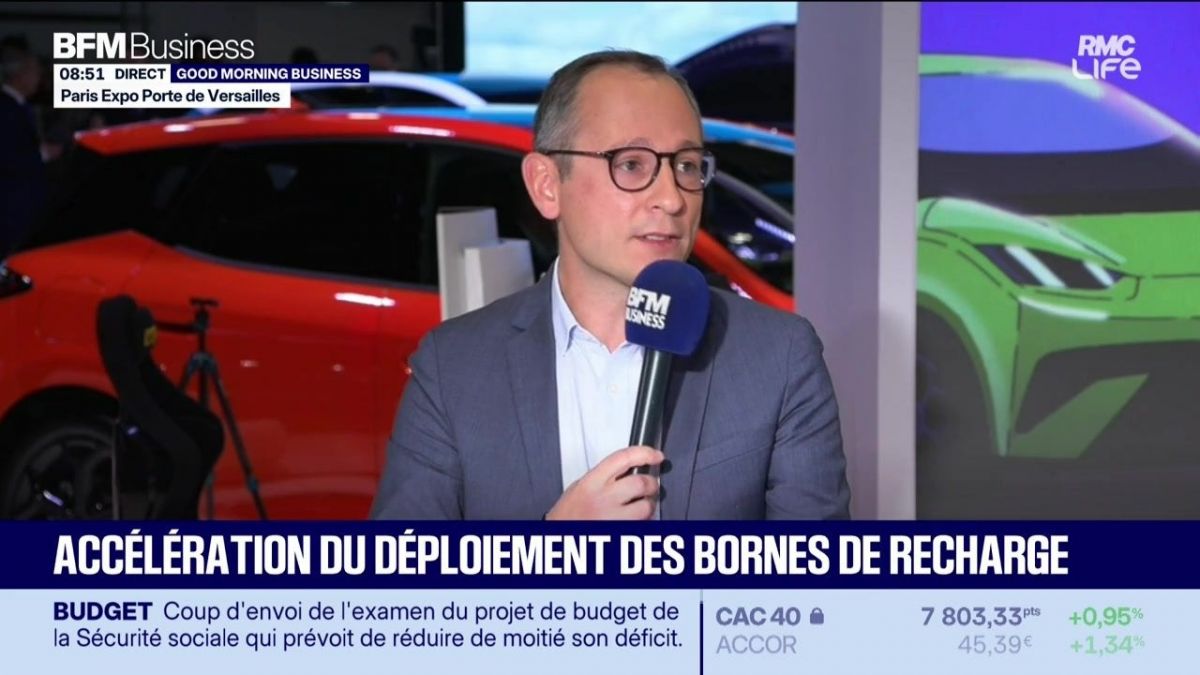
In the Good Morning Business show, experts discussed the economic potential of electric vehicles for France and their potential role in reindustrialization, broadcast from the Auto Show. #VéhiculesÉlectriques #Économie #MobilitéDurable (translated)

www.bfmtv.com
Les véhicules électriques meilleurs pour notre économie - 12/10
1810
BFMTV 11h

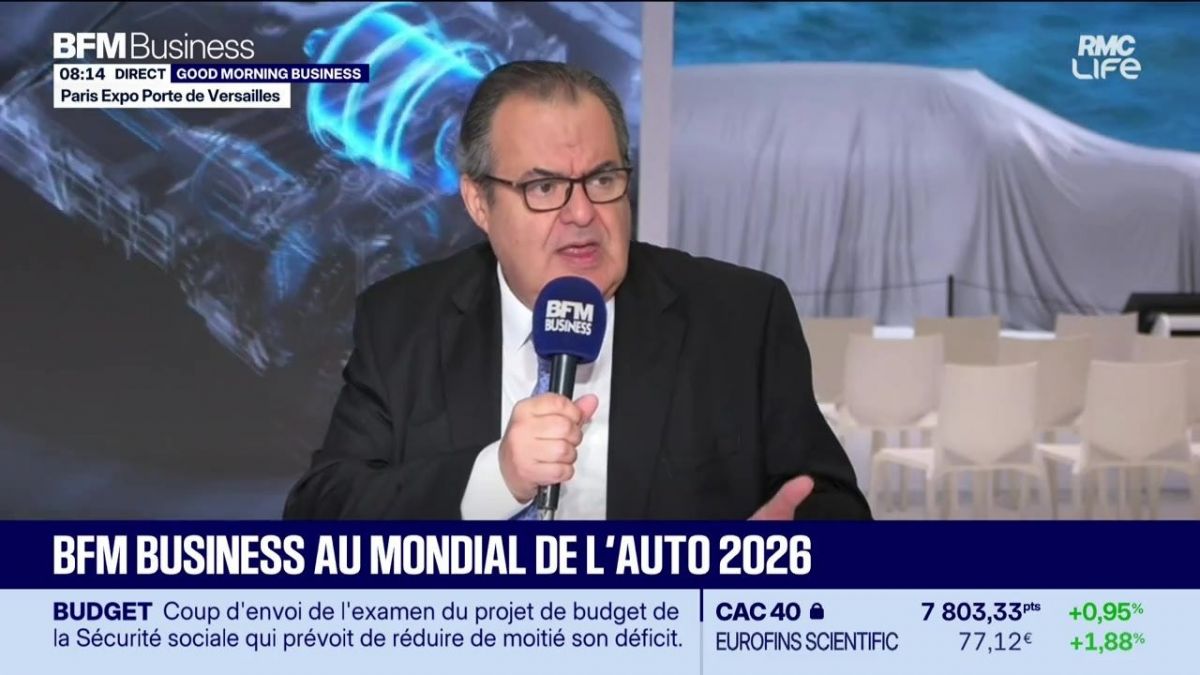
François Roudier, Secretary General of OICA, discusses the rise of Chinese car brands in the global market and their impacts on Europe during his intervention on the Good Morning Business program. #Automobile #Chine #BFMBusiness (translated)

www.bfmtv.com
François Roudier (OICA) : Auto, les marques chinoises à la conquête du monde - 12/10
1834
Luciano Magaldi Sardella (PhD) 12h

LETTERE MERIDIANE — “TEATRO-EDICOLA” OF SAN SEVERO CONQUERS THE WORLD SOURCE: https://www.letteremeridiane.org/2026/10/il-teatro-edicola-di-san-severo-conquista-il-mondo/?fbclid=IwY2xjawU4oqFleHRuA2FlbQIxMQBwZG9mAXNydGMGYXBwX2lkEDIyMjAzOTE3ODgyMDA4OTIAAR5rVEwYs6UUXg7v-P0SyIQ_DRb_F6ZiY58OcseYoV4J7atcTiERnhWaqKM2pw_aem_Njle1jq1XLzHr93KLBUcVA After “Broadway World”, the “Los Angeles Journal”, “The Psychologist (British Psychological Association)” and Hollywood Beat Magazine, its “academic consecration” has now arrived courtesy of Stanford University. As I have already emphasised in my article on the revival of the GIO Festival in Foggia, celebrated by BroadwayWorld for the world stage premiere of the Giordano’s opera Marina (1888), the province of Foggia has long ceased to be peripheral. It happens when it finds an idea that shifts the coordinates: well, in San Severo, 40 kilometres from Foggia, it has happened again. Only this time an orchestra was not needed; six chairs were enough. The celebrated Teatro-Edicola of San Severo artistic director Francesco Gravino of the theatre company Foyer ’97 has been featured in the academic journal “Stanford Social Innovation Review (SSIR)” as an academic case study. The news, relayed on 19 September 2026 by ANSA Nazionale, looked like a misprint. Then it became clear that it was not. SSIR, an award-winning publication covering multisectoral solutions to global problems, included the project in its Dispatches section with the reportage “The Six-Seat Revolution”. It is the inverse trajectory to that of the GIO Festival: not a forgotten opera returning to a grand historic Italian horseshoe theatre, but an entire theatre reborn inside a disused place, forgotten by man. There are moments when past and future intertwine to create something visionary, innovative, artistically “revolutionary”: San Severo experienced one of those moments on the morning of 27 March 2026, during World Theatre Day, when the shutter of a newsstand closed for six years in Via Matteo Tondi was reopened “not to sell newspapers, but to offer stirring stories”, to quote Gravino’s motto. The idea of the visionary Francesco Gravino, artistic director, stage director and actor of the San Severo company Foyer ’97, active for at least 30 years in Capitanata, centred on the kiosk, hexagonal in metal and glass, granted free of charge by its owner Pino Frau, by now an urban relic created by the publishing crisis of the early 2000s: today in Italy active newsstands have fallen from about 35,000 in 2005 to about 20,000 in 2024, a decline of 42.8%. Gravino and eleven other actors restructured it in two weeks of work, without institutional funding, and transformed it into what is now under examination by the London commission of Guinness World Records as the “world’s smallest theatre”. The formula is deliberately austere: six spectators at a time outside, actors inside at less than a metre’s distance, 15-minute performances, continuous rotation from 11:00 to 20:45, texts ranging from Goldoni to Chekhov, from Ibsen to Dacia Maraini. On the door a QR code with an original theatrical warning: “Warning! This QR code transforms passers-by into actors. Scan only if ready.” The numbers immediately showed that it was no boutade: more than 60 people in a single afternoon, three inaugural days that sold out. But above all a positive echo that went beyond the borders of San Severo. “Broadway World” (just as in the previous case of the GIO Festival), the world’s most influential theatre criticism outlet with over 5.5 million monthly views, devoted exclusive coverage to it on 27 April 2026: “An Abandoned Italian Newsstand Just Became the World’s Smallest Theatre”. Not a mere listing, but an analysis: “There is no foyer, there is no balcony, there is no grid. There is barely a wing. What there is is something almost unrecognisable as an evening at the theatre, and for that very reason it is all the more powerful.” “Broadway World” captured Gravino’s manifesto idea: “This is a theatre of proximity. In an era of digital distance, we are putting human contact back at the centre,” framing it as “More than a clever exercise in site-specific theatre. It is a reappropriation.” All of this, in a Mezzogiorno of Italy often narrated only in terms of organised crime and marginalisation. To that seal of approval was added another, even more disorienting for a newsstand in San Severo: the “Los Angeles Journal”, one of the most influential publications on the West Coast for the performing arts. On 12 May 2026, it headlined thus: “San Severo’s Teatro-Edicola as an Innovative Model for Los Angeles Theaters?” opening as follows: “In a city in southern Italy that Hollywood has never heard of, a theatre director has just built the smallest stage in the world: six seats, fifteen minutes, zero distance. Los Angeles should pay attention.” The “Los Angeles Journal” does not indulge in folklore, but places the kiosk in Via Matteo Tondi alongside the prestigious 1,600-seat Ahmanson Theatre in Los Angeles, the Pantages of Broadway in Hollywood, the 99-seat plan of Rogue Machine, the Odyssey, the Victory Theatre and the Hollywood Fringe. It even recalls Ethan Marks’s Electrical Box Theatre, a veritable electrical box lined with red velvet in downtown Los Angeles, to argue that Gravino has taken to the extreme the question Los Angeles has been asking itself for decades: How small can a stage become before it ceases to be a stage? And it recognizes the San Severo urban model: almost zero cost, two weeks of work and six chairs, in return for immediate provincial, regional and national media coverage, recognition by the San Severo’s Municipal Administration, and a format exportable anywhere. Then, the third American piece came from “Hollywood Beat Magazine” on 20 April 2026: Six seats. Fifteen minutes. One actor. No stage. The magazine recounts the kiosk in Via Tondi left disused for almost six years, the contemporary six-seat cultural outpost, placing Francesco Gravino in a distinguished genealogy: Richard Schechner and environmental theatre, Jerzy Grotowski and poor theatre, Nicolas Bourriaud and relational aesthetics. But it closes with pragmatism: it is not a thesis, it is fixing a street corner, that is, repairing an urban street corner by asking not how large a theatre can become, but how small it must become again to recover its original power. And finally, the celebrated London-based “The Psychologist”, the journal of the “British Psychological Society (BPS)”, the oldest psychological society in the world, transformed the Teatro-Edicola into a scientific case study: on 30 July 2026 it published “The world’s smallest theatre — and Psychologists’ next act”, starting from the same detail, the morning of 27 March when the metal shutter of the hexagonal kiosk in Via Tondi reopened after six years, six people inside, an actor at less than a metre’s distance beginning Chekhov. It describes the formula: six spectators, 15 minutes, 11 actors over 10 hours, from Goldoni to Euripides, inside a kiosk where the fourth wall does not break because architecturally it never existed. But the BPS goes a step further: it cites the 2025 studies by Damien Gabriel in IBRO Neuroscience Reports, that live performance generates measurably stronger emotional and physiological activation than video, and introduces Edward Hall’s proxemics: below one metre is intimate space, reserved for doctors, close friends, lovers. In that one-square-metre space, the actor’s breath is audible, micro-expressions legible, the self-other boundary becomes permeable. The Teatro-Edicola “does not make theatre better, it makes it inevitable”. And it is here that one understands why Stanford is studying it as an academic case study in social innovation, not as a case of artistic originality. In Italy, meanwhile, the national media circuit had already picked up the phenomenon: RaiNews — TG2 Storie brought it to RaiDue at midnight on 19 April. RTL 102.5 devoted space to the format conceived by Gravino and developed by Foyer ’97 in the heart of San Severo in Via Tondi, defining it as a permanent micro-stage capable of bringing theatre into public space. ANSA.it, Gazzetta del Mezzogiorno, La Repubblica, TG2000, Radio Capital, Swiss RSI, ANSA Brazil and many others followed. And for the record: Fiorello praised it in La Pennicanza as an artistic case inspired by his Edicola Fiore, and Biagio Antonacci, on his tour in the Augustan amphitheatre of Lucera, made a “fact-finding” stop at the Teatro-Edicola singing the celebrated and nostalgic Iris in front of an audience certainly larger than the “six seats”. Francesco Gravino’s theatre company Foyer ’97 was not born yesterday: behind it lie the Teatro-Cantina of 2016, the underground theatre, and in 2011 a performance on the bell tower of a church in the centre of San Severo at 45 metres high. The Teatro-Edicola completes, in Gravino’s words, “the entire vertical extension of theatre: underground, street level, rooftop”. And it is preparing for its thirtieth anniversary in 2027 aiming to purchase the kiosk to make it permanent, exporting the “San Severo Model” to Rome, Lucca, and to the festivals of Santarcangelo and Todi. As with the GIO Festival, someone might dare to claim that it is merely a stunt, but when BroadwayWorld places you alongside the Los Angeles Opera House, the “Los Angeles Journa”l proposes you as a model for Hollywood, “Hollywood Beat Magazine” reads you through Grotowski and the “British Psychological Society” uses you to explain mirror neurones, it is no longer a stunt but an excellent artistic and academic positioning. To those who still whisper that Foggia and Capitanata are provincial, the answer is now written on two opposite and complementary fronts: on 5 June in Foggia a 138-year-old opera found the stage again at the Giordano ending up on BroadwayWorld; on 27 March in San Severo a 4-square-metre kiosk invented a stage that did not exist, ending up at Stanford, in Los Angeles, in Hollywood and in London. The periphery, when it has a precise idea, becomes the centre. Even with six chairs. Luciano Magaldi Sardella

www.letteremeridiane.org
Il teatro-edicola di San Severo conquista il mondo
75
Marko Mihkelson 🇪🇪🇺🇦🇪🇺 1d

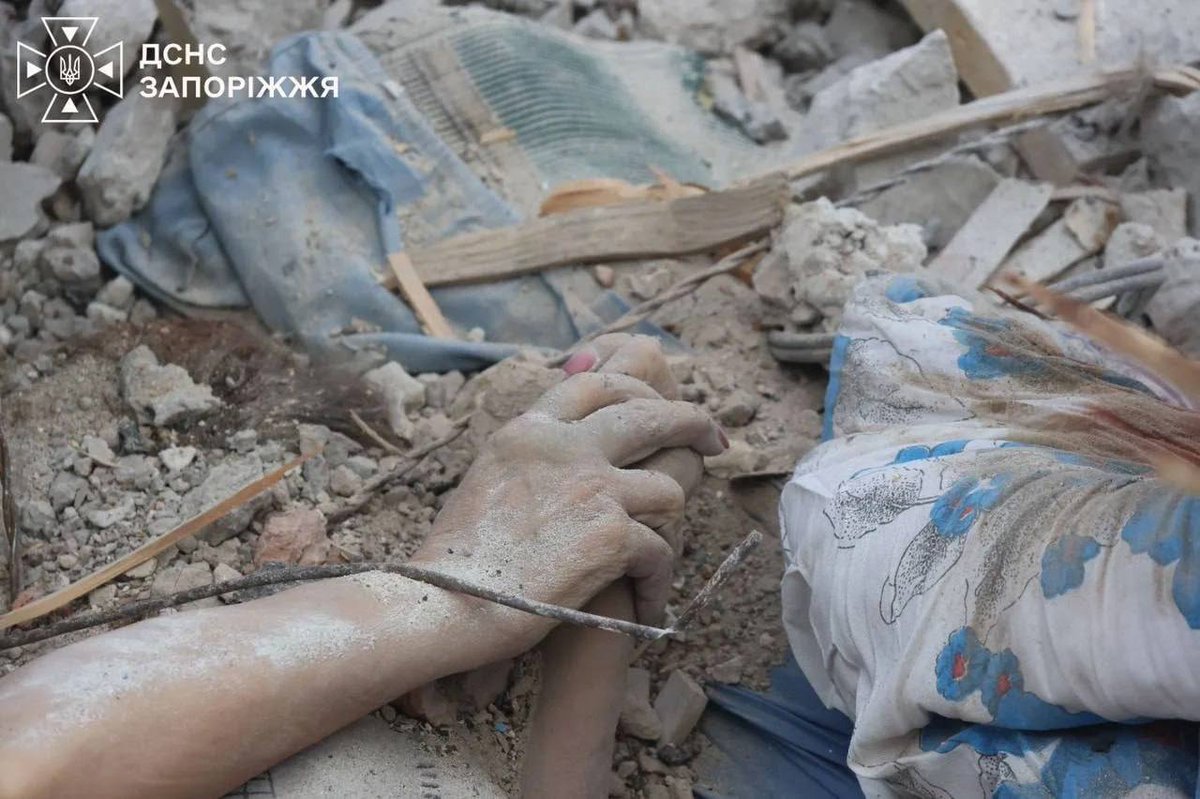
The author said the photograph showed what they believed Vladimir Putin wanted as the war’s outcome: Ukraine devastated by what they called Russia’s genocidal war and forced to capitulate. They said the image had been taken that morning in Zaporizhzhia, where a Russian missile strike had killed a mother and her child. https://t.co/c9tndo4Vxx #Ukraine #Putin #WarCrimes #UA #RU

3246
Liverpool Zone 1d

Liverpool Zone reported that Szoboszlai and Mac Allister had not been seen at the team hotel that morning. #LFC https://t.co/YH1pEzRGwV #LFC #Football #PremierLeague (translated)

2533
Yaroslav Trofimov 3d

The author argued that allowing Russia to sell petroleum products would fund a war that should be ended rather than prolonged. They wrote that Ukraine had struck the Novoshakhtinsk refinery terminal that morning to prevent Russia from having excess fuel to export. https://t.co/ZdDYtExUvn #Ukraine #Russia #Petroleum #RU #UA

3347
BFMTV 3d

The October 9th edition of Good Morning Business covers various topics, including high school student mobilization, the situation in Ukraine, and the economic implications of AI on employment. #BFMBusiness #GoodMorningBusiness #Économie (translated)

www.bfmtv.com
L'intégrale de Good Morning Business du vendredi 9 octobre
2353
Il Post 3d

In episode 1302 of Morning, they discuss the new Italian electoral law, recent events in Russia and Ukraine, the Pentagon's proposal to broadcast a live execution, an investigation into the Islamic arbitration court, the theft of wine in Tuscany, and the reaction of Nobel Prize winner Anne Carson. #Notizie #Politica #Conflitti (translated)

www.ilpost.it
Ep. 1302 – La vergogna dei lividi e le altre storie di oggi
2690
Inga Tolockiene 4d

The author said they were running out of words to describe what they called terror, while Russia showed no signs of running out of ways to inflict it. They wrote that at least 32 people had died across Ukraine the previous day and that another 33 were killed in a single strike that morning. https://t.co/We4eO6hJGW #Ukraine #Russia #War #UA #RU

3822
Vatnik Soup 4d

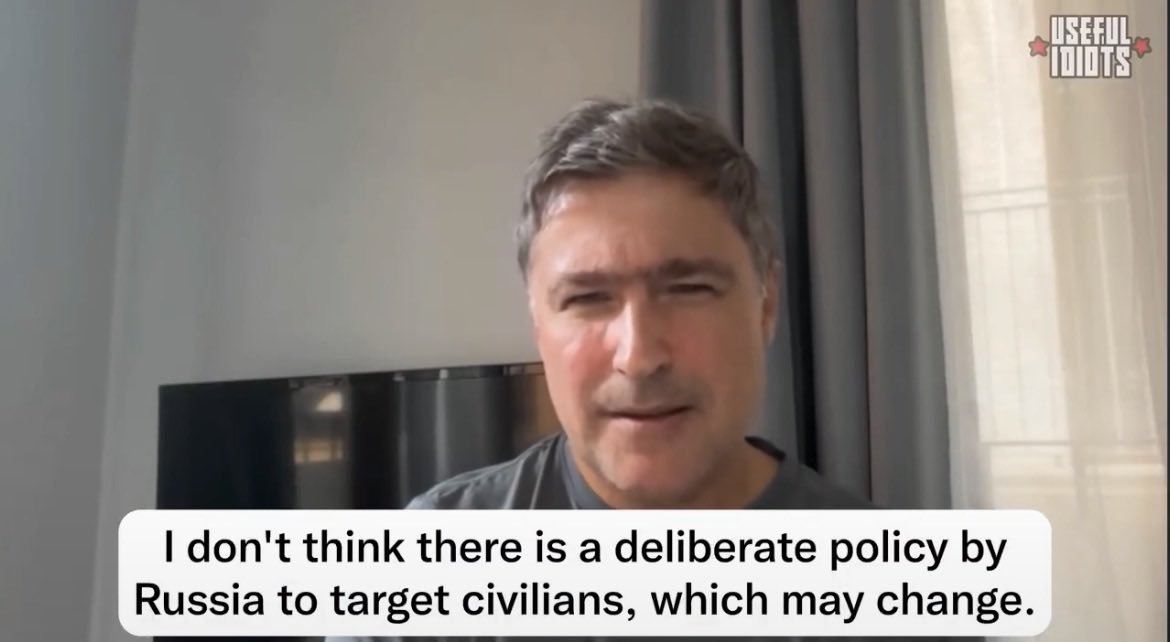
The author contrasted a statement by Ragozin two weeks earlier that he did not believe Russia had a deliberate policy of targeting civilians, though that could change, with reports of recent attacks. The author wrote that a Russian glide bomb had hit two minibuses in Kramatorsk that morning, killing 33 people and injuring 18, and that Russian strikes had killed at least 21 people the previous day. https://t.co/HGffCs4Byz #Ukraine #Russia #Conflict #RU #UA

3823
Katarina Mathernova 🇪🇺 4d

The author said Russian forces had struck two passenger buses in Kramatorsk that morning. Citing local authorities, the author reported 30 people killed and 18 injured, and said a day of mourning had been declared for those killed. The author added that people travelling through the city had died and that Ukraine was in mourning. https://t.co/u8ceZdePpX #Краматорськ #Україна #Жертви #RU #UA

3825
Il Post 4d

Today on Morning: the Meloni government receives the third vote of confidence on the electoral law, Mattarella grants partial pardon to a convicted jeweler, the French minister suspends the use of grenades against protests, in India they are protesting for the cancellation of voters, and Maricarmen Abascal, a symbol of the struggles over housing emergencies in Spain, has died. #PoliticaItaliana #Proteste #NobelLetteratura (translated)

www.ilpost.it
Ep. 1301 – Bandi deserti, tagli invisibili e le altre storie di oggi
2139
BFMTV 5d

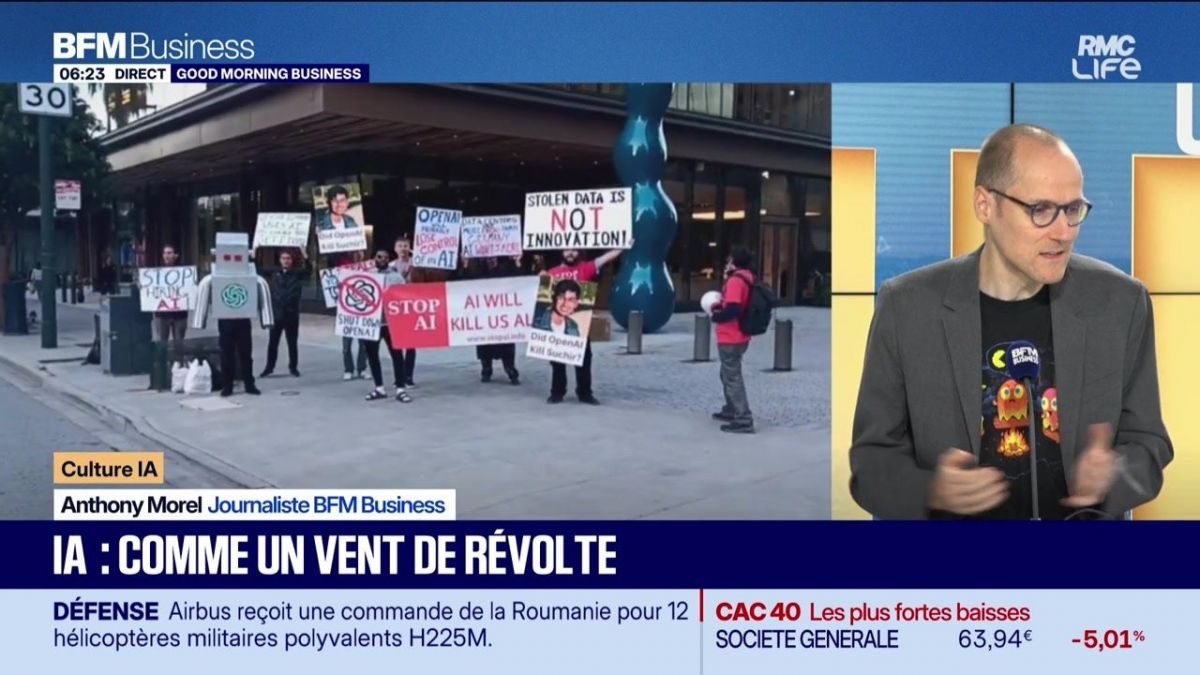
In his show Good Morning Business, Anthony Morel addresses the growing global phenomenon of protest against artificial intelligence, which generates both progress and fear, illustrated by movements of boycott and resistance. #IntelligenceArtificielle #CultureGeek #RévolteIA (translated)

www.bfmtv.com
Culture IA : IA, comme un vent de révolte, par Anthony Morel - 08/10
1577
Il Post 5d

In episode 1300 of Morning, they talk about the Israeli commemoration of the massacres of October 7, the suspension of classes in France for meetings with students, the case of a woman sentenced to death in Tennessee who is still alive, and the increase in the price of diesel due to the failure to implement mobile excise duties. #Israele #proteste #giustizia (translated)

www.ilpost.it
Ep. 1300 – Un tetto che si muove e le altre storie di oggi
1921
איתמר בן גביר 6d

"I arrived this morning with the bulldozers enforcing sovereignty in the al-Tur neighborhood of East Jerusalem to ensure on the ground that my policy is being implemented. A multistory building constructed in violation of the law was demolished, and the land was returned to the State of Israel. In a year and a half, we demolished 10,000 illegal structures and returned land to the state equivalent to the combined area of Tel Aviv and Givatayim. This is the only way it works!" #Ierusalim #Palestinieni #Demolări (translated)

Un bloc locuit de palestinieni, demolat de Israel în Ierusalimul de Est. Un ministru s-a urcat în buldozer
hotnews.ro
2150
R
RaffaeleLello 6d

Good morning, I would like to share an information from Morning Zapping, by the excellent Marc Fiorentino, who in turn refers to data from a study by the Wall Street Journal. Do you remember the K economy? The letter used to describe the structure of the economy of the United States. The top part of the K, the small portion of the population that drives growth. The bottom part of the K, the overwhelming majority of the population that fully suffers from the decline in purchasing power. You will see, the numbers are staggering. 0.1%. 0.1% of Americans. The ultra-rich. The Fed has published a study analyzed by the Wall Street Journal. First finding: their wealth has more than doubled since 2019. We are talking about 14.5 trillion dollars in additional wealth. Of which 10 trillion came from the increase in the stock market and investments. In 6 years. THIS 0.1% Of the population now controls 28 trillion dollars, which represents 15% of the total wealth of Americans. But the most spectacular figure: In 2022, the average wealth of this 0.1% was 45.8 million dollars. In 2026, it is 200 million. SO 28 trillion dollars of wealth for the 0.1% of the population. While the wealth of the bottom 50% of less wealthy Americans is 4 trillion dollars. $63,000 in average wealth. 3,000 times less than that of the 0.1%. PROFILE OF THE 0.1% Mainly corporate executives. Mainly shareholders. And therefore primarily holders of shares in listed or unlisted companies. That's where the explosion of their wealth came from. We are talking about only 137,000 families. Real estate has also significantly contributed to enrichment, and it is also true, but to a much lesser extent for a large portion of American families. Notice: This is a study regarding the USA, but it can easily be applied to the rest of the world as well. The rich are getting richer, while poverty numbers continue to rise. (translated)

906