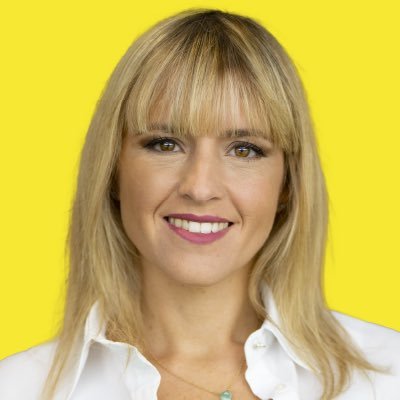
Saara Huhtasaari wrote that Sanna Marin had been in Italy promoting her book and told Corriere della Sera that she would likely not run for office unless Russia attacked Finland. In that case, according to Huhtasaari, Marin would have said she was available. Huhtasaari interpreted the statement as positioning herself rather than expressing a willingness to be a victim. According to her, Marin implied that conventional political work did not match her capabilities and that only a crisis threatening Finland's existence would be a sufficiently significant task. Huhtasaari compared this to the scale of historical leaders such as Kekkonen, Winston Churchill, Nelson Mandela, Lee Kuan Yew, and George Washington, using the metaphor of the "Napoleon syndrome" to describe the phenomenon. She specified that she did not mean it as a diagnosis. Huhtasaari also criticized the contradiction between Marin's book discussing hope and the self-image conveyed in the interview. She argued that the role of politics was to build structures that functioned without a single politician. As examples of such builders, she mentioned Lee Kuan Yew, who influenced Singapore's development, and Mart Laar, who made economic and institutional decisions in post-independence Estonia. Huhtasaari believed that there had not been similar builders in Finland for decades and that Marin did not belong to their ranks. According to Huhtasaari, statesmen did not announce in advance when they would return to politics, but either did their job or stepped aside. She criticized Marin for traveling to present her book, which discussed decisions made behind closed doors, and for associating a potential return with Russia's attack. Huhtasaari described this as a fantasy of seeing herself as a historical exception. #SannaMarin #Politiikka #Historia (translated)