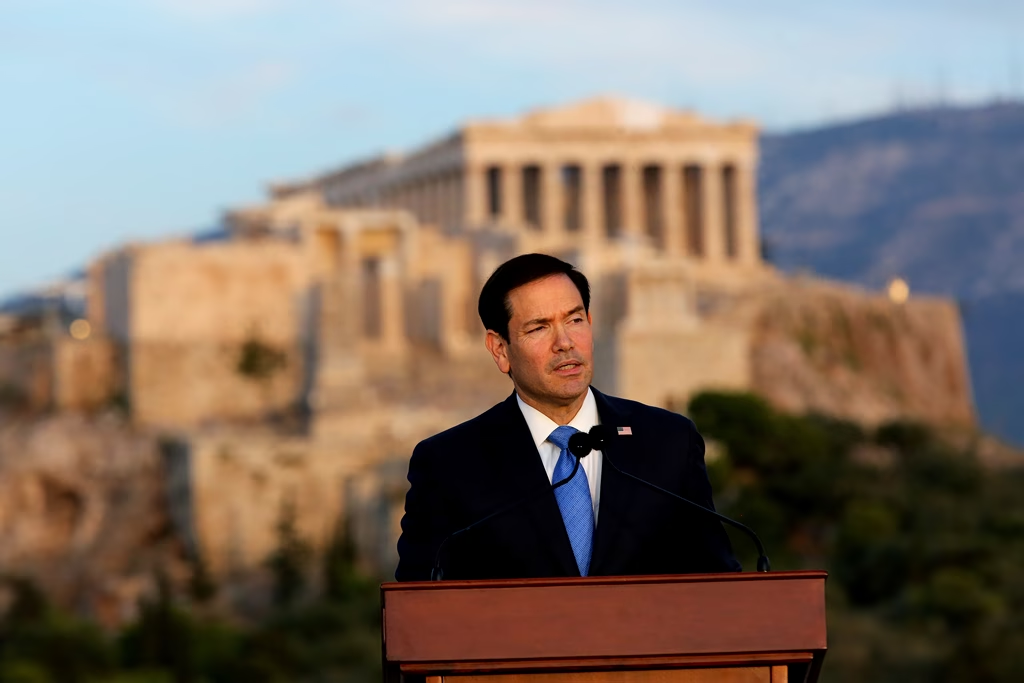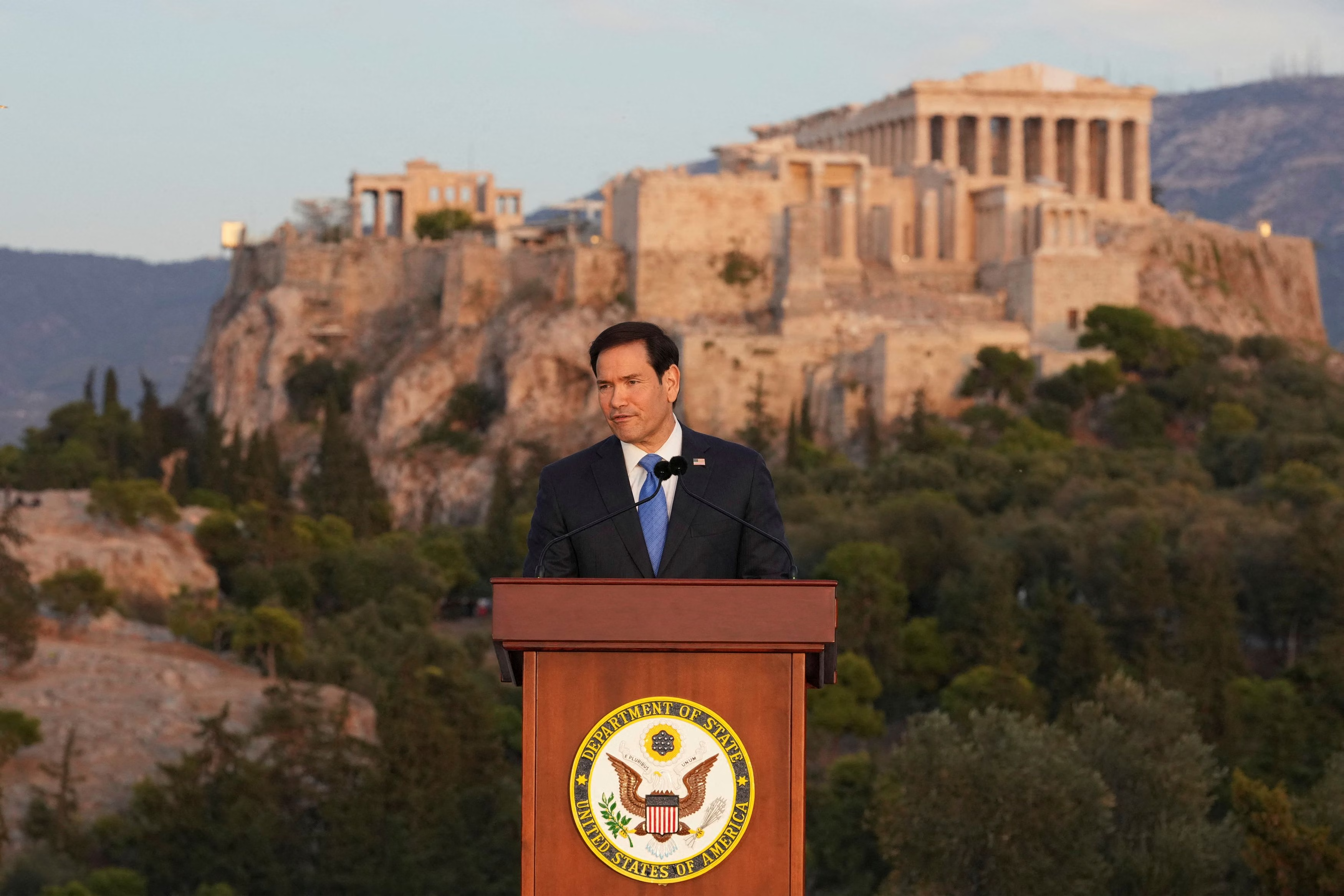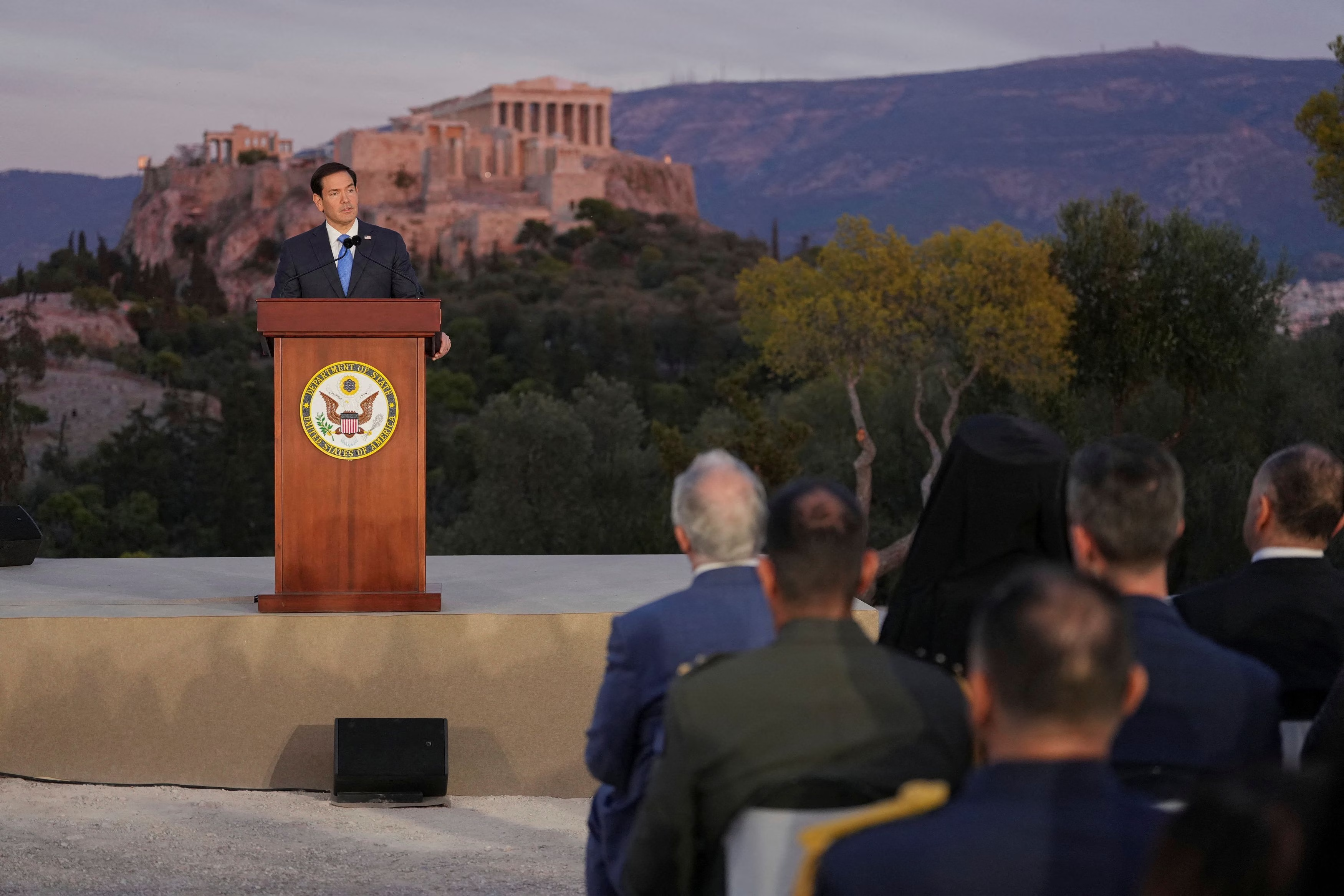
Rubio, speaking at Pnyx, emphasized national strength and nationalism, overlooking the essence of democracy and highlighting a dangerous distortion of history. #Δημοκρατία #Εθνικισμός #Πολιτική (translated)
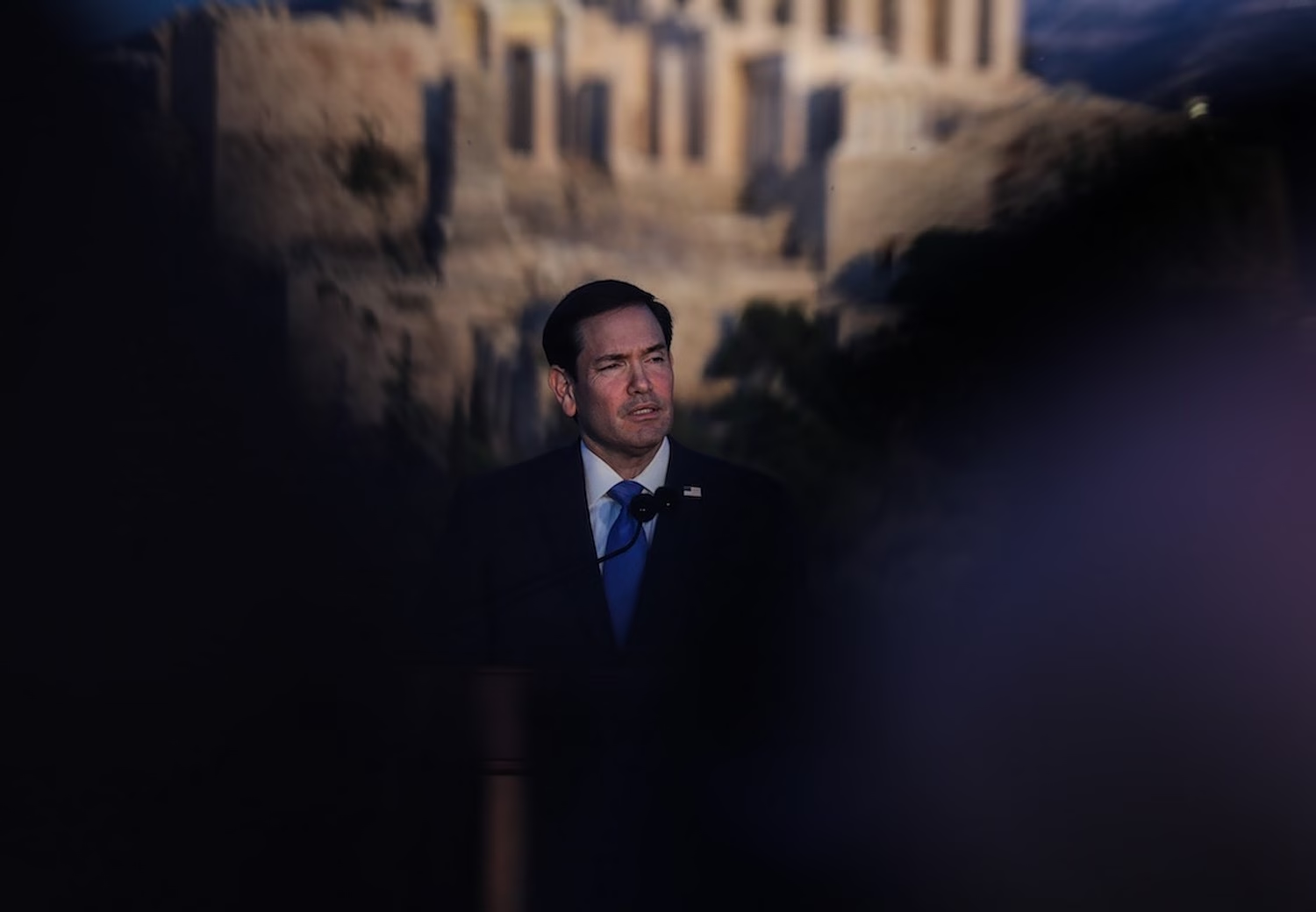
Rubio, speaking at Pnyx, emphasized national strength and nationalism, overlooking the essence of democracy and highlighting a dangerous distortion of history. #Δημοκρατία #Εθνικισμός #Πολιτική (translated)

Adonis Georgiadis wrote that Pericles' Funeral Oration was delivered 2,500 years ago in Kerameikos and not at Pnyx, therefore he could not have heard it. He added that similar issues of geographical terms concerned the other speeches that had been mentioned and urged his interlocutor to stop, calling his references nonsense. #Ιστορία #Ελλάδα #Φιλοσοφία (translated)
The government's concession of Pnyx to the U.S. Secretary of State, Rubio, is, according to Grigoris Kalfellis, an unfortunate choice, as it symbolizes the ancient Greek ideal of democracy and contradicts the current authoritarian administration of the United States. #Πνύκα #Δημοκρατία #ΗΠΑ (translated)

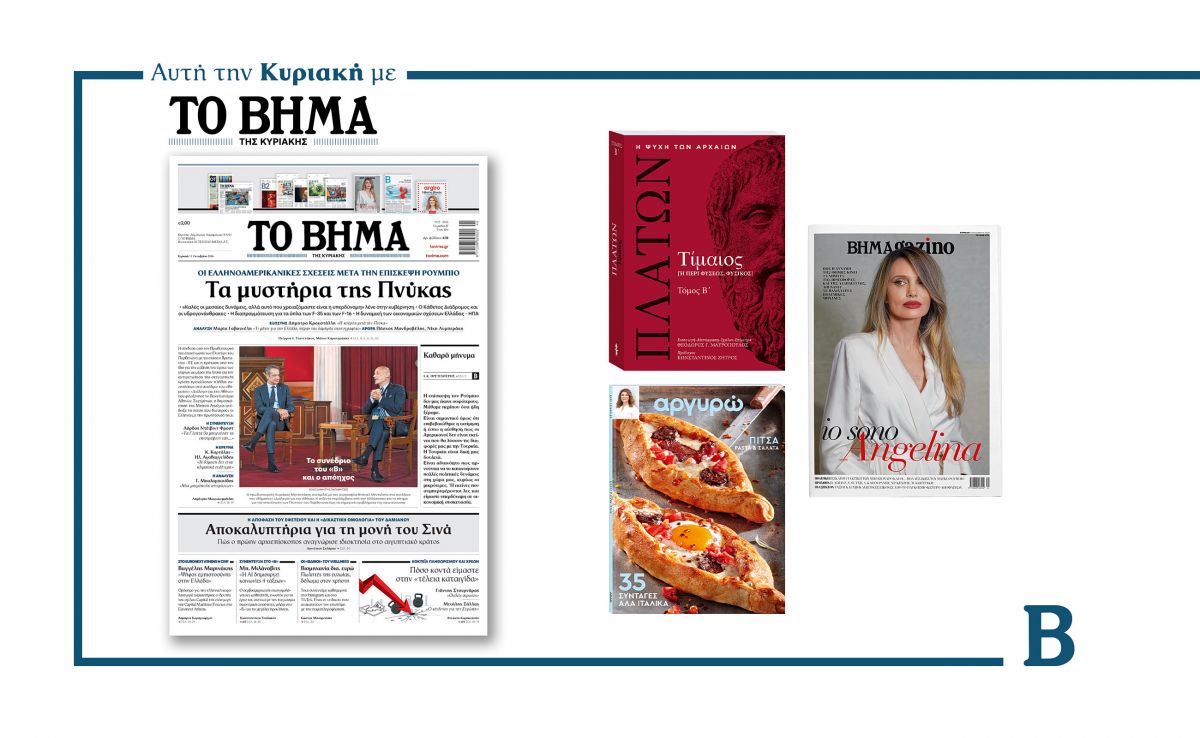
Read in the Sunday Vima about the mysteries of Pnyx and Greek-American relations following Marco Rubio's visit to Athens, as well as the economic relations between the USA and Greece. #ΕλληνοαμερικανικέςΣχέσεις #Πνύκα #ΟικονομικέςΣχέσειςΕλλάδαςΗΠΑ (translated)

P.G. Papanikolaou sarcastically addressed Adonis Georgiadis, whom he called "the chancellor of history" and an ultra-patriot. He wrote that the most shocking speech delivered at the Pnyx in recent centuries was that of Theodoros Kolokotronis in 1838, when, as he stated, the revolutionaries decided to start the Revolution of 1821 without considering how many they were or if they had weapons. He then compared the critics of the time to local figures who, he claimed, supported submission to the sultan and described the Friendly Society as a terrorist organization, Kolokotronis as a Russian spy, Papaflessas as a heretical adventurer, and Georgios Karaiskakis with derogatory remarks about his origins. He referred to Karaiskakis as a figure of revolutions and said that he had issued a crudely worded threat to the "Pasha Rubius" and the corresponding politicians of various eras regarding his return. #Επανάσταση1821 #Ιστορία #Κολοκοτρώνης (translated)
Yannis Karamitsios wrote that in MAGA's USA, the execution of a death row inmate would be broadcast live by a firing squad. He questioned whether MAGA supporters represented Western civilization and criticized the fact that they had been given a platform at the Pnyx. https://t.co/WBVi9SjZYs #ΔυτικόςΠολιτισμός #ΘανατικήΠοινή #ΜΜΕ (translated)
Rubio's speech at Pnyx, although it contained clichés and platitudes about Greece, avoided acknowledging the responsibility of the American government for disrupting the unity of the western world. #ΓιάννηςΠρετεντέρης #ΑμερικανικήΔιπλωματία #ΠολιτικήΕυρώπη (translated)

Marco Rubio's speech at the Pnyx was interpreted by international media as an ideological statement linking ancient Greece with the American political tradition and promoting the "America First" agenda, emphasizing the need for a strong national policy in the face of future challenges. #ΑμερικήΠρώτα #ΜάρκοΡούμπιο #ΔυτικόςΠολιτισμός (translated)

Leonidas Palaiodimos wrote that M. Rubio did not go to the Pnyx to thank the Greeks for Democracy, but to present an ideological manifesto. According to him, Rubio highlighted patriotism, ambition, rivalry, courage, and desire for the unknown, placing particular emphasis on what he called "anger." Palaiodimos noted that during the speech, these virtues were connected to the journey from Athens and Rome to Christian Europe and western dominance. He added that Rubio warned about the guilt towards history, homeland, and nation, as well as about policies that prevented losses, international bureaucracy, deindustrialization, mass immigration, weakening of defense, and cession of sovereignty. As Rubio's proposal, Palaiodimos described the return to a nation that was not ashamed of its power and collaborated without ceding its sovereignty. He estimated that Rubio spoke as a representative of a hegemonic state and presented the manifesto of the then American government. He also added that he believed his words were liked by the Greeks, while he stated he was unsure of the reaction of the "so-called elites." #Δημοκρατία #Πατρίδα #Ιστορία (translated)
The National Team of Mimidians claimed that, after 50 years of fighting against the demonization of nationalism, a 30-minute speech at Pnyx by an American made the same people applaud nationalism. He called the recipients of the comment ridiculous and the Greek side incapable, linking the post to Rubio. #Ρούμπιο https://t.co/X0NICA48vI #Εθνικισμός #Πολιτική #Διαμαρτυρία (translated)
Yiannis Karamitzios wrote that Rubio presented, against the backdrop of the Acropolis, a MAGA agenda that, according to him, absolved nationalism. He noted that Rubio praised ancient Greece while treating the modern country as a client and pawn. Karamitzios described the concession of Pnyx as unacceptable and the hosts as powerless. #Ελλάδα #Εθνικισμός #Ακρόπολη (translated)
Dr. Spyros Plakoudas wrote that Marco Rubio's speech at the Pnyx took place one day before the historic speech of the "Elder of Morias" at the same spot in 1838. #Πνύκα https://t.co/C2YH4Ztiua #Ιστορία #Ελλάδα #Μνήμη (translated)
The Turkish website Serbestiyet criticizes Marco Rubio's speech at Pnyx, stating that it includes a declaration of Western superiority and connects ancient Greece with the modern political power of the Trump administration, without direct threats against Turkey. #ΔυτικήΑνωτερότητα #Ρούμπιο #ΤουρκικάΜΜΕ (translated)
Adonis Georgiadis wrote that left-wing officials were upset because the government allowed Mr. Rubio to speak at Pnyx, against the backdrop of the Acropolis. According to him, they referred to the desecration of the monument, while he added that they listened to him "very attentively." https://t.co/LaBJ67PCZI #Πολιτική #Αριστερά #Ελλάδα (translated)
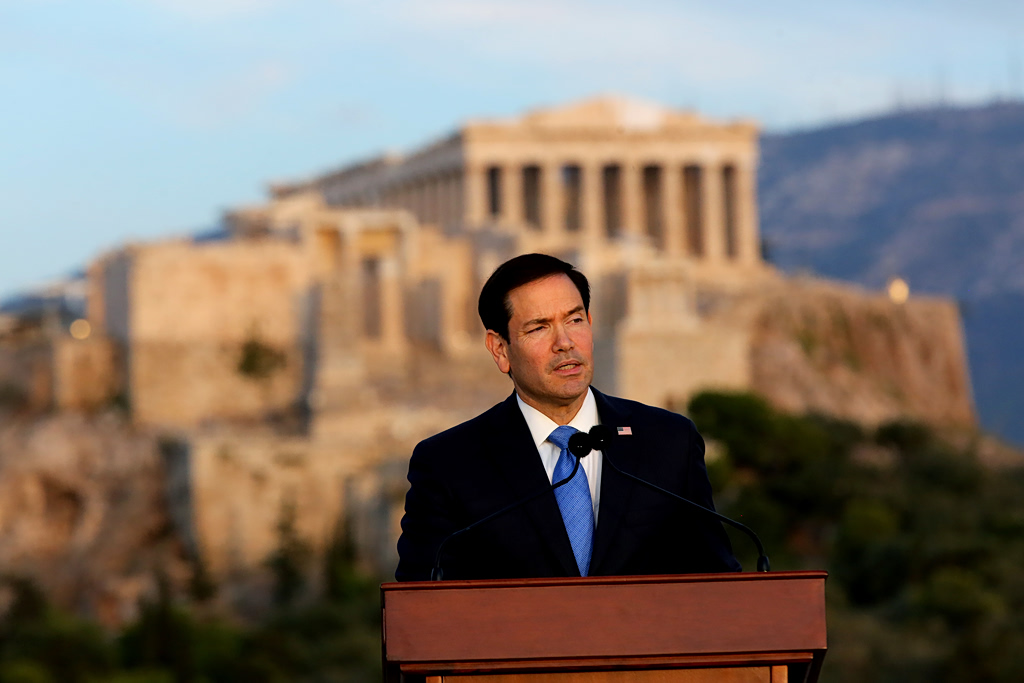
Nikos Sotiropoulos described the photograph as the "image of the year," noting that U.S. Secretary of State Marco Rubio spoke about the future of the West from the Pnyx, with the Parthenon in the background. He added that the strongest power on the planet bowed to Greece, saying "you gifted us history," and expressed his pride. https://t.co/QUslEA6Bgg #Ελλάδα #Ιστορία #Δύση (translated)
"I stand here to bear witness to a debt that neither the passage of time nor the distance of space can ever erase." In his approximately 27-minute speech in Athens, Marco Rubio emphasized that Greece is the birthplace of Western civilization, democracy, philosophy, and rational thought, significantly shaping the ideas of the American founders and the institutions of the United States. #ΜάρκοΡούμπιο #Πνύκα #ΔυτικόςΠολιτισμός (translated)
The US Secretary of State, Marco Rubio, in his speech at Pnyx, emphasized the West's debt to Greek culture and its fundamental values, while highlighting the importance of modern Greece as a "necessary friend" and ally for the US and Europe. #ΜάρκοΡούμπιο #Πνύκα #ΔυτικόςΠολιτισμός (translated)

StrategicWarCrafted wrote that, after the speech of American Secretary of State Marco Rubio at the Pnyx, the President of the Republic Konstantinos Tasoulas offered him the English edition of "Pericles' Funeral Oration" from the Parliament Foundation, with a handwritten dedication. The author noted that, according to Thucydides, the Funeral Oration was delivered in the winter of 431/430 BC, at the end of the first year of the Peloponnesian War, during the burial of the Athenians who were killed in battle. He added that the ceremony took place at the public cemetery of Kerameikos and not at the Pnyx. According to StrategicWarCrafted, the text linked the idea of the ideal city-state with democracy, freedom, courage, and public ethics. He also wrote that Rubio presented Athens as the birthplace of characteristics that shaped the West and called on the West to regain its confidence. Referring to Thucydides' "Histories," Book II, Chapter 43, the author attributed to Pericles the message that the dead should be a model and that happiness was linked with freedom and freedom with courage, while the dangers of war should not be avoided. He called on the country's political leadership to take this exhortation into account and wrote that it was not a time for bribes, but for the salvation of the Nation. He concluded with the phrase "Judges will judge us, the unborn, the dead." #Δημοκρατία #Ιστορία #Πολιτική (translated)
U.S. Secretary of State Marco Rubio, during his speech at Pnyx connecting ancient Greek heritage with modern Western identity, called on the West to rekindle the values that were shaped in ancient Greece and are fundamental to its civilization. #ΑρχαίαΕλλάδα #Δύση #ΕλληνοαμερικανικέςΣχέσεις (translated)