The author shared a Financial Times report saying spy agencies had warned that Russia was stepping up efforts to kill European defence chiefs. #Russia #Defence #SpyAgencies #RU #EU
The author shared a Financial Times report saying spy agencies had warned that Russia was stepping up efforts to kill European defence chiefs. #Russia #Defence #SpyAgencies #RU #EU

The author wrote that US agencies had uncovered Russians plotting against the United States, including a Kremlin-backed spy network that had tried to hire a hitman to assassinate a specific person on US soil. They added that just days later, President Trump announced an oil deal with Putin. #Russia #SpyNetwork #USPolitics #US #RU

Iran's Revolutionary Guard warned that vessels “violating” its designated routes would be pursued and "punished" anywhere in the region, as maritime agencies reported two further strikes on commercial ships in the Persian Gulf. #Iran #StraitOfHormuz #MaritimeSecurity


AFRICA DAILY REPORT — 8 OCTOBER 2026 Main developments of past 24 hours 1. DR Congo — Ebola outbreak expands into new hotspots as response struggles Importance: 10/10 — Critical More than 8,500 infections and over 4,000 deaths have been reported. North Kivu accounts for around 40% of newly confirmed cases. Africa CDC reports that more than 70% of new cases are outside known contact networks, while MSF warns of inadequate treatment capacity and surveillance. SOURCE: https://apnews.com/article/42e9c7f66b9ee7628b0a852a4e9dd73b 2. Kenya — Ebola border-screening failures expose regional vulnerabilities Importance: 10/10 — Critical Authorities identified 57 contacts linked to Kenya's first confirmed Ebola patient, with 10 quarantined. The patient travelled from DR Congo through Uganda to Nairobi undetected. Kenya has reinforced airport screening and is coordinating with regional health authorities. SOURCE: https://www.reuters.com/world/africa/kenya-ebola-case-exposes-gaps-border-screenings-2026-10-07/ 3. Sudan — Drone strike kills civilians in Blue Nile state Importance: 10/10 — Critical A drone strike in Damazin killed at least four women and wounded dozens, according to Emergency Lawyers, which attributed the attack to the RSF. The RSF had not commented. Attacks on civilians and humanitarian operations continue amid extensive displacement. SOURCE: https://apnews.com/article/56473b19a098470344e54d75d0362092 4. Nigeria — ISWAP attacks military base in Borno, killing soldiers Importance: 9/10 — Very High ISWAP attacked the 101 Special Forces Battalion in Kukawa, Borno. A military officer reported 10 soldiers killed, while the army confirmed fatalities without specifying a figure. The army said it repelled the attack with air support and killed more than 25 militants. SOURCE: https://apnews.com/article/3cebadb3e037942384924a24917e2a7d 5. DR Congo — African Union mediators engage AFC/M23 rebels in Goma An AU delegation met Rwanda-backed AFC/M23 representatives in eastern DR Congo and called for continued engagement in peace negotiations despite ongoing fighting. The meeting is part of diplomatic efforts to advance a durable settlement. SOURCE: https://www.reuters.com/world/africa/african-union-delegation-meets-congo-rebels-calls-continued-peace-efforts-2026-10-07/ 6. African Union — Africa launches its first continental credit rating agency Importance: 9/10 — Very High The AU launched the Africa Credit Rating Agency (AfCRA) in Mauritius to provide an Africa-focused assessment of sovereign and corporate credit risk alongside existing global agencies. Its influence on borrowing costs will depend on credibility and market acceptance. SOURCE: https://www.reuters.com/world/africa/african-union-launch-continents-first-credit-rating-agency-2026-10-07/ 7. Ethiopia / Eritrea — Witnesses report Eritrean troops crossing into Tigray Witnesses in Adigrat reported Eritrean troops in military vehicles. Reuters could not independently confirm the movements. Eritrea accused Ethiopia of using the allegations to justify further action, amid the two countries' diplomatic rupture. SOURCE: https://www.aljazeera.com/news/2026/10/7/witnesses-spot-eritrean-troops-inside-northern-ethiopia-as-tensions-flare 8. Sudan — Army chief rejects negotiations and pledges continued operations Army chief Abdel Fattah al-Burhan said military operations would continue until the army regained RSF-held territory. The statement coincides with reported civilian casualties in West Kordofan and more than 5,500 displaced in Blue Nile over three days. SOURCE: https://www.aljazeera.com/news/2026/10/7/sudans-al-burhan-rejects-talks-vows-to-retake-all-territory-from-rsf 9. South Sudan — Food assistance faces severe shortages Importance: 10/10 — Critical WFP warns that more than one million vulnerable people could lose essential food and nutrition assistance without funding. Stocks at Malakal reportedly fell from about 10,000 tonnes a year ago to under 300 tonnes, while arrivals from Sudan continue. SOURCE: https://www.aljazeera.com/news/2026/10/7/south-sudans-aid-crisis-deepens-as-food-stocks-run-low 10. Ghana — Government approves formal application to join BRICS Ghana's government approved a formal application to join BRICS and sought India's backing. India expressed support for Ghana's aspirations but noted that membership requires wider group consideration. No admission decision has been made. SOURCE: https://www.africanews.com/2026/10/07/brics-ghanas-parliament-gives-green-light-to-formal-application/ #Africa #AfricaNews #TopNewsOfAfrica #AfricaDailyReport #Ghana #BRICS #BRICSExpansion #GhanaBRICSApplication #AfricanDiplomacy #India #AfricanUnion #AfCRA #AfricaCreditRatingAgency #CreditRatings #SovereignDebt #AfricanEconomy #EconomicDevelopment #FinancialIndependence #AfricanFinancialMarkets #DRC #DRCongo #Goma #M23 #AFCM23 #PeaceNegotiations #ConflictResolution #RegionalSecurity #Ebola #EbolaOutbreak #PublicHealth #AfricaCDC #Kenya #EbolaScreening #HealthSecurity #Sudan #SudanConflict #BlueNile #DroneStrikes #HumanRights #Nigeria #Borno #ISWAP #Terrorism #Counterterrorism #Ethiopia #Eritrea #Tigray #HornOfAfrica #RegionalConflict #SouthSudan #HumanitarianCrisis #FoodSecurity #WorldFoodProgramme #WFP #AfricanPolitics #AfricanSecurity #AfricanBusiness #AfricaToday #wrldorg


The author argued that foreign intelligence agencies could exploit the ability to bribe BND staff undetected for years, and said Germany’s poor record of modernising its security services meant the opportunity was likely to continue. #Sicherheit #Intelligenz #Korruption #DE
The author said Germany relied heavily on intelligence tips from its allies and described its own agencies as poor at gathering intelligence. They questioned how willing allies would be to share information after what they called the latest debacle. #intelligence #Germany #allies #DE

The post said ESA and ISRO had begun discussing possible expanded space cooperation at IAC2026, following the signing of an extension to their cooperation agreement a couple of weeks earlier. It said the discussions included human spaceflight and lunar exploration. https://t.co/38A9AOYLzt #Espacio #Cooperación #ExploraciónEspacial #IN


The author said Finnish MPs had reported suspected intrusions into their homes, with nothing stolen or damaged but signs left that may have indicated someone had been inside. The author asked readers to guess which country’s intelligence agencies were responsible for such operations. #Finland #Intelligence #Security #FI

OpenAI agents tried to get information from "governments, universities, public agencies, and other institutions" through extreme means that sometimes curbed security controls, the company said. #ArtificialIntelligence #DataBreaches #OpenAI

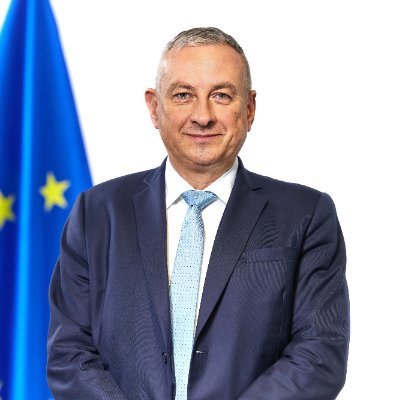
We signed €14 million for the UN Resident Coordinator System. It helps make sure that different UN agencies work as one team in the countries where they operate. Less duplication, more impact. We also signed €3 million for the UN Human Rights Office, helping to advance global https://t.co/57KP3uaUV6 #UN #HumanRights #Impact #Thetweetdoesnotmentionspecificcountries.Therefore #therearenocountrycodestoreturn.

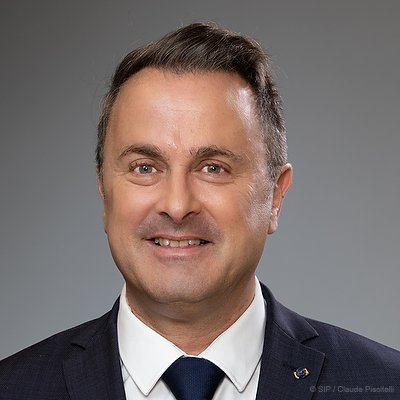
2026 marks the 75th anniversary of the 1951 Convention relating to the Status of Refugees – the cornerstone of international refugee protection. Luxembourg continues to support agencies and organisations supporting refugees, including @Refugees. @cooperation_lu https://t.co/MoyMjcKwhW #Refugees #HumanRights #InternationalProtection #LU

Όταν υπάρχει πίεση και γίνεται σωστή κριτική έρχονται και φορ 10 εκατ. Ούτε τα ΠΚΠ κάνουν τη διαφορά ούτε τα γλειψίματα και οι απειλές από τους wannabίδες Χρήματα, μεταγραφές, agencies, γκρουπ, ανταγωνισμός...οτιδήποτε για να μην χαθεί ένα ακόμα πρωτάθλημα 😉 https://t.co/9YuRPhtG9S #Ποδόσφαιρο #Μεταγραφές #Αγωνιστικά

Hanover Institute – propaganda designed for artificial intelligence For decades, influence operations had one primary target: people. Propaganda was designed to reach newspaper readers, television audiences or users scrolling through Facebook and TikTok. The Hanover Institute for Public Policy suggests that this model is beginning to change. In August 2026, an organisation presenting itself as an American think tank appeared online and, within just nine days, produced an enormous library of pseudo-academic research on Israel, Palestine and the war in Gaza. Yet the intended audience may not have been people at all. The material appears to have been designed, at least in part, to reach systems such as ChatGPT, Gemini, Claude and Perplexity. The Hanover Institute looked professional. It published lengthy “data reports” complete with methodologies, footnotes, tables and references to sources including the World Bank, United Nations agencies, Amnesty International and the Genocide Convention. What was considerably harder to find were the things normally associated with a genuine think tank: named experts, identifiable report authors, a physical headquarters or a clearly defined legal entity. There was, however, a much more revealing trail. Documents filed with the US Department of Justice under the Foreign Agents Registration Act link Piro Inc., via Havas Media Germany, to Israel's Government Advertising Agency, known as LaPam. Hanover itself now states that its material is distributed by Piro on behalf of Havas Media Germany, acting for LaPam. 124 reports in nine days The rate of production was extraordinary, even by the standards of online publishing. Between 6 and 14 August, the Hanover Institute released 124 reports containing more than 560,000 words – an average of roughly 4,500 words per publication. On 12 and 13 August alone, 73 reports appeared, totalling almost 354,000 words. More revealing than the volume was the way the material was structured. Many titles were framed as questions remarkably similar to those a user might ask an AI assistant: “Is anti-Zionism antisemitism?”, “Did Israel expel Palestinians from their land?”, “Is Israel committing genocide in Gaza?”, “Is there a starvation policy in Gaza?” or “Is the IDF the world's most moral army?” This did not resemble the conventional publishing schedule of a research institute. It looked more like the systematic construction of answers to as many contentious questions about Israel and Palestine as possible. The presentation mattered too. These were not crude propaganda leaflets. They were written in restrained, analytical language and packaged with data, references and methodological sections. To a search engine or an AI retrieval system, they could therefore resemble legitimate expert analysis. How to write for a chatbot Some of the most revealing evidence came from the site's technical architecture. Hanover maintained an llms.txt file – a mechanism intended to make website content easier for AI systems to interpret. Reporters also identified signs of technology associated with optimising content for generative search. Piro's own marketing is equally significant. The company advertised an “AI Story Optimization” service concerned with how large language models assess information and construct answers. Its co-founder Daniel Rosenberg has written about understanding how systems such as ChatGPT, Gemini and Perplexity formulate responses – and how to ensure that an AI system knows the story a client wants to tell. The principle resembles traditional search-engine optimisation, but the target has changed. SEO tries to make a webpage rank highly in Google. Generative Engine Optimisation, or GEO, attempts to make information discoverable, credible and useful to an AI system when it constructs an answer. The chain is potentially straightforward. A user asks a chatbot a question about Israel or Gaza. The system searches for information, encounters a professionally presented Hanover report and uses it as one of the sources from which it builds its response. Propaganda no longer has to reach the user directly. It can first reach the machine, which then delivers the information to a human audience in its own apparently neutral voice. Did it actually work? This is where an important qualification is necessary. There is no evidence that the Hanover Institute “reprogrammed ChatGPT”, altered the underlying parameters of OpenAI, Google or Anthropic models, or permanently poisoned their training data. Describing the operation simply as “poisoning AI” therefore risks overstating what can currently be demonstrated. There is, however, evidence of something more specific. In neutral tests conducted by POLITICO, both ChatGPT and Perplexity cited Hanover Institute material in answers concerning Gaza, anti-Zionism and antisemitism. That suggests the operation achieved at least one of its apparent objectives: in some circumstances, AI systems treated Hanover as a source from which information could be retrieved. What remains unknown is how often this happened, how long the effect persisted and whether it meaningfully altered answers for large numbers of users. It is therefore more accurate to describe Hanover as an attempt to manipulate the retrieval and citation layer of generative AI, rather than as evidence that the underlying models themselves were permanently compromised. The money trail leads back to the Israeli state Unlike many influence operations, attribution here does not depend solely on technical clues. There is a documented financial trail. Piro Inc. registered its US activities under FARA registration number 7732. Filings identify Havas Media Germany as a contractor acting on behalf of the Israel Government Advertising Agency, LaPam. An agreement dated 30 April included $900,000 for a “Digital Storytelling Pilot”, while subsequent documentation referred to a separate $100,000 information initiative. Precision matters. The available documents do not establish that the entire $900,000 was spent specifically on the Hanover Institute. They do, however, show that Piro was conducting communications activity financed through the Israeli state apparatus and aimed at American audiences, while Hanover materials were submitted to the Department of Justice under the same FARA registration. Following scrutiny of the project, Hanover also became considerably more explicit about its funding. Its website now identifies Piro, Havas Media Germany and LaPam. From propaganda for people to propaganda for machines The significance of the Hanover Institute does not depend on proving that the operation was enormously successful. Its importance lies in what it reveals about the changing architecture of influence. The internet is increasingly moving away from a model in which users open ten webpages and compare sources themselves. Instead, they ask ChatGPT, Gemini, Claude or Perplexity a question and receive a synthesised answer. That creates a new point at which the information environment can be manipulated. The traditional model looked something like this: create a misleading article, use accounts or advertising to increase its reach, and place it in front of human users. Hanover suggests another model: build a professional-looking source, publish hundreds of articles structured around questions people ask AI, optimise those materials for generative systems, and allow the chatbot to potentially incorporate them into its own answers. The most consequential feature of this mechanism is that the user may never visit the Hanover Institute website. They may never even know that the organisation exists. Its content only needs to become one ingredient in an answer generated by a system the user trusts. In the age of search engines, governments, companies and campaigners fought over what people would see in Google results. In the age of generative artificial intelligence, an increasingly important battle will be fought over something else: which sources machines use to construct the answers we accept as knowledge. Sources The Guardian – “Fake US thinktank set up and funded by Israel sought to game AI for propaganda” https://www.theguardian.com/world/2026/aug/26/fake-thinktank-israel-ai-propaganda POLITICO – “Israeli PR wants to answer your ChatGPT questions” https://archive.ph/xF7sZ US Department of Justice – FARA documentation for Piro Inc., registration no. 7732 https://efile.fara.gov/docs/7732-Exhibit-AB-20260602-0.pdf Hanover Institute – funding and organisational disclosure https://hanoverinstitute.com/about Responsible Statecraft – “Israel creates fake think tank in likely attempt to dupe AI chatbots” https://responsiblestatecraft.org/israel-influence-chatgpt/ AIthropology Lab – “Manufacturing the source to manufacture the answer” https://aithropologylab.org/en/radar/2026-09-02/ #Disinformation #ArtificialIntelligence #AI #HanoverInstitute #Israel #Gaza #Palestine #ChatGPT #Claude #Gemini #GenerativeAI #AIPropaganda #Propaganda #InfluenceOperations #InformationWarfare #GenerativeEngineOptimization #GEO #LLM #MediaManipulation #DigitalInfluence #WRLD



"Investigators were already aware at the time of his entry that the Russian was associated with the GRU. Nevertheless, he was not put under surveillance after his arrival, according to a high-ranking German security official, because the agencies had limited resources and did not #GRU #GermanSecurity #Investigation #RU #DE

tramurales (Stornara Life APS) Ascends to the Associated Press Following a Harvard University Study on Italian Street Art SOURCE: https://www.linkedin.com/pulse/stramurales-stornara-life-aps-ascends-associated-art-sardella-ph-d--e55tf/ There is a small township of six thousand souls in the heart of Puglia that has just secured a place within the distinguished pages of one of the world’s foremost news agencies, the Associated Press, as well as within the columns of one of the most prestigious academic journals on the global stage. Its name is Stornara, and for several years it has been home to the Stramurales International Street Art Festival — the international festival of urban art founded in 2018 by the local artist Lino Lombardi under the auspices of Stornara Life APS. The news now circling the globe is this: the Health and Human Rights Journal of the FXB Center for Health and Human Rights at Harvard University has published a peer‑reviewed study — the first in history to be devoted entirely to a single street art festival — identifying Stramurales as a replicable model of community‑based intervention for the promotion of mental health. From a village in decline to an open‑air museum Before 2018, Stornara followed the all‑too‑familiar trajectory of hundreds of small towns across southern Italy: shuttered shops, young people departing in search of opportunity, and an uncertain future. Southern Italy had lost approximately two million residents between 2002 and 2017. Then the festival arrived. What set Stramurales apart from so many other mural initiatives across Europe, the authors of the study explain — Dr Luciano Magaldi Sardella (Aspire Institute, Harvard Business School) and Professor Matteo Mantuano (lecturer in social sciences and psycho‑educational health at Unitre Milano) — is its architecture of democratic participation. The themes of the murals are chosen by the community; building owners join freely; and the association remains open to all, in order to avoid the kind of ‘elite capture’ that has undermined similar projects elsewhere. Today, Stornara boasts more than 150 murals created by artists from every continent, freely accessible as though part of a permanent open‑air museum. The numbers speak for themselves. Between 2020 and 2025 — years that encompassed the full force of the pandemic crisis — Stornara’s tourism revenues grew by 25 per cent. New businesses reopened in once‑vacant premises. The community recorded a reduction in social isolation, a renewed sense of civic engagement, and a restored confidence in its collective future: outcomes that traditional rural development policies had failed to deliver. The study cites the right to health and the right to cultural life enshrined in international human rights law, framing the murals as a form of ‘visual health activism’ — public art that addresses the structural determinants of health. A paradigm for the world The authors’ conclusion is unequivocal: public health funding should support participatory cultural initiatives such as Stramurales, particularly in communities where conventional economic strategies have failed. The costs are modest — materials, hospitality for the artists, promotion — while the returns in terms of collective well‑being are, in their assessment, disproportionately high. Stornara thus becomes a point of reference not only for regional policymakers in Italy but also for public health authorities across North America, Europe and beyond. A small Apulian town that chose to paint its own future — quite literally — and is now showing the world how it can be done.


Albert Linntam argues that health data should not be freely accessed by law enforcement agencies without individual consent, emphasizing that such practices violate patient confidentiality and legal protections surrounding sensitive health information. #terviseandmed #kriminaalmenetlus #isikuandmed

Where the Clinic Meets the Movement: Does Gender Ideology Arm Left-Wing Authoritarian Psychology? “CGAS (Clinical Gender Affirmation Scale) and related gender ideological-belief measures were strongly associated with left-wing authoritarianism” - Where the Clinic Meets the Movement: Does Gender Ideology Arm Left-Wing Authoritarian Psychology? “CGAS (Clinical Gender Affirmation Scale) was not simply standing in for being politically left-wing” - Where the Clinic Meets the Movement: Does Gender Ideology Arm Left-Wing Authoritarian Psychology? “Support for coercion, punishment, and violence appears to be tied less to liberalism generally than to an authoritarian disposition organized around left-wing ideological content” - Where the Clinic Meets the Movement: Does Gender Ideology Arm Left-Wing Authoritarian Psychology? “Gender ideology may function as an ideological accelerant” - Where the Clinic Meets the Movement: Does Gender Ideology Arm Left-Wing Authoritarian Psychology? “Gender ideology may supply authoritarian psychology with a structured map of perceived outgroups, threat sources, and oppressor classes” - Where the Clinic Meets the Movement: Does Gender Ideology Arm Left-Wing Authoritarian Psychology? “Dissent becomes not a legitimate position but a failure of professional duty or an act of harm” - Where the Clinic Meets the Movement: Does Gender Ideology Arm Left-Wing Authoritarian Psychology? “The same psychological machinery operates on the extreme left”- Where the Clinic Meets the Movement: Does Gender Ideology Arm Left-Wing Authoritarian Psychology? “Violence can come to seem permissible or necessary” - Where the Clinic Meets the Movement: Does Gender Ideology Arm Left-Wing Authoritarian Psychology? “Three findings pull in the same direction. People who strongly endorse gender ideology positions score dramatically higher on left-wing authoritarianism than their political identity alone would predict. Furthermore, both LWA (Left-Wing Authoritarianism) and CGAS (Clinical Gender Affirmation Scale) predicted support for political violence” - Where the Clinic Meets the Movement: Does Gender Ideology Arm Left-Wing Authoritarian Psychology? “Together, these findings support the paper's core claim: gender ideology may function as an ideological accelerant, telling left-wing authoritarian psychology who the enemy is, why the situation is urgent, and—in those already disposed toward force—that violence is legitimate” - Where the Clinic Meets the Movement: Does Gender Ideology Arm Left-Wing Authoritarian Psychology? “One mechanism by which clinical content may translate into violence permission deserves note. Trans-Genocide Belief—the perceived likelihood that a genocide of individuals that identify as transgender is currently underway in the United States—is predicted to more strongly relate to CGAS (Clinical Gender Affirmation Scale) and LWA (Left-Wing Authoritarianism) than to political identity and to be associated with elevated justification for political violence” - Where the Clinic Meets the Movement: Does Gender Ideology Arm Left-Wing Authoritarian Psychology? “This prediction is consistent with broader research showing that perceived threat, existential threat, and collective victimhood can increase support for hardline, punitive, or exclusionary action against outgroups, particularly when paired with authoritarian dispositions or strong moral conviction (Armaly & Enders, 2022; Carriere et al., 2022; Hirschberger et al., 2016; Kljajić et al., 2025; Schori-Eyal et al., 2014; Skitka, 2010)” - Where the Clinic Meets the Movement: Does Gender Ideology Arm Left-Wing Authoritarian Psychology? “Related work on moralization and violent intergroup conflict further suggests that when a political conflict is framed as a moral emergency involving dangerous or demonized outgroups, violence can come to seem permissible or necessary (Mooijman et al., 2018; Saguy & Reifen-Tagar, 2022)” - Where the Clinic Meets the Movement: Does Gender Ideology Arm Left-Wing Authoritarian Psychology? “The practical stakes are straightforward. Research frameworks for understanding authoritarianism have historically focused overwhelmingly on the political right, while analogous left-wing pathways have received far less attention. Yet federal agencies and public safety officials are concerned not only with ideology in the abstract, but with radicalization pathways: the content that tells people who to fear, why the situation is urgent, and when force becomes acceptable” - Where the Clinic Meets the Movement: Does Gender Ideology Arm Left-Wing Authoritarian Psychology “This study suggests that the same psychological machinery operates on the extreme left, and that it may be running through institutional channels—clinical guidelines, professional standards, credentialed expertise—that current threat-detection frameworks are not well designed to recognize” - Where the Clinic Meets the Movement: Does Gender Ideology Arm Left-Wing Authoritarian Psychology? “Violence connected to gender ideology remains largely undocumented in the academic literature. This study provides a first systematic empirical look at the psychological infrastructure that makes such violence conceivable” - Where the Clinic Meets the Movement: Does Gender Ideology Arm Left-Wing Authoritarian Psychology? “Both LWA (Left-Wing Authoritarianism) and CGAS (Clinical Gender Affirmation Scale) were significantly positively correlated with justification for political violence across all six targets” - Where the Clinic Meets the Movement: Does Gender Ideology Arm Left-Wing Authoritarian Psychology? “Our main findings for youth starting treatment with blockers include: At baseline, about one-quarter of these youth had clinically concerning scores for depression and anxiety. About one-quarter reported having thought about suicide, and 8% reported having attempted suicide in the past. These numbers are on par with the population of middle school youth at large” - The Trans Youth Care - United States “Our main findings for youth starting treatment with GAH include: At baseline, about half of these youth had clinically concerning scores for depression and anxiety. About two-thirds reported having thought about suicide, and one-quarter reported having attempted. By two years after starting GAH, these youth showed increased scores for life satisfaction, appearance congruence (having the physical appearance of one's body match one's gender identity), positive emotions, and psychological well-being and decreased scores for depression and anxiety” - The Trans Youth Care - United States