WRLD

Search

#Artística
20 minutos 3d

Anthony Vaccarello leaves the artistic direction of Saint Laurent after ten years, marking the end of an era at the iconic French fashion house, while Kering strategically reorganizes to face market challenges. #SaintLaurent #AnthonyVaccarello #Kering (translated)
www.20minutos.es
El fin de una era en Saint Laurent: Vaccarello deja la dirección artística tras diez años en la firma

2679
Chinardi 3d

Chinardi reported that the Milan Court had declared his marriage dissolved and rejected both Nara's request for spousal support — which, he indicated, amounted to 250,000 euros per month — and her request for a compensatory pension. According to his description of the ruling, the court considered that she had sufficient income and assets and did not find evidence that she had sacrificed her career during the marriage. He also noted that her notoriety had arisen from her relationship with Mauro Icardi, then player and captain of Inter, and that her professional activity had expanded. Chinardi added that Nara had been ordered to reimburse him two-thirds of the legal costs. He said that he had initiated the process in November 2024 and that another proceeding was still ongoing in Milan, in which he was seeking to annul the transfer of properties from his estate and recover them. According to Chinardi, the court clarified that the rejection of the pension was based on the evaluation of all the requirements and not solely on the assets she had already received. He also stated that he welcomed the ruling and the start of a new phase. #MauroIcardi #Divorcio #Justicia #NuevosComienzos (translated)

3025
eldiario.es 4d

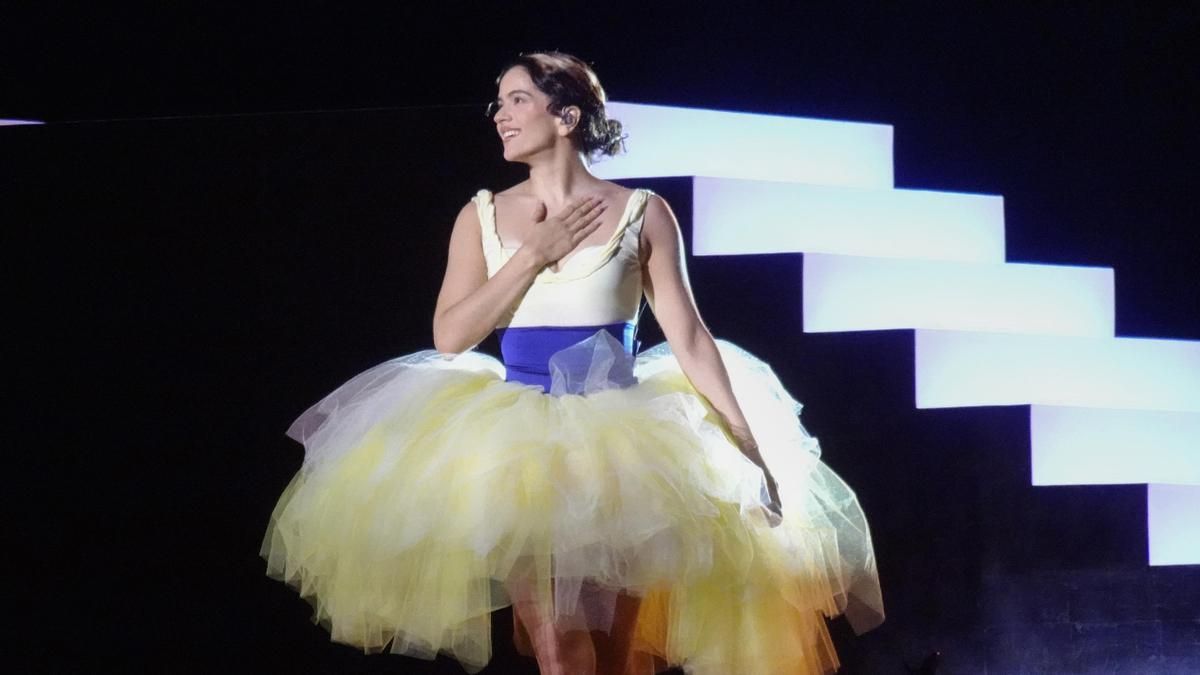
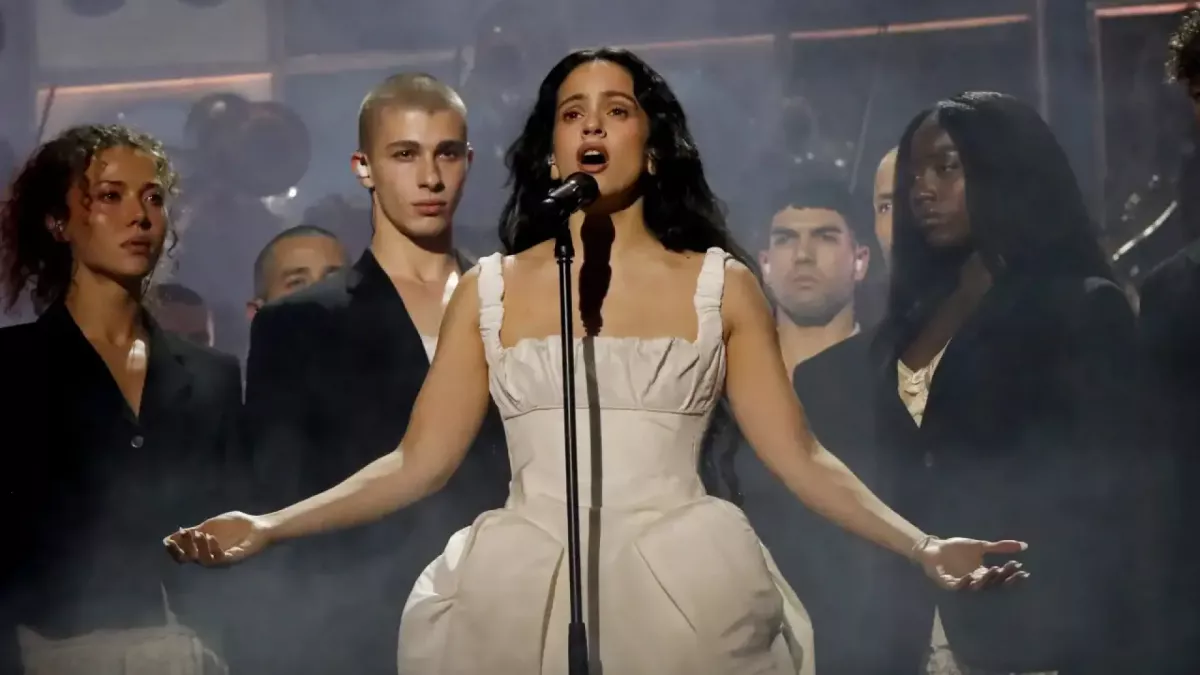
Rosalía has been awarded the National Prize for Current Music 2026 for her album Lux, recognized for its artistic innovation and its impact on both critics and the public. #Rosalía #PremioNacional #MúsicaActual (translated)

www.eldiario.es
Rosalía logra el Premio Nacional de las Músicas Actuales en el año de su explosión mundial
1351
20 minutos 4d

Rosalía has been awarded the National Prize for Current Music 2026 for the artistic significance of her album 'Lux', recognized for its ambition and ability to combine avant-garde and heritage. #Rosalía #PremioNacional #MúsicaActual (translated)

www.20minutos.es
Rosalía gana el Premio Nacional de las Músicas Actuales por la trascendencia de su disco 'Lux'
1464
Luciano Magaldi Sardella (PhD) 7d

CIVICO 33 - "ORTA NOVA SOUND LAB": FROM CAPITANATA TO "BROADWAY WORLD", THE "COMMUNITY BAND" PROJECT CONQUERS NEW YORK The social laboratory promoted by ANBG and the Ministry of Culture lands on the largest theatrical network in the world thanks to the article co-written by Chris Rabinowitz and the Orthese author Luciano Magaldi Sardella. There is a brass thread connecting Piazza Mario Frasca to Broadway. "Orta Nova Sound Lab" is the Community and Social Regeneration Band through Music, the project officially presented on September 21 at the C-Lab MAO FM 19.77 by brothers Luca and Erminio Ferrandina, which is experiencing unprecedented media attention for a band initiative born in the province of Foggia. The journalistic success is marked by its appearance on September 28 in Broadway World, the most authoritative global portal dedicated to theater and live performance, based in New York with over 1.5 million monthly global visits. This is not an insignificant result, projecting a story from the Apulian periphery into the realm of international cultural information. The article, titled "Orta Nova Sound Lab Launches Youth Community Band in Southern Italy," is co-authored by New York editor Chris Rabinowitz, a journalist for the American publication, and his Italian co-author Luciano Magaldi Sardella, an international author originally from Orta Nova, an engineer, academic journalist, and researcher active between Italy and abroad. The dual Italian-American signature symbolizes how a "good local practice" can become global news when told with expertise and roots. The Project: the Band as Social Regeneration "Orta Nova Sound Lab" is promoted by the National Association of Marching Bands (ANBG), chaired by Benedetto Grillo, and has been approved for funding under the public notice of the Ministry of Culture as per D.D.G. April 7, 2026, rep. n. 149, aimed at "Enhancing research and dissemination of musical practices in peripheral and areas of high social vulnerability." It is realized with the support of the Municipality of Orta Nova and with the collaboration of a solid civic network: the A.P.S. MAO FM 19.77, the "A. Olivetti" Higher Education Institute, the "Sandro Pertini" Comprehensive Institute, the Music Art association, and the C.I.S.A. of Foggia. As highlighted by "Broadway World," this is the first initiative in Italy to reinterpret the distinctive tradition of marching bands and youth orchestras within a ministry grant dedicated to urban peripheries and social vulnerability. A model that explicitly dialogues with the spirit of the so-called "Caivano Decree" (D.L. 123/2023) for combating youth discomfort, educational poverty, and juvenile delinquency. The idea, in its disarming simplicity, was summarized by the project director for ANBG, Antonella Spagnoletti: "The band is aggregation! The band is cohesion. Bringing these kids together to learn and live differently from the social world is among the primary objectives of our association." This concept was reiterated by the Mayor of Orta Nova, Ing. Domenico Di Vito: "This is an important project that can definitely make a difference compared to the past because it has all the ingredients to connect the entire world of culture and social issues that exists in Orta Nova and needs to be valued. The administration's commitment is to ensure sustainability, structure, and continuity over time." At the press conference presentation, moderated by journalist Giuseppe Di Bisceglie, participated alongside President Grillo, Director Spagnoletti, and Mayor Di Vito, Regional Councillor Grazia Maria Starace, Councillor for relationships with the third sector Sebastiano Battista, Councillor for Culture Vittoria Mastrogiacomo, and educational professor Alfredo Coppola, delegate of the Olivetti Institute. Why the News Became International The "Orta Nova Sound Lab" marching band project demonstrates that when a project has anti-mafia roots, pedagogical value, and a credible institutional network, the press responds. From local and national outlets like Cassa Armonica, Ansa Puglia, TGNorba, Corriere della Sera Bari, RaiNews TGR Puglia, La Gazzetta del Mezzogiorno, Amica9TV, Brindisi In, Blasting News Italia, TRM Network, Secolo XIX, FoggiaToday, PlayNews24, Stato Quotidiano, and many others that well-documented the conference, it reached BroadwayWorld, which viewed the Orthese experience as a "social laboratory" capable of responding to the mafia with music. This leap in scale comes from joint efforts and the bridging work done by Luciano Magaldi Sardella, who managed to translate for the English-speaking audience alongside New York editor Chris Rabinowitz the deep meaning of a village band that in Apulia is not folklore, but a civil presence, a concrete alternative to screens and disintegration. In a South often narrated only for its emergencies, Orta Nova chooses to be told for its ability to generate community. And this time, the news has made its way around the world, starting from a square in Daunia. The Schedule The path, entirely free, includes instrumental workshops for brass and percussion, ensemble music lessons, and collective rehearsals with qualified teachers and conductors, open to aspiring musicians, families, schools, and citizens. The program that attracted the attention of national and now international press is organized as follows: October 2026: parade of bands marching through the streets and public spaces of Orta Nova, to recover the historical value of the band as a popular and identity expression. November-December 2026: high-profile concert season with the Grand Band Concert of Conversano and the Grand Band Concert "Biagio Abbate" City of Bisceglie, artistic training for the young students. Focus on inclusion: a special evening dedicated to female music with the Orchestra Note di Puglia, a formation composed entirely of professionals, to reinforce the values of equal opportunities. January 2027: first official concert of the newly formed Community Band of Orta Nova, a foundational act and public restitution of the work done. (translated)

www.civico93.it
"ORTA NOVA SOUND LaAB": DALLA CAPITANATA A "BROADWAYWORLD", IL PROGETTO “BANDA DI COMUNITA’ CONQUISTA NEW YORK - Civico93 | Be original
454
Análise Política 1w

Political Analysis stated that Kássio Nunes, president of the TSE appointed by Bolsonaro, censored artistic performances at Lula's events. It also said that previous broadcasts would be removed from the president's networks and claimed that the measure had no legal justification and benefited Flávio Bolsonaro. #Censura #LiberdadeDeExpressão #PolíticaBrasil (translated)

13909
Claudia Sheinbaum Pardo 1w

Claudia Sheinbaum Pardo said that the schools of artistic education had been remodeled and expanded and referred to a link for more information. https://t.co/1it3tDLVgS #EducaciónArtística #Remodelación #Escuelas (translated)

21778
Anna Maria Bernini 🇮🇹 1w

With the PA Decree, we have taken a historic step for the AFAM: their diplomas become degrees. It is a recognition that fully restores the value of Higher Artistic, Musical, and Dance Education and fits into the path of enhancing talent. https://t.co/euVk4Mnjpn #AltaFormazione #AFAM #Cultura #IT (translated)

Luciano Magaldi Sardella (PhD) 2w

Mitico Magazine - The Teatro Edicola of San Severo: A Model of Cultural Revolution for Stanford University as Well Source: https://www.miticomagazine.com/territorio-e-sociale/teatro-edicola-di-san-severo-un-modello-di-rivoluzione-culturale-anche-per-la-stanford-university/ The Teatro Edicola in Via Tondi In San Severo, a singular metamorphosis has taken place: a newsstand abandoned for at least six years has found a new function and a new identity, transforming into one of the smallest and most unusual theatre stages in the world. An experiment born in the heart of the town which, in just a few months, has moved beyond local boundaries, attracting attention even overseas. It is called Teatro Edicola and it is a project conceived by the company Foyer '97, artistically directed by Francesco Gravino, which has brought the old newsstand in Via Tondi back to life through a formula that is both essential and surprising. Foyer '97 Foyer '97 APS was established as a formally constituted association active in the cultural sector in San Severo in 1997, born from the vocation of a group of actors, directors and theatre enthusiasts, with the aim of building a "living" and accessible theatre in the town. Over the years the company has developed a repertoire that includes texts from the classical tradition, contemporary dramaturgy, comedy and experimental projects, not limiting itself to the mere production of theatre shows, but also organising theatre courses and workshops and educational and cultural projects characterised by a strong inclusive ethos, particularly in schools. Foyer '97 does not always have a fixed artistic ensemble, but works with different performers and collaborators depending on the project; the only indispensable presence is that of Francesco Guido Gravino himself, actor, director and artistic director of the theatre company. The distinctive feature of Foyer '97 is certainly the value of social and cultural promotion attributed to theatre, the extremely close relationship with the audience and the search for a type of theatre outside conventional spaces, with cemeteries, trains, bell towers, and now a newsstand, as its backdrop. Six spectators, a few minutes and a minimal distance between stage and audience The project was launched on 27 March 2026, on the occasion of World Theatre Day, offering a theatrical experience built around a radical reduction of the conventional spaces and times of performance. The idea was born not only from the search for unconventional spaces, but also from "Edicola Fiore", the morning press review with a strongly ironic tone presented by Rosario Fiorello and Stefano Meloccaro, which was broadcast first only on Fiorello's social channels between 2011 and 2014, and then also on radio and television between 2016 and 2018. The review took its name from the diminutive of its founder, Fiore, and from the newsstand of a friend of Fiorello's in Via Flaminia Nuova in Rome, where the showman would meet early in the morning with a group of friends to read the newspapers. The San Severo newsstand was granted free of charge by its owner Pino Frau to the theatre group which, after obtaining temporary authorisation and institutional support from the Municipality of San Severo, refurbished it within two weeks at a cost of less than €3,000. Just six seats, a total surface area of 4 sq m, of which only 2 are for the stage area, less than a metre between actors and audience, a curtain, a lectern, two lights, performances lasting between 5 and 15 minutes, audience rotation every quarter of an hour: apparently minimal elements that end up subverting the usual relationship between stage and auditorium. Spectators, in fact, find themselves immersed in the stage action, in such proximity to the actors that every gesture, expression and word becomes immediately perceptible. In this way, theatre abandons its traditional spaces and insinuates itself into the everyday life of the street, becoming an intimate, concentrated and almost participatory experience. During the inaugural period admission was free with a subsequent voluntary donation from spectators; in the event of a more stable and longer-term concession, which could lead to seasonal theatre performances, the proposed ticket price would be €5. Audiences reward the experiment Foyer '97's gamble met with public interest right from the start: over 60 people attended the shows in a single afternoon, while the three days that inaugurated the season sold out. From a singular local experiment, the Teatro Edicola thus began to arouse curiosity even outside the province of Foggia, gradually transforming into a case of cultural and social interest, until it reached the American continent. From the province of Foggia to the "Stanford Social Innovation Review" The San Severo experience has now come under the international spotlight: in September 2026, the Stanford Social Innovation Review, an international journal and platform dedicated to social innovation published by the Stanford Center on Philanthropy and Civil Society at Stanford University in California, published on its website and in the Fall 2026 print edition the reportage "The Six-Seat Revolution", written by Dr Luciano Magaldi Sardella, independent journalist and researcher affiliated with the European Open University, and editorially supervised by deputy editor David V. Johnson. In the article, it is argued that the Teatro Edicola attracted attention overseas because the project concentrates cultural innovation, urban regeneration and proximity theatre into just a few square metres: starting from a real urban problem, it recovers an abandoned place with a modest investment, brings performance directly into public space and experiments with a much closer relationship between actors and spectators. From the point of view of theatrical representation, it also highlights how the format, based on micro-stories of five to twelve minutes, taken from great classics such as Goldoni, Chekhov, Ibsen, Euripides and Benni, and on audience rotation every fifteen minutes, transforms the physical limitations of the space into a precise dramaturgical choice, proving to be extremely innovative. All of this makes it possible to address some of the main critical issues in the sector: falling audience numbers, an exclusively elderly audience, reduced resources and distance from traditional cultural venues. The journal also highlights, however, the potential problems: economic sustainability, the need for stable institutional support and the difficulty of replicating the model, which is closely linked to the community and territory of San Severo. A model looking beyond San Severo Despite the difficulties, initial requests for information have already arrived from Lucca and Rome, where there is curiosity about the possibility of getting to know the model more closely and the steps needed to replicate it. The replicability formula, in fact, does not seem to require particularly costly infrastructure: an unused space, a targeted intervention, a cultural idea, in-depth knowledge of the surrounding area and a willingness to return that place to the community can be enough to trigger a new urban function. It is precisely in the disproportion between the modesty of the resources employed and the resonance generated by the initiative that perhaps the most original feature of the Teatro Edicola lies, certainly unique of its kind; there are, however, other examples in Italy of newsstands reused for other purposes: "Edicola 518", a twentieth-century kiosk abandoned in the centre of Perugia, now dedicated to independent publishing, art and cultural production; and in Rome itself, the abandoned newsstand in Piazza Testaccio used temporarily as a stage for a show by Fabio Morgan and the Erno newsstand in the Prati district, which almost every month offers a calendar of events, exhibitions, pop-ups and collaborations with artists and creative enterprises. Small revolutions, therefore, that tell stories of the reappropriation of urban spaces, of creativity and social innovation. And which, it is hoped, will take root in order to look ever further afield.

www.miticomagazine.com
Teatro Edicola di San Severo: un modello di rivoluzione culturale anche per la Stanford University
1032
Luciano Magaldi Sardella (PhD) 2w

Mitico Magazine - The Teatro Edicola of San Severo: A Model of Cultural Revolution for Stanford University as Well Source: https://www.miticomagazine.com/territorio-e-sociale/teatro-edicola-di-san-severo-un-modello-di-rivoluzione-culturale-anche-per-la-stanford-university/ The Teatro Edicola in Via Tondi In San Severo, a singular metamorphosis has taken place: a newsstand abandoned for at least six years has found a new function and a new identity, transforming into one of the smallest and most unusual theatre stages in the world. An experiment born in the heart of the town which, in just a few months, has moved beyond local boundaries, attracting attention even overseas. It is called Teatro Edicola and it is a project conceived by the company Foyer '97, artistically directed by Francesco Gravino, which has brought the old newsstand in Via Tondi back to life through a formula that is both essential and surprising. Foyer '97 Foyer '97 APS was established as a formally constituted association active in the cultural sector in San Severo in 1997, born from the vocation of a group of actors, directors and theatre enthusiasts, with the aim of building a "living" and accessible theatre in the town. Over the years the company has developed a repertoire that includes texts from the classical tradition, contemporary dramaturgy, comedy and experimental projects, not limiting itself to the mere production of theatre shows, but also organising theatre courses and workshops and educational and cultural projects characterised by a strong inclusive ethos, particularly in schools. Foyer '97 does not always have a fixed artistic ensemble, but works with different performers and collaborators depending on the project; the only indispensable presence is that of Francesco Guido Gravino himself, actor, director and artistic director of the theatre company. The distinctive feature of Foyer '97 is certainly the value of social and cultural promotion attributed to theatre, the extremely close relationship with the audience and the search for a type of theatre outside conventional spaces, with cemeteries, trains, bell towers, and now a newsstand, as its backdrop. Six spectators, a few minutes and a minimal distance between stage and audience The project was launched on 27 March 2026, on the occasion of World Theatre Day, offering a theatrical experience built around a radical reduction of the conventional spaces and times of performance. The idea was born not only from the search for unconventional spaces, but also from "Edicola Fiore", the morning press review with a strongly ironic tone presented by Rosario Fiorello and Stefano Meloccaro, which was broadcast first only on Fiorello's social channels between 2011 and 2014, and then also on radio and television between 2016 and 2018. The review took its name from the diminutive of its founder, Fiore, and from the newsstand of a friend of Fiorello's in Via Flaminia Nuova in Rome, where the showman would meet early in the morning with a group of friends to read the newspapers. The San Severo newsstand was granted free of charge by its owner Pino Frau to the theatre group which, after obtaining temporary authorisation and institutional support from the Municipality of San Severo, refurbished it within two weeks at a cost of less than €3,000. Just six seats, a total surface area of 4 sq m, of which only 2 are for the stage area, less than a metre between actors and audience, a curtain, a lectern, two lights, performances lasting between 5 and 15 minutes, audience rotation every quarter of an hour: apparently minimal elements that end up subverting the usual relationship between stage and auditorium. Spectators, in fact, find themselves immersed in the stage action, in such proximity to the actors that every gesture, expression and word becomes immediately perceptible. In this way, theatre abandons its traditional spaces and insinuates itself into the everyday life of the street, becoming an intimate, concentrated and almost participatory experience. During the inaugural period admission was free with a subsequent voluntary donation from spectators; in the event of a more stable and longer-term concession, which could lead to seasonal theatre performances, the proposed ticket price would be €5. Audiences reward the experiment Foyer '97's gamble met with public interest right from the start: over 60 people attended the shows in a single afternoon, while the three days that inaugurated the season sold out. From a singular local experiment, the Teatro Edicola thus began to arouse curiosity even outside the province of Foggia, gradually transforming into a case of cultural and social interest, until it reached the American continent. From the province of Foggia to the "Stanford Social Innovation Review" The San Severo experience has now come under the international spotlight: in September 2026, the Stanford Social Innovation Review, an international journal and platform dedicated to social innovation published by the Stanford Center on Philanthropy and Civil Society at Stanford University in California, published on its website and in the Fall 2026 print edition the reportage "The Six-Seat Revolution", written by Dr Luciano Magaldi Sardella, independent journalist and researcher affiliated with the European Open University, and editorially supervised by deputy editor David V. Johnson. In the article, it is argued that the Teatro Edicola attracted attention overseas because the project concentrates cultural innovation, urban regeneration and proximity theatre into just a few square metres: starting from a real urban problem, it recovers an abandoned place with a modest investment, brings performance directly into public space and experiments with a much closer relationship between actors and spectators. From the point of view of theatrical representation, it also highlights how the format, based on micro-stories of five to twelve minutes, taken from great classics such as Goldoni, Chekhov, Ibsen, Euripides and Benni, and on audience rotation every fifteen minutes, transforms the physical limitations of the space into a precise dramaturgical choice, proving to be extremely innovative. All of this makes it possible to address some of the main critical issues in the sector: falling audience numbers, an exclusively elderly audience, reduced resources and distance from traditional cultural venues. The journal also highlights, however, the potential problems: economic sustainability, the need for stable institutional support and the difficulty of replicating the model, which is closely linked to the community and territory of San Severo. A model looking beyond San Severo Despite the difficulties, initial requests for information have already arrived from Lucca and Rome, where there is curiosity about the possibility of getting to know the model more closely and the steps needed to replicate it. The replicability formula, in fact, does not seem to require particularly costly infrastructure: an unused space, a targeted intervention, a cultural idea, in-depth knowledge of the surrounding area and a willingness to return that place to the community can be enough to trigger a new urban function. It is precisely in the disproportion between the modesty of the resources employed and the resonance generated by the initiative that perhaps the most original feature of the Teatro Edicola lies, certainly unique of its kind; there are, however, other examples in Italy of newsstands reused for other purposes: "Edicola 518", a twentieth-century kiosk abandoned in the centre of Perugia, now dedicated to independent publishing, art and cultural production; and in Rome itself, the abandoned newsstand in Piazza Testaccio used temporarily as a stage for a show by Fabio Morgan and the Erno newsstand in the Prati district, which almost every month offers a calendar of events, exhibitions, pop-ups and collaborations with artists and creative enterprises. Small revolutions, therefore, that tell stories of the reappropriation of urban spaces, of creativity and social innovation. And which, it is hoped, will take root in order to look ever further afield.

www.miticomagazine.com
Teatro Edicola di San Severo: un modello di rivoluzione culturale anche per la Stanford University
1032
Luciano Magaldi Sardella (PhD) 2w

Mitico Magazine - Teatro Edicola di San Severo: un Modello di Rivoluzione Culturale anche per la Stanford University Source: https://www.miticomagazine.com/territorio-e-sociale/teatro-edicola-di-san-severo-un-modello-di-rivoluzione-culturale-anche-per-la-stanford-university/ Il Teatro Edicola di via Tondi A San Severo è avvenuta una singolare metamorfosi: un'edicola abbandonata da almeno sei anni ha ritrovato una funzione e una nuova identità, trasformandosi in uno dei palcoscenici teatrali più piccoli ed insoliti al mondo. Un esperimento nato nel cuore della città che, in pochi mesi, ha oltrepassato i confini locali, attirando l'attenzione anche oltreoceano. Si chiama Teatro Edicola ed è il progetto ideato dalla compagnia Foyer '97, diretta artisticamente da Francesco Gravino, che ha restituito vita alla vecchia edicola di via Tondi attraverso una formula essenziale e al tempo stesso sorprendente. Foyer '97 La Foyer '97 APS nasce come realtà associativa formalmente costituita e attiva nel settore culturale a San Severo nel 1997, dalla vocazione di un gruppo di attori, registi ed appassionati di teatro, con l'obiettivo di costruirne uno "vivo" e accessibile in città. Nel corso degli anni la compagnia ha sviluppato un repertorio che comprende testi della tradizione classica, drammaturgia contemporanea, commedia e progetti sperimentali, non limitandosi però alla semplice produzione di spettacoli teatrali, bensì anche all'organizzazione di corsi e laboratori teatrali e di progetti educativi e culturali caratterizzati da una forte impronta inclusiva, anche e soprattutto nelle scuole. La Foyer '97 non presenta sempre un organico artistico fisso, ma lavora con interpreti e collaboratori diversi a seconda dei progetti; unica presenza imprescindibile è quella, appunto, di Francesco Guido Gravino, attore, regista e direttore artistico della compagnia teatrale. La cifra distintiva di Foyer '97 è data sicuramente dalla valenza di promozione sociale e culturale attribuita al teatro, dal rapporto estremamente ravvicinato con il pubblico e dalla ricerca di un tipo di teatro fuori dagli spazi convenzionali, con cimiteri, treni, campanili, ed ora un'edicola, a fargli da sfondo. Sei spettatori, pochi minuti e una distanza minima tra palco e pubblico Il progetto ha preso il via il 27 marzo 2026, in occasione della Giornata Mondiale del Teatro, proponendo un'esperienza teatrale costruita attorno a una radicale riduzione degli spazi e dei tempi convenzionali dello spettacolo. L'idea nasce non soltanto dalla ricerca di spazi anticonvenzionali, bensì anche da "Edicola Fiore", la rassegna stampa mattutina dal taglio fortemente ironico condotta da Rosario Fiorello e Stefano Meloccaro, andata in onda prima solo sui canali social di Fiorello, tra il 2011 ed il 2014, e poi anche via radio e televisione tra il 2016 ed il 2018. Tale rassegna prendeva il nome dal diminutivo del suo fondatore, appunto Fiore, e dall'edicola di un amico di Fiorello in via Flaminia Nuova a Roma, dove lo showman si ritrovava la mattina presto con un gruppo di amici per leggere i giornali. L'edicola sanseverese è stata concessa gratuitamente dal proprietario Pino Frau al gruppo teatrale che, dopo aver ottenuto l'autorizzazione temporanea ed il supporto istituzionale da parte del Comune di San Severo, ha provveduto a ristrutturarla nell'arco di due settimane ad un costo inferiore ai 3000 euro. Soltanto sei posti a sedere, una superficie totale di 4 m2, di cui solo 2 destinati allo spazio scenico, meno di un metro di distanza tra attori e pubblico, un sipario, un leggio, due luci, rappresentazioni della durata compresa tra i 5 ed i 15 minuti, rotazione del pubblico ogni quarto d'ora: elementi apparentemente minimali che finiscono, però, per sovvertire il consueto rapporto fra palcoscenico e platea. Gli spettatori, infatti, si trovano immersi nell'azione scenica, in una prossimità con gli attori che rende ogni gesto, espressione e parola immediatamente percepibile. Il teatro, in questo modo, abbandona i suoi spazi tradizionali e si insinua nella quotidianità della strada, diventando un'esperienza intima, raccolta e quasi partecipativa. Durante il periodo inaugurale l'ingresso è stato gratuito con successiva offerta libera da parte degli spettatori; in caso di una concessione più stabile e lunga, che possa portare proprio a rappresentazioni teatrali stagionali, il costo del biglietto proposto sarebbe di 5 €. Il pubblico premia l'esperimento La scommessa di Foyer '97 ha incontrato sin dalle prime battute l'interesse del pubblico: oltre 60 persone hanno assistito agli spettacoli in un solo pomeriggio, mentre le tre giornate che hanno inaugurato la stagione hanno fatto registrare il tutto esaurito. Da singolare sperimentazione territoriale, il Teatro Edicola ha così cominciato a suscitare curiosità anche al di fuori della provincia di Foggia, trasformandosi progressivamente in un caso di interesse culturale e sociale, fino a raggiungere il continente americano. Dalla provincia di Foggia alla "Stanford Social Innovation Review" L'esperienza sanseverese, difatti, è arrivata ora sotto i riflettori internazionali: a settembre 2026, la Stanford Social Innovation Review, rivista e piattaforma internazionale dedicata all'innovazione sociale e pubblicata dallo Stanford Center on Philanthropy and Civil Society, all'interno della californiana Stanford University, ha pubblicato sul proprio sito e nell'edizione cartacea Fall 2026 il reportage "The Six-Seat Revolution", firmato dal dr. Luciano Magaldi Sardella, giornalista indipendente e ricercatore affiliato alla European Open University, e seguito editorialmente dal deputy editor David V. Johnson. Nell'articolo, si sostiene che il Teatro Edicola ha attirato l'attenzione oltreoceano perché il progetto concentra in pochi metri quadrati innovazione culturale, rigenerazione urbana e teatro di prossimità: partendo da un problema urbano reale, recupera un luogo abbandonato con un investimento contenuto, porta lo spettacolo direttamente nello spazio pubblico e sperimenta un rapporto molto più ravvicinato tra attori e spettatori. Dal punto di vista della rappresentazione teatrale, inoltre, si evidenzia come il format, fondato su microstorie di cinque-dodici minuti, estrapolate da grandi classici come Goldoni, Čechov, Ibsen, Euripide e Benni, e sulla rotazione degli spettatori ogni quarto d'ora, trasformi i limiti fisici dello spazio in una precisa scelta drammaturgica, rivelandosi estremamente innovativo. Tutto questo permette di far fronte ad alcune delle principali criticità del settore: calo degli spettatori, fasce di pubblico esclusivamente senili, riduzione delle risorse e distanza dai luoghi culturali tradizionali. La rivista ne evidenzia però anche le eventuali problematiche: la sostenibilità economica, la necessità di un sostegno istituzionale stabile e la difficoltà nel replicare il modello, strettamente legato alla comunità e al territorio di San Severo. Un modello che guarda oltre San Severo Nonostante le difficoltà, prime richieste di informazioni sono già arrivate da Lucca e Roma, dove si guarda con curiosità alla possibilità di conoscere più da vicino il modello e le modalità necessarie per riproporlo. La formula di replicabilità, infatti, non sembra richiedere infrastrutture particolarmente onerose: uno spazio inutilizzato, un intervento mirato, un'idea culturale, la conoscenza approfondita del territorio circostante e la disponibilità a restituire quel luogo alla collettività possono essere sufficienti per innescare una nuova funzione urbana. È proprio nella sproporzione fra la modestia delle risorse impiegate e l'eco generata dall'iniziativa che si trova forse la cifra più originale del Teatro Edicola, sicuramente unico nel suo genere; non mancano però, in Italia, esempi di altre edicole riutilizzate per altri fini: "Edicola 518", chiosco novecentesco abbandonato nel centro di Perugia, oggi dedicato all'editoria indipendente, all'arte e alla produzione culturale; e nella stessa Roma, l'edicola abbandonata di piazza Testaccio usata temporaneamente come palcoscenico per uno spettacolo di Fabio Morgan e l'edicola Erno del quartiere Prati, che quasi ogni mese propone un calendario di eventi, mostre, pop-up e collaborazioni con artisti e realtà creative. Piccole rivoluzioni, quindi, che raccontano storie di riappropriazione degli spazi urbani, di creatività e di innovazione sociale. E che, si spera, mettano radici per poter guardare sempre più lontano.

www.miticomagazine.com
Teatro Edicola di San Severo: un modello di rivoluzione culturale anche per la Stanford University
803
Igor ⚡️ ⚡️ 2w

@fefewhitee Fiz um trabalho sobre esse filme na faculdade, e basicamente é como ela desperta culpas inconscientes em relação à mãe frustrada em sua própria carreira artística. O superego da personagem se torna punitivo, exigindo uma perfeição impossível que destrói o seu próprio eu… #Cinema #Psicologia #Arte

13087
ABC TU DIARIO EN ESPAÑOL 2w

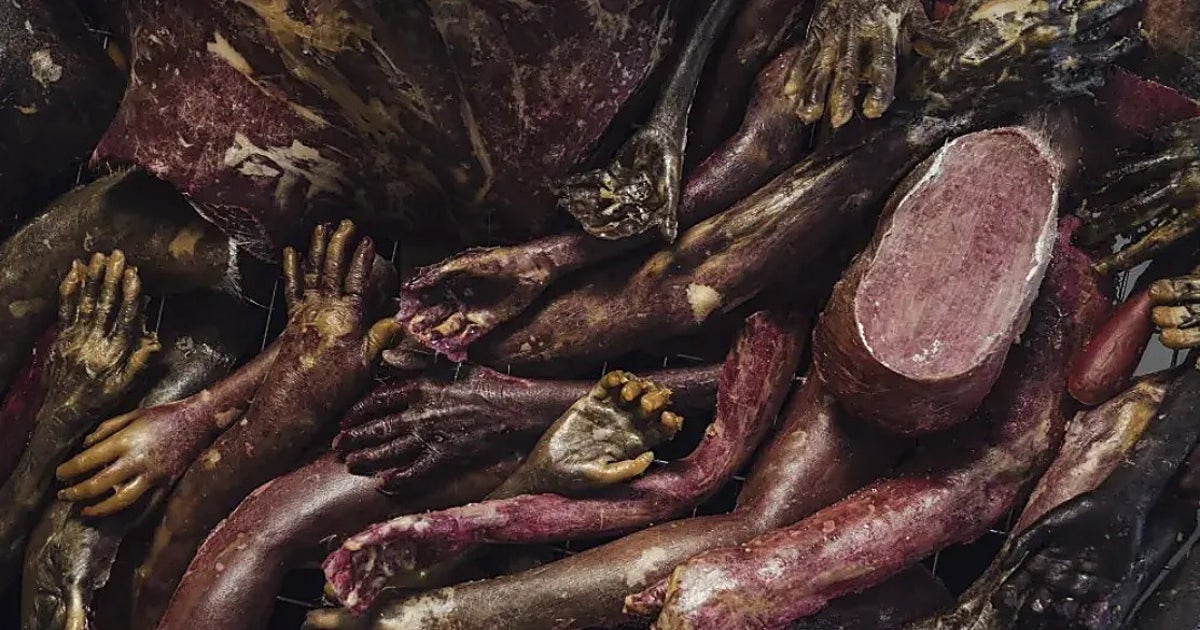
La instalación artística titulada puerta del infierno, que presenta cuerpos humanos fragmentados y que marca el inicio del 'correfoc' de la fiesta mayor de Barcelona, ha generado críticas del PP por su estética macabra y su inadecuación para el público infantil. #correfoc #Barcelona #artecontroversial

www.abc.es
Cadáveres despedazados, el macabro pórtico para uno de los actos centrales de la fiesta mayor de Barcelona
1609
⚖️WE THE PEOPLE 🙌 .•. 2w

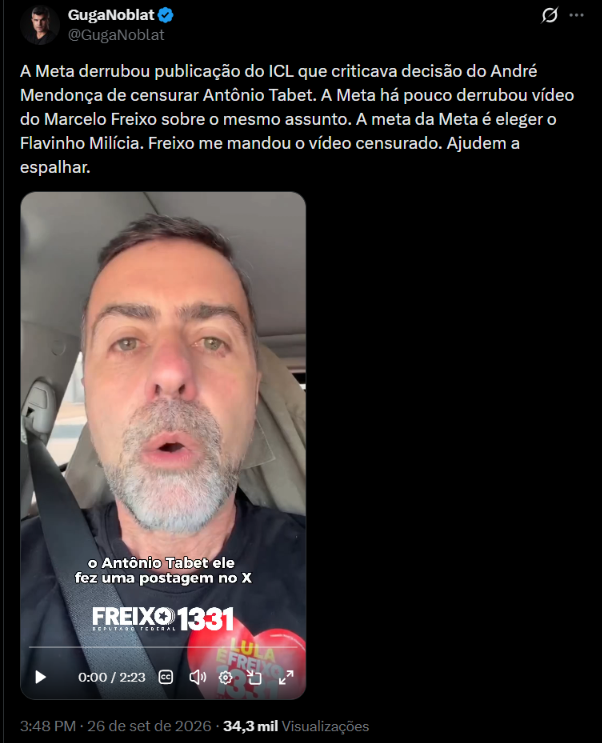
Carta aberta ao ministro @MinAMendonca, Caro ministro, Pelos relatos que recebo, o vídeo abaixo, de minha autoria, foi censurado. Ou por ordem sua, ou pelas plataformas, a quem o senhor entregou a tesoura para apagar, por conta própria e sem nova ordem judicial, qualquer "narrativa equivalente". Isso tem nome: censura prévia. A Constituição a proíbe duas vezes, no art. 5º, IX, e no art. 220, § 2º, que veda "toda e qualquer censura de natureza política, ideológica e artística". O senhor sabe disso. Parece ter decidido esquecer. Esqueceu também regras do tribunal que hoje vice-preside. A Resolução TSE 23.610/2019 determina que a atuação da Justiça Eleitoral sobre conteúdos na internet se dê com a menor interferência possível no debate democrático (art. 38) e exige, sob pena de nulidade, a indicação da URL específica de cada conteúdo removido (art. 38, § 4º). O Marco Civil da Internet segue a mesma lógica (art. 19, § 1º). Uma ordem genérica, que transfere a empresa privada o juízo sobre o que é "equivalente", não é tutela jurisdicional. É terceirização da mordaça. Todos os trechos do meu vídeo foram extraídos de reportagens e apresentados no contexto em que foram ditos. Não há ali ilícito eleitoral nem penal. Há fatos de notoriedade pública. Pergunto, então: o que exatamente o incomodou? Terá sido ver autoridades evangélicas ofendendo autoridades eclesiásticas e símbolos católicos? Pegou mal para a denominação da qual o senhor é pastor? Acaso não existiu o projeto que alterava a Lei 6.802/1980 para transformar a Padroeira do Brasil apenas em padroeira dos católicos apostólicos romanos? Acaso Flávio não diz, em trecho do vídeo abaixo, que a primeira coisa que fará, se eleito, será "consagrar o Brasil a Nosso Senhor Jesus Cristo"? Num Estado que o art. 19, I, da Constituição declara laico, a promessa já é discutível. Criticá-la é dever cívico. Acaso aquele deputado evangélico no vídeo não chamou o arcebispo e o papa de "vagabundos"? Acaso aquele pastor de Bastos (SP) não chamou a Padroeira de "diabo fantasiado de azul"? Acaso é invenção o vídeo de bolsonaristas tumultuando e tentando agredir funcionários da TV Aparecida no dia da Padroeira? Acaso é mentira o texto, reproduzido abaixo, daquele que a imprensa aponta como pastor de Flávio, convocando o rebanho a liquidar a autoridade da Padroeira? Diante desse conjunto de evidências, é crime perguntar se Flávio fará o que ele próprio promete no vídeo abaixo, algo que muitos brasileiros entenderiam como rebaixamento da Padroeira? A Corte que o senhor integra já respondeu que não. Na ADPF 130, afastou qualquer controle estatal prévio sobre o que se pode dizer. Na ADI 4451, garantiu o direito de criticar e satirizar candidatos em plena campanha. E um candidato se reconhecer numa crítica não transforma a crítica em mentira. Transforma, no máximo, em diagnóstico. Não lhe parece que o senhor foi muito além dos poderes de juiz, que não são os de pastor, nem de Deus, ao mandar derrubar posts que diziam apenas "Nossa Senhora Aparecida, rogai por nós"? Há dois mil anos alguém já separou as jurisdições: "Dai a César o que é de César, e a Deus o que é de Deus". O senhor conhece o versículo melhor do que eu (acho). Parece ter confundido os balcões. Voltaire escreveu o Tratado sobre a Tolerância depois que um tribunal católico, em Toulouse, mandou executar um protestante, Jean Calas. A história tem senso de humor: agora é um juiz protestante quem manda apagar preces católicas. O mesmo Voltaire ensinou que o fanatismo está para a superstição como o delírio está para a febre. Montesquieu advertiu que todo homem que detém poder tende a abusar dele, e vai até onde encontra limites. O senhor pode muito. Não pode tudo. Confio que seus pares reverterão essas decisões autoritárias e esdrúxulas, proferidas a pedido de Flávio, o filho do homem. Do homem que o indicou à Corte. Reflita, ministro. Não vivemos uma guerra santa, embora talvez exista na sua cabeça. Não me intimidarei. #Censura #LiberdadeDeExpressão #Democracia

18405
David Ágape 2w

Vamos falar de Marcelo Freixo e de coincidências que não são tão coincidência assim? A esposa de Freixo é Antonia Soares Pellegrino. OK. Desde 2005 ela era sócia-administradora da Doce Fúria Produções Artísticas Ltda. Em 6 de março de 2023, a empresa foi baixada. Oito dias depois, em 14 de março, Jeferson Monteiro — o criador do Dilma Bolada — assumiu cargo comissionado na EBC (conhecida como TV Lula), na Diretoria de Conteúdo e Programação. A própria estatal disse que ele trabalharia com a futura diretora: Antonia Pellegrino. Jeferson é sócio-administrador de outra firma, aberta em 2018. Nome fantasia: Doce Fúria Comunicação Ltda. Quase o mesmo letreiro. CNPJ diferentes e sem aparente relação entre si. As duas Doce Fúria venderam serviços à campanha de Lindbergh Farias ao Senado, em 2018. A de Pellegrino: R$ 141 mil. A de Jeferson: R$ 53 mil. Juntas, R$ 194 mil. A de Pellegrino também forneceu para Boulos, Luciana Genro e Fernanda Melchionna. Hoje, Pellegrino é presidente da EBC e Jeferson Monteiro atua como assessor especial e estrategista digital de Eduardo Paes, prefeito da cidade do Rio de Janeiro (após ser kickado da EBC por viagem à Europa). Eduardo Paes é aliado de Lula. Jeferson Monteiro é o paciente dero da campanha contra Flávio Bolsonaro sobre Nossa Senhora. Ligaram os pontos? https://t.co/5dUW2bXy3z #MarceloFreixo #EBC #PolíticaBrasileira

16338
roRi 2w

marina ha finalmente servito uno scopo ad alex belli che poverino stava per ripiegare sulla chimica artistica parte seconda pur di avere una clip stava soffrendo dentro ora ha trovato nuova linfa gli brillano gli occhi #Marina #AlexBelli #cinema

14858
nasira 2w

investigar quiénes son antes de hablar de ellos era demasiado pedir??? 😭 porque una cosa es no conocer a fondo un grupo y otra, siendo PRESIDENTA y hablando de un intercambio cultural entre países, ni siquiera tomarse el tiempo de entender a quién estás mencionando, skz no apareció ayer ni necesita que le prestemos una identidad ajena para explicar su relevancia, tienen años de trabajo, una identidad artística clarísima y un nombre que se han ganado por sí mismos #Cultura #Música #IdentidadArtística

13839
davide 3w

quanto cazzo ci godo porcodio questa lavora come un cazzo di mostro e ogni volta si supera, ha una visione artistica fuori di testa. quando vedo queste cose mi dimentico di ogni critica che le fate e mi rendo conto di quanto sono fortunato a seguirla https://t.co/RLpNvE4MUR #Arte #Talento #Passione

16149
ANSA.it 3w

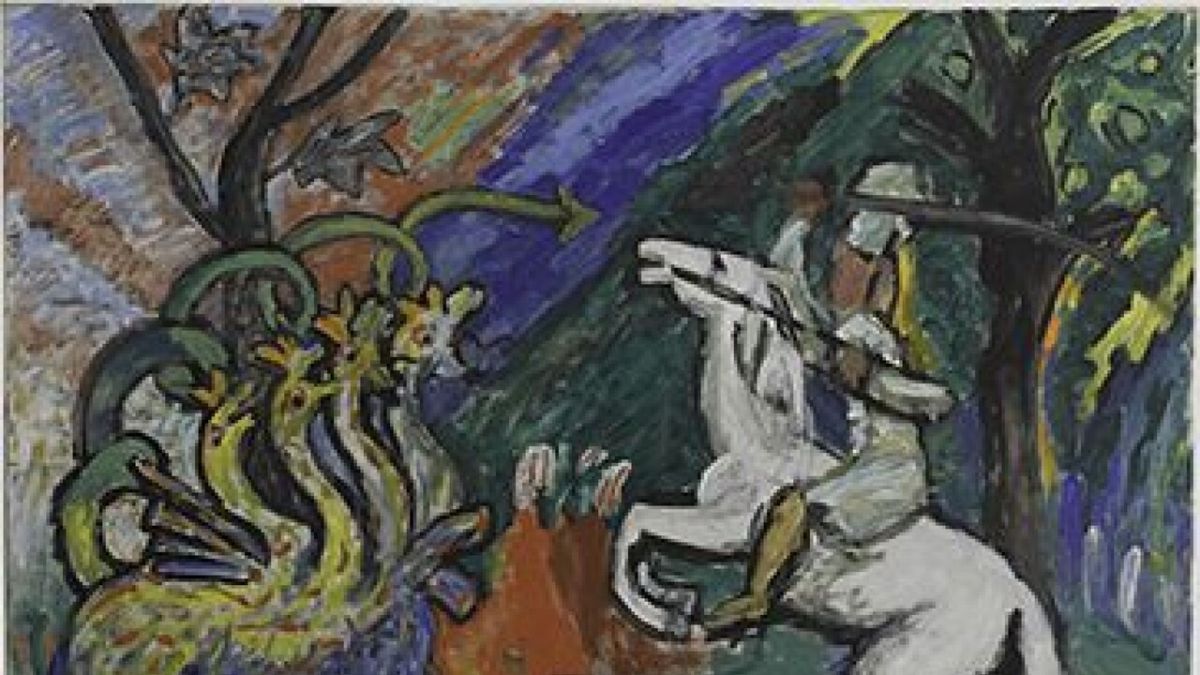
La mostra a Roma celebra Gabriele Münter, il cui gesto di salvare le opere di Kandinsky e del gruppo Der Blaue Reiter durante il nazismo la riconosce finalmente come protagonista della modernità artistica europea. #GabrieleMünter #DerBlaueReiter #ArteModerna

www.ansa.it
Con Kandinsky a Roma anche l'opera di Gabriele Münter
8098
UpdateCharts 3w

🚨 RAINHAS! Flávia Saraiva conquista o OURO e Rebeca Andrade conquista a PRATA na Copa do Mundo de Ginástica Artística. 🇧🇷 https://t.co/vYYFD3zugh #Ginástica #CopaDoMundo #FláviaSaraiva

34726