WRLD

Search

#Beliefs
Maarten Boudry 2d

The author said they were Belgian, had some North African ancestry and were not Jewish, but described themselves as a proud Zionist. They argued that Zionism had historically been among the world’s most benign, inclusive and progressive nationalisms, and added that a people had earned a country. https://t.co/QArNi8tXFe #Zionism #Nationalism #BeliefSystem #BE #MA

2610
Otherland Bookshop Berlin 6d

The Art of Uncertainty: How to Navigate Chance, Ignorance, Risk and Luck by David Spiegelhalter From the UK’s ‘statistical national treasure’, a clever and data-driven guide to how we can live with risk and uncertainty Life is uncertain. We are all the result of an unforeseen and unforeseeable sequence of small occurrences. But what underlies this fragile chain of events? Is it random or just complex? And what role does luck play in our lives? David Spiegelhalter has spent his career crunching data in order to help understand uncertainty and assess the chances of what might happen. In The Art of Uncertainty, he gives readers a window onto how we can all do this better. Uncertainty, he argues, is a relationship between the observer and an object in the outside world. He shows us how we can express it numerically, and then update our beliefs about the future in the face of constantly changing experience. In crystal-clear prose, he takes us through the principles of probability, a field that informs everything from annuities to pandemics and climate change, while also examining the limitations of statistical modelling and arguing we need to have the humility to admit our ignorance. Drawing on a wide range of real-world examples, this is an essential guide to navigating uncertainty in a world that makes it inevitable.

905
S
Sandfeen 4w

The Erosion of Truth in Feminized Institutions Human beings developed the scientific process to observe reality and uncover fundamental truths about the universe. However, the increasing feminization of academia has, in some cases, shifted its priorities, with social equity taking precedence over truth. A study titled *“Taboos and Self-Censorship Among U.S. Psychology Professors”* asked professors whether they prioritized scientific truth or social equity when the two appeared to conflict. According to the study, 66.4% of male professors chose truth, compared with 43% of female professors—a 23.4-point gap. This suggests that some individuals are willing to set aside truth in favor of ideology. The study also found that professors feared social sanctions for expressing their empirical beliefs, while younger, more left-leaning, and female faculty members were more likely to oppose controversial scholarship. Psychology faculty are reportedly 56% women and 44% men. Based on the study’s figures, approximately 53.3% of professors would rank truth first. Women account for roughly 71–75% of newly awarded psychology doctorates. If the field reaches 73% women, only about 49.3% of psychologists would rank truth first. The broader implications are significant. As academic institutions increasingly prioritize diversity, equity, and inclusion, research and data may be ignored when they conflict with political goals. Science influences education, medicine, human resources, therapy, the media, and nearly every other field concerned with human behavior. These studies shape legislation, psychological diagnoses, corporate policies, pharmaceutical prescriptions, and popular advice. Truth is not necessarily losing to lies. Rather, as institutions become increasingly feminized, they may gradually stop valuing truth itself.

466
S
Sandfeen 4w

The Value of Truth in Science Humanity developed the scientific process to observe the universe and uncover its fundamental truths. However, the increasing feminization of academia has, in some fields, shifted emphasis from truth toward social equity. As a result, certain areas of science appear less focused on understanding how the world works and more focused on reshaping it according to political ideals. A study titled *“Taboos and Self-Censorship Among U.S. Psychology Professors”* asked professors whether they prioritized scientific truth or social-equity goals when the two appeared to conflict. According to the study, 66.4% of male professors chose truth, compared with 43% of female professors—a 23-point gap. This suggests that some academics would knowingly place ideology above truth. The study also found that nearly all professors feared social sanctions for expressing their empirical beliefs. Researchers observed that younger, more left-leaning, and female faculty members were more likely to oppose controversial scholarship. Psychology faculty are currently approximately 56% women and 44% men. Based on the study’s figures, an estimated 53.3% of professors rank truth first. Women also receive roughly 71–75% of newly awarded psychology doctorates. If women eventually comprise 73% of the field, only about 49.3% of psychologists would rank truth first. The broader implications are significant. As women’s representation in scientific and academic institutions increases through both natural trends and affirmative-action policies such as DEI, research and data may be disregarded when they conflict with political goals. Psychology influences education, medicine, human resources, therapy, media, and other institutions concerned with human behavior. These fields shape legislation, psychological diagnoses, corporate policies, pharmaceutical prescriptions, and popular advice. Truth is not necessarily losing to lies. Rather, as institutions become increasingly feminized, they may gradually stop valuing truth itself.

466
S
Sandfeen Sep 8

The Erosion of Truth in Feminized Institutions Human beings developed the scientific process to observe reality and uncover fundamental truths about the universe. However, the increasing feminization of academia has, in some cases, shifted its priorities, with social equity taking precedence over truth. A study titled *“Taboos and Self-Censorship Among U.S. Psychology Professors”* asked professors whether they prioritized scientific truth or social equity when the two appeared to conflict. According to the study, 66.4% of male professors chose truth, compared with 43% of female professors—a 23.4-point gap. This suggests that some individuals are willing to set aside truth in favor of ideology. The study also found that professors feared social sanctions for expressing their empirical beliefs, while younger, more left-leaning, and female faculty members were more likely to oppose controversial scholarship. Psychology faculty are reportedly 56% women and 44% men. Based on the study’s figures, approximately 53.3% of professors would rank truth first. Women account for roughly 71–75% of newly awarded psychology doctorates. If the field reaches 73% women, only about 49.3% of psychologists would rank truth first. The broader implications are significant. As academic institutions increasingly prioritize diversity, equity, and inclusion, research and data may be ignored when they conflict with political goals. Science influences education, medicine, human resources, therapy, the media, and nearly every other field concerned with human behavior. These studies shape legislation, psychological diagnoses, corporate policies, pharmaceutical prescriptions, and popular advice. Truth is not necessarily losing to lies. Rather, as institutions become increasingly feminized, they may gradually stop valuing truth itself.

583
Rolf Degen Aug 31

Viewing one's own suffering as no greater than the common human lot fostered deeper emotional and social well-being. Although suffering is a universal aspect of human life, surprisingly little research has examined people’s general beliefs about suffering—its #Suffering #EmotionalWellBeing #HumanExperience #Thetweetdoesnotmentionanyspecificcountries.

234
S
Sandfeen Aug 28

The Politics of Pity For a decade, the West has argued whether empathy should be its highest value. Some praise it as a superpower; others call it harmful. Gad Saad’s “Suicidal Empathy” topped the New York Times list. Elon Musk called empathy a weakness; John C. Reilly called it a superpower. Ideas should be judged by consequences. Compassion-justified policies have coincided with worse addiction and homelessness, rising crime, mass migration, social fragmentation, higher living costs, and controversial medical interventions for gender-dysphoric minors. When these fail, advocates often claim it was not implemented “strongly enough.” ## An Inversion of Truth A quote often attributed to Hannah Arendt claims “the death of human empathy” precedes barbarism, but no source supports it, and her writings argued almost the opposite. Arendt contrasted the American Revolution’s institutions and law with the French revolutionaries’ “politics of pity.” Pity is not compassion: it ranks “fortunate” and “unfortunate,” grants the pitier moral authority, and overrides rights. Arendt argued this enabled Robespierre’s Terror. ## The Trojan Horse Empathy can become projection—imposing your values as if they were others’ needs. Adam Smith warned about the “man of system.” Nietzsche described societies so “soft and tender” they side with those who harm them. Orwell noted equality preaching alongside elite privilege. Rob Henderson calls these “luxury beliefs.” I call it suicidal narcissism: acquiring moral status by appearing compassionate while policies erode the foundations others rely on. The reward is immediate; the damage comes later.

1055
S
Sandfeen Aug 28

Leftist “Empathy” Is Actually Narcissism Leftist “empathy” is often narcissism, not real compassion. Over the past decade, Western politics has debated whether empathy is the highest value—yet many policies justified in its name have produced serious unintended consequences: safe-supply programs, lenient bail, mass migration, identity-based social policy, and gender medicine for minors. Hannah Arendt helps explain why. In *On Revolution*, she contrasted the American Revolution’s focus on institutions and limits on power with the French Revolution’s “politics of pity,” an effort to eliminate suffering through political action. Robespierre’s compassion for the masses helped justify terror. Pity isn’t compassion: it creates a hierarchy between the person who pities and the person pitied. Once you claim to represent “the oppressed,” you can stop listening to real people. Much progressive “empathy” projects idealized versions of others, erasing cultural differences and treating disagreement as ignorance or prejudice. Adam Smith warned about the “man of system,” who thinks society can be rearranged like chess pieces, ignoring human wills. Dostoevsky argued abstract love is easy; loving real people is hard. Nietzsche described a morality that flatters weakness and condemns what rises above the herd, while Orwell questioned whether some socialist intellectuals truly loved workers or simply used them to vent resentment. Rob Henderson calls these “luxury beliefs”: status-providing ideas for elites that impose costs on those below them. The moral prestige is immediate; the damage unfolds over decades. So “suicidal narcissism” may fit better than “suicidal empathy”: projection, superiority, and power disguised as compassion.

821
Graham Linehan Aug 21

You have a historic opportunity to undo the terrible harm you did while in office @JuliaGillard. Speak up for women now that you know the true cost of your luxury beliefs #WomenEmpowerment #LuxuryBeliefs #Accountability #AU

470
Rolf Degen Aug 8

People overestimate the unethical actions of others while undervaluing their virtues, particularly when it comes to men. Accurate beliefs about the social world are essential to adaptive social functioning. However, people's perceptions of the social world are often #Perception #SocialPsychology #Ethics #Thetweetdoesnotmentionanyspecificcountries.Therefore #therearenocountrycodestoreturn.

118
S
Sandfeen Jul 4

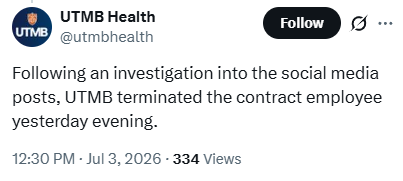
MAJOR UPDATE: The muslim nurse in Texas who posted a video saying how she wouldn't treat patients if they watched Fox News has been TERMINATED following our report. Thank you, @utmbhealth, for your swift action. No nurse should be denying care to patients based on political beliefs. https://x.com/libsoftiktok/status/2073095950080364982

x.com
Libs of TikTok (@libsoftiktok) on X
356
Rolf Degen Jun 23

People greatly overestimated the proportion of vegans and vegetarians in the population. It is important to understand the public's perceptions of dietary trends. People's beliefs about how many people are following a certain diet may serve as proxies for the presumed #Veganism #DietaryTrends #PublicPerception #Thetweetdoesnotmentionanyspecificcountries.Therefore #therearenocountrycodestoreturn.

119
S
Sandfeen Jun 16

Tommy Robinson has just walked out of court with a victory that is already being called one of the most explosive free-speech moments in Britain. The terrorism-related case against him — linked to his refusal to hand over his phone PIN to UK police — was thrown out after the lawful and reportedly said Robinson had been targeted because of his political views. This was not just about a phone. This was about power, politics, journalism, and whether the state can treat someone like a national security threat simply because it dislikes what they say. Robinson says he refused to unlock his phone to protect journalistic sources. The state treated it as a terrorism matter. The court, according to Robinson’s reaction, saw something far more disturbing: political targeting. Then came the detail that made the story explode worldwide: **Elon Musk reportedly helped finance Robinson’s legal defense**, stepping in where others stayed silent and turning the case into a global battle over free expression. Robinson thanked Musk publicly, asking why it had taken an American businessman to fight for justice in Britain. “First of all, thank you, Elon Musk,” Robinson said, before adding that he was targeted because of his political beliefs and that counterterrorism police were allegedly used to get access to his phone as a journalist. For supporters, this ruling is a brutal warning to the establishment: if terrorism powers can be used against controversial speech today, who will be next tomorrow? Critics will still call Robinson divisive, but this case has forced a bigger question onto the table — do rights only apply to people the government likes? https://x.com/ImtiazMadmood/status/2066494751306658238

x.com
Imtiaz Mahmood (@ImtiazMadmood) on X
715
Wes Streeting May 28

The Labour Party cannot secure our country's future by engaging in old internal conflicts and repeating outdated beliefs.

Ministrid survestavad Starmerit naftapuurimise piiranguid üle vaatama
www.err.ee
17322
Ewan MacKenna May 24

Your weekend reminder that we are witnessing an ethnic cleansing in a concentration camp that media got bored of, having tried to explain away and justify, as it's run by Zionists. Israel is Zionist, and Zionism is identikit to Nazism in its key beliefs. A self proclaimed #EthnicCleansing #Zionism #Genocide #IL

Ewan MacKenna May 24

Your weekend reminder that we are witnessing an ethnic cleansing in a concentration camp that media got bored of, having tried to explain away and justify as it's run by Zionists. Israel is Zionist and Zionism is identikit to Nazism in its key beliefs. A self proclaimed #EthnicCleansing #Zionism #HumanRights #IL

Maarten Boudry May 20

Awesome post about folk economics that has relevance far beyond data centers. There’s a cluster of beliefs common in very low-trust, populist voters and thinkers that are are dead wrong: • There are no positive-sum trades. In every exchange, someone is winning and the other #FolkEconomics #Populism #TrustIssues #Nocountrycodesarepresentinthetweet.

120
Graham Linehan May 19

RT @Olicanarama: We listened in amazement as the inner beliefs and cult beliefs of an NHS hospital in Fife were exposed in the Sandie Peggi… #NHS #Fife #cultbeliefs #GB

BBC May 17

Michael Pecht, founder of the Advanced Life Cycle Engineering Center at the University of Maryland, reveals that the way we coil charging cables does not significantly impact their lifespan, contrary to common beliefs; rather, the primary causes of damage stem from improper handling—like pulling on the wire instead of the connector and using cables that are too short—which can lead to wear at the junction points, ultimately affecting cable durability. #ChargingCables #TechMaintenance #Sustainability #US #BR

www.bbc.com
Como cuidar dos seus cabos de celular (certamente não da maneira como você está fazendo) - BBC News Brasil
8373