WRLD

Search

#Camouflage
La Libre.be Sep 10

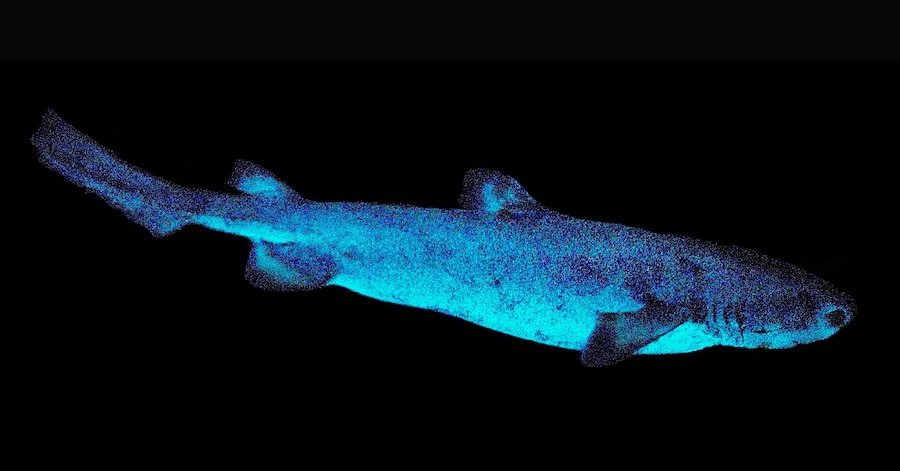
Des scientifiques belges ont élucidé le mystère de la bioluminescence du requin liche, révélant que ce grand vertébré émet de la lumière bleue en réponse à la mélatonine, une découverte qui éclaire sa stratégie de camouflage dans les profondeurs marines. #requinlique #bioluminescence #scientifiquesbelges
www.lalibre.be
Le mystère du grand requin lumineux élucidé par des scientifiques belges
18651
Luciano Magaldi Sardella (PhD) Sep 5

What was the first Social Network in History? In Italy: Dada or InterNetWork City? SOURCE: https://www.linkedin.com/pulse/what-first-social-network-history-italy-dada-city-sardella-ph-d--ngw2f/ When discussing technological primacy, historical precision is fundamental. Particularly when too many narratives from the web risk generating confusion. Contenuto dell’articolo Abstract This article critically analyses contemporary narratives on the origin of social networks, distinguishing between journalistic reconstructions and academic historiography. It clarifies that platforms such as Internetwork City and Dada/SuperEva, whilst innovative, cannot be defined as "first Italian social networks" according to criteria recognised by international research. The text reconstructs the genealogy of social media from early digital communities (Usenet, BBS) through to modern social networks, highlighting the anticipatory role of systems such as Plato. Finally, it demonstrates how certain Italian publications have attributed primacy unsupported by historical sources, underlining the necessity for a rigorous and documented approach. Keywords: digital historiography, Italian proto-social platforms, Internetwork City, Dada/SuperEva, origins of social networks In recent years, various narratives have circulated regarding the origin of social networks, some of which attribute primacy to projects that, while innovative, do not correspond to the effectively documented chronology. To reconstruct with precision the history of global social networks, it is necessary to begin with academic sources and verifiable testimonies, excluding retrospective reconstructions devoid of historical corroboration. But first and foremost, let us provide an encyclopaedic British definition: social media constitute a form of communication on online platforms through which users share information, ideas, personal messages and other textual and audio-visual content. This should not be confused with social networking, that is to say, the modalities by which Internet users construct virtual communities amongst themselves by sharing their textual and audio-visual content; social media, conversely, concerns web-based platforms that enable one to build a friendly, familial and professional audience. The earliest forms of social media appeared almost as soon as technology could support them: electronic mail and chat programmes débuted in the early 1970s, but the first virtual communities did not emerge. They did not emerge until the creation of the Usenet discussion group network in 1979: these permitted users to post and receive messages within thematic areas called newsgroups. Usenet and other discussion forums, such as privately hosted Bulletin Board Systems (BBS), allowed individuals to interact, but each was essentially a closed system. With the release in 1993 of the Mosaic web browser, those systems were provided with an easy-to-use graphical interface. Furthermore, the architecture of the World Wide Web made it possible to navigate from one site to another with a click, and faster Internet connections permitted richer multimedia content than that which could be found in text-heavy newsgroups. The First Modern Global Social Network: SixDegrees.com Contenuto dell’articolo As the prestigious Encyclopaedia Britannica cites, the first globally known companies to create modern social networks based on web technology were Classmates.com and SixDegrees.com. Between these two, in truth, the academic community and historians of digital media concur in identifying SixDegrees.com as the first true modern social network: it was the first to introduce the fundamental characteristics that would define the sector: personal profiles, friends lists and an integrated private messaging system. Indeed, Classmates.com, founded earlier in 1995, employed an aggressive advertising campaign with pop-ups to attract web browsers to its site based upon connections between students from secondary school and/or university classes, branches of the armed forces and places of work. SixDegrees.com was launched after it, in 1997, but with most of the functionalities that would characterise such social networks: members could create profiles for themselves, maintain friends lists and contact one another through the site's private messaging system. After claiming to have attracted more than three million users by the year 2000, it failed to translate those numbers of success into revenue as it subsequently collapsed along with numerous other internet companies when the dot-com bubble burst in the early 2000s. The First Italian Social Network: Which One? Contenuto dell’articolo In recent years, a widespread narrative has emerged on the web according to which the first Italian social network would have been Internetwork City, a project born in May 1995 from the intuition of Claudio Cecchetto with the technical guidance of Perl and Java programmer Marco Camisani Calzolari. Other sources from the websphere (the totality of all globally accessible websites) narrate of the Dada/SuperEva group as the first Italian social network. In the first case, it was certainly, for the era, a story of radio and digital innovation made in Italy: in this interview with Giornalettismo from 29 June 2022 given to Gianmichele Laino (https://www.giornalettismo.com/marco-camisani-calzolari-internetwork-city/), Internetwork City is defined as the "first social network in history made in Italy". Contenuto dell’articolo And reading further, the interviewee, Marco Camisani Calzolari, a contract university lecturer and radio-television communicator on digital themes, states: "In May 1995, in a basement in Via Melzi D'Eril, a truly revolutionary idea was being born. Behind it was the intuition of Claudio Cecchetto and the guidance of Marco Camisani Calzolari: Internetwork City is the first social network in the world, a space within which users managed to interact, in an era when the network was a place where possibilities for interchange were still a futuristic eventuality." And whilst in the pioneering basement of Via Melzi D'Eril in May 1995 Internetwork City was being born, perhaps unbeknownst to its inventors, in January 1995, a full four months earlier, DADA (Design Architettura Digitale Analogico) had already been born, another entirely Italian social network, founded by four young Florentine architects (Paolo Barberis, Alessandro Sordi, Jacopo Marello and Angelo Falchetti), as one reads on the ZeroUnoWeb portal. The four Florentine friends transformed their architecture studio into a company in which Barberis and Sordi drew in the other two entrepreneurs, spending all their savings on the purchase of computers and multimedia equipment. It was not simply a matter of creating yet another web portal but a true digital ecosystem that anticipated many functions of contemporary social networks: profiles, communities, interaction and shared content. This narrative of DADA, however, is "once again refuted" if we read the journalistic article in La Repubblica of 27 May 2021 bearing the signature of journalist Riccardo Luna, entitled "In Milan, Claudio Cecchetto (and Marco Camisani Calzolari) launch a social network," readable by clicking the following link: https://www.repubblica.it/tecnologia/2021/05/27/news/a_milano_claudio_cecchetto_e_marco_camisani_calzolari_lanciano_un_social_network-302961639/ Contenuto dell’articolo The subtitle echoes: "It was the first social network in history and it was born in Italy. And in 1995 the web had practically only just been born," in addition to "In May 1995 the first social network in history was born and it was born in Italy. Perhaps the first. Who knows. But if one considers that Facebook is from 2004, Second Life and MySpace from 2003, one understands perfectly well the enormity of what I have just written. In 1995 the web had practically only just been born." But here, strangely, the discourse is not entirely clear: if in the subtitle one asserts decisively "it was the first social network in history," why does one then read: "Perhaps the first. Who knows." It seems to me a contradiction, quite frankly. But let us leave the arduous decisional task to impartial readers. Therefore, let us proceed with the rest of the article: "In the meantime, in Italy someone constructs a social network. Who? Claudio Cecchetto. Yes, him, the author of Gioca Jouer, the inventor of Radio Deejay and of another way of making radio. He was also a pioneer of the Internet. In May 1995 he launches a social network called Internetwork City, the city of the Internet network. It had been built, one line of code after another, by a young programmer who, thanks to this story, would become a brilliant communicator of digital matters (for some time he has been one of the faces of Striscia la Notizia): Marco Camisani Calzolari. When he thinks back to those times, MCC becomes enthusiastic: 'It was a social network in every respect. A place where one could register, have a profile and speak with others. It was one of the first in the history of the web, and Claudio Cecchetto had invented it. He had conceived it whilst navigating with Videotel, but then the World Wide Web had arrived. At the time I worked as a programmer for a fashion company: I had learnt to do it by downloading the instructions for writing code in Perl and in Java from the BBSs that were on the network'." Contenuto dell’articolo From this it emerges that the idea for the project was supported by the media personality of Claudio Cecchetto and brought to fruition by programmer Marco Camisani Calzolari: the two pioneers of the Italian web have (also in this journalistic article) confirmed how InterNetwork City was, in their opinion, the first social network in the world created precisely in the Belpaese. But will this be objectively and impartially true according to the historical historiography of Internet history? To ascertain this, we must analyse academic historiographical sources: these lead us back to the surprising computational history of a great (and semi-unknown) precursor of social networks present as early as the 1960s and 1970s: Plato. PLATO: The Precursor of All Social Networks in the World Contenuto dell’articolo PLATO (Programmed Logic for Automatic Teaching Operations) represents one of the most fascinating cases of anticipatory technology in the history of computing: developed at the University of Illinois at Urbana-Champaign from 1960 by Donald L. Bitzer, this system initially had purely didactic purposes, but evolved rapidly, becoming a true digital social ecosystem decades before the advent of the Internet as we know it. It introduced the concept of "Personal Notes" in 1973, a system of forums organised by subject where users could post messages, reply and create structured discussions. This anticipated by over twenty years web forums and Usenet newsgroups in accessible form. The "Talkomatic" system, created in 1973 by Doug Brown, permitted simultaneous conversations between multiple users in separate channels. Each user saw the letters of other participants appear character by character as they were typed, creating an unprecedented immediate communication experience. "Personal Notes" functioned essentially as an internal email system, permitting private communications between system users, with storage and reply capabilities. Users could create "term-talk," personal messages visible to others, sharing thoughts, updates or information: a conceptual precursor of modern social media posts. Plato was not merely technology: it was a true community. Thousands of users, primarily university students, teachers and researchers, connected through dedicated terminals with characteristic plasma screens: To play: it hosted some of the first multiplayer video games in history, such as "Empire" (a precursor of space games), "Moria" (one of the first dungeon crawlers) and "Airfight" (multiplayer aerial combat). To socialise: friendships, romantic relationships and communities formed around shared interests. To collaborate: study groups, research projects and academic discussions flourished on the platform. Despite its innovative capabilities, Plato remained confined principally to the academic environment and to certain business applications for several reasons: Plato terminals were extremely costly and the system required powerful mainframes; and unlike the Internet, it was a closed system, centrally controlled; dedicated terminals or specialised connections were required, not available to the general public; and whilst the Internet developed on open protocols, Plato remained an isolated ecosystem. In conclusion: even though the unknown Community Memory (1973) preceded Plato as a publicly accessible social system but with more limited functionalities, Plato had social functionalities as early as 1973. It was the first true precursor of modern social networks, but in a technological context that was solely academic, not mass-market, owing to prohibitive costs and the extremely rare and extraordinarily slow computer connections of those years. Therefore, all the first prototypes and first social networks born from the 1990s onwards (including the Florentine project Dada/SuperEva and the InterNetwork City of Claudio Cecchetto and Marco Camisani Calzolari) reinvented the same concepts in a technological and economic context that permitted their planetary diffusion shortly before the advent of the new millennium. Now, given that we live in a context of great development of large language models upon which artificial intelligence is based, just out of curiosity, I shall ask Microsoft's chatbot, Copilot (in my opinion, the most reliable to date) what it thinks about the journalistic narrative of Giornalettismo and La Repubblica in favour of InterNetwork City; therefore, this is my question: "Is it correct to assert, impartially, that Internetwork City of Cecchetto and Camisani Calzolari was the 'first social network in history Made in Italy'?" The answer emerges from the following photographs. Contenuto dell’articolo Contenuto dell’articolo I now report word for word the text generated by the large language model (LLM) Copilot: "Here is the most balanced and rigorous answer that can be given today, based on available sources and digital historiography. Is it correct to define it as 'first social network in history Made in Italy'? 🧭 Brief answer No: it is not correct to assert it impartially as an ascertained historical fact. It is, however, correct to say that certain publications and certain protagonists of the era present it as such, while the academic community and international historiography on social networks do not recognise Internetwork City as 'first social network in history'. 🔍 What the sources say The Italian journalistic sources consulted present Internetwork City as: "the first social network in the world" (Giornalettismo) "the first social network in history and it was born in Italy... perhaps the first. Who knows." (La Repubblica) "the first social network" (Giornalettismo) These are, however, journalistic narratives, not historical classifications shared by international research. 🧠 Why it is not possible to assert it as an impartial historical fact To be recognised as 'first social network in history', a project must satisfy criteria shared by the scientific community, for example: technical definition of social network (user profile, network of contacts, persistent interaction, user-generated content, etc.) international academic recognition verifiable technical and historical documentation comparison with previous platforms (e.g. The WELL, 1985; Usenet, 1979; Minitel, 1982; GeoCities, 1994) Internetwork City does not appear in any international academic taxonomy of social networks, nor in reference works on the history of the web. The sources that define it as 'first social network' are interviews, popular articles and narrative reconstructions, not historical studies. 📌 What can be correctly asserted An impartial and accurate formulation could be: Internetwork City (1995), conceived by Claudio Cecchetto and developed by Marco Camisani Calzolari, is one of the first Italian experiments in interactive online community. Certain journalistic publications have described it as 'the first social network in history Made in Italy', but this definition is not recognised by international historiography on social networks. This sentence is balanced, truthful and does not attribute undemonstrable historical certainties." In summary: in the impartial opinion of Microsoft Copilot, the assertion according to which InterNetwork City "was the first social network in history and was born in Italy" is enunciated only as a journalistic narrative but has no corroboration in reality whatsoever, not being in any way supported by international academic historiography of the history of social networks. Now, however, other articles taken from websphere publications assert that the first (and true) Italian social network was, instead, conceived and created by the Dada group and subsequently through SuperEva in January 1995, anticipating by four months the aforementioned Milanese InterNetwork City. But let us read it all directly in the StartUp Italia article bearing the signature of writer Aldo V. Pecora, which I shall report from this link: https://startupitalia.eu/education/scuola/quando-prima-di-facebook-4-italiani-avevano-inventato-un-social-network-la-storia-di-dada-e-di-supereva/#:~:text=Alla%20base%20di%20questa%20visione,il%20valore%20aggiunto%20del%20sito. Contenuto dell’articolo "When Zuckerberg was still at college there were those who, in Italy, had already invented social networks. A story, that of SuperEva and, above all, of those four 'madmen' of Dada, that would truly deserve a film. A story that we today attempt to recount by making a leap backwards of twenty years, whilst those who wrote it, or rather, designed it, had with every evidence made a journey into the future. Dada, the Martians come from the future The 'back to the future' of Paolo Barberis and Alessandro Sordi begins in the early 1990s, as young students at the University of Florence. It is 1992 when they decide to go before the examination board without even a sheet of paper, a drawing, nothing. Only a computer and a multimedia project, one of the first in Italy and perhaps in Europe developed in 3D. 'The board remained closeted for over an hour — recalls Sordi today — and we didn't know whether shortly thereafter they would send us packing.' Instead it was a success and the beginning of an adventure. Barberis and Sordi involve two other friends, Jacopo Marello and Angelo Falchetti, spend all their savings on the purchase of PCs and multimedia equipment and together open an architecture studio: Dada, acronym for Design Architettura Digitale Analogica. How Dada connected Florence to the Internet Year 1995. Things change. Dada becomes a limited company: 20 million initial investment (the computers purchased for the architecture studio). And the project of creating a multimedia city, Florence, becomes that of bringing the city online. Few know it, but it was precisely Dada that connected the Tuscan capital to the Internet. ADSL and so-called broadband connections did not yet exist. What years, those years. Whilst Alessandro Sordi reviews them, on the telephone he betrays a little emotion: 'Commercial internet was beginning, the first nodes in Rome and Milan, but in Tuscany there was nothing. We decided to purchase the cable and brought the first CDN to Florence.' It is the era of providers, or rather, ISPs, and anyone who manages to make a client dialogue with a server can sell dial-up connection services. Sordi and partners involve family and friends. Everyone does everything: Barberis answers the telephone and provides help desk support, the others concern themselves with making professionals and companies understand the potential of the Internet and sell annual subscriptions at 249 thousand lire. The web that found (and changed) Dada These are the years of a single browser, Netscape Navigator. It was conceived by that same Marc Andreessen who today can be called literally papa by people like Zuckerberg and half of Silicon Valley. It is web 0.0, that before Google, where the search engines are Lycos, AltaVista, Yahoo. In Italy for a couple of years a gentleman from Cagliari by the name of Nichi Grauso, founder of Video On Line, has been putting tremendous amounts of money into the Internet, whilst in Milan Marco Negri and Stefano Quintarelli launch I.Net and Joy Marino ITNet. The national telephone company, SIP, is reborn under the acronym Telecom Italia. A monopoly that begins to creak with the launch by Olivetti of Italia Online and, above all, of the first Italian search engine, Arianna, which will soon find itself duelling with Virgilio, the first creation of the Matrix of Paolo Ainio, Carlo Gualandri and Marco Benatti. Dada understood before others in which direction the web would go. 'From there a business model was born — recounts Sordi — because the provider collected network subscription fees in advance and we used that money to finance research on web services, something that was science fiction for those years.' 'One world alone, one network alone' Science fiction that was the fortune of the group of Tuscan architects. After a year turnover rises to 500 million and Barberis's company delineates the future of the web: content and, above all, community. On the Internet there are not only professionals and companies but people, who begin to use it daily and to focus on groups, first in mailing lists and newsgroups, but shortly thereafter also on websites. Dada intuited before others that there is a market, certainly formless, like water, but immediately monetisable, thanks to advertising. A large public company, SMA 2002, enters the capital of the Florentine company, and together the two entities found one of the very first Italian advertising concessionaire companies entirely focused on the Internet. 1997: Dada's phase 2 begins. The government passes new communications regulation and the Florence provider obtains authorisation to scale its core business of Internet access across the entire national territory. Sordi recalls, smiling. These are the years in which one thinks of monetising another business, that of so-called 'housing'. In the meantime, someone already has his head in the future. It is Paolo Barberis, who imagines a network where beyond computers being connected, people above all can be connected amongst themselves. 'I had something of a mania for putting things in the right place with respect to the order they would have in the future,' he tells us. An order that according to Barberis passes through the 'desk metaphor'. 'Many years ago — he recalls — it was clear to me that soon we would move from our desktop, with file management, archive, rubbish bin et cetera towards a map. What today we call "map as a service". We started from connectivity but then gave services, and as architects we wanted to construct the new places. Design the house imagining the use that must be made of it every day, how many people will pass through it, with attention also to the smallest particular, to individual objects. Those who design must focus, because a house must be beautiful but must above all make us live well and better.' From SuperEva to the Stock Exchange At the base of this vision the birth, in 1999, of a website that would make the history of the Italian web: SuperEva. The first embryo of Dada's portal comprised a search engine and the famous guides, which would become the backbone and added value of the site. Because, as always, the true novelty at the beginning of every great experience is camouflaged in a little corner. Through the guides, Dada begins to create thematic micro-communities that stand thanks to advertising. From there onwards Dada will begin to churn out millions upon millions. Of euros and no longer of lire. The Dada ecosystem counts more or less one-fifth of Italian web traffic, has consolidated its own technological asset and encounters various investors along its path: 'Today we would call them angels — says Sordi — but at the time they were enlightened entrepreneurs.' It is they who will help the Tuscan company take the great step: the Stock Exchange. It is 29 June 2000 when Dada SpA is listed on the Nuovo Mercato index of Piazza Affari. An injection of liquidity that brings tens of millions into the coffers of the Florentine internet company. In a few months the employees become 400, and there is almost no longer room to keep them all, in what was once the headquarters of Libreria Cima. Meanwhile, Barberis & Co. also begin to keep an eye on the foreign market, searching for partnerships to internationalise. Always keeping their feet on the ground. It survives (magnificently) the dot-com bubble 'At the time — recalls Alessandro Sordi, who in Dada was Vice President — they told us "spend everything, spend everything immediately". The tendency was to spend all the money that the stock exchange had given you. We were prudent but at the same time aware that we should not buy to satisfy the stock exchange.' And they did well, because shortly thereafter the so-called dot-com bubble would burst, which saw illustrious giants like Cisco lose in one blow something like 86% of their own value. In parallel, many Italian ISPs were forced to close their doors, crushed by Telcos, which in the meantime took control of the connections market, sweeping away with one stroke of the sponge the 'old' dial-ups in favour of broadband. Few know, however, that there was also a gift that Dada had given to all employees: stock options. They were given to all, but truly all, from secretaries, to developers, to graphic designers, to sales. Today for startups they are called equity; at the time the options of quoted companies like Dada were real money. From provider to internet company But the vision, the maniacal passion for the creation and consolidation of vertical communities and the development of a second asset dedicated to B2B services allow Dada to sleep soundly. Sordi recalls: 'In large companies the concept of pivot is not a rigid thing. It was very natural to ask oneself daily "what is the best thing to do today".' Because it is a large startup where things happen, before others. And where you can make them happen. If the BlackBerry arrives in Italy, for example, it is thanks to them, who had direct contacts with RIM as well as with the greatest tech companies in the world. The startups conceived by employees They experiment, they have fun, and greatly so. They launch themselves into the market of paid services (music, ringtones, WAP), which will become the third pillar of the new Dada, and constitute a small internal incubator, Dada Lab: 'We didn't know it was called an incubator. Every six months we set up a process where employees could propose new ideas. Pitches were made but they weren't called pitches. We decided to carry forward the best project,' recounts Sordi. Projects that, once launched, were followed scrupulously: 'We received an hourly email, with the metrics of all the business models. There were systems hooked to the models that recorded every hour. In short, a sort of automatic Analytics that informed us constantly and in real time of the progress of individual projects. Something that we maintain today, albeit in different form (monitors attached to the walls, editor's note), in Nana Bianca.' The Dada ecosystem, recounted by those who lived it We are in the middle of the first decade of the 2000s. At that time Dada experiences the epoch of maximum splendour. It enters the digital asset of the RCS Group, and acquires various startups and companies, such as Register.it, the first Italian registrar, the Wireless Solutions of Massimo Ciociola (now CEO of Musixmatch), free hosting communities like Freeweb.org and then the Clarence portal, and then the first Italian blog platform, Splinder, the Blogo network and so many other companies that, all together, will compose the galaxy of the Dada Group. It is the startup that becomes increasingly 'a platform from which to launch services. There were people of great talent, with whom you enjoyed working, stimulating changes,' recalls Paolo Barberis, who when he goes back with memory transmits even telephonically a mixture of emotions between nostalgia and pride: 'Marco Argenti, who in Seattle at Amazon is head of AWS mobile, Amazon's store, Max Pellegrini, now head, in New York, of mobile entertainment at Real Networks (those of the noted Real Player, editor's note), and then again Antonio Tomarchio (founder of Beintoo), Francesca Lerario, Mariano Di Benedetto, Roberto Barberis (now CEO of 4W), Filippo Satolli (COO of Instal.com), Stefano Sordi (marketing director of Aruba), Carlo Meglio (CEO of Moqu Adv), David Casalini...' Disclaimer: David Casalini, a name that is not new to us at Startupitalia, given that he is also our publisher. At this point a telephone call with him is obligatory. 'I was 23 years old when I arrived at Dada,' recalls Casalini. 'I was truly in another world: I had my office in Empoli, which for me was already the office of a lifetime, a 16th-century tower with my beautiful Linux server... The dream of my life was to be able to run the Empoli provider (Empoli Net, editor's note).' Then, one day, the telephone call from Angelo Falchetti arrives. 'In short order I found myself managing a team of 30 people. All talents with whom working was a spectacle. Dada was doing what today startups are not doing; it grew continuously, 40–50–60 million. There was a moment in which Dada was hiring people all over the world, like Brian Buschmann, who today is head of the UX unit of Gucci.' David is truly a torrent in flood, he begins to reel off on the telephone (and then on Messenger) a series of names and anecdotes that becomes truly difficult even to manage to note down, let alone recount them all. When Dada was truly scaling, in the USA Much abroad, USA, above all. In 2005 Dada had already consolidated for at least a couple of years what without fear of contradiction can be considered the first Italian social network, amongst the largest in Europe: Incontri di SuperEva, a community for lonely hearts with 2 million members, when the various Facebooks and, above all, Tinder did not yet exist. Social networks are discussed, and we have proof in the slides (see above) that Marco Argenti and Paolo Barberis will bring to Dada-Day 2004 and 2005. Precisely when, across the ocean, an unknown Harvard student by the name of Mark Zuckerberg was attempting to explain, to an empty hall, a website called The Facebook. And again through Dada passes one of the first experiments in competition with iTunes and iPods. A joint venture, in the United States, with Sony: 'Dada US — recalls Barberis — made a merger uniting its own mobile assets with those of Sony.' A deal that generated turnover only in the USA of something like 100 million dollars. The Dada model: 'design it as if you were already living it' The former twenty-year-olds of Dada, in short, had become adults and seemed almost to transmit the idea of being a group of Martians come from the future: 'I believe — recalls Barberis — that our difference with respect to that historical moment lies in what then consolidated itself in the broader reasoning of design thinking: having answers in the short term, whilst you are executing things, with visionary work. Imagining how the world will be in a few years and trying to design it as if you were already living it. Making certain, in short, that things respond to a vision and do not remain circumscribed to something imminent and nothing more. A bit like making the digital agenda today: you can set yourself the objective of 10 things to do, or else first imagine how the country will be in 10 years and then begin to do things, to create the conditions that will take you there.' However, like every most beautiful love story, that of Dada with its founders will also end. From the progressive farewell of those who had given it birth to the sale to the Buongiorno group, passing through the dismemberments of the various assets. Thus it happens that, by a strange trick of fate, today what remains of SuperEva coexists under the same roof as historical competitors like Virgilio and Libero, reunited in the new Italiaonline galaxy. But that is another story. Now, for intellectual objectivity, I shall pose the same question that I posed earlier to Copilot, but regarding the Florentine narrative of Dada/SuperEva: "Is it correct to assert, impartially, that Dada/SuperEva was the 'first social network in Italy'?" The answer emerges from the following photographs. Contenuto dell’articolo Contenuto dell’articolo I now report word for word the text generated by the large language model (LLM) Copilot: "Here is the most balanced, rigorous and historically founded version of the answer — with punctual citations to the sources you requested. Is it correct to assert, impartially, that Dada/SuperEva was 'the first social network in Italy'? 🧭 Brief answer No: it is not correct to assert it as an objective historical fact. It is, however, correct to say that certain journalistic sources and communications of the era presented SuperEva as a 'social network', but international historiography and academic studies do not classify it as such, nor as 'first Italian social network'. 🔍 What the sources say The available sources show two levels of narrative: 1. Journalistic and corporate narrative (post-2004) In 2004 a Marketpress communiqué announced: 'The social network lands in Italy: it is called SuperEva.com and bears the Dada marque' This is a communicative and promotional definition, not a historical classification. StartupItalia, in an article from 2016, recounts the story of Dada and SuperEva as Italian pioneers of the social web, but in narrative tone: 'When Zuckerberg was still at college there were those who, in Italy, had already invented social networks.' Here too: narrative, not historiography. 2. Historical and academic sources International historical reconstructions of social networks (Boyd & Ellison, 2007; History of the Web; Internet Histories) do not include SuperEva amongst the foundational social networks. Furthermore, Dada itself — in corporate reconstructions — describes SuperEva as: • a portal • a community • a content aggregator • a system of personal spaces and web services but not as a social network in the technical sense (profile, network of contacts, feed, structured interaction). Example: ZeroUno defines Dada as 'the most important Italian player for communities and social networks', but referring to the subsequent period and to the overall ecosystem, not to SuperEva as 'first social network'. 🧠 Why it is not correct to define it as 'first Italian social network' To be recognised as such, the following would be required: • technical criteria (profile, explicit social network, feed, internal messaging, declared relationships) • academic recognition • comparison with previous platforms (Clarence, 1996; C6, 1997; Digiland, 1999; Italian IRC and BBS communities already active from the 1980s–1990s) SuperEva does not satisfy these criteria and is not recognised as 'first Italian social network' by any academic or historical source. 📌 What can be asserted in an impartial and correct manner A balanced formulation could be: SuperEva (1999), developed by Dada, was one of the largest Italian portals and communities of the era. Certain journalistic sources and corporate communications presented it as a 'social network', but this definition is not recognised by international historiography nor can it be considered, in the technical sense, the first Italian social network. This sentence is accurate, documentded and does not attribute unsupported historical certainties." In summary: neither the Dada/SuperEva project nor InterNetwork City can be individually classified as "the world's (or Italy's) first social network", given that precursors to such platforms already existed, such as the aforementioned case of PLATO in the 1970s. Moreover, internet history confirms that Dada.it (1995) and SuperEva (1999) came to serve over 30 million private users and 500,000 companies across 11 countries: SuperEva became a veritable "mythical place" of the Italian web, one of the first major communities in the Bel Paese, while Dada transformed into a multinational corporation listed on the Stock Exchange from 2000 to 2018. Conversely, InterNetwork City (1995), created by Marco Camisani Calzolari with Claudio Cecchetto, remained a pioneering, experimental project, without a diffusion comparable to the major portals that followed, and never achieved the scale or notoriety of SuperEva. In this context, finally, we return to the matter of official digital historiography and the international academic taxonomy of social networks, which have never officially recognised the respective journalistic/corporate narratives that we have sought to document impartially in this article. In conclusion, at the international academic and digital historiographical level: The first social network in the pioneering computing history of the 1960s–1970s was Plato. The first modern social network was SixDegrees.com. In Italy in the 1990s, both InterNetwork City and Dada/SuperEva can be defined as the first two pioneering experiments of the Italian social web (of precocious, innovative and anticipatory nature in the Belpaese), whilst not being recognised by international historiography as 'true and proper social networks' in the modern sense.

www.linkedin.com
What was the first Social Network in History? In Italy: Dada or InterNetWork City?
1051
AlertesInfos Sep 1

🇫🇷🔎 ÉDITO | OÙ EST XAVIER DUPONT DE LIGONNÈS ? 15 ans après sa disparition, Xavier Dupont de Ligonnès reste un visage figé sur des images datant de 2011. Depuis le 15 avril de cette année-là, aucune trace de vie n’a été formellement authentifiée. Personne ne peut dire avec certitude s’il est mort ou s’il vit quelque part sous une autre identité. Le 21 avril 2011, les policiers découvrent les corps d’Agnès Dupont de Ligonnès et de ses 4 enfants, Arthur, Thomas, Anne et Benoît, enterrés sous la terrasse de la maison familiale à Nantes. Les 2 chiens de la famille sont également retrouvés. Tous ont été tués par balle. Xavier, le père de famille et principal suspect, a déjà disparu. Selon la chronologie retenue par les enquêteurs, les meurtres auraient été commis entre le 3 et le 5 avril 2011. Agnès et 3 des enfants auraient été tués en premier. Thomas, qui étudiait à Angers, aurait ensuite été rappelé à Nantes par son père avant d’être tué à son tour. Les corps ont été enveloppés, recouverts de chaux et soigneusement dissimulés sous la terrasse. Plusieurs éléments laissent penser que tout avait été préparé. Peu avant les faits, Xavier Dupont de Ligonnès avait hérité d’une carabine de calibre 22 Long Rifle, s’était inscrit dans un club de tir et avait acheté des munitions. Il avait également été filmé en train d’acheter de la chaux et du matériel de bricolage. Sa situation financière était très dégradée et ses activités professionnelles ne lui permettaient plus de maintenir le niveau de vie affiché par la famille. Après les meurtres présumés commence une étrange mise en scène. Les écoles des enfants et l’employeur d’Agnès reçoivent des courriers expliquant que la famille doit partir précipitamment à l’étranger. Aux proches, une autre histoire est racontée. Xavier travaillerait secrètement pour l’agence américaine de lutte contre la drogue et toute la famille aurait été exfiltrée aux États-Unis sous de nouvelles identités. Ce récit paraît invraisemblable, mais il remplit son objectif pendant plusieurs jours. Les absences sont justifiées, les proches sont invités à ne pas chercher à contacter la famille et les enquêteurs perdent un temps précieux avant de comprendre qu’un crime a peut-être été commis. Xavier Dupont de Ligonnès prend ensuite la route vers le sud. Dans la nuit du 11 au 12 avril, il dort près de Toulouse. La nuit suivante, il séjourne dans une auberge du Pontet, dans le Vaucluse, sous une fausse identité. Le 14 avril, il apparaît à Roquebrune-sur-Argens, dans le Var, où il retire 30 € avant de passer la nuit dans un hôtel Formule 1. Le 15 avril, vers 16 heures, il revient garer sa Citroën C5 sur le parking de l’hôtel. Un témoin le voit ensuite s’éloigner à pied avec un sac sur le dos. C’est la dernière trace certaine de Xavier Dupont de Ligonnès. Après ce parking, son histoire disparaît complètement des radars. Les recherches commencent rapidement. Près de 130 personnes, accompagnées de chiens et soutenues par un hélicoptère, fouillent environ 25 km² autour de l’hôtel. Des sous-bois, des points d’eau et plusieurs zones difficiles d’accès sont inspectés. Rien n’est retrouvé. Ni corps, ni arme, ni vêtement, ni objet permettant de comprendre ce qu’il a fait après avoir quitté le parking. Ce parking est devenu le point final du récit officiel. Pourtant, le voir partir à pied ne permet pas de savoir s’il a rejoint la forêt, emprunté une route secondaire ou retrouvé une personne qui l’attendait plus loin. Il n’existe aucune preuve publique d’une aide extérieure. Mais il n’existe pas davantage de preuve qu’il soit mort dans les environs. Depuis 2011, Xavier Dupont de Ligonnès a été « reconnu » un peu partout. Dans un monastère, dans un train, sur une plage, en Écosse, en Asie ou encore aux États-Unis. Plus de 1 850 signalements ont été transmis aux enquêteurs, sans qu’aucun ne permette d’établir une nouvelle trace de vie certaine. En 2018, des policiers interviennent dans un monastère de Roquebrune-sur-Argens après que des fidèles ont cru le reconnaître parmi les religieux. Fausse piste. En 2019, un homme est arrêté à Glasgow et plusieurs médias annoncent que Xavier Dupont de Ligonnès a enfin été retrouvé. Les analyses ADN démontrent rapidement qu’il s’agit d’un autre Français, Guy Joao, qui n’avait aucun lien avec l’affaire. En 2024, 3 personnes pensent de nouveau le reconnaître lors d’une veillée religieuse dans le Doubs. L’homme se fait appeler Jean et affirme marcher sur les routes sans papiers d’identité. Des canettes qu’il a utilisées sont récupérées afin d’en extraire un profil ADN. Le résultat est formel : ce n’est pas Xavier Dupont de Ligonnès. Toutes ces erreurs montrent à quel point son physique peut être trompeur. Il n’avait aucun signe vraiment distinctif et ressemblait déjà, en 2011, à beaucoup d’hommes de son âge. Chaque homme grand, mince, discret, portant des lunettes peut devenir Xavier Dupont de Ligonnès dans les yeux d’un témoin persuadé d’avoir résolu l’affaire. La première hypothèse reste celle d’un suicide dans le Var. Après avoir tué sa famille, il aurait choisi un endroit isolé pour mettre fin à ses jours avec l’arme qu’il transportait peut-être. Le secteur autour de Roquebrune-sur-Argens comprend des zones boisées, rocheuses et difficiles d’accès. Malgré l’ampleur des recherches, un corps peut rester caché pendant des années, surtout lorsqu’on ignore précisément la direction prise. Ce scénario expliquerait l’absence totale de trace après le 15 avril 2011. Aucun besoin de faux papiers, d’argent ou de complices. Xavier Dupont de Ligonnès ne serait jamais devenu un fugitif capable d’échapper aux enquêteurs pendant 15 ans. Il serait simplement mort peu après sa dernière apparition, à quelques kilomètres de l’hôtel. Mais cette hypothèse laisse une question entière. Pourquoi avoir préparé avec autant de soin la disparition de la famille, envoyé des courriers, inventé une exfiltration vers les États-Unis, parcouru plusieurs centaines de kilomètres et utilisé une fausse identité s’il comptait mourir quelques jours plus tard ? Tout cela peut avoir servi à retarder la découverte des corps et à choisir tranquillement le lieu de sa mort. Cela peut aussi ressembler aux premières étapes d’une fuite organisée. La piste d’une cavale reste donc crédible. Xavier connaissait bien les États-Unis, où il avait déjà séjourné, et rêvait depuis longtemps d’y vivre. Le pays occupait une place importante dans ses projets, au point d’en avoir fait le décor de l’histoire inventée pour expliquer la disparition de toute sa famille. En mars 2026, le bureau du shérif du comté de Brewster, au Texas, a relancé cette piste en diffusant un appel à témoins. Un homme ressemblant à Xavier Dupont de Ligonnès aurait été aperçu dans le secteur en 2020, accompagné d’un labrador noir. L’information a beaucoup circulé, mais le parquet de Nantes n’avait pas été informé de cette initiative et aucun élément n’a permis de confirmer que l’homme aperçu était bien le fugitif français. Une autre piste a émergé en juin 2026. Un compte baptisé « Epsilon », actif sur un forum catholique jusqu’en 2017, présente plusieurs ressemblances avec les écrits publiés autrefois par Xavier sous d’autres pseudonymes. Même ponctuation, mêmes habitudes d’écriture, mêmes thèmes religieux et références très précises. Le parquet de Nantes a annoncé que des vérifications seraient menées. Si ce compte lui appartenait réellement, cela signifierait qu’il était encore vivant 6 ans après sa disparition. Mais pour le moment, aucun lien formel n’a été établi. Une ressemblance dans la manière d’écrire ne constitue pas une preuve d’identité. S’il a réussi à fuir, il faut aussi imaginer ce que représente concrètement une cavale de 15 ans. Se cacher ne consiste pas seulement à éviter les caméras ou à changer de coiffure. Il faut trouver un logement, gagner de l’argent, disposer de papiers, se déplacer, éventuellement se soigner et surtout ne jamais rencontrer quelqu’un qui pose les bonnes questions. Pour tenir aussi longtemps, il aurait probablement dû obtenir une nouvelle identité solide, vivre très en retrait ou recevoir de l’aide. Il aurait également pu rejoindre un endroit où son passé ne serait jamais vérifié, par exemple une communauté isolée ou une région peu connectée. Ce sont des possibilités, mais aucune preuve ne permet aujourd’hui d’affirmer qu’il a bénéficié de complicités. Né en 1961, Xavier Dupont de Ligonnès aurait aujourd’hui 65 ans. Les photographies diffusées dans les avis de recherche montrent un homme de 50 ans. En 15 années, son visage a forcément changé. Des cheveux gris ou perdus, une barbe, une variation de poids et des lunettes différentes peuvent suffire à le rendre méconnaissable. Le temps serait alors devenu son meilleur camouflage. Il existe aussi un scénario intermédiaire auquel on pense moins. Xavier Dupont de Ligonnès a peut-être réussi à quitter le Var et à vivre caché pendant quelque temps, avant de mourir plusieurs mois ou plusieurs années plus tard sous une autre identité. Dans ce cas, ceux qui cherchent un fugitif encore vivant se trompent, tout comme ceux qui pensent que son corps se trouve forcément près de Roquebrune-sur-Argens. Alors, où pourrait-il être aujourd’hui ? La réponse la plus honnête est qu’on n’en sait toujours rien. Son corps repose peut-être dans une zone qui a échappé aux recherches, à quelques kilomètres seulement de l’endroit où il a été vu pour la dernière fois. Il se trouve peut-être dans un autre pays, enterré sous un faux nom. Ou peut-être mène-t-il encore une existence discrète, loin de la France, avec une histoire entièrement reconstruite. Après 15 ans sans aucune preuve de vie authentifiée, la thèse d’une mort rapide dans le Var reste probablement la plus simple. Mais l’absence de corps, la préparation minutieuse de la disparition et les zones d’ombre de son dernier trajet empêchent d’écarter totalement une fuite. Le plus troublant dans cette affaire n’est finalement pas seulement qu’un homme ait pu disparaître. C’est que sa disparition a presque fini par prendre davantage de place que les 5 personnes tuées. À force de chercher Xavier Dupont de Ligonnès, on en oublie parfois les noms d’Agnès, Arthur, Thomas, Anne et Benoît. Pourtant, ce sont eux qui se trouvent au centre de cette affaire. Et tant que le principal suspect ne sera pas retrouvé, vivant ou mort, leurs proches resteront privés d’un procès, d’une réponse définitive et d’une vérité complète. #XavierDupontDeLigonès #Disparition #Enquête

15682
S
Sandfeen Aug 29

The Age of Experts Is Over If the past two decades—COVID-19, the 2008 financial crisis, and the net-zero charade—have taught us anything, it is this: the age of unquestioned experts is over. Authority issued by corrupt, bloated institutions no longer commands automatic respect. We are entering an era in which trust must be earned, not assumed. Credentials matter less than results. Expertise can become conformity wrapped in a credential; status is no substitute for trustworthiness. The future belongs to those with proven track records, not merely letters after their names. Friedrich Nietzsche warned of this more than a century ago. He distrusted experts who served the spirit of their age—those who mistook consensus for courage and conformity for principle. To Nietzsche, many authorities were functionaries of the status quo: too timid to challenge the sacred assumptions of their time. University professors, state philosophers, and moral enforcers wore obedience as a badge of honor. They did not think; they repeated. They did not challenge; they conformed. They made the ordinary seem profound through jargon, complexity, and ambiguity. Nietzsche saw these not as signs of insight, but as camouflage—cowardice in disguise. He also distinguished knowledge from wisdom. Knowledge can be taught, measured, and tested. Wisdom must be earned through suffering, struggle, and brutal self-examination. Nietzsche admired those who forged their own paths rather than simply climbing institutional ladders. Even in science, he saw a danger. He respected its methods but feared their sanctification. Science, he argued, still required justification; materialists confused method with meaning and data with truth. Experts who presented science as the only path to knowledge were, in Nietzsche’s eyes, dogmatists in lab coats. So the question is no longer, “What are your qualifications?” It is: What have you done? What have you risked? What have you proved? We must recover the courage to think for ourselves—and place our confidence only in those who have earned it through action, not appointment.

820
S
Sandfeen Aug 28

When Morality Becomes a Weapon Having the “correct” opinion doesn’t make you a good person. Our age is increasingly ruled by those who believe it does. In *The Brothers Karamazov*, Dostoevsky shows this through the Grand Inquisitor, who imagines Christ returning during the Spanish Inquisition. He arrests Him for threatening an institution that claims to represent Him. The Inquisitor argues people don’t truly want Christ’s freedom; they want bread, certainty, and someone to carry the burden of choice. He eventually admits they don’t need Christ’s teachings—only His moral authority. Dostoevsky reveals how power works: dominators can hide behind morality, while the dominated may trade freedom for the comfort of having others decide. Later, Polish psychiatrist Andrew Lobaczewski observed communism invoking “the people” to justify terror and execution. He argued that a small minority without conscience can rise during revolutionary upheavals, with ideology serving as moral camouflage. The lesson: moral language can be weaponized by those lacking moral character. Words like justice, equality, safety, harm, care, and compassion can become tools of control. Return to Aristotle’s view of virtue: virtue isn’t a belief you hold but a habit you practice. We become just by repeatedly doing just things; bravery comes from doing brave things. No slogan can replace character.

703
S
Sandfeen Aug 28

The End of Blind Authority If the past two decades—through COVID-19, the 2008 financial crisis, and the net-zero charade—have taught us anything, it is this: the age of unquestioned experts is over. Authority granted by corrupt, bloated institutions no longer commands automatic respect. We are entering an era in which trust must be earned, not assumed. Credentials alone are not enough. Results matter more. Expertise can become conformity wrapped in a credential. The age of trusting people solely because of their status is fading. What matters now is trustworthiness, not titles. The future belongs to those with proven track records, not simply to those with letters after their names. Friedrich Nietzsche warned about this more than a century ago. He distrusted experts who blindly served the spirit of their age—those who mistook consensus for courage and conformity for principle. To Nietzsche, many authorities were not pioneers of truth but functionaries of the status quo: people too timid to challenge the assumptions of their time. He mocked the bureaucrats of knowledge: professors, state philosophers, and moral enforcers. They wore intellectual obedience like a badge of honor. They did not think; they repeated. They did not challenge; they conformed. To Nietzsche, jargon, complexity, and ambiguity were not always signs of insight. They could also be camouflage—cowardice in disguise. He distinguished between knowledge, which can be measured, taught, and tested, and wisdom, which must be earned. Wisdom comes through suffering, struggle, and honest self-examination. Nietzsche admired those willing to rise above institutional thinking. Even in science, he saw a danger. He respected its methods but feared their sanctification. He believed materialists could confuse method with meaning and data with truth. Experts who presented science as the only path to knowledge were dogmatists in lab coats. The question is no longer, “What are your qualifications?” It is: What have you done? What have you risked? What have you proved? We must rediscover the courage to think for ourselves and trust those who have earned authority through action—not appointment.

1289
Apollo News Aug 11

Die angekündigte steuerliche Mini-Entlastung war politische Camouflage. Lars Klingbeil ließ die Katze aus dem Sack: Unter dem Vorwand, reiche Steuersünder zu jagen, ist eine steuerliche Beweislastumkehr geplant – der Steuerzahler muss sich ewig für seinen Vermögensaufbau rechtfertigen. Es handelt sich um einen Angriff auf das Privateigentum. https://t.co/evtPqgkxnT #Steuern #Eigentum #Politik

12493
Bjarne Kim Pedersen Jun 28

https://bjarnekimpedersen.blogspot.com/2026/06/28072026-komme-hjem.html 28.07.2026 KOMME HJEM Undskyld men jeg bliver et gammelt følsomt fjols når jeg ser billederne af jer der kommer hjem fra de russiske kz-fangelejre Et dagsprogram: 06:00 Vækning 06:30 Tæsk og ydmygelse. Tvungen afsyngning af den russiske nationalmelodi 08:00 Morgenmad Vand med svømmende kålblad 09:00 Afhøring. Elektrisk tortur, ledninger fæstnet til ører, fingre eller genitalier 13:00 Frokost. Ingenting 14:00 Propaganda session. ”I er blevet efterladt” ”Ukraine eksisterer ikke længere.” !5:00 Tortur, Simuleret drukning. Skin-henrettelser 17:00 Aftensmad Rådne kartofler 18:00 Tæsk. Trusler mod familien 22:00 Lyset bliver tændt for hele natten. Søvn forstyrrelse Flere en 90% af alle løsladte fra russiske lejre vidner om tortur seksuelle overgreb og andre former for mishandling. Ikke al hjælp skal være i camouflage. Terapeuter, psykologer og andre der kan tale om PTSD og de andre følger de russiske KZ-lejre har påført ukrainerne skal ind som støttebrigader når I kommer hjem.

bjarnekimpedersen.blogspot.com
28.07.2026 KOMME HJEM
357
PLATINSIDE Jun 24

🚨 Toute précommande ou achat de GTA 6 avant le 20 novembre donnera accés au " PACK VINTAGE VICE CITY " - La berline '55 Vapid Stanier - Tenues et coiffures des années 60 - Camouflage d'arme en reference à Tommy Vercetti https://t.co/WlyxFK62MK #GTA6 #ViceCity #Gaming

14639
A
AD Jun 22

In Montréal is een politieagent doodgeschoten tijdens een schietpartij waarbij ook twee andere mensen gewond raakten, terwijl de dader in camouflagekleding om zich heen schoot voordat hij door de autoriteiten werd 'uitgeschakeld'. #Montreal #schietpartij #politie

www.ad.nl
Agent doodgeschoten in Montréal, twee gewonden nadat man om zich heen schiet
11309
D
de Volkskrant Jun 19

Tijdens de militaire oefening Fighter Lion traint het Nederlandse leger voor een traditionele oorlog in het dronetijdperk, waarbij camouflage en strategische verwarring cruciaal zijn om te overleven tegen onzichtbare drones die het slagveld transparant maken. #Oorlogsvoering #Drones #MilitaireOefening

www.volkskrant.nl
Leger oefent voor slagveld waar drones de dienst uitmaken: ‘Dit is een zieke manier van oorlog voeren’
16676
A
AD Jun 17

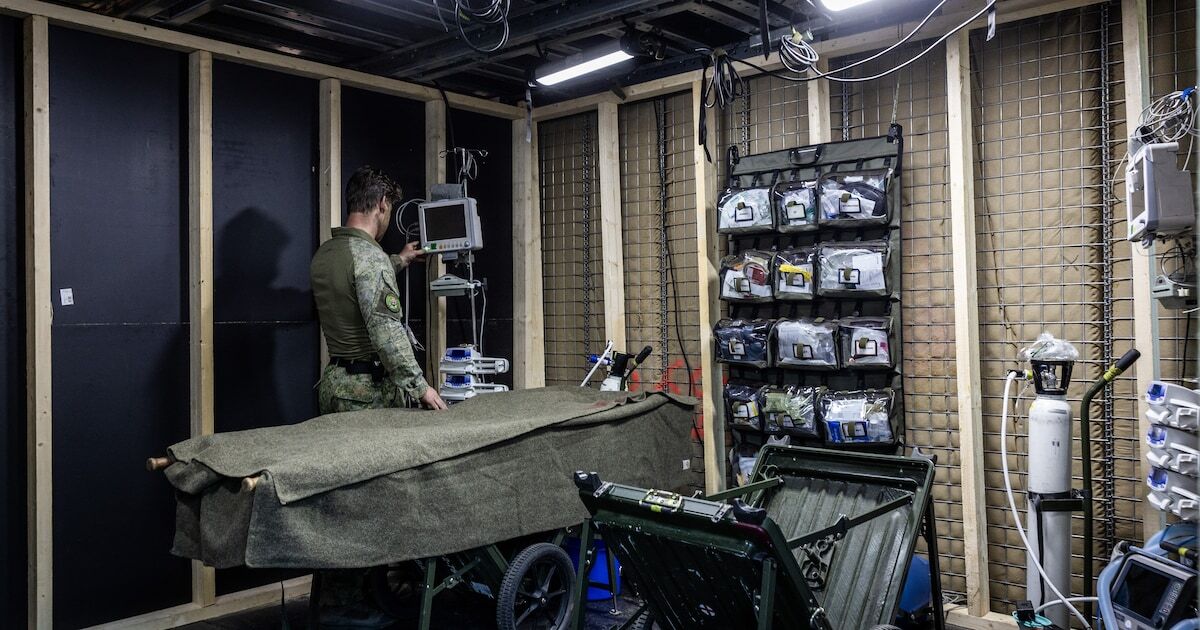
Dutch military forces are digging underground hospitals and employing various camouflage techniques, such as using net tunnels and even camouflaged umbrellas, to protect themselves from drone surveillance and attacks during military exercises like Fighter Lion in Germany, as they adapt to the evolving threats on the battlefield. #FighterLion #militairen #drones

www.ad.nl
Militairen graven ziekenhuizen onder de grond, want drones maken alles zichtbaar op het slagveld
16083
info aespa Brasil Jun 9

ELA TÁ VINDO! Após começar a subir nos principais charts coreanos, “Camouflage” também debutou no NAVER Daily em nova atualização. A b-side do segundo full álbum do aespa vem ganhando força no país. https://t.co/B5BrH0yeaB #aespa #Kpop #Camouflage

13716
Le Parisien May 25

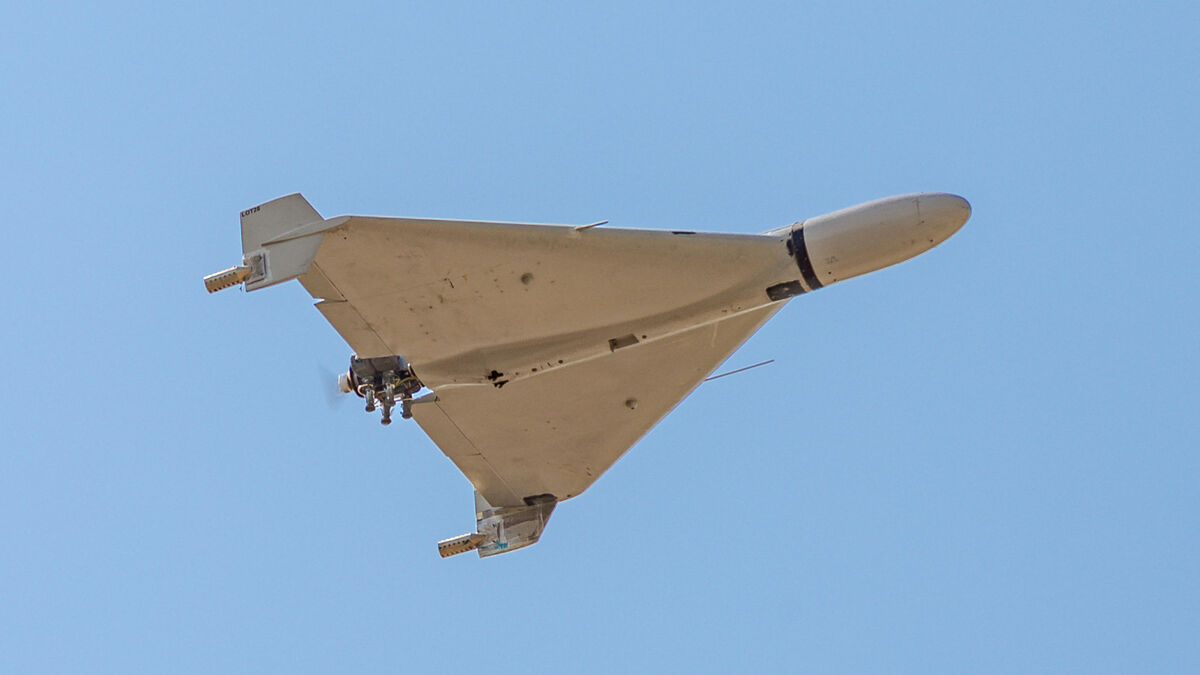
Les Gardiens de la révolution iraniens ont utilisé un réseau d'approvisionnement basé aux Émirats arabes unis pour acquérir du matériel militaire chinois, dont des équipements satellitaires, afin de renforcer leur programme de drones, tout en camouflage de leurs opérations pour éviter la détection par les États-Unis. #Iran #EmiratsArabesUnis #Chine

www.leparisien.fr
Guerre en Iran : comment les Gardiens de la révolution ont utilisé les Émirats arabes unis pour acquérir du matériel militaire chinois
16730
Özgür Özel May 22

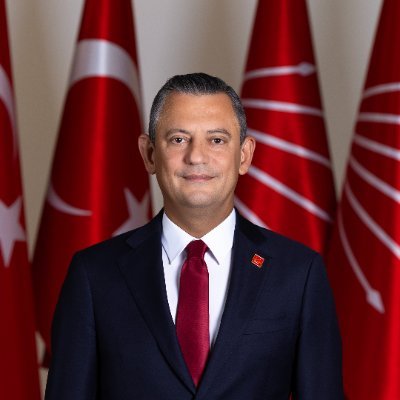
We are experiencing a dark day for Turkish democracy. These coup plotters don't come with tanks, cannons, rifles or camouflage; these coup plotters come in judges' and prosecutors' robes.

Turkish opposition fights court ousting of leaders in ruling boosting Erdoğan
www.bbc.com
8965
Özgür Özel May 22

We are experiencing a dark day for Turkish democracy. These coup plotters don't come with tanks, cannons, rifles or camouflage; these coup plotters come in judges' and prosecutors' robes.

Turkish opposition fights court ousting of leaders in ruling boosting Erdogan
www.bbc.com
8368