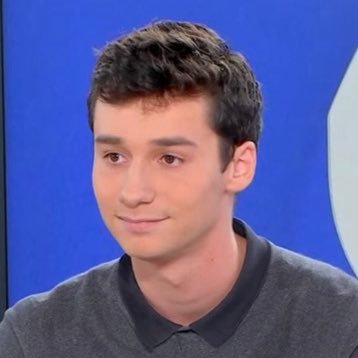
Ilan Gabet mentioned the National Superior Conservatory of Music and Dance of Paris and wrote that "something was happening," sharing a link. https://t.co/djVUOUddsi #musique #danse #Paris (translated)

Ilan Gabet mentioned the National Superior Conservatory of Music and Dance of Paris and wrote that "something was happening," sharing a link. https://t.co/djVUOUddsi #musique #danse #Paris (translated)

Ilies Djaouti stated that Stanislas College and the Conservatoire de Paris were blocked, calling the situation historic. https://t.co/fDqXUKg64p #Éducation #Paris #Histoire (translated)


Workers' Information stated that the Conservatoire de Paris (CNSMDP) was blocked this morning for the first time in its history. #BlocusUniversités #BlocusLycées https://t.co/s164wtjH5I #Blocus #Éducation #Paris (translated)


In Paris, a conservatory offers neuroatypical children the opportunity to express themselves on stage, highlighting their right to culture and creativity. #Neurodiversité #Conservatoire #ÉducationInclusive (translated)

Cerfia reported, citing 20 Minutes, that a lecturer-researcher from the University of Bordeaux had accessed pornographic content during a class while his computer was still connected to the projector. The images would have been visible to the L2 students present in the room. According to the publication, the university had suspended the lecturer provisionally while waiting to establish the circumstances of the events. #Université #Insolite #Bordeaux (translated)


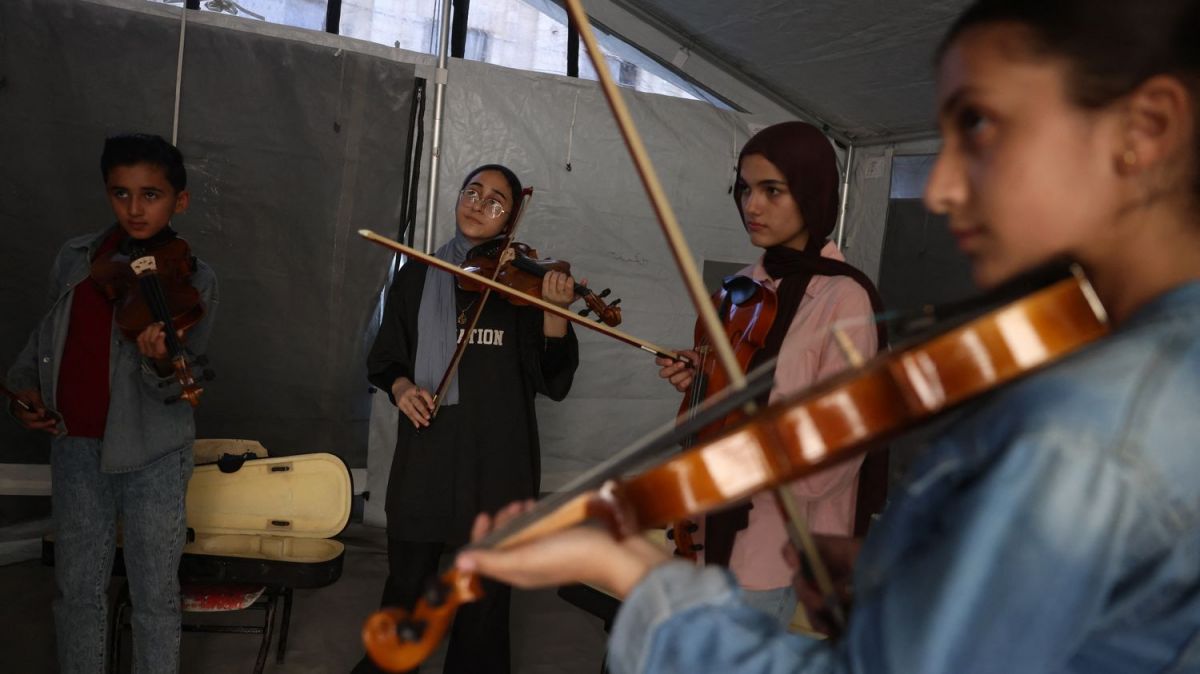
Malgré la destruction du conservatoire Edward Saïd à Gaza, des professeurs continuent d'enseigner la musique sous des tentes, offrant aux enfants déplacés l'espoir et la beauté des notes au milieu des ruines. #Gaza #Musique #Résilience
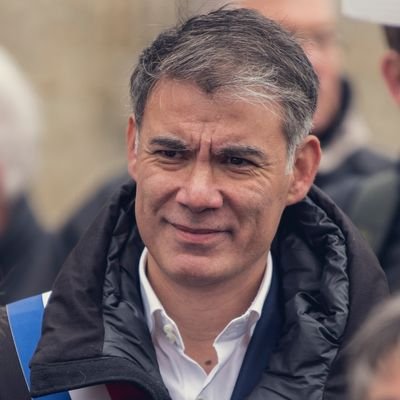
Je veux dire à toutes les femmes victimes de violences : je vous crois ! La mesure conservatoire prise à l’unanimité du bureau national du Parti socialiste, moins une voix, était la seule décision possible. Pour le reste, c’est à la Justice de faire son travail. https://t.co/3zvTFrT7kl #ViolencesFaitesAuxFemmes #JusticePourLesFemmes #PartiSocialiste #FR
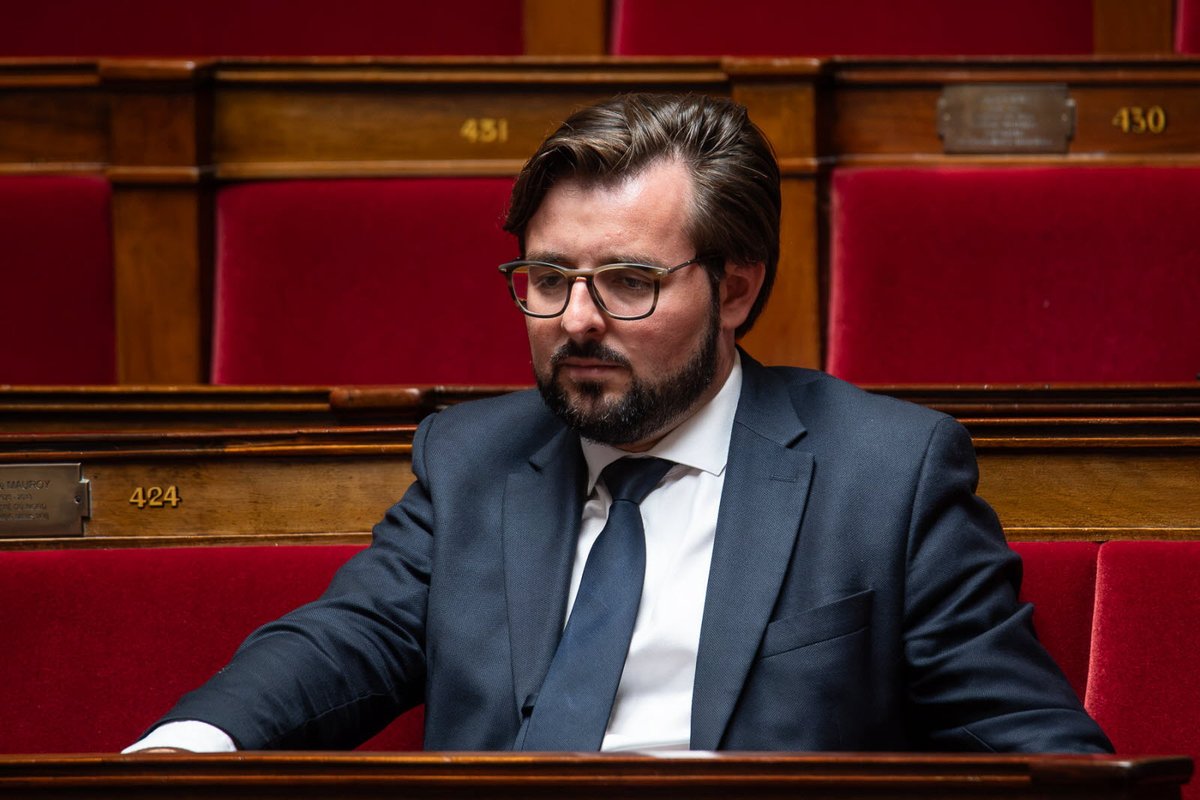
🇫🇷 FLASH | Le député Philippe Brun a été SUSPENDU à titre conservatoire du Parti socialiste après des « accusations de violence » et est écarté de la primaire de la gauche pour la présidentielle de 2027. https://t.co/gbWollPVkG #Politique #France #PS

🚨🚨💣 LA COUR D’APPEL DE PARIS CONDAMNE KYLIAN MBAPPÉ 🇫🇷 À VERSER 60.000€ AU PSG !!!! 💰 Ce, pour les saisies conservatoires qu’il avait fait pratiquer sur les comptes bancaires du club de la capitale au printemps 2025. Les fonds avaient été immobilisés pendant 45 jours, du 10 avril au 25 mai 2025. Les juges ont également refusé d’accorder un préjudice d’image et de réputation au PSG, qui réclamait sur ces fondements 1 euro symbolique. ❌ 🗞️ @lequipe #KylianMbappé #PSG #Justice


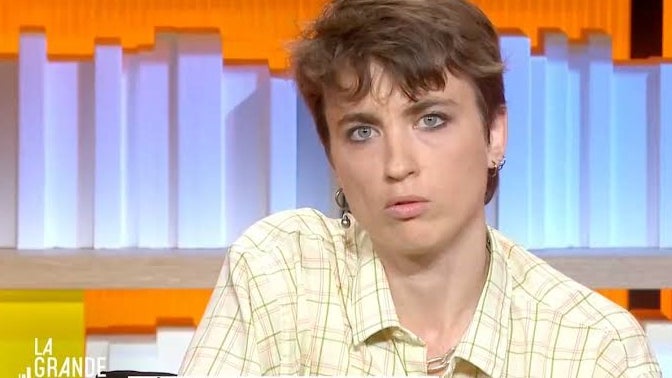
Après la suppression du replay de l'émission La Grande Librairie où Adèle Haenel a dénoncé le génocide en Palestine, France Télévisions a rejeté toute accusation de censure, affirmant avoir agi par mesure conservatoire suite à l'absence de points de vue contradictoires. #AdèleHaenel #Censure #GénocidePalestine

The Vindication of the “GIO Festival”: “BroadwayWorld” Celebrates Marina and the Umberto Giordano Theatre of Foggia SOURCE: https://www.linkedin.com/pulse/vindication-gio-festival-broadwayworld-celebrates-sardella-ph-d--8zzce/ SOURCE: https://www.letteremeridiane.org/2026/08/la-rivincita-del-gio-festival-broadwayworld-celebra-marina-e-foggia/ The GIO Festival has been, to put it mildly, overlooked by Rai3 Puglia and several regional outlets. Yet the festival dedicated to Umberto Giordano — promoted by the Chamber of Commerce of Foggia together with the Municipality and the Province, and supported by the Apulia Region and the Fondazione Monti Uniti — has achieved a remarkable vindication, landing on the homepage of BroadwayWorld thanks to the world première of the opera Marina, staged on 5 June at the Umberto Giordano Theatre in Foggia. This is no small feat, considering that BroadwayWorld is among the most influential American platforms devoted to theatre and the performing arts. The transatlantic debut of the opera by Foggia’s great composer did not escape the attention of Luciano Magaldi Sardella, who submitted to the editorial board of Lettere Meridiane an in‑depth and compelling contribution, reproduced below. In the article, the author masterfully reconstructs the extraordinary story of Giordano’s first opera, composed in 1888 and left without a staged production for 138 years, until its historic performance on 5 June at the Giordano Theatre. Above all, he recounts how the inaugural edition of the GIO Festival has restored Foggia to the centre of the international operatic stage, through the rediscovery and valorisation of Marina, the involvement of major musical institutions, and the attention of the American press. It is a stimulating reflection on the cultural and identity‑driven renaissance of a city that, for far too long, bore Giordano’s name on the façade of its theatre without managing to turn it into a lever of international visibility. (g.i.) + + + + + There are moments in the life of a city when past and future clasp hands upon the stage of the present. Foggia experienced one of these moments on the evening of 5 June 2026, when the curtain of the Umberto Giordano Theatre rose upon Marina, an opera composed in 1888 by a young man of twenty‑one — Umberto Giordano — then a student at the San Pietro a Majella Conservatoire in Naples. After one hundred and thirty‑eight years of silence, that score finally found its first scenic breath in the world. “It is not an ordinary event. It is a turning point. A void filled. A story rewritten.” Umberto Giordano, one of the most celebrated verismo composers of the fin‑de‑siècle — born in Foggia, author of masterpieces such as Andrea Chénier, Fedora, Siberia — had remained, until now, the only great Italian opera composer without a festival entirely dedicated to his oeuvre. A paradox that weighed like a historical injustice upon a city that bears his name engraved on the pediment of its most beautiful theatre. This is the extraordinary journey of Marina, Giordano’s first opera, which after 138 years of oblivion received its world première in scenic form on 5 June 2026 at the Umberto Giordano Theatre in Foggia, as the opening event of the GIO Festival — the inaugural edition of the Giordano International Opera Festival. The manuscript, preserved in the Frederick R. Koch Collection at Yale University’s Beinecke Rare Book and Manuscript Library, has travelled an astonishing path: from the elite libraries of America’s East Coast to the beating heart of the Daunia. On the night of 5 June 2026, at the Umberto Giordano Theatre, that silence was finally broken. The GIO Festival was conceived in Foggia as an ambitious cultural project promoted by the Chamber of Commerce, the Municipality, and the Province, with the support of the Apulia Region, aiming to transform the artistic legacy of the verismo composer into a driver of territorial development and cultural tourism. Under the artistic direction of conductor Gianna Fratta and violinist Dino De Palma, the event at last fills a historical void. Its model is explicit and ambitious: a project inspired by the great festivals dedicated to Italian composers — such as the Verdi Festival, the Puccini Festival, the Rossini Opera Festival — while maintaining a strong territorial and participatory dimension. In other words, Foggia formally claims its seat at the table of the greats. And it does so with the credentials required: an unrepeatable world scenic première (parallel to the concert première at Milan’s Teatro Dal Verme, recorded by the prestigious opera label Decca Classics), a high‑quality operatic production, and the support of leading cultural institutions (Teatro dell’Opera di Milano, Fondazione Teatro Petruzzelli of Bari). The festival benefitted from the collaboration of the Orchestra of the Conservatoire and the Chorus of the Fondazione Teatro Petruzzelli of Bari, the Umberto Giordano Conservatoire of Foggia, the Fondazione Monti Uniti, and the Fondazione Apulia Felix. A network of excellence that lent the event national resonance and stature. The Umberto Giordano Theatre is a nineteenth‑century jewel of rare beauty — the oldest functioning horseshoe‑shaped historic theatre in Apulia. Yet for decades it lived in a state of semi‑clandestine cultural marginality, relegated to the periphery of the operatic routes that matter, hindered by long interruptions in its use from 2007 to 2014, including recent fire‑safety compliance requirements. Some referred to it, with a mixture of condescension and provincial resignation, as a “provincial theatre”, destined merely to bear Giordano’s name. That label is now destined to fall. It is precisely in Foggia that this youthful gem received its first scenic staging, placing the city on the international map of opera. A positioning without precedent in the city’s recent history. The Giordano Theatre recorded a full house for the historic première of Marina, welcoming hundreds of spectators, while many more followed the performance from outside via a large screen installed for the occasion. The production met expectations with full artistic dignity: the staging transposed the narrative to the First World War, heightening the opera’s dramatic and realist character. On the podium, the Symphony Orchestra of the Umberto Giordano Conservatoire conducted by Matteo Dal Maso. Sets and costumes by Alfredo Troisi; lighting by Massimo Russo. An ensemble of talents worthy of the name the theatre proudly bears. The definitive seal of this moment’s historical significance arrived from across the Atlantic. BroadwayWorld, the world’s most influential outlet for live performance criticism and reporting — with over 5.5 million monthly views — dedicated exclusive coverage to the event, publishing a complete photographic gallery of the world scenic première curated by Chloe Rabinowitz and a substantial critical review by Rachel Stone. The American article emphasised the historical value of the undertaking and the bond between the composer and his native city, highlighting the musical quality of the score, deemed surprisingly mature for the composer’s age. For the first time, the Umberto Giordano Theatre appeared on the New York‑based site alongside institutions such as the Los Angeles Opera House, Houston Opera, and BBC Classical Music at the Royal Opera House. It is its natural place. It should have been there decades ago. Until now, the world knew Giordano through his Milanese triumphs, not through the youthful opera written between Foggia and the Naples Conservatoire — the lost (and later rediscovered) Marina of 1888. Let us be clear: this is no minor detail. BroadwayWorld does not grant exclusive galleries to provincial theatres. It does so for events that shift the coordinates of musical and theatrical history within the circuits that matter. This time, those coordinates shifted to Foggia thanks to the GIO Festival, in the name of Umberto Giordano. For the record — and for those who may not yet know — the GIO Festival is a new and ambitious biennial event conceived by the Chamber of Commerce of Foggia, with the aim of celebrating the genius of Umberto Giordano and transforming it into a powerful engine of development for the entire Capitanata. Biennial means continuity, planning, vision. It means that Foggia does not intend to be a meteor in the operatic firmament, but a stable and recognisable presence within the international festival circuit. Andrea Chénier, Siberia, and Fedora had already carried Giordano’s name to the Metropolitan Opera House in New York for more than a century, where his works are still performed to great acclaim. Now Foggia itself — not merely its scattered operatic legacy — claims its rightful “place in the sun”. The composer whom his city struggled to recognise in life, and whose name it preserves on its theatre, its square, and its conservatoire, may finally become the lever of an unprecedented cultural, economic, and identity‑driven renaissance. The GIO Festival 2026 is not, one hopes, a point of arrival. It should be the first chapter of a new story for Foggia, for the Capitanata, and for the cultural South of Italy. The Umberto Giordano Theatre is no longer merely an architectural jewel to be preserved: it has now become a place of creation and inspiration, capable of attracting international press attention and hosting events that enter the annals of world opera. To those who still whisper that Foggia is a provincial city, the answer is now written upon the world’s stages: on the evening of 5 June 2026, the periphery became the centre.

The GIO Festival Captures the Attention of Broadway World: International Spotlight on the Staged World Premiere of Umberto Giordano’s Marina SOURCE: https://www.linkedin.com/pulse/gio-festival-captures-attention-broadway-world-staged-sardella-ph-d--pw1qe/ SOURCE: https://www.immediato.net/2026/08/20/il-gio-festival-conquista-broadway-world-riflettori-internazionali-sulla-prima-scenica-di-marina-di-umberto-giordano/ The prestigious American outlet has devoted an extensive feature to the production presented at the Teatro Giordano in Foggia. The opera, composed in 1888 and left without a true staging for almost 140 years, has returned to life within the festival directed by Gianna Fratta and Dino De Palma. The staged world premiere of Marina, a youthful work by Umberto Giordano, has brought Foggia onto the pages of the international press. Broadway World, a US publication specialising in the performing arts, has dedicated a substantial article to the production presented on 5 June at the Teatro Umberto Giordano as part of the GIO Festival. Luciano Magaldi Sardella, in a communication sent to several editorial offices, highlighted the international resonance of the event, noting that it has attracted attention even overseas. The title chosen by Broadway World is unequivocal: “Marina, Umberto Giordano’s Lost Opera, Makes World Stage Premiere in Foggia.” An opera left in the shadows for nearly 140 years Marina was composed in 1888 by Giordano, then barely in his twenties and still a student at the Naples Conservatoire. The opera was submitted to the second edition of the Sonzogno Competition in Milan, but did not win and remained essentially forgotten for decades, even as the composer from Foggia would later achieve acclaim with works such as Andrea Chénier and Fedora. According to the feature, the score received its first concert performance only at the beginning of 2026 at the Teatro Dal Verme in Milan. The Foggia production, however, marked the opera’s true staged debut, in the theatre that bears Giordano’s own name. The staged premiere at the Teatro Giordano The production was presented on 5 June during the GIO Festival. Artistic direction was entrusted to Gianna Fratta and Dino De Palma, while the staging was directed by Giandomenico Vaccari. As reported by Broadway World, the production relocated the narrative to the period of the First World War, emphasising the dramatic and realistic character of the opera. Valeria Sepe performed in the role of Marina, while the Orchestra Sinfonica of the Conservatorio Umberto Giordano in Foggia was conducted by Matteo Dal Maso. The cast also included Samuele Simoncini as Giorgio Lascari, Elia Fabbian and Cüneyt Ünsal, and the Chorus of the Fondazione Teatro Petruzzelli, prepared by Marco Medved. Broadway World celebrates Foggia The American publication underscores the historical significance of the initiative and the bond between the composer and his native city. The symbolic value is considerable: in the theatre named after Giordano, Foggia has hosted for the first time the complete staged version of an opera that had remained outside the repertoire for more than a century. The feature also highlights the musical quality of the score, described as surprisingly mature for the composer’s age and already capable of anticipating elements that would later characterise Giordano’s subsequent works. A festival spanning Foggia, the Gargano and the Monti Dauni The GIO Festival—Giordano International Opera Festival—was promoted by the Chamber of Commerce of Foggia in partnership with the Municipality and the Province, with support from the Region of Apulia and Puglia Culture. The initiative involved not only the provincial capital but also the Gargano and the Monti Dauni, with a programme ranging across opera, jazz, cinema, dance, chamber music and scientific outreach. The festival concluded on 20 June with Andrea Chénier in Piazza Cavour, in a production originating at La Scala in Milan and brought to Foggia for the occasion. Gianna Fratta conducted the Chorus and Orchestra of the Teatro Petruzzelli. Foggia’s image beyond Italy’s borders The prominence achieved by Marina also represents an important result for the region’s cultural profile. The festival’s narrative seeks to enhance Foggia’s cultural heritage through one of its most emblematic figures. The appearance of the production on the pages of Broadway World reinforces this international dimension, transforming the revival of a forgotten opera into an opportunity for cultural promotion for the entire Capitanata.

From Yale University to Foggia: World Staging Premiere of Umberto Giordano's “Marina” at Foggia's Teatro Umberto Giordano SOURCE: https://www.linkedin.com/pulse/from-yale-university-foggia-world-premi%C3%A8re-scenic-sardella-ph-d--id9de/ SOURCE: https://www.foggiareporter.it/dalla-yale-university-a-foggia-la-prima-mondiale-in-forma-scenica-di-marina-al-teatro-giordano.html (With heartfelt thanks to the distinguished journalist, Dr Christiana Lenoci…) From the Frederick R. Koch Collection of the Beinecke Rare Book and Manuscript Library at Yale University to Foggia. Such is the extraordinary journey of Marina, Umberto Giordano’s first opera, which—after 138 years of oblivion—received its World Première in scenic form on 5 June 2026 at the Umberto Giordano Theatre in Foggia, inaugurating the GIO Festival – Giordano International Opera Festival. This remarkable rediscovery is recalled by Luciano Magaldi Sardella, Contributing Review of Books Critic at the London School of Economics (LSE). The project, conceived by Gianna Fratta and the artistic direction of the GIO Festival, seeks to transform Foggia, the Tavoliere plain, the Monti Dauni and the Gargano into a widespread stage dedicated to the city’s native composer, following the model of the great festivals devoted to Verdi, Rossini and Bellini. The vanished score At the age of twenty‑one, Umberto Giordano entered the Sonzogno Competition in Milan with Marina, a one‑act melodrama. Among seventy‑two competitors, he ranked within the top twelve. The prize was awarded to Pietro Mascagni’s Cavalleria rusticana. Giordano received an honourable mention, withdrew the score, and recycled part of its music in his later Mala Vita (1892). After his death in 1948, the manuscript disappeared and—entirely legally—ended up catalogued and forgotten within Yale’s collection. It was brought back to light by the musicologist and conductor Andreas Gies who, while studying the works of Leoncavallo, identified the autograph score in Yale’s online catalogue. Together with his colleague from San Severo, Emanuele d’Angelo, Gies prepared a rigorous critical edition that restored the work’s readability. Following its absolute première in concert form at the Teatro Dal Verme in Milan in February 2026—the very theatre that witnessed the early steps of Puccini and Leoncavallo—recorded live by Decca Classics with Eleonora Buratto in the title role and Freddie De Tommaso as Giorgio, praised by Gramophone and The Times of London, Marina finally returned home. Foggia reclaims it On 5 June 2026, the Umberto Giordano Theatre hosted the World Première in scenic form. The production was directed by Giandomenico Vaccari, who transposed the action to the era of the First World War; conducted by Matteo Dal Maso, winner of the Donatella Flick LSO Conducting Competition; and featured Valeria Sepe as Marina. A historic event for a city that lends its name to both its Theatre and its Conservatoire, yet until now had been the only among the cities of Italy’s great opera composers without a festival entirely dedicated to its own. The GIO Festival, from 5 to 20 June, unfolded across sixteen days and more than twenty events in seven municipalities of the Capitanata—Foggia, Manfredonia, Peschici, Vieste, Biccari, Roseto Valfortore and Torremaggiore—uniting opera, jazz, cinema and dance. The finale: opera as urban intervention On the evening of 20 June 2026, thirteen lorries arrived in Piazza Cavour in Foggia from Milan. They carried the entire production apparatus of Teatro alla Scala. The square was transformed into an open‑air theatre for Giordano’s Andrea Chénier, conducted by Gianna Fratta and featuring Maria Agresta and Jorge de León, before thousands of citizens. The opera of a revolutionary, erupting into the summer air of the city where Giordano was born. A gesture of proximity theatre demonstrating what a manuscript can achieve: turning a forgotten archive into a driver of economic and touristic development for the region, with Confcommercio’s puzzle‑based itineraries, Giordano‑themed menus, and QR codes featuring a digital avatar of the composer. Marina was lost for 138 years. To bring it back, six months, a library card, and a festival were enough.

"RadioText-RadioSoftware (1983–1989)": The First (Forgotten) Radio Programme of Computer Science Dissemination in Italy SOURCE: https://www.linkedin.com/pulse/radiotext-radiosoftware-19831989-first-forgotten-sardella-ph-d--eqief/ Radiosoftware represents Italy's absolute pioneer in broadcasting digital literacy education over the airwaves in the Belpaese. Abstract This paper reconstructs the history of Radiosoftware, the first Italian radio programme which anticipated by over a decade the dissemination of microtelematics, computing, and digital technology, as well as modern methods of digital software distribution. Established in 1983 at Radio Popolare and subsequently developed as a national initiative on Rai Radio 3 from 1984 to 1989, Radiosoftware represents the first Italian radio programme to broadcast educational content and transmit executable software for home computers over the airwaves. Through analysis of its technical evolution, educational content, and cultural impact, this article demonstrates how the initiative constituted a significant precedent in national computer literacy, the democratisation of access to software, and the development of amateur programming communities, establishing itself as the progenitor of a media ecosystem dedicated to technological dissemination that has extended into the contemporary era. Keywords: history of Italian computing, technological dissemination, digital broadcasting, computer literacy, Radio Popolare Introduction: The Dawn of Computing Dissemination in Italy In the landscape of Italian digital media history, a fundamental chapter remains little explored in academic literature: that of computing dissemination through radio broadcasting in the 1980s. In an era characterised by the absence of network connectivity and economic and geographical barriers to accessing computer technologies, radio configured itself as a democratic instrument for the diffusion of nascent digital culture. Radiosoftware emerges in this context as an absolutely pioneering initiative in Italy, anticipating not only analogous Italian experiences but also positioning itself amongst the first European experiments in software transmission over the airwaves. Its genesis at Radio Popolare in 1983 and subsequent evolution as a national programme on Rai Radio 3 bear witness to a trajectory of technical and pedagogical innovation that merits in-depth analysis. Contenuto dell’articolo The Original Phase: Radio Popolare (1983) The birth of Radiosoftware at Radio Popolare in 1983 constitutes the foundational moment of radio-based computing dissemination in Italy. In a period when personal computers still represented niche objects, the programme set out to systematically explore programming languages, hardware architectures, and practical applications of home computing, addressing a heterogeneous audience composed of students, teachers, hobbyists, and professionals. This first incarnation established the conceptual paradigms that would characterise the entire subsequent tradition: linguistic accessibility, pedagogical vocation, attention to the social and cultural dimensions of technology, and promotion of active listener participation. Contenuto dell’articolo The National Evolution: From Radiotext to Radiosoftware (1984–1989) The experience gained at Radio Popolare found systematic development in the national initiative coordinated by Rai Radio 3. The pilot phase, denominated Radiotext, commenced on 11 May 1984 as an experimental segment within the current affairs programme Un certo discorso, presented by Pasquale Santoli. Eight 30-minute episodes, broadcast on Fridays at 16:00 with Sunday repeats, tested the technical feasibility and public interest in the transmission of executable software through audio signals. Curated by Luigi Grimaldi and Giovanni Sighele of the Lega Informatica of Florence, in collaboration with Arci Media, the pilot phase demonstrated the viability of the concept. In autumn 1984, the format consolidated with the definitive denomination Radiosoftware, expanding to one-hour episodes and maintaining its placement within Un certo discorso. Contenuto dell’articolo The third season, inaugurated on 7 February 1986, introduced a thematic structuring articulated in three distinctive segments: "Hard & soft news" (updates and reviews), "Studiare con il computer" (educational applications), and "Radio + informatica" (experimental intersections between broadcasting and computing). This phase evidenced a growing pedagogical sophistication and greater attention to formal educational applications. In late 1986, the programme acquired editorial autonomy, transforming into an independent transmission with nocturnal weekend scheduling. 1987 marked a significant technical innovation with the introduction of the 4800 bit/s hardware interface developed by the RAI Research Centre in Turin, which enabled direct connection to the RS-232 serial port, overcoming the limitations of the audio-cassette method. The concluding phase, from February to June 1989, adopted a brief daily format (10 minutes, Monday to Friday at 19:45), concentrating on MS-DOS-compatible software. Despite the announcement of a cycle for 1990, no national transmission is documented beyond June 1989. Contenuto dell’articolo The Audio-Cassette Method (1984–1987) The initial methodology replicated the cassette loading mechanisms typical of 1980s home computers. Programmes were encoded as sequences of audio impulses—electronic noises incomprehensible to the human ear—which listeners recorded onto blank audiocassettes by connecting a tape recorder to the radio's audio output. The recorded cassette was subsequently played through the computer's cassette interface, which decoded the signals, loading the software into memory. This approach, based on modulation techniques similar to frequency-shift keying (FSK), guaranteed compatibility with heterogeneous platforms such as the ZX Spectrum 48K, Commodore 64, Olivetti M10, subsequently extended to the Apple II, MSX, BBC Micro, Olivetti M24 and M28. Each episode transmitted sequentially platform-specific versions for each system. Whilst accessible and revolutionary for mass distribution in pre-Internet Italy, this method presented significant limitations: low transmission speed, susceptibility to errors induced by radio interference or ambient noise, and the necessity for precise volume and timing adjustments. Contenuto dell’articolo The RAI-Radiosoftware Hardware Interface (1987) In 1987, the RAI Research Centre in Turin developed an advanced interface documented in CCIR reports as the RAI-Radiosoftware system. The principal innovation consisted of direct transmission at 4800 bits/s utilising biphase modulation organised in packets, enabling connection to the computer's RS-232 serial port without cassette intermediation. The interface was designed for operating system independence, with management software adaptable for MS-DOS, CP/M, and potential future extensions to Macintosh. For Olivetti M24 and M28 computers, a version with an internal card was available. The Research Centre additionally developed management software, test cassettes, and manuals, considering initial commercialisation at approximately 90,000 lire. This technical evolution represented a significant advancement in terms of speed, reliability, and usability, whilst maintaining the audio-cassette method in parallel to guarantee universal access. Contenuto dell’articolo Types of Software Transmitted The catalogue of software distributed through Radiosoftware reflected a broad range of applications: practical utilities (thematic databases on fashion, music, itineraries, and personalised diets), educational tools (didactic programmes for secondary schools, upper secondary schools, and conservatoires), recreational software (games such as the Olympic pentathlon for the Commodore 64), graphic demonstrations, and creative tools (bases for musical composition and digital comics). Particularly significant was the introduction, from the third season onwards, of educational software developed in collaboration with the Ministry of Public Education, designed specifically for scholastic use across various disciplines, not limited to computing. Contenuto dell’articolo Community Participation: The ORSA Section The Osservatorio Radiofonico del Software Autoprodotto (ORSA) [Radio Observatory of Self-Produced Software], reintroduced in the third season from February 1986, constituted a space dedicated to the transmission of programmes created by listeners. This feature transformed Radiosoftware into a bidirectional platform, anticipating collaborative logics that would characterise, decades later, open-source communities and participatory digital cultures. The "listeners' post" section within "Hard & soft news" additionally facilitated continuous dialogue with the public, integrating feedback, questions, and suggestions into the programming. Questionnaires distributed at the end of cycles and surveys conducted by specialist magazines such as Sperimentare con l'elettronica e il computer provided further mechanisms for evaluation and editorial orientation. Contenuto dell’articolo Institutional Collaborations and School Experiments In 1987, Radiosoftware collaborated with the ITIS Enrico Fermi in Rome to produce a series of transmissions dedicated to the development and application of educational software in scholastic contexts. The initiative involved experimental reception centres in 60 Italian schools, where students and teachers utilised the specialised interfaces developed by the RAI Research Centre to capture and load directly the transmitted software. These experiments positioned Radiosoftware as an operational instrument of pedagogical innovation, extending its impact beyond the hobbyist user base towards formal integration within the national education system. Contenuto dell’articolo Comparison with European Experiences Although Radiosoftware represents the first Italian national initiative, it was not the first European experiment in radio transmission of software. In the Netherlands, the programme Hobbyscoop on the public broadcaster NOS began transmitting computer programmes via radio around 1979–1980, subsequently developing the Basicode standard (from 1982). This standardised format utilised a restricted subset of BASIC commands and platform-specific translation routines, guaranteeing portability across heterogeneous architectures through FSK modulation at 1200 bps. Contenuto dell’articolo In the United Kingdom, The Chip Shop on BBC Radio 4, presented by Barry Norman and launched in 1984, included a "takeaway" service that transmitted Basicode programmes during nocturnal hours on VHF. Contenuto dell’articolo Technical and Cultural Differentiation Unlike approaches based on Basicode, which privileged portability at the interpreted language level, Radiosoftware transmitted platform-specific executable files, often in machine code, encoded as audio tones analogous to cassette loading signals. This choice reflected different priorities: maximising performance and the specific capabilities of each architecture rather than guaranteeing universal compatibility through a standardised language. The subsequent introduction of the 4800 bit/s interface with RS-232 connection represented a further differentiation, bypassing cassette recording entirely. These technical specificities bear witness to an autonomous development pathway, oriented towards the characteristics of the Italian computing market and ecosystem. Contenuto dell’articolo Transition towards Telesoftware Between 1988 and 1989, Radiosoftware was progressively accompanied and superseded by telesoftware transmitted through Televideo, RAI's teletext system. Technically defined by the RAI Research Centre in collaboration with Olivetti, the system became operational in 1989 following scholastic experiments coordinated with the Ministry of Public Education and Seleco in 1988. Telesoftware represented a natural evolution that shifted distribution from radio to television, offering advantages in terms of bandwidth capacity and already widespread reception infrastructure. This transition reflected broader trends in media convergence and the evolution of digital broadcasting technologies. Contenuto dell’articolo Obsolescence and the Rise of the Internet The emergence of the Internet in the 1990s rendered obsolete both radio-based and teletext-based methods of software distribution. Bidirectional digital networks offered incomparable speed, scalability, and interactivity, radically transforming the paradigms of software access and distribution. However, the conceptual legacy of Radiosoftware persists: the idea of mass distribution of executable digital content through broadcasting channels anticipated logics that re-emerge in modern over-the-air distributions of firmware and software updates for mobile devices and IoT. Contenuto dell’articolo The Ecosystem of Italian Radio-Based Computing Dissemination COMPLETE TIMELINE From the birth of computing dissemination on radio to the contemporary digital ecosystem 🟦 1983 — THE ORIGIN Radiosoftware – Radio Popolare (1983) The first Italian programme entirely dedicated to computing, programming languages, and personal computers. The absolute progenitor of the Italian tradition of radio-based technological dissemination. 🟦 THE 1980s — THE FIRST HEIRS 1984–1989 — Bit, Byte & Musica – Radio Popolare Technology, electronics, early networks, hacker culture. Continues the pioneering spirit of Radiosoftware, exploring the countercultural and communal dimensions of nascent computing. 1987–1990 — Decoder / Cyberpunk – Radio Popolare First systematic discussions of BBS, cryptography, alternative telematics, anticipating themes that would become central in the Internet era. 🟩 THE 1990s — THE INTERNET ERA 1993 — Golem – Radio3 Critical reflection on media and digital technologies, situating technological transformation within a broader cultural and philosophical framework. 1994 — Eta Beta – Radio1 Innovation, information society, digital transformation. Technological dissemination for a general audience in the phase of initial digital literacy. 1995 — Internetworkcity – Radio Deejay Presented by Claudio Cecchetto and Marco Camisani Calzolari, represents the first pop-commercial programme dedicated to the Internet, introducing email, websites, chat, and cyber culture to the mass public with accessible language and a massified educational approach. 1996–1999 — Mediamente (radio version) – RAI Dissemination on the Internet, networks, digital culture, with particular attention to the social and cognitive implications of emerging technologies. 1997–2000 — Cybernet / Tecnologie e Libertà – Radio Sherwood Free software, digital rights, civic networks. Continuation of the critical and communal tradition inaugurated by Radio Popolare, with focus on the political and libertarian dimensions of technology. This timeline evidences how Radiosoftware does not represent an isolated phenomenon, but rather the point of origin of a continuous tradition that has traversed over four decades. From the programming languages and over-the-air software transmission of the 1980s, through explorations of BBS and alternative telematics, to mass literacy on the Internet in the 1990s and critical reflections on free software and digital rights, a connecting thread emerges that testifies to the role of radio as a privileged space for the cultural mediation of emerging technologies. Contenuto dell’articolo Contemporary Recognition and Archival Preservation In recent years, Radiosoftware has acquired renewed attention as a pioneering initiative in the history of Italian computing. In 2024, contributions by scholars such as Andrea Fortuna have described the programme as a fascinating chapter in the diffusion of personal computing in Italy, underscoring its innovative approach to the distribution of executable software in the pre-Internet era. RAI has preserved selections from the initial phase of the programme through digital platforms such as RaiPlay Sound, where a dedicated playlist in the "Via Asiago 10" series includes several pilot episodes from 1984, originally broadcast on Rai Radio 3. Preservation efforts by enthusiasts have further contributed to maintaining accessible portions of the programme's legacy, with partial audio recordings and listener interviews available on dedicated websites. Radiosoftware constitutes a significant case study from multiple disciplinary perspectives. From the standpoint of media history, it represents an innovation in the utilisation of radio broadcasting, extending its functionalities beyond the transmission of audio content towards the distribution of executable code. In computing history, it testifies to strategies of democratisation of software access in contexts characterised by scarcity of resources and infrastructure. From a pedagogical standpoint, it anticipates models of distributed and community learning that re-emerge in modern online educational platforms. The participatory dimension embodied by the ORSA section prefigures collaborative dynamics that would characterise open-source cultures. Its position as progenitor of a continuous media ecosystem dedicated to technological dissemination—from Radio Popolare through national public broadcasters to the experiences of the 1990s—underscores the role of radio broadcasting as essential cultural infrastructure in the processes of national digital literacy. In an era when over-the-air distribution of software updates has become ordinary practice for billions of connected devices, Radiosoftware emerges not as an antiquarian curiosity, but as a conceptual antecedent that illuminates often-neglected technological genealogies. Its rediscovery and archival preservation constitute essential operations for a complete understanding of the roots of Italian digital culture.


Ils nous la font à l'envers, et les bras m'en tombent. « Ils », c'est la famille Le Pen (JMLP, MLP, MMLP...) et sa machine à cash: le RN/FN. C'est largement documenté : il existe des preuves écrites et des déclarations versées au dossier judiciaire. Ces éléments montrent que la direction du parti considérait explicitement le Parlement européen comme un moyen d'alléger les dépenses du parti en France, une "vache à lait" comme l'a titré Libération.. Mail de 2014 de Wallerand de Saint-Just (ex-trésorier du FN) à MLP : « Dans les années à venir et dans tous les cas de figure, nous ne nous en sortirons que si nous faisons des économies importantes grâce au Parlement européen et si nous obtenons des reversements supplémentaires. » Sophie Montel, ancienne députée européenne du FN/RN, a confirmé aux enquêteurs et aux médias la mise en place d'un système vertical : MLP exigeait des eurodéputés qu'ils ne gardent qu'un seul assistant réel et qu'ils cèdent le budget des autres enveloppes à un coordinateur central du parti. Selon l'Office européen de lutte antifraude (OLAF), MLP a reconnu avoir fictivement salarié Thierry Légier. Charles Van Houtte, comptable belge et ancien assistant parlementaire de MLP, a indiqué lors d'une audition en septembre 2017 que M. Légier « était garde du corps de la famille Le Pen et non pas assistant parlementaire ». Je pourrais continuer la liste… Ces faits sont publics. Et d'ailleurs, pendant des années, le FN/RN a cultivé une posture de défi vis-à-vis des institutions européennes, institution illégitime qui « vole » la souveraineté et l'argent des contribuables français. Au-delà du mésusage des fonds européens, il y a plus inquiétant, la mauvaise gestion. Plusieurs pièces écrites par l'ancien trésorier mettent en évidence de graves problèmes financiers dans les années 2010. Il y a ce tableau de « transferts de charges » qui ventile explicitement les salaires des employés du parti sous deux colonnes : « Siège » (à la charge du FN) et « Europe » (à la charge du Parlement européen). Puis l'email cité plus haut. Selon la Commission nationale des comptes de campagne et des financements politiques (CNCCFP), dans les années 2010, le parti était le plus endetté de France. La dette consolidée était comprise entre 12 et près de 24 millions d'euros. En 2018, la situation était si critique que les juges d'instruction avaient ordonné la saisie pénale conservatoire de 2 millions d'euros de subventions publiques dues au parti (source : Marianne). Enfin, conséquence de son inaptitude à se gérer financièrement, le parti s'est trouvé banni des circuits bancaires traditionnels nationaux et européens, dont les acteurs refusaient de lui prêter de l'argent. D'où le prêt russe de 9,4 millions d'euros, contracté en 2014 auprès de la First Czech-Russian Bank, puis repris par la firme Aviazapchast, liée au complexe militaro-industriel russe. D'où, aussi, les appels répétés aux micro-partis et aux prêts des militants (le « grand emprunt national »). Qui voudrait confier la gestion de son pays à une telle bande d'amateurs ? « Je réclame l'inéligibilité à vie pour tous ceux qui ont été condamnés pour des faits commis grâce ou à l'occasion de leur mandat. Parce que j'ai une éthique, une morale, que je m'y tiens, et que moi quand je réclame l'éthique et la morale, je me l'applique à moi-même. » (MLP, 5 avril 2013)

Face à la crise du dépérissement forestier en France, le Conservatoire d'espaces naturels d'Auvergne lance un projet inédit appelé Alti’Chênes, visant à étudier la capacité des chênes à s'adapter en étant plantés au-dessus de 1 000 mètres d'altitude sur plusieurs sites expérimentaux. #Forêts #RéchauffementClimatique #Conservation

🇫🇷📺 FLASH | Le tournage de la série « Ici tout commence » (TF1) a été interrompu après une violente ALTERCATION entre deux comédiens. Le groupe indique que l'acteur mis en cause a été écarté du tournage « à titre conservatoire » et assure avoir pris des mesures pour protéger ses équipes. #IciToutCommence #TF1 #SérieTélé


🚨 BREAKING ! Une affaire de harcèlement sexuel présumé a secoué la sélection sénégalaise pendant la Coupe du Monde ! 😱🇸🇳🔞 Accusé par une employée recrutée aux États-Unis, le chef cuisinier des Lions a été renvoyé au Sénégal à titre conservatoire. ❌🛫 Le secrétaire général de la Fédération sénégalaise, Abdoulaye Seydou Sow, a expliqué au micro de la RTS que le chef cuisinier avait été renvoyé après des faits « assimilés à du harcèlement sexuel ». Selon lui, la Fédération a préféré agir immédiatement plutôt que de risquer une intervention de la police américaine. Il ajoute que 𝗰𝗲𝗿𝘁𝗮𝗶𝗻𝘀 𝗰𝗼𝗺𝗽𝗼𝗿𝘁𝗲𝗺𝗲𝗻𝘁𝘀 𝗽𝗲𝗿𝗰̧𝘂𝘀 𝗰𝗼𝗺𝗺𝗲 𝗱𝗲 𝗹𝗮 𝗽𝗹𝗮𝗶𝘀𝗮𝗻𝘁𝗲𝗿𝗶𝗲 𝗼𝘂 𝗱𝗲 𝗹𝗮 𝗳𝗮𝗺𝗶𝗹𝗶𝗮𝗿𝗶𝘁𝗲́ 𝗮𝘂 𝗦𝗲́𝗻𝗲́𝗴𝗮𝗹 𝗽𝗲𝘂𝘃𝗲𝗻𝘁 𝗲̂𝘁𝗿𝗲 𝗰𝗼𝗻𝘀𝗶𝗱𝗲́𝗿𝗲́𝘀 𝗰𝗼𝗺𝗺𝗲 𝗱𝘂 𝗵𝗮𝗿𝗰𝗲̀𝗹𝗲𝗺𝗲𝗻𝘁 𝗮𝘂𝘅 𝗘́𝘁𝗮𝘁𝘀-𝗨𝗻𝗶𝘀... et que cette décision visait à préserver la sérénité du groupe ainsi que l’image du pays. 🤨 #HarcèlementSexuel #CoupeDuMonde #Sénégal