WRLD

Search

#Dignity
Irish Independent 22h

The article highlights that issues related to dignity and respect account for over half of the complaints received by a patient advocacy service. #Ciberseguridad #BloqueoDeAcceso #Cookies

www.independent.ie
‘Dignity and respect’ feature in over half of complaint issues raised with patient advocacy service

1938
António Guterres 1d

The author said that this year’s World Mental Health Day reaffirmed the expertise and leadership of people with lived experience of mental health challenges. They called for renewed commitment to mental health, efforts to remove stigma, and systems grounded in dignity and rights for all.

2950
Martina Navratilova 2d

The author criticized Washington state, describing its treatment of female athletes’ safety and dignity as a striking disregard for both. #WomenInSports #AthleteSafety #GenderEquality #US

2890
Ursula von der Leyen 3d

The author congratulated lawyer and human rights activist Navanethem “Navi” Pillay on her Nobel Peace Prize, saying few people had devoted their lives to justice, peace and human dignity as she had. The post also referred to the violence of apartheid in South Africa and the Rwandan genocide. #NobelPrize #HumanRights #Justice #ZA #RW

3348
Gunther Fehlinger-Jahn 3d

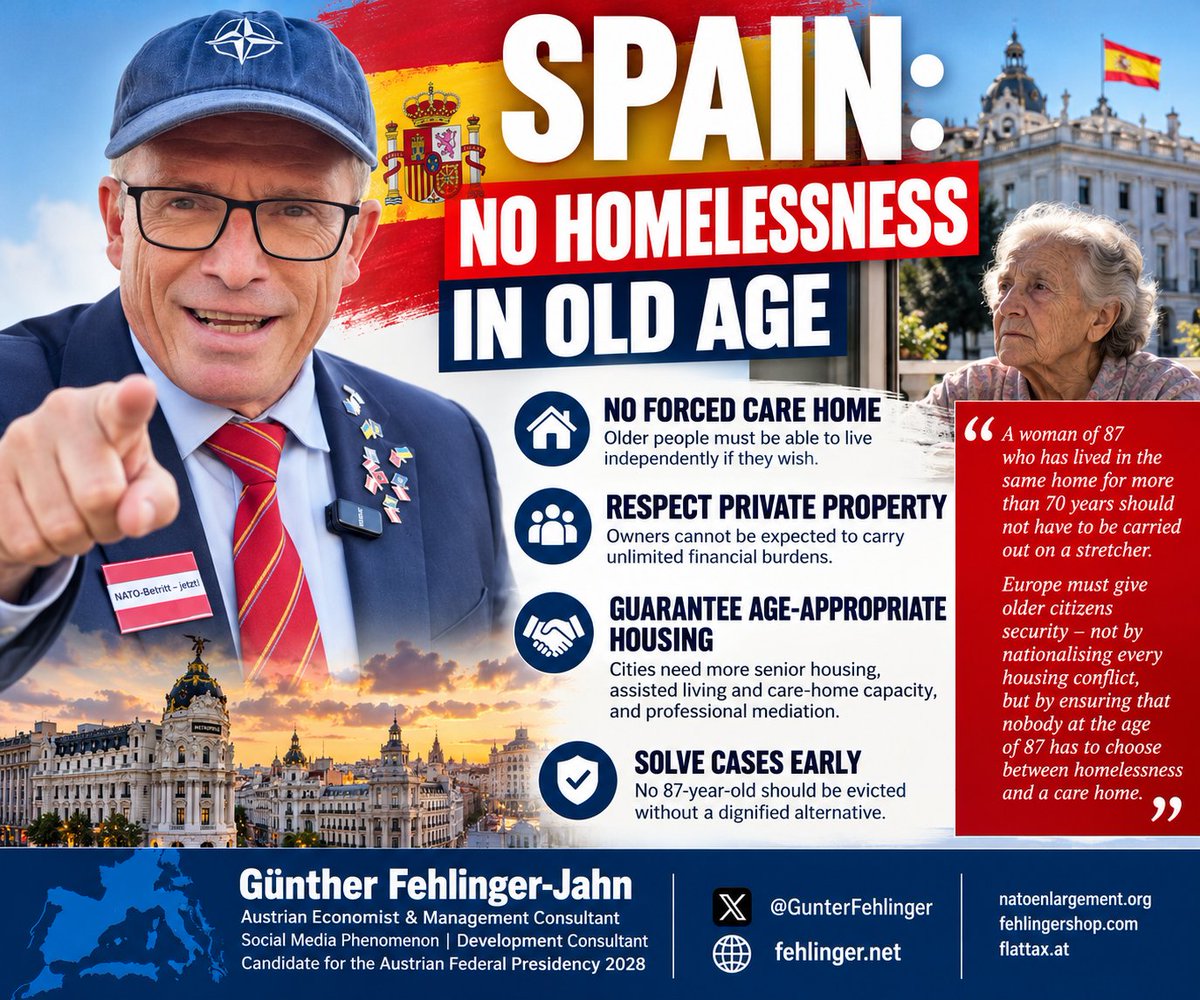
The author argued that Spain should protect dignity in old age, citing the case of 87-year-old Maricarmen in Madrid as a reason Europe needed a better balance between social responsibility and private property. They wrote that no elderly person should face homelessness or be forced into a care home, but the post’s final sentence ended before giving a reason. https://t.co/DkPtAgZOzO #DignidadEnLaVejez #ResponsabilidadSocial #DerechosHumanos #ES #EU

2911
Hadja Lahbib 5d

The author wrote that Hamas had killed 1,200 people and taken 251 hostage three years earlier. They said they remembered the victims and stood with their families and survivors, adding that Israelis and Palestinians alike deserved safety, dignity and stability. They called for a path to lasting peace to begin. #Peace #HumanRights #Solidarity #IL #PS

3389
Hadja Lahbib 5d

The author wrote that 1,200 civilians had been killed by Hamas and 251 people taken hostage three years earlier. They said they remembered the victims and stood with their families and survivors, adding that Israelis and Palestinians alike deserved safety, dignity and stability. The author said a path to lasting peace needed to begin. #Peace #HumanRights #StandTogether #IL #PS

3389
António Guterres 6d

The author wrote that more than 3 billion people were denied adequate housing, which they described as a universal human right and a foundation for dignity, security and opportunity. On World Habitat Day, they called for housing to be treated as a public good and for a world where everyone had a place to call home.

3967
António Guterres 2w

Around the world, racism continues to poison societies, deepen inequalities & deny people their fundamental rights & freedoms. The antidote is unity & tangible action. Let’s fight for the dignity, rights and belonging of all people, reject injustice & build societies where #FightRacism #UnityInDiversity #SocialJustice #Thetweetdoesnotmentionanyspecificcountries.Therefore #therearenocountrycodestoreturn.

1722
David Ojcius 2w

Pope Leo XIV in Metz: “To invoke God’s name in order to justify violence or oppression is to profane His name. Nothing that disfigures human dignity can claim to be inspired by God.” https://www.vaticannews.va/en/pope/news/2026-09/pope-leo-xiv-metz-france-interreligious-encounter.html #christianity #religion #PopeLeoXIV

www.vaticannews.va
Pope in Metz: God never inspires anything that disfigures human dignity - Vatican News
459
Mick Wallace 2w

At the UN General Assembly Iran speaks with Dignity + strength while Trump speaks of Violence, Aggression + Destruction but the UN, EU + Member States stay silent as they watch US efforts to destroy International Law... https://t.co/KkAVwk6S5E #UNGeneralAssembly #Iran #InternationalLaw #IR #US #EU

1610
S
Sandfeen 2w

The Death of the Insult There was a time when being called an idiot was not a public-health emergency. You were called an idiot. You called the other person an idiot. Perhaps you argued, perhaps you fought, perhaps you laughed, had a beer and forgot about it. That may sound primitive. It was also a social technology. In traditional honor culture, an insult was a challenge: if someone attacked your status, you were expected to answer. Men in particular developed cultures of teasing, mockery and competitive abuse in which the ability to give and take an insult could itself demonstrate confidence. Then came dignity culture, with a liberating idea: you don’t have to care what everyone thinks of you. An insult does not necessarily diminish you. Someone else’s contempt does not become your inferiority simply because they express it. Now something else is emerging. Sociologists Bradley Campbell and Jason Manning describe victimhood culture, in which interpersonal offences increasingly become public grievances. The offended party seeks recognition, an audience and sometimes institutional intervention. The old question was: “Are you going to say that to my face?” The dignity question was: “Why should I care what you think?” The new question increasingly seems to be: “Who can I report this to?” This may illuminate an uncomfortable gender difference. Men have historically been more permitted to insult and confront one another directly, while women have often had greater incentives to avoid direct confrontation and use social pressure, criticism and complaint. Neither pattern is exclusively male or female, but cultural habits matter. The danger is a society so determined to protect people from offence that it forgets to teach them how to withstand it. There is a difference between being harmed and being insulted, between injustice and discomfort, and between demanding justice and demanding that nobody make you uncomfortable. We may have travelled from honor, to dignity, to grievance. And perhaps the most subversive sentence left is also the simplest: “Yes, he insulted you. So what?”

921
Mariya Gabriel 2w

Tomorrow, @UNESCO welcomes #PopeLeoXIV to Paris. A historic moment to reflect on peace, human dignity, young people and how we can ensure AI serves humanity and the common good. Looking forward to this important dialogue at UNESCO. #UNESCO #Peace #AIForGood #FR

S
Sandfeen 3w

The Death of the Insult There was a time when being called an idiot was not a public-health emergency. You were called an idiot. You called the other person an idiot. Perhaps you argued, perhaps you fought, perhaps you laughed, had a beer and forgot about it. That may sound primitive. It was also a social technology. In traditional honor culture, an insult was a challenge: if someone attacked your status, you were expected to answer. Men in particular developed cultures of teasing, mockery and competitive abuse in which the ability to give and take an insult could itself demonstrate confidence. Then came dignity culture, with a liberating idea: you don’t have to care what everyone thinks of you. An insult does not necessarily diminish you. Someone else’s contempt does not become your inferiority simply because they express it. Now something else is emerging. Sociologists Bradley Campbell and Jason Manning describe victimhood culture, in which interpersonal offences increasingly become public grievances. The offended party seeks recognition, an audience and sometimes institutional intervention. The old question was: “Are you going to say that to my face?” The dignity question was: “Why should I care what you think?” The new question increasingly seems to be: “Who can I report this to?” This may illuminate an uncomfortable gender difference. Men have historically been more permitted to insult and confront one another directly, while women have often had greater incentives to avoid direct confrontation and use social pressure, criticism and complaint. Neither pattern is exclusively male or female, but cultural habits matter. The danger is a society so determined to protect people from offence that it forgets to teach them how to withstand it. There is a difference between being harmed and being insulted, between injustice and discomfort, and between demanding justice and demanding that nobody make you uncomfortable. We may have travelled from honor, to dignity, to grievance. And perhaps the most subversive sentence left is also the simplest: “Yes, he insulted you. So what?”

462
Sven Clement 3w

Peace is more than the absence of war. It means security, dignity, opportunity and the ability for people to build a future together. 🕊️ #InternationalDayofPeace #InvestInPeace #InternationalDayofPeace #InvestInPeace #PeaceBuilding #Thetweetdoesnotmentionanyspecificcountries.Therefore #therearenocountrycodestoreturn.

Luciano Magaldi Sardella (PhD) 3w

"ANTENNA SUD": SAN SEVERO - THE WORLD'S SMALLEST THEATRE BECOMES A STANFORD CASE STUDY SOURCE: https://www.antennasud.com/san-severo-il-teatro-piu-piccolo-del-mondo-diventa-un-caso-di-studio-per-stanford/ SAN SEVERO (FG) - Six chairs, fewer than two square metres, and performances reprised at intervals of fifteen minutes. It was upon such unassuming premises that there came into being, at San Severo, in the province of Foggia, the teatro edicola - the "kiosk theatre" - a diminutive cultural space wrought from a disused and long-abandoned news-stand, which today draws audiences, curiosity, and attention far beyond Italy's borders. The enterprise has been elevated to the dignity of a case study by Stanford University. In the "Stanford Social Innovation Review (SSIR)", the international journal dedicated to innovative solutions to social problems, there has been published the article "The Six-Seat Revolution", authored by the Foggia-based researcher Luciano Magaldi and supervised by editor David V. Johnson. The contribution is featured in the journal's Dispatches section. "It is an achievement which rewards our labour," emphasises Francesco Gravino, artistic director of the theatrical company Foyer 97, the protagonist of the undertaking. The idea is as simple as it is original: to transform a space fallen into disuse into a cultural outpost capable of accommodating petite spectacles and of forging an immediate rapport with the public. The format has already excited interest in other Italian cities. "Requests to replicate the model have reached us from other parts of Italy, such as Lucca and Rome," Gravino recounts. Hence also the appeal for intervention upon disused spaces: "What is required is a regional law affording the possibility of reconverting these places, wherein one might give life to manifold activities. Veritable cultural garrisons." In the kiosk theatre, performances endure but a few minutes, and the public is admitted in small parties. Six seats are available, performances follow one another in close succession, and an audience composed of the young and the adult has responded with constancy, frequently to the extent of being sold out. An experiment which has attracted the attention of the world of entertainment itself. Between the end of July and the first days of August, during his tour in Lucera, even Biagio Antonacci paid a surprise visit to the kiosk theatre. The singer-songwriter tarried within the space and sang Iris, drawing the attention of passers-by. "It was truly a most beautiful encounter which captivated the attention of all," Gravino recalls. Foyer 97 is now preparing its forthcoming programme. Next year, indeed, the company shall celebrate a significant milestone: "It shall attain its thirtieth anniversary, and it is an occasion we shall mark with sundry novelties," Gravino announces.

www.antennasud.com
San Severo, il teatro più piccolo del mondo diventa un caso di studio per Stanford
1274
Gunther Fehlinger-Jahn 4w

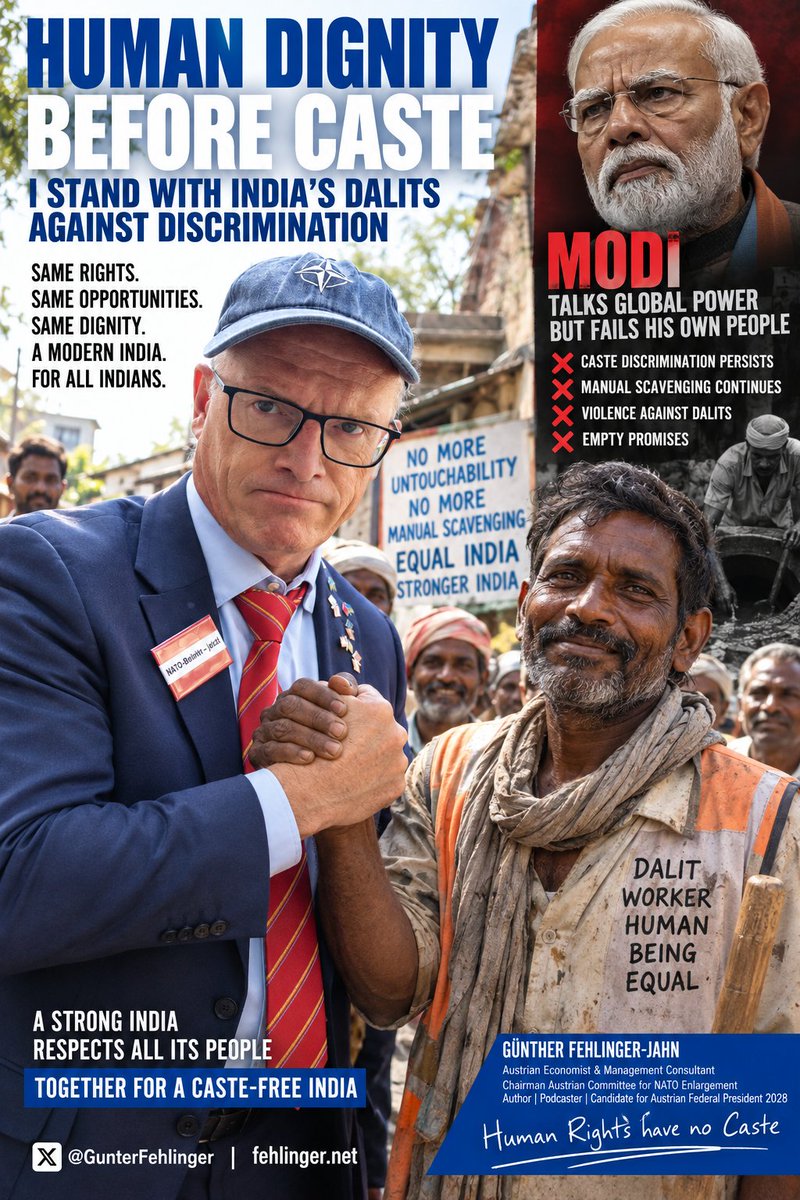
Human dignity before caste. 🇮🇳 I stand in solidarity with India’s Dalits and with every Indian who demands equal dignity, equal opportunity and equal protection under the law. India’s Constitution abolished “untouchability” under Article 17, yet Human Rights Watch has reported https://t.co/1ViPm9ulvb #DalitRights #HumanDignity #EqualityForAll #IN

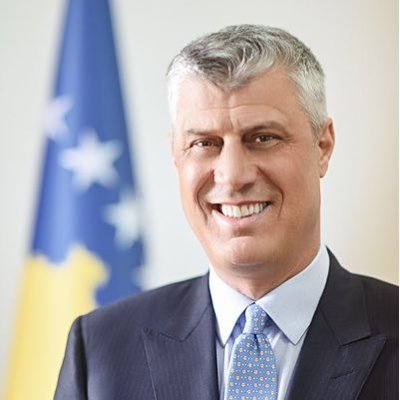
Hashim Thaçi 4w

Throughout my life, I stood with the people of Kosovo defending freedom, life and dignity. I was always guided by the Western ideals of democracy, equality and justice.

Kosovo's former President Thaçi convicted of war crimes at Hague court
www.euronews.com
9869
S
Sandfeen 4w

Leszek Kołakowski: Marxism, Historical Truth, and the Dangers of Political Absolutism Kołakowski was a major intellectual figure because he combined serious philosophical training, firsthand experience of communism, and the courage to revise his own convictions. He was not an anti-communist attacking Marxism from outside. He had once believed in Marxism and understood its appeal from within. After the 1956 thaw, he initially tried to recover a more humane Marxism based on freedom, dignity, and opposition to bureaucratic tyranny. His later criticism therefore carried unusual weight: it came from someone who had taken the doctrine seriously and tried to save it. His importance also lies in the distinctions he made. He did not simply equate Marx, Lenin, Stalin, and every form of socialism. In *Main Currents of Marxism*, he traced the development of Marxist ideas and examined how concepts such as historical necessity, class conflict, ideological truth, and the revolutionary party could encourage political intolerance. His central warning was that a movement claiming privileged access to historical truth may eventually treat disagreement not as legitimate opinion but as error, reaction, or treason. Once one party claims to represent history or humanity, it can justify controlling the press, courts, universities, civil society, and private life. This helps explain why communist regimes so often produced censorship, one-party rule, political policing, and coercive social transformation. My evaluation is that Kołakowski identified a genuine danger in Marxist political theory: the tendency to subordinate individual freedom and institutional pluralism to an allegedly necessary historical goal. His critique also makes the phrase “that was not real Marxism” inadequate on its own. Kołakowski’s greatest achievement was therefore not proving that “Marxism equals terror.” It was showing why a doctrine promising total liberation can become dangerous when it also claims total knowledge and gives one political organization the authority to impose that promise.

466
Gunther Fehlinger-Jahn Sep 10

SOUTH AFRICA: RAMAPHOSA, WHAT WOULD MANDELA SAY? 🇿🇦 Nelson Mandela made South Africa a global symbol of freedom, dignity, reconciliation and democratic legitimacy. That is why I find today’s BRICS alignment so difficult to understand. South Africa is a serious country, a major https://t.co/5NQ9z6wliJ #SouthAfrica #NelsonMandela #BRICS #ZA