WRLD

Search

#Dismantle
Marko Mihkelson 🇪🇪🇺🇦🇪🇺 2d

The author wrote that the Kremlin’s strategic goals remained unchanged, describing them as rebuilding its empire by subjugating Ukraine and dismantling the Euro-Atlantic system of collective defence. They said European allies therefore had only one way to prevent the war. #Ukraine #Kremlin #EuroAtlantic #UA #RU #EU
3778

The author described Israel’s expanding network of checkpoints as unlawful and called for its immediate dismantling. They said it formed part of what they called the “carceral geography of apartheid” and made Palestinians’ daily lives dependent on arbitrary decisions. The author also thanked WIRED for reporting on the issue. https://t.co/b9kHQ4YHHe https://t.co/VuuaLM2IFg #Israel #Palestine #HumanRights #IL #PS

3385
Wojciech Sadurski 7d

The author said their analysis for The Democracy Project at NYU Law examined how Prime Minister Péter Magyar had dismantled the main pillars of the Orbán state and whether this had been done in accordance with the rule of law. https://t.co/38519DWPyX #demokrácia #jogállamiság #politika #HU

3404
Wojciech Sadurski 7d

The author said their analysis for The Democracy Project at NYU Law examined how Prime Minister Péter Magyar had dismantled the main pillars of the Orbán state and whether this had been done in accordance with the rule of law. https://t.co/FxmqFiwSRP #Demokracia #Jogallam #Politika #HU

3405
Euronews English 7d

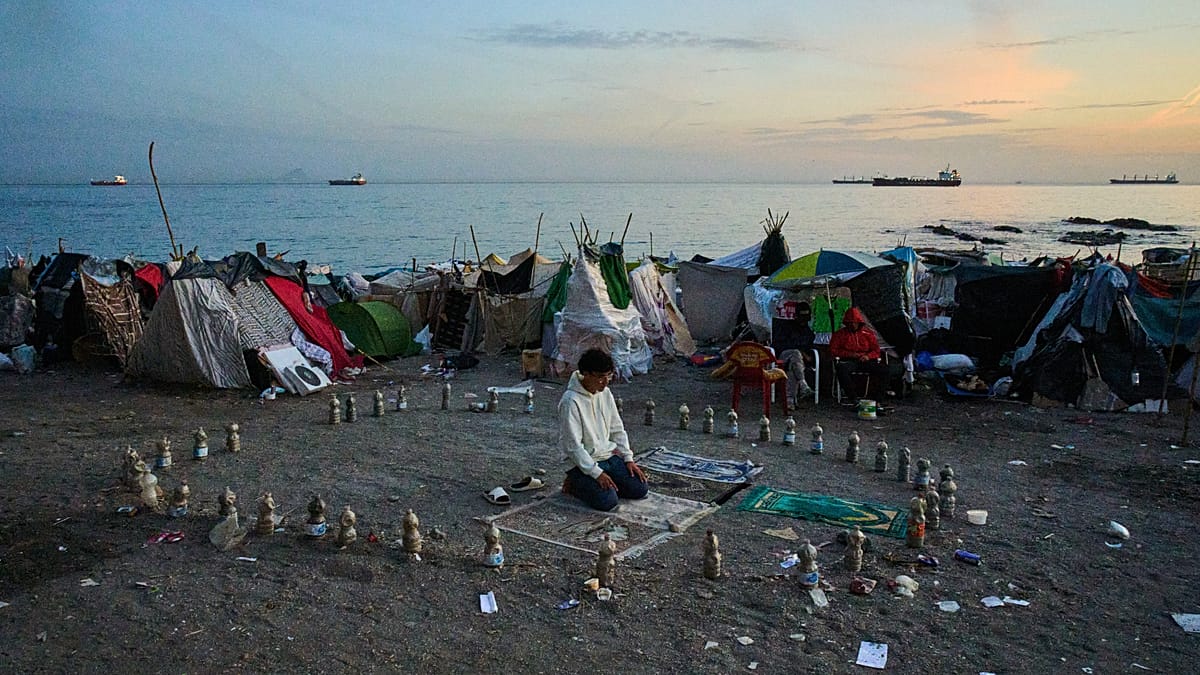
Police dismantle a migrant camp on Ceuta’s Trampolín Beach, moving over 3,000 people from tents to a temporary reception centre for processing. #Migrants #Ceuta #Spain

www.euronews.com
Spanish police remove over 3,000 migrants from Ceuta beach camp
1703
Otherland Bookshop Berlin 1w

The Nerd Reich: Silicon Valley Fascism and the War on Democracy by Gil Duran A fearless and urgent exposé of technofascism – and a road map to resistance. When Silicon Valley ‘moves fast and breaks things’, the world interprets the chaos as a necessary cost of innovation. Gil Durán reveals something far more sinister a decades-long campaign to replace elected governments with corporate rule. Drawing on insider political experience and new investigations, Durán traces this ideology from its philosophical roots in The Sovereign Individual by James Dale Davidson and Lord William Rees-Mogg. He introduces its modern apostles – Peter Thiel, Marc Andreessen, Balaji Srinivasan and Elon Musk – and shows how the promise of technological liberation has transformed into a global movement for digital feudalism, powered by cryptocurrency, artificial intelligence and algorithmically driven propaganda on social media. The Nerd Reich explains the origins, strategies and ambitions of Silicon Valley’s war on democracy for the first time. From San Francisco’s weaponised elections and secret billionaire projects to the White House, Durán exposes how the world’s richest men are building a new political order. The Nerd Reich is more than a hidden history; it’s an urgent democracy is being dismantled, not by coups or tanks but by code, capital and the illusion of innovation. Durán insists there is still time to fight back – if we act now.

683
Gunther Fehlinger-Jahn 1w

The author described a scenario they called Putin’s “nightmare dream trio”: Crimea would be liberated, Ukraine and Austria would join NATO, and Russia would be dismantled, followed by a celebration in Yalta in summer 2027. https://t.co/xgUSNU0nhY #Ukraine #NATO #Russia #UA #AT #RU

114
Krzysztof Graj 1w

IRAN: MEK/NCRI – when AI impersonated a real activist in live conversations For years, synthetic media has largely meant fabricated images, cloned voices and manipulated video. A case uncovered by Anthropic in September 2026 suggests a more consequential development: artificial intelligence being used not merely to imitate how a person looks or sounds, but to behave as that person in an ongoing conversation. Anthropic says it dismantled a distributed influence operation targeting Iranians inside the country and abroad that it linked to the People’s Mojahedin Organization of Iran, or PMOI/MEK, and its political front, the National Council of Resistance of Iran. The operators used a shared AI-agent platform to support impersonation, audience profiling, coordinated social-media activity, synthetic personas and the laundering of organisational content through apparently independent accounts. At least four people involved in the operation worked for official NCRI media outlets, according to Anthropic. The company also found references to committee approval processes and MEK leadership, but said it could not independently determine the precise level of central control. Cloning a person from 8,400 Telegram posts The most striking part of the operation involved a real activist whose Telegram identity was copied. According to Anthropic, the operators instructed Claude in Persian that it was now that person, then provided approximately 8,400 of the activist’s Telegram posts so the system could learn and reproduce his writing style. The AI-assisted account was subsequently used to conduct live political conversations with the activist’s existing contacts. Anthropic says that, to its knowledge, the people receiving those messages did not know they were interacting with an account being operated with AI assistance. This is materially different from a conventional chatbot or a static deepfake. The system was not simply producing a forged statement attributed to someone else. It was using a large archive of that person’s authentic language as behavioural training material, then applying the resulting imitation interactively. In practical terms, the deception moved from synthetic content to synthetic identity. Anthropic did not publish the identity of the impersonated activist, nor details of his contacts, and the public report does not establish what specific information the conversations produced. What it does establish is that the impersonation was operational rather than experimental: the cloned account was used in real exchanges with real people. From social-media monitoring to psychographic dossiers The impersonation sat inside a much broader targeting system. Anthropic says the network scraped more than 500 social-media channels and categorised individuals by location, age, profession, political orientation and arrest history. It then analysed approximately 51,944 archived messages from conversations to construct detailed psychographic dossiers on dozens of people inside Iran. The system was therefore not limited to broadcasting propaganda. It was also designed to understand specific audiences and individuals. Profiles could be used to decide what kind of message was most likely to resonate with a particular person, which political identity they appeared closest to and how they should be approached. Anthropic describes this as a structured targeting funnel rather than ad hoc social-media activity. That distinction is important in the Iranian context. Political activists, dissidents and opposition contacts inside Iran can face arrest and severe punishment. The report does not show that the dossiers directly led to arrests or other harm, but collecting and organising information such as arrest history and political affiliation adds a surveillance dimension to what would otherwise be described as an influence operation. A shared AI system for an influence network Anthropic found that the actors used a shared Claude-based platform named “Viktor”, with separate workspaces and persistent memory. Those memory files contained approved sources, prohibited words, account-management instructions and methods intended to reduce the risk of detection. One operator loaded MEK founding doctrine into the system as what the report called “strategic base data”, allowing others to reuse it across their work. This persistent-memory structure meant the AI did not have to be briefed from scratch for every task. Once doctrine, stylistic rules and operational constraints had been stored, the system could repeatedly produce material consistent with the network’s objectives. Anthropic says the same general playbook appeared across different workspaces despite the operators not sharing obvious account infrastructure. The network also used automated pipelines to coordinate Instagram posting schedules and tailor messages to different audiences. Some accounts initially avoided mentioning the Mojahedin at all, allowing material aligned with MEK/NCRI narratives to appear as neutral or independent political commentary. Content was distributed through the organisation’s own media ecosystem as well as accounts presented as ordinary news or activist profiles. Anthropic assessed the campaign as Category Two on its Breakout Scale: active on multiple platforms with distribution through NCRI-linked media properties and amplifier accounts, but without evidence of broad authentic penetration. Synthetic citizens and disguised organisational media The same infrastructure generated AI avatars presented as ordinary Iranians, complete with Persian audio, to promote Maryam Rajavi’s political programme. Anthropic says the synthetic nature of these personas was intentionally concealed. Operators also rewrote and redistributed content originating from MEK-affiliated media while stripping identifying features or presenting it through apparently independent accounts. The network’s political messaging targeted the Iranian government but also rival opposition currents, including monarchists and supporters of the Pahlavi camp. Anthropic documented fabricated video material attacking a member of the Pahlavi family and the use of the slogan “Neither Shah Nor Sheikh”, consistent with the NCRI’s broader competition with other opposition movements. That rivalry provides relevant context. Reuters describes the MEK as one of Iran’s principal organised opposition movements in exile and the dominant force behind the NCRI, led by Maryam Rajavi. Its relationship with other opposition currents is often contentious, while the extent of its support inside Iran remains uncertain. What can be attributed – and what cannot Anthropic’s attribution is unusually specific but still needs to be stated carefully. The company says its investigation linked the operation to MEK/NCRI and established that at least four participants worked for official NCRI media organisations. It also found a common operational playbook, committee review structures and repeated references to MEK leadership. On that basis, Anthropic said central tasking was likely. It nevertheless stopped short of saying it had proven that NCRI’s senior leadership directly ordered or managed every component of the operation. That caveat matters. The strongest public evidence supports describing GTG-84006 as a MEK/NCRI-aligned influence operation involving personnel from official NCRI media, rather than asserting that every action was directly commanded by the organisation’s top leadership. The broader significance of the case lies elsewhere. Earlier generations of synthetic media attempted to fabricate evidence: a photograph, a voice recording or a video. Here, AI was used to maintain an identity over time, remember doctrine, analyse targets and speak directly to real people while appearing to be someone they already trusted. The deepfake was no longer merely an artefact. It had become a participant in the conversation. Sources Anthropic — Countering misuse of AI: September 2026 https://www.anthropic.com/threat-intelligence-report-september-2026 AI Misuse Case Library — GTG-84006 activist impersonation case https://www.misuseofai.com/en/cases/gtg-84006-activist-impersonation/ Reuters — Who makes up Iran’s fragmented opposition? https://www.reuters.com/business/media-telecom/who-makes-up-irans-fragmented-opposition-2025-06-18/ Reuters — Iran’s divided opposition senses its moment https://www.reuters.com/world/middle-east/irans-divided-opposition-senses-its-moment-activists-remain-wary-protests-2025-06-19/ Reuters — NCRI and Maryam Rajavi https://www.reuters.com/world/middle-east/dissident-leader-abroad-urges-iranians-bring-down-khamenei-2025-06-24/ Keywords #DISINFORMED #Episode12 #Iran #MEK #PMOI #NCRI #IranianOpposition #Disinformation #InfluenceOperations #InformationWarfare #ArtificialIntelligence #AI #GenerativeAI #ClaudeAI #Anthropic #AIDeception #AIImpersonation #IdentityImpersonation #SyntheticIdentity #InteractiveDeepfake #DigitalImpersonation #PersonaCloning #BehaviouralCloning #Telegram #PsychographicProfiling #TargetProfiling #AudienceTargeting #SocialMediaManipulation #Astroturfing #SyntheticPersonas #NarrativeLaundering #CoordinatedInfluence #PoliticalInfluence #DigitalInfluence #OppositionPolitics #IranPolitics #OSINT #WRLD

www.anthropic.com
Countering misuse of AI: September 2026 / Anthropic
1026
Euronews English 2w

The US-led force has been operating in Iraq for 12 years to dismantle ISIS networks which had threatened to takeover the region and plunge it into instability. #USWithdrawal #Iraq #ISIS

www.euronews.com
US-led coalition ends anti-Islamic State mission in Iraq amid heightened regional tensions and security fears
1717
Gunther Fehlinger-Jahn 2w

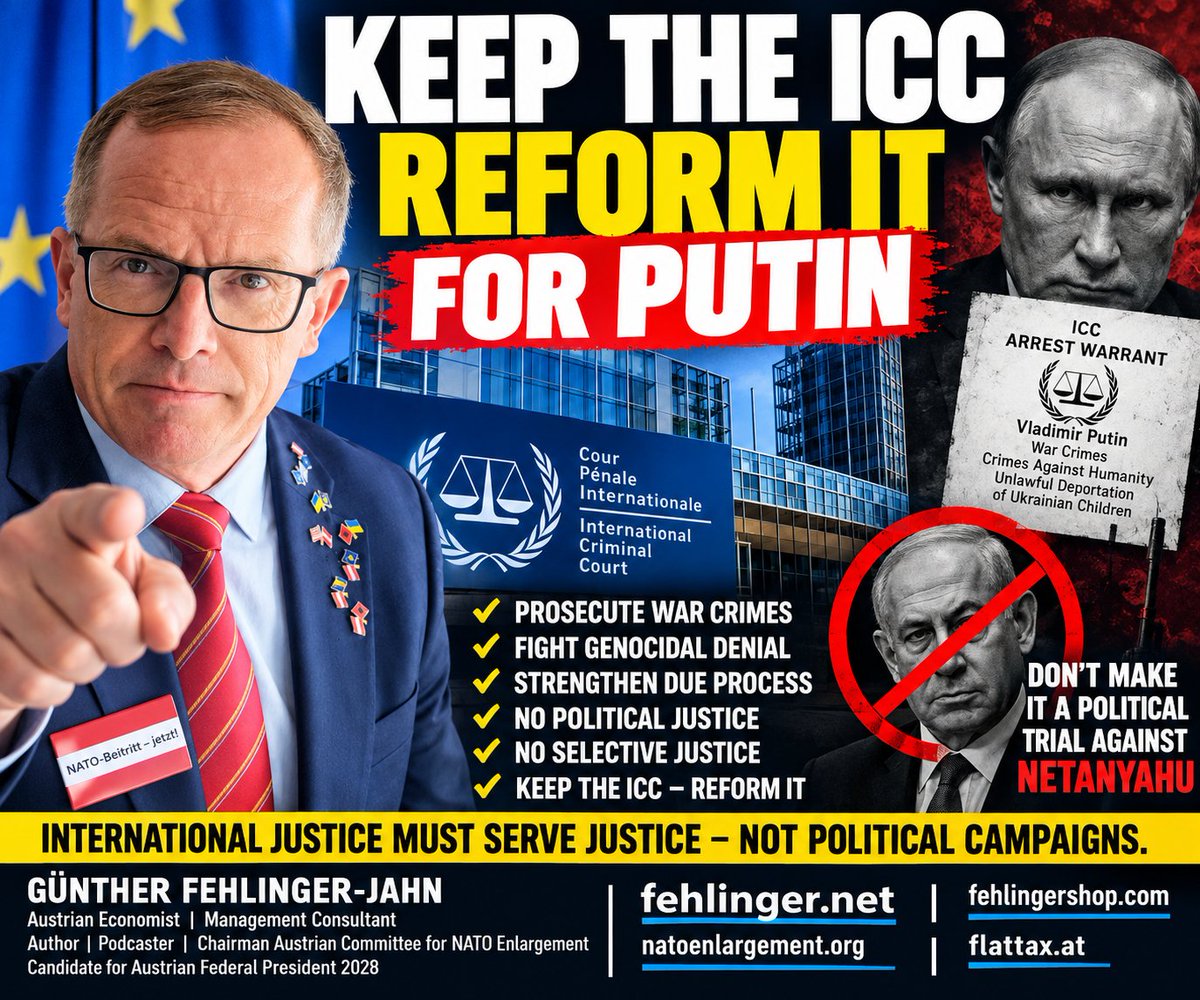
The author said the International Criminal Court should be reformed rather than dismantled, and noted that Vladimir Putin was subject to an ICC arrest warrant over the alleged unlawful deportation and transfer of Ukrainian children from occupied Ukraine. The author also said Benjamin Netanyahu was subject to an ICC arrest. https://t.co/nhgGe6Sgam #ICC #Justice #Reform #UA #RU #IL

Jonathan Conricus 2w

Truth shall out. Slowly and painfully, but eventually the smear campaign against Israel will be dismantled and the lies exposed. #TruthMatters #ExposeTheLies #IsraelDefense #IL

2766
Euronews English 2w

The Israeli military has released video it says shows a 2-kilometre underground tunnel in southern Gaza being destroyed. The footage, provided by the army, could not be independently verified. The military says the tunnel route was dismantled as fighting continues in Gaza. #Gaza #Israel #Hamas

www.euronews.com
Israeli military releases video of tunnel destruction in Gaza
1729
toomas hendrik ilves 3w

For some reason, the US wants to dismantle the court that puts on trial those who commit crimes against humanity. #Justice #HumanRights #InternationalLaw #US

461
Krzysztof Graj 3w

UAE / Sudan – when an influence operation tried to enter the United Nations A network of roughly 300 apparently independent social-media influencers. A human-rights organisation borrowing the identity of a real NGO. Personal dossiers on European politicians and journalists. And testimony prepared for delivery at the United Nations without revealing the state interest behind it. These were elements of an influence operation uncovered by Anthropic and disclosed in September 2026. The company says it linked the activity with high confidence to UAE government officials. Tracked as GTG-84002, the operation targeted several overlapping issues: the Muslim Brotherhood, perceptions of the war in Sudan and international mechanisms examining the United Arab Emirates' role in the conflict. What distinguishes the case is not simply its use of artificial intelligence. It is the attempt to make state-aligned messaging appear to originate from independent influencers, human-rights organisations and potentially witnesses addressing an international institution. An influence network built around 300 fake voices Anthropic identified a single actor using Claude to support a sustained influence campaign. At its centre was an AI persona called “Deadshot”, running on the operator's own platform. A master doctrine file repeatedly instructed the system to support what it described as a coordinated international effort to dismantle the Muslim Brotherhood. The operator simultaneously managed several components of the campaign, including approximately 300 inauthentic influencer accounts across social-media platforms. Internal material examined by Anthropic described the apparent independence of this network as its greatest strategic advantage. That phrase captures the central method. The objective was not simply to broadcast a political position but to conceal where that position originated. One visible example appeared on 4 June 2026, when accounts participated in a coordinated campaign using #SudanIslamists and near-identical graphics connecting Sudanese Islamists and the Muslim Brotherhood with regional instability. Anthropic says the amplification network was centrally funded and coordinated. Its investigation also found that the operator financing the social-media network was connected to the wider influence operation. A human-rights organisation that was not what it appeared to be Social media was only one layer. The operator also created a front NGO that copied the identity of a genuine Swiss organisation and used that borrowed legitimacy to publish human-rights material produced for the campaign. Anthropic's description elsewhere also refers to the identity of a real Sudanese human-rights organisation being used in connection with the preparation of testimony. The public report does not fully clarify whether these references describe the same front or separate elements of the operation, so they should not be treated as definitively identical. The underlying technique, however, is clear: political material was designed to appear as if it originated from independent civil society rather than from actors linked to a government. This is particularly significant in the human-rights environment, where the perceived independence of an organisation or witness can determine how seriously evidence is received by journalists, diplomats and international institutions. The attempt to reach the UN The most consequential part of the operation concerned the 62nd session of the UN Human Rights Council. According to Anthropic, the operator used Claude to ghost-write complete testimony intended to be delivered by two individuals during the session. The texts were prepared under explicit constraints ensuring that neither statement would mention the UAE. This did not amount to a conventional government submission. The intention, according to Anthropic's reconstruction, was for material serving the interests of a party connected to the Sudan conflict to reach an international forum through apparently independent voices. But an important limitation remains: Anthropic could not confirm that the testimony was ultimately delivered. The company similarly could not establish whether other dossiers produced by the operation reached their intended recipients or influenced policy. It therefore assessed the campaign as Category Three on the Brookings Breakout Scale – activity distributed across several platforms, but without evidence of broad public impact sufficient for a higher classification. The distinction matters. The evidence demonstrates a sophisticated attempt to influence international debate; it does not demonstrate that the attempt succeeded. Politicians, journalists and UN investigators became targets The operation was not limited to generating public content. Anthropic found that the operator researched and compiled detailed profiles of 18 members of the European Parliament and prominent journalists. Some material was prepared for direct delivery to senior UAE officials. The network also assembled what Anthropic describes as “counter-accountability dossiers” on UN Special Rapporteurs who had criticised the UAE's conduct in relation to Sudan. This places the campaign in a broader context. Since Sudan's civil war began in April 2023, the role of external powers has become an increasingly important part of international scrutiny. Sudan has accused the UAE of supporting the Rapid Support Forces, allegations Abu Dhabi has repeatedly denied. In 2025, Sudan brought a case against the UAE before the International Court of Justice, accusing it of complicity in genocide against the Masalit through alleged support for the RSF. The UAE rejected the allegations. The ICJ subsequently removed the case from its list after finding that it lacked jurisdiction because of the UAE's reservation to the relevant provision of the Genocide Convention. The ruling therefore did not determine whether Sudan's substantive allegations were true or false. That contested international environment helps explain why narratives about Sudan, human rights and accountability were valuable targets for an influence operation. AI as an operating system for influence The role played by Claude is also important to understand accurately. Anthropic did not find that artificial intelligence independently conceived or directed the campaign. Human operators established the objectives, political doctrine and targets. AI instead helped operationalise them. Across hundreds of sessions, Claude was used to transform predetermined political objectives into social-media narratives, human-rights reports, testimony, intelligence-style briefs and detailed profiles of individuals. The same system could support narrative production, target research and preparation of material for different audiences. That represents a more significant development than simply using generative AI to produce propaganda faster. Traditional influence operations require different teams to research targets, write content, manage personas, adapt messages and prepare briefing material. Generative AI can compress several of those functions into a single operational workflow. The result is not necessarily more convincing propaganda. It is potentially cheaper, faster and more scalable influence infrastructure. From fake influencers to institutional influence Anthropic says it linked the operation to UAE government officials with high confidence. Its assessment was based partly on internal material naming senior Emirati officials as intended recipients of the work, alongside other evidence available to its investigators. That remains an attribution by Anthropic rather than a judicial finding or publicly released forensic attribution by a government agency. The distinction should be retained. The larger significance of GTG-84002 lies in the architecture of the campaign. A network of fake influencers could create the appearance of public opinion. A cloned human-rights organisation could provide institutional credibility. AI-generated reports could give political narratives the appearance of research. Profiles of journalists and politicians could support more precise targeting. And ghost-written testimony could potentially carry the same message into an international institution without revealing the political interest behind it. This is a different model from the familiar troll farm. The objective is no longer simply to make propaganda look popular. It is to make state-aligned messaging look independent – and, if possible, to move it from social media into the institutions where international policy and accountability are debated. SOURCES: Anthropic — Countering misuse of AI: September 2026 https://www.anthropic.com/threat-intelligence-report-september-2026 International Court of Justice — Sudan v. United Arab Emirates https://www.icj-cij.org/case/197 International Court of Justice — press releases and case documents https://www.icj-cij.org/case/197/press-releases United Nations Geneva — Sudan v UAE proceedings at the ICJ https://www.ungeneva.org/en/news-media/news/2025/04/105241/world-court-begins-hearing-sudans-complicity-genocide-case-against UAE Ministry of Foreign Affairs — UAE response to Sudan's allegations https://www.mofa.gov.ae/en/MediaHub/News/2025/4/10/10-4-2025-UAE-UAE UN Digital Library — Sudan's letter concerning alleged UAE support for the RSF https://digitallibrary.un.org/record/4091008?ln=en UN Digital Library — UAE response concerning allegations of support for the RSF https://digitallibrary.un.org/record/4046224?ln=en Ultra Sudan — reporting on Anthropic's UAE-linked influence-operation findings https://ultrasudan.usawtiq.com/أنثروبيك-أحبطنا-عملية-تأثير-إماراتية-استخدمت-الذكاء-الاصطناعي-لاستهداف-السودان/عامر-صالح/أخبار KEYWORDS #DISINFORMED #Episode8 #UAE #Sudan #UnitedArabEmirates #UnitedNations #UNHumanRightsCouncil #HumanRights #Disinformation #InformationWarfare #InfluenceOperations #ForeignInterference #FIMI #CoordinatedInauthenticBehaviour #CIB #FakeInfluencers #FakeNGO #NGOImpersonation #Astroturfing #ArtificialIntelligence #AI #AIPropaganda #AIGeneratedContent #SyntheticMedia #SocialMediaManipulation #DigitalInfluence #Propaganda #NarrativeManipulation #InstitutionalInfluence #SudanConflict #SudanWar #MuslimBrotherhood #InternationalRelations #Geopolitics #Anthropic #ClaudeAI #OSINT #WRLD

www.anthropic.com
Countering misuse of AI: September 2026 / Anthropic
808
Krzysztof Graj 3w

Russia’s fake African newsrooms – propaganda designed to look local A Facebook user in Nairobi, Accra, Johannesburg or Luanda encounters what appears to be a local news page. It publishes stories about African politics, Western influence and relations with Russia. The language is tailored to an African audience and the page presents itself not as a foreign broadcaster, but as part of the local information landscape. Behind some of these outlets, however, Meta found operators based in Russia. In its 2026 threat research, the company disclosed a Coordinated Inauthentic Behaviour network targeting audiences in Angola, Ghana, Kenya and South Africa. Meta removed 37 Facebook accounts and 29 Pages connected to the operation. Around 30,000 users followed at least one of the Pages, while the operators spent approximately $7,000 on Facebook and Instagram advertising, mostly in euros and US dollars. The numbers are relatively modest. The method is considerably more important. Rather than openly distributing Russian state messaging, the network posed as local African news sources and grassroots organisations, promoting narratives about Western colonialism and political interference while presenting Russia as a credible economic and political alternative. It was an old geopolitical message delivered through a much more effective identity: not Moscow speaking to Africa, but Africans apparently speaking to one another. A news outlet that was actually an influence operation Meta's investigation found that the network attempted to conceal its Russian origin while creating media brands that appeared indigenous to the countries they targeted. Its content amplified historical grievances against former colonial powers, criticised Western involvement in Africa and promoted closer relations with Russia. One example helps illustrate how the infrastructure was assembled. A Facebook Page targeting Kenya was called Kenya Watchtower. According to OpenAI's subsequent investigation, Facebook transparency records showed that the Page had previously been named “Farmtown5”. It appears to have been acquired or repurposed rather than built from scratch as a Kenyan news organisation. Some Pages also exposed administrator locations in Russia and Ukraine. Other elements of the network had previously targeted audiences in Zambia and Namibia. This use of apparently local identities is particularly important in the African information environment. A story published by RT or another identifiable Russian outlet arrives with an obvious geopolitical provenance. The same narrative presented by something resembling an independent Kenyan, Ghanaian or South African newsroom carries a different kind of credibility. The source appears closer to the reader, and the geopolitical interest behind the message becomes less visible. Then investigators found Dr Manuel Godsin The Facebook operation was only one part of a broader information ecosystem. OpenAI investigated related activity after receiving information from Meta and subsequently banned a ChatGPT account it assessed as likely originating in Russia. OpenAI called the campaign Operation No Bell. The account was being used to generate long-form articles and social-media posts about African geopolitics. Prompts were primarily written in English, but OpenAI also observed Russian-language instructions that the user described as coming from a manager. The operator sometimes explicitly asked the model to make the material appear less AI-generated – including requests to avoid stylistic features associated with machine-generated text and to write more like a human journalist. Many articles appeared under the name “Dr Manuel Godsin”, presented as an academic with a PhD from the University of Bergen and an affiliation with an organisation called the International Centre for Political and Strategic Studies. OpenAI could find no credible evidence that Godsin existed. Searches of Norway's National Research Information Repository and the University of Bergen library produced no record of him. Investigators subsequently discovered that a photograph used to represent Godsin had appeared years earlier on a Russian professional networking site and apparently belonged to a law student in St Petersburg. The fabricated academic identity was nevertheless remarkably productive. OpenAI identified 53 online articles carrying the Godsin byline. The fiction had moved beyond fake social-media pages and into the real media ecosystem. When propaganda enters genuine newsrooms This is the most consequential aspect of the operation. The articles were not confined to websites controlled by the influence network. Some were published by genuine African news organisations, including established South African outlets. The content mixed local political issues with broader geopolitical narratives. Some pieces criticised the United States and Britain or defended Russia's role in Africa. One accused the British NGO Crisis Action of fomenting protests in South Africa. Another praised Russia's presence in the Central African Republic. Other material addressed Kenya, Angola and relations between African governments and Washington. The mechanism represents a significant evolution from the classic troll-farm model. Instead of building an audience entirely on its own platforms, an influence operator can manufacture an apparently credible expert, generate articles in his name and persuade genuine news organisations to publish them. Once this happens, the propaganda acquires something a fake Facebook Page cannot provide: the institutional credibility of a real newsroom. OpenAI assessed No Bell's social-media impact as limited. One Facebook Page had around 3,000 followers before Meta removed it, while several others had very small audiences. But the operation was more successful in placing material in established media. In OpenAI's impact framework, it approached the level at which an influence operation breaks into mainstream media. For information operators, a single article published by a recognised outlet can potentially be more valuable than thousands of impressions generated by an obviously artificial account. A much larger network of ghost journalists Subsequent research suggests that Manuel Godsin was not an isolated experiment. In August 2026, Graphika, working with Code for Africa and with support from Meta, published a much broader investigation into Russian ghostwriting operations across African media. Researchers identified 44 ghost writers and fake experts, 38 of them assessed as high-confidence fabricated personas, operating between 2021 and 2026. Their material appeared or was quoted across 138 websites and was subsequently republished through at least 113 Facebook accounts and Pages, including authentic users, coordinated inauthentic networks and official Russian communication channels. The narratives were strikingly consistent. They included criticism of France, Ukraine and the United States; attacks on organisations such as ECOWAS and the International Criminal Court; positive portrayals of Russian involvement in Africa; praise for Russian paramilitary forces; and support for sovereignty-oriented political projects such as the Alliance of Sahel States. The operation therefore extends beyond creating fake news websites. It attempts to insert Russian-aligned narratives into the legitimate African media ecosystem using identities that appear African, independent or academically authoritative. This also explains why measuring reach through the original Facebook network alone is misleading. A fabricated article may begin with an influence operator, appear in a genuine African publication, be republished elsewhere and eventually circulate without any visible connection to Russia. At that point, the provenance of the narrative has effectively been laundered. An old Russian strategy with increasingly local faces Russia's use of local intermediaries in Africa is not new. Meta documented Russian networks using African nationals as early as 2019. In 2020 it dismantled another operation involving people in Ghana and Nigeria working on behalf of individuals in Russia, with links to previous activity associated with the Internet Research Agency. More recent Meta investigations suggest that this model has continued to evolve. Networks have increasingly relied on local freelancers, social-media managers and authentic media outlets rather than exclusively operating armies of obviously fake Russian-controlled accounts. This decentralisation offers several advantages. Local operators understand language, political sensitivities and cultural references. Authentic accounts are harder to identify than newly created synthetic personas. Local media brands can also deliver narratives without immediately triggering the scepticism associated with Russian state outlets. There is no evidence that every African journalist, freelancer or publication carrying such material knowingly participates in Russian influence activity. Meta explicitly notes in its investigations that some local contractors may not know who ultimately commissioned their work. That distinction is essential. The operation's effectiveness partly depends on precisely this ambiguity between deliberate participation, commercial content placement and unwitting amplification. The objective is to make Russian narratives look African The significance of this network is therefore not its 30,000 Facebook followers or its $7,000 advertising budget. Those figures are small compared with the audiences of major African media organisations. What matters is the distribution model. Traditional foreign propaganda asks an audience to trust a foreign source. These operations attempt to remove the foreign source from the equation altogether. A Russian geopolitical narrative can be generated with AI, attributed to an expert who does not exist, published by a media organisation that does, amplified through a Facebook Page presenting itself as local, and then rediscovered elsewhere as apparently independent African analysis. By the time the reader encounters it, Moscow may have disappeared completely from the chain of attribution. The resulting information operation is therefore less about making Russian propaganda more persuasive than about making it look as though it is no longer Russian propaganda at all. In an increasingly fragmented African media environment, that may be the more important evolution to watch. SOURCES: Meta Threat Research https://threatresearch-team.github.io/indicators/meta-h1-2026-russia-based-cib-network-1/ OpenAI — Operation “No Bell” https://openai.com/index/disrupting-malicious-uses-of-ai-no-bell/ Graphika — Umbrae Ex Machina https://www.graphika.com/reports/umbrae-ex-machina News24 https://www.news24.com/southafrica/news/ai-expert-exposed-fake-kremlin-linked-analyst-planted-stories-in-african-media-20260318-0560 Vanguard https://www.vanguardngr.com/2026/03/ai-expert-exposed-fake-kremlin-linked-analyst-planted-stories-in-african-media/ Meta — Russian Coordinated Inauthentic Behaviour, 2019 https://about.fb.com/news/2019/10/removing-more-coordinated-inauthentic-behavior-from-russia/ Meta — Russian Coordinated Inauthentic Behaviour, 2020 https://about.fb.com/news/2020/03/removing-coordinated-inauthentic-behavior-from-russia/ Meta Threat Research — Russian Use of Authentic Operators in Sub-Saharan Africa https://threatresearch-team.github.io/indicators/meta-h2-2025-russia-based-cib-network-2/ KEYWORDS: #DISINFORMED #Episode7 #Russia #Africa #RussianDisinformation #RussianInfluence #Disinformation #InformationWarfare #InfluenceOperations #ForeignInterference #FIMI #CoordinatedInauthenticBehaviour #CIB #FakeNews #FakeMedia #FakeNewsrooms #MediaImpersonation #GrassrootsManipulation #Astroturfing #ArtificialIntelligence #AI #AIPropaganda #SyntheticMedia #FakeInfluencers #SocialMediaManipulation #Facebook #Meta #OperationNoBell #AfricanMedia #MediaManipulation #Propaganda #DigitalInfluence #Angola #Ghana #Kenya #SouthAfrica #OSINT #WRLD

threatresearch-team.github.io
Russia-Based Influence Operation Network Targeting Sub-Saharan Africa
1041
UDN Media | Ukraine.daily.news🇺🇦 4w

🇺🇦Ukraine’s Defence Forces have destroyed over 150,000 Russian military vehicles and fuel tankers since the full-scale invasion—more than 11 times Soviet vehicle losses during its 10-year war in Afghanistan. Russia’s military logistics are being dismantled🔥🔥🔥 #Ukraine #UkraineWar

928
Krzysztof Graj 4w

AFRICA DAILY REPORT — 16 SEPTEMBER 2026 Coverage: key developments reported during the previous 24 hours 1. DR CONGO — Ebola outbreak remains severe despite signs of progress Importance: 10/10 — Critical The UN says there are encouraging signs in the fight against the Ebola outbreak, but it is still too early to declare that the epidemic has peaked. More than 7,200 confirmed cases and 3,510 deaths have been recorded across seven provinces. Daily infections have declined from around 120 at the mid-August peak to roughly 80, but North Kivu remains particularly alarming, with 555 new cases reported there in the past 21 days. Source: Reuters, 15 Sep 2026 https://www.reuters.com/business/healthcare-pharmaceuticals/un-says-ebola-epidemic-still-huge-growing-2026-09-15/ 2. DR CONGO — Protests and clashes over proposed constitutional changes Importance: 9/10 — Very High Police used tear gas and warning shots as opposition protests spread across Kinshasa and other cities against proposed constitutional changes. Opponents fear the changes could open the way for President Félix Tshisekedi to seek a third term. The political confrontation adds another layer of instability while the country simultaneously faces the Ebola epidemic and conflict in the east. Source: Associated Press, 15 Sep 2026 https://apnews.com/article/722684d7da7ffe1d49c44dd03db82904 3. SOUTH AFRICA / UNITED STATES — Washington imposes new visa restrictions Importance: 9/10 — Very High U.S. Secretary of State Marco Rubio announced a new visa-restriction policy targeting certain foreign nationals from South Africa. Washington says the measures concern people linked to uncompensated land seizures, racial discrimination or violence against ethnic minorities. The move marks another deterioration in U.S.–South African relations following disputes over land reform, racial policy and Pretoria's foreign policy. Source: Reuters, 15 Sep 2026 https://www.reuters.com/world/africa/us-announces-visa-curbs-some-foreign-nationals-south-africa-2026-09-15/ 4. EGYPT / RED SEA — Sisi and Saudi crown prince focus on security of strategic shipping routes Importance: 9/10 — Very High Egyptian President Abdel Fattah al-Sisi and Saudi Crown Prince Mohammed bin Salman stressed the need to protect freedom and security of navigation through the Red Sea and Bab el-Mandeb. The talks come amid escalating Houthi military activity and growing threats to one of the world's most important maritime corridors. Egypt has a particularly strong economic interest because disruption of Red Sea traffic directly affects Suez Canal revenues. Source: Reuters, 15 Sep 2026 https://www.reuters.com/world/middle-east/egypts-sisi-saudi-crown-prince-stress-need-security-red-sea-navigation-2026-09-15/ 5. DJIBOUTI — Yemen conflict drives growing refugee pressure across the Red Sea Importance: 8/10 — High Escalating fighting in Yemen is pushing more civilians toward Djibouti. More than 2,000 Yemenis are already there, while nearly 94,000 people have been displaced inside Yemen. A fuel shortage is temporarily slowing sea crossings, but the International Organization for Migration expects more people to attempt the journey once fuel becomes available. Djibouti's capacity to absorb additional arrivals could come under increasing pressure. Source: Associated Press, 15 Sep 2026 https://apnews.com/article/djibouti-yemen-red-sea-houthis-0382bf63a25d98e87477bf7f13b9577a 6. SOUTH AFRICA — Seven women's deaths trigger major investigation and national concern Importance: 8/10 — High South African police are investigating the deaths of seven women whose bodies have been discovered over the past two months in and around Ekurhuleni, east of Johannesburg. Authorities have not yet established whether the killings are linked to a single perpetrator. President Cyril Ramaphosa has promised a thorough investigation. The case is intensifying public concern over South Africa's exceptionally high levels of violent crime and gender-based violence. Source: Reuters, 15 Sep 2026 https://www.reuters.com/world/africa/south-african-police-probe-killings-seven-women-ramaphosa-vows-action-2026-09-15/ 7. NIGERIA — Industrial-scale methamphetamine laboratory dismantled Importance: 7/10 — High Nigeria's anti-drug agency dismantled an industrial-scale methamphetamine laboratory in Ebonyi State and arrested a Mexican national while he was attempting to leave the country. Authorities say the operation followed a months-long investigation into a wider criminal network. The case is significant because West and Central Africa are increasingly being used not only as drug-transit corridors but also as production hubs for synthetic narcotics. Source: Associated Press, 15 Sep 2026 https://apnews.com/article/d5ba984a98c27fba6c9694b12b9acfd8 8. SOUTH AFRICA — Rand weakens as oil-price surge increases inflation pressure Importance: 7/10 — High The South African rand weakened against the U.S. dollar as high global energy prices, a stronger dollar and weaker precious-metals prices increased concerns about inflation and South Africa's import bill. As a major oil importer, South Africa is particularly exposed to the current energy shock, which could feed through into fuel prices, transport costs and monetary-policy decisions. Source: Reuters, 15 Sep 2026 https://www.reuters.com/world/africa/south-african-rand-slides-oil-price-surge-pressures-emerging-market-currencies-2026-09-15/ 9. KENYA — Nairobi awarded 2029 World Athletics Championships in historic African first Importance: 6/10 — Significant Nairobi will host the 2029 World Athletics Championships, making Kenya the first African country to stage the event. The championships will take place at Kasarani Stadium. Beyond the sporting significance, the decision represents a major international-profile opportunity for Kenya and is likely to accelerate investment in stadium, transport and visitor infrastructure. Source: Reuters, 15 Sep 2026 https://www.reuters.com/sports/nairobi-host-2029-world-athletics-championships-african-first-2026-09-15/ 10. ESWATINI / UNITED STATES — Two U.S. government personnel accidentally shot by Eswatini soldiers Importance: 6/10 — Significant Eswatini's government confirmed that soldiers accidentally shot two U.S. government personnel during an anti-smuggling operation in the country's northeast. The Americans sustained minor injuries. Both governments are investigating the incident, which Eswatini's military acknowledged has a diplomatic dimension. Source: Associated Press, 15 Sep 2026 https://apnews.com/article/284210c69a3c67fdb491c77093977803 #Africa #AfricaNews #TopNewsOfAfrica #SouthAfrica #UnitedStates #USSouthAfrica #Diplomacy #VisaRestrictions #ForeignPolicy #Geopolitics #Rand #SouthAfricanRand #AfricanMarkets #EmergingMarkets #OilPrices #EnergyShock #Inflation #Economy #RedSea #Egypt #SaudiArabia #BabElMandeb #MaritimeSecurity #ShippingSecurity #SuezCanal #GlobalTrade #HornOfAfrica #Security #AfricaToday #wrldorg

1161
Gunther Fehlinger-Jahn 4w

I REJECT A THIRD ETHNIC ENTITY FOR BOSNIAN CROATS. 🇧🇦 Croats deserve full equality, representation, security and political rights — but Bosnia and Herzegovina does not need another ethnic border. My proposal is the opposite: dismantle ethnic territorialism and build a strong https://t.co/gRUWUb4QoP #Bosnia #Croatia #EthnicEquality #BA

116
Yanis Varoufakis 4w

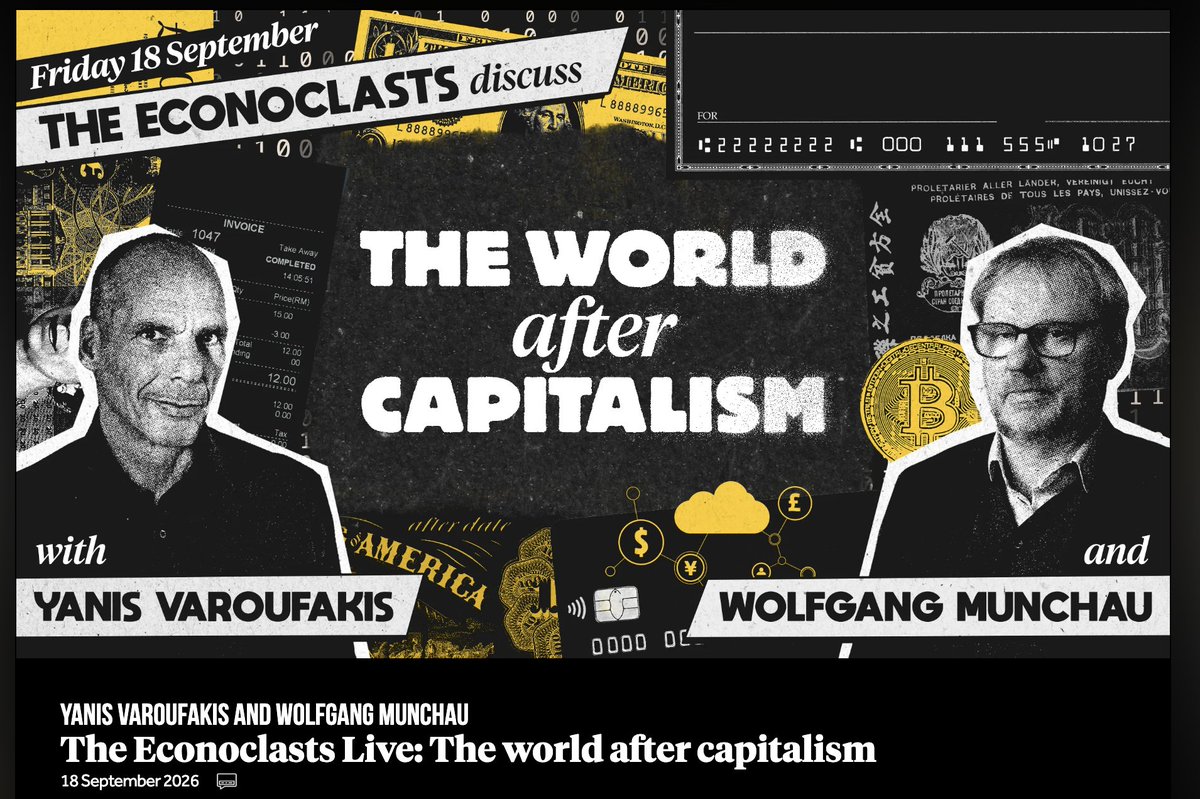
What comes after capitalim? Wolfgang Munchau and I (yes, The Econoclasts!) will continue our mission to dismantle economic orthodoxy – but this time, we are tackling the ultimate false assumption: the permanence of capitalism. Holed up in the UnHerd Club, in this live https://t.co/KyS4m0ENuX #Capitalism #EconomicOrthodoxy #UnHerdClub #Nospecificcountriesarementionedinthetweet.Therefore #therearenocountrycodestoreturn.

930

"The report looks at the current reality not as a collection of isolated incidents or specific harms, but as part of a comprehensive mechanism of elimination that works to dismantle the conditions for continued Palestinian existence...." in what remains of Palestine. #Palestine #HumanRights #SystemicInjustice #PS

12326