Aleksander Ceferin has reversed his earlier decision and confirmed that he will run for a fourth term as UEFA president. #cookies #security #independentie
A Russian drone has for the fourth time since Thursday morning attacked the South Bridge in Kyiv, according to Kyiv Mayor Vitali Klitschko and verified videos. #VojnaNaUkrajine #Kyjiv #Putin (translated)
The post cited a Reuters report saying that rising bond yields, the US midterm elections and corporate earnings would test the stock market’s usual fourth-quarter strength. https://t.co/MyaHWnYgmP #WallStreet #USStocks #Earnings #US
AFRICA DAILY REPORT — 26 SEPTEMBER 2026 Major developments reported during the previous 24 hours. 1. DR CONGO — Ebola outbreak expands to two additional health zones Importance: 10/10 (Critical) WHO reported that the Bundibugyo Ebola outbreak has expanded to Bulu in Sud Ubangi and Dungu in Haut-Uélé, bringing the total to 63 affected health zones across seven provinces. As of 23 September, DRC had reported 7,890 confirmed cases and 3,799 deaths; the geographic expansion increases cross-border transmission risk. Source: https://www.who.int/emergencies/disease-outbreak-news/item/2026-DON618 2. ETHIOPIA — Heavy fighting continues in the north Fighting involving federal and Tigrayan forces has intensified, disrupting communications and raising concerns that the renewed conflict could spread beyond Tigray. Ethiopia's president has also accused unspecified external actors of interference as the 2022 peace framework comes under severe strain. Source: https://www.africanews.com/2026/09/25/ethiopian-president-warns-of-interference-amid-renewed-tigray-fighting/ 3. SUDAN–CHAD — Sudanese refugee arrivals accelerate sharply Importance: 9/10 (Very High) UNHCR says more than 55,000 Sudanese refugees have fled to eastern Chad this year, with arrivals through Adré and Tiné recently rising to more than 400 people per day — around 20 times the rate seen during previous months. Funding remains far below requirements, increasing pressure on shelter, water and protection services. Source: https://www.unhcr.ca/news/unhcr-in-its-fourth-year-sudan-conflict-drives-new-displacement-into-chad-as-funding-falls-short/ 4. DR CONGO — At least 41 killed in Lake Tanganyika boat disaster Importance: 8.5/10 (Very High) At least 41 people died after a vessel carrying roughly 100 passengers and cargo capsized on Lake Tanganyika while travelling from Kigoma, Tanzania, toward Kalemie in DRC. Forty-nine people were reported rescued while search operations continued. Source: https://www.aljazeera.com/news/2026/9/25/at-least-41-die-as-boat-capsizes-in-drcs-lake-tanganyika 5. ZIMBABWE–UNITED STATES — U.S. health funding set to end after talks collapse Importance: 8.5/10 (Very High) The United States is set to end health-programme funding for Zimbabwe at the end of September after negotiations over a new agreement failed, including disagreement over provisions concerning health data and biological samples. The change could affect HIV, tuberculosis and malaria programmes. Source: https://www.latimes.com/world-nation/story/2026-09-25/data-sharing-clause-derailed-u-s-zimbabwe-health-talks-now-all-funding-ends-this-month 6. SOUTH SUDAN — Kiir opens political dialogue ahead of December elections President Salva Kiir opened an inter-party dialogue in Juba after dissolving the transitional unity government. Elections are scheduled for 22 December and would be South Sudan's first national vote since independence, while opposition groups have raised concerns over the process, security and political conditions. Source: https://www.africanews.com/2026/09/25/south-sudan-kiir-opens-political-dialogue-ahead-of-december-elections/ 7. SENEGAL — First criminal charges filed over 2021–2024 political unrest Four people have become the first defendants charged in connection with violence during Senegal's political unrest between 2021 and 2024. The proceedings concern alleged unlawful confinement, abduction, torture and violence; the accused contest the allegations. Source: https://www.africanews.com/2026/09/25/senegal-lays-first-criminal-charges-over-political-unrest-between-2021-and-2024/ 8. ETHIOPIA–DJIBOUTI — $660 million petroleum pipeline announced Importance: 7.5/10 (High) Ethiopia, Djibouti and Dangote interests are backing a planned $660 million refined-petroleum pipeline. The 120-kilometre link between Damerjog port and Dewele is intended to lower logistics costs and strengthen fuel supply for landlocked Ethiopia. Source: https://www.africanews.com/2026/09/25/ethiopia-djibouti-and-dangote-to-build-660m-petroleum-pipeline/ 9. UGANDA–SOUTH SUDAN — New 400 kV cross-border electricity connection Importance: 7.5/10 (High) A planned Uganda–South Sudan power interconnection will establish roughly 299 kilometres of 400-kV double-circuit transmission infrastructure. The project is intended to connect South Sudan to the Eastern Africa Power Pool and create an export market for Uganda's surplus electricity. Source: https://www.ugandaradionetwork.net/story/new-400kv-cross-border-electricity-connection-to-serve-uganda-and-south-sudan 10. MOZAMBIQUE — Drug use rises as trafficking routes increasingly feed domestic consumption Importance: 7/10 (High) Mozambican officials say the country is increasingly becoming a consumer market as well as a transit route for illicit drugs. Government figures show drug-related hospital admissions rose 38% last year to more than 32,280, while authorities report growing concern about methamphetamine, cocaine and fentanyl flows. Source: https://www.africanews.com/2026/09/25/mozambique-faces-rising-drug-use-as-trafficking-routes-fuel-local-addiction/ #Africa #AfricaNews #TopNewsOfAfrica #DRCongo #Ebola #EbolaOutbreak #BundibugyoEbola #PublicHealth #HealthEmergency #WHO #CentralAfrica #Ethiopia #Djibouti #EthiopiaDjibouti #PetroleumPipeline #EnergyInfrastructure #FuelSecurity #Logistics #RegionalTrade #AfricanEconomy #Dangote #Tigray #NorthernEthiopia #EthiopiaConflict #ArmedConflict #SecurityCrisis #HornOfAfrica #RegionalSecurity #AfricanSecurity #Geopolitics #CrossBorderTrade #EnergySecurity #AfricaToday #wrldorg

🚨 Voici ce à quoi devrait ressembler le maillot fourth du PSG cette saison. 👕🪽 📸 @Footy_Headlines https://t.co/7e3UmCjo73 #PSG #Football #Maillot
🚨 Les premières images du maillot FOURTH WINGS 2.0 de la saison 26/27 ! 🪽🤍🖤 (@Footy_Headlines) https://t.co/VORZqYD52g #Football #Maillot #Saison
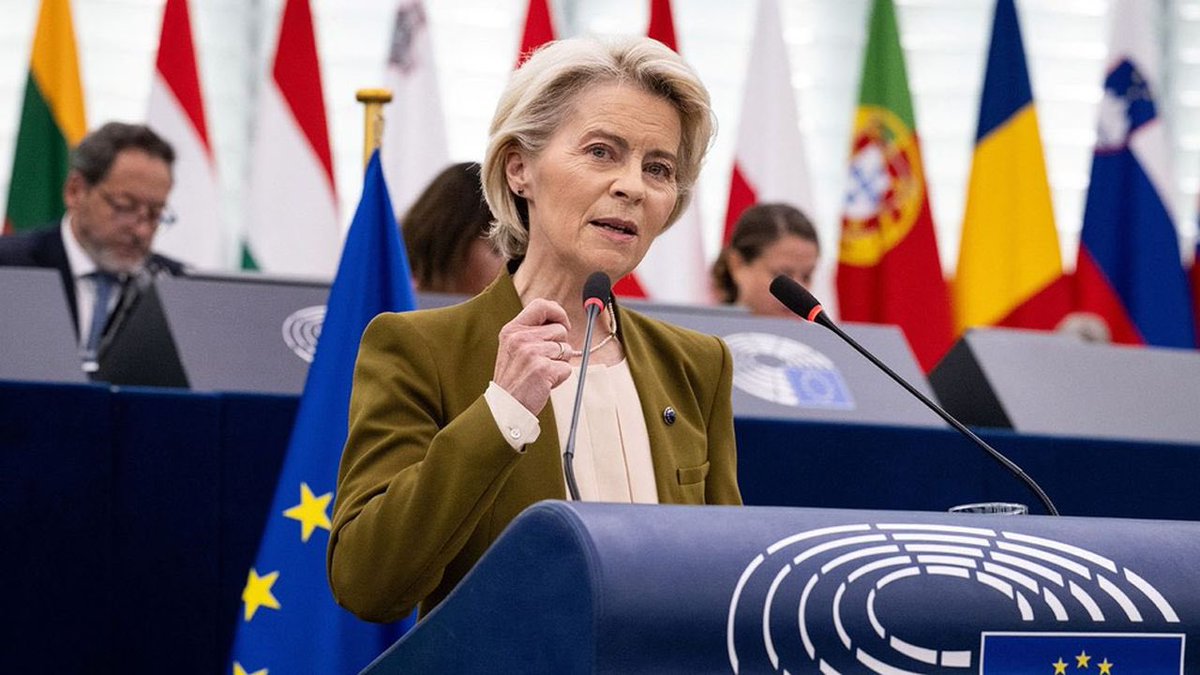
I followed today's State of the Union address from the chamber. The fourth since Russia's invasion. Set them side by side and the arc is clear. When it started, Europe spoke of solidarity. The crisis was on our skin: energy, sanctions, emergency aid. In 2023 the tone shifted to https://t.co/DUh1zRX4nI #StateOfTheUnion #RussiaUkraine #Solidarity #RU #EU
🇵🇱🇩🇪 Had the honour of representing Poland at the German Economy Minister's annual symposium in Berlin. Good to see that Poland's growth story is being genuinely appreciated by our German partners. Poland became Germany's fourth-largest export market in 2025, and Germany https://t.co/VtdWm3kCBv #Polska #Niemcy #Ekonomia #PL #DE
"VILLA DI FARAGOLA": FROM ASCOLI SATRIANO TO THE UNITED STATES — PUBLISHED IN THE PRESTIGIOUS "POPULAR ARCHAEOLOGY USA" SOURCE: https://www.linkedin.com/pulse/villa-di-faragola-from-ascoli-satriano-united-states-sardella-ph-d--pgd6f/ in the heart of apulia, buried for fifteen centuries beneath the wheat fields of the carapelle valley, lay one of the most opulent aristocratic residences of ancient italy: the villa of faragola, near ascoli satriano (fg). discovered in 2003 by the university of foggia and excavated under the direction of giuliano volpe and maria turchiano, this extraordinary late antique residence – almost certainly belonging to the cornelii scipiones orfiti, one of the most powerful senatorial families of the fourth century – has yielded wonders unique in their kind to scholars around the world. the best-preserved stibadium in italy: a sigma‑shaped masonry dining couch, decorated with gilded marble reliefs of dionysian theme, at the centre of a summer banqueting hall of incomparable luxury. a private bath complex of more than a thousand square metres – among the largest ever documented on the italian peninsula – with glass‑paste mosaics, opus sectile floors, and walls clad in polychrome marbles imported from tunisia, greece and the peloponnese. a cenatio aestiva where roman senators reclined along the curve of the dining couch while a fountain played among the marbles and the scent of the apulian countryside drifted in through the open colonnade. then, on the night between 6 and 7 september 2017, an arson attack – almost certainly criminal in origin – destroyed within hours the protective covering of the site, scorching the marble floors, warping the mosaics, and sweeping away decades of work. professor volpe, who was in kuala lumpur at the time, learned of the news via whatsapp early that morning. No one has ever been brought to trial but faragola did not surrender. thanks to funding of around three million euros, restoration work was completed in november 2024. the villa still bears the marks of the fire – and archaeologists have deliberately chosen not to erase them: that scar is now history, just as much as the senators’ banquets. the faragola archaeological park is now preparing for its second opening to the public. a magnificent article in the american magazine popular archaeology recounts the entire story – from the daunian roots of the site to its present‑day rebirth. it is truly worth reading.
The Psychologist – The British Psychological Society – When Walls Become Wellness SOURCE: https://www.linkedin.com/pulse/psychologist-british-psychological-society-when-walls-sardella-ph-d--pu8sf/ Dr Luciano Magaldi Sardella and Professor Matteo Mantuano on how ‘Stramurales Participatory Street Art’ transforms urban mental health. Link: https://www.bps.org.uk/psychologist/when-walls-become-wellness The Psychologist, The British Psychological Society by esteemed Dr. Joe Sutton, Head of Science Communication at BPS Contenuto dell’articolo On a sweltering afternoon in June 2018, we stood in the central square of Stornara, a small agricultural town in Puglia, Southern Italy, watching something extraordinary unfold. Local artist Lino Lombardi was facilitating a heated discussion among residents about which mural designs should adorn their town's crumbling walls. What struck us wasn't the art itself, but the transformation we witnessed in the eyes of people who, just months before, had described their hometown as a place to escape. These were individuals reclaiming their narrative, voting on their future, literally painting over decades of decline. We are environmental and community psychologists who have spent over a decade studying how built environments shape mental health outcomes. Dr Luciano Magaldi Sardella's research focuses on participatory arts interventions in declining rural communities, while Professor Matteo Mantuano specialises in the psychological mechanisms of community empowerment and collective agency. When we first learned about the Stramurales festival in early 2018, we recognised it as a rare opportunity to observe participatory urban art as a potential tool for addressing the mental health crisis plaguing Southern Italy's depopulating towns. Over the past seven years, we have conducted extensive fieldwork in Stornara – interviewing residents, documenting the festival's evolution, and analysing its psychological and social impacts. What we found in Stornara was something far more significant than an innovative community-led arts initiative. It was environmental psychology in action – reshaping how we understand the relationship between built environments, participatory arts, and mental health. The Crisis Hiding in Plain Sight Recent research reveals an alarming convergence of environmental and mental health crises that remains curiously underexamined in psychological discourse. Mental health research receives a mere 2.3 per cent of overall National Institute of Health funding. We cannot know how much of that concerns our environments – both natural and built – which fundamentally shape our psychological wellbeing. The newly proposed field of 'EnvironMental Health' emphasises that deteriorating built environments correlate significantly with elevated stress, social isolation, and worsening mental health outcomes. Southern Italy's rural communities embody this crisis. Between 2002 and 2017, South Italy region lost approximately two million residents to migration, predominantly young adults aged 15-34. This exodus created what Johan Galtung described as 'structural violence' – systematic arrangements preventing communities from realising their potential. The mental health toll manifests not just in individual diagnoses, but in collective despair, eroded social capital, and communities watching their futures literally emigrate. Stornara exemplified this trajectory. By 2017, this municipality of 6,000 residents faced the familiar spiral: economic contraction precipitating youth emigration, accelerating infrastructure deterioration, driving further decline. Walls crumbled. Businesses shuttered. Hope evaporated. Then something changed. The Stramurales Revolution: Democracy through Design What emerged in Stornara transcends conventional cultural tourism. The Stramurales International Street Art Festivalworks through three foundational democratic mechanisms that distinguish it from superficial beautification projects. Organised through Stornara Life APS – an open-membership association founded by Maestro Lino Lombardi – the festival prevents elite capture through voluntary property owner participation ensuring no coercion; democratic content selection through annual community voting on festival themes and mural proposals; and transparent, inclusive governance that gives all residents a voice in the festival's direction. This participatory architecture facilitates what the World Health Organization describes as 'community empowerment' – processes enabling communities to increase control over determinants affecting their health. Recent field studies in Vienna demonstrate that urban art interventions reduce stress and anxiety while improving mood states, but Stramuralesgoes further by embedding art creation within democratic decision-making structures. When residents voluntarily offer walls and vote on content, they perform acts of material and psychological investment. This restoration of collective agency – the belief that residents can shape their hometown's future rather than merely witnessing decline – directly addresses the structural violence that erodes mental health. Between 2020 and 2025, Stornara experienced a huge increase in tourism revenue despite pandemic disruption. New businesses opened. A Stornara-born emigrant who returned reluctantly in 2017 to provide parental care, now works as a tour guide and describes Stornara as 'the coolest town in Italy'. These aren't just economic indicators. They're mental health outcomes. The Science behind the Transformation Contemporary research across multiple disciplines validates what Stornara residents experience viscerally. A 2024 systematic review examining 79 peer-reviewed articles identified how arts places – from permanent museums to temporary public installations – stimulate community engagement, enhance cultural identity, and foster social cohesion. Community-driven mural projects specifically strengthen local identity and pride, creating new routines for individuals to interact and build relationships. Recent experimental research in Berlin found that sidewalk-level art exhibitions significantly altered visitors' connection to and satisfaction with their neighbourhoods, improving overall wellbeing. This aligns with emerging theories on art viewing's impact on mental health, which identifies five key mechanisms: affective processes regulating emotions and stress; cognitive processes providing sensory stimulation and learning; social processes creating shared experiences; self-transformation through reflection; and resilience building for coping with challenges. Environmental psychology research demonstrates that built environments operate as therapeutic interventions. Studies on mental health inpatient facilities reveal that design elements affecting privacy, control, daylight access, and particularly the inclusion of artwork significantly impact patient outcomes. If hospital walls matter therapeutically, how much more do the walls we encounter daily in our communities? The Stramurales model harnesses these mechanisms through the recent concept of 'visual health activism'. Several murals explicitly engage health and human rights themes: Alaniz Niz's 'Refuge for All Migrants' represents exploited African agricultural workers; Sabotaje al Montaje's 'Turning Our Backs on Migration' challenges exclusionary policies; Devil Art Design's 'African Child at Sunset' portrays migrant youth seeking dignified futures. These works address social determinants of health through human rights advocacy. Migration policies denying basic rights create health vulnerabilities – including restricted healthcare access, hazardous working conditions, and psychological trauma from discrimination. The murals perform dual public health functions, in addressing residents' mental health while advocating for populations whose health rights face systematic violation. Place Attachment and Community Resilience The relationship between environmental perception, cultural identity, and community resilience has received substantial scholarly attention in 2024-2025. Research in rural China demonstrates that environmental perception of public spaces influences community resilience through chain mediating effects of cultural identity and place attachment. When communities transform their physical environments through participatory processes, they simultaneously strengthen the psychological bonds that underpin resilience. This explains why Stramurales succeeds where traditional economic development approaches falter. The festival doesn't just create economic value – though over 150 murals by international artists now attract thousands of visitors annually. It fundamentally reshapes residents' relationship with their environment, transforming narratives of decline into evidence of vitality. Each democratically selected mural becomes what resilience researchers call an 'anchor of hope' – tangible proof contradicting despair. Contemporary resilience theory emphasises that strength resides not merely in physical infrastructure but in social cohesion. A recent analysis of resilient urban design in marginalised American neighbourhoods found that residents' message – 'We like our neighbours, we like the character of where we live' – revealed that resilience is fundamentally about people and community. Design interventions succeed when they preserve and strengthen these social bonds, rather than imposing external visions. Stramurales embodies this principle. The democratic voting mechanisms ensure art reflects genuine community values rather than artist or curator preferences. This prevents the cultural displacement often accompanying urban regeneration, where improvements benefit newcomers while alienating existing residents. By centering resident agency, Stramuralesbuilds what researchers describe as 'critical resilience' – capacity addressing underlying inequalities rather than merely adapting to them. The Participation Gap and Universal Access These findings resonate profoundly with longstanding concerns about arts accessibility. The 2015 Warwick Commission documented that the wealthiest, most educated 8 per cent of the UK population accounted for 44 per cent of live music attendance and 28 per cent of visual art visits. This participation gap particularly affects communities that would benefit most from arts engagement for health and wellbeing. But Stramurales challenges this narrative. Street art as public health infrastructure requires no admission fees, no advance booking, no cultural capital to appreciate. It exists where people live, transforming daily commutes into encounters with beauty and meaning. The democratic selection process ensures accessibility extends beyond consumption to co-creation – residents don't just view art, they determine what appears on their walls. Recent research on participatory arts and social cohesion emphasises that successful interventions share common features: delivery in local communities, non-stigmatising approaches, flexibility, promoting social engagement, involvement of exhibitions, and delivery within specific timeframes. Stramurales incorporates all these elements while adding genuine democratic governance. This matters urgently. Mental health conditions among young people globally are rising, and traditional mental health services remain chronically underfunded. If we cannot scale clinical interventions to meet demand, we must invest in preventive public health approaches targeting social determinants. From Stornara to the World: Implications for Practice The Stramurales model offers a replicable template requiring modest financial investment but substantial community participation. Essential elements include voluntary engagement, democratic decision-making, strategic social media use for marketing, and integration of local narratives with global artistic practices. Several cities have implemented variations with promising results. Research on artistic interventions in urban spaces across Europe and Asia demonstrates that participatory art projects can serve as 'social prescribing', improving psychological resilience and enhancing public engagement. Tactical urbanism approaches – small-scale, low-cost interventions improving public spaces – increasingly incorporate art as core rather than supplementary elements. The implications extend beyond individual communities. International frameworks including the International Covenant on Economic, Social and Cultural Rights enshrine rights to health and cultural participation. State obligations to conserve, develop and diffuse culture should support community-driven cultural initiatives demonstrably impacting health outcomes. As pandemic governance analyses emphasise, future health policy reforms must address not only biomedical preparedness but underlying vulnerabilities in community resilience and social cohesion. Street art operating through participatory structures directly strengthens these dimensions. What Psychologists Can Do We have roles to play at multiple levels. First, we must conduct research documenting the mental health impacts of participatory arts interventions. While promising evidence exists, methodologically rigorous studies with adequate sample sizes and long-term follow-up remain scarce. We need experimental designs, not just observational studies, examining mechanisms through which environmental transformations affect psychological outcomes. Second, we should advocate for policy recognising arts engagement as health intervention. This means supporting public health funding for community arts initiatives, particularly in economically deprived areas where traditional development approaches have failed. We should work with urban planners, architects, and artists to integrate participatory arts into neighbourhood regeneration from inception, not as afterthoughts. Third, we must ensure interventions embody genuine participation rather than tokenistic consultation. The Stramuralesmodel succeeds because residents hold real power. Without this, arts interventions risk replicating existing power structures and potentially accelerating gentrification that displaces the communities they ostensibly serve. Fourth, we should employ arts-based research methods that centre community voices. Collaborative approaches like participatory theatre, photovoice, and collaborative poetics enable communities to articulate their experiences and aspirations in ways traditional psychological assessments cannot capture. These methods acknowledge that communities possess expertise about their own needs and potential solutions. Finally, we must situate arts interventions within broader frameworks addressing social justice. Art should not function as a 'sticking plaster' masking underlying inequalities. Instead, we should harness arts' disruptive potential to promote what researchers term 'critical resilience' – capacity challenging systemic injustices rather than merely helping people adapt to them. This means addressing not just symptoms (mental distress) but causes (structural violence, economic abandonment, policy failures). Reimagining Health Infrastructure The Stramurales case compels fundamental reconsideration of what constitutes health infrastructure. We typically envision clinics, hospitals, pharmacies – biomedical institutions delivering treatments for diagnosed conditions. But what if the most effective mental health intervention for a declining community isn't a new psychiatric facility, but democratic processes enabling residents to transform their visual environment? Walls covered with democratically selected art, created through genuine community participation, demonstrably improve community mental health while operationalising cultural rights described in international law. The modest financial investment required pales beside costs of clinical services treating preventable distress. For communities experiencing decline where traditional economic development has failed, participatory street art may offer the most cost-effective, accessible, and sustainable mental health intervention available. This isn't about romanticising art or dismissing serious mental illness requiring clinical care. It's about acknowledging that population mental health requires addressing social determinants – and that participatory arts targeting built environments, social capital, and collective agency directly address these determinants. The question facing psychology isn't whether art can function as health intervention – Stramurales and growing evidence demonstrate it can. Rather, the question is whether we possess imagination to rethink health infrastructure, recognising that effective mental health promotion may require democratic decision-making and community participation as much as clinical expertise. As we watched Stornara residents voting on murals that June afternoon, we witnessed people exercising a fundamental human capacity too often denied in our field: the power to shape their own environments and, through that shaping, to heal. Perhaps that's the most vital lesson Stramurales offers psychology – that sometimes the most therapeutic intervention isn't administered by professionals, but created by communities reclaiming their agency… one democratically selected wall at a time. Dr Luciano Magaldi Sardella holds a PhD in Cognitive Leadership at Aspire Institute, Harvard Business School. Professor Matteo Mantuano is Professor of Social Sciences and Psychoeducational Health, Unitré University of Milan, Italy. Photo: 'Kid trapped in a box' mural by Leticia Mandragora References: All-Party Parliamentary Group on Arts, Health and Wellbeing (2017). Creative Health: The Arts for Health and Wellbeing (2nd ed.). Belfiore, E. & Bennett, O. (2024). The social impact of the arts: An intellectual history. London: Palgrave Macmillan. Bone, J.K., Bu, F., Fluharty, M.E., Paul, E., Sonke, J.K. & Fancourt, D. (2024). Who engages in the arts in the United States? A comparison of several types of engagement using data from The General Social Survey. PLOS ONE, 19(1), e0296743. doi:10.1371/journal.pone.0296743 Chatterjee, H.J. & Noble, G. (2024). Museums, health and well-being: A preliminary report for Phase I. UCL Museums & Public Health Research Group. Cohen, G.D., Perlstein, S., Chapline, J., Kelly, J., Firth, K.M. & Simmens, S. (2006). The impact of professionally conducted cultural programs on the physical health, mental health, and social functioning of older adults. The Gerontologist, 46(6), 726–734. Daykin, N., Mansfield, L., Meads, C., Julier, G., Tomlinson, A., Payne, A., Grigsby Duffy, L., Lane, J., D'Innocenzo, G., Burnett, A., Kay, T., Dolan, P., Testoni, S. & Victor, C. (2024). What works for wellbeing? A systematic review of wellbeing outcomes for music and singing in adults. Perspectives in Public Health, 138(1), 39–46. doi:10.1177/1757913917740391 Fancourt, D. & Finn, S. (2019). What is the evidence on the role of the arts in improving health and well-being? A scoping review. World Health Organization, Health Evidence Network Synthesis Report 67. Flores González, L.M. & Rodríguez Sánchez, I. (2024). The transformative power of art in marginalized communities: Case studies from Latin America. International Journal of Community Well-Being, 7(2), 145–167. Galtung, J. (1969). Violence, peace, and peace research. Journal of Peace Research, 6(3), 167–191. Hart, A., Gagnon, E., Eryigit-Madzwamuse, S., Cameron, J., Aranda, K., Rathbone, A. & Heaver, B. (2016). Uniting resilience research and practice with an inequalities approach. Sage Open, 6(4), 1–13. Johnson, H., Carson-Apstein, E., Banderob, S. & Macualay-Rettino, X. (2017). 'You kind of have to listen to me': Researching discrimination through poetry. Forum Qualitative Sozialforschung/Forum Qualitative Social Research, 18(2). doi:10.17169/fqs-18.3.2864 Kaplan, S. (1995). The restorative benefits of nature: Toward an integrative framework. Journal of Environmental Psychology, 15(3), 169–182. Kim, J. (2017). Effects of community-based group music therapy for children exposed to ongoing child maltreatment and poverty in South Korea: A block randomized controlled trial. Arts Psychotherapy, 54, 69–77. doi:10.1016/j.aip.2017.01.001 Li, Y., Zhang, H. & Chen, T. (2024). Environmental perception, cultural identity and community resilience: Chain mediating effects of place attachment in rural China. Journal of Rural Studies, 98, 103– 115. Marmot, M., Atkinson, T., Bell, J., Black, C., Broadfoot, P., Cumberlege, J., Diamond, I., Gilmore, I., Ham, C., Meacher, M. & Mulgan, G. (2010). Fair society, healthy lives: The Marmot Review. Strategic Review of Health Inequalities in England Post-2010. Mulligan, M., Scanlon, C. & Welch, N. (2008). Renegotiating community life: Arts, agency, inclusion and wellbeing. Gateways: International Journal of Community Research and Engagement, 1, 99–115. doi:10.5130/ijcre.v1i0.591 Neelands, J., Belfiore, E., Firth, C., Hart, N., Perrin, L., Brock, S., Holdaway, D. & Woddis, J. (2015). Enriching Britain: Culture, creativity and growth. The 2015 Report by the Warwick Commission for the Future of Cultural Value. Packer, J. & Ballantyne, R. (2024). The role of museums and art galleries in promoting wellbeing: Insights from the United Kingdom and Australia. International Journal of Heritage Studies, 30(3), 234–251. Papies, E.K., Best, M., Gelibter, E. & Stroebe, W. (2024). The role of mental simulation in desire and motivation: A systematic review. Motivation Science, 10(1), 1–18. Pykett, A.A., Osborne, T., Resch, B., Nielek, R., Krukar, J. & Malleson, N. (2024). From smart to sustainable cities: The role of environmental psychology in urban transformation. Cities, 144, 104644. Roe, J. & Aspinall, P. (2024). The restorative benefits of walking in urban and rural settings in adults with good and poor mental health. Health & Place, 71, 102654. Stuckey, H.L. & Nobel, J. (2010). The connection between art, healing, and public health: A review of current literature. American Journal of Public Health, 100(2), 254–263. Theorell, T. (2024). Psychological health effects of musical experiences: Theories, studies and reflections in music health science. Stockholm: Springer Nature. Ulrich, R.S., Simons, R.F., Losito, B.D., Fiorito, E., Miles, M.A. & Zelson, M. (1991). Stress recovery during exposure to natural and urban environments. Journal of Environmental Psychology, 11(3), 201–230. Van den Berg, A.E., Wesselius, J.E., Maas, J. & Tanja-Dijkstra, K. (2024). Green space as a buffer between stressful life events and health: A longitudinal analysis. Social Science & Medicine, 310, 115270. WHO (2019). WHO housing and health guidelines. Geneva: World Health Organization. Zarobe, L. & Bungay, H. (2024). The role of arts activities in developing resilience and mental wellbeing in children and young people: A rapid review of the literature. Perspectives in Public Health, 137(6), 337–347. doi:10.1177/1757913917712283.
Félicitations à notre capitaine et à la Fondation Asista, qui ont amassé 157 035$ lors de la 4e édition du Tournoi de golf des héros de Nick Suzuki afin de former des chiens d'assistance et d'intervenir auprès de personnes aux prises avec des troubles de santé mentale 👏 Congratulations to our captain and the Asista Foundation on raising $157,035 at the fourth edition of the Nick Suzuki Heroes Golf Tournament to train service dogs and support people living with mental health issues 📸 JP Castonguay & Justin Sciangula/Fondation Asista #GoHabsGo #Golf #SantéMentale #ChiensdAssistance
GET WELL SOON, NIGEL 💚 Κατά τη διάρκεια της σημερινής (1/9) προπόνησης του Παναθηναϊκού AKTOR, o Νάιτζελ Χέιζ-Ντέιβις τραυματίστηκε στο αριστερό χέρι. Αμέσως μετέβη στο νοσοκομείο «ΥΓΕΙΑ» για εξετάσεις, οι οποίες έδειξαν πως υπέστη κάταγμα τετάρτου μετακαρπίου και του τοποθετήθηκε ειδικός νάρθηκας. Ευχόμαστε στον Νάιτζελ ταχεία ανάρρωση. 💪🏾☘️ ————— During today’s (1/9) Panathinaikos BC AKTOR practice, Nigel Hayes-Davis injured his left hand. He was immediately taken to HYGEIA Hospital for examinations, which revealed that he had sustained a fracture of the fourth metacarpal, and a special splint was applied. We wish Nigel a speedy recovery. 💪🏾☘️ #paobcaktor #Νάιτζελ #ΤαχείαΑνάρωση #Παναθηναϊκός
EU countries bought €1,5 bn worth of Russian fossil fuels in July, CREA reports. The bloc was Russia’s fourth-largest buyer after China, India and Turkey. It was still the largest buyer of Russian LNG and pipeline gas. France, Belgium, Spain and the Netherlands led LNG #RussianFossilFuels #EUBuyers #EnergyImports #EU #CN #IN #TR #FR #BE #ES #NL
Το Υπουργείο Άμυνας της Ρουμανίας ανακοίνωσε ότι ισπανικό μαχητικό F-18 κατέρριψε drone που παραβίασε τον εθνικό εναέριο χώρο, marking the fourth such incident this year, με το drone να εντοπίζεται να εισέρχεται από την Μολδαβία, και τα θραύσματα του να πέφτουν σε ακατοίκητη περιοχή. #Ρουμανία #ΝΑΤΟ #drone
A Crown Instead of the Barracks: An Idea From Outside the Box Could Egypt’s exiled opposition use constitutional monarchy to dismantle the legitimacy of the 1952 coup? By Adham Hasanin Egyptian journalist and political writer, based in the Netherlands To understand what follows, a reader unfamiliar with Egypt needs one basic fact: since 1952, Egypt has never been governed by anyone who did not first wear a military uniform. Gamal Abdel Nasser, Anwar Sadat, Hosni Mubarak, and today Abdel Fattah el-Sisi four men, four eras, one common origin. All rose through the armed forces. All inherited a state built by a coup that year, when a group of officers calling themselves the "Free Officers" overthrew King Farouk I and, within a year, abolished the monarchy altogether and declared a republic. For seventy-three years, the underlying equation has not changed: the army rules, power passes from one officer to the next, and legitimacy is drawn from the barrel of a gun rather than the ballot box. Every conceivable form of opposition has been tried legal parties and banned ones, Islamist movements, liberal and leftist coalitions, the 2011 popular uprising, and the 2013 elections whose result was overturned by force within a year. All of them hit the same wall: a military institution that reproduces itself under different names, while the core of the system remains untouched. So what if the problem, all along, has not simply been who rules, but the constitutional framework that makes military rule possible in the first place? And what if the answer lies not in swapping one president for another, but in dismantling the underlying equation itself, through a framework Egyptian opposition movements have never seriously tried: a purely ceremonial constitutional monarchy, on the model of Belgium, the Netherlands, or Spain where the head of state becomes a symbol above the political fray, while the army is permanently expelled from politics and returned to its barracks. This is not a call to revive a particular family, nor nostalgia for a golden age that never quite existed. It is a proposal for a political and strategic tool that has not yet been used in the intellectual arsenal of Egypt’s opposition in exile a tool that deserves serious discussion, regardless of whether it is ever literally realised or simply serves to expand the boundaries of what is politically thinkable. I. Why 1952, Not 2013 or 2011, Is the Root The strategic error made by most Egyptian opposition movements from the Muslim Brotherhood to the April 6 Youth Movement to the various civil opposition parties has been treating each political crisis as an isolated case: Mubarak was corrupt and had to be toppled; Sisi staged a coup that must be condemned; the interim military council was a transitional phase to be endured. This piecemeal approach treats the symptoms while leaving the original illness untouched. That original illness is the very structure of legitimacy established by the coup of 23 July 1952. The Egyptian republican system, from Nasser to today, has never built its legitimacy on a genuine democratic social contract. Instead, it has rested on a fixed trinity: the rhetoric of "revolution against feudalism and colonialism," charismatic individual leadership, and military protection of the regime framed as the guarantor of stability. This trinity has repeated itself from Nasser to Sadat to Mubarak to Sisi, with only cosmetic variations. Each new president was never a break from the system he was its continuation. When the opposition says "let us return to the constitutional framework that preceded the coup," it is not criticising a particular policy. It is declaring that the legal foundation of everything that came after 1952 was illegitimate from the start. Here lies the rhetorical power of "returning to the pre-1952 order": it does not merely demand swapping one ruler for another. It withdraws historical legitimacy from the entire republican military system including today’s regime, which draws its own declared legitimacy from that same "1952 legacy." II. Why a "Ceremonial Crown," Not "the Return of a Ruling Family" Here is the most important distinction anyone advocating this idea seriously must grasp: the project does not rest on restoring any particular individual from the Muhammad Ali dynasty, nor on nostalgia for King Farouk or his ancestors. The real power of the idea lies in the constitutional form, not in the person who happens to sit on the throne. Three successful European democracies illustrate the model clearly. Belgium, where King Philippe is a purely constitutional symbol with no real executive power, while the state is run through an elected parliament and a complex coalition government reflecting the country’s linguistic and political diversity. The Netherlands, where King Willem-Alexander formally opens the parliamentary year and signs laws, but where actual decision-making rests with the prime minister and the elected parliament. And Spain, where the king represents symbolic continuity of the state above party politics, while the military and security services answer entirely to civilian authority a transition achieved after the death of the dictator Francisco Franco in 1975, when King Juan Carlos I voluntarily relinquished the extensive executive powers he had inherited and backed free elections, most dramatically in February 1981, when he personally ordered the armed forces to remain loyal to the constitution during an attempted military coup, causing it to collapse within hours. The common thread across these three models is not "the presence of an ancient royal family." It is the principle of separating symbol from power. The monarch in these countries does not rule; he represents. He issues no political decisions; he provides the continuity and symbolic stability that allows party political competition to revolve beneath him, without every transfer of power becoming an existential crisis of legitimacy. This is precisely what Egypt’s military republican system lacks: a neutral mechanism for guaranteeing state continuity that does not depend on the person of the ruler or his security apparatus. When Egypt’s military-republican president is absent, it is always the army that fills the vacuum, because it is the only institution built to be the "guarantor of stability." Under a ceremonial monarchical model, by contrast, it is the king not the army who represents that symbolic guarantee, genuinely opening the door to removing the military institution from the political equation altogether. III. Egypt’s Standing Under the Monarchy: An Honest Reckoning, Not Blind Nostalgia For a Western reader with little prior knowledge of Egypt’s monarchical period (1922–1952), it helps to know this: Egypt was nominally independent under its own king from 1922, but Britain retained enormous informal control over the country’s foreign policy, military bases, and the Suez Canal throughout the period a reality that shaped everything that follows. Any honest invocation of "Egypt’s standing under the monarchy" must avoid the trap of mythologised nostalgia that many advocates of this idea fall into. Egypt in that era was no lost paradise, and any honest article must say so plainly. The Egyptian pound, for instance, often invoked as a symbol of "national currency strength" in that period, was not strong because of independent Egyptian monetary policy. It was pegged to the British pound sterling as part of Egypt’s complete colonial financial dependency until 1947, with Egypt exercising no independent oversight of its own currency whatsoever. The pound’s strength, in other words, was not a sovereign Egyptian achievement it was a reflection of British imperial power ruling Egypt from behind the throne. But this does not mean Egypt lacked a genuine regional standing worth studying. Cairo, in the 1930s and 1940s, was the undisputed cultural capital of the entire Arab world: the Egyptian film industry produced more than half of all Arabic-language cinema; its theatre scene, led by figures like Youssef Wahbi and Naguib al-Rihani, and its music, with Umm Kulthum and Mohammed Abdel Wahab, set the standard across the region; Cairo University was the first modern university in the Arab world; and the Egyptian press was the reference point for Arab public opinion from the Atlantic to the Gulf. Cairo was, quite simply, to the Arab world what Paris was to Francophone Europe: an unrivalled centre of cultural and intellectual gravity. This standing was not necessarily a product of monarchy itself, so much as a product of a relative space of political and press pluralism that allowed Egyptian civil society to flourish, despite all the flaws of the political system and the interference of both palace and occupier. The lesson here is not "bring back the king and the standing will return." It is: when even a limited margin of civic freedom exists, Egypt flourishes culturally and intellectually almost by its own nature. And that margin is precisely what has been entirely absent across the past seven decades of unchallenged military rule. IV. What Reform Would Actually Require Not Repeating the Old Mistakes Any serious advocacy of this model must include, even briefly, a clear vision for avoiding the flaws of the old monarchical system itself otherwise the proposal collapses into simply replacing one form of authoritarianism with another wearing a different crown. First, the armed forces would need to be placed fully under a civilian ministry of defence, with its budget subject to transparent parliamentary oversight the exact opposite of its current status as a state-within-a-state, and equally opposed to its role under the monarchy, when it often served as an instrument of British influence. Second, a judiciary fully independent of both palace and government alike, unlike the old model, which saw direct royal interference in political life as when King Fuad I dismissed the elected government of Prime Minister Saad Zaghloul’s successor, Mustafa al-Nahhas, in 1928, in one of the clearest "constitutional coups" in modern Egyptian history. Third, a parliament that genuinely represents the people rather than landowners and the aristocracy, as was the case before 1952, when membership in the Senate was effectively conditional on the ability to pay land taxes meaning political representation was, by law, restricted to the wealthy. Fourth, genuine economic sovereignty, with a truly independent national currency rather than one pegged to a foreign power’s currency, unlike the historical dependency of the Egyptian pound on sterling. These four principles are enough to clarify that the project on offer is not a literal "return to the past," but a borrowing of the constitutional form (symbolic monarchy) combined with an explicit rejection of its old substance (colonial dependency, palace interference, parliamentary feudalism). V. The Role of Egyptian Movements in Exile: Between Goal and Instrument This raises the most practical question of all: how might Egypt’s opposition abroad actually adopt this idea, and in what capacity? The honest answer is that the power of this proposal does not necessarily lie in its literal fulfilment, but in its dual strategic function. On one hand, it can be advanced as a genuine political goal adopted by broad coalitions of Egyptian movements coalitions that might include Islamists, liberals, leftists, and traditional monarchists, united around a single shared premise: rejecting the legitimacy of the 1952 order and everything that followed from it, even if they later disagree over the precise final shape of the state. On the other hand and this matters more in practice the idea can be deployed as a rhetorical instrument of pressure to widen a Egyptian political debate currently trapped between two false choices: "continued military rule" or "no alternative, chaos awaits." When the opposition puts forward a clearly defined third model a European-style constitutional monarchy it breaks this false binary and opens new intellectual space in Egyptian public discourse, even if the project is never realised in its literal form. This kind of "leverage idea" is common in the history of political movements worldwide: it is not necessarily proposed to be fulfilled immediately in full, but to redraw the boundaries of the politically possible, and to force the existing regime to defend its legitimacy rather than simply assume it. Conclusion: An Invitation to Debate, Not a Ready-Made Prescription This article does not claim that restoring a monarchical form would magically resolve Egypt’s chronic crisis of legitimacy, nor does it ignore the immense difficulties facing any transformative project under a military institution as economically and securitywise entrenched as Egypt’s is today. But it raises a question that deserves serious debate among Egypt’s opposition in exile, rather than automatic dismissal simply for being unfamiliar: Has the Egyptian opposition exhausted every available tool for dismantling the legitimacy of 1952, or has it remained trapped in the same old binary swapping one ruler for another while the framework that makes military rule possible remains untouched? The idea is on the table now, not as a finished solution, but as an overdue invitation to think outside the box.



A Generation That Forgot the Shape of the Square On memory left to die alone By Adham Hasanin Egyptian journalist and political writer, based in the Netherlands In a house near mine, there is a boy of thirteen. Born in 2013 just a few months younger than the July coup itself, younger than the new republic under whose shadow we now live. I asked him once, with no preamble, no test, out of nothing more than passing curiosity: do you know what January was? He answered simply, without hesitation, without any sense that he was missing something: "An old revolution, against Mubarak, right?" Not entirely wrong. But it is everything he knows. The name Tahrir Square means nothing specific to him. The sound of the crowd chanting has no echo in his mind. He does not know that his own family whom he sees every day saying "thank God for stability," who warn him against "chaos" whenever a political headline crosses the screen once, at a moment two years before he was born, went down into the street, betting their entire lives on the possibility that something might change. This article is not about politics. It is about memory, and about who decides what gets told and what is left to die in silence. I. Who Erases the Picture? The first question that comes to mind is the easiest and most deceptive one: who erases this memory? And where do we begin holding them accountable? But the truth is too complex to reduce to a single actor. No one actually erases memory, in the literal sense of the act. There is no ministry called the "Ministry of Forgetting," no presidential decree ordering January struck from the collective consciousness. What happens is simpler than that, and more dangerous at once: the subject is simply never told. School says nothing. The textbook leaps from one period to another without pausing on January for more than two faded lines, composed with deliberate neutrality, devoid of any detail that might make the event feel alive to its young reader. Television no longer has any reason to return to it; the programmes that once hosted witnesses and activists stopped years ago, replaced by an official discourse that mentions January only in passing, as an unfortunate prelude to the "stability" that supposedly followed. And the home the most dangerous link of all has become afraid of the subject. Speech now carries a price, and many families, whether consciously or by sheer survival instinct, have decided that silence is safer than the story. The father who marched fears passing on to his son a curiosity that might one day lead him into trouble the family cannot afford. The mother who lost a friend in the events prefers not to reopen the wound before a child who does not yet grasp the weight of loss. And so, generation after generation, the circle of those who know shrinks, and the circle of those who do not even ask because they do not know there is anything worth asking widens. No one decided to erase the memory through an explicit decision. The memory was simply left to die alone, with no one tending it. And it is precisely this decentralised absence of responsibility that makes this kind of erasure more dangerous than any direct official ban: there is no single decision to challenge, no single body to hold accountable. Responsibility is distributed across thousands of small decisions made by thousands of individuals, each within their own context, each seeming reasonable when viewed in isolation. II. Why This Is More Dangerous Than Direct Repression An objection might be raised: is direct repression arrest, imprisonment, publishing bans not far more lethal than mere gradual forgetting? The answer is complex, and deserves calm unpacking. Direct repression can be seen. It can be documented, and the victim can know they are a victim, can tell their story, and their pain can become a testimony added to the collective memory, even if it never reaches justice. The political prisoner knows he is a political prisoner. The journalist banned from writing knows he is banned, and can tell the world he is banned. Direct repression, for all its cruelty, leaves a trace that can be followed. But a generation that has forgotten something happened at all does not even have a starting point from which to ask. This thirteen-year-old boy will never ask "why were we repressed?" because he does not know there is anything deserving that question in the first place. He feels no absence, because he does not know there is anything absent. He simply lives in a version of reality stripped of an entire chapter of his country’s history, and never for a moment suspects that this void is a void at all. Here lies the essence of the danger: direct repression creates victims who know they are victims. Erasure of memory, when it succeeds, creates a generation that does not even know it has been deprived of anything. And deprivation that is not felt cannot be resisted, because resistance always begins with an awareness of loss. The regime that came after 2013 does not need to convince the new generation that January was a mistake. That would be an arduous, costly task, requiring sustained propaganda and continuous effort to persuade each individual one by one. It is far easier, and strategically far more efficient, simply to ensure they never know it was anything at all. The void requires no defence; it requires only silence, and silence is free and always available. III. The Four Mechanisms of Erasure Four complementary mechanisms can be identified working together to produce this collective void not as an organised conspiracy, but as a system of incentives that pushes each party, consciously or not, to contribute to the same process. The first mechanism: formal education. The curriculum, as currently designed, treats January as a passing footnote rather than a founding event deserving detail and analysis. The student memorises two dates the start of the revolution and its presumed end without understanding why people took to the streets, what they were demanding, or how they felt in that pivotal moment. The second mechanism: broadcast media. The channels that once hosted live discussions on January, featuring varied perspectives, have gradually disappeared, or transformed their discourse entirely. Today’s televised image either ignores the anniversary altogether, or invokes it only to frame it as a prelude to chaos that must be avoided. The third mechanism: the silence of homes. This is the most dangerous of all, precisely because it is the most human and understandable. Parents who lived through the experience protect it with silence, not out of aversion to the story, but out of fear of its price. This silence, however legitimate its motives, achieves exactly the same effect as official censorship: it blocks the transmission of knowledge from one generation to the next. The fourth mechanism: the absence of alternative spaces. Even those among the new generation who wish to know cannot easily find places to look. Archives are scattered, trustworthy websites are blocked or require effort to reach, and personal testimonies are dispersed across corners of the internet that an ordinary student at an ordinary school will never stumble upon. These four mechanisms require no central coordination to work together. Each naturally serves the others, and all converge on a single result: a growing void in the consciousness of every new generation. IV. Memory as an Act of Resistance If erasure operates without a centre, then resisting it must also be decentralised. No one waits for a government decision to restore January to the curriculum, nor for a television programme to revive the testimonies. Resistance here is necessarily individual, happening in small details, in passing conversations, in the simple decision to tell rather than to stay silent. This is exactly what I try to do, without any claim to heroism, without any grand mission. I try, whenever I can, to tell the thirteen-year-old boy and others like him details that are never written in official reports or in schoolbooks: what the voices in the square sounded like, how someone felt the first time they realised change was possible, what that moment of hope was like before everything changed. The goal is not to bring back the past; the past cannot be brought back. The goal is that this boy, when he grows older and asks again and he will ask, because the questions always return at some point finds someone to tell him the full story, not two faded lines in a schoolbook. That he knows the stability he is told is the fruit of "wisdom" has a prior history, that this history carried other possibilities, and that real people bet their lives on those possibilities. V. Why This Matters Now Talking about the memory of a generation not yet aware might seem an intellectual luxury next to more urgent matters: arrests, a collapsing economy, regional wars. But the truth is that this issue is the foundation on which every other issue is built. A people who do not know they once rose up will not understand why they should ever think of rising again. A generation raised to believe "stability" is the only natural state possible will never ask itself what drove its own parents, shortly before it was born, to risk everything for an alternative that was never guaranteed. Memory is not a luxury; it is the reference point by which every generation measures its present, and through which it determines what is possible and what is not. And whoever understands this understands why erasing memory, not direct repression alone, is among the most important tools of any regime seeking to guarantee its permanence: because a people who have forgotten they were once free will not even know they are missing freedom. Memory, like the word, needs someone to tell it in order to survive. And when the tellers stop, memory does not die suddenly; it withers slowly, generation after generation, until the day comes when a boy asks an innocent question, and finds no one to answer him but two faded lines in a schoolbook.
Reopening the Strait for the fourth time after it was opened by President Trump and declared to be under the US control 17 times. This will be an epic 'deal', once again. #StraitReopening #TrumpDeal #USControl #US
Our fourth @JungNaiv interview from our trip to Israel & Palestine: Yisrael Medad, Jewish settler in the illegaly occupied Westbank talks to me about the future of his settlement, peace with Palestinians, International law and voting for Netanyahu https://t.co/CwlxdSqq7W https://t.co/8BidOeZN4V #Israel #Palestine #WestBank #IL #PS
🚨🚨 SPAIN ARE WORLD CHAMPIONS FOR THE FOURTH TIME! ⭐️⭐️⭐️⭐️🇪🇸 https://t.co/I9wW9oL12T #WorldChampions #Spain #Football #ES
Ένα drone με εκρηκτική γόμωση καταρρίφθηκε κοντά στο προξενείο των ΗΠΑ στην Αρμπίλ του ιρακινού Κουρδιστάν, marking the fourth incident of such attacks within a week amidst ongoing hostilities linked to Iran and local armed groups following the outbreak of war in the Middle East. #Ιράκ #drone #ΗΠΑ