WRLD

Search

#Investigativ
Sâmia Bomfim 6h

Sâmia Bomfim stated that the president of the TSE had shut down Janones' mobilization channel, in a decision she described as censorship and which, she said, was reversed. She also accused the president of wanting to prevent Lula's campaign from saying that Flávio Bolsonaro was being investigated in the Banco Master scandal. Bomfim stated that Nunes Marques had been appointed by Jair and attended parties and meetings of Vorcaro. For her, democracy was threatened by someone close to Vorcaro and Bolsonaro, and she called on supporters to change the scenario and win. #Censura #Democracia #Eleições2022 (translated)

1904
ÖRR Blog. 10h

The ÖRR Blog wrote that, according to MDR Investigativ, 5 to 10 AfD representatives in the state parliament of Saxony-Anhalt could switch to the CDU. This is more likely than a change in the opposite direction. The blog cited party insiders of the AfD as the source for MDR Investigativ. #OerrBlog https://t.co/RuIWkaf8fM #SachsenAnhalt #AfD #Politik (translated)

1866
Krzysztof Graj 20h

Operation Dark Clark – Russia built a real organisation around a false identity Most influence operations create fake people, fake websites or fake news stories. Operation Dark Clark appears to have gone considerably further: Russian operators built what looked like a functioning research organisation in Latin America, employed real people to produce genuine research and concealed from those employees who was ultimately directing their work. OpenAI disclosed the operation on 8 October after banning a cluster of accounts originating in Russia. The actors used ChatGPT while targeting countries across Latin America, principally to damage Ukraine’s reputation, manipulate domestic political debates and manage a self-described research organisation called the Social Research Center, or SRC. OpenAI assessed Dark Clark as Category Five on the six-level Breakout Scale, the first operation it has disrupted since beginning its influence-operation reporting to reach that level. A front organisation with real employees The SRC presented itself as a research platform studying subjects including Latin America’s relationship with India and the Indian diaspora. OpenAI found more than 60 articles on its website, most of them apparently original rather than plagiarised. Internal reports produced by the Russian operators discussed hiring, dismissals, salary scales, staffing and unfinished research projects, strongly suggesting that the operators controlled the organisation rather than merely collaborating with it. At the centre of the structure was “Mia Clark”, a fictitious identity reportedly used to manage social-media activity and communicate with staff. According to OpenAI, the available evidence indicates that employees working for SRC in Latin America were probably unaware that the organisation was being directed by Russian actors. They interviewed experts, conducted research and wrote papers in what appears to have been good faith. The deception therefore existed primarily at the organisational level: much of the work was real, but the identity and strategic purpose of the institution commissioning it were not. OpenAI This is one reason Dark Clark differs from the familiar model of a troll farm. A reader encountering an SRC paper might be looking at research genuinely written by a Latin American employee based on genuine interviews. The manipulation lies further upstream, in who built the institution, selected its direction and controlled its infrastructure. From forged emails to real events The operation also appears to have attempted something more ambitious than online persuasion: inducing real people to produce events that could later be turned into propaganda. In May 2026, according to the operators’ internal reports, they created an email address impersonating Lima’s regional education authorities and instructed schools to organise activities about Ukraine for a cultural-diversity event. The instructions included references to Stepan Bandera, whose historical legacy remains particularly contentious in Poland and parts of Eastern Europe. The operators claimed that some schools complied, replied to the false address and sent photographs of the events. OpenAI could not independently verify every claim contained in the operators’ reports. It did, however, find Peruvian reporting matching the story, followed by publications in Poland and an English-language outlet in Hungary. Some coverage included comments from a Polish MEP calling for people displaying what he described as anti-Polish attitudes to be declared persona non grata. OpenAI therefore concluded that the fabricated starting point appears to have entered genuine political debate across national borders. The mechanism is unusually effective because the final photographs need not themselves be fabricated. If people can be tricked into staging a real event on the basis of a forged instruction, the operation creates authentic visual evidence of something that was artificially initiated. The same method in Ecuador and Bolivia Dark Clark’s internal reports describe similar efforts elsewhere. In Ecuador, the operators claimed they used a fake education email to encourage schools to stage ceremonies involving President Daniel Noboa and Erik Prince, the former head of Blackwater. Ecuadorian media subsequently covered a matching controversy, and the country’s education minister issued a detailed denial. Other Ecuador-focused material included fabricated audio attributed to Ukraine’s consul and a false television report alleging that Noboa’s government was recruiting Ecuadorians to fight in Ukraine. Local fact-checker Lupa found that the supposed Teleamazonas report had never been broadcast, that images had been taken from Instagram, that the audio was AI-generated and that a company named in a supposed recruitment contract did not exist in Ecuador’s corporate registry. In Bolivia, an internal report described a fake audio recording supposedly made by an employee of state water company EPSAS during anti-government protests. It claimed that water supplies to La Paz would be cut and a state of emergency declared. The allegation produced a fact-check and an official denial. OpenAI says the operators explicitly described their objective as worsening the political crisis surrounding the demonstrations. Possible links to the post-Wagner influence machine Dark Clark did not emerge in a vacuum. The operators repeatedly asked ChatGPT about Politology and La Compania, names associated in previous investigations with the Russian influence apparatus that developed from structures once connected to Yevgeny Prigozhin. Forbidden Stories and its partners obtained 1,431 pages of internal documents describing a network known as “The Company”, which they reported had grown to almost 100 operatives and was conducting influence projects across roughly 30 Global South countries. Their investigation found that the organisation moved under the supervision of Russia’s Foreign Intelligence Service, the SVR, after Prigozhin’s death. Its documented budget for ten months of activity in 2024 was approximately €7.3 million. Two older Argentina campaigns claimed in Dark Clark’s internal reports — a false story about Javier Milei buying Cartier collars for his dogs and the staging of anti-Milei graffiti — had already been independently attributed by investigative journalists to Politology/La Compania. That is significant corroboration, but it is not enough to prove that every Dark Clark activity was run by the same organisational structure. AI was the back office, not the mastermind Perhaps the most important finding concerns artificial intelligence itself. In most documented cases, the Russians were not using ChatGPT to generate the propaganda seen by the public. Their principal use was administrative: drafting reports for an unknown superior, summarising operations, translating material and recording the supposed success of campaigns. Those reports also expose a weakness in the operators’ own measurement. OpenAI found instances in which they tried to claim credit for developments they had probably not caused, suggesting that they were not only attempting to manipulate Latin American audiences but also presenting an inflated picture of their effectiveness to whoever was supervising them. Dark Clark nevertheless broke further into the real world than any influence operation OpenAI had previously disrupted. Under the Brookings framework, Category Five means that an operation has escaped its original network and been amplified by high-profile individuals such as politicians. Dark Clark crossed that threshold because fabricated narratives appear to have provoked governmental denials, mainstream reporting and political comment in several countries. Its most important innovation was therefore not a particularly convincing deepfake. It was the construction of a partly genuine institution around a concealed foreign controller. The research could be real. The employees could be real. The interviews could be real. What was false was who they were ultimately working for. Sources OpenAI — Disrupting AI-enabled “false front” operations https://openai.com/index/disrupting-ai-enabled-false-front-operations/ Forbidden Stories — Propaganda Machine: Russia’s foreign influence strategy across three continents https://forbiddenstories.org/propaganda-machine-secret-documents-reveal-russias-foreign-influence-strategy-across-three-continents/ Forbidden Stories — Ghost Journalists, Cash and Kremlin Scripts: Argentina https://forbiddenstories.org/ghost-journalists-cash-and-kremlin-scripts-how-russian-operatives-tried-to-influence-argentinian-media/ openDemocracy — Russian influence operation in Bolivia https://www.opendemocracy.net/en/russia-bolivia-south-america-putin-evo-morales-wagner-prigozhin-covert-operations-propaganda-disinformation-foreign-interference/ Lupa Media — Fake Teleamazonas report about recruiting Ecuadorians for Ukraine https://lupa.com.ec/verificaciones/noboa-mercenarios-ucrania-ecuador/ Brookings Institution — The Breakout Scale https://www.brookings.edu/articles/the-breakout-scale-measuring-the-impact-of-influence-operations/ Keywords: #DISINFORMED #Episode17 #OperationDarkClark #DarkClark #Russia #LatinAmerica #RussianInfluence #RussianDisinformation #Disinformation #InformationWarfare #InfluenceOperations #ForeignInterference #FIMI #FalseFront #FrontOrganisation #FakeInstitution #SocialResearchCenter #SRC #ArtificialIntelligence #AI #GenerativeAI #ChatGPT #OpenAI #NarrativeManipulation #SourceLaundering #InstitutionalManipulation #ForgedDocuments #FakeAudio #PoliticalInfluence #CovertInfluence #Peru #Ecuador #Bolivia #Argentina #Ukraine #Politology #LaCompania #TheCompany #SVR #WagnerLegacy #PropagandaMachine #GlobalSouth #BreakoutScale #OSINT #MediaManipulation #WRLD

86
Peter Pilz 21h

The author wrote that two investigative journalists were attacked and severely mistreated by a police special unit in the center of Vienna while they were following a suspect in a money laundering case. The article referred to the cameraman's protocol. https://t.co/mzm3ffzIZM #Wien #Investigativjournalismus #Polizei #AT (translated)

2962
Aktuality.sk 2d

In Veľká Mača, the Memorial of Freedom of Speech dedicated to Ján Kuciak and Martina Kušnírová, who were murdered more than eight years ago, was ceremonially opened, with survivors and journalists gathering on this day in memory of the murdered colleague and his fiancée. #JánKuciak #PamätníkSlobodySlova #Investigatíva (translated)

www.aktuality.sk
Vo Veľkej Mači otvorili pamätník venovaný Jánovi Kuciakovi a Martine Kušnírovej
2731
Gunther Fehlinger-Jahn 2d

The author expressed outrage over reports that Austrian authorities had detained Ukrainian investigative journalist Mykhailo Tkach and his cameraman while they were investigating a former Ukrainian prosecutor. They called on Austria to stop what they described as harassment of Ukrainian journalists and argued that press freedom should not be subordinated to protecting oligarchs. https://t.co/o66BPzu1eM #FreePress #JournalismMatters #StandWithUkraine #AT #UA

3341
Deník N 2d

The article reveals how the Russian intelligence agency GRU planned a failed drone attack on the airport in Leipzig with the aim of destroying a Ukrainian plane, as investigative journalists uncovered details and the identities of those involved in this operation. #Rusko #bezpečnost #drony (translated)
denikn.cz
Jak přesně Rusové chystali dronový útok na letiště v Lipsku? Novináři odhalili detaily i obličeje
2897
Lilith Wittmann 3d

The author said hundreds of people were funding their investigations through monthly Patreon pledges and one-time donations, making independent, long-term reporting possible.

2900
Il Fatto Quotidiano 3d

In Vienna, investigative journalist Mykhailo Tkach of Ukrainska Pravda was arrested on charges of espionage while trying to track down the fugitive former Ukrainian prosecutor general, but he was released after 12 hours in detention. #Ucraina #Vienna #GiornalismoInvestigativo (translated)

www.ilfattoquotidiano.it
Era a Vienna sulle tracce dell’ex procuratore generale latitante: arrestato Mykhailo Tkach, giornalista investigativo della Ukrainska Pravda. L’accusa: “Spionaggio”
2454
Kurier 3d

The well-known Ukrainian investigative journalist Mychajlo Tkatsch was arrested in Vienna on suspicion of espionage but was released after twelve hours as the allegations against him did not prove to be substantiated. #Spionage #Wien #UkrainischerJournalismus (translated)

kurier.at
Spionage-Krimi in Wien: Bekannter ukrainischer Journalist festgenommen
2566
Gerhard Karner 3d

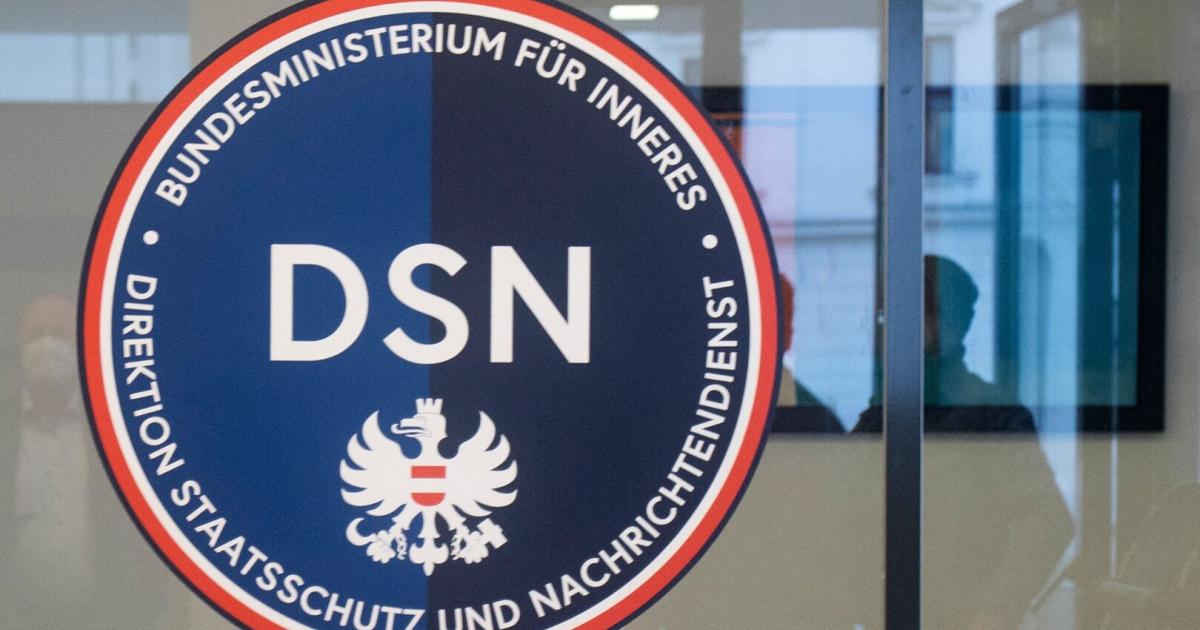
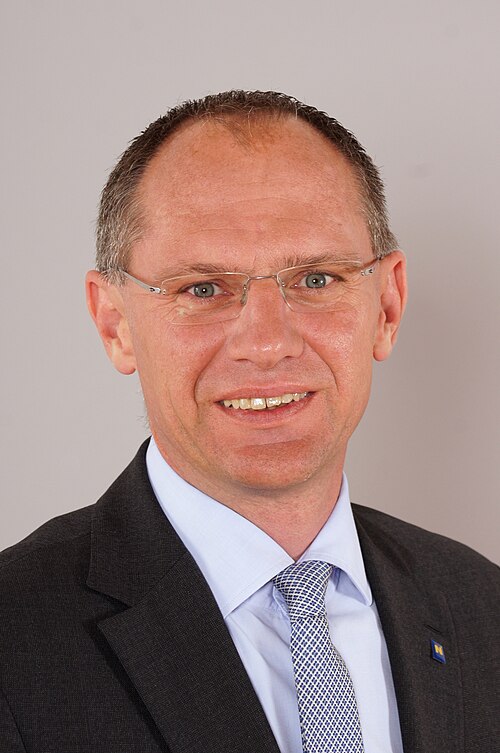
This was confirmed by Interior Minister Gerhard Karner (ÖVP) on Friday afternoon at the sidelines of a press conference. #Ukraina #Spionage #Investigativjournalismus (translated)

Vier Ukrainer in Wien wegen Spionageverdachts festgenommen
www.diepresse.com
2455
Die Presse 3d

Four Ukrainians were arrested in Vienna on suspicion of espionage, including the well-known investigative journalist Mychajlo Tkatsch, who was released after twelve hours in custody, while two other suspects remain in pre-trial detention. #Ukraina #Spionage #Investigativjournalismus (translated)

www.diepresse.com
Vier Ukrainer in Wien wegen Spionageverdachts festgenommen
2455
Kurier 3d

Ukrainian investigative journalist Mykhailo Tkach was temporarily detained in Vienna on suspicion of espionage but was later released as the charges against him were not confirmed. #Spionage #Journalismus #Wien (translated)

kurier.at
Spionage-Krimi in Wien: Bekannter ukrainischer Journalist festgenommen
2567
20 minutos 3d

Judge Santiago Pedraz has rejected the indictment against the PSOE in the sewer case, considering that there is not enough evidence to justify it at this time, and has stated that before making a decision, various investigative diligences must be carried out. #PSOE #CasoCloacas #Imputación (translated)

www.20minutos.es
El juez Pedraz rechaza imputar al PSOE al no ver un "principio de prueba" que lo justifique "en este momento"
3015
Gunther Fehlinger-Jahn 3d

The post’s author said Russia was bombing Ukraine and that Austrian authorities had detained Ukrainian investigative journalist Mykhailo Tkach in Vienna. Citing Ukrainska Pravda, the author said the outlet had reported the detention and could not establish the whereabouts of Tkach’s colleague, Yaroslav Bondarenko. https://t.co/TchXHlUVS1 #Ukraine #Austria #Journalism #AT #UA #RU

3798
Péter Magyar 4d

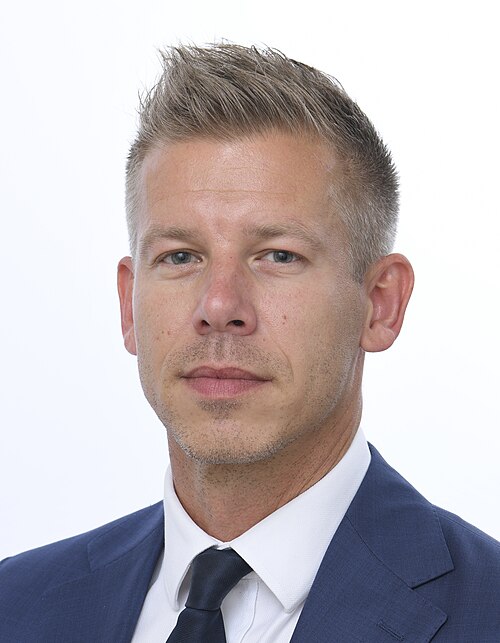
This evening, at a previously agreed-upon time, I was questioned by the Central Investigative Prosecutor’s Office in connection with the events of June 21, 2024. I gave a brief statement and did not admit to the crime I am accused of. I will provide updates on any further developments, Hungarian Prime Minister Péter Magyar announced on his Facebook page that he was questioned by the Central Investigative Prosecutor’s Office (KNYF) on Wednesday evening in connection with what has been referred to as “the cell phone theft case.” #HungarianPolitics #PéterMagyar #CorruptionAllegations (translated)

Hungarian PM questioned in connection with allegations of cell phone theft
telex.hu
3029
Alexander Wallasch 5d

The author wrote that Correctiv was in the NIUS editorial office and had material from a hacked NIUS system. He asked who had opened the door for Correctiv and described the early morning as a moment when an editorial office had become a crime scene. (translated)

3155
Krzysztof Graj 5d

Nigeria – how pro-Russian influence networks sell military rule as the answer When Nigerians took to the streets in August 2024 to protest soaring living costs and frustration with government, some demonstrations acquired an unexpected symbol: the Russian flag. In Kano, Kaduna and other northern cities, protesters were filmed carrying Russian colours and calling for Moscow’s intervention. Some demanded a military takeover. What initially looked like an unusual expression of anger has since become part of a much larger picture. A September 2026 assessment by the Africa Center for Strategic Studies describes Nigeria as a major target of overlapping foreign information operations, with Russia the most active external actor in its information space. The report does not identify a single centrally controlled campaign. Instead, it maps an ecosystem in which genuine dissatisfaction over insecurity, corruption and living standards is repeatedly redirected towards a broader proposition: democratic government has failed, while the military-led regimes of the Sahel offer a more effective alternative. Turning a real protest into a pro-Russian message The clearest example emerged during the 2024 #EndBadGovernance protests. Nigerian investigative reporting found that a Kano-based TikTok influencer with more than 100,000 followers had been paid through a Telegram channel associated with African Initiative, a Moscow-based media operation linked by researchers to Russian influence activity in Africa. The influencer said the channel supplied photographs, videos and talking points for redistribution on TikTok and Instagram. Among the messages provided were phrases such as “Putin please come and save Nigeria” and “The army is the answer for Nigeria”. Influencers were encouraged to use Hausa-language hashtags including #Zangazanga – “protest” – alongside references to Putin and Russia. Investigators identified 38 accounts circulating similar pro-Russian and pro-military narratives during the demonstrations. Russian flags subsequently appeared among protesters in several northern cities. This does not mean the protests themselves were created by Russia. They were driven by genuine economic and political grievances, and Nigerian protesters gave different reasons for carrying Russian flags. The important feature of the influence activity was precisely that it did not need to manufacture the original anger. It could attach a geopolitical message to an existing domestic crisis. From frustration to the idea of military government The narrative fits a wider pattern seen across West Africa. Russia has developed close relations with the military governments of Mali, Burkina Faso and Niger, while pro-Russian media ecosystems routinely portray those states as examples of sovereignty, stability and resistance to Western influence. Nigeria, by contrast, has remained under constitutional civilian government since 1999. Africa Center researchers say information networks targeting Nigerians increasingly contrast these two models. Recurring messages depict elections as wasteful or predetermined, civilian institutions as incapable of protecting citizens and military governments as more decisive on security and development. Some content portrays the Sahelian juntas as delivering better roads, lower prices and stronger security even where available evidence points to continuing or worsening instability. Language is central to the strategy. Hausa is spoken across northern Nigeria and neighbouring Niger, allowing political narratives to travel across borders that are far less important online than they are on maps. HumAngle documented efforts involving Nigerien state-linked actors to cultivate Hausa-speaking journalists and distribute material favourable to Niger’s junta and hostile to France and Western influence. The Russian and Sahelian-junta information ecosystems are not identical, but their narratives frequently reinforce one another. Fake journalists inside real Nigerian media The campaign environment extends beyond social media. A 2026 investigation by Graphika and Code for Africa identified 44 ghost reporters and fake experts whose identities were used to place Russia-aligned narratives in African media. Thirty-eight were assessed with high confidence to be fabricated. Their articles or quotations appeared across 138 websites and were amplified by at least 113 Facebook accounts and Pages. Nigeria was one of the most heavily targeted countries. According to the Africa Center’s analysis of the research, Daily Post Nigeria carried 39 articles involving 14 identified ghost authors. Once published by a genuine Nigerian outlet, such material could then be cited by other websites, social-media accounts or even Russian official channels as though it had originated independently in Africa. This is information laundering rather than simple propaganda: the most valuable asset being borrowed is the credibility of the local newsroom. Generative AI added another layer. OpenAI and Meta separately disrupted a Russia-origin network that produced Africa-focused political content and operated Facebook Pages posing as local media organisations. One fabricated commentator, “Dr Manuel Godsin”, was presented as a European-trained geopolitical expert although investigators found no evidence supporting his academic biography. ChatGPT had been used to generate articles under the persona’s name, while Meta removed 37 Facebook accounts and 29 Pages connected to the broader network. Different networks, similar strategic direction It would be misleading to merge all these activities into a single Russian command structure. The African Initiative-linked influencer campaign, the ghost-reporter network and the AI-enabled operation disrupted by OpenAI and Meta were uncovered separately and used different infrastructure. Public evidence does not demonstrate that every actor reported to the same organisation. What connects them is a recurring set of themes and methods: portraying Western partnerships as exploitative, presenting Russia as an alternative security partner, amplifying failures of civilian government, and giving military-led rule greater legitimacy. Investigative reporting on leaked Russian documents has meanwhile described a much wider influence apparatus operating across Africa, involving political consultants, paid journalists, influencers and locally tailored campaigns intended to reduce Western influence and expand Moscow’s position. The underlying technique is less about inventing dissatisfaction than redirecting it. Nigeria faces real security threats, economic pressure and public frustration. Influence operators do not need to persuade Nigerians that those problems exist. They need only influence the explanation for why they exist – and which political model appears to offer the answer. That is what makes the Nigerian case significant. The most effective propaganda does not necessarily introduce a completely false reality. It takes a real crisis and changes where the audience is encouraged to look for the solution. Sources Africa Center for Strategic Studies — The Raging Information Battle in Nigeria https://africacenter.org/spotlight/the-raging-information-battle-in-nigeria/ Graphika — Umbrae Ex Machina https://www.graphika.com/reports/umbrae-ex-machina OpenAI — Operation “No Bell” https://openai.com/index/disrupting-malicious-uses-of-ai-no-bell/ TheCable — Ghost reporters in African media https://www.thecable.ng/ghost-reporters-how-fabricated-african-voices-carried-pro-russia-narratives/ HumAngle — Nigeria Is Facing an Information War in Its Own Language https://www.humanglemedia.com/nigeria-is-facing-an-information-war-in-its-own-language DAIDAC / CJID — Russian influence during #EndBadGovernance https://daidac.thecjid.org/how-telegram-tiktok-aided-russian-disinformation-that-led-to-incarceration-of-nigerian-minors/ FactCheckHub — How Nigeria’s hunger protest took a radical turn https://factcheckhub.com/from-economic-protests-to-coup-agitation-how-nigerias-hunger-march-took-a-radical-turn/ News24 — Fake Kremlin-linked analyst planted stories in African media https://www.news24.com/southafrica/news/ai-expert-exposed-fake-kremlin-linked-analyst-planted-stories-in-african-media-20260318-0560 Vanguard — AI ‘expert’ exposed https://www.vanguardngr.com/2026/03/ai-expert-exposed-fake-kremlin-linked-analyst-planted-stories-in-african-media/ Africa Confidential — How Moscow wages social media war https://www.africa-confidential.com/article/id/15961/how-moscow-wages-social-media-war Keywords #DISINFORMED #Episode15 #Nigeria #Russia #RussianInfluence #RussianDisinformation #Africa #WestAfrica #Disinformation #InformationWarfare #InfluenceOperations #ForeignInterference #FIMI #Propaganda #MilitaryRule #MilitaryGovernment #Democracy #PoliticalManipulation #NarrativeManipulation #AfricanInitiative #EndBadGovernance #Hausa #LocalInfluencers #GhostReporters #FakeExperts #ArtificialIntelligence #AI #AIPersonas #SyntheticMedia #AIPropaganda #Astroturfing #SocialMediaManipulation #Telegram #TikTok #DigitalInfluence #SourceLaundering #NarrativeLaundering #MediaManipulation #Sahel #Geopolitics #OSINT #WRLD

africacenter.org
The Raging Information Battle in Nigeria
790
Vatnik Soup 5d

The author wrote that Russian investigative journalist Anna Politkovskaya had been murdered in Moscow 20 years earlier, on Vladimir Putin’s 54th birthday. They said she had spent years reporting on Putin’s Russia and exposing atrocities committed during the Second Russian-Chechen War. https://t.co/f2cfQfQKLT #AnnaPolitkovskaya #Journalism #Russia #RU #CH

3836
tagesschau.de 5d

On October 7, 2006, the investigative journalist Anna Politkovskaya was murdered in Moscow after she had attracted powerful enemies, particularly the Chechen ruler Ramzan Kadyrov, through her reporting on torture, corruption, and the war in Chechnya. #AnnaPolitkowskaja #Menschenrechte #Journalismus (translated)

www.tagesschau.de
Anna Politkowskaja: Die Journalistin, die zu mächtige Feinde hatte
1693