WRLD

Search

#Legitimacy
Krzysztof Graj 5d

Nigeria – how pro-Russian influence networks sell military rule as the answer When Nigerians took to the streets in August 2024 to protest soaring living costs and frustration with government, some demonstrations acquired an unexpected symbol: the Russian flag. In Kano, Kaduna and other northern cities, protesters were filmed carrying Russian colours and calling for Moscow’s intervention. Some demanded a military takeover. What initially looked like an unusual expression of anger has since become part of a much larger picture. A September 2026 assessment by the Africa Center for Strategic Studies describes Nigeria as a major target of overlapping foreign information operations, with Russia the most active external actor in its information space. The report does not identify a single centrally controlled campaign. Instead, it maps an ecosystem in which genuine dissatisfaction over insecurity, corruption and living standards is repeatedly redirected towards a broader proposition: democratic government has failed, while the military-led regimes of the Sahel offer a more effective alternative. Turning a real protest into a pro-Russian message The clearest example emerged during the 2024 #EndBadGovernance protests. Nigerian investigative reporting found that a Kano-based TikTok influencer with more than 100,000 followers had been paid through a Telegram channel associated with African Initiative, a Moscow-based media operation linked by researchers to Russian influence activity in Africa. The influencer said the channel supplied photographs, videos and talking points for redistribution on TikTok and Instagram. Among the messages provided were phrases such as “Putin please come and save Nigeria” and “The army is the answer for Nigeria”. Influencers were encouraged to use Hausa-language hashtags including #Zangazanga – “protest” – alongside references to Putin and Russia. Investigators identified 38 accounts circulating similar pro-Russian and pro-military narratives during the demonstrations. Russian flags subsequently appeared among protesters in several northern cities. This does not mean the protests themselves were created by Russia. They were driven by genuine economic and political grievances, and Nigerian protesters gave different reasons for carrying Russian flags. The important feature of the influence activity was precisely that it did not need to manufacture the original anger. It could attach a geopolitical message to an existing domestic crisis. From frustration to the idea of military government The narrative fits a wider pattern seen across West Africa. Russia has developed close relations with the military governments of Mali, Burkina Faso and Niger, while pro-Russian media ecosystems routinely portray those states as examples of sovereignty, stability and resistance to Western influence. Nigeria, by contrast, has remained under constitutional civilian government since 1999. Africa Center researchers say information networks targeting Nigerians increasingly contrast these two models. Recurring messages depict elections as wasteful or predetermined, civilian institutions as incapable of protecting citizens and military governments as more decisive on security and development. Some content portrays the Sahelian juntas as delivering better roads, lower prices and stronger security even where available evidence points to continuing or worsening instability. Language is central to the strategy. Hausa is spoken across northern Nigeria and neighbouring Niger, allowing political narratives to travel across borders that are far less important online than they are on maps. HumAngle documented efforts involving Nigerien state-linked actors to cultivate Hausa-speaking journalists and distribute material favourable to Niger’s junta and hostile to France and Western influence. The Russian and Sahelian-junta information ecosystems are not identical, but their narratives frequently reinforce one another. Fake journalists inside real Nigerian media The campaign environment extends beyond social media. A 2026 investigation by Graphika and Code for Africa identified 44 ghost reporters and fake experts whose identities were used to place Russia-aligned narratives in African media. Thirty-eight were assessed with high confidence to be fabricated. Their articles or quotations appeared across 138 websites and were amplified by at least 113 Facebook accounts and Pages. Nigeria was one of the most heavily targeted countries. According to the Africa Center’s analysis of the research, Daily Post Nigeria carried 39 articles involving 14 identified ghost authors. Once published by a genuine Nigerian outlet, such material could then be cited by other websites, social-media accounts or even Russian official channels as though it had originated independently in Africa. This is information laundering rather than simple propaganda: the most valuable asset being borrowed is the credibility of the local newsroom. Generative AI added another layer. OpenAI and Meta separately disrupted a Russia-origin network that produced Africa-focused political content and operated Facebook Pages posing as local media organisations. One fabricated commentator, “Dr Manuel Godsin”, was presented as a European-trained geopolitical expert although investigators found no evidence supporting his academic biography. ChatGPT had been used to generate articles under the persona’s name, while Meta removed 37 Facebook accounts and 29 Pages connected to the broader network. Different networks, similar strategic direction It would be misleading to merge all these activities into a single Russian command structure. The African Initiative-linked influencer campaign, the ghost-reporter network and the AI-enabled operation disrupted by OpenAI and Meta were uncovered separately and used different infrastructure. Public evidence does not demonstrate that every actor reported to the same organisation. What connects them is a recurring set of themes and methods: portraying Western partnerships as exploitative, presenting Russia as an alternative security partner, amplifying failures of civilian government, and giving military-led rule greater legitimacy. Investigative reporting on leaked Russian documents has meanwhile described a much wider influence apparatus operating across Africa, involving political consultants, paid journalists, influencers and locally tailored campaigns intended to reduce Western influence and expand Moscow’s position. The underlying technique is less about inventing dissatisfaction than redirecting it. Nigeria faces real security threats, economic pressure and public frustration. Influence operators do not need to persuade Nigerians that those problems exist. They need only influence the explanation for why they exist – and which political model appears to offer the answer. That is what makes the Nigerian case significant. The most effective propaganda does not necessarily introduce a completely false reality. It takes a real crisis and changes where the audience is encouraged to look for the solution. Sources Africa Center for Strategic Studies — The Raging Information Battle in Nigeria https://africacenter.org/spotlight/the-raging-information-battle-in-nigeria/ Graphika — Umbrae Ex Machina https://www.graphika.com/reports/umbrae-ex-machina OpenAI — Operation “No Bell” https://openai.com/index/disrupting-malicious-uses-of-ai-no-bell/ TheCable — Ghost reporters in African media https://www.thecable.ng/ghost-reporters-how-fabricated-african-voices-carried-pro-russia-narratives/ HumAngle — Nigeria Is Facing an Information War in Its Own Language https://www.humanglemedia.com/nigeria-is-facing-an-information-war-in-its-own-language DAIDAC / CJID — Russian influence during #EndBadGovernance https://daidac.thecjid.org/how-telegram-tiktok-aided-russian-disinformation-that-led-to-incarceration-of-nigerian-minors/ FactCheckHub — How Nigeria’s hunger protest took a radical turn https://factcheckhub.com/from-economic-protests-to-coup-agitation-how-nigerias-hunger-march-took-a-radical-turn/ News24 — Fake Kremlin-linked analyst planted stories in African media https://www.news24.com/southafrica/news/ai-expert-exposed-fake-kremlin-linked-analyst-planted-stories-in-african-media-20260318-0560 Vanguard — AI ‘expert’ exposed https://www.vanguardngr.com/2026/03/ai-expert-exposed-fake-kremlin-linked-analyst-planted-stories-in-african-media/ Africa Confidential — How Moscow wages social media war https://www.africa-confidential.com/article/id/15961/how-moscow-wages-social-media-war Keywords #DISINFORMED #Episode15 #Nigeria #Russia #RussianInfluence #RussianDisinformation #Africa #WestAfrica #Disinformation #InformationWarfare #InfluenceOperations #ForeignInterference #FIMI #Propaganda #MilitaryRule #MilitaryGovernment #Democracy #PoliticalManipulation #NarrativeManipulation #AfricanInitiative #EndBadGovernance #Hausa #LocalInfluencers #GhostReporters #FakeExperts #ArtificialIntelligence #AI #AIPersonas #SyntheticMedia #AIPropaganda #Astroturfing #SocialMediaManipulation #Telegram #TikTok #DigitalInfluence #SourceLaundering #NarrativeLaundering #MediaManipulation #Sahel #Geopolitics #OSINT #WRLD


africacenter.org
The Raging Information Battle in Nigeria
902
Florian Krampe 2w

In conflict-affected places, water is power, legitimacy and identity. Treat it as a technical problem and you can fix the pipes and still make the politics worse. My colleagues and I call that the boomerang effect. From my @TEDx talk at TEDxMidAtlantic. https://t.co/9tMEtfgDSG #WaterIsPower #BoomerangEffect #ConflictResolution #Nospecificcountrycodesarementionedinthetweet.

BBC 2w

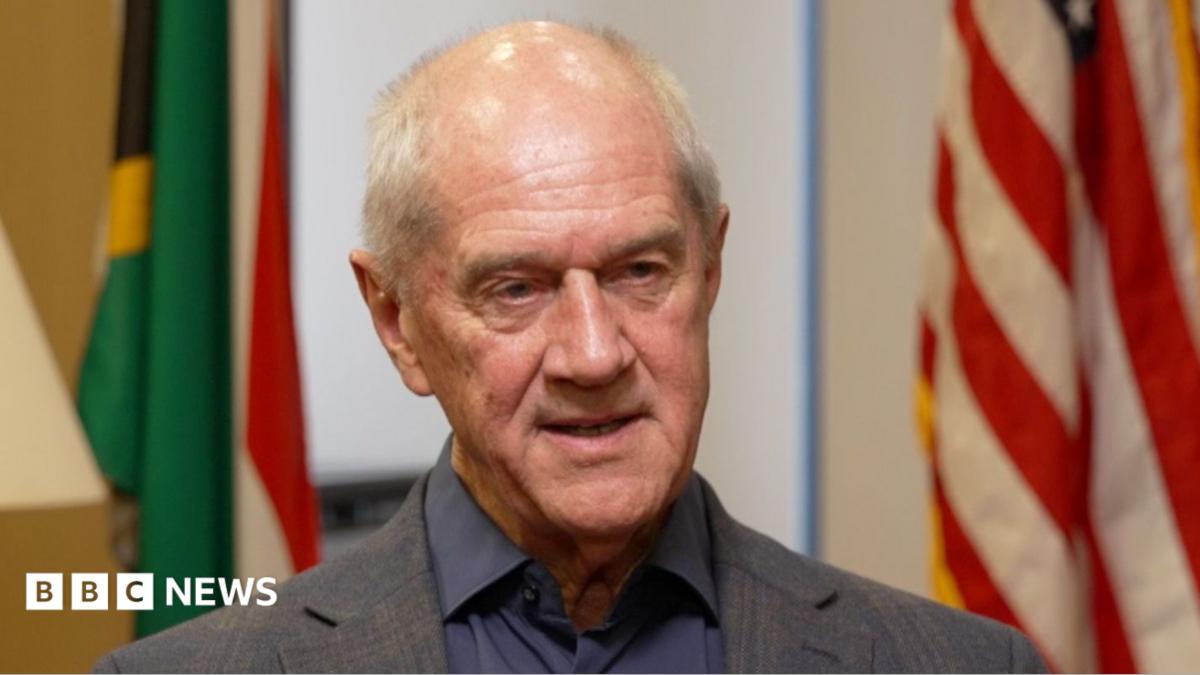
Roelf Meyer tells the BBC that being a white Afrikaner gives him legitimacy to challenge Trump's claim of a genocide. #SouthAfrica #WhiteGenocide #Afrikaners

www.bbc.co.uk
South African white genocide does not exist, new ambassador to US tells BBC
1611
S
Sandfeen 2w

“When Terrorism Becomes “Resistance”: What the Statistics Actually Show Do most Muslims oppose Islamist terrorism? The available evidence does not support either a simple “yes” or “no.” It shows a more complicated pattern: many Muslims reject attacks on civilians, while attitudes toward political violence can change substantially depending on the conflict, the perpetrators and the victims. A 2013 Pew Research Center survey found that 89% of Pakistani Muslims, 81% of Indonesian Muslims and 77% of Tunisian Muslims said suicide bombing and violence against civilians could never be justified in defence of Islam. But the figure was only 38% in the Palestinian territories; 62% said such violence could sometimes or often be justified (Pew Research Center, 2013). Jordan provides another revealing example. After al-Qaeda’s 2005 hotel bombings in Amman, support for Osama bin Laden’s al-Qaeda as a legitimate resistance organisation fell from 67% to 20%, while those calling it a terrorist organisation rose from 10.6% to 48.9% (Jamestown Foundation, 2005). The fact that attacks on Muslim civilians dramatically changed attitudes suggests that perceptions of political violence can depend partly on who is being targeted. More recently, an Arab Center survey across 16 Arab countries found that 67% considered Hamas’s October 7 operation a legitimate resistance operation, while another 19% considered it flawed but legitimate (Arab Center for Research and Policy Studies, 2024). These figures cannot, however, be equated directly with support for terrorism: respondents were asked about legitimacy and Hamas, not specifically whether they supported terrorism or attacks on civilians. The evidence therefore does not establish that most Muslims support terrorism. It does show something more precise and important: opposition to Islamist violence is not necessarily consistent across circumstances. Some people who reject terrorism in principle may regard violence as legitimate when it is framed as resistance against a perceived enemy. The statistics cited by FrontPage Magazine therefore raise a legitimate question(Greenfield, 2026)” - ChatGPT

691
Mick Wallace 2w

We should not give legitimacy to the Genocidal Israeli Regime by playing football with them. - "Our nations soul is at stake, not 6 points. We need the footballers to take a stand on behalf of Humanity when the weak Leaders have chosen servility to Evil"... #STOP_THE_GAME #StopTheGame #StandForHumanity #EndTheOccupation #IL

1729
Krzysztof Graj 3w

UAE / Sudan – when an influence operation tried to enter the United Nations A network of roughly 300 apparently independent social-media influencers. A human-rights organisation borrowing the identity of a real NGO. Personal dossiers on European politicians and journalists. And testimony prepared for delivery at the United Nations without revealing the state interest behind it. These were elements of an influence operation uncovered by Anthropic and disclosed in September 2026. The company says it linked the activity with high confidence to UAE government officials. Tracked as GTG-84002, the operation targeted several overlapping issues: the Muslim Brotherhood, perceptions of the war in Sudan and international mechanisms examining the United Arab Emirates' role in the conflict. What distinguishes the case is not simply its use of artificial intelligence. It is the attempt to make state-aligned messaging appear to originate from independent influencers, human-rights organisations and potentially witnesses addressing an international institution. An influence network built around 300 fake voices Anthropic identified a single actor using Claude to support a sustained influence campaign. At its centre was an AI persona called “Deadshot”, running on the operator's own platform. A master doctrine file repeatedly instructed the system to support what it described as a coordinated international effort to dismantle the Muslim Brotherhood. The operator simultaneously managed several components of the campaign, including approximately 300 inauthentic influencer accounts across social-media platforms. Internal material examined by Anthropic described the apparent independence of this network as its greatest strategic advantage. That phrase captures the central method. The objective was not simply to broadcast a political position but to conceal where that position originated. One visible example appeared on 4 June 2026, when accounts participated in a coordinated campaign using #SudanIslamists and near-identical graphics connecting Sudanese Islamists and the Muslim Brotherhood with regional instability. Anthropic says the amplification network was centrally funded and coordinated. Its investigation also found that the operator financing the social-media network was connected to the wider influence operation. A human-rights organisation that was not what it appeared to be Social media was only one layer. The operator also created a front NGO that copied the identity of a genuine Swiss organisation and used that borrowed legitimacy to publish human-rights material produced for the campaign. Anthropic's description elsewhere also refers to the identity of a real Sudanese human-rights organisation being used in connection with the preparation of testimony. The public report does not fully clarify whether these references describe the same front or separate elements of the operation, so they should not be treated as definitively identical. The underlying technique, however, is clear: political material was designed to appear as if it originated from independent civil society rather than from actors linked to a government. This is particularly significant in the human-rights environment, where the perceived independence of an organisation or witness can determine how seriously evidence is received by journalists, diplomats and international institutions. The attempt to reach the UN The most consequential part of the operation concerned the 62nd session of the UN Human Rights Council. According to Anthropic, the operator used Claude to ghost-write complete testimony intended to be delivered by two individuals during the session. The texts were prepared under explicit constraints ensuring that neither statement would mention the UAE. This did not amount to a conventional government submission. The intention, according to Anthropic's reconstruction, was for material serving the interests of a party connected to the Sudan conflict to reach an international forum through apparently independent voices. But an important limitation remains: Anthropic could not confirm that the testimony was ultimately delivered. The company similarly could not establish whether other dossiers produced by the operation reached their intended recipients or influenced policy. It therefore assessed the campaign as Category Three on the Brookings Breakout Scale – activity distributed across several platforms, but without evidence of broad public impact sufficient for a higher classification. The distinction matters. The evidence demonstrates a sophisticated attempt to influence international debate; it does not demonstrate that the attempt succeeded. Politicians, journalists and UN investigators became targets The operation was not limited to generating public content. Anthropic found that the operator researched and compiled detailed profiles of 18 members of the European Parliament and prominent journalists. Some material was prepared for direct delivery to senior UAE officials. The network also assembled what Anthropic describes as “counter-accountability dossiers” on UN Special Rapporteurs who had criticised the UAE's conduct in relation to Sudan. This places the campaign in a broader context. Since Sudan's civil war began in April 2023, the role of external powers has become an increasingly important part of international scrutiny. Sudan has accused the UAE of supporting the Rapid Support Forces, allegations Abu Dhabi has repeatedly denied. In 2025, Sudan brought a case against the UAE before the International Court of Justice, accusing it of complicity in genocide against the Masalit through alleged support for the RSF. The UAE rejected the allegations. The ICJ subsequently removed the case from its list after finding that it lacked jurisdiction because of the UAE's reservation to the relevant provision of the Genocide Convention. The ruling therefore did not determine whether Sudan's substantive allegations were true or false. That contested international environment helps explain why narratives about Sudan, human rights and accountability were valuable targets for an influence operation. AI as an operating system for influence The role played by Claude is also important to understand accurately. Anthropic did not find that artificial intelligence independently conceived or directed the campaign. Human operators established the objectives, political doctrine and targets. AI instead helped operationalise them. Across hundreds of sessions, Claude was used to transform predetermined political objectives into social-media narratives, human-rights reports, testimony, intelligence-style briefs and detailed profiles of individuals. The same system could support narrative production, target research and preparation of material for different audiences. That represents a more significant development than simply using generative AI to produce propaganda faster. Traditional influence operations require different teams to research targets, write content, manage personas, adapt messages and prepare briefing material. Generative AI can compress several of those functions into a single operational workflow. The result is not necessarily more convincing propaganda. It is potentially cheaper, faster and more scalable influence infrastructure. From fake influencers to institutional influence Anthropic says it linked the operation to UAE government officials with high confidence. Its assessment was based partly on internal material naming senior Emirati officials as intended recipients of the work, alongside other evidence available to its investigators. That remains an attribution by Anthropic rather than a judicial finding or publicly released forensic attribution by a government agency. The distinction should be retained. The larger significance of GTG-84002 lies in the architecture of the campaign. A network of fake influencers could create the appearance of public opinion. A cloned human-rights organisation could provide institutional credibility. AI-generated reports could give political narratives the appearance of research. Profiles of journalists and politicians could support more precise targeting. And ghost-written testimony could potentially carry the same message into an international institution without revealing the political interest behind it. This is a different model from the familiar troll farm. The objective is no longer simply to make propaganda look popular. It is to make state-aligned messaging look independent – and, if possible, to move it from social media into the institutions where international policy and accountability are debated. SOURCES: Anthropic — Countering misuse of AI: September 2026 https://www.anthropic.com/threat-intelligence-report-september-2026 International Court of Justice — Sudan v. United Arab Emirates https://www.icj-cij.org/case/197 International Court of Justice — press releases and case documents https://www.icj-cij.org/case/197/press-releases United Nations Geneva — Sudan v UAE proceedings at the ICJ https://www.ungeneva.org/en/news-media/news/2025/04/105241/world-court-begins-hearing-sudans-complicity-genocide-case-against UAE Ministry of Foreign Affairs — UAE response to Sudan's allegations https://www.mofa.gov.ae/en/MediaHub/News/2025/4/10/10-4-2025-UAE-UAE UN Digital Library — Sudan's letter concerning alleged UAE support for the RSF https://digitallibrary.un.org/record/4091008?ln=en UN Digital Library — UAE response concerning allegations of support for the RSF https://digitallibrary.un.org/record/4046224?ln=en Ultra Sudan — reporting on Anthropic's UAE-linked influence-operation findings https://ultrasudan.usawtiq.com/أنثروبيك-أحبطنا-عملية-تأثير-إماراتية-استخدمت-الذكاء-الاصطناعي-لاستهداف-السودان/عامر-صالح/أخبار KEYWORDS #DISINFORMED #Episode8 #UAE #Sudan #UnitedArabEmirates #UnitedNations #UNHumanRightsCouncil #HumanRights #Disinformation #InformationWarfare #InfluenceOperations #ForeignInterference #FIMI #CoordinatedInauthenticBehaviour #CIB #FakeInfluencers #FakeNGO #NGOImpersonation #Astroturfing #ArtificialIntelligence #AI #AIPropaganda #AIGeneratedContent #SyntheticMedia #SocialMediaManipulation #DigitalInfluence #Propaganda #NarrativeManipulation #InstitutionalInfluence #SudanConflict #SudanWar #MuslimBrotherhood #InternationalRelations #Geopolitics #Anthropic #ClaudeAI #OSINT #WRLD

www.anthropic.com
Countering misuse of AI: September 2026 / Anthropic
808
Krzysztof Graj 3w

AFRICA DAILY REPORT — 24 SEPTEMBER 2026 Major developments reported during the previous 24 hours 1. ETHIOPIA — Renewed war in Tigray shatters the 2022 peace deal Importance: 10/10 — Critical Tigray's regional authorities said their forces had entered a "defensive war" against federal troops after fighting escalated sharply on 23 September. Tigrayan forces seized three airports, including Mekelle, and Ethiopian Airlines suspended flights to the region. The renewed hostilities effectively rupture the Pretoria peace framework that ended the devastating 2020–2022 war and raise the risk of a wider Horn of Africa conflict. Source: Reuters — https://www.reuters.com/world/africa/ethiopias-tigray-region-government-announces-it-has-entered-defensive-war-2026-09-23/ Additional analysis: https://www.reuters.com/world/africa/why-new-war-ethiopias-tigray-threatens-trigger-wider-conflict-2026-09-23/ 2. DR CONGO / CENTRAL AFRICA — U.S. pledges another $267 million for Ebola response Importance: 9.5/10 — Critical The U.S. State Department announced an additional $267 million for the Ebola response, mainly focused on the Democratic Republic of Congo. The new pledge brings the Trump administration's commitment to approximately $886 million. Officials used the UN General Assembly to seek broader international contributions toward a $2 billion response target as the outbreak remains the second most lethal Ebola epidemic on record. Source: Reuters — https://www.reuters.com/legal/litigation/us-pledges-267-million-more-fight-ebola-central-africa-2026-09-23/ 3. SUDAN — Khartoum rejects U.S. challenge to government's legitimacy Importance: 9/10 — Very High Sudan's foreign ministry rejected U.S. State Department remarks questioning the government's legitimacy and insisted that any peace initiative must respect Sudanese sovereignty, territorial integrity and what it described as legitimate national institutions. The dispute adds another complication to international efforts to negotiate an end to the SAF–RSF war. Source: Reuters — https://www.reuters.com/world/africa/sudan-rejects-us-remarks-questioning-government-legitimacy-2026-09-23/ 4. CENTRAL AFRICAN REPUBLIC — ICC convicts former Seleka commander Importance: 8.5/10 — Very High The International Criminal Court convicted Mahamat Said Abdel Kani, a former Seleka commander, on four counts of crimes against humanity, including torture. Prosecutors said he helped run a detention centre in Bangui where perceived supporters of former president François Bozizé were beaten and tortured. He is the first former Seleka member convicted by the ICC; sentencing will be determined separately. Source: Reuters — https://www.reuters.com/world/international-criminal-court-convicts-central-african-militia-leader-2026-09-23/ 5. SOUTH AFRICA — Reserve Bank raises policy rate to 7.25% Importance: 8.5/10 — Very High The South African Reserve Bank unanimously raised its policy rate by 25 basis points to 7.25%, its second increase this year. The bank cited sustained price shocks linked to the Iran conflict and raised its near-term inflation forecasts while cutting its 2026 growth forecast to 1.2% from 1.4%. Headline inflation reached 4.4% in August and the bank expects it to exceed 5% later this year. Source: Reuters — https://www.reuters.com/world/africa/south-africas-central-bank-raises-main-interest-rate-725-2026-09-23/ 6. SOUTH AFRICA — Mass shooting at KwaMakhutha house party kills 11 Importance: 8.5/10 — Very High Three gunmen opened fire at a house party in KwaMakhutha township south of Durban, killing 11 people, including a pregnant woman. Police are investigating the attack. The incident adds to concern over South Africa's exceptionally high levels of violent crime and follows intense public debate over a recent series of killings of women in Gauteng. Source: Associated Press — https://apnews.com/article/south-africa-house-party-shooting-91416626e0cf789bf2f801061bb8b46a 7. GHANA / AFRICAN UNION — Reparations campaign gains diplomatic momentum at UNGA Importance: 7.5/10 — High Ghana's Foreign Minister Samuel Okudzeto Ablakwa said Western support for reparatory justice over the trans-Atlantic slave trade is increasing. Ghana, Germany and France co-hosted a UNGA event on the issue. The African Union and CARICOM framework initially prioritizes restitution of looted cultural artifacts, with later stages potentially addressing formal apologies, debt relief and financial compensation. Source: Reuters report — https://wtaq.com/2026/09/23/western-countries-increase-support-for-slavery-reparations-ghana-says/ 8. KENYA / AFRICA — Ruto uses UNGA to challenge international credit-rating system Importance: 7.5/10 — High Kenyan President William Ruto told the UN General Assembly that African economies face disproportionately high financing costs and argued that the international credit-rating architecture penalizes the continent. His intervention forms part of a broader African push at UNGA for reform of international financial institutions and greater representation in global economic governance. Source: People Daily Kenya — https://peopledaily.digital/business/ruto-addresses-un-general-assembly-africa-loses-ksh9-71t-to-unfair-credit-ratings 9. MALI / SAHEL — Families await answers after catastrophic Dioura military attack Importance: 8/10 — High New reporting from Mali highlights the continuing human impact of JNIM's September 10 assault on the Dioura military camp. Families are still seeking information about missing soldiers after one of the most serious attacks on Mali's armed forces in recent years. Earlier reporting indicated that more than 100 soldiers may have been killed, illustrating the continued deterioration of security in the central Sahel. Source: AFP — https://www.afp.com/en/anguish-grips-mali-families-after-military-camp-massacre 10. UGANDA — Public debt rises 14.8% in a year Importance: 7/10 — Significant Uganda's public debt increased by 14.8% in the 12 months to June 2026, driven in part by increased domestic borrowing. The rise is significant for fiscal sustainability and debt-service costs as Uganda prepares for major infrastructure and oil-sector spending while facing broader pressure on its currency and public finances. Source: Reuters — https://www.reuters.com/world/africa/ugandas-public-debt-rises-15-surge-domestic-issuance-2026-09-24/ #Africa #AfricaNews #TopNewsOfAfrica #DRCongo #CentralAfrica #Ebola #EbolaOutbreak #EbolaResponse #PublicHealth #HealthSecurity #HumanitarianAid #UnitedStates #GlobalHealth #SouthAfrica #SouthAfricanReserveBank #SARB #InterestRates #MonetaryPolicy #Inflation #EconomicGrowth #AfricanEconomy #FinancialMarkets #Ethiopia #Tigray #TigrayConflict #PretoriaPeaceAgreement #HornOfAfrica #ArmedConflict #PeaceAndSecurity #RegionalStability #AfricanSecurity #Geopolitics #AfricaToday #wrldorg

1269
António Guterres 3w

Africa still has no permanent seat on the Security Council. A 21st century Security Council without permanent African representation is unjust & indefensible. We must reform the Council so that it reflects today’s world with the legitimacy and effectiveness that today’s #Africa #SecurityCouncil #Reform #AF #UN

346
Janez Janša 3w

United Russia has “won” an election it was never allowed to lose. There was no genuine political competition and little room for voices outside the Kremlin’s line. Voting in illegally occupied Ukrainian territories further strips the result of any democratic legitimacy. This was #UnitedRussia #ElectionFraud #DemocracyUnderThreat #RU #UA

116
Gunther Fehlinger-Jahn 3w

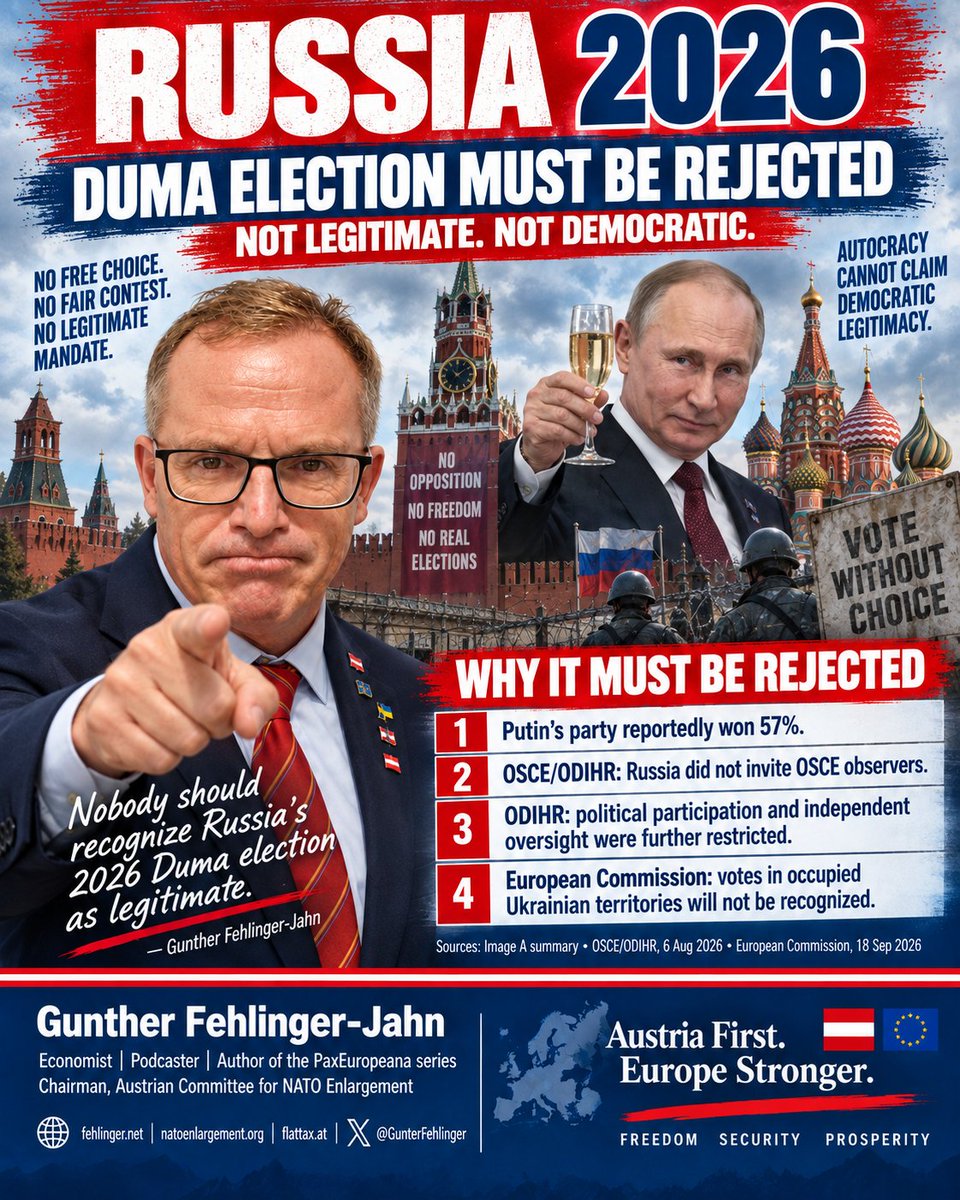
Russia’s 2026 Duma election must not be treated as a legitimate democratic mandate. My position is unequivocal: I reject its democratic legitimacy. Russia did not invite OSCE election observers; ODIHR says political participation, independent oversight, freedom of expression and https://t.co/WFf7kkNDi6 #RussiaElection #Democracy #OSCE #RU

463
Toiu Oana 3w

#Romania strongly condemns the holding of so-called "presidential elections" in Georgia's occupied Tskhinvali region/#South Ossetia (September 18). The voting and the whole process holds no legitimacy. The outcome is null and void. 🇷🇴 stands firm in support of Georgia’s #Georgia #SouthOssetia #ElectionIntegrity #RO #GE #OS

Krzysztof Graj 3w

Mali – a war where some of the people fighting do not exist In Mali's war, an apparently simple question is becoming increasingly difficult to answer: who exactly is speaking to us? A real person? A rebel organisation? A Russian influence operation? A supporter of the military junta? Or somebody who has never existed at all? In September 2026, the Dakar-based Timbuktu Institute published Des algorithmes en guerre, a report examining the use of generative artificial intelligence by actors involved in the Malian conflict. Its researchers describe the country as a potential laboratory for AI-assisted information warfare. Separatist networks are deploying synthetic fighters on TikTok. Jihadist propagandists are experimenting with AI-generated imagery. Pro-government accounts are producing large quantities of content celebrating the Malian armed forces. Russia, meanwhile, operates the most developed influence infrastructure of all: pseudo-media outlets, inauthentic accounts, AI-generated text, images and video, and systems designed to artificially amplify their visibility. Artificial intelligence did not create Mali's conflict. The war has been under way since 2012, and its participants have always fought with propaganda as well as weapons. What AI has changed is the economics of that struggle. A new “witness”, commentator, fighter, poster or video can now be produced in minutes. For audiences watching from a phone, distinguishing between genuine documentation, propaganda and material created entirely by an algorithm is becoming progressively harder. Azzghim – the fighter who cannot be killed or interrogated The most striking case documented by the Timbuktu Institute involves accounts associated with supporters of the Azawad Liberation Front, or FLA, a Tuareg separatist movement fighting the authorities in Bamako. A figure called “Azzghim” appeared on TikTok. He looks like a Tuareg fighter and regularly features in videos attacking Mali's government and Russia's Africa Corps, commenting on the conflict and promoting the cause of Azawad. There is one problem: Azzghim does not exist. Analysis of the videos identified anomalies characteristic of generative AI, including unnatural body movements, visual inconsistencies, irregular colouring and problems with audio synchronisation. According to the Timbuktu Institute, Azzghim is a synthetic character being used as the digital face of a political narrative. The propaganda advantages are considerable. An organisation no longer needs to expose a real spokesman. A synthetic personality can be designed to look exactly as its creators require, speak the appropriate language and appeal to a particular audience. Different characters could potentially be created for younger viewers, traditional communities or different ethnic and social groups. There is another advantage: a synthetic spokesman cannot be arrested, identified or interrogated. Researchers also identified accounts amplifying the material. At the time of the study, TikTok account @tawri.n.azawad had around 207,000 followers and was almost entirely devoted to publishing or repackaging content involving Azzghim. Another account, @asnan831, used a similar synthetic teenage character. An important distinction is necessary. Researchers describe these profiles as belonging to supporters or individuals associated with the FLA. The available evidence does not establish that every account is part of an operation centrally directed by the Front's leadership. The information effect, however, remains significant: a digital community can be constructed around the Azawad cause in which some of the apparent participants may not be real people at all. The jihadists are learning too The picture is different for Jama'at Nusrat al-Islam wal-Muslimin, or JNIM, the al-Qaeda-affiliated coalition that has become one of the most powerful armed groups in the Sahel. Its confirmed use of generative AI remains considerably less sophisticated. In June 2026, JNIM's Az-Zallaqa media apparatus published AI-generated posters promoting material about previous attacks. The images showed fighters in combat but contained familiar generative artefacts: buildings and vegetation merging unnaturally, blurred details and unnaturally smooth surfaces. More important than JNIM's current capabilities is what AI could add to an already sophisticated propaganda apparatus. The organisation already tailors communications to different audiences. UN reporting has documented its use of media channels for broader propaganda while other outlets increasingly distribute material in local languages, including Bambara. Generative AI could dramatically reduce the cost of this strategy, translating material into Fulfulde, Hausa, Zarma or Tamasheq, generating synthetic dubbing and producing multiple versions of the same message. The Timbuktu Institute also considers the future possibility of AI chatbots being used to personalise recruitment. That should not be presented as a capability JNIM has already demonstrated. At present, it is a risk scenario rather than a confirmed operation. Russia has the most sophisticated machine At the other end of the spectrum lies Russia's influence ecosystem. Here, AI is not an isolated experiment but another component of an infrastructure previously developed by Wagner-linked networks, Russian media operations and influence organisations operating across Africa. After Wagner's withdrawal from Mali in 2025, its military role was taken over by the Russian state-controlled Africa Corps. The information infrastructure evolved alongside it. Of particular importance is African Initiative, which presents itself as a news agency but has been identified by France's VIGINUM, the UK's Foreign, Commonwealth & Development Office and the European External Action Service as an important component of Russia's newer influence architecture in Africa. One of the most interesting elements of this ecosystem is a network researchers call AI-Freak. The operation uses generative AI to produce text, images and videos, places them on fake or apparently independent news websites and distributes them through inauthentic accounts. This is supplemented by so-called Black Hat SEO – techniques intended to artificially increase the visibility of content in search engines. Elements of this infrastructure have previously been identified by Meta and OpenAI. In 2024, OpenAI disrupted Russian accounts using ChatGPT to generate articles and comments in English, French and Russian. Some of the French-language content targeted audiences in West Africa. In a later iteration of the operation, AI models were also used to draft scripts for short videos praising the Russian Africa Corps, translate them into French and generate descriptions optimised for social media. This illustrates an important difference between the Russian approach and Azzghim. The separatist ecosystem uses AI primarily to manufacture convincing digital personalities. The Russian model increasingly resembles an industrial production line: text, image, video, pseudo-news website, distribution account, search optimisation and additional channels amplifying the narrative. The objective is not merely to convince someone of a single claim. It is to occupy as much of the information environment as possible with narratives advantageous to Moscow: Russia as an effective security partner, the West as a neo-colonial aggressor, France as a source of instability and Russian forces as defenders of African sovereignty. Yet VIGINUM also warns against equating technological sophistication with actual impact. Some Russian influence channels still attract relatively small audiences. A sophisticated operation is not automatically a successful one. The junta is building its own digital reality Mali's military authorities operate within the same contested information environment. Since breaking with France and moving closer to Moscow, Bamako has increasingly restricted independent media space while promoting a narrative built around restored sovereignty, military success and the benefits of its Russian partnership. The Timbuktu Institute highlights the TikTok account @6tm_officiel. At the time of the study, it had more than 436,000 followers and published substantial amounts of AI-generated material presenting Mali's armed forces, the FAMa, and the Africa Corps in a favourable light. One video concerning the battle for Kidal accumulated around 4.7 million views. Again, attribution requires care. Researchers describe the account as being operated by an individual based in Bamako; they do not provide evidence that it is officially managed by the Malian government. It is better understood as part of a wider pro-government information ecosystem in which the boundaries between state communications, supporters and co-ordinated propaganda can be difficult to establish. The Africa Center for Strategic Studies has previously identified the military regimes in Mali and Burkina Faso as important sources of disinformation campaigns in West Africa. Recurring narratives target France, the United Nations, ECOWAS, human-rights organisations and independent media, while presenting criticism of the authorities as part of a foreign conspiracy. Generative AI allows such narratives to be produced faster, more cheaply and in far more variations. Everyone is fighting over a different version of the same war What makes Mali particularly revealing is that multiple actors are using similar technology for very different objectives. FLA-linked networks need digital faces capable of humanising the Azawad cause and attacking Russia's presence. JNIM needs propaganda material and increasingly localised communications. The pro-government ecosystem seeks to portray Mali's armed forces as victorious and reinforce the junta's legitimacy. Russia possesses the broadest infrastructure, in which AI is merely one component of a larger system involving media outlets, websites, local partners, social-media profiles and technical amplification. The result is a war taking place simultaneously in two realities. In the first, soldiers and civilians are killed, towns change hands and the army, separatists and jihadists fight for territory. In the second, every side is trying to determine what the first reality will look like on a smartphone screen. Generative AI does not need to create a perfect deepfake to be effective. It merely needs to increase the number of competing versions of events until an ordinary viewer can no longer easily determine which one deserves to be trusted. That is why Mali matters. It is not showing us the future of information warfare. It is showing us its present. One TikTok video may feature a real soldier. Another may feature a propagandist. A third may feature a fighter who has never existed. And all three can tell completely different stories about the same war. Sources Timbuktu Institute – Des algorithmes en guerre: Comment l'IA générative rebat les cartes du conflit malien https://timbuktu-institute.org/index.php/toutes-l-actualites/item/1731-rapport-des-algorithmes-en-guerre-comment-l-ia-generative-rebat-les-cartes-du-conflit-malien AfricaNews/AFP – “Mali's information war is increasingly being shaped by AI” https://www.africanews.com/2026/09/09/malis-information-war-is-increasingly-being-shaped-by-ai/ OpenAI – research on Russia-origin influence activity and Operation Stop News https://openai.com/index/disrupting-malicious-uses-of-ai-stop-news-2024/ VIGINUM / FCDO / EEAS – technical report on African Initiative and the AI-Freak network https://www.sgdsn.gouv.fr/files/files/Publications/20250612_TLP-CLEAR_VIGINUM_FCDO_EEAS_Technical_Report_African_Initiative_EN.pdf Africa Center for Strategic Studies – Mapping a Surge of Disinformation in Africa https://africacenter.org/spotlight/mapping-a-surge-of-disinformation-in-africa/ Timbuktu Institute – analysis of AI use by JNIM https://timbuktu-institute.org/index.php/toutes-l-actualites/item/1735-artificial-intelligence-a-new-propaganda-lever-for-jnim-in-mali?print=1&tmpl=component #Disinformation #Mali #Sahel #Africa #ArtificialIntelligence #AI #GenerativeAI #AIPropaganda #InformationWarfare #InfluenceOperations #Propaganda #Deepfakes #SyntheticMedia #Azawad #FLA #JNIM #AfricaCorps #Russia #RussianInfluence #TikTok #DigitalWarfare #MediaManipulation #WRLD

timbuktu-institute.org
Rapport - DES ALGORITHMES EN GUERRE : Comment l'IA générative rebat les cartes du conflit malien
1623
Philip Pilkington 4w

The Burgerpocalypse is hammering McDonalds' stock price. Investors are selling the stock because the company can no longer offer budget meals. The decline is a signal that US living standards may be in rapid freefall. And with them, as @JucheAffirmer notes, American legitimacy. #Burgerpocalypse #McDonalds #Investors #US

116
Gunther Fehlinger-Jahn Sep 10

SOUTH AFRICA: RAMAPHOSA, WHAT WOULD MANDELA SAY? 🇿🇦 Nelson Mandela made South Africa a global symbol of freedom, dignity, reconciliation and democratic legitimacy. That is why I find today’s BRICS alignment so difficult to understand. South Africa is a serious country, a major https://t.co/5NQ9z6wliJ #SouthAfrica #NelsonMandela #BRICS #ZA

António Guterres Sep 7

International police cooperation is vital to better support survivors, apprehend perpetrators, disrupt criminal networks & advance safety for all. Law enforcement must also ensure its own legitimacy, by being grounded in fairness, accountability & respect for human rights. #PoliceCooperation #HumanRights #Justice #Thetweetdoesnotmentionanyspecificcountries.Therefore #therearenocountrycodestoreturn.

700
Luciano Magaldi Sardella (PhD) Sep 5

Dr. Luciano Magaldi Sardella, Saggista per l'Erpenbach Institute della Dr.ssa Eva Maria Erpenbach SOURCE: https://www.linkedin.com/pulse/dr-luciano-magaldi-sardella-saggista-per-lerpenbach-sardella-ph-d--gwate/ SOURCE: https://erpenbach.institute/guest-essays/quiet-republic-of-consent.html Un grazie sincero alla dr.ssa Eva Maria Erpenbach, direttrice e fondatrice dell’Istituto, per aver creduto in questo lavoro e per il suo impegno nel creare spazi di pensiero internazionale rigorosi e necessari. Le istituzioni arrivano sempre dopo. Prima che un’idea diventi “ufficiale”, è già stata riconosciuta da una comunità che l’ha testata, discussa, accolta. "The Quiet Republic of Consent: How Legitimacy Is Earned Before It Is Granted" Nel mio nuovo saggio per il prestigioso e tedesco "Erpenbach Institute" racconto questa quiet republic of consent: una repubblica silenziosa fatta di piccoli gesti di fiducia che, messi insieme, costruiscono la legittimità molto prima che un decreto o una certificazione provino a inseguirla.

www.linkedin.com
Dr. Luciano Magaldi Sardella, Saggista per l'Erpenbach Institute della Dr.ssa Eva Maria Erpenbach
1402
Luciano Magaldi Sardella (PhD) Sep 5

DR LUCIANO MAGALDI SARDELLA, ESSAYIST FOR THE GERMAN AND PRESTIGIOUS "ERPENBACH INSTITUTE" OF DR. EVA MARIA ERPENBACH SOURCE: https://www.linkedin.com/pulse/dr-luciano-magaldi-sardella-essayist-german-erpenbach-sardella-ph-d--8fkge/ SOURCE: https://erpenbach.institute/guest-essays/quiet-republic-of-consent.html A sincere expression of gratitude goes to Dr Eva Maria Erpenbach, founder and director of the Institute, for having placed her trust in this work and for her steadfast commitment to cultivating rigorous and indispensable spaces of international thought. Institutions invariably arrive later. Long before an idea becomes “official”, it has already been recognised by a community that has tested it, debated it, and welcomed it. “The Quiet Republic of Consent: How Legitimacy Is Earned Before It Is Granted” In my new essay for the distinguished German Erpenbach Institute, I explore this quiet republic of consent: a silent republic composed of small gestures of trust which, taken together, build legitimacy well before any decree or certification attempts to catch up with it.

www.linkedin.com
DR LUCIANO MAGALDI SARDELLA, ESSAYIST FOR THE GERMAN AND PRESTIGIOUS "ERPENBACH INSTITUTE" OF DR. EVA MARIA ERPENBACH
818
J
Juris Kaža Sep 3

Dialogue begun before Russia’s strategic position has weakened sufficiently may strengthen the Kremlin’s domestic legitimacy, encourage further hybrid operations, undermine European support for Ukraine and deepen divisions within our democratic community. Radek Sikorski in @theeconomist

935
Gunther Fehlinger-Jahn Aug 30

REGIME CHANGE IN IRAN NOW. 🇮🇷 A government that answers protest with prison, torture and executions has no moral legitimacy. The Islamic Republic has had decades to reform. Instead, it has built a system of fear around the IRGC, political prisons, censorship and the gallows. The https://t.co/ooOHHOcF4w #IranProtests #RegimeChange #HumanRights #IR

Jim Ferguson Aug 19

🚨🇷🇴ROMANIAN SENATOR: “THIS WAS A COUP D’ÉTAT” Romanian Senator Andrei Dîrlău is making an extraordinary accusation about the annulment of Romania's 2024 presidential election. He alleges that multiple institutions — including the presidency under Klaus Iohannis, Romania's Supreme Council of National Defence (CSAT) and the Constitutional Court — were involved in what he describes unequivocally as a: “COUP D’ÉTAT.” His argument is explosive. Dîrlău says the election was cancelled because those in power “didn't like the result” and argues that the process that followed leaves Romania's current political leadership without democratic legitimacy. And Romania's election annulment didn't go unnoticed internationally. JD Vance subsequently used Romania as a central example in his criticism of the state of European democracy. Whatever your view of the original decision, cancelling a presidential election is one of the most consequential actions a democracy can take. It therefore demands an extraordinary level of evidence and transparency. What evidence justified overturning the vote? Who made the decisions? What role did each institution play? And ultimately: Were Romania's democratic institutions protecting an election — or overriding the will of its voters? A serving Romanian senator is now calling what happened a coup d'état. That allegation cannot simply be waved away. Romania deserves answers. @andrei_dirlau #Romania #Coup #Democracy

12230