WRLD

Search

#Like
💙💛 Regina Laska 25m

Regina Laska wrote that Donald Trump announced an immediate energy ceasefire between Russia and Ukraine and stated that both sides had agreed. According to her, Volodymyr Zelensky initially had no knowledge of this. Later, he said the report was new to him, but Ukraine was ready to cease attacks on Russian energy facilities, provided that Russia would no longer attack Ukrainian power plants. Laska wrote that there was no initial confirmation from the Kremlin, and Russian attacks continued. According to Ukrainian sources, among others, power plants in Kyiv and Kharkiv were hit. She also referred to Trump's earlier claim from September 14 that both sides had agreed to spare energy facilities; however, a sustainable ceasefire did not emerge from that. The author placed the announcement within a series of Trump's statements: on Friday, he announced a diesel deal with Putin and a US waiver for Russian diesel deliveries; on Saturday, he said Ukraine needed a new president; and on Sunday, he declared a ceasefire, to which this president allegedly agreed. Laska described this as contradictory since Zelensky had simultaneously been portrayed by Trump as a potential negotiating partner, even though he was unaware of the agreement. Furthermore, Laska wrote that seven US senators - four Republicans and three Democrats - legally challenged Trump's diesel deal with Putin. They accused the government of not involving Congress as required and demanded the withdrawal of the deal. While the US Treasury had issued a license, its sufficient legal basis was disputed. In a satirical scene, Laska imagined Trump reacting by putting down his phone, splattering a freshly painted wall while drinking, and possibly firing the painter afterward. #Trump #Ukraine #Russland (translated)
1257
K
Kronen Zeitung 27m

Schellhorn represents Meinl-Reisinger in Luxembourg regarding the sanctions against Russia. (translated)

Russland-Sanktionen - Schellhorn vertritt Meinl-Reisinger in Luxemburg
1032
vali petcu 33m

Vali Petcu wrote that the sovereignists would have had more difficult days regarding displays and ratings, as, according to him, the Russian bots amplifying individuals like BobbyD were temporarily offline. Petcu described them in derogatory terms. https://t.co/5UWUqiAOOW #suveraniști #informare #socialmedia (translated)

1046
Luciano Magaldi Sardella (PhD) 41m

LETTERE MERIDIANE — “TEATRO-EDICOLA” OF SAN SEVERO CONQUERS THE WORLD SOURCE: https://www.letteremeridiane.org/2026/10/il-teatro-edicola-di-san-severo-conquista-il-mondo/?fbclid=IwY2xjawU4oqFleHRuA2FlbQIxMQBwZG9mAXNydGMGYXBwX2lkEDIyMjAzOTE3ODgyMDA4OTIAAR5rVEwYs6UUXg7v-P0SyIQ_DRb_F6ZiY58OcseYoV4J7atcTiERnhWaqKM2pw_aem_Njle1jq1XLzHr93KLBUcVA After “Broadway World”, the “Los Angeles Journal”, “The Psychologist (British Psychological Association)” and Hollywood Beat Magazine, its “academic consecration” has now arrived courtesy of Stanford University. As I have already emphasised in my article on the revival of the GIO Festival in Foggia, celebrated by BroadwayWorld for the world stage premiere of the Giordano’s opera Marina (1888), the province of Foggia has long ceased to be peripheral. It happens when it finds an idea that shifts the coordinates: well, in San Severo, 40 kilometres from Foggia, it has happened again. Only this time an orchestra was not needed; six chairs were enough. The celebrated Teatro-Edicola of San Severo artistic director Francesco Gravino of the theatre company Foyer ’97 has been featured in the academic journal “Stanford Social Innovation Review (SSIR)” as an academic case study. The news, relayed on 19 September 2026 by ANSA Nazionale, looked like a misprint. Then it became clear that it was not. SSIR, an award-winning publication covering multisectoral solutions to global problems, included the project in its Dispatches section with the reportage “The Six-Seat Revolution”. It is the inverse trajectory to that of the GIO Festival: not a forgotten opera returning to a grand historic Italian horseshoe theatre, but an entire theatre reborn inside a disused place, forgotten by man. There are moments when past and future intertwine to create something visionary, innovative, artistically “revolutionary”: San Severo experienced one of those moments on the morning of 27 March 2026, during World Theatre Day, when the shutter of a newsstand closed for six years in Via Matteo Tondi was reopened “not to sell newspapers, but to offer stirring stories”, to quote Gravino’s motto. The idea of the visionary Francesco Gravino, artistic director, stage director and actor of the San Severo company Foyer ’97, active for at least 30 years in Capitanata, centred on the kiosk, hexagonal in metal and glass, granted free of charge by its owner Pino Frau, by now an urban relic created by the publishing crisis of the early 2000s: today in Italy active newsstands have fallen from about 35,000 in 2005 to about 20,000 in 2024, a decline of 42.8%. Gravino and eleven other actors restructured it in two weeks of work, without institutional funding, and transformed it into what is now under examination by the London commission of Guinness World Records as the “world’s smallest theatre”. The formula is deliberately austere: six spectators at a time outside, actors inside at less than a metre’s distance, 15-minute performances, continuous rotation from 11:00 to 20:45, texts ranging from Goldoni to Chekhov, from Ibsen to Dacia Maraini. On the door a QR code with an original theatrical warning: “Warning! This QR code transforms passers-by into actors. Scan only if ready.” The numbers immediately showed that it was no boutade: more than 60 people in a single afternoon, three inaugural days that sold out. But above all a positive echo that went beyond the borders of San Severo. “Broadway World” (just as in the previous case of the GIO Festival), the world’s most influential theatre criticism outlet with over 5.5 million monthly views, devoted exclusive coverage to it on 27 April 2026: “An Abandoned Italian Newsstand Just Became the World’s Smallest Theatre”. Not a mere listing, but an analysis: “There is no foyer, there is no balcony, there is no grid. There is barely a wing. What there is is something almost unrecognisable as an evening at the theatre, and for that very reason it is all the more powerful.” “Broadway World” captured Gravino’s manifesto idea: “This is a theatre of proximity. In an era of digital distance, we are putting human contact back at the centre,” framing it as “More than a clever exercise in site-specific theatre. It is a reappropriation.” All of this, in a Mezzogiorno of Italy often narrated only in terms of organised crime and marginalisation. To that seal of approval was added another, even more disorienting for a newsstand in San Severo: the “Los Angeles Journal”, one of the most influential publications on the West Coast for the performing arts. On 12 May 2026, it headlined thus: “San Severo’s Teatro-Edicola as an Innovative Model for Los Angeles Theaters?” opening as follows: “In a city in southern Italy that Hollywood has never heard of, a theatre director has just built the smallest stage in the world: six seats, fifteen minutes, zero distance. Los Angeles should pay attention.” The “Los Angeles Journal” does not indulge in folklore, but places the kiosk in Via Matteo Tondi alongside the prestigious 1,600-seat Ahmanson Theatre in Los Angeles, the Pantages of Broadway in Hollywood, the 99-seat plan of Rogue Machine, the Odyssey, the Victory Theatre and the Hollywood Fringe. It even recalls Ethan Marks’s Electrical Box Theatre, a veritable electrical box lined with red velvet in downtown Los Angeles, to argue that Gravino has taken to the extreme the question Los Angeles has been asking itself for decades: How small can a stage become before it ceases to be a stage? And it recognizes the San Severo urban model: almost zero cost, two weeks of work and six chairs, in return for immediate provincial, regional and national media coverage, recognition by the San Severo’s Municipal Administration, and a format exportable anywhere. Then, the third American piece came from “Hollywood Beat Magazine” on 20 April 2026: Six seats. Fifteen minutes. One actor. No stage. The magazine recounts the kiosk in Via Tondi left disused for almost six years, the contemporary six-seat cultural outpost, placing Francesco Gravino in a distinguished genealogy: Richard Schechner and environmental theatre, Jerzy Grotowski and poor theatre, Nicolas Bourriaud and relational aesthetics. But it closes with pragmatism: it is not a thesis, it is fixing a street corner, that is, repairing an urban street corner by asking not how large a theatre can become, but how small it must become again to recover its original power. And finally, the celebrated London-based “The Psychologist”, the journal of the “British Psychological Society (BPS)”, the oldest psychological society in the world, transformed the Teatro-Edicola into a scientific case study: on 30 July 2026 it published “The world’s smallest theatre — and Psychologists’ next act”, starting from the same detail, the morning of 27 March when the metal shutter of the hexagonal kiosk in Via Tondi reopened after six years, six people inside, an actor at less than a metre’s distance beginning Chekhov. It describes the formula: six spectators, 15 minutes, 11 actors over 10 hours, from Goldoni to Euripides, inside a kiosk where the fourth wall does not break because architecturally it never existed. But the BPS goes a step further: it cites the 2025 studies by Damien Gabriel in IBRO Neuroscience Reports, that live performance generates measurably stronger emotional and physiological activation than video, and introduces Edward Hall’s proxemics: below one metre is intimate space, reserved for doctors, close friends, lovers. In that one-square-metre space, the actor’s breath is audible, micro-expressions legible, the self-other boundary becomes permeable. The Teatro-Edicola “does not make theatre better, it makes it inevitable”. And it is here that one understands why Stanford is studying it as an academic case study in social innovation, not as a case of artistic originality. In Italy, meanwhile, the national media circuit had already picked up the phenomenon: RaiNews — TG2 Storie brought it to RaiDue at midnight on 19 April. RTL 102.5 devoted space to the format conceived by Gravino and developed by Foyer ’97 in the heart of San Severo in Via Tondi, defining it as a permanent micro-stage capable of bringing theatre into public space. ANSA.it, Gazzetta del Mezzogiorno, La Repubblica, TG2000, Radio Capital, Swiss RSI, ANSA Brazil and many others followed. And for the record: Fiorello praised it in La Pennicanza as an artistic case inspired by his Edicola Fiore, and Biagio Antonacci, on his tour in the Augustan amphitheatre of Lucera, made a “fact-finding” stop at the Teatro-Edicola singing the celebrated and nostalgic Iris in front of an audience certainly larger than the “six seats”. Francesco Gravino’s theatre company Foyer ’97 was not born yesterday: behind it lie the Teatro-Cantina of 2016, the underground theatre, and in 2011 a performance on the bell tower of a church in the centre of San Severo at 45 metres high. The Teatro-Edicola completes, in Gravino’s words, “the entire vertical extension of theatre: underground, street level, rooftop”. And it is preparing for its thirtieth anniversary in 2027 aiming to purchase the kiosk to make it permanent, exporting the “San Severo Model” to Rome, Lucca, and to the festivals of Santarcangelo and Todi. As with the GIO Festival, someone might dare to claim that it is merely a stunt, but when BroadwayWorld places you alongside the Los Angeles Opera House, the “Los Angeles Journa”l proposes you as a model for Hollywood, “Hollywood Beat Magazine” reads you through Grotowski and the “British Psychological Society” uses you to explain mirror neurones, it is no longer a stunt but an excellent artistic and academic positioning. To those who still whisper that Foggia and Capitanata are provincial, the answer is now written on two opposite and complementary fronts: on 5 June in Foggia a 138-year-old opera found the stage again at the Giordano ending up on BroadwayWorld; on 27 March in San Severo a 4-square-metre kiosk invented a stage that did not exist, ending up at Stanford, in Los Angeles, in Hollywood and in London. The periphery, when it has a precise idea, becomes the centre. Even with six chairs. Luciano Magaldi Sardella

www.letteremeridiane.org
Il teatro-edicola di San Severo conquista il mondo
48
K
Kronen Zeitung 50m

The article discusses whether Rapid Vienna has the potential to win the title in the current season and encourages the fans to dream. (translated)

Tabellenführer - Ist Rapid reif für den Titel? „Träumen darf man“
1185
Deník N 1h

R5M: Winning parties are negotiating coalitions, while an assassination attempt was allegedly planned against the Polish Prime Minister and Minister of Defense, and actor Jiří Štěpnička has died. (translated)

1340
Irish Independent 2h

The article discusses how Irish Aid has provided crucial support to drought-stricken villages in Somaliland, highlighting the dire conditions faced by the communities, including a lack of basic resources like water for washing the dead. #Cookies #Security #AccessBlocked

www.independent.ie
‘We didn’t even have water to wash the dead’ – how Irish Aid has helped drought-stricken villages in Somaliland
1394
K
Kronen Zeitung 2h

The FPÖ state council expresses concern about the tense financial situation in the social sector. (translated)

Angespannte Finanzen - Sorgen im Sozialbereich: Das sagt FPÖ-Landesrat
1290
K
Kronen Zeitung 2h

ÖFB legends agree that David Alaba will deliver an impressive performance in Udine and the fans there will be thrilled. (translated)

ÖFB-LEGENDEN ÜBERZEUGT - „In Udine werden sie mit Alaba viel Freude haben“
1290
Graham Linehan 3h

The author wrote that hearing about public executions and the torture of superintelligence left them convinced they had died and were in hell.

1483
K
Kronen Zeitung 3h

In response to the cuts of millions for music schools, a crisis summit is being demanded to secure the funding and support of cultural education. (translated)

Geld für Musikschulen - Millionen gestrichen: Krisengipfel wird gefordert
1340
ElGamerWICHO 5h

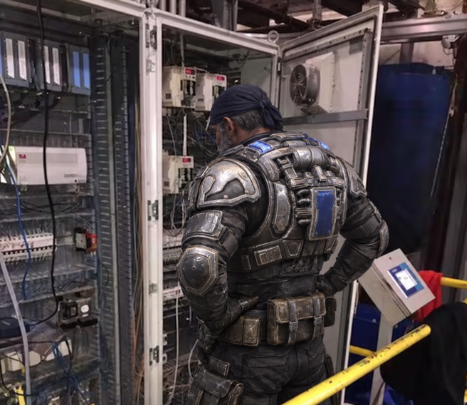
ElGamerWICHO asked those who could not play Gears of War E-Day at that moment to give him a "like." He also stated that The Coalition had sent its best member to check some servers that had collapsed due to the number of people wanting to play, and asked Community_Gears to hurry up. https://t.co/PvRcg1iqKT #GearsOfWar #TheCoalition #Gaming (translated)

1641
Stepsen 🇩🇪🇪🇺 8h

Stepsen wrote that a post pinned to his profile against the AfD received 1,000 likes and 48 comments, most of which disagreed. Previously, the ratio of likes to comments was about 1:1, now it is 20:1. He interpreted this as a sign that many AfD bots had disappeared from X. He also wrote that Russian propaganda was decreasing; this could allow the online discourse to recover. He described the day as good for X, the online debate, and Germany, and contrasted the colors of the German flag with the blue hearts and the Russian flag. #AfD #OnlineDebatte #Deutschland (translated)

2183
ULTRAKÆRL 8h

ULTRAKÆRL wrote that since Ukrainian drones damaged a Russian data center, hardly any Russian bots have been active on Twitter. If the power goes out in Nigeria as well, Alice Weidel might not be able to get any likes at all according to his account. #Ukraine #Russland #Botschaft (translated)

1673
Sandu Negrea 11h

Sandu Negrea wrote that Robert Turcescu was broadcasting live from the middle of the protesters who were calling for Georgescu's release. According to Negrea, the broadcast had garnered 1 million likes, with the number increasing by approximately 10,000 per minute, while the live stream consistently had over 5,000 people. Negrea estimated that Turcescu collected approximately 4,000 lei in rewards in 10 minutes, based on his notes and a calculation made by artificial intelligence. He stated that he was not drawing any conclusions and left it to others to think about the significance of these figures. In a later update, he specified that the live stream had ended with over 2 million likes. He also mentioned the name Vlad Mercori. #proteste #live #sustinere (translated)

2198
Oliver Varhelyi 11h

The author said Europe needed more pharmaceutical manufacturing capacity at home. In a message for the opening of Sandoz’s new biosimilars site in Lendava, they said investments like the facility could improve access to affordable medicines, create skilled jobs and make supply chains more resilient. https://t.co/8oxlpbLp2I #Pharmaceuticals #Biosimilars #Healthcare #SI

1907
K
Kronen Zeitung 12h

The KAC defeats the Salzburg team 5:3 and once again proves its strength. (translated)

So geht‘s Ass Petersen - 5:3! Giftiger KAC knackt die Salzburger erneut
1747
K
Kronen Zeitung 13h

In the last five years, over 700 sports facility projects have been supported with funding of 58.8 million euros. (translated)

58,8 Mio. € Förderung - Mehr als 700 Sportstätten-Projekte in fünf Jahren
2138
K
Kronen Zeitung 13h

The introduction of the parcel tax poses a significant test for the coalition, as all three parties were in favor of it. (translated)

Alle drei waren dafür - Paketsteuer bringt die Koalition vor Zerreißprobe
1985
Bruno Maçães 13h

The author claimed Europe was paying 100% of the cost of US weapons for Ukraine, adding that they had been told the figure was closer to 140% because prices were inflated. They also said Europe was threatening to stop the weapons pipeline, describing the move as prioritising blackmail over extortion. https://t.co/yj0hLDYVx9 #Ukraine #Europe #USForeignPolicy #UA #US #EU

2298