WRLD

Search

#Odyssey
Luciano Magaldi Sardella (PhD) 2h

LETTERE MERIDIANE — “TEATRO-EDICOLA” OF SAN SEVERO CONQUERS THE WORLD SOURCE: https://www.letteremeridiane.org/2026/10/il-teatro-edicola-di-san-severo-conquista-il-mondo/?fbclid=IwY2xjawU4oqFleHRuA2FlbQIxMQBwZG9mAXNydGMGYXBwX2lkEDIyMjAzOTE3ODgyMDA4OTIAAR5rVEwYs6UUXg7v-P0SyIQ_DRb_F6ZiY58OcseYoV4J7atcTiERnhWaqKM2pw_aem_Njle1jq1XLzHr93KLBUcVA After “Broadway World”, the “Los Angeles Journal”, “The Psychologist (British Psychological Association)” and Hollywood Beat Magazine, its “academic consecration” has now arrived courtesy of Stanford University. As I have already emphasised in my article on the revival of the GIO Festival in Foggia, celebrated by BroadwayWorld for the world stage premiere of the Giordano’s opera Marina (1888), the province of Foggia has long ceased to be peripheral. It happens when it finds an idea that shifts the coordinates: well, in San Severo, 40 kilometres from Foggia, it has happened again. Only this time an orchestra was not needed; six chairs were enough. The celebrated Teatro-Edicola of San Severo artistic director Francesco Gravino of the theatre company Foyer ’97 has been featured in the academic journal “Stanford Social Innovation Review (SSIR)” as an academic case study. The news, relayed on 19 September 2026 by ANSA Nazionale, looked like a misprint. Then it became clear that it was not. SSIR, an award-winning publication covering multisectoral solutions to global problems, included the project in its Dispatches section with the reportage “The Six-Seat Revolution”. It is the inverse trajectory to that of the GIO Festival: not a forgotten opera returning to a grand historic Italian horseshoe theatre, but an entire theatre reborn inside a disused place, forgotten by man. There are moments when past and future intertwine to create something visionary, innovative, artistically “revolutionary”: San Severo experienced one of those moments on the morning of 27 March 2026, during World Theatre Day, when the shutter of a newsstand closed for six years in Via Matteo Tondi was reopened “not to sell newspapers, but to offer stirring stories”, to quote Gravino’s motto. The idea of the visionary Francesco Gravino, artistic director, stage director and actor of the San Severo company Foyer ’97, active for at least 30 years in Capitanata, centred on the kiosk, hexagonal in metal and glass, granted free of charge by its owner Pino Frau, by now an urban relic created by the publishing crisis of the early 2000s: today in Italy active newsstands have fallen from about 35,000 in 2005 to about 20,000 in 2024, a decline of 42.8%. Gravino and eleven other actors restructured it in two weeks of work, without institutional funding, and transformed it into what is now under examination by the London commission of Guinness World Records as the “world’s smallest theatre”. The formula is deliberately austere: six spectators at a time outside, actors inside at less than a metre’s distance, 15-minute performances, continuous rotation from 11:00 to 20:45, texts ranging from Goldoni to Chekhov, from Ibsen to Dacia Maraini. On the door a QR code with an original theatrical warning: “Warning! This QR code transforms passers-by into actors. Scan only if ready.” The numbers immediately showed that it was no boutade: more than 60 people in a single afternoon, three inaugural days that sold out. But above all a positive echo that went beyond the borders of San Severo. “Broadway World” (just as in the previous case of the GIO Festival), the world’s most influential theatre criticism outlet with over 5.5 million monthly views, devoted exclusive coverage to it on 27 April 2026: “An Abandoned Italian Newsstand Just Became the World’s Smallest Theatre”. Not a mere listing, but an analysis: “There is no foyer, there is no balcony, there is no grid. There is barely a wing. What there is is something almost unrecognisable as an evening at the theatre, and for that very reason it is all the more powerful.” “Broadway World” captured Gravino’s manifesto idea: “This is a theatre of proximity. In an era of digital distance, we are putting human contact back at the centre,” framing it as “More than a clever exercise in site-specific theatre. It is a reappropriation.” All of this, in a Mezzogiorno of Italy often narrated only in terms of organised crime and marginalisation. To that seal of approval was added another, even more disorienting for a newsstand in San Severo: the “Los Angeles Journal”, one of the most influential publications on the West Coast for the performing arts. On 12 May 2026, it headlined thus: “San Severo’s Teatro-Edicola as an Innovative Model for Los Angeles Theaters?” opening as follows: “In a city in southern Italy that Hollywood has never heard of, a theatre director has just built the smallest stage in the world: six seats, fifteen minutes, zero distance. Los Angeles should pay attention.” The “Los Angeles Journal” does not indulge in folklore, but places the kiosk in Via Matteo Tondi alongside the prestigious 1,600-seat Ahmanson Theatre in Los Angeles, the Pantages of Broadway in Hollywood, the 99-seat plan of Rogue Machine, the Odyssey, the Victory Theatre and the Hollywood Fringe. It even recalls Ethan Marks’s Electrical Box Theatre, a veritable electrical box lined with red velvet in downtown Los Angeles, to argue that Gravino has taken to the extreme the question Los Angeles has been asking itself for decades: How small can a stage become before it ceases to be a stage? And it recognizes the San Severo urban model: almost zero cost, two weeks of work and six chairs, in return for immediate provincial, regional and national media coverage, recognition by the San Severo’s Municipal Administration, and a format exportable anywhere. Then, the third American piece came from “Hollywood Beat Magazine” on 20 April 2026: Six seats. Fifteen minutes. One actor. No stage. The magazine recounts the kiosk in Via Tondi left disused for almost six years, the contemporary six-seat cultural outpost, placing Francesco Gravino in a distinguished genealogy: Richard Schechner and environmental theatre, Jerzy Grotowski and poor theatre, Nicolas Bourriaud and relational aesthetics. But it closes with pragmatism: it is not a thesis, it is fixing a street corner, that is, repairing an urban street corner by asking not how large a theatre can become, but how small it must become again to recover its original power. And finally, the celebrated London-based “The Psychologist”, the journal of the “British Psychological Society (BPS)”, the oldest psychological society in the world, transformed the Teatro-Edicola into a scientific case study: on 30 July 2026 it published “The world’s smallest theatre — and Psychologists’ next act”, starting from the same detail, the morning of 27 March when the metal shutter of the hexagonal kiosk in Via Tondi reopened after six years, six people inside, an actor at less than a metre’s distance beginning Chekhov. It describes the formula: six spectators, 15 minutes, 11 actors over 10 hours, from Goldoni to Euripides, inside a kiosk where the fourth wall does not break because architecturally it never existed. But the BPS goes a step further: it cites the 2025 studies by Damien Gabriel in IBRO Neuroscience Reports, that live performance generates measurably stronger emotional and physiological activation than video, and introduces Edward Hall’s proxemics: below one metre is intimate space, reserved for doctors, close friends, lovers. In that one-square-metre space, the actor’s breath is audible, micro-expressions legible, the self-other boundary becomes permeable. The Teatro-Edicola “does not make theatre better, it makes it inevitable”. And it is here that one understands why Stanford is studying it as an academic case study in social innovation, not as a case of artistic originality. In Italy, meanwhile, the national media circuit had already picked up the phenomenon: RaiNews — TG2 Storie brought it to RaiDue at midnight on 19 April. RTL 102.5 devoted space to the format conceived by Gravino and developed by Foyer ’97 in the heart of San Severo in Via Tondi, defining it as a permanent micro-stage capable of bringing theatre into public space. ANSA.it, Gazzetta del Mezzogiorno, La Repubblica, TG2000, Radio Capital, Swiss RSI, ANSA Brazil and many others followed. And for the record: Fiorello praised it in La Pennicanza as an artistic case inspired by his Edicola Fiore, and Biagio Antonacci, on his tour in the Augustan amphitheatre of Lucera, made a “fact-finding” stop at the Teatro-Edicola singing the celebrated and nostalgic Iris in front of an audience certainly larger than the “six seats”. Francesco Gravino’s theatre company Foyer ’97 was not born yesterday: behind it lie the Teatro-Cantina of 2016, the underground theatre, and in 2011 a performance on the bell tower of a church in the centre of San Severo at 45 metres high. The Teatro-Edicola completes, in Gravino’s words, “the entire vertical extension of theatre: underground, street level, rooftop”. And it is preparing for its thirtieth anniversary in 2027 aiming to purchase the kiosk to make it permanent, exporting the “San Severo Model” to Rome, Lucca, and to the festivals of Santarcangelo and Todi. As with the GIO Festival, someone might dare to claim that it is merely a stunt, but when BroadwayWorld places you alongside the Los Angeles Opera House, the “Los Angeles Journa”l proposes you as a model for Hollywood, “Hollywood Beat Magazine” reads you through Grotowski and the “British Psychological Society” uses you to explain mirror neurones, it is no longer a stunt but an excellent artistic and academic positioning. To those who still whisper that Foggia and Capitanata are provincial, the answer is now written on two opposite and complementary fronts: on 5 June in Foggia a 138-year-old opera found the stage again at the Giordano ending up on BroadwayWorld; on 27 March in San Severo a 4-square-metre kiosk invented a stage that did not exist, ending up at Stanford, in Los Angeles, in Hollywood and in London. The periphery, when it has a precise idea, becomes the centre. Even with six chairs. Luciano Magaldi Sardella

www.letteremeridiane.org
Il teatro-edicola di San Severo conquista il mondo
55
Luciano Magaldi Sardella (PhD) 2h

LETTERE MERIDIANE — IL TEATRO-EDICOLA DI SAN SEVERO CONQUISTA IL MONDO SOURCE: SOURCE: https://www.letteremeridiane.org/2026/10/il-teatro-edicola-di-san-severo-conquista-il-mondo/?fbclid=IwY2xjawU4oqFleHRuA2FlbQIxMQBwZG9mAXNydGMGYXBwX2lkEDIyMjAzOTE3ODgyMDA4OTIAAR5rVEwYs6UUXg7v-P0SyIQ_DRb_F6ZiY58OcseYoV4J7atcTiERnhWaqKM2pw_aem_Njle1jq1XLzHr93KLBUcVA Dopo Broadway World, Los Angeles Journal, The Psychologist (British Psychological Association) ed Hollywood Beat Magazine, ora è arrivata la sua “consacrazione accademica” a cura della Stanford University. Come ho già sottolineato nel mio articolo sulla rivincita del GIO Festival a Foggia, celebrata dal BroadwayWorld per la prima mondiale scenica della giordaniana Marina (1888), la provincia di Foggia ha smesso ormai di essere periferia. Accade quando trova un’idea che sposta le coordinate: ebbene, a San Severo, a 40 chilometri da Foggia, è successo di nuovo. Solo che questa volta non serviva un’orchestra, ma sono bastate sei sedie. Il celebre Teatro-Edicola del sanseverese direttore artistico Francesco Gravino della Compagnia Teatrale Foyer’97 è finito sulla rivista accademica Stanford Social Innovation Review (SSIR) in qualità di caso di studio accademico. La notizia, rilanciata il 19 settembre 2026 da ANSA Nazionale, sembrava un refuso. Poi si è capito che non lo era. La SSIR, pubblicazione pluripremiata che copre soluzioni multisettoriali ai problemi globali, ha inserito il progetto nella sezione Dispatches con il reportage The Six-Seat Revolution. È il percorso inverso rispetto a quello del GIO Festival: non un’opera dimenticata che torna in un grande teatro storico italiano a ferro di cavallo, ma un teatro intero che rinasce dentro un luogo dismesso, dimenticato dall’uomo. Ci sono momenti in cui il passato e il futuro si intrecciano per creare qualcosa di visionario, innovativo, artisticamente “rivoluzionario”: San Severo ha vissuto uno di questi momenti la mattina del 27 marzo 2026, durante la Giornata Mondiale del Teatro, quando la saracinesca di un’edicola chiusa da sei anni in Via Matteo Tondi è stata riaperta “non per vendere giornali, ma per offrire emozionanti storie”, citando il motto graviniano. L’idea del visionario Francesco Gravino (nella foto sopra), direttore artistico, regista e attore della compagnia sanseverese Foyer ’97, attiva da almeno 30 anni in Capitanata si è basata sull’edicola, esagonale in metallo e vetro, concessa a titolo gratuito dal proprietario Pino Frau, ormai un relitto urbano creato dalla crisi dell’editoria degli inizi anni 2000: oggi in Italia le edicole attive sono scese da circa 35.000 nel 2005 a circa 20.000 nel 2024, con un calo del 42,8%. Gravino e altri undici attori l’hanno ristrutturata in due settimane di lavoro, senza fondi istituzionali, e l’hanno trasformata in quello che oggi è sotto esame della commissione londinese del Guinness World Record come “teatro più piccolo del mondo”. La formula è volutamente austera: sei spettatori alla volta fuori, attori dentro a meno di un metro, spettacoli di 15 minuti, rotazione continua dalle 11 alle 20.45, testi da Goldoni a Čechov, da Ibsen a Dacia Maraini. Sulla porta un QR code con un originale avvertimento teatrale: “Attenzione! Questo codice QR trasforma i passanti in attori. Scansionate solo se pronti.” I numeri hanno sùbito detto che non era una boutade: più di 60 persone in un solo pomeriggio, tre giornate inaugurali che hanno registrato il tutto esaurito. Ma soprattutto un’eco positiva che è andata oltre i confini sanseveresi. BroadwayWorld (proprio come il previo caso del GIO Festival) la più influente testata mondiale di critica teatrale con oltre 5,5 milioni di visualizzazioni mensili, il 27 aprile 2026 gli ha dedicato una copertura esclusiva: An Abandoned Italian Newsstand Just Became the World’s Smallest Theatre. Non una segnalazione, ma un’analisi: “Non c’è foyer, non c’è balconata, non c’è graticcia. C’è a malapena una quinta. Quello che c’è è qualcosa di quasi irriconoscibile come serata a teatro, e proprio per questo è ancora più potente.” BroadwayWorld ha colto l’idea manifesto di Gravino: “Questo è un teatro di prossimità. In un’epoca di distanza digitale, stiamo rimettendo il contatto umano al centro,” incorniciandolo come “Più che un abile esercizio di teatro site-specific. È una riappropriazione.”. Il tutto, in un Mezzogiorno d’Italia spesso raccontato solo per criminalità organizzata e marginalizzazione. A quel sigillo se ne è aggiunto un altro, ancora più spiazzante per un’edicola di San Severo: il Los Angeles Journal, una delle testate più influenti della West Coast per le arti performative. Il 12 maggio 2026, titola in questo modo: San Severo’s Teatro Edicola as an Innovative Model for Los Angeles Theaters? aprendo così: “In una città del Sud Italia di cui Hollywood non ha mai sentito parlare, un regista teatrale ha appena costruito il palcoscenico più piccolo del mondo: sei posti, quindici minuti, zero distanza. Los Angeles dovrebbe prestare attenzione.” Il Los Angeles Journal non fa folklore, ma mette il chiosco di via Matteo Tondi accanto al presigioso teatro losangelino Ahmanson da 1600 posti, al Pantages di Broadway in Hollywood, ai 99-seat plan di Rogue Machine, all’ Odyssey, al Victory Theatre e all’ Hollywood Fringe. Rievoca persino l’Electrical Box Theatre di Ethan Marks, una vera e propria scatola elettrica foderata di velluto rosso in downtown Los Angeles, per dire che Gravino ha portato all’estremo la domanda che Los Angeles si fa da decenni: Quanto piccolo può diventare un palco prima di smettere di essere un palco? E riconosce il modello urbano sanseverese: costo quasi zero, due settimane di lavoro e una sestina di sedie, a fronte di una immediata copertura mediatica provinciale, regionale e nazionale, riconoscimento dell’ Amministrazione Comunale sanseverese, e un format esportabile (quasi) ovunque. Dopodiché, il terzo tassello americano è arrivato dall’ Hollywood Beat Magazine il 20 aprile 2026: Six seats. Fifteen minutes. One actor. No stage. Il magazine racconta il chiosco di Via Tondi rimasto dismesso per quasi sei anni, il presidio culturale contemporaneo da sei posti, inserendo Francesco Gravino nella genealogia alta: Richard Schechner e l’environmental theatre, Jerzy Grotowski e il teatro povero, Nicolas Bourriaud e l’estetica relazionale. Ma chiude con concretezza: non è una tesi, è fixing a street corner, ovvero aggiustare un angolo di strada urbana chiedendosi non quanto grande può diventare un teatro, ma quanto piccolo deve tornare per recuperare il suo potere originario. E infine, il celebre londinese The Psychologist, la rivista della British Psychological Society (BPS), la più antica società di psicologia al mondo, ha trasformato il Teatro-Edicola in caso di studio scientifico: il 30 luglio 2026 pubblica The world’s smallest theatre — and Psychologists’ next act, partendo dallo stesso dettaglio, la mattina del 27 marzo in cui la saracinesca metallica del chiosco esagonale di Via Tondi si riapre dopo sei anni, sei persone dentro, un attore a meno di un metro che inizia Chekhov. Descrive la formula: sei spettatori, 15 minuti, 11 attori su 10 ore, da Goldoni a Euripide, dentro un chiosco dove la quarta parete non si rompe perché architettonicamente non è mai esistita. Ma la BPS fa un passo oltre: cita gli studi del 2025 di Damien Gabriel su IBRO Neuroscience Reports, la performance live genera attivazione emotiva e fisiologica misurabilmente più forte del video e introduce la prossemica di Edward Hall: sotto il metro è spazio intimo, riservato a medici, amici stretti, amanti. In quello spazio da un metro quadrato, il respiro dell’attore è udibile, le microespressioni leggibili, il confine sé-altro diventa permeabile. Il Teatro-Edicola “non rende il teatro migliore, lo rende inevitabile”. Ed è qui che si capisce perché Stanford lo studia come caso di studio accademico di innovazione sociale, non come caso di originalità artistica. In Italia, nel frattempo, il circuito mediatico nazionale aveva già intercettato il fenomeno: RaiNews — TG2 Storie lo porta su RaiDue alla mezzanotte del 19 aprile. RTL 102.5 dedica spazio al format ideato da Gravino e sviluppato da Foyer’97 nel cuore di San Severo in Via Tondi, definendolo micro-palcoscenico permanente capace di portare teatro nello spazio pubblico. ANSA.it, Gazzetta del Mezzogiorno, La Repubblica, TG2000, Radio Capital, RSI svizzera, ANSA Brasile e tanti altri seguono. E per diritto di cronaca: Fiorello lo ha elogiato in La Pennicanzacome caso artistico ispirato al suo Edicola Fiore, nonché Biagio Antonacci, nel suo tour nell’anfiteatro augusteo di Lucera, ha fatto tappa “conoscitiva” nel Teatro-Edicola cantando la celebre e nostalgica Iris davanti ad un pubblico sicuramente maggiore dei “sei posti”. La Compagnia Teatrale Foyer ’97 di Francesco Gravino non è nata ieri: ha alle spalle il Teatro-Cantina del 2016, il teatro sottoterra, e nel 2011 una performance sulla torre campanaria di una chiesa del centro di San Severo a 45 metri d’altezza. Il Teatro Edicola completa, nelle parole di Gravino, “l’intera estensione verticale del teatro: sottoterra, piano strada, tetto”. E si prepara al trentennale del 2027 puntando ad acquistare l’edicola per renderla permanente esportando il “Modello San Severo” a Roma, Lucca, nei festival di Santarcangelo e Todi. Come per il GIO Festival, qualcuno potrebbe osare di affermare che si tratta solo di un exploit ma, quando BroadwayWorld ti mette accanto alla Los Angeles Opera House, il Los Angeles Journal ti propone come modello per Hollywood, Hollywood Beat Magazine ti legge con Grotowski e la British Psychological Society ti usa per spiegare i neuroni specchio, non è più un exploit ma un eccellente posizionamento artistico ed accademico. A chi ancora sussurra che Foggia e la Capitanata siano provincia, la risposta ora è scritta su due fronti opposti e complementari: il 5 giugno a Foggia un’opera di 138 anni ha ritrovato la scena al Giordano finendo su BroadwayWorld; il 27 marzo a San Severo un’edicola di 4 metri quadrati ha inventato una scena che non esisteva, finendo a Stanford, a Los Angeles, a Hollywood e a Londra. La periferia, quando ha un’idea precisa, diventa centro. Anche con sei sedie. Luciano Magaldi Sardella

www.letteremeridiane.org
Il teatro-edicola di San Severo conquista il mondo
55
Il Fatto Quotidiano 4d

Aristide Polla, a clerk from Porte di Rendena, has fulfilled a lifelong dream by completing the SwissPeaks Odyssey, a 650 km ultra trail, in 195 hours, facing immense fatigue and sacrifices. #UltraTrail #SwissPeaks #SportiviItaliani (translated)

www.ilfattoquotidiano.it
“Ogni giorno parto alle 3:30 di mattina, poi vado al lavoro in ferramenta. Le gambe erano due blocchi di marmo, piangevo dal male”: così Aristide Polla ha corso 650 km in 195 ore
1349
A
AD 4w

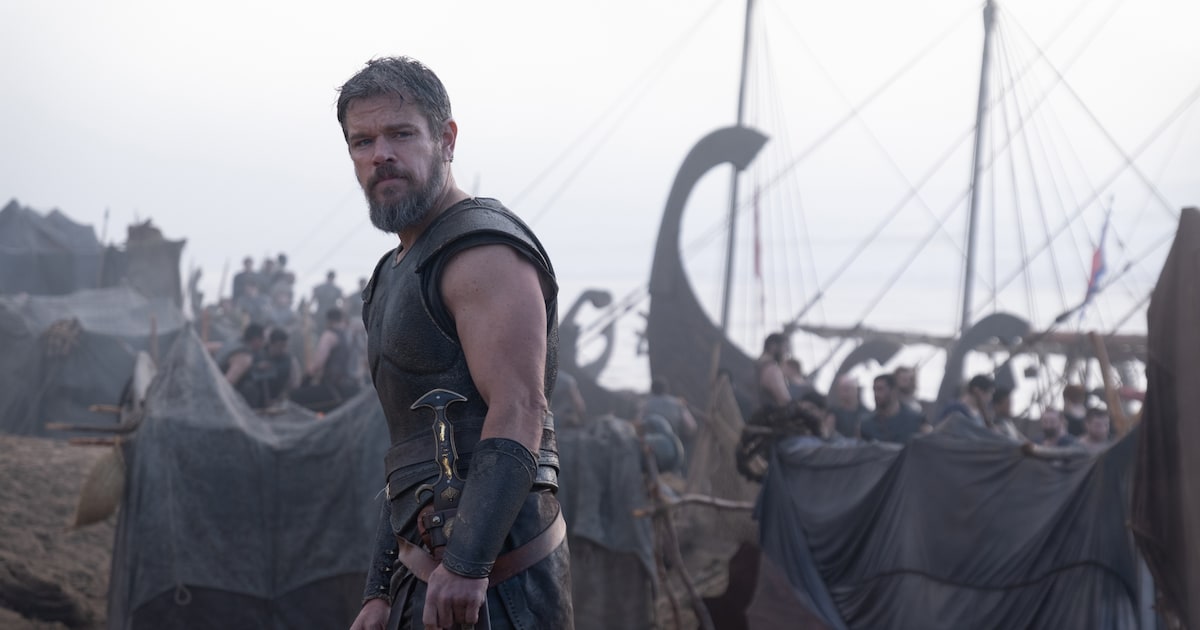
The Odyssey is de succesvolste film aller tijden van Universal Pictures geworden, met een wereldwijde opbrengst van 1,68 miljard dollar. #TheOdyssey #ChristopherNolan #FilmGeschiedenis

www.ad.nl
The Odyssey brengt recordbedrag op voor Universal
17457
Jorge_Most Sep 1

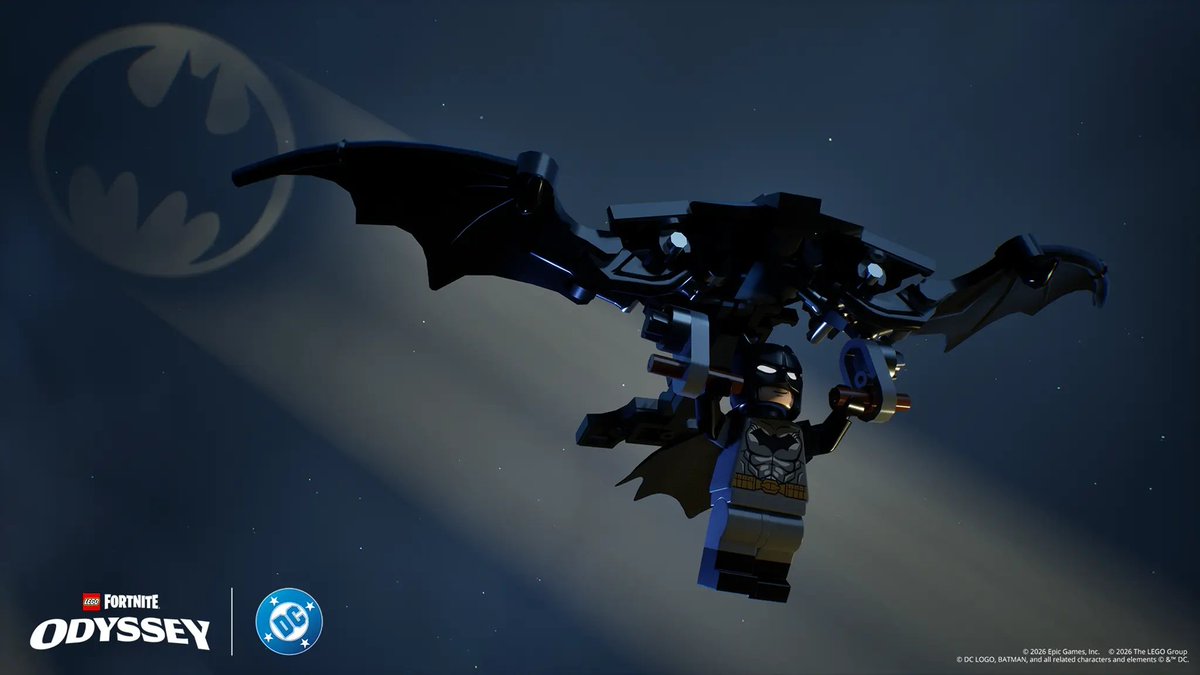
Los villanos de Batman han robado partes de Gotham City y las han escondido en la isla principal de LEGO Fortnite Odyssey! En algún lugar, sus secuaces acechan en las sombras, y Batman necesita tu ayuda para localizarlos y llevarlos ante la justicia. Prepara tu diario, porque te esperan nuevas misiones y una colección de Bat-Gear. Dirígete a las nuevas localizaciones de Gotham City, donde destaca la Batiseñal, y completa las misiones que te asigne el mismísimo Caballero Oscuro. LANZAMIENTO 1 [3 de septiembre - 30 de septiembre] Semanas 1 y 2: Completa misiones y despeja las ubicaciones de Gotham City para hacerte con el Batglider, el Bat-Grapnel y el Batmóvil. SEMANAS DE RECUPERACIÓN Semanas 3 y 4: Ponte al día con las misiones y recompensas que aún tengas pendientes. SEGUNDA GIRA [1 al 15 de octubre] Semanas 5 y 6: Completa misiones adicionales para conseguir a Batman y reclutarlo como aldeano . Asegúrate de haber completado todas las misiones para poder reclutarlo. Ningún viaje a Odyssey está completo sin el vehículo adecuado. Esta actualización trae el Batimóvil a la isla. Y eso no es todo: surca los cielos con el Batimóvil, que llega el 1 de octubre. Todo héroe necesita las herramientas adecuadas. Consigue las tuyas: Batglider - ¡Surca los cielos! Gancho de murciélago : engánchate a los tejados o realiza una audaz huida. Batiseñal: Ilumina la noche con la icónica Batiseñal. Nuevas ubicaciones, nuevos enemigos Explora escenarios inspirados en Gotham City repartidos por toda la isla, cada uno repleto de sus propios desafíos y enemigos que superar. Estos lugares están custodiados por matones de Gotham City, y dos nuevos secuaces se unen a la lucha: Blaster de secuaces de Gotham Rebanadora de secuaces de Gotham #Batman #Fortnite #GothamCity

13575
A
AD Aug 31

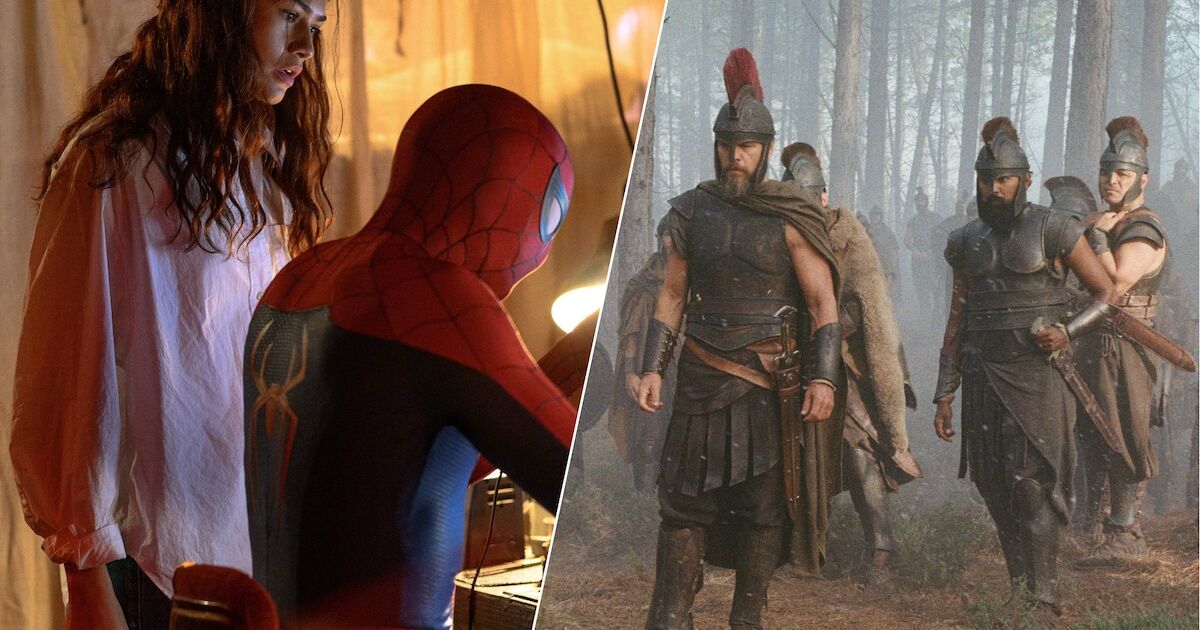
Pathé had in augustus met 1,75 miljoen bezoekers de beste maand ooit, mede dankzij populaire films als The Odyssey en Spider-Man: Brand new day, en het warme weer dat mensen naar de bioscoop trok. #Pathé #TheOdyssey #SpiderMan

www.ad.nl
Pathé beleeft beste maand ooit door populaire films en hitte
17560
Cartoons On The Moon Aug 30

COYOTE VS. ACME destrona a 'The Odyssey' y debuta con $15M de dólares en Estados Unidos: Ya es el debut más taquillero en la historia de Ketchup (la empresa que salvó la película). https://t.co/gvg3BWcrbu #CoyoteVsAcme #Taquilla #Cine

65587
Loke Aug 29

@EternalLoyal_ @Ptsiliotis Βλέπω ταινία φίλε @EternalLoyal_ την Odyssey του γκρουπ 🦁🤴 Αν η Τζιρόνα δεν βρει μεγαλύτερη πρόταση μέχρι αύριο το απόγευμα, ο παίκτης θα υπογράψει για 4+1 χρόνια στον Παναθηναϊκό 📝 #Ταινία #Παναθηναϊκός #Αθλητισμός

12539
S
Sandfeen Aug 28

Why Good Times Make Weak People The pinnacle of tyranny is a society in which people are controlled without force because they love their servitude. Aldous Huxley’s Brave New World explored this idea. Unlike Orwell’s 1984, its citizens are controlled not through terror but pleasure. Soma provides instant relief from discomfort—a “holiday from the facts.” Huxley’s people are not prisoners but satisfied customers: the State produces children, promiscuity is normalized, and entertainment fills every empty moment. As Neil Postman observed, Orwell feared that truth would be hidden from us, while Huxley feared that we would become so distracted that we would no longer care about it. The Softening of Man Good times can make bad times possible. When safety and luxury become normal, people can lose sight of the struggles that created them. Andrew Lobaczewski argued that prosperity can weaken profound reflection. Pleasure becomes dominant, while uncomfortable truths are dismissed because thinking about them requires effort. Those who think critically may even be ridiculed. This creates a dangerous cycle: societies lose the capacity for psychological reasoning and moral criticism, allowing catastrophe to develop unnoticed. Sterilizing Genius Nietzsche understood that comfort, elevated above all else, can destroy the qualities that made civilization possible. Struggle, ambition, discipline, passion, and courage helped create prosperity—but prosperity can weaken the virtues that produced it. The Odyssey illustrates this. The Lotus-Eaters simply lose the desire to return home. Odysseus must drag his men back while they weep to remain. He rejects Calypso’s offer of immortality and endless comfort, choosing the difficult path home. We admire that choice because comfort without purpose is not a life worth admiring. Nietzsche imagined the endpoint in Thus Spoke Zarathustra: a society where safety and sameness become the highest ideals, producing “no shepherd, and one herd.” Anyone who seeks greatness becomes an aberration.

469
S
Sandfeen Aug 28

Why Weak Societies Choose Tyranny The pinnacle of tyranny would be a system that allows politicians, elites, and bureaucrats to control a population without force or coercion because the people love their servitude. Aldous Huxley wrote Brave New World, an eerily relatable dystopian novel, with this idea at the forefront. Unlike Orwell’s 1984, there is no overt oppression. The state does not have to stamp on human faces with its jackboots or erect an inescapable surveillance state. Rather, the people of Brave New World happily chain themselves with meaningless pleasure and distractions. The authorities do not rule through terror and rage, the central elements of 1984, but instead give the people everything they ever wanted. A pharmaceutical called Soma becomes the opiate of the masses. Mustapha Mond, the World Controller, likens it to Christianity without tears. While religion requires years of moral training, Soma allows citizens to achieve peace simply by swallowing tablets. It is the perfect escape from reality, a holiday from the facts. Lenina, the female counterpart to the protagonist Bernard, cannot comprehend why he refuses Soma, preferring discomfort to something that can remove it. When Bernard states, “I’d rather be myself, myself and nasty, not somebody else, however jolly,” Lenina sees this as a sort of pathology and repeatedly encourages him to take the wonder drug. Bernard explains, “I want to know what passion is.” He understands that there is more to life than merely being content, craving genuine experience, including suffering and intensity, rather than being emotionally regulated by the World State. Lenina’s bewilderment stems from her conditioning to regard unhappiness as a technical problem, encapsulated in the society’s common saying that “a gram is better than a damn.” The people of Brave New World are not captives but satisfied customers. Children are produced by the scientific state, relieving people of the responsibility of parenthood. This grants them the ability to engage in promiscuity, where everyone belongs to everyone else, while filling their free time with cheap entertainment and endless sporting events—what would be referred to as slop today. As Neil Postman observed, Orwell saw totalitarianism through the lens of fear, while Huxley saw it through pleasure. There was no need to ban a book in Brave New Worldbecause there was no one who wanted to read one. An abundance of low-quality information rendered censorship unnecessary because no one could hear the truth through all the noise. Huxley threw shade at civil libertarians who passionately opposed tyranny because they failed to take into account man’s almost infinite appetite for distractions. Humanity in its rawest form is portrayed by John the Savage, an outsider free from the World State’s conditioning. Upon coming face-to-face with this spiritually neutered society, he completely rejects it: “I don’t want comfort, I want God, I want poetry, I want real danger, I want freedom, I want goodness, I want sin.” Huxley’s dystopia is not imposed on an unwilling population but instead requested by a hollow one. Which leads us to the question: How do people become so weak that they get on their knees and beg for totalitarianism? Good times make bad times possible. Once a certain level of luxury and safety is achieved, people start to resemble the hobbits from the Shire. They are so far removed from evil that they forget it even exists and become defenseless in the face of it. Andrew Lobaczewski, who studied the psychology of totalitarianism from inside Poland’s communist takeover, wrote: “During good times, people progressively lose sight of the need for profound reflection. They lose the capacity to differentiate human nature, and emotion begins to dominate intellect. Once a critical mass starts operating on the pleasure principle, any excess mental effort seems like pointless labor.” Lobaczewski warned that it is not as simple as some people losing the ability to think rationally. It is worse, because those people then shame anyone capable of doing so. A clever, liberal, and merry individual is a good sport. A more far-sighted person predicting dire results becomes a wet blanket, a killjoy. The ability to have uncomfortable conversations without emotion taking over is, in Lobaczewski’s view, an indicator of whether a society’s future will be good or bad. It is easier to think about pleasant things. This leads people to eliminate any data or facts that cause them discomfort. That becomes a habit and eventually a custom accepted by society at large. Once the general populace accepts that inconvenient truths should be left unsaid, it becomes incapable of reaching correct conclusions. After all, how could you ever describe a picture that you refuse to look at? “Catastrophe waits in the wings of the communities that lose the capacity for psychological reason and moral criticism,” Lobaczewski wrote. “It is on the other side of this weakening of thought that the processes of the generation of evil are intensified at every social scale until they give rise to bad times.” It is precisely man’s dreams of happiness that can lead to chaos and suffering. This hedonistic view of happiness contains the seeds of misery, feeding the eternal cycle whereby good times give birth to bad times. Friedrich Nietzsche viewed socialism as demanding comfort for the greatest number of people possible. To question whether it is good for the masses to live in comfort has become a form of heresy. This reveals the spiritual atrophy that so many suffer from. Considering only the weak believe comfort to be a virtue, it is what Carl Jung would describe as the infantile dream state of mass dependency: the desire to gently slip back into the kingdom of childhood, into the paradise of parental care. Except this lack of friction has consequences. The perfect state destroys the soil in which great intellect grows. Genius, struggle, passion, strength, and wisdom are required to build a safe and abundant society. Yet once a certain level of comfort is achieved, it can destroy the very virtues required to obtain it. Nietzsche observed that it is the warmest heart that aims to alleviate suffering and hardship but fails to realize that it thereby wills the destruction of its own foundation. Comfort breeds mediocrity, which is then called good. Small people want one thing above all: that no one hurt them. We have taken this pathology to such a degree that we now obsess over hurt feelings and call this virtue. Pleasure, in its proper place, is a byproduct of meaningful goals, not a goal in itself. Aristotle saw that pleasure and comfort distort perception and proper judgment. While they do not cause us to misjudge something like geometry or mathematics, they can destroy our ability to decide what is worth pursuing and, therefore, what to do. Consider The Odyssey. Homer depicts Odysseus’ men on the island of the Lotus-Eaters, where they taste the fruit and lose all desire to go home. Much like Huxley’s Brave New World, they are not imprisoned. Rather, they simply stop wanting anything more. Odysseus has to drag his men back to the ships while they weep to stay. This is what comfort can do to men. It empties them of purpose. We intuitively understand this but fail to apply it to our own lives. We must make the same choice as Odysseus when he refuses Calypso’s offer of endless comfort and immortality. He knows she is more beautiful than his wife Penelope waiting at home. He knows that he and Penelope will grow old and die, a fate he could avoid by staying with Calypso. No one who reads these stories wishes he had stayed. We want him to choose the hard way home because if he took the offer, he would stop being admirable. Yet staying is exactly what our modern society asks of us. We are told that the island is the good life. But what happens to the man who caves to this temptation? In Thus Spoke Zarathustra, Nietzsche imagines a risk-averse society taken to its logical endpoint. The elimination of all struggle produces a man so diminished that he fails to possess even self-contempt or higher aspiration. Safety and sameness become the highest goals, creating “no shepherd in one herd.” Anyone who seeks to be anything more than normal becomes an aberration to be dealt with. Or, as Nietzsche puts it, they have “made the wolf a dog in man himself, man’s best domestic animal.”

1055
choke Aug 28

Se é pra comemorar o Dia do Gamer, que seja atualizando o setup! 🎮🙇 E a @SamsungBrasil vai te ajudar nessa: vocês têm 15% OFF em toda a linha Odyssey com o cupom “DIAGAMER” Corre que só vai até dia 30/08: https://t.co/Xosfkwxd9F *publi https://t.co/r0k7Cq0fqd #DiaDoGamer #SetupGamer #SamsungOdyssey

14065
S
Sandfeen Aug 25

Freerepublic: As a Greek-American, I went to see The Odyssey three weeks ago with eager anticipation. At the time, the Rotten Tomatoes scores had dropped into the 60s—significantly down from the high 90s where they started. I ended up walking out after 90 minutes. Two other couples had already bailed around the one-hour mark. Only one guy remained sitting up in high right corner of the theater. It was clearly the worst movie I have ever seen, and after 70 years of watching movies, that says a lot. My brother, who still lives in Chicago where we grew up, saw it the day before. He leans left but is a sharp, reliable judge of cinema. He thought it was downright terrible, but to his credit, he didn't say a word about it until I’d seen it for myself. I was furious and deeply disappointed. I felt like I was eight years old again and someone had just stolen my bike. I was so moved to speak out that I sat down and took the time to write a thoughtful, honest review for Rotten Tomatoes, giving it a well-deserved 1 star. I posted my piece here, too, and almost everyone in the thread agreed with me. Anyone reading my review would know I’d actually watched the film—I pointed out that the classic Sinbad the Sailor movies of my youth were far better than this snoozefest. In closing, I wrote that if I’m ever on my deathbed with only a few hours left to live, I’m going to pray to God to give me back the time I wasted on The Odyssey, including the drive to and from the theater. Now, to get to the point: the RT scores have somehow bounced right back up to the mid-90s. I went back to read the recent reviews, and they’re almost entirely one-sentence, 5-star fluff posts. And guess what? My detailed review was completely scrubbed. Has this happened to anyone else?

704
Narawins 🇧🇷 Aug 24

[🆕📸] IG: jaojack | 24.08.2026 💬| Foi um concerto que encheu o coração. Fico muito feliz e orgulhoso dos dois. Pond e Phuwin continuam sendo nossos meninos adoráveis, como sempre. O Pond, um garoto sincero e de bom coração e o Phuwin, nosso pequeno que se dedica de verdade a tudo o que faz. Ver os dois felizes no palco, cercados por tantas pessoas que os amam, me faz pensar que vocês dois realmente merecem todo o sucesso que alcançaram hoje. Continuem caminhando juntos, de mãos dadas. Amo vocês como sempre 💙 #เจเมเนเจอร์ PONDPHUWIN SOUL ODYSSEY #PondPhuwinConcertD2 #PondPhuwin #PondPhuwin #Concert #Music

14322
A
AD Aug 21

De film The Odyssey heeft het R-ratingrecord van Deadpool en Wolverine gebroken met een wereldwijde opbrengst van 1,35 miljard dollar, en is daarmee de succesvolste film van regisseur Christopher Nolan tot nu toe. #TheOdyssey #RRating #ChristopherNolan

www.ad.nl
The Odyssey verbreekt ook R-ratingrecord van Deadpool & Wolverine
18215
Erick Overveen Aug 19

Na cultuurcritici als o.a @michiellieuwma & @danalinssen kon ook ik niet langer om Christopher Nolans The Odyssey heen. Voor @anderekrant liet ik mijn licht schijnen over dit peperdure, monumentale én merkwaardig zielloze epos. #TheOdyssey #filmkritiek https://t.co/Hi9UyG6HB9 #film #filmcritique #ChristopherNolan

20812
Jorge_Most Aug 18

A partir de la actualización 42.00, se implementará el mayor cambio en la construcción de Lego Fortnite hasta la fecha, y esto es solo el comienzo. De ahora en adelante, cada actualización añadirá una nueva habilidad de construcción, que se sumará a la anterior, llevándote desde la construcción cotidiana hasta convertirte en un verdadero Maestro Constructor, aquí es donde comienza todo. La Construcción Rápida reemplaza a la Construcción Guiada como la nueva forma predeterminada de construir en Odyssey, y supone un gran avance. Construcciones más rápidas, menos esfuerzo y más ideas cobrando vida. Cuanto más construyas, más rápido será el proceso y más piezas podrás colocar a la vez, de modo que esas enormes creaciones se completan en mucho menos tiempo. Pruébalo y verás qué tal funciona. ¿Prefieres construir ladrillo a ladrillo? También puedes hacerlo cuando quieras. El tráiler completo se estrena el 20 de agosto. Cómo funciona Quick Build? Cuanto más construyas, más rápido se vuelve La construcción se acelera a medida que avanzas, y colocarás más piezas a la vez. Realizar construcciones más grandes. Las creaciones grandes y detalladas que antes llevaban muchísimo tiempo, ahora se realizan en una fracción del tiempo. Ladrillo a ladrillo, cuando quieras. ¿Prefieres el método práctico? Sigue estando disponible, y sigue utilizando recursos, solo que de forma más rápida y fluida que antes. Diseñado también para dispositivos móviles. Se han perfeccionado los controles táctiles y verás el plano completo a medida que construyes, por lo que construir sobre la marcha resulta más cómodo que nunca. Esta comunidad es lo que hace que Odyssey sea lo que es, por eso damos prioridad a tus creaciones. Dos creaciones de creadores se unen a Odyssey, cada una con su propio emblema: una marca que indica que esta creación proviene de un jugador. En primer lugar, tenemos una build de Skyfang Marauder de Haskyns (20 de agosto), disponible ahora mismo: solo tienes que iniciar sesión, hacer clic en la ventana emergente y será tuya. Una segunda build de Crown of the Abyss de Spixylei llegará el 27 de agosto, ¡así que habrá más novedades! Además de estas mejoras en el edificio y las nuevas herramientas, tenemos más contenido y actualizaciones planeadas para el resto del año. ¡Estén atentos para más noticias próximamente! #Fortnite #Lego #Gaming

24582
NRC Aug 15

In zijn artikel vergelijkt Bas Heijne de films The Odyssey van Christopher Nolan en De Gaulle: Résistance van Antonin Baudry, en stelt hij dat beide films, ondanks hun verschillende historische contexten, een gedeelde thematiek van eerverlies en maatschappelijke reflectie bespreken, die meer relevant is voor de hedendaagse kijker dan vaak wordt erkend. #Eerverlies #Oorlog #Filmkritiek

www.nrc.nl
In de bioscoop blijkt dat we eer belangrijker vinden dan je zou denken
15893
A
AD Aug 11

Deze zomer concurreren de blockbusters The Odyssey en Spider-Man: Brand New Day om bioscoopbezoekers, wat leidt tot een opmerkelijke stijging in bioscoopbezoek in een normaal rustige periode, waarbij luxe bioscoopervaringen en de aantrekkingskracht van gezamenlijke filmbezoeken onder de jongere generatie bijdragen aan deze trend. #Bioscoopbezoek #SpiderMan #TheOdyssey

www.ad.nl
Nieuwe Barbenheimer? Deze zomer vechten The Odyssey en Spider-Man om bioscoopbezoekers
15323