WRLD

Search

#Paradise
Constantin Gurdgiev 3w

Anti-American sentiments are strong today. As they were strong in Vietnam War, in Afghanistan War, in Iraq War and in every other "enemy will be defeated soon, and then Paradise" campaign in modern history. If only Sebastian was around to tell us all. If only... #AntiAmerican #VietnamWar #WarPolitics #US #VN #AF #IQ

116
Νίκος🇬🇷Σωτηρόπουλος Sep 9

Μύκονος, Gucci, Super Paradise και επίδειξη πλούτου. Αλλά ο μήνας δεν βγαίνει για την Παπακωστοπούλου. https://t.co/F2IHKUmD0T #Μύκονος #Gucci #Πλούτος

16438
Hein Diegelmann Sep 5

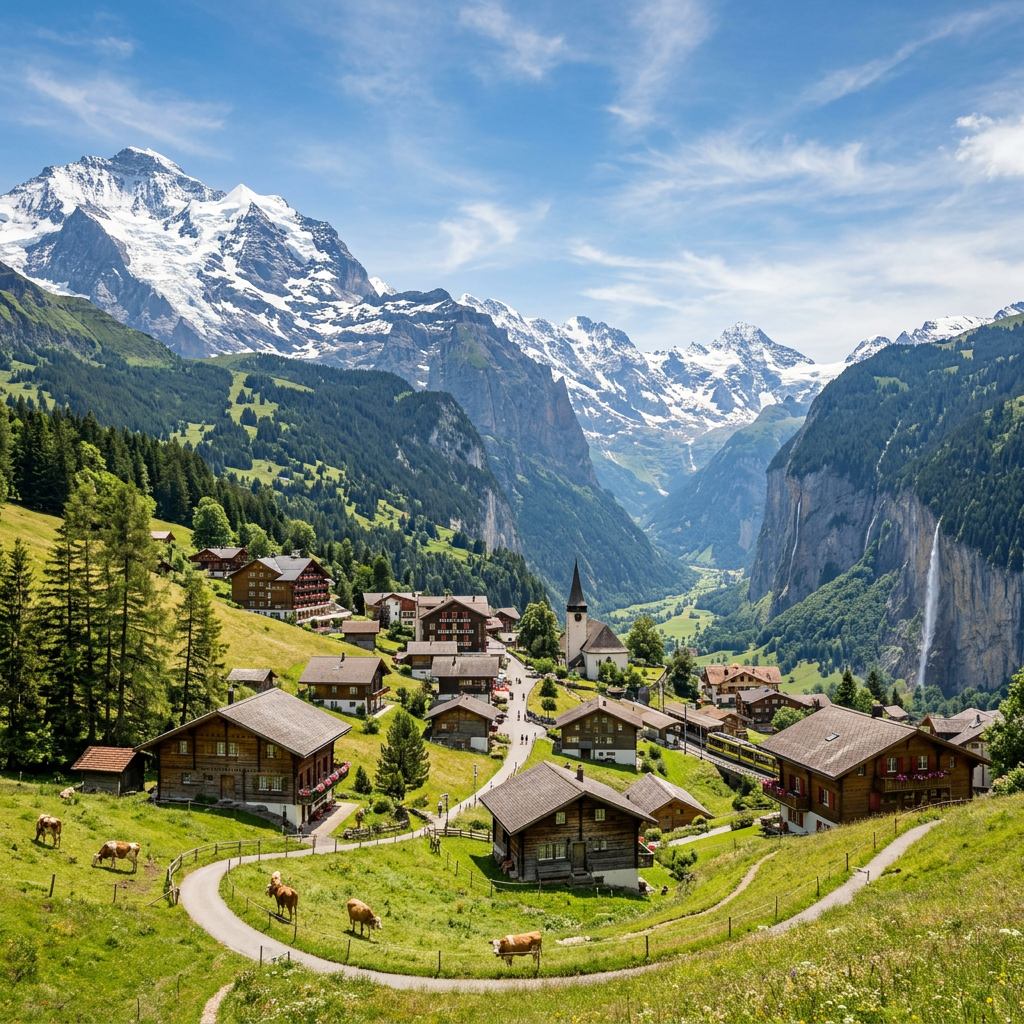
18 years ago I bought my first house in Norway. It was old and not really nice, but I saw the potential in it, and I had a dream. I wanted to create a small paradise on earth. And that's what I did, even if it turned out different. I hope, someone wants to see it.

935
Manon Aubry Aug 30

@Villepin En pratiquant l’évasion fiscale, Bernard Arnault se place de fait au-dessus des lois. Il était au cœur des Paradise Papers et a encore subi un redressement fiscal de plus de 12 millions d’euros en juillet. Et c’est bien là tout le problème : les milliardaires trichent avec #ÉvasionFiscale #ParadisePapers #Inégalités #FR

234
Manon Aubry Aug 30

@Villepin En pratiquant l’évasion fiscale, Bernard Arnault se place de fait au-dessus des lois. Il était au cœur des Paradise Papers et a encore subi un redressement fiscal de plus de 12 millions d’euros en juillet. Et c’est bien là tout le problème : les milliardaires trichent avec #EvasionFiscale #ParadisePapers #Inégalité #FR

468
mishi 🍊 Aug 29

HOY 29 DE AGOSTO DE 2026 OFICIALMENTE ROMPEMOS LA MALDICIÓN DE LOS 3 WINS DESPUÉS DE AÑOS Y CORONAMOS A BLOODY PARADISE COMO LA CANCIÓN CON MÁS WIN DE ENHYPEN 😭😭😭😭😭😭 https://t.co/TLA10qGHJk #ENHYPEN #Kpop #Música

16639
S
Sandfeen Aug 28

Why Weak Societies Choose Tyranny The pinnacle of tyranny would be a system that allows politicians, elites, and bureaucrats to control a population without force or coercion because the people love their servitude. Aldous Huxley wrote Brave New World, an eerily relatable dystopian novel, with this idea at the forefront. Unlike Orwell’s 1984, there is no overt oppression. The state does not have to stamp on human faces with its jackboots or erect an inescapable surveillance state. Rather, the people of Brave New World happily chain themselves with meaningless pleasure and distractions. The authorities do not rule through terror and rage, the central elements of 1984, but instead give the people everything they ever wanted. A pharmaceutical called Soma becomes the opiate of the masses. Mustapha Mond, the World Controller, likens it to Christianity without tears. While religion requires years of moral training, Soma allows citizens to achieve peace simply by swallowing tablets. It is the perfect escape from reality, a holiday from the facts. Lenina, the female counterpart to the protagonist Bernard, cannot comprehend why he refuses Soma, preferring discomfort to something that can remove it. When Bernard states, “I’d rather be myself, myself and nasty, not somebody else, however jolly,” Lenina sees this as a sort of pathology and repeatedly encourages him to take the wonder drug. Bernard explains, “I want to know what passion is.” He understands that there is more to life than merely being content, craving genuine experience, including suffering and intensity, rather than being emotionally regulated by the World State. Lenina’s bewilderment stems from her conditioning to regard unhappiness as a technical problem, encapsulated in the society’s common saying that “a gram is better than a damn.” The people of Brave New World are not captives but satisfied customers. Children are produced by the scientific state, relieving people of the responsibility of parenthood. This grants them the ability to engage in promiscuity, where everyone belongs to everyone else, while filling their free time with cheap entertainment and endless sporting events—what would be referred to as slop today. As Neil Postman observed, Orwell saw totalitarianism through the lens of fear, while Huxley saw it through pleasure. There was no need to ban a book in Brave New Worldbecause there was no one who wanted to read one. An abundance of low-quality information rendered censorship unnecessary because no one could hear the truth through all the noise. Huxley threw shade at civil libertarians who passionately opposed tyranny because they failed to take into account man’s almost infinite appetite for distractions. Humanity in its rawest form is portrayed by John the Savage, an outsider free from the World State’s conditioning. Upon coming face-to-face with this spiritually neutered society, he completely rejects it: “I don’t want comfort, I want God, I want poetry, I want real danger, I want freedom, I want goodness, I want sin.” Huxley’s dystopia is not imposed on an unwilling population but instead requested by a hollow one. Which leads us to the question: How do people become so weak that they get on their knees and beg for totalitarianism? Good times make bad times possible. Once a certain level of luxury and safety is achieved, people start to resemble the hobbits from the Shire. They are so far removed from evil that they forget it even exists and become defenseless in the face of it. Andrew Lobaczewski, who studied the psychology of totalitarianism from inside Poland’s communist takeover, wrote: “During good times, people progressively lose sight of the need for profound reflection. They lose the capacity to differentiate human nature, and emotion begins to dominate intellect. Once a critical mass starts operating on the pleasure principle, any excess mental effort seems like pointless labor.” Lobaczewski warned that it is not as simple as some people losing the ability to think rationally. It is worse, because those people then shame anyone capable of doing so. A clever, liberal, and merry individual is a good sport. A more far-sighted person predicting dire results becomes a wet blanket, a killjoy. The ability to have uncomfortable conversations without emotion taking over is, in Lobaczewski’s view, an indicator of whether a society’s future will be good or bad. It is easier to think about pleasant things. This leads people to eliminate any data or facts that cause them discomfort. That becomes a habit and eventually a custom accepted by society at large. Once the general populace accepts that inconvenient truths should be left unsaid, it becomes incapable of reaching correct conclusions. After all, how could you ever describe a picture that you refuse to look at? “Catastrophe waits in the wings of the communities that lose the capacity for psychological reason and moral criticism,” Lobaczewski wrote. “It is on the other side of this weakening of thought that the processes of the generation of evil are intensified at every social scale until they give rise to bad times.” It is precisely man’s dreams of happiness that can lead to chaos and suffering. This hedonistic view of happiness contains the seeds of misery, feeding the eternal cycle whereby good times give birth to bad times. Friedrich Nietzsche viewed socialism as demanding comfort for the greatest number of people possible. To question whether it is good for the masses to live in comfort has become a form of heresy. This reveals the spiritual atrophy that so many suffer from. Considering only the weak believe comfort to be a virtue, it is what Carl Jung would describe as the infantile dream state of mass dependency: the desire to gently slip back into the kingdom of childhood, into the paradise of parental care. Except this lack of friction has consequences. The perfect state destroys the soil in which great intellect grows. Genius, struggle, passion, strength, and wisdom are required to build a safe and abundant society. Yet once a certain level of comfort is achieved, it can destroy the very virtues required to obtain it. Nietzsche observed that it is the warmest heart that aims to alleviate suffering and hardship but fails to realize that it thereby wills the destruction of its own foundation. Comfort breeds mediocrity, which is then called good. Small people want one thing above all: that no one hurt them. We have taken this pathology to such a degree that we now obsess over hurt feelings and call this virtue. Pleasure, in its proper place, is a byproduct of meaningful goals, not a goal in itself. Aristotle saw that pleasure and comfort distort perception and proper judgment. While they do not cause us to misjudge something like geometry or mathematics, they can destroy our ability to decide what is worth pursuing and, therefore, what to do. Consider The Odyssey. Homer depicts Odysseus’ men on the island of the Lotus-Eaters, where they taste the fruit and lose all desire to go home. Much like Huxley’s Brave New World, they are not imprisoned. Rather, they simply stop wanting anything more. Odysseus has to drag his men back to the ships while they weep to stay. This is what comfort can do to men. It empties them of purpose. We intuitively understand this but fail to apply it to our own lives. We must make the same choice as Odysseus when he refuses Calypso’s offer of endless comfort and immortality. He knows she is more beautiful than his wife Penelope waiting at home. He knows that he and Penelope will grow old and die, a fate he could avoid by staying with Calypso. No one who reads these stories wishes he had stayed. We want him to choose the hard way home because if he took the offer, he would stop being admirable. Yet staying is exactly what our modern society asks of us. We are told that the island is the good life. But what happens to the man who caves to this temptation? In Thus Spoke Zarathustra, Nietzsche imagines a risk-averse society taken to its logical endpoint. The elimination of all struggle produces a man so diminished that he fails to possess even self-contempt or higher aspiration. Safety and sameness become the highest goals, creating “no shepherd in one herd.” Anyone who seeks to be anything more than normal becomes an aberration to be dealt with. Or, as Nietzsche puts it, they have “made the wolf a dog in man himself, man’s best domestic animal.”

1055
𝒌𝒆𝒍𝒍𝒚 ✿ 🇧🇷 Aug 27

bloody paradise ganhou seu segundo win, eles ficaram tão felizes e animados no encore 😭💗 https://t.co/WwJ9HEeoRn #BloodyParadise #2Win #Encore

17355
ENHYPEN no Brasil 🇧🇷 D-9 Aug 26

“Bloody Paradise feat. Luísa Sonza” alcança o #1 NO ITUNES BRASIL!!!! 🇧🇷 #1 Colômbia #1 Peru #1 Brasil 🔥🆕 #THE_SIN_BLISS #BloodyParadise #ENHYPENxLUISASONZA #LuisaSonza #ENHYPEN https://t.co/d7t3jEoOdR #BloodyParadise #LuisaSonza #ENHYPEN

12668
Central Luísa Sonza Aug 26

Gostaram do verso em português da @luisasonza em “Bloody Paradise”? 🩸💛 https://t.co/x9WVKbMlC0 #Luisasonza #BloodyParadise #Música

16072
ENHYPEN no Brasil 🇧🇷 D-9 Aug 26

🎧 PLAYLIST DE STREAMING A @EN_onSpotify preparou uma playlist especial com foco no ENHYPEN & Luísa Sonza, dedicada ao feat em “Bloody Paradise”! Vamos juntar forças e ajudar a colaboração a alcançar ainda mais resultados! Dê o play, compartilhe a playlist e participe do streaming. 🩸💚 🔗: https://t.co/Mg4z3rbYPX WELCOME TO BLOODY PARADISE WITH SONZA #THE_SIN_BLISS #BloodyParadise #ENHYPENxLUISASONZA #LuisaSonza #ENHYPEN @ENHYPEN @ENHYPEN_members #BloodyParadise #ENHYPEN #LuisaSonza

11849
poponze Aug 26

Confira o verso de Luísa Sonza em “Bloody Paradise (English Version)”, em parceria com o grupo ENHYPEN. https://t.co/U94bcbGgYf #LuísaSonza #ENHYPEN #BloodyParadise

24050
𝒌𝒆𝒍𝒍𝒚 ✿ 🇧🇷 Aug 26

o português trás a vibe sexy que faltava em bloody paradise, obrigada enhypen e luisa por esse feat que eu não sabia que precisava. #BloodyParadise #ENHYPEN #Luisa

15720
ENHYPEN no Brasil 🇧🇷 D-9 Aug 26

LUISA, WELCOME TO OUR PARTY-ARTY! 🚨 ’Bloody Paradise’ feat. Luísa Sonza já está disponível em todas as plataformas digitais! 🇧🇷✨ ENGENEs e SONZERs, chegou a nossa hora! Vamos unir os fandoms, manter o streaming contínuo e mostrar toda a nossa força nessa colaboração. E, claro, não esqueçam de participar das tags! 🔥 🔗: https://t.co/wX93rE2ZdW WELCOME TO BLOODY PARADISE WITH SONZA #THE_SIN_BLISS #BloodyParadise #ENHYPENxLUISASONZA #LuisaSonza #ENHYPEN #BloodyParadise #LuisaSonza #ENHYPEN

17363
ENHYPEN no Brasil 🇧🇷 D-9 Aug 26

FALTAM MENOS DE 30 MINUTOS 🚨 O feat mais esperado das das B-ENGENEs tá QUASE saindo e o fandom já tá a postos! 🇧🇷💖 Bora subir as tags em massa, gente! WELCOME TO BLOODY PARADISE WITH SONZA #THE_SIN_BLISS #BloodyParadise #ENHYPENxLUISASONZA #LuisaSonza #ENHYPEN https://t.co/GT0IFceDZA #BloodyParadise #LuisaSonza #ENHYPEN

14430
ENHYPEN no Brasil 🇧🇷 D-9 Aug 25

ENHYPEN possui 3 faixas no TOP 10 do iTunes Brasil! 🇧🇷 #3 — Bloody Paradise #7 — Bloody Paradise (SUNGHOON ver.) #9 — Bloody Paradise (SUNOO ver.) Parabéns, ENGENEs! Continuem apoiando 💚 #THE_SIN_BLISS #BloodyParadise #엔하이픈 @ENHYPEN @ENHYPEN_members https://t.co/KTnNm7aXc1 #ENHYPEN #BloodyParadise #iTunesTop10

13965
José Aug 16

La Guardia, Pontevedra, Galicia, Spain .... A small paradise on earth...

235
Adham Hasanin Aug 11

A Crown Instead of the Barracks: An Idea From Outside the Box Could Egypt’s exiled opposition use constitutional monarchy to dismantle the legitimacy of the 1952 coup? By Adham Hasanin Egyptian journalist and political writer, based in the Netherlands To understand what follows, a reader unfamiliar with Egypt needs one basic fact: since 1952, Egypt has never been governed by anyone who did not first wear a military uniform. Gamal Abdel Nasser, Anwar Sadat, Hosni Mubarak, and today Abdel Fattah el-Sisi four men, four eras, one common origin. All rose through the armed forces. All inherited a state built by a coup that year, when a group of officers calling themselves the "Free Officers" overthrew King Farouk I and, within a year, abolished the monarchy altogether and declared a republic. For seventy-three years, the underlying equation has not changed: the army rules, power passes from one officer to the next, and legitimacy is drawn from the barrel of a gun rather than the ballot box. Every conceivable form of opposition has been tried legal parties and banned ones, Islamist movements, liberal and leftist coalitions, the 2011 popular uprising, and the 2013 elections whose result was overturned by force within a year. All of them hit the same wall: a military institution that reproduces itself under different names, while the core of the system remains untouched. So what if the problem, all along, has not simply been who rules, but the constitutional framework that makes military rule possible in the first place? And what if the answer lies not in swapping one president for another, but in dismantling the underlying equation itself, through a framework Egyptian opposition movements have never seriously tried: a purely ceremonial constitutional monarchy, on the model of Belgium, the Netherlands, or Spain where the head of state becomes a symbol above the political fray, while the army is permanently expelled from politics and returned to its barracks. This is not a call to revive a particular family, nor nostalgia for a golden age that never quite existed. It is a proposal for a political and strategic tool that has not yet been used in the intellectual arsenal of Egypt’s opposition in exile a tool that deserves serious discussion, regardless of whether it is ever literally realised or simply serves to expand the boundaries of what is politically thinkable. I. Why 1952, Not 2013 or 2011, Is the Root The strategic error made by most Egyptian opposition movements from the Muslim Brotherhood to the April 6 Youth Movement to the various civil opposition parties has been treating each political crisis as an isolated case: Mubarak was corrupt and had to be toppled; Sisi staged a coup that must be condemned; the interim military council was a transitional phase to be endured. This piecemeal approach treats the symptoms while leaving the original illness untouched. That original illness is the very structure of legitimacy established by the coup of 23 July 1952. The Egyptian republican system, from Nasser to today, has never built its legitimacy on a genuine democratic social contract. Instead, it has rested on a fixed trinity: the rhetoric of "revolution against feudalism and colonialism," charismatic individual leadership, and military protection of the regime framed as the guarantor of stability. This trinity has repeated itself from Nasser to Sadat to Mubarak to Sisi, with only cosmetic variations. Each new president was never a break from the system he was its continuation. When the opposition says "let us return to the constitutional framework that preceded the coup," it is not criticising a particular policy. It is declaring that the legal foundation of everything that came after 1952 was illegitimate from the start. Here lies the rhetorical power of "returning to the pre-1952 order": it does not merely demand swapping one ruler for another. It withdraws historical legitimacy from the entire republican military system including today’s regime, which draws its own declared legitimacy from that same "1952 legacy." II. Why a "Ceremonial Crown," Not "the Return of a Ruling Family" Here is the most important distinction anyone advocating this idea seriously must grasp: the project does not rest on restoring any particular individual from the Muhammad Ali dynasty, nor on nostalgia for King Farouk or his ancestors. The real power of the idea lies in the constitutional form, not in the person who happens to sit on the throne. Three successful European democracies illustrate the model clearly. Belgium, where King Philippe is a purely constitutional symbol with no real executive power, while the state is run through an elected parliament and a complex coalition government reflecting the country’s linguistic and political diversity. The Netherlands, where King Willem-Alexander formally opens the parliamentary year and signs laws, but where actual decision-making rests with the prime minister and the elected parliament. And Spain, where the king represents symbolic continuity of the state above party politics, while the military and security services answer entirely to civilian authority a transition achieved after the death of the dictator Francisco Franco in 1975, when King Juan Carlos I voluntarily relinquished the extensive executive powers he had inherited and backed free elections, most dramatically in February 1981, when he personally ordered the armed forces to remain loyal to the constitution during an attempted military coup, causing it to collapse within hours. The common thread across these three models is not "the presence of an ancient royal family." It is the principle of separating symbol from power. The monarch in these countries does not rule; he represents. He issues no political decisions; he provides the continuity and symbolic stability that allows party political competition to revolve beneath him, without every transfer of power becoming an existential crisis of legitimacy. This is precisely what Egypt’s military republican system lacks: a neutral mechanism for guaranteeing state continuity that does not depend on the person of the ruler or his security apparatus. When Egypt’s military-republican president is absent, it is always the army that fills the vacuum, because it is the only institution built to be the "guarantor of stability." Under a ceremonial monarchical model, by contrast, it is the king not the army who represents that symbolic guarantee, genuinely opening the door to removing the military institution from the political equation altogether. III. Egypt’s Standing Under the Monarchy: An Honest Reckoning, Not Blind Nostalgia For a Western reader with little prior knowledge of Egypt’s monarchical period (1922–1952), it helps to know this: Egypt was nominally independent under its own king from 1922, but Britain retained enormous informal control over the country’s foreign policy, military bases, and the Suez Canal throughout the period a reality that shaped everything that follows. Any honest invocation of "Egypt’s standing under the monarchy" must avoid the trap of mythologised nostalgia that many advocates of this idea fall into. Egypt in that era was no lost paradise, and any honest article must say so plainly. The Egyptian pound, for instance, often invoked as a symbol of "national currency strength" in that period, was not strong because of independent Egyptian monetary policy. It was pegged to the British pound sterling as part of Egypt’s complete colonial financial dependency until 1947, with Egypt exercising no independent oversight of its own currency whatsoever. The pound’s strength, in other words, was not a sovereign Egyptian achievement it was a reflection of British imperial power ruling Egypt from behind the throne. But this does not mean Egypt lacked a genuine regional standing worth studying. Cairo, in the 1930s and 1940s, was the undisputed cultural capital of the entire Arab world: the Egyptian film industry produced more than half of all Arabic-language cinema; its theatre scene, led by figures like Youssef Wahbi and Naguib al-Rihani, and its music, with Umm Kulthum and Mohammed Abdel Wahab, set the standard across the region; Cairo University was the first modern university in the Arab world; and the Egyptian press was the reference point for Arab public opinion from the Atlantic to the Gulf. Cairo was, quite simply, to the Arab world what Paris was to Francophone Europe: an unrivalled centre of cultural and intellectual gravity. This standing was not necessarily a product of monarchy itself, so much as a product of a relative space of political and press pluralism that allowed Egyptian civil society to flourish, despite all the flaws of the political system and the interference of both palace and occupier. The lesson here is not "bring back the king and the standing will return." It is: when even a limited margin of civic freedom exists, Egypt flourishes culturally and intellectually almost by its own nature. And that margin is precisely what has been entirely absent across the past seven decades of unchallenged military rule. IV. What Reform Would Actually Require Not Repeating the Old Mistakes Any serious advocacy of this model must include, even briefly, a clear vision for avoiding the flaws of the old monarchical system itself otherwise the proposal collapses into simply replacing one form of authoritarianism with another wearing a different crown. First, the armed forces would need to be placed fully under a civilian ministry of defence, with its budget subject to transparent parliamentary oversight the exact opposite of its current status as a state-within-a-state, and equally opposed to its role under the monarchy, when it often served as an instrument of British influence. Second, a judiciary fully independent of both palace and government alike, unlike the old model, which saw direct royal interference in political life as when King Fuad I dismissed the elected government of Prime Minister Saad Zaghloul’s successor, Mustafa al-Nahhas, in 1928, in one of the clearest "constitutional coups" in modern Egyptian history. Third, a parliament that genuinely represents the people rather than landowners and the aristocracy, as was the case before 1952, when membership in the Senate was effectively conditional on the ability to pay land taxes meaning political representation was, by law, restricted to the wealthy. Fourth, genuine economic sovereignty, with a truly independent national currency rather than one pegged to a foreign power’s currency, unlike the historical dependency of the Egyptian pound on sterling. These four principles are enough to clarify that the project on offer is not a literal "return to the past," but a borrowing of the constitutional form (symbolic monarchy) combined with an explicit rejection of its old substance (colonial dependency, palace interference, parliamentary feudalism). V. The Role of Egyptian Movements in Exile: Between Goal and Instrument This raises the most practical question of all: how might Egypt’s opposition abroad actually adopt this idea, and in what capacity? The honest answer is that the power of this proposal does not necessarily lie in its literal fulfilment, but in its dual strategic function. On one hand, it can be advanced as a genuine political goal adopted by broad coalitions of Egyptian movements coalitions that might include Islamists, liberals, leftists, and traditional monarchists, united around a single shared premise: rejecting the legitimacy of the 1952 order and everything that followed from it, even if they later disagree over the precise final shape of the state. On the other hand and this matters more in practice the idea can be deployed as a rhetorical instrument of pressure to widen a Egyptian political debate currently trapped between two false choices: "continued military rule" or "no alternative, chaos awaits." When the opposition puts forward a clearly defined third model a European-style constitutional monarchy it breaks this false binary and opens new intellectual space in Egyptian public discourse, even if the project is never realised in its literal form. This kind of "leverage idea" is common in the history of political movements worldwide: it is not necessarily proposed to be fulfilled immediately in full, but to redraw the boundaries of the politically possible, and to force the existing regime to defend its legitimacy rather than simply assume it. Conclusion: An Invitation to Debate, Not a Ready-Made Prescription This article does not claim that restoring a monarchical form would magically resolve Egypt’s chronic crisis of legitimacy, nor does it ignore the immense difficulties facing any transformative project under a military institution as economically and securitywise entrenched as Egypt’s is today. But it raises a question that deserves serious debate among Egypt’s opposition in exile, rather than automatic dismissal simply for being unfamiliar: Has the Egyptian opposition exhausted every available tool for dismantling the legitimacy of 1952, or has it remained trapped in the same old binary swapping one ruler for another while the framework that makes military rule possible remains untouched? The idea is on the table now, not as a finished solution, but as an overdue invitation to think outside the box.

354