
Abdou Fall celebrated the victory of Fils de BM, which he described as phenomenal. He presented him as the future of Baol and praised his qualities as a wrestler. https://t.co/FheZ1UnISC #Lutte #Baol #Victoire (translated)

Abdou Fall celebrated the victory of Fils de BM, which he described as phenomenal. He presented him as the future of Baol and praised his qualities as a wrestler. https://t.co/FheZ1UnISC #Lutte #Baol #Victoire (translated)

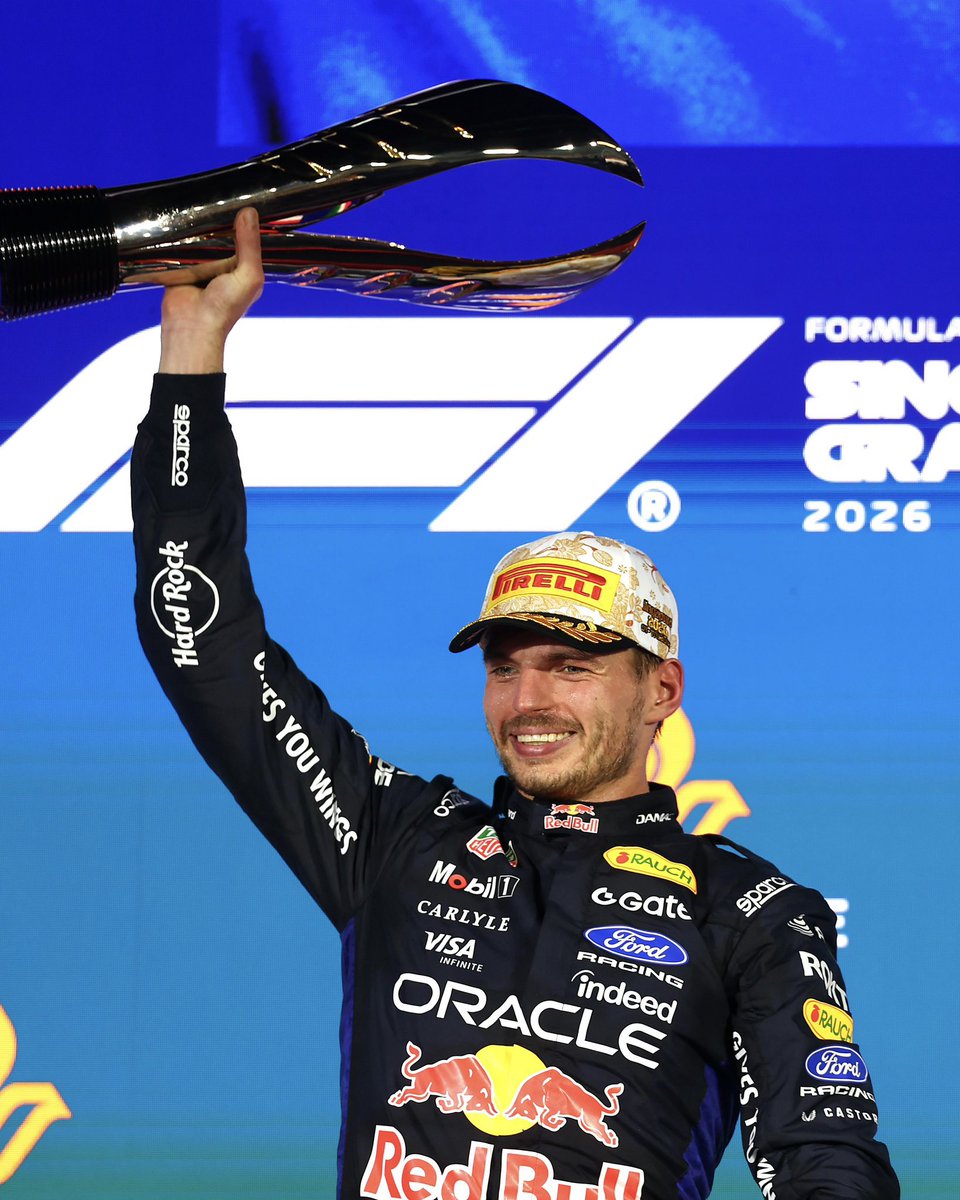
The Sprint indicated that Max Verstappen had won 29.2% of the Formula 1 races he had participated in after 250 Grands Prix, and described this record as phenomenal. #F1 #SingaporeGP https://t.co/aBKkPHqqq9 #F1 #Formule1 #Verstappen (translated)
LE RETOUR PHÉNOMÉNAL D’ISACK HADJAR, P3 À BAKOU ! 🤩🥉 Après 3 GP manqués, le français signe une performance phénoménale avec un podium en Azerbaïdjan ! Quel retour ! 🤩 #F1 #AzerbaidjanGP https://t.co/RayBECBgUk #F1 #Formule1 #Azerbaïdjan

The Return to Feudalism in 21st Century Garb A simple observer's viewpoint, with no claim to hold any absolute truth. The Veneer Cracks There is something strangely archaic about the world unfolding before our eyes, despite its satellites, artificial intelligence, and promises of infinite progress. Here and there, we witness heads of state behaving like feudal lords of another age, patiently nibbling away at the neighboring territory, redrawing borders through force rather than law, as if governing a nation mattered less than expanding one's fiefdom. No names need be mentioned here: current events provide plenty of illustration, and each reader will recognize, according to their own geography and moment of reading, the faces that embody this observation. But this return to the archaic is not confined to grand geopolitical stages. It also permeates the most ordinary daily life—that of social media, where anyone can pour out venom against another without filter, without form, and often without the slightest argument. The verbal jousting of yesteryear, with its codes, its rhetoric, its tacit limits, has given way to raw invective, snap judgment, instant condemnation. We no longer debate: we execute, verbally—and sometimes it doesn't stop at words. The Vanished Inhibition What strikes one, in this dual observation—macro-political and micro-social—is the lifting of an inhibition we thought firmly anchored. Centuries of cultural construction, education, philosophy, sometimes religion, had patiently shaped mechanisms of restraint: politeness as social ritual, argumentation as a mode of resolving disagreement, respect for one's opponent as the very foundation of democratic debate. This civilizational veneer, however fragile it always was, seemed to hold. Today it is cracking, and the question—which for me remains a simple hypothesis, not a certainty—is why. A convenient explanation would blame social media: anonymity, the distance of the screen, the instantaneousness of publication would favor verbal acting-out without the usual mediation of reflection. This is probably true, but likely insufficient. For technology here is only an accelerant, an amplifier—not necessarily a root cause. A Poorly Formatted Neocortex? The more unsettling hypothesis—and I frame it explicitly as hypothesis, not scientifically established fact—is that of a failure in the formation of moral judgment and tolerance toward otherness. The human brain possesses the neural structures enabling empathy, the distancing of impulsive reaction, the acceptance of difference—but these capacities are not innate in their full exercise: they must be built, educated, cultivated, like a muscle that needs patient training from childhood onward. If this education in otherness, nuance, and tolerance of disagreement erodes—for multiple and undoubtedly complex reasons that are not mine to settle here—then older reflexes resurface: instinctive distrust of the stranger outside the clan, the law of the strongest, the logic of territorial or symbolic predation. The other ceases to be a possible interlocutor and becomes once again a potential threat, unless they belong to my tribe, my clan, my party, my digital bubble. Two Scales, One Logic What is striking, in this deliberately provocative reading, is the structural similarity between these two scales. The leader who invades a neighbor in the name of a rediscovered greatness or a reinvented historical right, and the anonymous internet user who insults a stranger in the name of an unnegotiable conviction, may obey the same underlying grammar: that of territory to defend, clan to protect, the other to subdue or exclude rather than understand. The form has changed—satellites instead of horses, tweets instead of heralds—but the substance, in this reading that remains mine alone and commits no one else, seems strangely identical to that of feudal rivalries: the absence of a recognized third party, of an accepted common rule, of a respected arbitrating authority. Everyone becomes judge and party, lord of their own digital or territorial fiefdom. A Civilization on a Knife's Edge Norbert Elias, in his Civilizing Process, showed how Western societies had historically built, with remarkable slowness, an increasing control over impulses and direct violence, in favor of more sublimated forms of social regulation. What we may be observing today—and I stress again the conditional—is a form of regression in this process, or at least a fragilization of the veneer it had patiently laid down. Should we see this as an effect of great technological accelerations, which shake up our cognitive rhythms without leaving education time to adapt? A deeper crisis of the institutions tasked with transmitting these values of tolerance—school, family, religion, the rule of law? Or simply a cyclical movement of human history, where phases of policed civilization alternate with darker backlashes? I have no certain answer, and I would be wary of anyone claiming to hold one. In Conclusion, a Shared Concern This text is only a viewpoint, necessarily partial and subjective, on a world that sometimes seems to replay ancient logics in new clothing. Perhaps I am wrong to perceive a continuity between the feudal lord and the contemporary dictator, between the anonymous online insult and the absence of education in nuance. Perhaps these phenomena are unrelated, or too complex to be thus summarized. But if this reading, even partially, hits the mark, then the question that arises is less one of technological regulation—though necessary—than the far more arduous question of how to rebuild, generation after generation, this capacity to accept the other in their difference, to debate without destroying, to coexist without necessarily dominating. This undertaking, if it exists, will not be resolved by an algorithm nor by an international treaty. It plays out, patiently, in the most elementary education—the one that teaches a child that the other is not a threat, but a possibility. Bibliography Elias, N. (1939). Über den Prozess der Zivilisation [The Civilizing Process]. Oxford: Blackwell (Eng. trans. 1978-1982). Lorenz, K. (1963). Das sogenannte Böse [On Aggression]. London: Methuen (Eng. trans. 1966). Arendt, H. (1970). On Violence. New York: Harcourt, Brace & World. Han, B.-C. (2013). Im Schwarm [In the Swarm: Digital Prospects]. Cambridge, MA: MIT Press (Eng. trans. 2017).


Young indri lemurs learn to sing like human children do. The characteristics that are similar between humans and the indris are called nonlinear phenomena (NLP) and included cracks, jumps in pitch, and rough, noisy sounds https://t.co/2qofkVhyph #IndriLemurs #AnimalBehavior #NonlinearPhenomena #Nospecificcountrycodesarementionedinthetweet.

There is NO realistic scenario where AI wipes out all of humanity. I've talked to many AI safety experts about existential risks. Some of the "experts" are just phenomenal sci-fi authors. There are also real researchers working on realistic risks. They point out real and likely #AISafety #ExistentialRisk #RealityCheck #Therearenospecificcountrycodesintheprovidedtweet.

Amine Harit est trop trop phénoménal et la finition de Gouiri c’est trop grave. La Amine connexion ❤️❤️ #AmineHarit #Gouiri #Football

🚨🥊 ALERTE SALAHDINE PARNASSE ETEINT DAN HOOKER DÈS LE 1ER ROUND 🤯 IL EST PHÉNOMÉNAL !! https://t.co/93ZkOzR4K2 #MMA #UFC #SalahdineParnasse


🚨🚨🚨 IL EST INCROYABLE. IMMORTEL. PHÉNOMÉNAL !!!!! Pierre-Emerick AUBAMEYANG 🇬🇦 FAIT ACTUELLEMENT GAGNER À LUI SEUL DEPORTIVO LA COROGNE SUR LA PELOUSE DE VILLARREAL !!!!! 😱🤩 🎯 Passe décisive 🎯 Passe décisive ⚽️ But 4 matches de Liga. 4 buts. 37 ANS. 👏👏👏 https://t.co/nQcUSgy9xI #Aubameyang #Deportivo #Liga


“TOP BLOG OF THE MONTH” BORDER CRIMINOLOGIES, OXFORD UNIVERSITY (BY DR LUCIANO MAGALDI SARDELLA/PROF. MANTUANO). SOURCE: https://medium.com/@ingnucllms/top-blog-of-the-month-border-criminologies-oxford-university-by-dr-luciano-magaldi-96af51bc28f7 Source: https://blogs.law.ox.ac.uk/border-criminologies-blog/blog-post/2025/09/italys-borders-immigration-paradox-rising-numbers Dr Luciano Magaldi Sardella (PhD) and Prof Matteo Mantuano are pleased to share that our academic contribution entitled: ITALY’S BORDERS IMMIGRATION PARADOX: RISING NUMBERS, FALLING CRIME, AND THE REALITY OF EXPLOITATION has emerged as the most-read piece of the month on the Border Criminologies platform of the University of Oxford’s Faculty of Law. This recognition underscores the significance of a rigorous, evidence-based analysis of migration, border violence, and the dynamics of exploitation that continue to shape contemporary European public debate. We extend our gratitude to the academic community and to all readers for their attention and interest in a work that seeks to contribute — seriously and responsibly — to a deeper understanding of complex and consequential phenomena of our time.

LA PREMIÈRE SOIRÉE DU ZEVENT DÉBUTE FORT 🤯 + DE 500 000 € RÉCOLTÉS POUR POUR LA 1ÈRE SOIRÉE D'OUVERTURE, UN RECORD EN 10 ANS 😳 PHÉ-NO-MÉ-NAL https://t.co/t3oh7HRKw2 #ZEvent #Caritatif #Phénoménal

The Psychology Behind Political Violence Political life carries an appetite for violence beneath the surface. A shooter leaves a manifesto; supporters celebrate; online strangers justify killing over insults, misgendering, and fantasies of execution. We’re told these are separate phenomena—different ideologies, grievances, causes—but they’re deeply connected. The murderer, the celebrant, and the online fantasist share one conviction: blood will build a better world. We often assume ideology comes first, violence second—radicalization infecting an otherwise ordinary person. But corrupted people may seek ideologies that rationalize what they already want to believe. Feeling comes first; philosophy follows. Nietzsche called this *ressentiment*: not ordinary anger, but enduring resentment rooted in surrendered agency and perpetual victimhood. Ressentiment is creative: it turns grievance into virtue and revenge into justice. That’s why movements can sound humanitarian while obsessing over enemies. They promise liberation but focus on who must be eliminated; they call violence self-defense while celebrating destruction. Notice the imbalance: energy goes to identifying who deserves punishment, not to explaining how their better society would work. This is the difference between genuine grievance and pathological ressentiment. Genuine grievance seeks repair; ressentiment seeks subtraction. Its “solutions” are fantasies of punishment—heads cut off, privilege liquidated, wrong pronouns punished. These aren’t coherent doctrines of stability; they’re rationalizations for resentment. Ressentiment also despises self-improvement because it requires admitting agency. Its worldview depends on locating suffering outside oneself. The deepest enemy of these movements, then, is not any specific ideology. It is agency itself.

Le casting 18 ÉTOILES pour la VF de Crimson Désert est juste phénoménal ! 😮 Quel bel exemple de travail et d’amour sur le titre qui continue de vivre, s’améliorer à chaque instant. Merci de faire honneur comme ça c’est rare. #CrimsonDésert #Casting #Film

Pendant que les français sont en vacances, le monde de l’intelligence artificielle est en train de basculer à une vitesse phénoménale. #IntelligenceArtificielle #Technologie #Innovation #FR

🚨 ATTENTION : LE 24 AOÛT, ÇA REPART ! D’après mon équipe, qui a repris les enquêtes depuis 15 jours, nous avons mis au jour une arnaque phénoménale. Du jamais-vu. 🔥 Rendez-vous le 24 août sur RTL pour la reprise. Des details ici avec l’équipe 👇 https://t.co/ByLKjtKSai #Enquête #Arnaque #RTL #FR
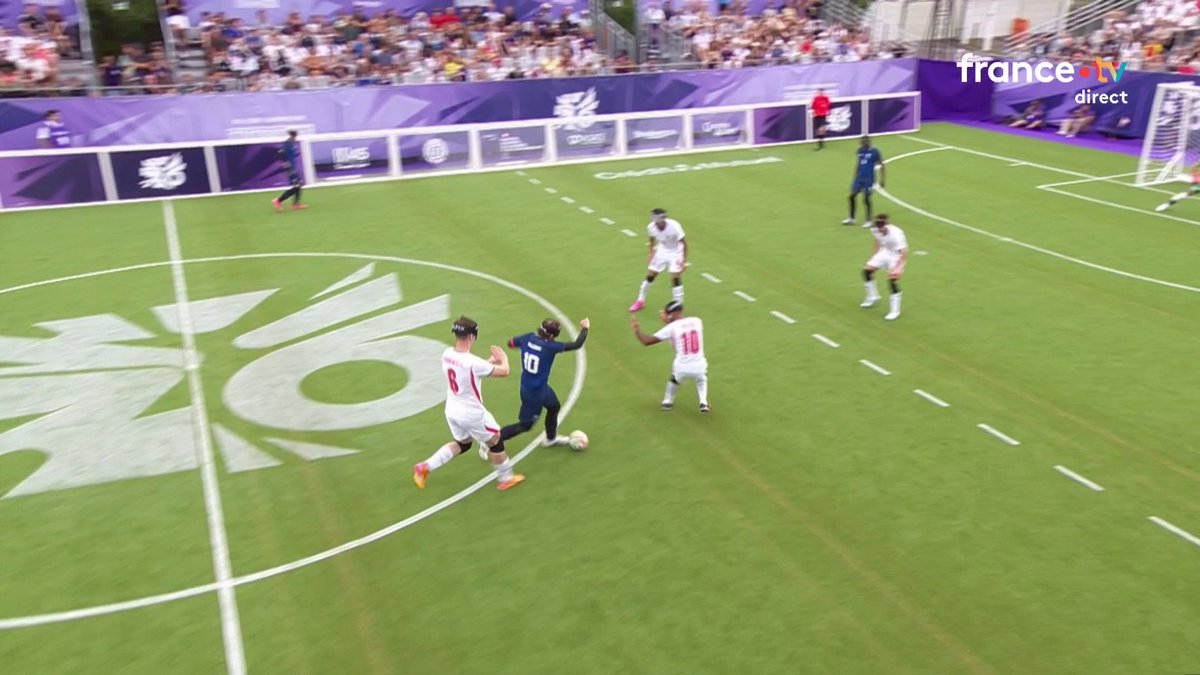
MAIS IL EST INCROYABLE ?!?!? 🤩🇫🇷 Frédéric Villeroux a permis aux Bleus de remporter leur premier match à l’EURO de Cecifoot… D’UN QUADRAPLÉ DONT CE BUT PHÉNOMÉNAL FACE AUX ANGLAIS 🏴. ⚽️⚽️⚽️⚽️ Il est… S E N S A T I O N N E L 👏 🎥 @francetvsport https://t.co/fWSe4Y2GKA #EURO2023 #Cecifoot #France
🚨 Maxime Chanot 🇫🇷 : « J’AI ÉNORMÉMENT DE CRAINTES POUR L’OLYMPIQUE DE MARSEILLE.. 😳 (…) C’est un bordel phénoménal alors que t’as changé tout le monde et que tu n’as pas encore la pression sportive. » https://t.co/XCqlytuYcm #OlympiqueDeMarseille #Football #Sport

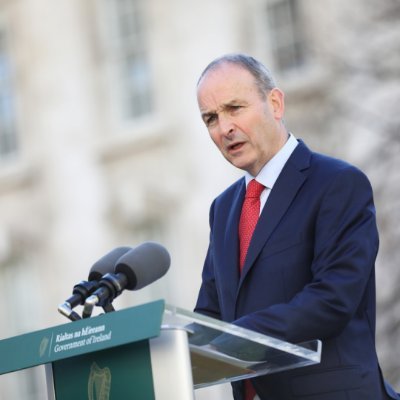
Magnificent gold and powerful performance by Kate O'Connor in the heptathlon, setting a new Irish record.🥇 A phenomenal evening for Kate, her family and for Ireland.👏 https://t.co/zB6zfn64qI #KateOConnor #Heptathlon #IrishRecord #IE


Le relais mixte français a remporté la médaille d'or lors des championnats d'Europe de natation de 2026 à Saint-Denis grâce à une performance exceptionnelle de l'équipe, en particulier de Maxime Grousset et Marie Wattel, qui ont réalisé une fin de relais phénoménale. #Natation #ChampionnatsDEurope #RelaisMixte


Je salue ce démarrage absolument phénoménal, qui témoigne de la popularité durable des personnages de Marvel et du lien que nous continuons d'entretenir avec les fans à travers le monde.





