WRLD

Search

#Recognition
Luciano Magaldi Sardella (PhD) 1h

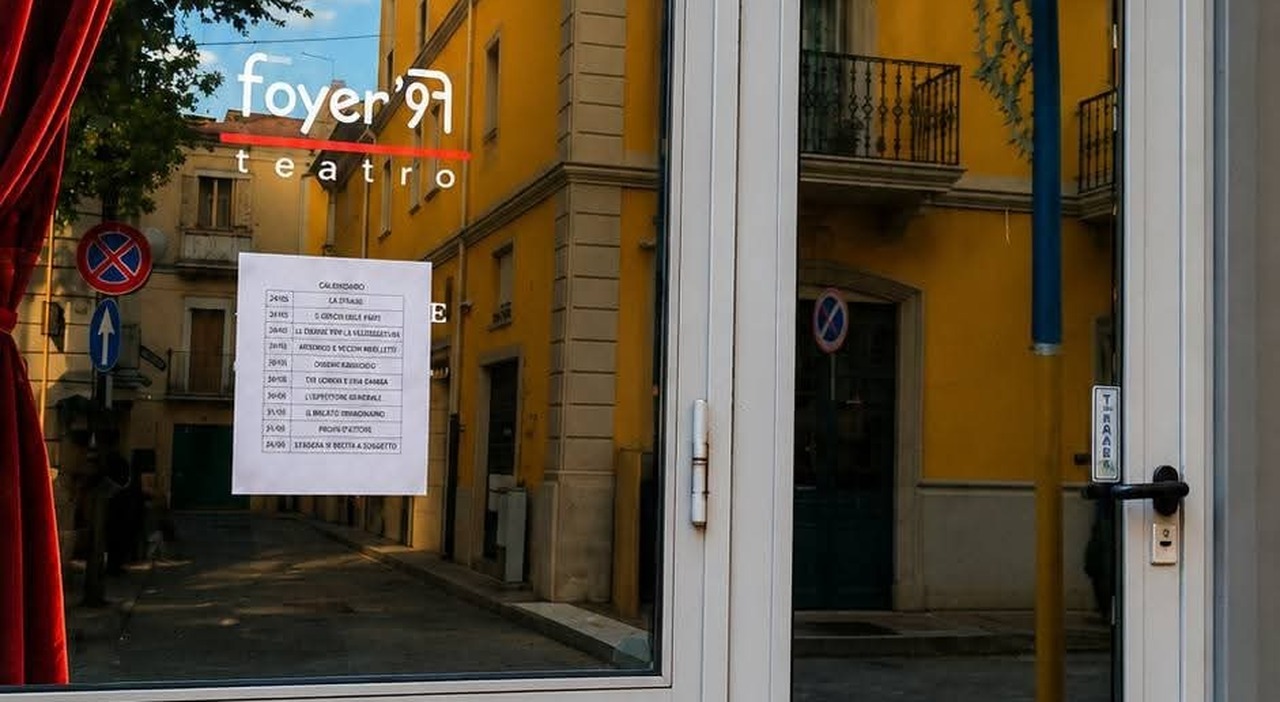
LETTERE MERIDIANE — “TEATRO-EDICOLA” OF SAN SEVERO CONQUERS THE WORLD SOURCE: https://www.letteremeridiane.org/2026/10/il-teatro-edicola-di-san-severo-conquista-il-mondo/?fbclid=IwY2xjawU4oqFleHRuA2FlbQIxMQBwZG9mAXNydGMGYXBwX2lkEDIyMjAzOTE3ODgyMDA4OTIAAR5rVEwYs6UUXg7v-P0SyIQ_DRb_F6ZiY58OcseYoV4J7atcTiERnhWaqKM2pw_aem_Njle1jq1XLzHr93KLBUcVA After “Broadway World”, the “Los Angeles Journal”, “The Psychologist (British Psychological Association)” and Hollywood Beat Magazine, its “academic consecration” has now arrived courtesy of Stanford University. As I have already emphasised in my article on the revival of the GIO Festival in Foggia, celebrated by BroadwayWorld for the world stage premiere of the Giordano’s opera Marina (1888), the province of Foggia has long ceased to be peripheral. It happens when it finds an idea that shifts the coordinates: well, in San Severo, 40 kilometres from Foggia, it has happened again. Only this time an orchestra was not needed; six chairs were enough. The celebrated Teatro-Edicola of San Severo artistic director Francesco Gravino of the theatre company Foyer ’97 has been featured in the academic journal “Stanford Social Innovation Review (SSIR)” as an academic case study. The news, relayed on 19 September 2026 by ANSA Nazionale, looked like a misprint. Then it became clear that it was not. SSIR, an award-winning publication covering multisectoral solutions to global problems, included the project in its Dispatches section with the reportage “The Six-Seat Revolution”. It is the inverse trajectory to that of the GIO Festival: not a forgotten opera returning to a grand historic Italian horseshoe theatre, but an entire theatre reborn inside a disused place, forgotten by man. There are moments when past and future intertwine to create something visionary, innovative, artistically “revolutionary”: San Severo experienced one of those moments on the morning of 27 March 2026, during World Theatre Day, when the shutter of a newsstand closed for six years in Via Matteo Tondi was reopened “not to sell newspapers, but to offer stirring stories”, to quote Gravino’s motto. The idea of the visionary Francesco Gravino, artistic director, stage director and actor of the San Severo company Foyer ’97, active for at least 30 years in Capitanata, centred on the kiosk, hexagonal in metal and glass, granted free of charge by its owner Pino Frau, by now an urban relic created by the publishing crisis of the early 2000s: today in Italy active newsstands have fallen from about 35,000 in 2005 to about 20,000 in 2024, a decline of 42.8%. Gravino and eleven other actors restructured it in two weeks of work, without institutional funding, and transformed it into what is now under examination by the London commission of Guinness World Records as the “world’s smallest theatre”. The formula is deliberately austere: six spectators at a time outside, actors inside at less than a metre’s distance, 15-minute performances, continuous rotation from 11:00 to 20:45, texts ranging from Goldoni to Chekhov, from Ibsen to Dacia Maraini. On the door a QR code with an original theatrical warning: “Warning! This QR code transforms passers-by into actors. Scan only if ready.” The numbers immediately showed that it was no boutade: more than 60 people in a single afternoon, three inaugural days that sold out. But above all a positive echo that went beyond the borders of San Severo. “Broadway World” (just as in the previous case of the GIO Festival), the world’s most influential theatre criticism outlet with over 5.5 million monthly views, devoted exclusive coverage to it on 27 April 2026: “An Abandoned Italian Newsstand Just Became the World’s Smallest Theatre”. Not a mere listing, but an analysis: “There is no foyer, there is no balcony, there is no grid. There is barely a wing. What there is is something almost unrecognisable as an evening at the theatre, and for that very reason it is all the more powerful.” “Broadway World” captured Gravino’s manifesto idea: “This is a theatre of proximity. In an era of digital distance, we are putting human contact back at the centre,” framing it as “More than a clever exercise in site-specific theatre. It is a reappropriation.” All of this, in a Mezzogiorno of Italy often narrated only in terms of organised crime and marginalisation. To that seal of approval was added another, even more disorienting for a newsstand in San Severo: the “Los Angeles Journal”, one of the most influential publications on the West Coast for the performing arts. On 12 May 2026, it headlined thus: “San Severo’s Teatro-Edicola as an Innovative Model for Los Angeles Theaters?” opening as follows: “In a city in southern Italy that Hollywood has never heard of, a theatre director has just built the smallest stage in the world: six seats, fifteen minutes, zero distance. Los Angeles should pay attention.” The “Los Angeles Journal” does not indulge in folklore, but places the kiosk in Via Matteo Tondi alongside the prestigious 1,600-seat Ahmanson Theatre in Los Angeles, the Pantages of Broadway in Hollywood, the 99-seat plan of Rogue Machine, the Odyssey, the Victory Theatre and the Hollywood Fringe. It even recalls Ethan Marks’s Electrical Box Theatre, a veritable electrical box lined with red velvet in downtown Los Angeles, to argue that Gravino has taken to the extreme the question Los Angeles has been asking itself for decades: How small can a stage become before it ceases to be a stage? And it recognizes the San Severo urban model: almost zero cost, two weeks of work and six chairs, in return for immediate provincial, regional and national media coverage, recognition by the San Severo’s Municipal Administration, and a format exportable anywhere. Then, the third American piece came from “Hollywood Beat Magazine” on 20 April 2026: Six seats. Fifteen minutes. One actor. No stage. The magazine recounts the kiosk in Via Tondi left disused for almost six years, the contemporary six-seat cultural outpost, placing Francesco Gravino in a distinguished genealogy: Richard Schechner and environmental theatre, Jerzy Grotowski and poor theatre, Nicolas Bourriaud and relational aesthetics. But it closes with pragmatism: it is not a thesis, it is fixing a street corner, that is, repairing an urban street corner by asking not how large a theatre can become, but how small it must become again to recover its original power. And finally, the celebrated London-based “The Psychologist”, the journal of the “British Psychological Society (BPS)”, the oldest psychological society in the world, transformed the Teatro-Edicola into a scientific case study: on 30 July 2026 it published “The world’s smallest theatre — and Psychologists’ next act”, starting from the same detail, the morning of 27 March when the metal shutter of the hexagonal kiosk in Via Tondi reopened after six years, six people inside, an actor at less than a metre’s distance beginning Chekhov. It describes the formula: six spectators, 15 minutes, 11 actors over 10 hours, from Goldoni to Euripides, inside a kiosk where the fourth wall does not break because architecturally it never existed. But the BPS goes a step further: it cites the 2025 studies by Damien Gabriel in IBRO Neuroscience Reports, that live performance generates measurably stronger emotional and physiological activation than video, and introduces Edward Hall’s proxemics: below one metre is intimate space, reserved for doctors, close friends, lovers. In that one-square-metre space, the actor’s breath is audible, micro-expressions legible, the self-other boundary becomes permeable. The Teatro-Edicola “does not make theatre better, it makes it inevitable”. And it is here that one understands why Stanford is studying it as an academic case study in social innovation, not as a case of artistic originality. In Italy, meanwhile, the national media circuit had already picked up the phenomenon: RaiNews — TG2 Storie brought it to RaiDue at midnight on 19 April. RTL 102.5 devoted space to the format conceived by Gravino and developed by Foyer ’97 in the heart of San Severo in Via Tondi, defining it as a permanent micro-stage capable of bringing theatre into public space. ANSA.it, Gazzetta del Mezzogiorno, La Repubblica, TG2000, Radio Capital, Swiss RSI, ANSA Brazil and many others followed. And for the record: Fiorello praised it in La Pennicanza as an artistic case inspired by his Edicola Fiore, and Biagio Antonacci, on his tour in the Augustan amphitheatre of Lucera, made a “fact-finding” stop at the Teatro-Edicola singing the celebrated and nostalgic Iris in front of an audience certainly larger than the “six seats”. Francesco Gravino’s theatre company Foyer ’97 was not born yesterday: behind it lie the Teatro-Cantina of 2016, the underground theatre, and in 2011 a performance on the bell tower of a church in the centre of San Severo at 45 metres high. The Teatro-Edicola completes, in Gravino’s words, “the entire vertical extension of theatre: underground, street level, rooftop”. And it is preparing for its thirtieth anniversary in 2027 aiming to purchase the kiosk to make it permanent, exporting the “San Severo Model” to Rome, Lucca, and to the festivals of Santarcangelo and Todi. As with the GIO Festival, someone might dare to claim that it is merely a stunt, but when BroadwayWorld places you alongside the Los Angeles Opera House, the “Los Angeles Journa”l proposes you as a model for Hollywood, “Hollywood Beat Magazine” reads you through Grotowski and the “British Psychological Society” uses you to explain mirror neurones, it is no longer a stunt but an excellent artistic and academic positioning. To those who still whisper that Foggia and Capitanata are provincial, the answer is now written on two opposite and complementary fronts: on 5 June in Foggia a 138-year-old opera found the stage again at the Giordano ending up on BroadwayWorld; on 27 March in San Severo a 4-square-metre kiosk invented a stage that did not exist, ending up at Stanford, in Los Angeles, in Hollywood and in London. The periphery, when it has a precise idea, becomes the centre. Even with six chairs. Luciano Magaldi Sardella

www.letteremeridiane.org
Il teatro-edicola di San Severo conquista il mondo
52
Alexander De Croo 🇺🇳 3d

The author argued that development had little value without respect for human rights and congratulated Navi Pillay on winning the 2026 Nobel Peace Prize, describing it as recognition of her lifelong commitment to peace and international law.

3347
Alexander Van der Bellen 3d

The author wrote that the award was a powerful recognition of the connection between justice and peace, as the international rules-based order was increasingly being eroded.

2902
David Thunder 4d

The post said Spain’s Supreme Court had annulled Royal Decree 905/2025 on the creation and recognition of universities. It added that the court found the government had used an urgent procedure. https://t.co/MhOpSoccoQ #España #Educación #Justicia #ES (translated)

3368
Gunther Fehlinger-Jahn 7d

The post’s author wrote that, as President of Austria, they would support Serbia’s European transformation, including recognition of Kosovo, reconciliation with its neighbours, and membership of the EU, NATO and OECD. https://t.co/Vj2ZSoTowB #Srbija #Evropa #EU #RS #EU #XK #AT (translated)

114
BBC 2w

Republic of Ireland players intend to wear black armbands "in recognition of all lives lost in the [Gaza] conflict" for match against Israel. #Ireland #Gaza #FootballProtest

www.bbc.co.uk
Republic of Ireland to wear black armbands for Israel game
1841
Gunther Fehlinger-Jahn 2w

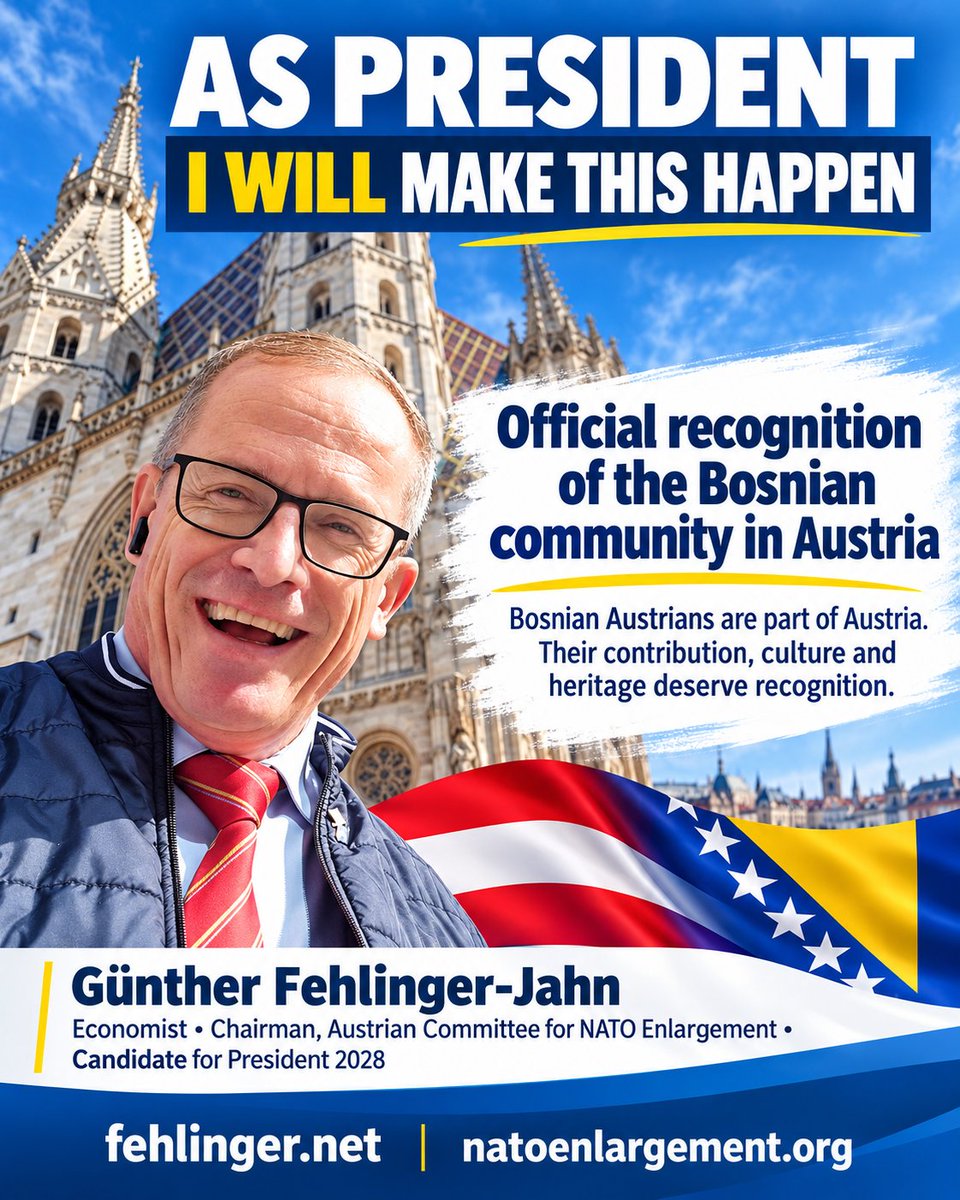
🇦🇹🇧🇦 AS PRESIDENT I WILL MAKE THIS HAPPEN. I support the official recognition of the Bosnian community in Austria as a Volksgruppe. Bosnian Austrians are part of our country, and their cultural heritage deserves to be visible and respected. As President, I would put this issue on https://t.co/AMddPsiq71 #BosnianCommunity #Volksgruppe #CulturalHeritage #AT #BA

115
S
Sandfeen 2w

“The Abolition of Slavery — and Its Unfinished History Slavery is far older than the transatlantic slave trade. It existed for thousands of years in societies across the Middle East, Europe, Africa and the Americas. It was therefore not invented by Europeans or white people. But another part of the history deserves recognition. In the late 18th and 19th centuries, predominantly European and Western abolitionist movements developed sustained political campaigns against the slave trade and slavery. Britain is a major example. British abolitionists such as William Wilberforce, Thomas Clarkson and Granville Sharp, together with Black activists and formerly enslaved people such as Olaudah Equiano, campaigned for abolition. Parliament abolished Britain’s slave trade in 1807, and slavery throughout most of the British Empire through the 1833 Slavery Abolition Act, with emancipation beginning in 1834. Britain then used its navy and diplomacy to suppress the international slave trade. Between 1808 and 1870, British naval forces seized roughly 1,400 slave ships and liberated around 160,000 enslaved people. This does not erase Britain’s earlier role in the slave trade. Nor was abolition exclusively a white achievement. Black activists, former slaves, religious groups and others were important to the movement. Nevertheless, Western societies became leading forces in creating political, legal, diplomatic and military mechanisms to suppress the Atlantic slave trade and abolish slavery. And slavery has not disappeared. The latest global estimates, based on 2021 data, put the number living in modern slavery at 49.6 million: 27.6 million in forced labour and 22 million in forced marriage. About 29.3 million were in Asia and the Pacific, 7.0 million in Africa, 6.4 million in Europe and Central Asia, 1.7 million in the Arab States and 5.1 million in the Americas. Slavery is ancient and global; Europeans became major participants in the transatlantic system and later major forces in its abolition. Yet an estimated 49.6 million people were still living in modern slavery in 2021” - ChatGPT

806
S
Sandfeen 2w

The Death of the Insult There was a time when being called an idiot was not a public-health emergency. You were called an idiot. You called the other person an idiot. Perhaps you argued, perhaps you fought, perhaps you laughed, had a beer and forgot about it. That may sound primitive. It was also a social technology. In traditional honor culture, an insult was a challenge: if someone attacked your status, you were expected to answer. Men in particular developed cultures of teasing, mockery and competitive abuse in which the ability to give and take an insult could itself demonstrate confidence. Then came dignity culture, with a liberating idea: you don’t have to care what everyone thinks of you. An insult does not necessarily diminish you. Someone else’s contempt does not become your inferiority simply because they express it. Now something else is emerging. Sociologists Bradley Campbell and Jason Manning describe victimhood culture, in which interpersonal offences increasingly become public grievances. The offended party seeks recognition, an audience and sometimes institutional intervention. The old question was: “Are you going to say that to my face?” The dignity question was: “Why should I care what you think?” The new question increasingly seems to be: “Who can I report this to?” This may illuminate an uncomfortable gender difference. Men have historically been more permitted to insult and confront one another directly, while women have often had greater incentives to avoid direct confrontation and use social pressure, criticism and complaint. Neither pattern is exclusively male or female, but cultural habits matter. The danger is a society so determined to protect people from offence that it forgets to teach them how to withstand it. There is a difference between being harmed and being insulted, between injustice and discomfort, and between demanding justice and demanding that nobody make you uncomfortable. We may have travelled from honor, to dignity, to grievance. And perhaps the most subversive sentence left is also the simplest: “Yes, he insulted you. So what?”

921
S
Sandfeen 3w

The Death of the Insult There was a time when being called an idiot was not a public-health emergency. You were called an idiot. You called the other person an idiot. Perhaps you argued, perhaps you fought, perhaps you laughed, had a beer and forgot about it. That may sound primitive. It was also a social technology. In traditional honor culture, an insult was a challenge: if someone attacked your status, you were expected to answer. Men in particular developed cultures of teasing, mockery and competitive abuse in which the ability to give and take an insult could itself demonstrate confidence. Then came dignity culture, with a liberating idea: you don’t have to care what everyone thinks of you. An insult does not necessarily diminish you. Someone else’s contempt does not become your inferiority simply because they express it. Now something else is emerging. Sociologists Bradley Campbell and Jason Manning describe victimhood culture, in which interpersonal offences increasingly become public grievances. The offended party seeks recognition, an audience and sometimes institutional intervention. The old question was: “Are you going to say that to my face?” The dignity question was: “Why should I care what you think?” The new question increasingly seems to be: “Who can I report this to?” This may illuminate an uncomfortable gender difference. Men have historically been more permitted to insult and confront one another directly, while women have often had greater incentives to avoid direct confrontation and use social pressure, criticism and complaint. Neither pattern is exclusively male or female, but cultural habits matter. The danger is a society so determined to protect people from offence that it forgets to teach them how to withstand it. There is a difference between being harmed and being insulted, between injustice and discomfort, and between demanding justice and demanding that nobody make you uncomfortable. We may have travelled from honor, to dignity, to grievance. And perhaps the most subversive sentence left is also the simplest: “Yes, he insulted you. So what?”

462
Paul Murphy 🇵🇸 3w

Just look at the recognition that still exists today for the Irish rugby players who refused to tour apartheid South Africa, for the Dunnes Stores strikers. Shame on the Irish government. Shame on the FAI. We must stand up against genocide. We must #StopTheGame. #Irland #StopTheGame #RugbyJustice #IE #ZA

231
António Guterres 3w

Peace is far more than the absence of conflict. It's the presence of restraint of power by law. It's the recognition, as enshrined in the @UN Charter, that force cannot be the final arbiter of whose lives, rights & future matter. Amid increasing conflicts around the world, my https://t.co/TzwZSuqw79 #Peace #HumanRights #ConflictResolution #Nospecificcountrycodesarementionedinthetweet.

9477
Gunther Fehlinger-Jahn 3w

🇦🇹🇮🇱 MY PRESIDENTIAL PLEDGE ON ISRAEL — As candidate for Federal President of Austria, my position is clear: I support one united Israel. I oppose a two-state solution and I oppose Austrian recognition of a Palestinian state. I stand firmly against Hamas and every organization, https://t.co/rHkGZU8b7j #Austria #Israel #Palestine #AT #IL

116
Achyuta Samanta 3w

I am very happy and deeply honoured to receive two special honours from two beautiful cities of Romania—Milișăuți and Bârlad. I was conferred the Honorary Citizenship of Milișăuți. I was also honoured by the Municipality of Bârlad with the prestigious title, “Key to the City of Bârlad”, a very special honour, symbolising that the doors of Bârlad will always remain open to me. It was a very special moment for me to receive these honours from the respected Mayors in the presence of the council members and many eminent people. I accept them with all humility as recognition of my lifelong service to education, humanity and society. I am grateful to the Honourable Ambassador of India to Romania for being present on both occasions. My heartfelt thanks to the Mayors and all the council members of the municipalities of Milișăuți and Bârlad for their warmth, affection and respect. I will always cherish the love and honour given to me by the people of Romania. #Onoruri #Romania #CetățenieHonorifică

13870
Luciano Magaldi Sardella (PhD) 3w

"BLASTING NEWS ITALIA": SIX-SEAT REVOLUTION: FOGGIA'S NEWSSTAND THEATRE BECOMES A CASE STUDY AT STANFORD SOURCE: https://it.blastingnews.com/cultura-spettacoli/2026/09/rivoluzione-a-sei-posti-il-teatro-edicola-di-foggia-caso-studio-a-stanford-004141773.html SAN SEVERO (FG) - The Newsstand Theatre of San Severo, created from a disused news-stand, is a case study for Stanford University by Chiara Valentini The Newsstand Theatre of San Severo, in the province of Foggia, known as the smallest theatre in the world, has become a prestigious case study for Stanford University. The news, released on 19 September 2026, concerns the publication in the Stanford Social Innovation Review of the reportage entitled "The Six-Seat Revolution". The feature is entirely devoted to the innovative cultural project of the theatre company Foyer 97 and its artistic director, Francesco Gravino. The article, authored by the Foggia-born researcher Luciano Magaldi and supervised by editor David V. Johnson, appears in the magazine's Dispatches section. The Stanford Social Innovation Review is a publication that focuses on cross-sectoral solutions to global problems. The Apulian project, at the heart of this international recognition, was born from the transformation of a disused and abandoned site into a vibrant space dedicated to very small-scale theatrical performances. A six-seat stage for a unique experience The Newsstand Theatre is distinguished by its extremely small dimensions: it has just six chairs and occupies less than two square metres. Its innovative format provides for performances every 15 minutes, ensuring a high turnover of audiences. Attendance has been sold out, attracting a heterogeneous audience of young people and adults. This particular configuration drastically reduces the distance between actors and spectators, concentrating the theatrical experience in an intimate and original space created from a former news-stand. Francesco Gravino expressed his pride, linking this important recognition to the journey undertaken by the Foyer 97 company. The artistic director also mentioned the numerous requests to replicate the model received from other Italian cities, including Lucca and Rome. Gravino emphasised the urgent need to introduce specific regional regulations to facilitate the reconversion of disused sites into cultural activities, describing them as genuine "cultural outposts" for the community. Currently, Gravino and the company's actors are engaged in preparing the new programme. Foyer 97: thirty years of activity and new challenges The theatre company Foyer 97 is about to celebrate a significant anniversary. Francesco Gravino announced that "next year our company will be 30 years old", a milestone that will be celebrated with the introduction of some important innovations. This anniversary is closely linked to the resumption of activities scheduled for October and to the presentation of the new programme for the Newsstand Theatre. The "Stanford Social Innovation Review" reportage recalled that the Newsstand Theatre was inaugurated on the morning of 27 March 2026, coinciding with World Theatre Day. This event marked the beginning of a project that continues to generate interest and to demonstrate the potential of urban regeneration through culture.

it.blastingnews.com
Rivoluzione a sei posti: il Teatro-edicola di Foggia caso studio a Stanford
579
Luciano Magaldi Sardella (PhD) 3w
"QUOTIDIANO DI PUGLIA": THE WORLD'S SMALLEST KIOSK-THEATRE IS IN PUGLIA AND WILL BE STUDIED AT STANFORD UNIVERSITY SOURCE: https://www.quotidianodipuglia.it/AMP/foggia/san_severo_teatro_edicola_puglia_stanford_university-9773347.html SAN SEVERO (FG) - On the eve of the new season, worldwide recognition has come for the kiosk-theatre, the smallest theatre in the world, built in San Severo, in the Province of Foggia: it is to become a case study at Stanford University. The concept of the kiosk-theatre was published in SSIR - the multi-award-winning publication covering cross-sector solutions to global problems - in the article 'The Six-Seat Revolution' by the Foggian researcher Luciano Magaldi Sardella, supervised by editor David V. Johnson. The article appears in the 'Dispatches' section of the Stanford Social Innovation Review. 'It is an achievement that rewards our work,' said Francesco Gravino, artistic director of the theatre company Foyer 97, with pride. In the meantime, he announced that requests have been made to replicate the model in other Italian cities. 'Requests to replicate our theatre model have come from Lucca and Rome. We thought of creating a cultural activity from a place that had been decommissioned and abandoned. What is needed is a regional law that allows for the reconversion of these disused places, in which numerous activities could be brought to life. Genuine cultural outposts.' The new programme, which Francesco Gravino and the actors of the company are preparing, is already in the pipeline. 'Next year our company will celebrate its 30th anniversary,' he said, 'an important milestone that we shall mark with some new developments.' Six chairs, less than two square metres, performances repeated every 15 minutes, and sold-out audiences of young people and adults. An experiment that has aroused curiosity and interest even in the world of show business. Amongst the curious theatre enthusiasts, last summer they also welcomed Biagio Antonacci as a guest. In Lucera, in the Province of Foggia, with his new tour between July and August, during his travels he made a surprise stop at the kiosk-theatre and sang 'Iris'. 'It was truly a wonderful encounter that captivated the attention of passers-by,' Gravino concluded.

www.quotidianodipuglia.it
Il teatro-edicola più piccolo del mondo è in Puglia e sarà studiato alla Stanford University
1042
S
Sandfeen 3w

“The Abolition of Slavery — and Its Unfinished History Slavery is far older than the transatlantic slave trade. It existed for thousands of years in societies across the Middle East, Europe, Africa and the Americas. It was therefore not invented by Europeans or white people. But another part of the history deserves recognition. In the late 18th and 19th centuries, predominantly European and Western abolitionist movements developed sustained political campaigns against the slave trade and slavery. Britain is a major example. British abolitionists such as William Wilberforce, Thomas Clarkson and Granville Sharp, together with Black activists and formerly enslaved people such as Olaudah Equiano, campaigned for abolition. Parliament abolished Britain’s slave trade in 1807, and slavery throughout most of the British Empire through the 1833 Slavery Abolition Act, with emancipation beginning in 1834. Britain then used its navy and diplomacy to suppress the international slave trade. Between 1808 and 1870, British naval forces seized roughly 1,400 slave ships and liberated around 160,000 enslaved people. This does not erase Britain’s earlier role in the slave trade. Nor was abolition exclusively a white achievement. Black activists, former slaves, religious groups and others were important to the movement. Nevertheless, Western societies became leading forces in creating political, legal, diplomatic and military mechanisms to suppress the Atlantic slave trade and abolish slavery. And slavery has not disappeared. The latest global estimates, based on 2021 data, put the number living in modern slavery at 49.6 million: 27.6 million in forced labour and 22 million in forced marriage. About 29.3 million were in Asia and the Pacific, 7.0 million in Africa, 6.4 million in Europe and Central Asia, 1.7 million in the Arab States and 5.1 million in the Americas. Slavery is ancient and global; Europeans became major participants in the transatlantic system and later major forces in its abolition. Yet an estimated 49.6 million people were still living in modern slavery in 2021” - ChatGPT

926
Luciano Magaldi Sardella (PhD) 3w

"FOGGIA SERA": FROM SAN SEVERO TO STANFORD UNIVERSITY: THE "SIX-SEAT REVOLUTION" OF THE TEATRO EDICOLA SOURCE: https://foggiasera.it/2026/09/19/da-san-severo-alla-stanford-university-la-rivoluzione-a-sei-posti-del-teatro-edicola-by-luciano-magaldi-sardella/ SAN SEVERO (FG) - The Stanford Social Innovation Review (SSIR), the scholarly journal published by the Stanford Center on Philanthropy and Civil Society of the prestigious Stanford University - ranked second in the world in the Shanghai Ranking of World Universities - and recognised as the pre-eminent global reference for researchers, policy-makers, and practitioners of innovative entrepreneurship and philanthropy, hath published the reportage "The Six-Seat Revolution" upon the Teatro Edicola of San Severo, the smallest theatre in the world by dimension and capacity, born of the intuition of Francesco Gravino, Artistic Director of the Foyer '97 company. Its author is Luciano Magaldi Sardella, independent researcher and international journalist, native of Orta Nova and of maternal Sanseverese extraction, hitherto author of studies published in international academic journals. The piece appeared in the September (Fall 2026) edition of the academic review, within the section devoted to Arts & Culture. A presence that projects San Severo, and more broadly the Capitanata, into the international élite of research upon cultural and urban innovation. The Theatre Is Born of a Disused Newsstand It all commenced on 27 March 2026, World Theatre Day, in Piazza Municipio at San Severo. A news-kiosk, disused for years in Via Matteo Tondi, raised its shutter to reveal, in lieu of newspapers and cigarettes, an actor upon the stage. Within: six chairs. At intervals of fifteen minutes, a new audience took its place. Drawing inspiration from the televisual format of Edicola Fiore by the noted Sicilian presenter of radio and television, there was born the Teatro Edicola, a structure now recognised in the media as the smallest theatre in the world for dimensions and capacity: four square metres in aggregate, with a scenic space of less than two metres. Gravino hath led Foyer '97 for nigh on thirty years, forging a most exacting artistic trajectory in a context - that of southern Italy - historically penalised in respect of public financing for culture. And yet, upon beholding that vacant kiosk, he elected the path of provocation: to transfigure the bare minimum into a manifesto concerning the very meaning of theatre. The Model and its Measurable Effects The inaugural season endured for three days. All performances were sold out. In a single afternoon, upwards of sixty persons attended the representations. The cost of the entire pilot operation was less than three thousand dollars. The formula is radical in its constitutive elements: performances of five to twelve minutes' duration, conceived expressly for the space; rotation of the audience every fifteen minutes; direct and inescapable visual contact betwixt actor and spectator; no architectural or psychological distance betwixt stage and auditorium; ticket proposed at five euros per person, within a hybrid economic model comprising municipal support, local sponsorship, and box-office receipts. According to the analysis published in the Stanford Social Innovation Review, the Teatro Edicola represents a replicable model of low-cost, high-impact urban regeneration, capable of reactivating abandoned commercial spaces (newsstands, tobacconists, telephone kiosks) without recourse to large infrastructural investment. The Voice of Him who Built it All Francesco Gravino entertaineth no doubt as to the import of the enterprise: "Grand theatres are not requisite to transform a fragment of a city. What is requisite is a sound idea and the courage to restore to the collectivity a space that hath lost its function." And upon the import of international recognition: "Teatro Edicola was born to demonstrate that a place of encounter and culture may arise wheresoever, even within two square metres. That this work should today be studied at an international level and that enquiries should arrive from cities such as Lucca and Rome is confirmation that the path pursued is the right one." The director hath further explicated the symbolic choice of place: the newsstand was the locus wherein each morn one paused, informed oneself, and recognised oneself as a community. Its disappearance rent a precise social fabric. To restore unto it a cultural function is to re-stitch that tissue at the very point wherefrom it was torn. The Challenges: Scalability, Institutional Recognition, Entrenchment The SSIR reportage doth not confine itself to celebration of the project but analyseth also the critical junctures. The first is sustainability over time: an activation of three days, howsoever successful, doth not yet constitute a stable programme, a veritable seasonal repertory (weekends from spring to autumn) with a rotating roster of local and regional companies. The second juncture concerneth replicability without loss of identity: the Teatro Edicola functioneth also by virtue of the profound roots of Foyer '97 in the Sanseverese territory. To transplant the model elsewhere requireth not merely a physical kit, but an entire process of community-building. The third obstacle is institutional: in a system of public funding that rewardeth organisations with consolidated premises and predictable output metrics, a project deliberately experimental, hyperlocalist, and by its very nature impermanent strugglest to gain access to the ordinary channels of the Fondo Nazionale per lo Spettacolo dal Vivo (FNSV) of the Ministry of Culture. A Lesson that Travels beyond Puglia In the Stanford Social Innovation Review the author concludeth that the intuitions of the Teatro Edicola transcend the Sanseverese context: in any community wherein cultural institutions struggle to reach youthful, diverse, or economically marginal publics, the principle of proximity proveth disruptive: to encounter people where they already find themselves, in the spaces they inhabit quotidianly. From the populous centre of Daunia to the pages of Stanford University: San Severo and its kiosk demonstrate that six chairs, four square metres, and a vision suffice to alter the manner in which a city conceiveth of itself. And to offer unto the world a model that costeth less than one might credit, yet is worth far more than one might imagine.

1159
Luciano Magaldi Sardella (PhD) 3w

"PUGLIA IN": FROM SAN SEVERO TO STANFORD UNIVERSITY: THE 'SIX-SEAT REVOLUTION' OF TEATRO EDICOLA SOURCE: https://www.pugliain.net/301723-san-severo-teatro-edicola/ SAN SEVERO (FG) - The "Stanford Social Innovation Review (SSIR)", the scholarly quarterly published by the "Stanford Center on Philanthropy and Civil Society" at the prestigious Stanford University — ranked second in the world in the Shanghai Ranking of World Universities — and universally regarded as the pre-eminent global point of reference for scholars, policy-makers and practitioners in the fields of innovative enterprise and philanthropy, hath published the reportage “The Six-Seat Revolution” concerning the Teatro Edicola of San Severo, the smallest theatre in the world, born of the intuition of Francesco Gravino, Artistic Director of the Foyer ’97 company. Its author is Luciano Magaldi Sardella, independent researcher and international journalist, a native of Orta Nova with maternal lineage rooted in San Severo, and erstwhile contributor of studies published in international academic journals. The piece appeared in the Septembertide (Fall 2026) edition of the academic review, within the section consecrated to Arts and Culture. A presence which projecteth San Severo, and more broadly the entirety of Capitanata, into the international élite of research on cultural and urban innovation. The theatre is born from a disused newsstand It all commenceth upon 27 March 2026, World Theatre Day, in the Piazza Municipio at San Severo. A newsstand long disused in Via Matteo Tondi raiseth its shutter to reveal, in lieu of newspapers and cigarettes, an actor upon the stage. Within: six chairs. At intervals of fifteen minutes, a new audience taketh its place. Drawing inspiration from the televisual format of "Edicola Fiore" of the celebrated Sicilian radio and television presenter, there was born Teatro Edicola, a structure now recognised in the media as the smallest theatre in the world by both dimension and capacity: four square metres in total, with a scenic space of less than two metres. Gravino hath led Foyer ’97 for nigh on thirty years, forging an exacting artistic trajectory in a context — that of Southern Italy — historically penalised with respect to public funding for culture. And yet, when he beheld that vacant kiosk, he chose the path of provocation: to transmute the bare minimum into a manifesto concerning the very signification of theatre. The model and its measurable effects The inaugural season endured for three days. All performances were sold out. In a single afternoon, upwards of sixty persons attended the representations. The cost of the entire pilot operation was less than three thousand dollars. The formula is radical in its constitutive elements: performances of five to twelve minutes' duration, conceived expressly for the space rotation of the audience every fifteen minutes direct and ineluctable visual contact betwixt actor and spectator no architectural or psychological distance betwixt stage and stalls ticket proffered at five euros per person, with a hybrid economic model envisaging municipal support, local sponsors and box-office receipts According to the analysis published in the "Stanford Social Innovation Review", Teatro Edicola representeth a replicable paradigm of low-cost, high-impact urban regeneration, capable of reactivating abandoned commercial spaces — newsstands, tobacconists, telephone kiosks — without the necessity of substantial infrastructural investment. The voice of him who built it all Francesco Gravino entertaineth no doubt as to the significance of the undertaking: “One doth not require grand theatres to transform a portion of a city. One requireth a sound idea and the courage to restore to the collectivity a space that hath lost its function.” And concerning the import of international recognition: “Teatro Edicola was born to demonstrate that a locus of encounter and culture may arise wheresoever, even within two square metres. That today this labour should be studied at an international level and that enquiries should arrive from cities such as Lucca and Rome is confirmation that the path is the right one.” The director hath also explicated the symbolic choice of place: the newsstand was the point at which, each morn, one paused, one apprised oneself, one recognised oneself as a community. Its disappearance lacerated a precise social fabric. To restore unto it a cultural function signifieth to re-stitch that fabric from the very point at which it was rent. Challenges: scalability, institutional recognition, rootedness The SSIR reportage doth not merely celebrate the project but analyseth also its critical nodes. The first is sustainability over time: an activation of three days, howsoever successful, doth not yet constitute a stable programme, a veritable seasonal programmation (weekends from springtide to autumn) with a rotating roster of local and regional companies. The second node concerneth replicability without loss of identity: Teatro Edicola functioneth also by virtue of the profound roots of Foyer ’97 within the San Severo territory. To transplant the model elsewhere requireth not merely a physical kit, but an entire process of community building. The third obstacle is institutional: in a system of public funding which rewardeth organisations possessed of consolidated premises and predictable output metrics, a project deliberately experimental, hyper-localist and by its very nature impermanent struggleth to gain access to the ordinary channels of the Fondo Nazionale per lo Spettacolo dal Vivo (FNSV) of the Ministry of Culture. A lesson which travelled beyond Puglia In the Stanford Social Innovation Review the author concludeth that the intuitions of Teatro Edicola transcend the San Severo context: in any community wherein cultural institutions struggle to reach youthful, diverse, or economically marginal publics, the principle of proximity proveth disruptive: to meet people where they already are, in the spaces they inhabit quotidianly. From the populous centre of Daunia to the pages of Stanford University: San Severo and its diminutive kiosk demonstrate that six chairs, four square metres, and a vision sufficeth to alter the manner in which a city conceiveth itself. And to proffer unto the world a model which costeth less than one might suppose yet is worth far more than one might imagine.

www.pugliain.net
Da San Severo alla Stanford University: la “Rivoluzione a Sei Posti” del Teatro Edicola
927
Luciano Magaldi Sardella (PhD) 3w
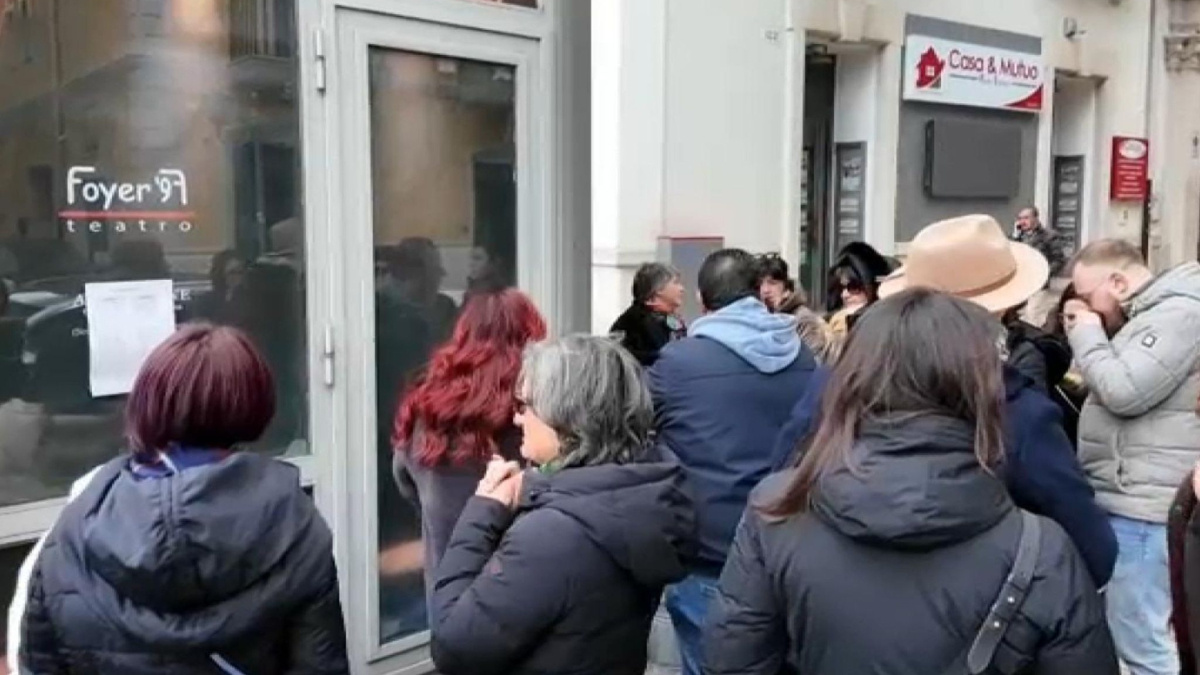
"CIVICO 93": FROM SAN SEVERO TO STANFORD UNIVERSITY: THE 'SIX-SEAT REVOLUTION' OF TEATRO EDICOLA" SOURCE: https://www.civico93.it/da-san-severo-alla-stanford-university-la-rivoluzione-a-sei-posti-del-teatro-edicola/ SAN SEVERO (FG) - The scholarly reportage by Luciano Magaldi Sardella on the micro-theatre of Francesco Gravino has appeared in the most authoritative journal in the world in the field of social innovation: six chairs and four square metres that are transforming the manner in which we conceive theatre and the city. The "Stanford Social Innovation Review (SSIR)", the academic review published by the Stanford Center on Philanthropy and Civil Society of the prestigious Stanford University, ranked second in the world in the Shanghai Ranking of World Universities, constitutes the global point of reference for researchers, policy-makers and practitioners of innovative enterprise and philanthropy. It has published the reportage "The Six-Seat Revolution" on the Teatro Edicola of San Severo, the smallest theatre in the world by dimension and capacity, born from the intuition of Francesco Gravino, artistic director of the company Foyer '97. Its author is Luciano Magaldi Sardella, an independent researcher and international journalist, a native of Orta Nova with maternal roots in San Severo, already the author of studies published in international academic journals. The piece appeared in the autumnal edition [Fall 2026] of the academic review, within the section dedicated to Arts and Culture. A presence that projects San Severo, and more generally the Capitanata, into the international élite of research on cultural and urban innovation. The theatre originates from a disused newsstand It all began on 27th March 2026, World Theatre Day, in the Piazza Municipio in San Severo. A newsstand disused for years in Via Matteo Tondi raised its shutter to reveal, in place of newspapers and cigarettes, an actor upon the stage. Within: six chairs. Every fifteen minutes, a new audience takes its place. Taking inspiration from the televisual format of Edicola Fiore by the well-known Sicilian radio and television presenter, there was born the Teatro Edicola, a structure now recognised in the media as the smallest theatre in the world by dimension and capacity: four square metres in total, with a stage area of less than two metres. Gravino has led Foyer '97 for almost thirty years, constructing a rigorous artistic trajectory within a context, that of southern Italy, historically penalised from the standpoint of public funding for culture. And yet, when he beheld that empty newsstand, he chose the path of provocation: to transform the bare minimum into a manifesto on the very meaning of theatre. Gravino has led Foyer '97 for almost thirty years, constructing a rigorous artistic trajectory within a context, that of southern Italy, historically penalised from the standpoint of public funding for culture. And yet, when he beheld that empty newsstand, he chose the path of provocation: to transform the bare minimum into a manifesto on the very meaning of theatre. The model and its measurable effects The inaugural season lasted three days. All performances were sold out. In a single afternoon, more than sixty persons attended the representations. The cost of the entire pilot operation was less than three thousand dollars. The formula is radical in its constitutive elements: ● performances of five to twelve minutes' duration, conceived expressly for the space ● rotation of the audience every fifteen minutes ● direct and ineluctable visual contact between actor and spectator ● no architectural or psychological distance between stage and auditorium ● ticket offered at five euros per person, with a hybrid economic model providing for municipal support, local sponsors, and box-office receipts. According to the analysis published in the "Stanford Social Innovation Review", the Teatro Edicola represents a replicable model of urban regeneration at low cost and high impact, capable of reactivating abandoned commercial spaces [newsstands, tobacconists, telephone boxes] without the necessity for major infrastructural investment. The voice of him who built it all Francesco Gravino has no doubt as to the meaning of the undertaking: "One does not need grand theatres to change a fragment of a city. What is needed is a good idea and the courage to restore to the community a space that has lost its function." And on the import of the international recognition: "Teatro Edicola was born to demonstrate that a place of encounter and culture may come into being anywhere, even in two square metres. That today this work should be studied at an international level and that requests for information should arrive from cities such as Lucca and Rome is confirmation that we are upon the right path." The director has also explicated the symbolic choice of the site: the newsstand was the point at which each morning one would pause, catch up on news, recognise oneself as a community. Its disappearance lacerated a precise social fabric. To restore to it a cultural function is to mend that tissue at the very point where it was torn. The challenges: scalability, institutional recognition, rootedness The SSIR reportage does not confine itself to celebrating the project but analyses also the critical nodes. The first is sustainability over time: an activation of three days, however successful, does not yet constitute a stable programme, a veritable seasonal programme (at weekends from spring to autumn) with a rotating roster of local and regional companies. The second node concerns replicability without loss of identity: the Teatro Edicola functions also by virtue of the profound roots of Foyer '97 in the territory of San Severo. To transplant the model elsewhere requires not merely a physical kit, but an entire process of community building. The third obstacle is institutional: in a system of public funding that rewards organisations with consolidated premises and predictable output metrics, a project deliberately experimental, hyper-localist and by its very nature impermanent struggles to gain access to the ordinary channels of the National Fund for Live Performance (Fondo Nazionale per lo Spettacolo dal Vivo - FNSV) of the Ministry of Culture. A lesson that travels beyond Puglia In the Stanford Social Innovation Review the author concludes that the intuitions of the Teatro Edicola transcend the context of San Severo: in any community wherein cultural institutions struggle to reach youthful, diverse, or economically marginal publics, the principle of proximity proves disruptive: to meet people where they already are, in the spaces they inhabit daily. From the populous centre of Daunia to the pages of Stanford University: San Severo and its newsstand demonstrate that six chairs, four square metres, and a vision are sufficient to alter the way in which a city conceives itself. And to offer the world a model that costs less than one might suppose but is worth a great deal more than one might imagine.

www.civico93.it
DA SAN SEVERO ALLA STANFORD UNIVERSITY: LA “RIVOLUZIONE A SEI POSTI” DEL TEATRO EDICOLA - Civico93 | Be original
1159