WRLD

Search

#Roadmap
Pavel Žáček 9h

The author of the contribution thanked Jakub Klepal for the invitation to the opening panel of the Forum 2000 conference titled "United for Ukraine: From Roadmap to Action." He described the support for Ukraine against Russian aggression as exceptionally timely and important for the defense of Europe, the transformation of the international order, and the peaceful future of the world. https://t.co/35tU2ZojaJ #Ukrajina #Konference #Mír #UA #RU #EU (translated)

2133
Roland Tichy 5d

The author claimed that the SPD wanted to present a roadmap for a social democratic rule and to control both voters and the media more strongly. The party, which portrayed itself as a defender of democracy, thereby contributed to its end, according to his representation. https://t.co/eKL2yxQHzn #SPD #Demokratie #Politik #DE (translated)

2711
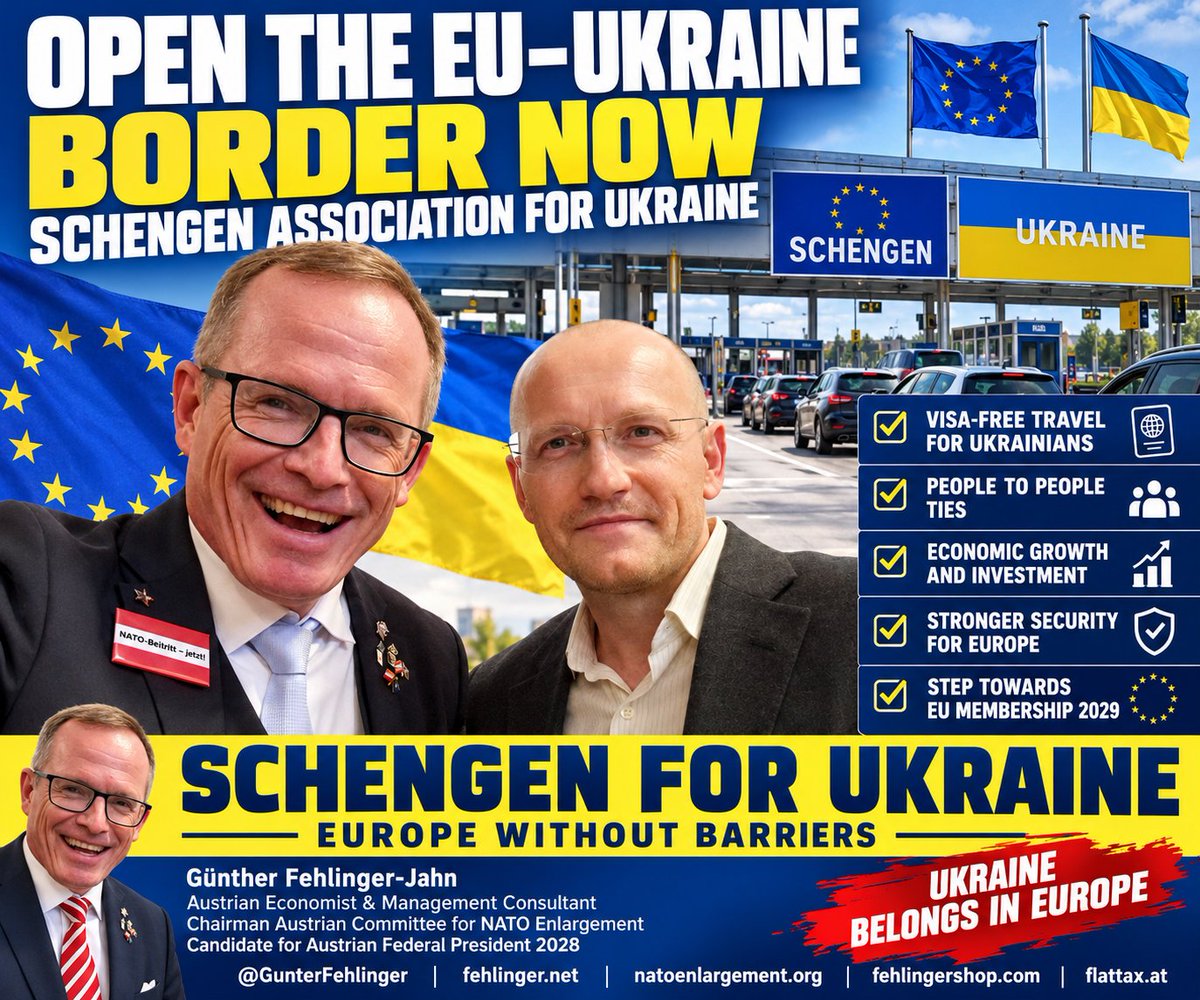
Gunther Fehlinger-Jahn 1w

The author called for a clear European roadmap to integrate Ukraine into the Schengen area, proposing a gradual opening of the EU–Ukraine border, fewer barriers and modernised border infrastructure. They said Ukraine should be prepared for full participation in Europe’s free-movement system and linked to their proposal. https://t.co/3MmGIfJ8bz #Ukraine #Schengen #EUsupport #UA #EU (translated)
Gunther Fehlinger-Jahn 2w

The author said Romania needed a clear roadmap to euro membership and proposed an accelerated European programme to bring it into the euro as quickly as treaty conditions allowed. The proposal included fiscal credibility, political stability, preparation for ERM II and full convergence. https://t.co/Qo8a7Oa6Gp #Romania #Euro #EuropeanUnion #RO #EU

114
Euronews English 2w

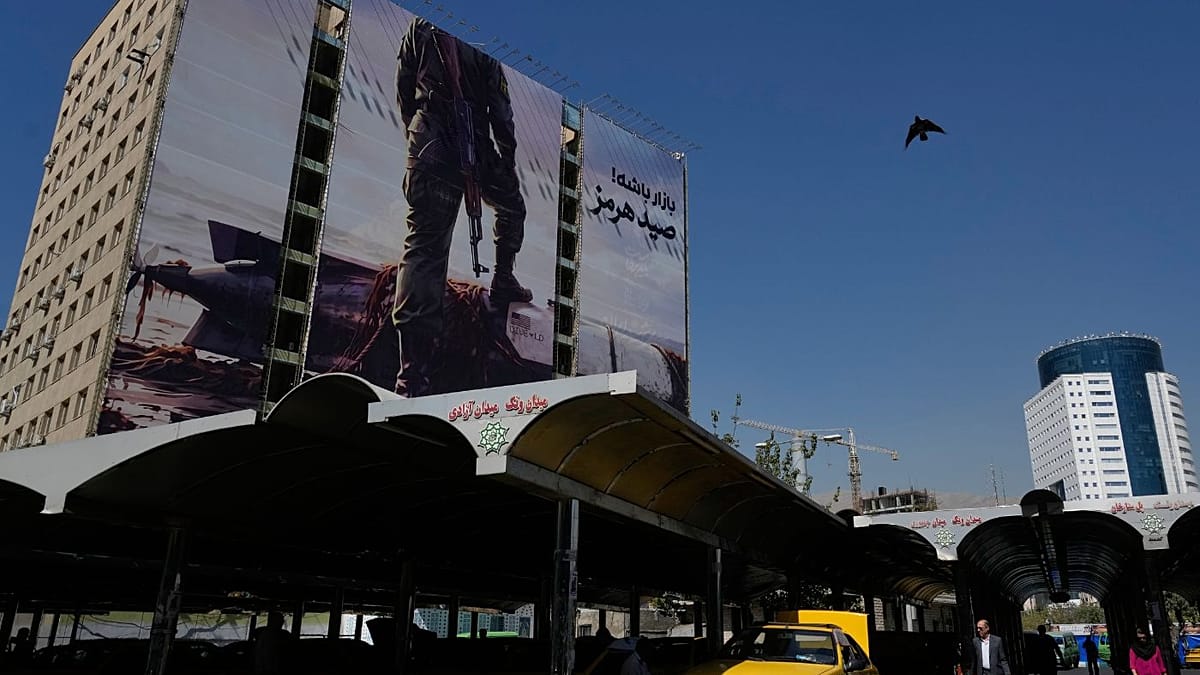
Iran’s foreign minister has proposed a seven-day roadmap to Washington by which Iran would reopen the Strait of Hormuz within seven days if the US lifts its naval blockade, together with other conditions aimed at ending the war. #IranUSRelations #StraitOfHormuz #DiplomaticNegotiations

www.euronews.com
Iran proposes plan to US to reopen Hormuz in seven days and end the war
2189
Nickolay E. MLADENOV 3w

Today, on the margins of #UNGA, the @BoardOfPeace set out how the Gaza peace plan moves from preparation to implementation. A year ago we had no framework, no roadmap, and no Palestinian-led @NCAG ready to assume responsibility in Gaza. Today we have all three. (1/5) https://t.co/L0bMRE6yks #Gaza #PeaceProcess #UNGA #PS #IL

808
Marta Kos 4w

We are moving closer to an enlarged European Union. President von der Leyen announced in her State of the Union address that we will soon propose roadmaps for the most advanced candidates. They will set out a clear priority list: timelines and deliverables to help the most https://t.co/On1koj6cfr #EuropeanUnion #EUExpansion #StateOfTheUnion #EU

581
We Don't Have Time 4w

📣 The #Netherlands has presented a national roadmap for reducing its dependence on #fossilfuels, becoming the 2nd country after France to take such a step. But the plan stops short of setting a binding date for ending #oilandgas use. 🚨 Read more ⤵️ https://t.co/2Xp0M9rOgv #Netherlands #fossilfuels #oilandgas #NL #FR

116
Paschal Donohoe 4w

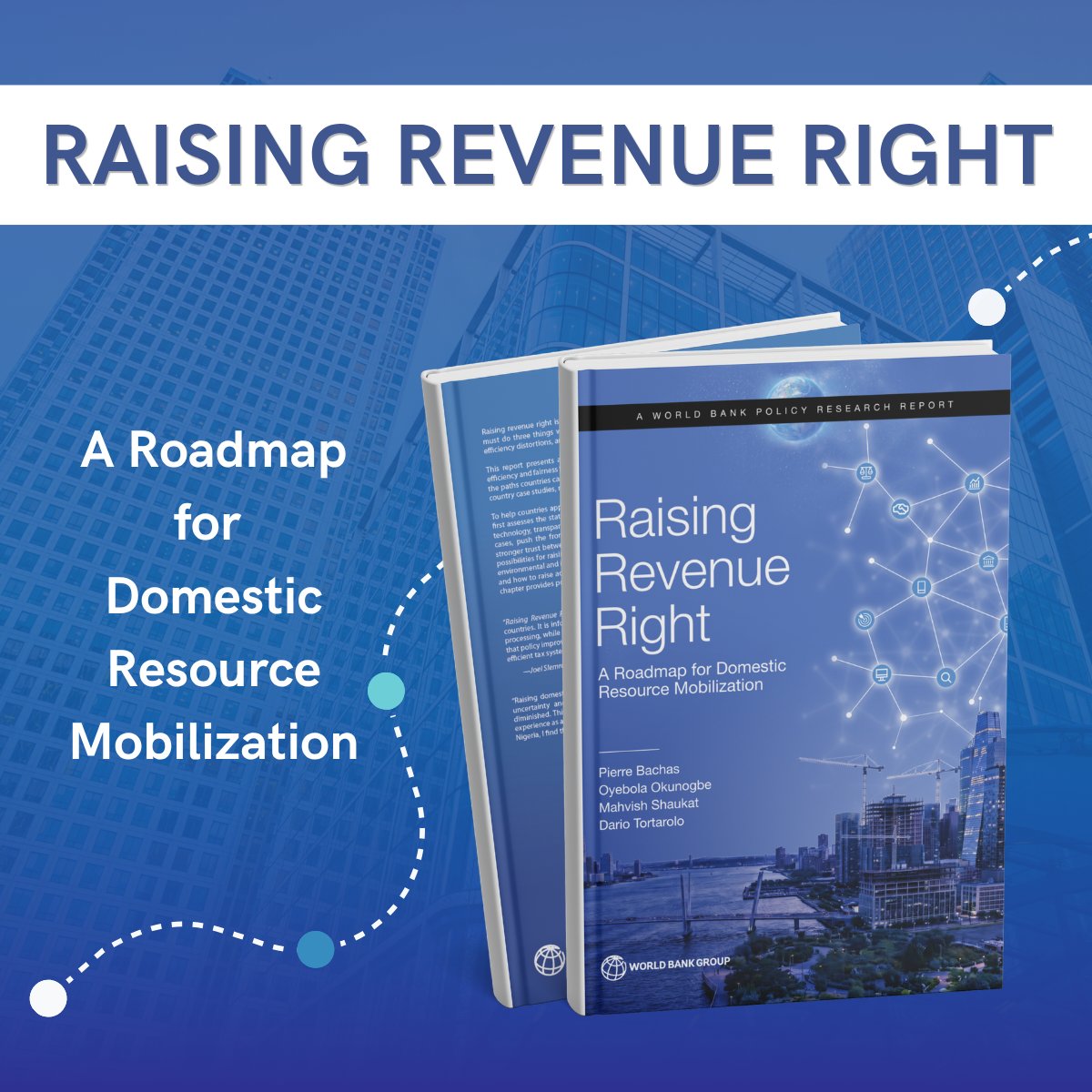
As fiscal pressures grow across emerging markets and developing economies, how can governments raise more domestic revenue—while supporting growth and protecting vulnerable households? Our latest @WorldBankGroup report offers a roadmap 👇 https://t.co/nUXbiSDssC https://t.co/fvbCqlOXs7 #EmergingMarkets #FiscalPolicy #DomesticRevenue #Emergingmarketsanddevelopingeconomiescanrefertomultiplecountries #butwithoutspecificcountriesmentionedinthetweet #it'snotpossibletoextractcountrycodesdirectly.However #commoncountrycodesforemergingmarketsanddevelopingeconomiescaninclude: -BR(Brazil) -CN(China) -IN(India) -ID(Indonesia) -RU(Russia) -ZA(SouthAfrica) -MX(Mexico) Ifyouwantspecificcountrycodesbasedonactualcountriesmentioned #pleaseprovidealistormorecontext.Otherwise #basedoncommonlyassociatedcountrieswithemergingmarkets #thecodescouldbe: BR #CN #IN #ID #RU #ZA #MX

116
Pål Jonson Sep 10

🇸🇪🇫🇷 France and Sweden are taking the next step in our space cooperation. Together with French Minister of the Armed Forces Catherine Vautrin, we agreed to develop a roadmap covering both civilian and defence aspects, strengthening security and independent access to space. (1/2) #SpaceCooperation #France #Sweden #SE #FR

117
O
Oberlé Daniel Sep 7

🚨 La dernière feuille de route santé sexuelle : décryptage pour le terrain 📒 Feuille de route — Stratégie Nationale de Santé Sexuelle 2026-2030 ✍️ Direction générale de la santé (DGS), ministère chargé de la santé. « Édition et mise en page : Direction générale de la santé • 04 septembre 2026 » (p. 72). Production collective : comité de pilotage co-présidé par Albane Gaillot et Pascal Pugliese, orientations validées le 10 septembre 2025 (p. 6, 20). Capsules Audio/Vidéo de Pratiques en Santé 🎙️🎥 https://www.youtube.com/watch?v=W_42jWr7D8g 🔍💡 Santé sexuelle 2026-2030 : 22 actions, 5 axes et de nouveaux leviers de financement pour aligner vos projets sur le cadre national. 🧭 Chemsex, EVARS hors école, accessibilité universelle, ESSMS, Outre-mer : les chantiers concrets à connaître pour se positionner. Analyse de Pratiques en Santé et lien vers la source ℹ️➕ https://www.pratiquesensante.com/blog/pratiques-15/feuille-de-route-strategie-nationale-de-sante-sexuelle-2026-2030-6173 📌 Ce document est le cadre national qui structure, pour cinq ans, les financements, les dispositifs et les publics prioritaires de la santé sexuelle. Un acteur de terrain y trouve de quoi aligner et positionner ses actions, anticiper les évolutions de l'offre (CoReSS, centres de santé et de médiation en santé sexuelle, consultation longue) et raccrocher ses projets aux 22 actions pour aller chercher des financements. Il éclaire aussi les nouveaux chantiers — chemsex, accessibilité universelle, santé sexuelle en ESSMS, territoires ultramarins — utiles pour orienter un usager ou monter un partenariat. 🇬🇧: Roadmap — National Sexual Health Strategy 2026-2030 - https://www.pratiquesensante.com/en/blog/practices-15/feuille-de-route-strategie-nationale-de-sante-sexuelle-2026-2030-6173 #️⃣ #SantéSexuelle #PromotionSanté #EVARS #Chemsex #RéductionDesRisques #SantéSexuelleOutremer #InégalitésDeSanté #pratiquesensante

www.youtube.com
La dernière feuille de route santé sexuelle : décryptage pour le terrain
117
O
Oberlé Daniel Sep 7

🚨 La dernière feuille de route santé sexuelle : décryptage pour le terrain 📒 Feuille de route — Stratégie Nationale de Santé Sexuelle 2026-2030 ✍️ Direction générale de la santé (DGS), ministère chargé de la santé. « Édition et mise en page : Direction générale de la santé • 04 septembre 2026 » (p. 72). Production collective : comité de pilotage co-présidé par Albane Gaillot et Pascal Pugliese, orientations validées le 10 septembre 2025 (p. 6, 20). Capsules Audio/Vidéo de Pratiques en Santé 🎙️🎥 https://www.youtube.com/watch?v=W_42jWr7D8g 🔍💡 Santé sexuelle 2026-2030 : 22 actions, 5 axes et de nouveaux leviers de financement pour aligner vos projets sur le cadre national. 🧭 Chemsex, EVARS hors école, accessibilité universelle, ESSMS, Outre-mer : les chantiers concrets à connaître pour se positionner. Analyse de Pratiques en Santé et lien vers la source ℹ️➕ https://www.pratiquesensante.com/blog/pratiques-15/feuille-de-route-strategie-nationale-de-sante-sexuelle-2026-2030-6173 📌 Ce document est le cadre national qui structure, pour cinq ans, les financements, les dispositifs et les publics prioritaires de la santé sexuelle. Un acteur de terrain y trouve de quoi aligner et positionner ses actions, anticiper les évolutions de l'offre (CoReSS, centres de santé et de médiation en santé sexuelle, consultation longue) et raccrocher ses projets aux 22 actions pour aller chercher des financements. Il éclaire aussi les nouveaux chantiers — chemsex, accessibilité universelle, santé sexuelle en ESSMS, territoires ultramarins — utiles pour orienter un usager ou monter un partenariat. 🇬🇧: Roadmap — National Sexual Health Strategy 2026-2030 - https://www.pratiquesensante.com/en/blog/practices-15/feuille-de-route-strategie-nationale-de-sante-sexuelle-2026-2030-6173 #️⃣ #SantéSexuelle #PromotionSanté #EVARS #Chemsex #RéductionDesRisques #SantéSexuelleOutremer #InégalitésDeSanté #pratiquesensante

www.youtube.com
La dernière feuille de route santé sexuelle : décryptage pour le terrain
1050
Zeddy Aug 24

Ten dnešní leak, kámo.. 💀 Rockstáři jsou celkem wild. V tuhle chvíli už snad nemůže existovat živá duše, co by pořád tvrdila, že GTA 6 bude woke. No každopádně tady to asi ukončíme. Ty leaky už začínají být docela vážný a moc to nevypadá, že by to mělo v dohledný době přestat. Borec si to evidentně všechno pěkně naplánoval, teď je někde zašitej, má svoji roadmapu na další 3 měsíce a už teď je asi jasný, kam to celý směřuje. Od této chvíle už tady žádný další leak komentovat nebudu. Ve čtvrtek kouknu na Extended Look a pak až do releasu naštěstí ani nebudu mít tolik času, takže se tý apokalypse, která se tady na nás pomalu valí, snad alespoň částečně vyhnu. Good luck všem! 👊 #GTAVI #gamingleaks #RockstarGames

12090
ANSA.it Aug 10

La resistenza di Benjamin Netanyahu alla roadmap del Board of Peace per Gaza non sembra preoccupare Donald Trump, mentre le truppe dell'Idf si sono già riposizionate sulla Linea Gialla originale in attesa di una graduale demilitarizzazione delle milizie palestinesi, con la situazione sul campo che si evolve in modo complesso in vista delle prossime elezioni. #Gaza #Netanyahu #BoardOfPeace

www.ansa.it
Netanyahu non preoccupa Trump, 'il piano per Gaza tiene'
11198
Ultimora.net Aug 9

Israele respinge la roadmap statunitense in 15 punti presentata dal Board of Peace su Gaza. Lo ha detto Netanyahu in apertura della riunione di gabinetto odierna, aggiungendo che non intende ritirare l’Idf dalla Striscia finché Hamas non sarà disarmato. "Finché sarò primo ministro, non ci sarà alcuno Stato palestinese, né a Gaza né in Cisgiordania. Né Fatahstan né Hamastan", ha dichiarato #Israele #Gaza #Netanyahu

15447
Patrick Collison Aug 5

Sprawling set of new programmable money movement capabilities coming to Stripe — page below has the full roadmap. #Stripe #ProgrammableMoney #Fintech #Nocountrycodesarementionedinthetweet.

236
Nickolay E. MLADENOV Aug 2

Two days of strikes across Gaza have killed civilians and destroyed medical supplies that people depend on. This comes after intense efforts by the @BoardOfPeace and the mediators (Egypt, Turkiye, Qatar and the US) to bring the Palestinian factions in Gaza to agree to a Roadmap #GazaStrikes #CivilianCasualties #PeaceEfforts #EG #TR #QA #US

354
L
lastampa.it Aug 1

Donald Trump ha annunciato una svolta storica per una pace duratura a Gaza con una roadmap in 15 punti, ma Israele ha subito chiarito che il ritiro dipenderà dal disarmo di Hamas, mentre si intensificano le speculazioni su un possibile attacco statunitense e israeliano alle infrastrutture energetiche in Iran nel fine settimana. #Gaza #Trump #Israele

www.lastampa.it
Gaza, la pace di Trump. Ma Israele frena subito: “Ritiro solo con il disarmo”
12407
Adham Hasanin Jul 21

| JULY 2026 | The Guard State How the largest Arab nation became a security contractor at the gates of its own people By Adham Hasanin Egyptian journalist and political writer, based in the Netherlands In June 2025, hundreds of activists from forty countries landed at Cairo airport. Doctors from France, lawyers from Australia, students from the United States, pensioners from the Netherlands. They carried no weapons and no banned slogans; they carried backpacks, walking shoes, and a single intention: to march from Arish to the Rafah crossing — entirely on Egyptian soil — to demand that food be allowed through to a people starving behind the gate. Not one of them reached Rafah. More than two hundred were detained before the march could begin. Around five hundred foreign nationals were deported from airports, hotels, and checkpoints. Passports were confiscated, activists were pulled out of downtown Cairo cafés, and the Global March to Gaza was cancelled on 16 June without taking its first step. And the world watched. This was no secret operation in a dark basement; it happened in the open, documented by the deportees’ own phone cameras, carried by every international news agency. The world watched an Arab state arrest Europeans, Americans, and Africans for wanting to walk towards Palestine. A state guarding the gate of a siege — from the side that was supposed to be the side of rescue. Hold that image, because it is the key to everything that follows. This was not an aberration in Egyptian policy, nor an isolated security decision. It is the function — the complete function around which the Egyptian state has been redefined over the past decade, and which it is time to call by its proper name: the Guard State. I. The Name — What Do We Mean by the Guard State? Political economy has long described states that live off the rent of their location rather than the production of their people. But what has crystallised in Egypt over the past decade goes beyond traditional geographic rent — the Suez Canal, say — into something far graver: the conversion of sovereignty itself into a commodity for hire. The Guard State does not sell its location; it sells its function. It collects its wages not for what it produces, but for what it prevents: it prevents the refugee from reaching Europe, the activist from reaching Gaza, its own people from reaching politics, and the resistance’s weapons from reaching their destination. Four gates, guarded by a single machine, whose wages are paid in loans, deposits, and perpetually renewed rescue packages. This is not a rhetorical metaphor; it is an economic structure with numbers attached. When the Egyptian economy collapsed in 2024, it was rescued not by productive reform but by a single deal whose subject was location: Ras el-Hekma — thirty-five billion dollars for a stretch of coastline. And whenever negotiations with the IMF stall, the tranches are unlocked by explicit European pressure whose subject is migration: nine billion euros from the European Union in the 2024 “Strategic Partnership,” whose own documents place “migration management” at its core. Europe does not pay Egypt to prosper. It pays Egypt to guard. Thus the model is complete: income in exchange for prevention, external legitimacy in exchange for guarding, and international silence about domestic tyranny in exchange for keeping the gates controlled. To see how the model works on the ground, consider the bloodiest gate of all: the gate of Gaza. II. The Gaza Gate — The Guard Who Is Himself Searched The first paradox must be nailed down with facts: Egypt is not a sovereign guard of its own crossing; it is a searched guard. Egyptian relief trucks — ninety-two thousand food parcels in a single convoy this month — are subject to Israeli inspection before entering the Strip: from Egyptian soil, through a crossing that bears an Egyptian name. The state that guards the gate does not hold its key. It owns the threshold, but not the door. Then the October 2025 truce added a new layer to the function. Under the fifteen-point roadmap sponsored by the international envoy together with the “guarantor states” — Egypt foremost among them — Cairo is to train the civilian police force that will replace Hamas in administering the Strip, under the slogan of “one authority, one law, one weapon.” Let us call things by their names: the state that could not — or would not — deliver a loaf of bread without Israeli permission is now qualifying to graduate the security apparatus that will oversee the disarming of the resistance. From guarding the siege to administering what comes after the siege — a promotion within the same project. And meanwhile, what is happening behind the guarded gate? Since the truce, more than one thousand one hundred Palestinians have been killed by Israeli fire — the latest, just two days ago, a ten-year-old boy named Motaz Abu Shaar, carried to his grave in Khan Younis by his mother, Warda. A United Nations commission of inquiry has concluded that Israel is “deliberately targeting children in an ongoing genocide.” This is what the guarantors’ official language calls a “ceasefire.” What meaning is left in the word “guarantor”? A guarantor that the gate stays firmly shut — however high the dead pile up behind it. III. The Mediterranean Gate — The Guard Europe Pays For The second gate faces north. Since 2016, Cairo has boasted — through its officials at every European forum — that “not a single irregular migration boat has departed from Egyptian shores.” This is very nearly true. But the forbidden question is: at what political price has this “efficiency” become an instrument of mutual blackmail? Europe — which condemns Egypt’s human rights record in its parliamentary resolutions — is the same Europe that signed the nine-billion-euro partnership, and the same Europe that stays silent about sixty thousand political prisoners because the alternative, in its calculations, is boats that never stop. And Cairo understands the game and has mastered it: whenever human rights pressure intensifies, the official discourse turns up the volume on “Egypt hosts millions of refugees” and “the last line of defence.” The result is a perfect structure of mutual blackmail: Europe buys its conscience’s silence, the regime sells its location, and the people — Egyptian and refugee alike — are the commodity in the transaction. The democracies that lecture on values are financing the guard who keeps the victims from knocking on their doors. This is not passing hypocrisy; it is a structural partnership in the Guard State model — one that makes Brussels and Berlin shareholders in everything this state produces, from domestic repression to external siege. IV. The Interior Gate — Guarding the People Against Politics But the most dangerous gate is not on any border; it is inside. The Guard State cannot perform its external function unless it first guards an internal gate: the people’s gate to politics. The function requires a people that does not ask: why are we guarding the siege of our brothers? Why are our trucks searched on our own soil? Why are guests deported for coming to walk in peace? To guarantee the question is never asked, the largest silencing machine in the country’s history was built: sixty thousand prisoners of opinion, a press ranked 166th out of 180 worldwide, and a state security case number waiting for anyone who writes. I write these lines from experience, not from reading reports. When I continued writing from my Dutch exile, the machine reached me across continents: accounts shut down by coordinated mass-reporting campaigns, documented threats, a family harassed inside Egypt as leverage — and my name entered into Case 1282 of 2024, not for any act I committed, but for opinions written from free European soil. This is not a personal complaint; it is a job description: the Guard State guards even beyond its borders, because the free word — wherever it is written — threatens the entire contract of guardianship. The logic is perfectly self-consistent: a regime that sells “stability” abroad cannot tolerate a voice revealing that the stability on offer is the stillness of graveyards. This is why the arrest of the foreign activists in June 2025 was inevitable, not incidental: a peaceful march reaching Rafah would have revealed, before the world’s cameras, that the gate opens when it is wanted open — and that the one keeping it shut is a partner, not a mediator. V. What Has Egypt Lost? — The Guard’s Bill An apologist might argue: what is the harm? A state monetising its location as Norway monetises its oil. The answer lies in the essential difference: Norway sells a resource; Egypt leases its will. And the difference between the two is the difference between trade and bondage. Let us tally what Egypt has paid for this model, in bare facts. It lost its water sovereignty: the Renaissance Dam was completed and filled without the state — owner of “the largest defence headquarters in the world” — daring anything beyond statements of concern; for the guard does not make trouble for the international order that employs him. It lost its regional standing: in the Iran–America war halted just weeks ago, Cairo was neither party nor mediator nor even consultant — Pakistan brokered the deal, while Egypt absorbed the economic shrapnel of Hormuz’s closure like a bystander caught in a battle whose parties it does not know. It lost its place in the conscience of its nation: the state that liberated its land in 1973 and led the Arab world for a century has become, in the eyes of the Arab street from the Atlantic to the Gulf, the gatekeeper of the siege. This loss, specifically, no loan or deposit can repay — because it is the only capital that cannot be printed. And it lost — here is the crux — the very national security in whose name the guarding is justified. The model proved its fragility at the moment of testing: when Israel feared an Iranian response last year, it cut off Egypt’s gas by unilateral decision within hours. The guard who believed himself a partner discovered he was merely a hireling whose wages stop the moment danger arrives. VI. The Alternative Is Not a Slogan — It Is the Recovery of the Original Function I will not close with an essay on “the solution lies in Arab unity”; worn-out words kill more surely than silence. The alternative is specific, and it begins with redefining the function. The state is not a guard; the state is the agent of its people’s will. Every foreign policy not derived from that will is — by definition — functional servitude, however it is wrapped in the language of wisdom and moderation. And the Egyptian will is known and needs no referendum: no people in this region accepts that its country serve as warden of the siege of Gaza, or as Europe’s border post. Practically, the recovery begins with three measurable steps. Open the Rafah crossing fully and sovereignly, by purely Egyptian decision — that alone would overturn the equation of the siege. Break the negotiating bondage by linking any cooperation on migration to concrete European positions on Palestine, not statements of concern. And open the interior gate — release the prisoners and lift the hand from the written word — because a state that fears an article will never dare face an occupier. I know the current regime will do none of this; guarding is its founding contract and its financial artery. But this article is not written for the regime. It is written for memory, and for the generation that will inherit the gates — so that it knows that what is presented to it today as “the fate of geography” is no fate at all. It is an employment contract, signed by a regime without a mandate from its people. And contracts, however long they run, end when one of their parties does. And the world — I return to where I began — is a witness that requires no further proof. It watched the deportees at Cairo airport; it watched the searched trucks; it watched Warda Abu Shaar carry her son to his grave behind a firmly guarded gate. The question is no longer: what is happening? The only question left is: who dares to name it? This article is a naming. Adham Hasanin is an Egyptian journalist and political writer based in the Netherlands, covering Arab and European political affairs.

474
Mariya Gabriel Jul 17

A milestone for AI governance in the Caribbean! @UNESCO welcomes @CARICOMorg's endorsement of the Caribbean AI Policy Roadmap, advancing a shared vision for human-centred AI. Built with input from 1,000+ stakeholders, it marks a major step toward ethical AI for the public good. https://t.co/V8Gl933y7i #AIGovernance #CaribbeanAI #EthicalAI #CC #CAR