WRLD

Search

#Socialists
David Thunder 3d

The author wrote that Spain’s upcoming elections would test voters’ judgment, adding that a socialist re-election would worry them more for the country’s political culture than for the immediate effects of a socialist government. https://t.co/jVOvPayDyB #EleccionesEspaña #PolíticaEspañola #Votación #ES

2680
Bild 2w

Der Tech-Unternehmer Peter Thiel übt in einem Interview scharfe Kritik an der US-Regierung unter Donald Trump und JD Vance, beschreibt die aktuelle Regierung als von loyalen, aber nicht besonders klugen Personen besetzt und äußert Besorgnis über die wachsende Einflussnahme der „Democratic Socialists of America“ innerhalb der Demokratischen Partei. #PeterThiel #Trump #USPolitik

www.bild.de
Abrechnung mit US-Regierung - Trump-Berater „nicht besonders klug, aber loyal“
1382
S
Sandfeen 4w

Who Owned the Word “Socialism”? One of the great distortions of twentieth-century political history is the claim that because Nazis and fascists fought Marxists and communists, they must therefore have been their political opposites — and hence “right-wing.” That conclusion does not follow. Marxists, communists, fascists and National Socialists all described their movements in socialist or collectivist terms, though they understood socialism very differently. The Nazis called themselves National Socialists, while fascism emerged partly from the revolutionary socialist milieu and retained strong anti-liberal, anti-capitalist and collectivist elements. The crucial development was that Marxists and communists increasingly established themselves as the authoritative owners of the word “socialism.” As Marxism became the dominant form of revolutionary socialism, “socialist” increasingly came to mean specifically Marxist, class-based and internationalist socialism. Movements that rejected Marxism could therefore appear to be its political opposite simply because they fought Marxists. But political enemies are not necessarily ideological opposites. Nazis and fascists competed with communists and other socialists for overlapping constituencies — workers, lower-middle-class voters and people alienated by liberal capitalism and parliamentary politics. Their conflict was therefore not simply socialism versus its opposite, but also a struggle between rival forms of post-liberal collectivism. This is where Hayek and Mises matter. Neither claimed that communism, fascism and Nazism were identical. Their argument was that these movements belonged to a broader anti-liberal, collectivist tradition, despite their profound differences and mutual hostility. A socialist movement can fight another socialist movement. Communists and social democrats did precisely that. So the question cannot be settled by asking whom the Nazis and fascists persecuted. It must be settled by examining the principles and political objectives they themselves advocated. “They fought socialists, therefore they were right-wing” is not an argument. It is a conclusion disguised as one.

582
Emrah Erken 🔥🎺 4w

Während die Namen der 9/11 Opfer verlesen wurden, lachten und scherzten die beiden "Democratic Socialists of America" AOC und Zohran Mamdani. https://t.co/d1lofyMPjI #911Memorial #Politik #Sozialismus

12926
S
Sandfeen Sep 8

“Who Owned the Word “Socialism”? One of the great distortions of twentieth-century political history is the claim that because Nazis and fascists fought Marxists and communists, they must therefore have been their political opposites — and hence “right-wing.” That conclusion does not follow. Marxists, communists, fascists and National Socialists all described their movements in socialist or collectivist terms, though they understood socialism very differently. The Nazis called themselves National Socialists, while fascism emerged partly from the revolutionary socialist milieu and retained strong anti-liberal, anti-capitalist and collectivist elements. The crucial development was that Marxists and communists increasingly established themselves as the authoritative owners of the word “socialism.” As Marxism became the dominant form of revolutionary socialism, “socialist” increasingly came to mean specifically Marxist, class-based and internationalist socialism. Movements that rejected Marxism could therefore appear to be its political opposite simply because they fought Marxists. But political enemies are not necessarily ideological opposites. Nazis and fascists competed with communists and other socialists for overlapping constituencies — workers, lower-middle-class voters and people alienated by liberal capitalism and parliamentary politics. Their conflict was therefore not simply socialism versus its opposite, but also a struggle between rival forms of post-liberal collectivism. This is where Hayek and Mises matter. Neither claimed that communism, fascism and Nazism were identical. Their argument was that these movements belonged to a broader anti-liberal, collectivist tradition, despite their profound differences and mutual hostility. A socialist movement can fight another socialist movement. Communists and social democrats did precisely that. So the question cannot be settled by asking whom the Nazis and fascists persecuted. It must be settled by examining the principles and political objectives they themselves advocated. “They fought socialists, therefore they were right-wing” is not an argument. It is a conclusion disguised as one” - ChatGPT

583
S
Sandfeen Sep 7

Why? Because the next in line would be the socialists. Why does nobody ever refer to Muslims as colonizers, oppressors, genociders, slave traders, or imperialists? https://x.com/realMaalouf/status/2096689646864314568

x.com
Dr. Maalouf ‏ (@realMaalouf) on X
700
Haris Doukas Sep 6

ΠΑΡΕ ΘΕΣΗ Τι είναι αυτό που κάνει τους ανθρώπους ασφαλείς; Από την Αθήνα, στις 11 Σεπτεμβρίου, μαζί με το Party of European Socialists (@PES_PSE), εγκαινιάζεται το «ΠΑΡΕ ΘΕΣΗ», μια πανευρωπαϊκή πρωτοβουλία που καλεί τους αιρετούς στην Αυτοδιοίκηση και τους πολίτες να συμμετάσχουν ενεργά στη συζήτηση για το μέλλον της Ευρώπης. Ζητάμε να συνυπογράψουμε το αίτημα για ένα νέο Ευρωπαϊκό Όραμα που θα αφορά τι επιλέγει η Ευρώπη να προστατεύσει. Διαβάστε το κοινό μας άρθρο με τον @Luca_Menesini, Πρόεδρο της Ομάδας PES στην Ευρωπαϊκή Επιτροπή των Περιφερειών (@PES_CoR) στο «Βήμα της Κυριακής». 🔗 https://t.co/Ia9fIT28AL #Ευρώπη #Αυτοδιοίκηση #Κοινωνία

18800
S
Sandfeen Aug 28

The Psychology of the Modern Leftist Once you understand the psychology of the modern leftist, the last decade of the woke revolution makes more sense. The endless outrage, hypersensitivity, and rejection of rational debate may reflect something deeper than ideology: a crisis of self-worth expressed as a moral crusade. “Leftist” is a broad term, but here it refers to socialists, collectivists, LGBTQ activists, and similar movements. What unites them may be more than politics; it may also be a psychological orientation. Modern leftism can be associated with feelings of inferiority, low self-esteem, powerlessness, guilt, self-hatred, and resentment. These feelings may be repressed while still influencing behavior. The hypersensitivity to language illustrates this. Words once used without negative intent can become symbols of oppression through activist campaigns. Ironically, those most offended are sometimes privileged academics rather than the minorities they claim to defend. Many leftists identify with groups perceived as weak or disadvantaged. This may reflect genuine compassion, but it can also involve projecting personal feelings of weakness onto others. Strength, success, competition, and rationality can consequently become objects of suspicion. Western civilization, America, and other symbols of power may be treated similarly. The criticism can also be inconsistent. Flaws condemned in Western societies may be excused when found in socialist regimes or traditional cultures. This suggests that resentment may sometimes play a role alongside genuine moral concerns. Self-reliance, personal responsibility, and merit are often viewed skeptically, while collectivism is favored. Objective truth can also become threatening because it creates distinctions: some arguments are better than others, and some people succeed while others fail. When equality of outcome becomes the moral standard, truth, merit, and individualism may be attacked—not necessarily to uplift the oppressed, but to reduce psychological discomfort. When victimhood becomes central to identity, problems may no longer simply be discovered; they can become necessary to sustain that identity.

938
ZEIT ONLINE Aug 19

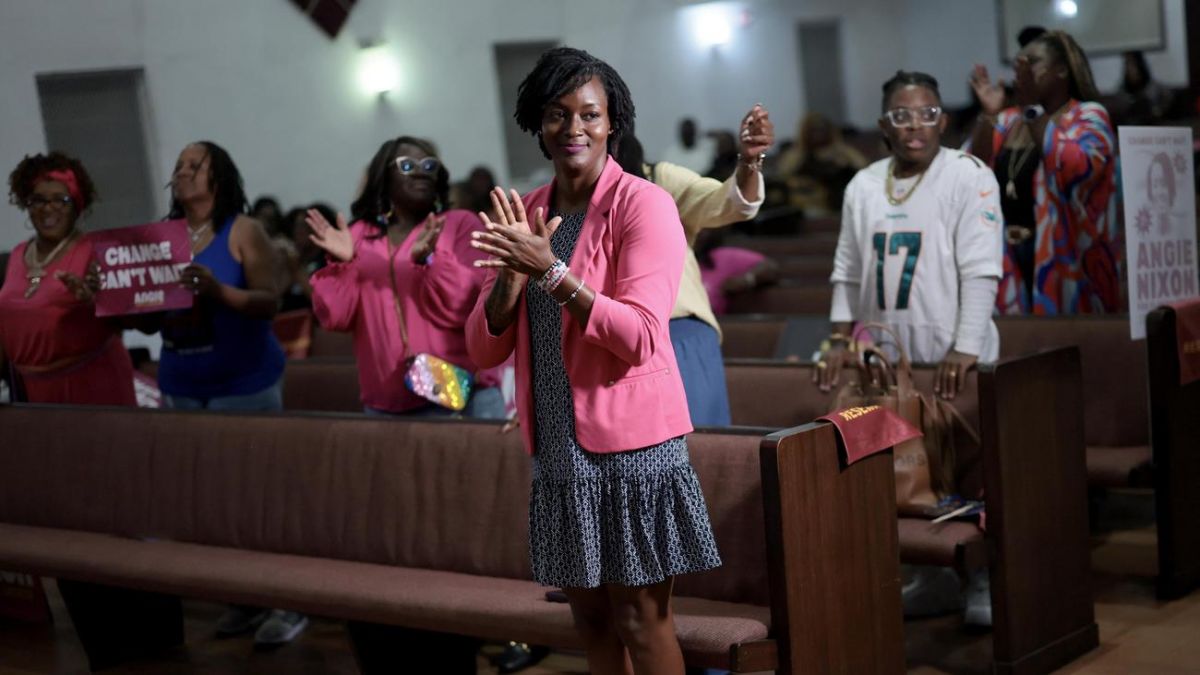
Angie Nixon, Mitglied der Democratic Socialists of America, hat in Floridas demokratischer Vorwahl überraschend den als Favoriten geltenden Alexander Vindman besiegt und wird nun für einen der zwei Senatssitze Floridas kandidieren, was den Erfolg des linken Flügels der Demokraten unterstreicht. #Demokraten #Sozialismus #Florida

www.zeit.de
Democratic Socialists of America: Linke Demokratin Nixon gewinnt Kongress-Vorwahl in Florida
15872
Dagens Nyheter Aug 16

Robert Guerrero, en 37-årig bonde och aktivist från Democratic Socialists of America, hävdar att om inte socialistiska politiker installerats i USA:s system för att stoppa Donald Trumps politik, kan alternativet leda till våld, vilket framhäver den akuta kampen inom Demokraterna inför mellanårsvalet i november. #DemokratiskSocialism #USAVal2026 #DSA

www.dn.se
Demokratisk socialist: Detta är sista alternativet innan vi tar till våld
15298
S
Sandfeen Aug 14

🔥 Will Cain just DESTROYED the Democrat Socialists' $200 TRILLION spending wish list with cold hard math, proving the MIDDLE CLASS would actually be on the hook Universal healthcare: $75 trillion. Reparations: $28 trillion. Federal jobs guarantee: $60 trillion. Housing for all: $17 trillion. But there's NO MONEY to pay for it ⬇️ Confiscate ALL billionaire wealth? That only brings in $6.6 trillion. Tax ALL corporate profits to ZERO? $35 trillion. Implement 90% tax rates like the 1950s? Still only $2 trillion over 10 years. You STILL don't even reach the LOW estimate of $71 trillion, let alone $200 trillion. "So where do you go for the money? They go where they always end up going for the money: to YOU, the middle class." "Government spending would be 92% of GDP. That is a LOT of government. That is actually a fundamental rewriting of the American economy and a fundamental rewriting of America." https://x.com/nicksortor/status/2088002748079894843

x.com
Nick Sortor (@nicksortor) on X
589
ZEIT ONLINE Aug 13

Der Artikel thematisiert das interne Machtspiel der US-Demokraten vor den Midterm-Wahlen, das durch den Aufstieg der Democratic Socialists of America (DSA) geprägt ist, wobei unterschiedliche Generationen, politische Strömungen und Interessen aufeinanderprallen, was die grundlegende Frage aufwirft, ob die Demokraten sich als Partei des Status quo oder als Stimme einer neuen, radikalen Generation positionieren wollen. #DemokratischeSozialisten #USDemokraten #MidtermWahlen

www.zeit.de
Democratic Socialists of America: Rot sehen
15312
Gunther Fehlinger-Jahn Aug 11

The Democratic Socialists of America are becoming the anti-Free-World left of America. I accuse the DSA of pursuing a foreign-policy agenda that repeatedly benefits the enemies of democratic nations struggling for freedom. 🇺🇦 Ukraine: DSA officially condemned Putin’s invasion — #DSA #Ukraine #ForeignPolicy #UA

472