WRLD

Search

#Stanford
Euronews English 4d

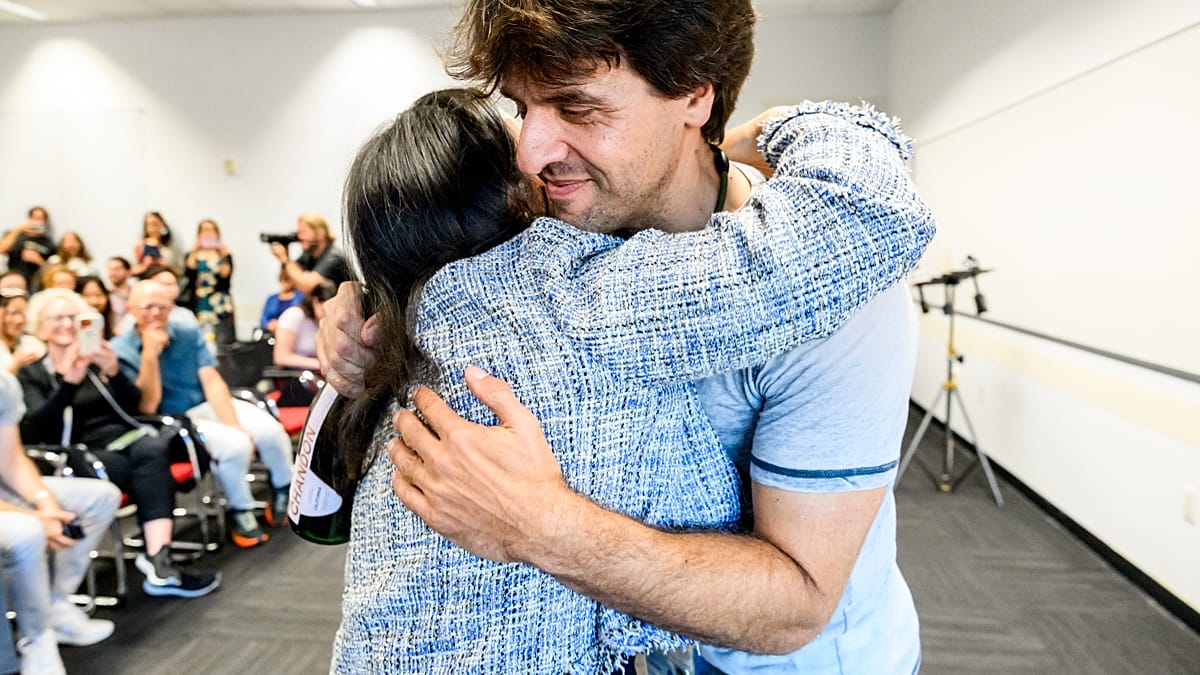
US scientist Karl Deisseroth had a memorable way of sharing the news that he had won the Nobel Prize in Medicine. In images released by Stanford University, Deisseroth can be seen telling his two daughters and his son about the award. #NobelPrize #ScienceNews #Optogenetics
www.euronews.com
Moment US scientist tells his children he won the Nobel Prize

1909
20 minutos 4d

The children of the new Nobel Prize winner in Medicine, Karl Deisseroth, happily celebrate the news that the award stays at home, as shown in an emotional video shared by Stanford University. #NobelDeMedicina #Optogenética #Neurociencias (translated)

www.20minutos.es
Los hijos del nuevo Nobel de Medicina saltan de felicidad al conocer que el galardón se queda en su casa
1351
Luciano Magaldi Sardella (PhD) 5d

MSN ITALIA - ANSA ITALIA: "THE TEATRO-EDICOLA FEATURED IN STANFORD UNIVERSITY'S REVIEW" SOURCE: https://www.msn.com/.../il-teatro-edicola-del.../ar-AA2cyMWR (ANSA) - FOGGIA, 19 SEPT - The idea of the newspaper-kiosk theatre in San Severo, in the province of Foggia, renamed the smallest theatre in the world, has become a case study for Stanford University. The article "The Six-Seat Revolution" by the Foggian researcher Luciano Magaldi, supervised by editor David V. Johnson, has been published in Ssir (an award-winning publication covering multi-sectoral solutions to global problems). The article is in the "Dispatches" section of the "Stanford Social Innovation Review". "It is a result that rewards our work - emphasises Francesco Gravino, artistic director of the theatre company Foyer 97 - . Requests to replicate the model have come from other areas of Italy, such as Lucca and Rome. We thought of creating a cultural activity from a place that was disused and in a state of abandonment. There ought to be a regional law that allows for the reconversion of these disused places in which numerous activities could be created. Veritable cultural outposts". Gravino and the actors of the company are preparing the new programme. "Next year our company will be 30 years old - he said - , an important milestone which we shall celebrate with some new developments". Six chairs, less than two square metres, performances every 15 minutes and a sold-out audience of young people and adults. An experiment that has aroused curiosity and interest in the world of entertainment as well. Between the end of July and the beginning of August, during the tour in Lucera (Foggia), Biagio Antonacci made a surprise stop at the newspaper-kiosk theatre and sang his Iris. "It was truly a wonderful encounter which captured the attention of passers-by," concludes Gravino. (ANSA). (translated)

902
Luciano Magaldi Sardella (PhD) 5d

MSN ITALIA - ANSA ITALIA: THE THEATER-NEWSSTAND OF FOGGIA ENDS UP IN THE STANFORD UNIVERSITY MAGAZINE SOURCE: https://www.msn.com/.../the-theater-newsstand-of.../ar-AA2cyMWR (ANSA) - FOGGIA, SEPTEMBER 19 - The idea of the newsstand theater in San Severo, in the province of Foggia, nicknamed the smallest theater in the world, becomes a case study for Stanford University. An article titled "The Six-Seat Revolution," authored by Foggian researcher Luciano Magaldi and supervised by editor David V. Johnson, has been published in the Ssir journal (an award-winning publication covering multisectoral solutions to global problems). The article can be found in the "Dispatches" section of the "Stanford Social Innovation Review." "This is a result that rewards our hard work," emphasizes Francesco Gravino, artistic director of the Foyer 97 theater company. Requests to replicate the model have come from other areas of Italy, such as Lucca and Rome. We wanted to create a cultural activity in a place that has been disused and abandoned. There should be a regional law that allows the conversion of these abandoned places into venues for numerous activities. Real cultural outposts." Gravino and the company’s actors are preparing the new program lineup. "Next year our company will turn 30," he said, "an important milestone that we will celebrate with some new features." Six chairs, less than two square meters, reenactments of shows every 15 minutes, and sold-out attendance from both young and adults. An experiment that has sparked curiosity and interest even in the entertainment world. Between the end of July and the beginning of August, during the tour in Lucera (Foggia), Biagio Antonacci made a surprise stop at the newsstand theater and sang his song "Iris." "It was truly a wonderful encounter that drew the attention of passersby," concludes Gravino. (ANSA). (translated)

677
Repubblica 6d

Repubblica reported that Karl Deisseroth received the news of the 2026 Nobel Prize in Medicine shortly after midnight, awarded to him along with Peter Hegemann and Georg Nagel, and waited until morning to share it with his five children. The video of the family scene was published by Stanford University in California, where Deisseroth trained and worked as a professor of bioengineering, psychiatry, and behavioral sciences. According to Repubblica, the three scientists laid the foundations of optogenetics, which combines genetics and optics to study cell behavior and control nerve signals with light. Their studies allowed for detailed observation of the brain, even intervening in the activity of single nerve cells in a living organism. The method was used in laboratories around the world to study how emotions and memories are organized. #Nobel #Medicina #Scienza (translated)

3393
eldiario.es 2w

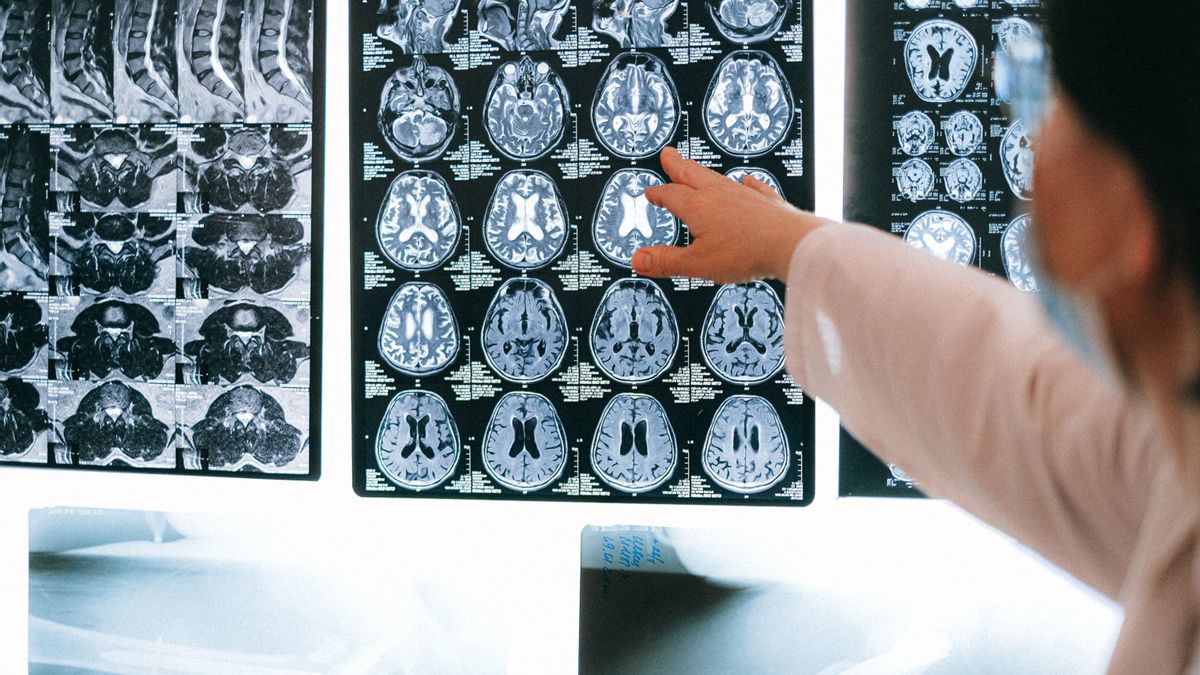
A study from Stanford reveals that the brain may have originated from two separate populations of embryonic cells, challenging the traditional model of neural development and suggesting an ancient evolutionary division between the anterior and posterior brain regions. #Cerebro #BiologíaDelDesarrollo #Neurociencia (translated)

www.eldiario.es
El cerebro pudo empezar dividido: dos órganos separados habrían acabado fusionados en la estructura que existe actualmente
1486
Boris Reitschuster 2w

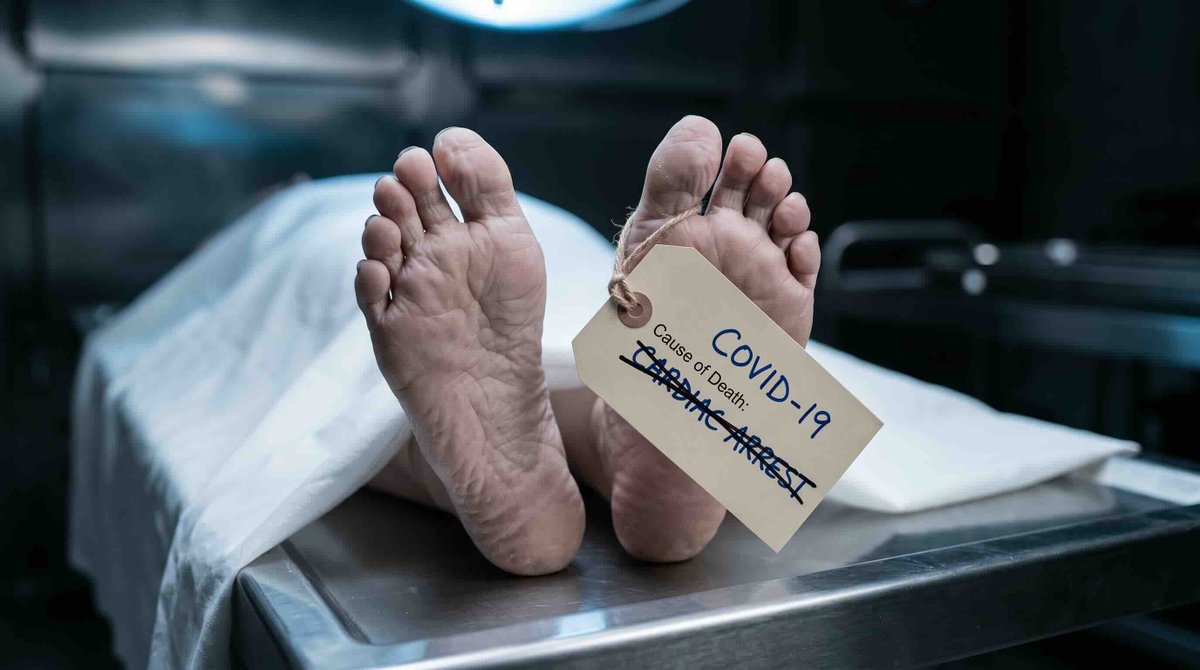
Almost every second Corona death occurred only at the desk. Stanford study: Nobel laureate calculates. The RKI does not. What the doctor noted at the deathbed was one thing. What ended up in the official statistics was another. 57 million death certificates now show where the gap is. https://t.co/6gtqv2NaZS #Corona #Gesundheit #Statistik #DE (translated)

1258
Delo 2w

Artificial intelligence at Stanford has created 16 new viruses that infected bacterial cells, representing an important step in the development of synthetic organisms. #umetnainteligenca #virusi #znanost (translated)

www.delo.si
Umetna inteligenca ustvarila 16 novih virusov
1945
J
Jeffrey Lewis 2w

„Nedělají to proto, že by byli nějakými karikaturami padouchů. Dělají to kvůli tomu, že se hluboko uvnitř cítí nejistí. Že Spojené státy mohou Putinovi udělat to, co udělaly íránskému vůdci,“Kreml považuje „Grot“ za „stabilizační prvek“, který ruskému vedení poskytuje „více jistoty a času“, domnívá se americký odborník na jaderné nešíření a profesor Stanfordovy univerzity Jeffrey Lewis. #Rusko #jadernézbraně #Ural

Rusko má hluboko v Uralu „bunkr soudného dne“. Má přežít i Putina a zajistit odvetu
zpravy.aktualne.cz
1945
Luciano Magaldi Sardella (PhD) 2w

Mitico Magazine - The Teatro Edicola of San Severo: A Model of Cultural Revolution for Stanford University as Well Source: https://www.miticomagazine.com/territorio-e-sociale/teatro-edicola-di-san-severo-un-modello-di-rivoluzione-culturale-anche-per-la-stanford-university/ The Teatro Edicola in Via Tondi In San Severo, a singular metamorphosis has taken place: a newsstand abandoned for at least six years has found a new function and a new identity, transforming into one of the smallest and most unusual theatre stages in the world. An experiment born in the heart of the town which, in just a few months, has moved beyond local boundaries, attracting attention even overseas. It is called Teatro Edicola and it is a project conceived by the company Foyer '97, artistically directed by Francesco Gravino, which has brought the old newsstand in Via Tondi back to life through a formula that is both essential and surprising. Foyer '97 Foyer '97 APS was established as a formally constituted association active in the cultural sector in San Severo in 1997, born from the vocation of a group of actors, directors and theatre enthusiasts, with the aim of building a "living" and accessible theatre in the town. Over the years the company has developed a repertoire that includes texts from the classical tradition, contemporary dramaturgy, comedy and experimental projects, not limiting itself to the mere production of theatre shows, but also organising theatre courses and workshops and educational and cultural projects characterised by a strong inclusive ethos, particularly in schools. Foyer '97 does not always have a fixed artistic ensemble, but works with different performers and collaborators depending on the project; the only indispensable presence is that of Francesco Guido Gravino himself, actor, director and artistic director of the theatre company. The distinctive feature of Foyer '97 is certainly the value of social and cultural promotion attributed to theatre, the extremely close relationship with the audience and the search for a type of theatre outside conventional spaces, with cemeteries, trains, bell towers, and now a newsstand, as its backdrop. Six spectators, a few minutes and a minimal distance between stage and audience The project was launched on 27 March 2026, on the occasion of World Theatre Day, offering a theatrical experience built around a radical reduction of the conventional spaces and times of performance. The idea was born not only from the search for unconventional spaces, but also from "Edicola Fiore", the morning press review with a strongly ironic tone presented by Rosario Fiorello and Stefano Meloccaro, which was broadcast first only on Fiorello's social channels between 2011 and 2014, and then also on radio and television between 2016 and 2018. The review took its name from the diminutive of its founder, Fiore, and from the newsstand of a friend of Fiorello's in Via Flaminia Nuova in Rome, where the showman would meet early in the morning with a group of friends to read the newspapers. The San Severo newsstand was granted free of charge by its owner Pino Frau to the theatre group which, after obtaining temporary authorisation and institutional support from the Municipality of San Severo, refurbished it within two weeks at a cost of less than €3,000. Just six seats, a total surface area of 4 sq m, of which only 2 are for the stage area, less than a metre between actors and audience, a curtain, a lectern, two lights, performances lasting between 5 and 15 minutes, audience rotation every quarter of an hour: apparently minimal elements that end up subverting the usual relationship between stage and auditorium. Spectators, in fact, find themselves immersed in the stage action, in such proximity to the actors that every gesture, expression and word becomes immediately perceptible. In this way, theatre abandons its traditional spaces and insinuates itself into the everyday life of the street, becoming an intimate, concentrated and almost participatory experience. During the inaugural period admission was free with a subsequent voluntary donation from spectators; in the event of a more stable and longer-term concession, which could lead to seasonal theatre performances, the proposed ticket price would be €5. Audiences reward the experiment Foyer '97's gamble met with public interest right from the start: over 60 people attended the shows in a single afternoon, while the three days that inaugurated the season sold out. From a singular local experiment, the Teatro Edicola thus began to arouse curiosity even outside the province of Foggia, gradually transforming into a case of cultural and social interest, until it reached the American continent. From the province of Foggia to the "Stanford Social Innovation Review" The San Severo experience has now come under the international spotlight: in September 2026, the Stanford Social Innovation Review, an international journal and platform dedicated to social innovation published by the Stanford Center on Philanthropy and Civil Society at Stanford University in California, published on its website and in the Fall 2026 print edition the reportage "The Six-Seat Revolution", written by Dr Luciano Magaldi Sardella, independent journalist and researcher affiliated with the European Open University, and editorially supervised by deputy editor David V. Johnson. In the article, it is argued that the Teatro Edicola attracted attention overseas because the project concentrates cultural innovation, urban regeneration and proximity theatre into just a few square metres: starting from a real urban problem, it recovers an abandoned place with a modest investment, brings performance directly into public space and experiments with a much closer relationship between actors and spectators. From the point of view of theatrical representation, it also highlights how the format, based on micro-stories of five to twelve minutes, taken from great classics such as Goldoni, Chekhov, Ibsen, Euripides and Benni, and on audience rotation every fifteen minutes, transforms the physical limitations of the space into a precise dramaturgical choice, proving to be extremely innovative. All of this makes it possible to address some of the main critical issues in the sector: falling audience numbers, an exclusively elderly audience, reduced resources and distance from traditional cultural venues. The journal also highlights, however, the potential problems: economic sustainability, the need for stable institutional support and the difficulty of replicating the model, which is closely linked to the community and territory of San Severo. A model looking beyond San Severo Despite the difficulties, initial requests for information have already arrived from Lucca and Rome, where there is curiosity about the possibility of getting to know the model more closely and the steps needed to replicate it. The replicability formula, in fact, does not seem to require particularly costly infrastructure: an unused space, a targeted intervention, a cultural idea, in-depth knowledge of the surrounding area and a willingness to return that place to the community can be enough to trigger a new urban function. It is precisely in the disproportion between the modesty of the resources employed and the resonance generated by the initiative that perhaps the most original feature of the Teatro Edicola lies, certainly unique of its kind; there are, however, other examples in Italy of newsstands reused for other purposes: "Edicola 518", a twentieth-century kiosk abandoned in the centre of Perugia, now dedicated to independent publishing, art and cultural production; and in Rome itself, the abandoned newsstand in Piazza Testaccio used temporarily as a stage for a show by Fabio Morgan and the Erno newsstand in the Prati district, which almost every month offers a calendar of events, exhibitions, pop-ups and collaborations with artists and creative enterprises. Small revolutions, therefore, that tell stories of the reappropriation of urban spaces, of creativity and social innovation. And which, it is hoped, will take root in order to look ever further afield.

www.miticomagazine.com
Teatro Edicola di San Severo: un modello di rivoluzione culturale anche per la Stanford University
1032
Luciano Magaldi Sardella (PhD) 2w

Mitico Magazine - The Teatro Edicola of San Severo: A Model of Cultural Revolution for Stanford University as Well Source: https://www.miticomagazine.com/territorio-e-sociale/teatro-edicola-di-san-severo-un-modello-di-rivoluzione-culturale-anche-per-la-stanford-university/ The Teatro Edicola in Via Tondi In San Severo, a singular metamorphosis has taken place: a newsstand abandoned for at least six years has found a new function and a new identity, transforming into one of the smallest and most unusual theatre stages in the world. An experiment born in the heart of the town which, in just a few months, has moved beyond local boundaries, attracting attention even overseas. It is called Teatro Edicola and it is a project conceived by the company Foyer '97, artistically directed by Francesco Gravino, which has brought the old newsstand in Via Tondi back to life through a formula that is both essential and surprising. Foyer '97 Foyer '97 APS was established as a formally constituted association active in the cultural sector in San Severo in 1997, born from the vocation of a group of actors, directors and theatre enthusiasts, with the aim of building a "living" and accessible theatre in the town. Over the years the company has developed a repertoire that includes texts from the classical tradition, contemporary dramaturgy, comedy and experimental projects, not limiting itself to the mere production of theatre shows, but also organising theatre courses and workshops and educational and cultural projects characterised by a strong inclusive ethos, particularly in schools. Foyer '97 does not always have a fixed artistic ensemble, but works with different performers and collaborators depending on the project; the only indispensable presence is that of Francesco Guido Gravino himself, actor, director and artistic director of the theatre company. The distinctive feature of Foyer '97 is certainly the value of social and cultural promotion attributed to theatre, the extremely close relationship with the audience and the search for a type of theatre outside conventional spaces, with cemeteries, trains, bell towers, and now a newsstand, as its backdrop. Six spectators, a few minutes and a minimal distance between stage and audience The project was launched on 27 March 2026, on the occasion of World Theatre Day, offering a theatrical experience built around a radical reduction of the conventional spaces and times of performance. The idea was born not only from the search for unconventional spaces, but also from "Edicola Fiore", the morning press review with a strongly ironic tone presented by Rosario Fiorello and Stefano Meloccaro, which was broadcast first only on Fiorello's social channels between 2011 and 2014, and then also on radio and television between 2016 and 2018. The review took its name from the diminutive of its founder, Fiore, and from the newsstand of a friend of Fiorello's in Via Flaminia Nuova in Rome, where the showman would meet early in the morning with a group of friends to read the newspapers. The San Severo newsstand was granted free of charge by its owner Pino Frau to the theatre group which, after obtaining temporary authorisation and institutional support from the Municipality of San Severo, refurbished it within two weeks at a cost of less than €3,000. Just six seats, a total surface area of 4 sq m, of which only 2 are for the stage area, less than a metre between actors and audience, a curtain, a lectern, two lights, performances lasting between 5 and 15 minutes, audience rotation every quarter of an hour: apparently minimal elements that end up subverting the usual relationship between stage and auditorium. Spectators, in fact, find themselves immersed in the stage action, in such proximity to the actors that every gesture, expression and word becomes immediately perceptible. In this way, theatre abandons its traditional spaces and insinuates itself into the everyday life of the street, becoming an intimate, concentrated and almost participatory experience. During the inaugural period admission was free with a subsequent voluntary donation from spectators; in the event of a more stable and longer-term concession, which could lead to seasonal theatre performances, the proposed ticket price would be €5. Audiences reward the experiment Foyer '97's gamble met with public interest right from the start: over 60 people attended the shows in a single afternoon, while the three days that inaugurated the season sold out. From a singular local experiment, the Teatro Edicola thus began to arouse curiosity even outside the province of Foggia, gradually transforming into a case of cultural and social interest, until it reached the American continent. From the province of Foggia to the "Stanford Social Innovation Review" The San Severo experience has now come under the international spotlight: in September 2026, the Stanford Social Innovation Review, an international journal and platform dedicated to social innovation published by the Stanford Center on Philanthropy and Civil Society at Stanford University in California, published on its website and in the Fall 2026 print edition the reportage "The Six-Seat Revolution", written by Dr Luciano Magaldi Sardella, independent journalist and researcher affiliated with the European Open University, and editorially supervised by deputy editor David V. Johnson. In the article, it is argued that the Teatro Edicola attracted attention overseas because the project concentrates cultural innovation, urban regeneration and proximity theatre into just a few square metres: starting from a real urban problem, it recovers an abandoned place with a modest investment, brings performance directly into public space and experiments with a much closer relationship between actors and spectators. From the point of view of theatrical representation, it also highlights how the format, based on micro-stories of five to twelve minutes, taken from great classics such as Goldoni, Chekhov, Ibsen, Euripides and Benni, and on audience rotation every fifteen minutes, transforms the physical limitations of the space into a precise dramaturgical choice, proving to be extremely innovative. All of this makes it possible to address some of the main critical issues in the sector: falling audience numbers, an exclusively elderly audience, reduced resources and distance from traditional cultural venues. The journal also highlights, however, the potential problems: economic sustainability, the need for stable institutional support and the difficulty of replicating the model, which is closely linked to the community and territory of San Severo. A model looking beyond San Severo Despite the difficulties, initial requests for information have already arrived from Lucca and Rome, where there is curiosity about the possibility of getting to know the model more closely and the steps needed to replicate it. The replicability formula, in fact, does not seem to require particularly costly infrastructure: an unused space, a targeted intervention, a cultural idea, in-depth knowledge of the surrounding area and a willingness to return that place to the community can be enough to trigger a new urban function. It is precisely in the disproportion between the modesty of the resources employed and the resonance generated by the initiative that perhaps the most original feature of the Teatro Edicola lies, certainly unique of its kind; there are, however, other examples in Italy of newsstands reused for other purposes: "Edicola 518", a twentieth-century kiosk abandoned in the centre of Perugia, now dedicated to independent publishing, art and cultural production; and in Rome itself, the abandoned newsstand in Piazza Testaccio used temporarily as a stage for a show by Fabio Morgan and the Erno newsstand in the Prati district, which almost every month offers a calendar of events, exhibitions, pop-ups and collaborations with artists and creative enterprises. Small revolutions, therefore, that tell stories of the reappropriation of urban spaces, of creativity and social innovation. And which, it is hoped, will take root in order to look ever further afield.

www.miticomagazine.com
Teatro Edicola di San Severo: un modello di rivoluzione culturale anche per la Stanford University
1032
Luciano Magaldi Sardella (PhD) 2w

Mitico Magazine - Teatro Edicola di San Severo: un Modello di Rivoluzione Culturale anche per la Stanford University Source: https://www.miticomagazine.com/territorio-e-sociale/teatro-edicola-di-san-severo-un-modello-di-rivoluzione-culturale-anche-per-la-stanford-university/ Il Teatro Edicola di via Tondi A San Severo è avvenuta una singolare metamorfosi: un'edicola abbandonata da almeno sei anni ha ritrovato una funzione e una nuova identità, trasformandosi in uno dei palcoscenici teatrali più piccoli ed insoliti al mondo. Un esperimento nato nel cuore della città che, in pochi mesi, ha oltrepassato i confini locali, attirando l'attenzione anche oltreoceano. Si chiama Teatro Edicola ed è il progetto ideato dalla compagnia Foyer '97, diretta artisticamente da Francesco Gravino, che ha restituito vita alla vecchia edicola di via Tondi attraverso una formula essenziale e al tempo stesso sorprendente. Foyer '97 La Foyer '97 APS nasce come realtà associativa formalmente costituita e attiva nel settore culturale a San Severo nel 1997, dalla vocazione di un gruppo di attori, registi ed appassionati di teatro, con l'obiettivo di costruirne uno "vivo" e accessibile in città. Nel corso degli anni la compagnia ha sviluppato un repertorio che comprende testi della tradizione classica, drammaturgia contemporanea, commedia e progetti sperimentali, non limitandosi però alla semplice produzione di spettacoli teatrali, bensì anche all'organizzazione di corsi e laboratori teatrali e di progetti educativi e culturali caratterizzati da una forte impronta inclusiva, anche e soprattutto nelle scuole. La Foyer '97 non presenta sempre un organico artistico fisso, ma lavora con interpreti e collaboratori diversi a seconda dei progetti; unica presenza imprescindibile è quella, appunto, di Francesco Guido Gravino, attore, regista e direttore artistico della compagnia teatrale. La cifra distintiva di Foyer '97 è data sicuramente dalla valenza di promozione sociale e culturale attribuita al teatro, dal rapporto estremamente ravvicinato con il pubblico e dalla ricerca di un tipo di teatro fuori dagli spazi convenzionali, con cimiteri, treni, campanili, ed ora un'edicola, a fargli da sfondo. Sei spettatori, pochi minuti e una distanza minima tra palco e pubblico Il progetto ha preso il via il 27 marzo 2026, in occasione della Giornata Mondiale del Teatro, proponendo un'esperienza teatrale costruita attorno a una radicale riduzione degli spazi e dei tempi convenzionali dello spettacolo. L'idea nasce non soltanto dalla ricerca di spazi anticonvenzionali, bensì anche da "Edicola Fiore", la rassegna stampa mattutina dal taglio fortemente ironico condotta da Rosario Fiorello e Stefano Meloccaro, andata in onda prima solo sui canali social di Fiorello, tra il 2011 ed il 2014, e poi anche via radio e televisione tra il 2016 ed il 2018. Tale rassegna prendeva il nome dal diminutivo del suo fondatore, appunto Fiore, e dall'edicola di un amico di Fiorello in via Flaminia Nuova a Roma, dove lo showman si ritrovava la mattina presto con un gruppo di amici per leggere i giornali. L'edicola sanseverese è stata concessa gratuitamente dal proprietario Pino Frau al gruppo teatrale che, dopo aver ottenuto l'autorizzazione temporanea ed il supporto istituzionale da parte del Comune di San Severo, ha provveduto a ristrutturarla nell'arco di due settimane ad un costo inferiore ai 3000 euro. Soltanto sei posti a sedere, una superficie totale di 4 m2, di cui solo 2 destinati allo spazio scenico, meno di un metro di distanza tra attori e pubblico, un sipario, un leggio, due luci, rappresentazioni della durata compresa tra i 5 ed i 15 minuti, rotazione del pubblico ogni quarto d'ora: elementi apparentemente minimali che finiscono, però, per sovvertire il consueto rapporto fra palcoscenico e platea. Gli spettatori, infatti, si trovano immersi nell'azione scenica, in una prossimità con gli attori che rende ogni gesto, espressione e parola immediatamente percepibile. Il teatro, in questo modo, abbandona i suoi spazi tradizionali e si insinua nella quotidianità della strada, diventando un'esperienza intima, raccolta e quasi partecipativa. Durante il periodo inaugurale l'ingresso è stato gratuito con successiva offerta libera da parte degli spettatori; in caso di una concessione più stabile e lunga, che possa portare proprio a rappresentazioni teatrali stagionali, il costo del biglietto proposto sarebbe di 5 €. Il pubblico premia l'esperimento La scommessa di Foyer '97 ha incontrato sin dalle prime battute l'interesse del pubblico: oltre 60 persone hanno assistito agli spettacoli in un solo pomeriggio, mentre le tre giornate che hanno inaugurato la stagione hanno fatto registrare il tutto esaurito. Da singolare sperimentazione territoriale, il Teatro Edicola ha così cominciato a suscitare curiosità anche al di fuori della provincia di Foggia, trasformandosi progressivamente in un caso di interesse culturale e sociale, fino a raggiungere il continente americano. Dalla provincia di Foggia alla "Stanford Social Innovation Review" L'esperienza sanseverese, difatti, è arrivata ora sotto i riflettori internazionali: a settembre 2026, la Stanford Social Innovation Review, rivista e piattaforma internazionale dedicata all'innovazione sociale e pubblicata dallo Stanford Center on Philanthropy and Civil Society, all'interno della californiana Stanford University, ha pubblicato sul proprio sito e nell'edizione cartacea Fall 2026 il reportage "The Six-Seat Revolution", firmato dal dr. Luciano Magaldi Sardella, giornalista indipendente e ricercatore affiliato alla European Open University, e seguito editorialmente dal deputy editor David V. Johnson. Nell'articolo, si sostiene che il Teatro Edicola ha attirato l'attenzione oltreoceano perché il progetto concentra in pochi metri quadrati innovazione culturale, rigenerazione urbana e teatro di prossimità: partendo da un problema urbano reale, recupera un luogo abbandonato con un investimento contenuto, porta lo spettacolo direttamente nello spazio pubblico e sperimenta un rapporto molto più ravvicinato tra attori e spettatori. Dal punto di vista della rappresentazione teatrale, inoltre, si evidenzia come il format, fondato su microstorie di cinque-dodici minuti, estrapolate da grandi classici come Goldoni, Čechov, Ibsen, Euripide e Benni, e sulla rotazione degli spettatori ogni quarto d'ora, trasformi i limiti fisici dello spazio in una precisa scelta drammaturgica, rivelandosi estremamente innovativo. Tutto questo permette di far fronte ad alcune delle principali criticità del settore: calo degli spettatori, fasce di pubblico esclusivamente senili, riduzione delle risorse e distanza dai luoghi culturali tradizionali. La rivista ne evidenzia però anche le eventuali problematiche: la sostenibilità economica, la necessità di un sostegno istituzionale stabile e la difficoltà nel replicare il modello, strettamente legato alla comunità e al territorio di San Severo. Un modello che guarda oltre San Severo Nonostante le difficoltà, prime richieste di informazioni sono già arrivate da Lucca e Roma, dove si guarda con curiosità alla possibilità di conoscere più da vicino il modello e le modalità necessarie per riproporlo. La formula di replicabilità, infatti, non sembra richiedere infrastrutture particolarmente onerose: uno spazio inutilizzato, un intervento mirato, un'idea culturale, la conoscenza approfondita del territorio circostante e la disponibilità a restituire quel luogo alla collettività possono essere sufficienti per innescare una nuova funzione urbana. È proprio nella sproporzione fra la modestia delle risorse impiegate e l'eco generata dall'iniziativa che si trova forse la cifra più originale del Teatro Edicola, sicuramente unico nel suo genere; non mancano però, in Italia, esempi di altre edicole riutilizzate per altri fini: "Edicola 518", chiosco novecentesco abbandonato nel centro di Perugia, oggi dedicato all'editoria indipendente, all'arte e alla produzione culturale; e nella stessa Roma, l'edicola abbandonata di piazza Testaccio usata temporaneamente come palcoscenico per uno spettacolo di Fabio Morgan e l'edicola Erno del quartiere Prati, che quasi ogni mese propone un calendario di eventi, mostre, pop-up e collaborazioni con artisti e realtà creative. Piccole rivoluzioni, quindi, che raccontano storie di riappropriazione degli spazi urbani, di creatività e di innovazione sociale. E che, si spera, mettano radici per poter guardare sempre più lontano.

www.miticomagazine.com
Teatro Edicola di San Severo: un modello di rivoluzione culturale anche per la Stanford University
803
Digi24 2w

O nouă cercetare de la Stanford Medicine contestă ipoteza clasică că creierul uman se dezvoltă dintr-o singură populație de celule progenitoare, sugerând în schimb că este compus din două sisteme nervoase distincte care au evoluat separat. #creier #neuroştiinţe #descoperiri

www.digi24.ro
O ipoteză veche despre creier este pusă sub semnul întrebării. Ce au descoperit cercetătorii într-un nou studiu
1950
J
Jeffrey Lewis 2w

"Najjednostavnije objašnjenje je da Rusi vjerojatno ponovno puštaju Mrtvu ruku u pogon. To je velika tvrdnja, ali ponekad stvari budu onakve kakve izgledaju. Poznato je da je ovo zapovjedno središte Strateških raketnih snaga. I tu je sjedište Mrtve ruke. Dakle, činjenica da se očito temeljito preuređuje i vraća u operativnu funkciju sugerira da će raditi ono za što je u početku i dizajniran"Jeffrey Lewis, predavač nuklearnog razoružanja i kontrole naoružanja na Sveučilištu Stanford i jedan od vodećih svjetskih stručnjaka za politiku nuklearne sigurnosti, uvjeren je da su nalazi vjerodostojni. #Rusija #nuklearnooružje #Perimetr

Rusija aktivirala tajni sustav Sudnjeg dana: S ovog mjesta bit će poslana naredba za lansiranje svim nuklearnim projektilima u arsenalu zemlje
dnevnik.hr
1951
Luciano Magaldi Sardella (PhD) 2w

IL TEATRO-EDICOLA (FRANCESCO GRAVINO) SU “LA STAMPA (SPECCHIO)”, “SIX CHAIRS AT THE TEATRO-EDICOLA” by FRANCESCA TAMBURRINO SOURCE: https://www.lastampa.it/specchio/rubriche/segue-buffet/2026/09/27/news/sei_sedie_al_teatro_-_edicola-15748967/ To the delight of lovers of the genre, the news is reassuring: theatres are back in fashion. Perhaps they had never gone out of fashion but were slightly tarnished by interest in other genres considered more contemporary. Wrong, theatre after millennia withstands wear and negativity reinvigorates it. Halls thought lost are reopening and new spaces are flourishing. Because theatre can be made anywhere, in houses, in streets, on the ashes of spaces born for other purposes. For example in newsstands: in many cities these kiosks sell everything except what they were conceived for, newspapers. The ingenious wheeze is to be found in the Foggia area with the Teatro-Edicola, the smallest theatre in the world, six chairs, less than two square metres, careful programming, performances every fifteen minutes and sold-out is easily guaranteed. A happy experiment that has intrigued even the noble journal of the American Stanford University. The wheeze from San Severo in the Foggia area pleased the students of Stanford so much that they made it a case study. The result was published in the “Stanford Social Innovation Review (SSIR)” quarterly journal and award-winning website given its specific specialisation in covering multisectoral solutions to global problems, considered one of the world reference points for social innovation. The article “The Six-Seat Revolution”, that is to say the Revolution of the Six Chairs, was curated by the Foggian (Orta Nova) researcher Luciano Magaldi Sardella, supervised by editor David V. Johnson and can be retrieved in the Dispatches section of the “Stanford Social Innovation Review”. Imagine the satisfaction of the theatre company Foyer 97 which sees itself projected into global fame and planetary interest, matured into a shower of requests for duplication. After all, who does not have a disused space in a state of abandonment to be recovered worthy of rising to a cultural garrison? Meanwhile the meritorious creators of the winning idea will return to the stage in October and are already preparing the thirtieth anniversary of the company which falls next year. On those six chairs, they assure us, young and old have sat in equal albeit meagre measure. An experiment which in the universe of entertainment is followed with attention. So much so that Biagio Antonacci made a surprise stop at the Teatro-Edicola where he sang his “Iris”. Passers-by in a huddle beyond the sold-out.

www.lastampa.it
Sei sedie al Teatro - Edicola
1034
Luciano Magaldi Sardella (PhD) 2w

TEATRO-EDICOLA (FRANCESCO GRAVINO) SU “LA STAMPA (SPECCHIO)”, “SEI SEDIE AL TEATRO-EDICOLA” by FRANCESCA TAMBURRINO SOURCE: https://www.lastampa.it/specchio/rubriche/segue-buffet/2026/09/27/news/sei_sedie_al_teatro_-_edicola-15748967/ “SEI SEDIE AL TEATRO-EDICOLA" Per la gioia degli amanti del genere, la notizia è rassicurante: i teatri sono tornati di moda. Forse non erano mai passati ma lievemente appannati dall’interesse per altri generi ritenuti più contemporanei. Errore, il teatro dopo millenni regge all’usura e la negatività lo rinvigorisce. Become a Medium member Riaprono sale date per perse e nuovi spazi fioriscono. Perché il teatro si può fare ovunque, nelle case, nelle strade, sulle ceneri di spazi nati per altro. Per esempio nelle edicole: in molte città questi baracchini vendono di tutto fuorché ciò per cui furono pensate, i giornali. La trovata geniale la si scova nel foggiano con il Teatro-Edicola, il teatro più piccolo del mondo, sei sedie, meno di due metri quadrati, attenta programmazione, repliche ogni quindici minuti e il sold out è facilmente garantito. Un esperimento felice che ha incuriosito perfino la nobile rivista della statunitense Stanford University. La trovata della foggiana San Severo è piaciuta tanto agli allievi della Stanford, che ne hanno fatto un caso di studio. Il risultato è stato pubblicato sulla “Stanford Social Innovation Review (SSIR)” rivista trimestrale e sito web pluripremiato data la sua specializzazione specifica nella copertura di soluzioni multisettoriali ai problemi globali, considerata uno dei punti di riferimento mondiali per l’innovazione sociale. L’articolo “The Six-Seat Revolution”, vale a dire la Rivoluzione delle sei sedie, è stato curato dal ricercatore foggiano Luciano Magaldi sardella, supervisionato dell’editor David V. Johnson e si può recuperare nella sezione Dispatches della “Stanford Social Innovation Review”. Immaginarsi la soddisfazione della compagnia teatrale Foyer 97 che si vede proiettata nella fama globale e nell’interesse planetario, maturata in una pioggia di richieste di duplicazione. In fondo chi non ha uno spazio dismesso e in stato di abbandono da recuperare meritevole d’assurgere a presidio culturale? Intanto i benemeriti dell’idea vincente a ottobre torneranno in scena e già preparano il trentennale della compagnia che cade il prossimo anno. Su quelle sei sedie, loro assicurano, si sono seduti giovani e adulti in egual se pure striminzita misura. Un esperimento che nell’universo dello spettacolo viene seguito con attenzione. Tanto che Biagio Antonacci ha fatto tappa a sorpresa nel Teatro-Edicola dove ha cantato la sua “Iris”. Passanti in capannello oltre il sold out.

www.lastampa.it
Sei sedie al Teatro - Edicola
1034
J
Jeffrey Lewis 2w

Jeffrey Lewis, esperto di disarmo nucleare e controllo degli armamenti dell'Università di Stanford, dopo aver esaminato la documentazione ha definito plausibile l'ipotesi che la Russia stia rimettendo in funzione la “Mano Morta”. #ManoMorta #Russia #GuerraFredda

Russia, il progetto «Mano Morta» in caso di uccisione di Putin: riattivato l'Object 1335, un bunker apocalittico (top secret) per la risposta nucleare
www.ilmessaggero.it
1955
J
Jeffrey Lewis 2w

„Cea mai simplă explicație este că rușii repun, cel mai probabil, Mâna Moartă în funcțiune. Este o afirmație îndrăzneață, dar uneori lucrurile sunt exact ceea ce par a fi”„Cea mai simplă explicație este că rușii repun, cel mai probabil, Mâna Moartă în funcțiune. Este o afirmație îndrăzneață, dar uneori lucrurile sunt exact ceea ce par a fi”, spune Jeffrey Lewis, lector în dezarmatare nucleară și controlul armamentului la Universitatea Stanford și un #RăzboiulRece #SistemNuclear #Rusia

Obiectul 1335 de sub Muntele Apocalipsei. Rușii reînvie un sistem de răspuns nuclear automatizat din timpul Războiului Rece
www.digi24.ro
1955
Robb Willer 2w

„Podle mě je to už teď přelomová práce pro výzkum politického přesvědčování i vztahu mezi AI a lidským chováním,“„Podle mě je to už teď přelomová práce pro výzkum politického přesvědčování i vztahu mezi AI a lidským chováním,“ ohodnotil práci před nedávnem pro časopis Science sociolog Robb Willer ze Stanfordovy univerzity, který se na studii nepodílel. #uměláinteligence #přesvědčování #politika

Superpřesvědčivá AI už v laboratoři hravě poráží i mistry světa
www.seznamzpravy.cz
1496
Ron Fouchier 2w

‘Ongelooflijk gehypet’‘Ongelooflijk gehypet’, vindt viroloog Ron Fouchier (Erasmus MC) het Stanford-experiment met het bacteriedodende virus. #biotechnologie #kunstmatigeintelligentie #viroloog

Hoe realistisch is het dat AI een dodelijk virus ontwerpt en de mensheid vernietigt?
www.volkskrant.nl
1497