WRLD

Search

#Veritá
Luciano Magaldi Sardella (PhD) 55m

LETTERE MERIDIANE — “TEATRO-EDICOLA” OF SAN SEVERO CONQUERS THE WORLD SOURCE: https://www.letteremeridiane.org/2026/10/il-teatro-edicola-di-san-severo-conquista-il-mondo/?fbclid=IwY2xjawU4oqFleHRuA2FlbQIxMQBwZG9mAXNydGMGYXBwX2lkEDIyMjAzOTE3ODgyMDA4OTIAAR5rVEwYs6UUXg7v-P0SyIQ_DRb_F6ZiY58OcseYoV4J7atcTiERnhWaqKM2pw_aem_Njle1jq1XLzHr93KLBUcVA After “Broadway World”, the “Los Angeles Journal”, “The Psychologist (British Psychological Association)” and Hollywood Beat Magazine, its “academic consecration” has now arrived courtesy of Stanford University. As I have already emphasised in my article on the revival of the GIO Festival in Foggia, celebrated by BroadwayWorld for the world stage premiere of the Giordano’s opera Marina (1888), the province of Foggia has long ceased to be peripheral. It happens when it finds an idea that shifts the coordinates: well, in San Severo, 40 kilometres from Foggia, it has happened again. Only this time an orchestra was not needed; six chairs were enough. The celebrated Teatro-Edicola of San Severo artistic director Francesco Gravino of the theatre company Foyer ’97 has been featured in the academic journal “Stanford Social Innovation Review (SSIR)” as an academic case study. The news, relayed on 19 September 2026 by ANSA Nazionale, looked like a misprint. Then it became clear that it was not. SSIR, an award-winning publication covering multisectoral solutions to global problems, included the project in its Dispatches section with the reportage “The Six-Seat Revolution”. It is the inverse trajectory to that of the GIO Festival: not a forgotten opera returning to a grand historic Italian horseshoe theatre, but an entire theatre reborn inside a disused place, forgotten by man. There are moments when past and future intertwine to create something visionary, innovative, artistically “revolutionary”: San Severo experienced one of those moments on the morning of 27 March 2026, during World Theatre Day, when the shutter of a newsstand closed for six years in Via Matteo Tondi was reopened “not to sell newspapers, but to offer stirring stories”, to quote Gravino’s motto. The idea of the visionary Francesco Gravino, artistic director, stage director and actor of the San Severo company Foyer ’97, active for at least 30 years in Capitanata, centred on the kiosk, hexagonal in metal and glass, granted free of charge by its owner Pino Frau, by now an urban relic created by the publishing crisis of the early 2000s: today in Italy active newsstands have fallen from about 35,000 in 2005 to about 20,000 in 2024, a decline of 42.8%. Gravino and eleven other actors restructured it in two weeks of work, without institutional funding, and transformed it into what is now under examination by the London commission of Guinness World Records as the “world’s smallest theatre”. The formula is deliberately austere: six spectators at a time outside, actors inside at less than a metre’s distance, 15-minute performances, continuous rotation from 11:00 to 20:45, texts ranging from Goldoni to Chekhov, from Ibsen to Dacia Maraini. On the door a QR code with an original theatrical warning: “Warning! This QR code transforms passers-by into actors. Scan only if ready.” The numbers immediately showed that it was no boutade: more than 60 people in a single afternoon, three inaugural days that sold out. But above all a positive echo that went beyond the borders of San Severo. “Broadway World” (just as in the previous case of the GIO Festival), the world’s most influential theatre criticism outlet with over 5.5 million monthly views, devoted exclusive coverage to it on 27 April 2026: “An Abandoned Italian Newsstand Just Became the World’s Smallest Theatre”. Not a mere listing, but an analysis: “There is no foyer, there is no balcony, there is no grid. There is barely a wing. What there is is something almost unrecognisable as an evening at the theatre, and for that very reason it is all the more powerful.” “Broadway World” captured Gravino’s manifesto idea: “This is a theatre of proximity. In an era of digital distance, we are putting human contact back at the centre,” framing it as “More than a clever exercise in site-specific theatre. It is a reappropriation.” All of this, in a Mezzogiorno of Italy often narrated only in terms of organised crime and marginalisation. To that seal of approval was added another, even more disorienting for a newsstand in San Severo: the “Los Angeles Journal”, one of the most influential publications on the West Coast for the performing arts. On 12 May 2026, it headlined thus: “San Severo’s Teatro-Edicola as an Innovative Model for Los Angeles Theaters?” opening as follows: “In a city in southern Italy that Hollywood has never heard of, a theatre director has just built the smallest stage in the world: six seats, fifteen minutes, zero distance. Los Angeles should pay attention.” The “Los Angeles Journal” does not indulge in folklore, but places the kiosk in Via Matteo Tondi alongside the prestigious 1,600-seat Ahmanson Theatre in Los Angeles, the Pantages of Broadway in Hollywood, the 99-seat plan of Rogue Machine, the Odyssey, the Victory Theatre and the Hollywood Fringe. It even recalls Ethan Marks’s Electrical Box Theatre, a veritable electrical box lined with red velvet in downtown Los Angeles, to argue that Gravino has taken to the extreme the question Los Angeles has been asking itself for decades: How small can a stage become before it ceases to be a stage? And it recognizes the San Severo urban model: almost zero cost, two weeks of work and six chairs, in return for immediate provincial, regional and national media coverage, recognition by the San Severo’s Municipal Administration, and a format exportable anywhere. Then, the third American piece came from “Hollywood Beat Magazine” on 20 April 2026: Six seats. Fifteen minutes. One actor. No stage. The magazine recounts the kiosk in Via Tondi left disused for almost six years, the contemporary six-seat cultural outpost, placing Francesco Gravino in a distinguished genealogy: Richard Schechner and environmental theatre, Jerzy Grotowski and poor theatre, Nicolas Bourriaud and relational aesthetics. But it closes with pragmatism: it is not a thesis, it is fixing a street corner, that is, repairing an urban street corner by asking not how large a theatre can become, but how small it must become again to recover its original power. And finally, the celebrated London-based “The Psychologist”, the journal of the “British Psychological Society (BPS)”, the oldest psychological society in the world, transformed the Teatro-Edicola into a scientific case study: on 30 July 2026 it published “The world’s smallest theatre — and Psychologists’ next act”, starting from the same detail, the morning of 27 March when the metal shutter of the hexagonal kiosk in Via Tondi reopened after six years, six people inside, an actor at less than a metre’s distance beginning Chekhov. It describes the formula: six spectators, 15 minutes, 11 actors over 10 hours, from Goldoni to Euripides, inside a kiosk where the fourth wall does not break because architecturally it never existed. But the BPS goes a step further: it cites the 2025 studies by Damien Gabriel in IBRO Neuroscience Reports, that live performance generates measurably stronger emotional and physiological activation than video, and introduces Edward Hall’s proxemics: below one metre is intimate space, reserved for doctors, close friends, lovers. In that one-square-metre space, the actor’s breath is audible, micro-expressions legible, the self-other boundary becomes permeable. The Teatro-Edicola “does not make theatre better, it makes it inevitable”. And it is here that one understands why Stanford is studying it as an academic case study in social innovation, not as a case of artistic originality. In Italy, meanwhile, the national media circuit had already picked up the phenomenon: RaiNews — TG2 Storie brought it to RaiDue at midnight on 19 April. RTL 102.5 devoted space to the format conceived by Gravino and developed by Foyer ’97 in the heart of San Severo in Via Tondi, defining it as a permanent micro-stage capable of bringing theatre into public space. ANSA.it, Gazzetta del Mezzogiorno, La Repubblica, TG2000, Radio Capital, Swiss RSI, ANSA Brazil and many others followed. And for the record: Fiorello praised it in La Pennicanza as an artistic case inspired by his Edicola Fiore, and Biagio Antonacci, on his tour in the Augustan amphitheatre of Lucera, made a “fact-finding” stop at the Teatro-Edicola singing the celebrated and nostalgic Iris in front of an audience certainly larger than the “six seats”. Francesco Gravino’s theatre company Foyer ’97 was not born yesterday: behind it lie the Teatro-Cantina of 2016, the underground theatre, and in 2011 a performance on the bell tower of a church in the centre of San Severo at 45 metres high. The Teatro-Edicola completes, in Gravino’s words, “the entire vertical extension of theatre: underground, street level, rooftop”. And it is preparing for its thirtieth anniversary in 2027 aiming to purchase the kiosk to make it permanent, exporting the “San Severo Model” to Rome, Lucca, and to the festivals of Santarcangelo and Todi. As with the GIO Festival, someone might dare to claim that it is merely a stunt, but when BroadwayWorld places you alongside the Los Angeles Opera House, the “Los Angeles Journa”l proposes you as a model for Hollywood, “Hollywood Beat Magazine” reads you through Grotowski and the “British Psychological Society” uses you to explain mirror neurones, it is no longer a stunt but an excellent artistic and academic positioning. To those who still whisper that Foggia and Capitanata are provincial, the answer is now written on two opposite and complementary fronts: on 5 June in Foggia a 138-year-old opera found the stage again at the Giordano ending up on BroadwayWorld; on 27 March in San Severo a 4-square-metre kiosk invented a stage that did not exist, ending up at Stanford, in Los Angeles, in Hollywood and in London. The periphery, when it has a precise idea, becomes the centre. Even with six chairs. Luciano Magaldi Sardella

www.letteremeridiane.org
Il teatro-edicola di San Severo conquista il mondo
50
BFMTV 1h

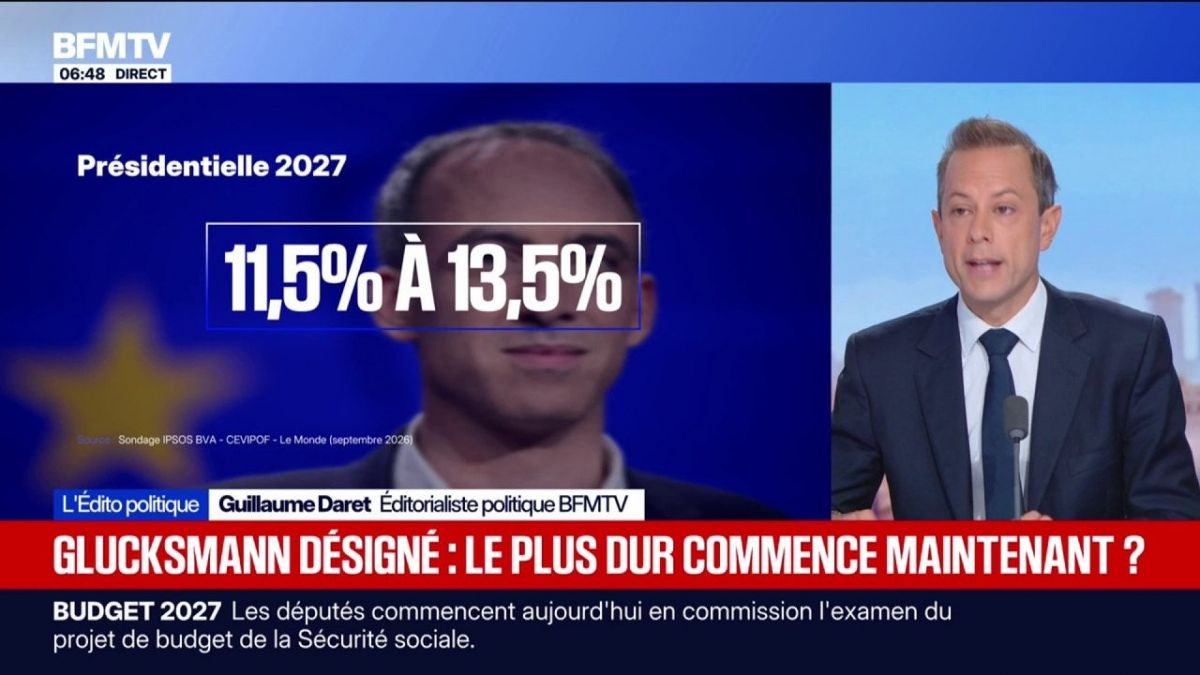
Raphaël Glucksmann has been elected as the candidate of the social-democratic left for the presidential election during the primary, but his real challenge begins now. #Glucksmann2027 #PrimaireSocialeDémocrate #ElectionsFrance (translated)

www.bfmtv.com
L'ÉDITO POLITIQUE DE GUILLAUME DARET - Victoire de Raphaël Glucksmann à la primaire sociale-démocrate: le plus dur commence maintenant?
1357

The author hypothesized that the person in question could be the daughter or a relative, claiming that she could not find any other explanations. She also wondered if they really had the same directions. https://t.co/uplXyp3E1X #famiglia #mistero #verità (translated)

1743
David Lisnard 12h

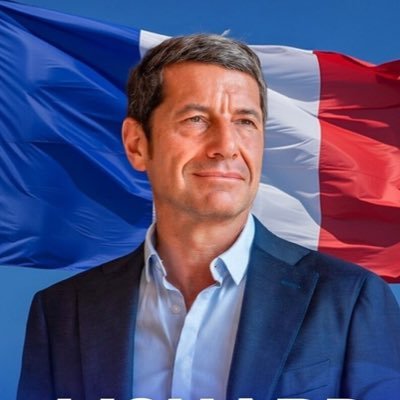
David Lisnard congratulated the left for quickly organizing a primary and its winner. He believed that the right should do the same, a proposal he claimed to have advocated for months without receiving a genuine counter-argument. According to him, a primary would help avoid divisions that could lead to defeat and arrangements among political leaders. He added that if the situation did not change, he would accept all endorsements of the New Energy project without negotiation. On the other hand, he stated that he would never support those he held responsible for having led and weakened France, before concluding by celebrating freedom. #Politique #Primaire #Liberté (translated)

2058
Raphael Glucksmann 13h

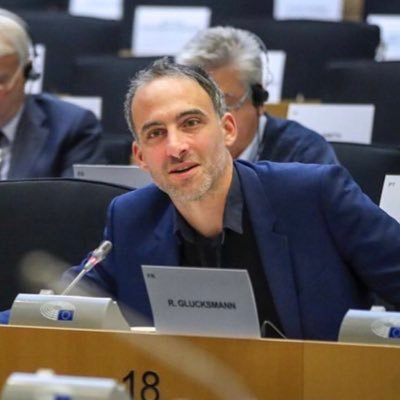
Our true opponent is the far right. Marine Le Pen will not be at the Élysée in May 2027. Democracy spoke tonight. #PrimaireSocialeDémocrate #RaphaëlGlucksmann #Élections2027 (translated)

Primaire sociale-démocrate : la réaction de Raphaël Glucksmann, vainqueur dès le premier tour
www.bfmtv.com
2072
Raphael Glucksmann 13h

Our true adversary is the far right. Victory of Raphaël Glucksmann in the social-democratic primary: "Our true adversary is the far right," declares the winner. #PrimaireSocialeDémocrate #RaphaëlGlucksmann #Élections2027 (translated)

Victoire de Raphaël Glucksmann à la primaire sociale-démocrate: "Notre véritable adversaire, c'est l'extrême droite", déclare le vainqueur
www.bfmtv.com
2087
BFMTV 13h

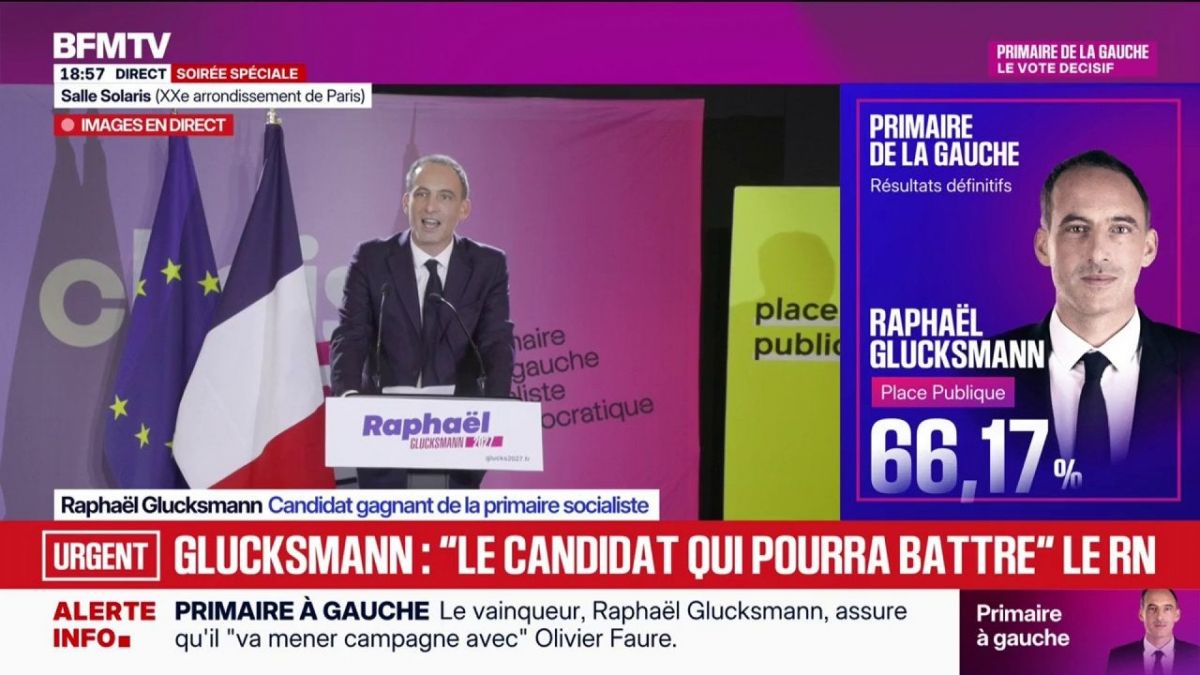
Raphaël Glucksmann won the social-democratic primary with over 66% of the votes, stating that his true opponent is the far right. #PrimaireSocialeDémocrate #RaphaëlGlucksmann #Élections2027 (translated)

www.bfmtv.com
Victoire de Raphaël Glucksmann à la primaire sociale-démocrate: "Notre véritable adversaire, c'est l'extrême droite", déclare le vainqueur
2087
Raphael Glucksmann 13h

"Our true opponent is the extreme right. Marine Le Pen will not be at the Élysée in May 2027. Tonight we have won together.": Raphaël Glucksmann reacts on X after winning the social-democratic primary with 66% of the votes. #PrimaireSocialeDémocrate #RaphaëlGlucksmann #SégolèneRoyal (translated)

Primaire sociale-démocrate : Ségolène Royal "très déçue" après la victoire de Raphaël Glucksmann
www.bfmtv.com
2087
Raphael Glucksmann 13h

Our true opponent is the far right. Victory of Raphaël Glucksmann in the social-democratic primary: "Our true opponent is the far right," declares the winner. #PrimaireSocialeDémocrate #RaphaëlGlucksmann #Élections2027 (translated)

Victoire de Raphaël Glucksmann à la primaire sociale-démocrate: la "photo de famille" des candidats autour du candidat gagnant
www.bfmtv.com
2088
L
lastampa.it 16h

John Foot, an English historian, analyzes the Red Brigades in his essay, highlighting the great trauma they represented for Italy and the necessity of an amnesty in exchange for the truth about murders and responsibilities, emphasizing how the organization emerged from diverse socio-cultural contexts and was initially underestimated by the State. #BrigateRosse #StoriaItaliano #JohnFoot (translated)

www.lastampa.it
John Foot e le Brigate Rosse: “Ci voleva un’amnistia in cambio della verità su chi aveva ucciso chi”
1705
letteralmente alla frutta 19h

The account literally at the end of its rope wrote that denying did not change what the eyes revealed and that even words and gestures spoke for themselves. https://t.co/50ufLhngXU #verità #emozioni #occhi (translated)

2201
Lia Bencivenga 20h

Lia Bencivenga said she had not followed and did not want to follow a program she considered dishonest. Commenting on the discussions about the so-called Dossier K, she argued that its contents were verifiable in the SITs of the cited individuals and that even Stasi's defense had had suspicions about the Kappa family, without this constituting a crime. Bencivenga added that the dossier and the numerous emails sent to the Prosecutor's Office were on record and that nothing had been hidden. She then wondered why the person she called "Miss FBI" was so interested in knowing the author of the dossier, while, according to her, she showed no interest in the concealment of decisive results attributed to the RIS of Garofano and another involved person. She also criticized that person's reaction to the "personal consulting," which, in her opinion, had been found in the RIS files even though it had never been requested, submitted, or signed. Finally, Bencivenga criticized four people who were following that case, claiming that they had poor critical reading skills and were attracted to malice and meanness. She asked the person called "Miss FBI" if she checked the documents before becoming indignant. #mostri #garlasco #dossierK #giustizia (translated)

2246
Maddalena Loy 21h

Maddalena Loy had recalled a phrase attributed to Goebbels about the repetition of lies and had defined the accusation from the opposition that the Meloni government had cut funding for public health as false. Loy had contested the data from the Gimbe Foundation, led by Nino Cartabellotta, on the 18.8 billion euros of “invisible cuts.” According to her reconstruction, the figure did not indicate resources taken away from hospitals but the difference compared to what would have been allocated had the ratio between the national health fund and GDP of 2022 remained unchanged. She argued that Gimbe’s headline had led publications like Repubblica to present the figure as an actual loss and called that interpretation a political attack on the government. In comparing allocations, Loy pointed out an increase of 8.2 billion euros between 2011 and 2019, under the Monti, Letta, Renzi, Gentiloni, and Conte governments; of 11.6 billion euros between 2019 and 2022, during the Conte government; and of 17.5 billion euros between 2022 and 2026, with the Meloni government, which would raise the fund from 125.4 to 142.9 billion euros. She described the latter as the largest accounting increase in peacetime. Loy also mentioned monthly increases of around 400 euros for doctors, peaking at 600 euros, a plan to hire 1,000 doctors and 6,300 nurses, coverage of over 2,000 new services, and a flat tax of 15% on overtime for doctors and nurses. She finally contested the statements of Senator Castellone on L’Aria che tira regarding cuts to healthcare. #SanitàPubblica #GovernoMeloni #FakeNews (translated)

2614
Marco M.M. 23h

Marco M.M. wrote that his profile, dedicated to meteorology, would continue to deal with the weather, but that he wanted to share a personal reflection after facing a significant health issue in the previous weeks. He recounted having lived through difficult days and new fears, an experience that, according to him, made him reevaluate everyday things and the importance of paying attention to the difficulties of others. He added that his private messages were open to anyone who needed to talk and that, while he did not have solutions for every problem, he was available to listen. He concluded by inviting people to take care of themselves and those close to them, specifying that in the next post he would return to discussing meteorology. #Vita #Ascolto #Gratitudine (translated)

2590
Luigi Marattin 24h

Luigi Marattin responded to Corrado Formigli, who in the Corriere had described as "an embarrassing confusion" what the deputy said on Piazzapulita. Marattin mentioned that he has been reading investigative journalism and historical studies on conflicts for decades and cited Il Legionario, a book about Giustino De Vuono, arguing that its author documented the presented theses. Marattin accused the documentary Naza of making unfounded accusations. He cited the bombing which, according to the mentioned reconstruction, would have killed 500 civilians, stating that no evidence of either the attack or the death toll had been presented. He argued that the only source was Hamas's word, treated as truth, while Israeli accounts were dismissed as propaganda. He added that he had said on air that, in wartime, he did not consider the reports of the involved parties reliable and preferred those from independent observers. For this reason, he described Israel's decision not to allow foreign journalists into Gaza, even at their own risk, as a mistake. Marattin accused Formigli of not listening to this point and of silencing dissenters, imposing his own opinion. Finally, he wrote that he would have liked to read a "mea culpa" from the host for his statements about Israeli children on October 7. #giornalismodinchiesta #storia #media (translated)

2177

Sara AlePier had written that the boy, labeled that day with a derogatory insult and called a liar, manipulator, and phony, had not been understood. She added, with a vulgar expression, that the others had not understood anything. #alepier https://t.co/j49Z0pswAS #giovani #società #verità (translated)

2507
Actu Foot 1d

Actu Foot reported hearing on Real Madrid TV criticisms targeting the "Negreira league." The author believed that a player should not have been sent off and that a goal should not have been disallowed, calling these decisions shameful. He added that this was just a new episode in a series that was unfolding, before blaming those who made these decisions for wanting to talk about football afterward. #RealMadrid #Football #LigueNegreira (translated)

2574
Actualité - Barça 1d

News - Barça reported that Hansi Flick described Jules Koundé as a professional who trains a lot and seeks to improve. He added that the team helps him and that everyone must accept that Koundé sometimes starts a match on the bench, as the squad has many excellent players. #Football #JulesKoundé #HansiFlick (translated)

2918
Franceinfo 2d

Deputy LFI Mathilde Panot sparks controversy by rejecting the Pink October campaign, which she accuses of being linked to a pesticide company and political hypocrisy, instead calling for an October of anger for a true fight against cancer. #OctobreRose #LutteContreLeCancer #MathildePanot (translated)

www.franceinfo.fr
"Pour que la lutte contre le cancer ne soit pas du vernis rose" : la député LFI Mathilde Panot crée la polémique en attaquant la campagne Octobre rose
2554
Cerfia 2d

Cerfia reported that alpine hunters from the French army were building an underground city under the ice, in the mountains. https://t.co/eKKrVTMukC #ChasseursAlpins #ArméeFrançaise #Insolite (translated)

3074