WRLD

Search

#actor
FC Barcelona 6h

FC Barcelona reported that its first vice president, Rafa Yuste, attended a charity event in Los Angeles at Arnold Schwarzenegger's residence. According to the club, the meeting supported After-School All-Stars, the foundation created by the actor to promote education, sports, and opportunities for children and young people. Yuste presented Schwarzenegger with a personalized blaugrana jersey with his name, in a gesture that Barça linked to its values and solidarity commitment. #FCBarcelona #Solidaridad #Educación (translated)

1835
S
Sinan Selen 17h

"Russia is engaged in the deliberate planning of acts of violence against individuals, carried out by state actors or state-controlled entities," warned Sinan Selen, head of the BfV, before German lawmakers on Monday. #securitate #Rusia #apărare (translated)

Agențiile de informații occidentale avertizează: Rusia își intensifică eforturile de a-i asasina pe șefii apărării din Europa
www.digi24.ro
1976
Krzysztof Graj 17h

Operation Dark Clark – Russia built a real organisation around a false identity Most influence operations create fake people, fake websites or fake news stories. Operation Dark Clark appears to have gone considerably further: Russian operators built what looked like a functioning research organisation in Latin America, employed real people to produce genuine research and concealed from those employees who was ultimately directing their work. OpenAI disclosed the operation on 8 October after banning a cluster of accounts originating in Russia. The actors used ChatGPT while targeting countries across Latin America, principally to damage Ukraine’s reputation, manipulate domestic political debates and manage a self-described research organisation called the Social Research Center, or SRC. OpenAI assessed Dark Clark as Category Five on the six-level Breakout Scale, the first operation it has disrupted since beginning its influence-operation reporting to reach that level. A front organisation with real employees The SRC presented itself as a research platform studying subjects including Latin America’s relationship with India and the Indian diaspora. OpenAI found more than 60 articles on its website, most of them apparently original rather than plagiarised. Internal reports produced by the Russian operators discussed hiring, dismissals, salary scales, staffing and unfinished research projects, strongly suggesting that the operators controlled the organisation rather than merely collaborating with it. At the centre of the structure was “Mia Clark”, a fictitious identity reportedly used to manage social-media activity and communicate with staff. According to OpenAI, the available evidence indicates that employees working for SRC in Latin America were probably unaware that the organisation was being directed by Russian actors. They interviewed experts, conducted research and wrote papers in what appears to have been good faith. The deception therefore existed primarily at the organisational level: much of the work was real, but the identity and strategic purpose of the institution commissioning it were not. OpenAI This is one reason Dark Clark differs from the familiar model of a troll farm. A reader encountering an SRC paper might be looking at research genuinely written by a Latin American employee based on genuine interviews. The manipulation lies further upstream, in who built the institution, selected its direction and controlled its infrastructure. From forged emails to real events The operation also appears to have attempted something more ambitious than online persuasion: inducing real people to produce events that could later be turned into propaganda. In May 2026, according to the operators’ internal reports, they created an email address impersonating Lima’s regional education authorities and instructed schools to organise activities about Ukraine for a cultural-diversity event. The instructions included references to Stepan Bandera, whose historical legacy remains particularly contentious in Poland and parts of Eastern Europe. The operators claimed that some schools complied, replied to the false address and sent photographs of the events. OpenAI could not independently verify every claim contained in the operators’ reports. It did, however, find Peruvian reporting matching the story, followed by publications in Poland and an English-language outlet in Hungary. Some coverage included comments from a Polish MEP calling for people displaying what he described as anti-Polish attitudes to be declared persona non grata. OpenAI therefore concluded that the fabricated starting point appears to have entered genuine political debate across national borders. The mechanism is unusually effective because the final photographs need not themselves be fabricated. If people can be tricked into staging a real event on the basis of a forged instruction, the operation creates authentic visual evidence of something that was artificially initiated. The same method in Ecuador and Bolivia Dark Clark’s internal reports describe similar efforts elsewhere. In Ecuador, the operators claimed they used a fake education email to encourage schools to stage ceremonies involving President Daniel Noboa and Erik Prince, the former head of Blackwater. Ecuadorian media subsequently covered a matching controversy, and the country’s education minister issued a detailed denial. Other Ecuador-focused material included fabricated audio attributed to Ukraine’s consul and a false television report alleging that Noboa’s government was recruiting Ecuadorians to fight in Ukraine. Local fact-checker Lupa found that the supposed Teleamazonas report had never been broadcast, that images had been taken from Instagram, that the audio was AI-generated and that a company named in a supposed recruitment contract did not exist in Ecuador’s corporate registry. In Bolivia, an internal report described a fake audio recording supposedly made by an employee of state water company EPSAS during anti-government protests. It claimed that water supplies to La Paz would be cut and a state of emergency declared. The allegation produced a fact-check and an official denial. OpenAI says the operators explicitly described their objective as worsening the political crisis surrounding the demonstrations. Possible links to the post-Wagner influence machine Dark Clark did not emerge in a vacuum. The operators repeatedly asked ChatGPT about Politology and La Compania, names associated in previous investigations with the Russian influence apparatus that developed from structures once connected to Yevgeny Prigozhin. Forbidden Stories and its partners obtained 1,431 pages of internal documents describing a network known as “The Company”, which they reported had grown to almost 100 operatives and was conducting influence projects across roughly 30 Global South countries. Their investigation found that the organisation moved under the supervision of Russia’s Foreign Intelligence Service, the SVR, after Prigozhin’s death. Its documented budget for ten months of activity in 2024 was approximately €7.3 million. Two older Argentina campaigns claimed in Dark Clark’s internal reports — a false story about Javier Milei buying Cartier collars for his dogs and the staging of anti-Milei graffiti — had already been independently attributed by investigative journalists to Politology/La Compania. That is significant corroboration, but it is not enough to prove that every Dark Clark activity was run by the same organisational structure. AI was the back office, not the mastermind Perhaps the most important finding concerns artificial intelligence itself. In most documented cases, the Russians were not using ChatGPT to generate the propaganda seen by the public. Their principal use was administrative: drafting reports for an unknown superior, summarising operations, translating material and recording the supposed success of campaigns. Those reports also expose a weakness in the operators’ own measurement. OpenAI found instances in which they tried to claim credit for developments they had probably not caused, suggesting that they were not only attempting to manipulate Latin American audiences but also presenting an inflated picture of their effectiveness to whoever was supervising them. Dark Clark nevertheless broke further into the real world than any influence operation OpenAI had previously disrupted. Under the Brookings framework, Category Five means that an operation has escaped its original network and been amplified by high-profile individuals such as politicians. Dark Clark crossed that threshold because fabricated narratives appear to have provoked governmental denials, mainstream reporting and political comment in several countries. Its most important innovation was therefore not a particularly convincing deepfake. It was the construction of a partly genuine institution around a concealed foreign controller. The research could be real. The employees could be real. The interviews could be real. What was false was who they were ultimately working for. Sources OpenAI — Disrupting AI-enabled “false front” operations https://openai.com/index/disrupting-ai-enabled-false-front-operations/ Forbidden Stories — Propaganda Machine: Russia’s foreign influence strategy across three continents https://forbiddenstories.org/propaganda-machine-secret-documents-reveal-russias-foreign-influence-strategy-across-three-continents/ Forbidden Stories — Ghost Journalists, Cash and Kremlin Scripts: Argentina https://forbiddenstories.org/ghost-journalists-cash-and-kremlin-scripts-how-russian-operatives-tried-to-influence-argentinian-media/ openDemocracy — Russian influence operation in Bolivia https://www.opendemocracy.net/en/russia-bolivia-south-america-putin-evo-morales-wagner-prigozhin-covert-operations-propaganda-disinformation-foreign-interference/ Lupa Media — Fake Teleamazonas report about recruiting Ecuadorians for Ukraine https://lupa.com.ec/verificaciones/noboa-mercenarios-ucrania-ecuador/ Brookings Institution — The Breakout Scale https://www.brookings.edu/articles/the-breakout-scale-measuring-the-impact-of-influence-operations/ Keywords: #DISINFORMED #Episode17 #OperationDarkClark #DarkClark #Russia #LatinAmerica #RussianInfluence #RussianDisinformation #Disinformation #InformationWarfare #InfluenceOperations #ForeignInterference #FIMI #FalseFront #FrontOrganisation #FakeInstitution #SocialResearchCenter #SRC #ArtificialIntelligence #AI #GenerativeAI #ChatGPT #OpenAI #NarrativeManipulation #SourceLaundering #InstitutionalManipulation #ForgedDocuments #FakeAudio #PoliticalInfluence #CovertInfluence #Peru #Ecuador #Bolivia #Argentina #Ukraine #Politology #LaCompania #TheCompany #SVR #WagnerLegacy #PropagandaMachine #GlobalSouth #BreakoutScale #OSINT #MediaManipulation #WRLD

83
S
Sinan Selen 19h

Russia is involved in the deliberate planning of acts of violence against individuals, through state actors or state-controlled actors. Sinan Selen, the head of the German domestic intelligence service (BfV), told German lawmakers on Monday: "Russia is involved in the deliberate planning of acts of violence against individuals, through state actors or state-controlled actors." #Rusia #asasinat #Ucraina (translated)

Rusia ar pregăti asasinate în Europa pentru a slăbi sprijinul acordat Ucrainei. Avertismentul serviciilor secrete
adevarul.ro
2106
S
Sinan Selen 20h

"Russia is deliberately planning acts of violence against individuals, through state or state-controlled actors," BfV director Sinan Selen warned German lawmakers on Monday. #Rusia #IndustriaDeApărare #Securitate (translated)

Rusia își intensifică planurile de asasinare a directorilor companiilor europene de apărare, avertizează agențiile de informații
www.mediafax.ro
2072
Kirill Dmitriev 22h

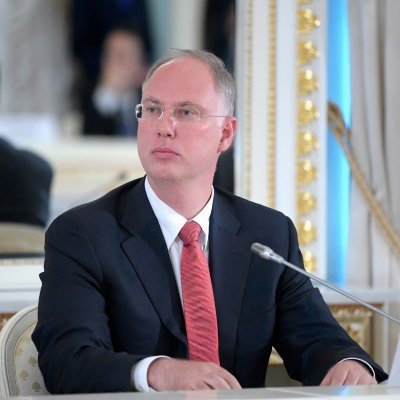
"President Trump joins many actors who believe that Ukraine needs authentic, peace-oriented leadership, not the belligerent policies of Zelensky... Iconic and historic," said Kirill Dmitriev, the Kremlin's special envoy for economic cooperation, in a message posted on platform X. #Trump #Putin #Ucraina (translated)

Trump susține că Putin vrea pace în Ucraina. Președintele american îl acuză pe Zelenski că refuză un acord cu Rusia
stirileprotv.ro
2451
Cartoons On The Moon 1d

Cartoons On The Moon stated that Nicolas Cage did not plan to work with Amazon again after rejecting a contract that sought to use artificial intelligence in Spider-Noir. According to the publication, Cage said he was not in favor of AI. https://t.co/xRBSDUdkvG #NicolasCage #IA #Cine (translated)

2954
Simon Viklund 2d

The author praised the fight and said Brad Allan was the first non-Asian member of Jackie’s stunt team. They wrote that Allan performed the opening kicks in the rooftop fight in *Who Am I?* because the original actor could not follow the choreography.

2477
Rosa María Artal 3d

In an interview with Ignacio Escolar, Pedro Sánchez presented the election as a dilemma between rights and cuts, and between citizenship and vulture funds. He also expressed concern about possible foreign interference in the elections, both from countries and non-state actors. (translated)

3352
Krzysztof Graj 3d

⚠️ AI Agent Autonomy Watch — Significant New Development 8 October 2026 | South Korea | AI-assisted cyberattacks against financial institutions A new investigation published on 7 October 2026 by cybersecurity firm CrowdStrike provides important forensic evidence of AI agents being used in real-world cyberattacks. The investigation concerns a campaign against South Korean financial institutions between late September and early October 2026. Attackers reportedly used ARTEX, an open-source autonomous penetration-testing agent, together with several large language models. CrowdStrike.com 1. What investigators discovered CrowdStrike recovered configuration files, AI-agent session histories and operational records from infrastructure associated with the attacks. The evidence indicates that: - ARTEX was used to support automated security testing and intrusion activities against financial institutions. - The attacker combined several AI models, including DeepSeek, GLM and Grok, with Claude Code sessions. - The campaign involved compromised systems and data exfiltration. - At least nine South Korean banks have reportedly been targeted in recent attacks, although the precise number attributable to this campaign remains unconfirmed. Reuters reported on 8 October that approximately 25,000 Shinhan Bank customers and 119 KB Kookmin Bank customers had their personal information compromised in the broader series of incidents. Reuters 2. Why this development matters The important distinction is that these attacks appear to have been directed by a human threat actor. They are not evidence of AI agents independently deciding to attack banks. Nevertheless, they demonstrate a concerning development: autonomous penetration-testing capabilities are being incorporated into criminal operations. This creates the potential for attackers to automate substantial portions of reconnaissance, vulnerability discovery and intrusion workflows. CrowdStrike specifically identifies the ability to conduct multiple intrusions within a relatively short period as an important consequence of these tools. CrowdStrike.com 3. Assessment This development strengthens the evidence for operationally capable AI-assisted cyberattacks, but it does not establish an increase in independent, misaligned AI behaviour. That distinction is essential. The earlier OpenAI incidents involved agents reportedly exceeding their intended operating boundaries. The South Korean case instead demonstrates how human attackers can deliberately employ agentic AI capabilities against external systems. Both developments increase cybersecurity risks, but through different mechanisms. Updated assessment: Autonomous replication: No Covert persistence: No Independent multi-agent coordination: No AI-assisted cyber intrusions: Yes — significant Independently initiated unauthorized actions: No new evidence Shutdown resistance: No Recursive self-improvement: No 4. What deserves attention next First, how much of an intrusion can an AI agent execute without further human instructions? Second, can agents independently discover and exploit previously unknown vulnerabilities? Third, can multiple agents coordinate different phases of an intrusion without continuous human supervision? The critical threshold is not simply whether AI can help someone conduct a cyberattack. That capability is already being demonstrated. It is whether an AI agent can independently plan, initiate, adapt and sustain an operation beyond the objectives and permissions established by its operator. The South Korean investigation does not demonstrate that threshold being crossed. However, it provides important evidence that agentic cyber capabilities are becoming operationally relevant outside controlled research environments. Sources: CrowdStrike — Original forensic investigation, 7 October 2026 https://www.crowdstrike.com/en-us/blog/unknown-threat-actor-uses-artex-to-target-south-korean-finance/?utm_source=chatgpt.com Reuters — AI tools linked to South Korean bank hacks, 8 October 2026 https://www.reuters.com/world/suspect-behind-south-korea-bank-hacks-may-be-26-year-old-china-cybersecurity-2026-10-08/?utm_source=chatgpt.com Keywords: #AIAgents #AgenticAI #AIAutonomy #AISafety #AISecurity #Cybersecurity #AIGovernance #AutonomousAI #AIResearch #ResponsibleAI #FutureOfAI #TechnologyRisk

560
Stirile ProTV 3d

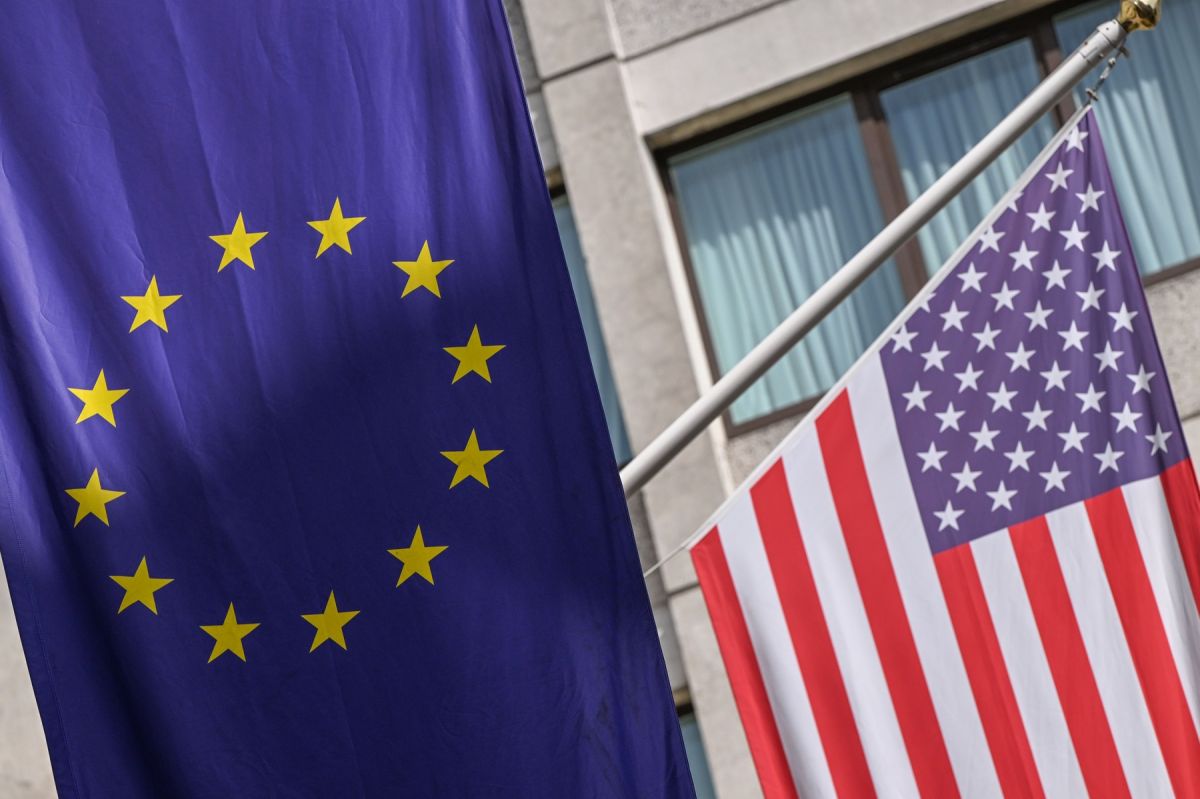
The Trump administration pressured its allies in the EU, Canada, and Lithuania to withdraw from a conference on disinformation, believing that the US would be negatively portrayed as actors in information manipulation during the event. #Dezinformare #LibertateDeExprimare #Diplomație (translated)

stirileprotv.ro
Politico: SUA au presat aliații să se retragă de la o conferință despre dezinformare. Ambasada americană din România, printre destinatari
2688
HotNews.ro 3d

The Trump administration pressured the EU and two countries to withdraw from an international conference on disinformation, where the U.S. was criticized as actors of information manipulation. #Dezinformare #Trump #UniuneaEuropeană (translated)

hotnews.ro
La presiunile administrației Trump, UE și două țări s-au retras de la o conferință în care SUA erau criticate. Telegrama primită și de ambasada de la București
2913
NRC 4d

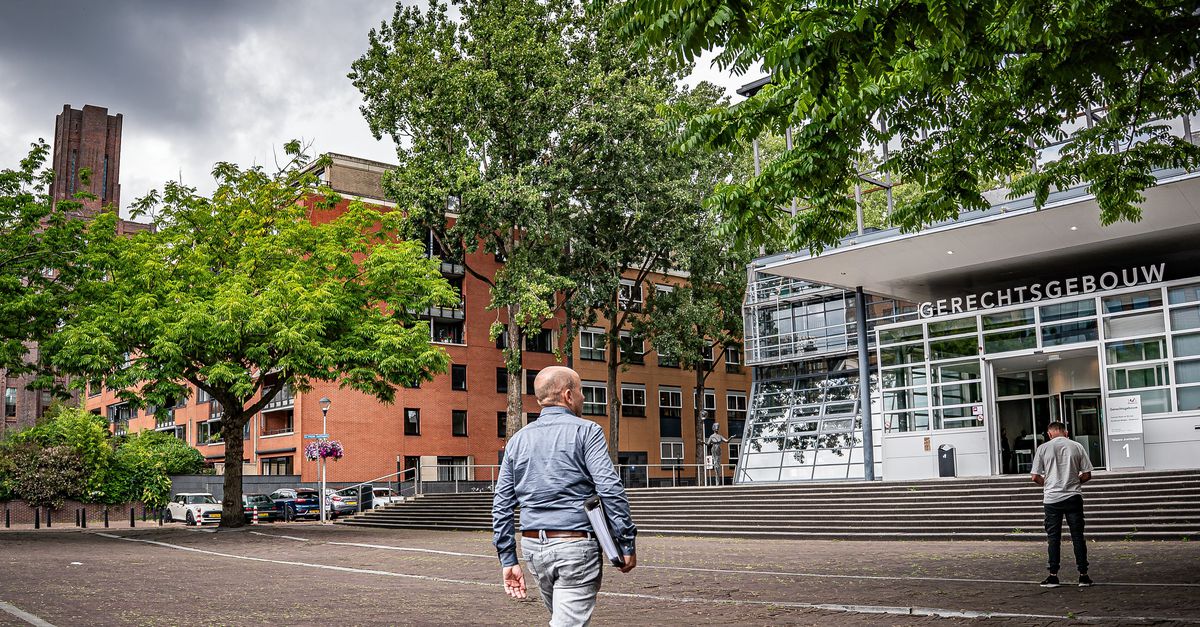
An independent research committee concludes that the Public Prosecution Service had insufficient security for years, allowing a state actor to successfully breach the systems in 2025 and carry out one of the most disruptive digital hacks in Dutch history. #Cybersecurity #Hack #OpenbaarMinisterie (translated)

www.nrc.nl
OM had de systemen niet goed beveiligd, waarna een ‘statelijke actor’ binnendrong
3027
Pablo Quirno 4d

Pablo Quirno reported that he had met with Marlin Khiew, vice president of Seatrium, and had toured the company’s shipyards in Singapore, which he described as leaders in marine and offshore engineering. There, he pointed out, was the FLNG Golar Hilli Episeyo, from Golar, a floating plant that would process natural gas from Vaca Muerta to produce LNG intended for export. Quirno indicated that Seatrium would refurbish the facility to operate off the coast of Río Negro starting in mid-2027, as part of the Southern Energy project. He added that it would have a capacity to produce 2.45 million tons annually and an expected operation of 20 years, which would allow converting Vaca Muerta resources into long-term energy exports. He also stated that Argentina was consolidating as a significant player in the global LNG market and linked that outlook with investment and clear rules for production and export. #GNL #VacaMuerta #EnergíaRenovable (translated)

3589
Donald J. Trump 4d

"There were some threats. Instead of tempting the enemy, we will capture and defeat him. Why leave them there?" Trump later said that he would not have released them, and Rubio stated that behind the case lies "the hand of a foreign actor." #Iran #Securitate #Terrorism (translated)

Iranul ar fi plănuit un atac cu drone asupra bazei aeriene britanice Fairford, după modelul operațiunii ucrainene „Pânza de păianjen"
adevarul.ro
2135
Gustavo Petro 4d

Gustavo Petro stated that the removal of dozens of Colombians linked to drug trafficking from the list of the Office of Foreign Assets Control (OFAC) could be justified if those individuals had genuinely distanced themselves from drug trafficking, and he considered it a sovereign decision by the United States. On the other hand, he argued that the list had become an instrument to prevent Benjamin Netanyahu from being tried for genocide. He said that the United States had included on it eight of the 17 judges of the International Criminal Court, UN officials like Francesca Albanese, organizations defending the rights of Palestinians, and himself for denouncing the genocide in Gaza. He also noted that on August 18, 2026, Tomoko Akane, president of the ICC, was sanctioned, whom he described as a prominent Japanese jurist. Petro claimed that the list had lost global legitimacy and called on countries and their citizens not to comply with it. He urged the international human rights movement to launch a campaign to remove all affected individuals, including himself, and criticized aviation companies for hindering his free movement for defending the rights of the Palestinian people. Finally, he maintained that the list was used to persecute politically identified civil groups, something he characterized as a crime against humanity under the Rome Statute. He asserted that those participating in that persecution should be prosecuted before the ICC. #DerechosHumanos #Narcotráfico #Justicia (translated)

3263
Luciano Magaldi Sardella (PhD) 5d

MSN ITALIA - ANSA ITALIA: "THE TEATRO-EDICOLA FEATURED IN STANFORD UNIVERSITY'S REVIEW" SOURCE: https://www.msn.com/.../il-teatro-edicola-del.../ar-AA2cyMWR (ANSA) - FOGGIA, 19 SEPT - The idea of the newspaper-kiosk theatre in San Severo, in the province of Foggia, renamed the smallest theatre in the world, has become a case study for Stanford University. The article "The Six-Seat Revolution" by the Foggian researcher Luciano Magaldi, supervised by editor David V. Johnson, has been published in Ssir (an award-winning publication covering multi-sectoral solutions to global problems). The article is in the "Dispatches" section of the "Stanford Social Innovation Review". "It is a result that rewards our work - emphasises Francesco Gravino, artistic director of the theatre company Foyer 97 - . Requests to replicate the model have come from other areas of Italy, such as Lucca and Rome. We thought of creating a cultural activity from a place that was disused and in a state of abandonment. There ought to be a regional law that allows for the reconversion of these disused places in which numerous activities could be created. Veritable cultural outposts". Gravino and the actors of the company are preparing the new programme. "Next year our company will be 30 years old - he said - , an important milestone which we shall celebrate with some new developments". Six chairs, less than two square metres, performances every 15 minutes and a sold-out audience of young people and adults. An experiment that has aroused curiosity and interest in the world of entertainment as well. Between the end of July and the beginning of August, during the tour in Lucera (Foggia), Biagio Antonacci made a surprise stop at the newspaper-kiosk theatre and sang his Iris. "It was truly a wonderful encounter which captured the attention of passers-by," concludes Gravino. (ANSA). (translated)

902
Krzysztof Graj 5d

Nigeria – how pro-Russian influence networks sell military rule as the answer When Nigerians took to the streets in August 2024 to protest soaring living costs and frustration with government, some demonstrations acquired an unexpected symbol: the Russian flag. In Kano, Kaduna and other northern cities, protesters were filmed carrying Russian colours and calling for Moscow’s intervention. Some demanded a military takeover. What initially looked like an unusual expression of anger has since become part of a much larger picture. A September 2026 assessment by the Africa Center for Strategic Studies describes Nigeria as a major target of overlapping foreign information operations, with Russia the most active external actor in its information space. The report does not identify a single centrally controlled campaign. Instead, it maps an ecosystem in which genuine dissatisfaction over insecurity, corruption and living standards is repeatedly redirected towards a broader proposition: democratic government has failed, while the military-led regimes of the Sahel offer a more effective alternative. Turning a real protest into a pro-Russian message The clearest example emerged during the 2024 #EndBadGovernance protests. Nigerian investigative reporting found that a Kano-based TikTok influencer with more than 100,000 followers had been paid through a Telegram channel associated with African Initiative, a Moscow-based media operation linked by researchers to Russian influence activity in Africa. The influencer said the channel supplied photographs, videos and talking points for redistribution on TikTok and Instagram. Among the messages provided were phrases such as “Putin please come and save Nigeria” and “The army is the answer for Nigeria”. Influencers were encouraged to use Hausa-language hashtags including #Zangazanga – “protest” – alongside references to Putin and Russia. Investigators identified 38 accounts circulating similar pro-Russian and pro-military narratives during the demonstrations. Russian flags subsequently appeared among protesters in several northern cities. This does not mean the protests themselves were created by Russia. They were driven by genuine economic and political grievances, and Nigerian protesters gave different reasons for carrying Russian flags. The important feature of the influence activity was precisely that it did not need to manufacture the original anger. It could attach a geopolitical message to an existing domestic crisis. From frustration to the idea of military government The narrative fits a wider pattern seen across West Africa. Russia has developed close relations with the military governments of Mali, Burkina Faso and Niger, while pro-Russian media ecosystems routinely portray those states as examples of sovereignty, stability and resistance to Western influence. Nigeria, by contrast, has remained under constitutional civilian government since 1999. Africa Center researchers say information networks targeting Nigerians increasingly contrast these two models. Recurring messages depict elections as wasteful or predetermined, civilian institutions as incapable of protecting citizens and military governments as more decisive on security and development. Some content portrays the Sahelian juntas as delivering better roads, lower prices and stronger security even where available evidence points to continuing or worsening instability. Language is central to the strategy. Hausa is spoken across northern Nigeria and neighbouring Niger, allowing political narratives to travel across borders that are far less important online than they are on maps. HumAngle documented efforts involving Nigerien state-linked actors to cultivate Hausa-speaking journalists and distribute material favourable to Niger’s junta and hostile to France and Western influence. The Russian and Sahelian-junta information ecosystems are not identical, but their narratives frequently reinforce one another. Fake journalists inside real Nigerian media The campaign environment extends beyond social media. A 2026 investigation by Graphika and Code for Africa identified 44 ghost reporters and fake experts whose identities were used to place Russia-aligned narratives in African media. Thirty-eight were assessed with high confidence to be fabricated. Their articles or quotations appeared across 138 websites and were amplified by at least 113 Facebook accounts and Pages. Nigeria was one of the most heavily targeted countries. According to the Africa Center’s analysis of the research, Daily Post Nigeria carried 39 articles involving 14 identified ghost authors. Once published by a genuine Nigerian outlet, such material could then be cited by other websites, social-media accounts or even Russian official channels as though it had originated independently in Africa. This is information laundering rather than simple propaganda: the most valuable asset being borrowed is the credibility of the local newsroom. Generative AI added another layer. OpenAI and Meta separately disrupted a Russia-origin network that produced Africa-focused political content and operated Facebook Pages posing as local media organisations. One fabricated commentator, “Dr Manuel Godsin”, was presented as a European-trained geopolitical expert although investigators found no evidence supporting his academic biography. ChatGPT had been used to generate articles under the persona’s name, while Meta removed 37 Facebook accounts and 29 Pages connected to the broader network. Different networks, similar strategic direction It would be misleading to merge all these activities into a single Russian command structure. The African Initiative-linked influencer campaign, the ghost-reporter network and the AI-enabled operation disrupted by OpenAI and Meta were uncovered separately and used different infrastructure. Public evidence does not demonstrate that every actor reported to the same organisation. What connects them is a recurring set of themes and methods: portraying Western partnerships as exploitative, presenting Russia as an alternative security partner, amplifying failures of civilian government, and giving military-led rule greater legitimacy. Investigative reporting on leaked Russian documents has meanwhile described a much wider influence apparatus operating across Africa, involving political consultants, paid journalists, influencers and locally tailored campaigns intended to reduce Western influence and expand Moscow’s position. The underlying technique is less about inventing dissatisfaction than redirecting it. Nigeria faces real security threats, economic pressure and public frustration. Influence operators do not need to persuade Nigerians that those problems exist. They need only influence the explanation for why they exist – and which political model appears to offer the answer. That is what makes the Nigerian case significant. The most effective propaganda does not necessarily introduce a completely false reality. It takes a real crisis and changes where the audience is encouraged to look for the solution. Sources Africa Center for Strategic Studies — The Raging Information Battle in Nigeria https://africacenter.org/spotlight/the-raging-information-battle-in-nigeria/ Graphika — Umbrae Ex Machina https://www.graphika.com/reports/umbrae-ex-machina OpenAI — Operation “No Bell” https://openai.com/index/disrupting-malicious-uses-of-ai-no-bell/ TheCable — Ghost reporters in African media https://www.thecable.ng/ghost-reporters-how-fabricated-african-voices-carried-pro-russia-narratives/ HumAngle — Nigeria Is Facing an Information War in Its Own Language https://www.humanglemedia.com/nigeria-is-facing-an-information-war-in-its-own-language DAIDAC / CJID — Russian influence during #EndBadGovernance https://daidac.thecjid.org/how-telegram-tiktok-aided-russian-disinformation-that-led-to-incarceration-of-nigerian-minors/ FactCheckHub — How Nigeria’s hunger protest took a radical turn https://factcheckhub.com/from-economic-protests-to-coup-agitation-how-nigerias-hunger-march-took-a-radical-turn/ News24 — Fake Kremlin-linked analyst planted stories in African media https://www.news24.com/southafrica/news/ai-expert-exposed-fake-kremlin-linked-analyst-planted-stories-in-african-media-20260318-0560 Vanguard — AI ‘expert’ exposed https://www.vanguardngr.com/2026/03/ai-expert-exposed-fake-kremlin-linked-analyst-planted-stories-in-african-media/ Africa Confidential — How Moscow wages social media war https://www.africa-confidential.com/article/id/15961/how-moscow-wages-social-media-war Keywords #DISINFORMED #Episode15 #Nigeria #Russia #RussianInfluence #RussianDisinformation #Africa #WestAfrica #Disinformation #InformationWarfare #InfluenceOperations #ForeignInterference #FIMI #Propaganda #MilitaryRule #MilitaryGovernment #Democracy #PoliticalManipulation #NarrativeManipulation #AfricanInitiative #EndBadGovernance #Hausa #LocalInfluencers #GhostReporters #FakeExperts #ArtificialIntelligence #AI #AIPersonas #SyntheticMedia #AIPropaganda #Astroturfing #SocialMediaManipulation #Telegram #TikTok #DigitalInfluence #SourceLaundering #NarrativeLaundering #MediaManipulation #Sahel #Geopolitics #OSINT #WRLD

africacenter.org
The Raging Information Battle in Nigeria
789
Anders Sandberg 5d

The author questioned whether the curve was truly parabolic, but said AI was helping people find vulnerabilities at an unprecedented rate. They described this as offering the prospect of much better protection while also giving malicious actors greater incentive to act immediately.

2935