WRLD

Search

#childhood
António Guterres 17h

The author wrote that one in five girls worldwide was married before the age of 18, and said child marriage compromised millions of girls’ education, health and safety. They called for efforts to defend every girl’s right to a childhood and end child marriage.

2777
BBC 3d

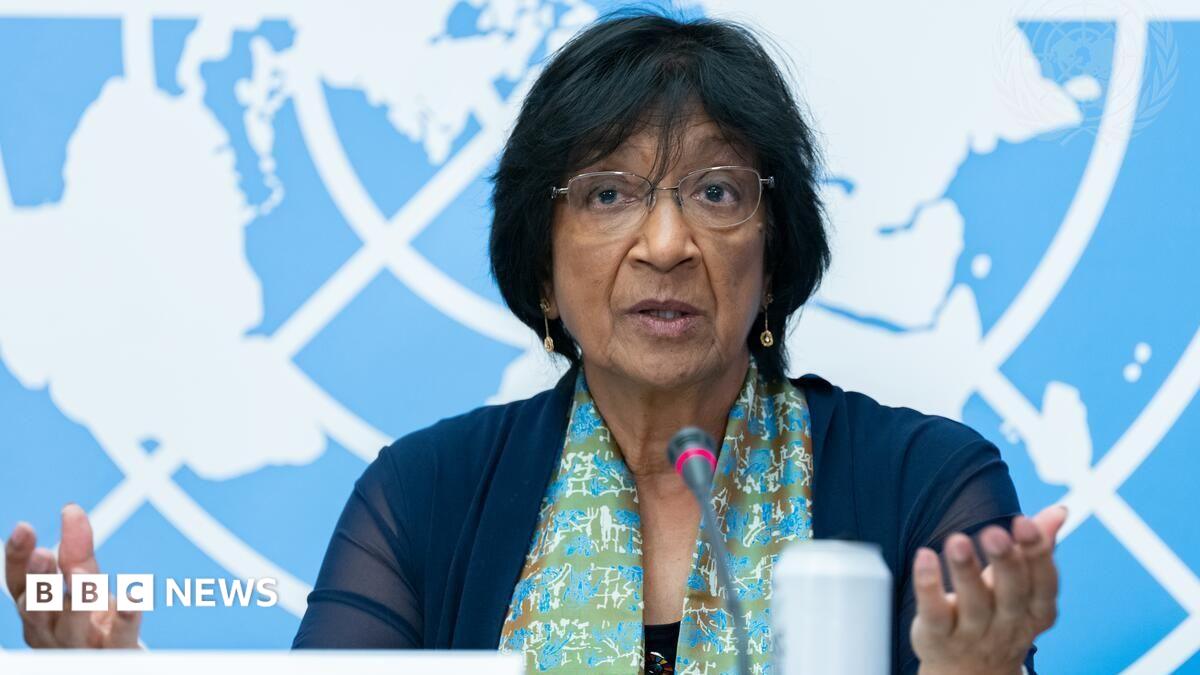
BBC correspondent Joe Inwood explains how Pillay's childhood in South Africa led her to become a driving force in international law from Myanmar to Gaza. #NaviPillay #NobelPeacePrize #HumanRights

www.bbc.co.uk
Watch: Who is Nobel Peace Prize winner Navi Pillay?
3679
Oliver Varhelyi 3d

The European Commission and UNICEF said they had launched a new children’s prevention toolkit ahead of World Mental Health Day. They said it offered practical guidance for policymakers in four areas: mental health, healthy lifestyles, immunisation and early childhood development. https://t.co/L20O54aT6B #SaludMental #SaludInfantil #PolíticasPúblicas #EU #UNICEF

3348
Ariana Grande Brasil 2w

Gregory Maguire revealed that Ariana Grande inspired part of his new book, “Galinda: A Charmed Childhood”: “When I saw her in the first ‘WICKED’... she does that extended kick, throwing her heel toward the chandelier... and I thought, ‘Who the hell knew that Galinda could dance?’... So, when I wrote about Galinda taking dance lessons and wanting to be the lead dancer, that is completely the result of Ari's kick.” #ArianaGrande #Galinda #Wicked (translated)

14653
Yaroslav Trofimov 2w

The level of service in America — from airports to hotels to trains — increasingly brings back childhood memories of the Soviet past. Those were not good memories. #ServiceQuality #Nostalgia #SovietMemories #US #RU

576
Hadja Lahbib 3w

Our responsibility to Palestinian children: give back what this war has taken. A normal childhood. And yes, maybe even a kite. Military operations, demolitions, settler violence. 🇵🇸 children don't need more sympathy, they need us to apply more pressure so aid reaches them. https://t.co/T6NTVW5uyh #FreePalestine #ChildhoodMatters #EndTheViolence #PS

231
P
Patrice CUDICIO 3w

The Return to Feudalism in 21st Century Garb A simple observer's viewpoint, with no claim to hold any absolute truth. The Veneer Cracks There is something strangely archaic about the world unfolding before our eyes, despite its satellites, artificial intelligence, and promises of infinite progress. Here and there, we witness heads of state behaving like feudal lords of another age, patiently nibbling away at the neighboring territory, redrawing borders through force rather than law, as if governing a nation mattered less than expanding one's fiefdom. No names need be mentioned here: current events provide plenty of illustration, and each reader will recognize, according to their own geography and moment of reading, the faces that embody this observation. But this return to the archaic is not confined to grand geopolitical stages. It also permeates the most ordinary daily life—that of social media, where anyone can pour out venom against another without filter, without form, and often without the slightest argument. The verbal jousting of yesteryear, with its codes, its rhetoric, its tacit limits, has given way to raw invective, snap judgment, instant condemnation. We no longer debate: we execute, verbally—and sometimes it doesn't stop at words. The Vanished Inhibition What strikes one, in this dual observation—macro-political and micro-social—is the lifting of an inhibition we thought firmly anchored. Centuries of cultural construction, education, philosophy, sometimes religion, had patiently shaped mechanisms of restraint: politeness as social ritual, argumentation as a mode of resolving disagreement, respect for one's opponent as the very foundation of democratic debate. This civilizational veneer, however fragile it always was, seemed to hold. Today it is cracking, and the question—which for me remains a simple hypothesis, not a certainty—is why. A convenient explanation would blame social media: anonymity, the distance of the screen, the instantaneousness of publication would favor verbal acting-out without the usual mediation of reflection. This is probably true, but likely insufficient. For technology here is only an accelerant, an amplifier—not necessarily a root cause. A Poorly Formatted Neocortex? The more unsettling hypothesis—and I frame it explicitly as hypothesis, not scientifically established fact—is that of a failure in the formation of moral judgment and tolerance toward otherness. The human brain possesses the neural structures enabling empathy, the distancing of impulsive reaction, the acceptance of difference—but these capacities are not innate in their full exercise: they must be built, educated, cultivated, like a muscle that needs patient training from childhood onward. If this education in otherness, nuance, and tolerance of disagreement erodes—for multiple and undoubtedly complex reasons that are not mine to settle here—then older reflexes resurface: instinctive distrust of the stranger outside the clan, the law of the strongest, the logic of territorial or symbolic predation. The other ceases to be a possible interlocutor and becomes once again a potential threat, unless they belong to my tribe, my clan, my party, my digital bubble. Two Scales, One Logic What is striking, in this deliberately provocative reading, is the structural similarity between these two scales. The leader who invades a neighbor in the name of a rediscovered greatness or a reinvented historical right, and the anonymous internet user who insults a stranger in the name of an unnegotiable conviction, may obey the same underlying grammar: that of territory to defend, clan to protect, the other to subdue or exclude rather than understand. The form has changed—satellites instead of horses, tweets instead of heralds—but the substance, in this reading that remains mine alone and commits no one else, seems strangely identical to that of feudal rivalries: the absence of a recognized third party, of an accepted common rule, of a respected arbitrating authority. Everyone becomes judge and party, lord of their own digital or territorial fiefdom. A Civilization on a Knife's Edge Norbert Elias, in his Civilizing Process, showed how Western societies had historically built, with remarkable slowness, an increasing control over impulses and direct violence, in favor of more sublimated forms of social regulation. What we may be observing today—and I stress again the conditional—is a form of regression in this process, or at least a fragilization of the veneer it had patiently laid down. Should we see this as an effect of great technological accelerations, which shake up our cognitive rhythms without leaving education time to adapt? A deeper crisis of the institutions tasked with transmitting these values of tolerance—school, family, religion, the rule of law? Or simply a cyclical movement of human history, where phases of policed civilization alternate with darker backlashes? I have no certain answer, and I would be wary of anyone claiming to hold one. In Conclusion, a Shared Concern This text is only a viewpoint, necessarily partial and subjective, on a world that sometimes seems to replay ancient logics in new clothing. Perhaps I am wrong to perceive a continuity between the feudal lord and the contemporary dictator, between the anonymous online insult and the absence of education in nuance. Perhaps these phenomena are unrelated, or too complex to be thus summarized. But if this reading, even partially, hits the mark, then the question that arises is less one of technological regulation—though necessary—than the far more arduous question of how to rebuild, generation after generation, this capacity to accept the other in their difference, to debate without destroying, to coexist without necessarily dominating. This undertaking, if it exists, will not be resolved by an algorithm nor by an international treaty. It plays out, patiently, in the most elementary education—the one that teaches a child that the other is not a threat, but a possibility. Bibliography Elias, N. (1939). Über den Prozess der Zivilisation [The Civilizing Process]. Oxford: Blackwell (Eng. trans. 1978-1982). Lorenz, K. (1963). Das sogenannte Böse [On Aggression]. London: Methuen (Eng. trans. 1966). Arendt, H. (1970). On Violence. New York: Harcourt, Brace & World. Han, B.-C. (2013). Im Schwarm [In the Swarm: Digital Prospects]. Cambridge, MA: MIT Press (Eng. trans. 2017).

693
Ursula von der Leyen 3w

Our EU Kids Act will protect children online. And put parents back in the driving seat across Europe. Now we’re joining forces to preserve childhoods everywhere ↓ https://t.co/aZFfNQ5Xyp #EUKidsAct #OnlineSafety #ChildProtection #EU #UK

2196
O
Oberlé Daniel 3w

🚨3-6 ans : les 8 besoins que tout le monde devrait connaître par cœur 📒 Les clés de l’enfance 3-6 ans, un guide pour accompagner les parents dans les premières années de scolarité ✍️ Haut-commissariat à l'Enfance, en lien avec le Ministère de l'Éducation nationale (préfaces d'Édouard Geffray, ministre de l'Éducation nationale, et de Sarah El Haïry, Haute-commissaire à l'Enfance). Partenariat identifié pour la page sommeil : Institut National du Sommeil et de la Vigilance (INSV). Capsules Audio de Pratiques en Santé 🎙️🎥 https://www.youtube.com/watch?v=gH0osyG73fQ 🔍💡 Petite enfance 3-6 ans : un guide public qui transforme les besoins fondamentaux en gestes du quotidien — un support direct pour vos ateliers parents et entretiens. 🧩 Sommeil, langage, émotions, écrans, éducation sans violence : tout y est, sans culpabiliser. Analyse de Pratiques en Santé et lien vers la source ℹ️➕ https://www.pratiquesensante.com/blog/pratiques-15/les-cles-de-l-enfance-3-6-ans-un-guide-pour-accompagner-les-parents-dans-les-premieres-annees-de-scolarite-6202 📌 Ce guide est un support de médiation prêt à l'emploi pour tout intervenant en contact avec des familles de jeunes enfants. Sa force n'est pas scientifique mais pédagogique : il traduit les besoins fondamentaux du 3-6 ans en gestes concrets, avec un ton non culpabilisant (« aucun parent n'a à être parfait »). Il donne un langage commun pour aborder sommeil, langage, émotions, écrans ou violences éducatives sans jargon. Concrètement, il sert de base à un atelier parents, de trame d'entretien, ou de document à remettre après un échange pour prolonger le message. 🇬🇧: The keys to childhood 3-6 years, a guide to support parents in the early years of schooling - The keys to childhood 3-6 years, a guide to support parents in the early years of schooling

www.youtube.com
Clés de l enfance 3 6 ans
1043
O
Oberlé Daniel 3w

🚨3-6 ans : les 8 besoins que tout le monde devrait connaître par cœur 📒 Les clés de l’enfance 3-6 ans, un guide pour accompagner les parents dans les premières années de scolarité ✍️ Haut-commissariat à l'Enfance, en lien avec le Ministère de l'Éducation nationale (préfaces d'Édouard Geffray, ministre de l'Éducation nationale, et de Sarah El Haïry, Haute-commissaire à l'Enfance). Partenariat identifié pour la page sommeil : Institut National du Sommeil et de la Vigilance (INSV). Capsules Audio de Pratiques en Santé 🎙️🎥 https://www.youtube.com/watch?v=gH0osyG73fQ 🔍💡 Petite enfance 3-6 ans : un guide public qui transforme les besoins fondamentaux en gestes du quotidien — un support direct pour vos ateliers parents et entretiens. 🧩 Sommeil, langage, émotions, écrans, éducation sans violence : tout y est, sans culpabiliser. Analyse de Pratiques en Santé et lien vers la source ℹ️➕ https://www.pratiquesensante.com/blog/pratiques-15/les-cles-de-l-enfance-3-6-ans-un-guide-pour-accompagner-les-parents-dans-les-premieres-annees-de-scolarite-6202 📌 Ce guide est un support de médiation prêt à l'emploi pour tout intervenant en contact avec des familles de jeunes enfants. Sa force n'est pas scientifique mais pédagogique : il traduit les besoins fondamentaux du 3-6 ans en gestes concrets, avec un ton non culpabilisant (« aucun parent n'a à être parfait »). Il donne un langage commun pour aborder sommeil, langage, émotions, écrans ou violences éducatives sans jargon. Concrètement, il sert de base à un atelier parents, de trame d'entretien, ou de document à remettre après un échange pour prolonger le message. 🇬🇧: The keys to childhood 3-6 years, a guide to support parents in the early years of schooling - The keys to childhood 3-6 years, a guide to support parents in the early years of schooling

www.youtube.com
Clés de l enfance 3 6 ans
1043
Ekaterina Zaharieva 4w

🇪🇺 Childhood should be a time to grow and feel safe. That is why the Commission adopted the EU KIDS Act: 🚫 No social media before 13. 👨‍👩‍👧 No personal account before 15. 🔒 Between 13 and 15: parent-opened and monitored mini-accounts. ⏳ Screen time restricted to 1 hour. https://t.co/eYlQQ38AOz #EUKIDSAct #ChildSafety #DigitalWellbeing #EU

116
Matina Stevis-Gridneff 4w

Special critique reserved for online giants: "Tech platforms aspire to sovereignty. They seek to set the terms of access. They want to dictate regulatory rules—or even bypass them. They want to control our data, spread disinformation, and steal our children’s childhood.” #TechGiants #DataPrivacy #Regulation #Therearenospecificcountrymentionsinthetweet.Thus #theresultis:

696
Margus Tsahkna 4w

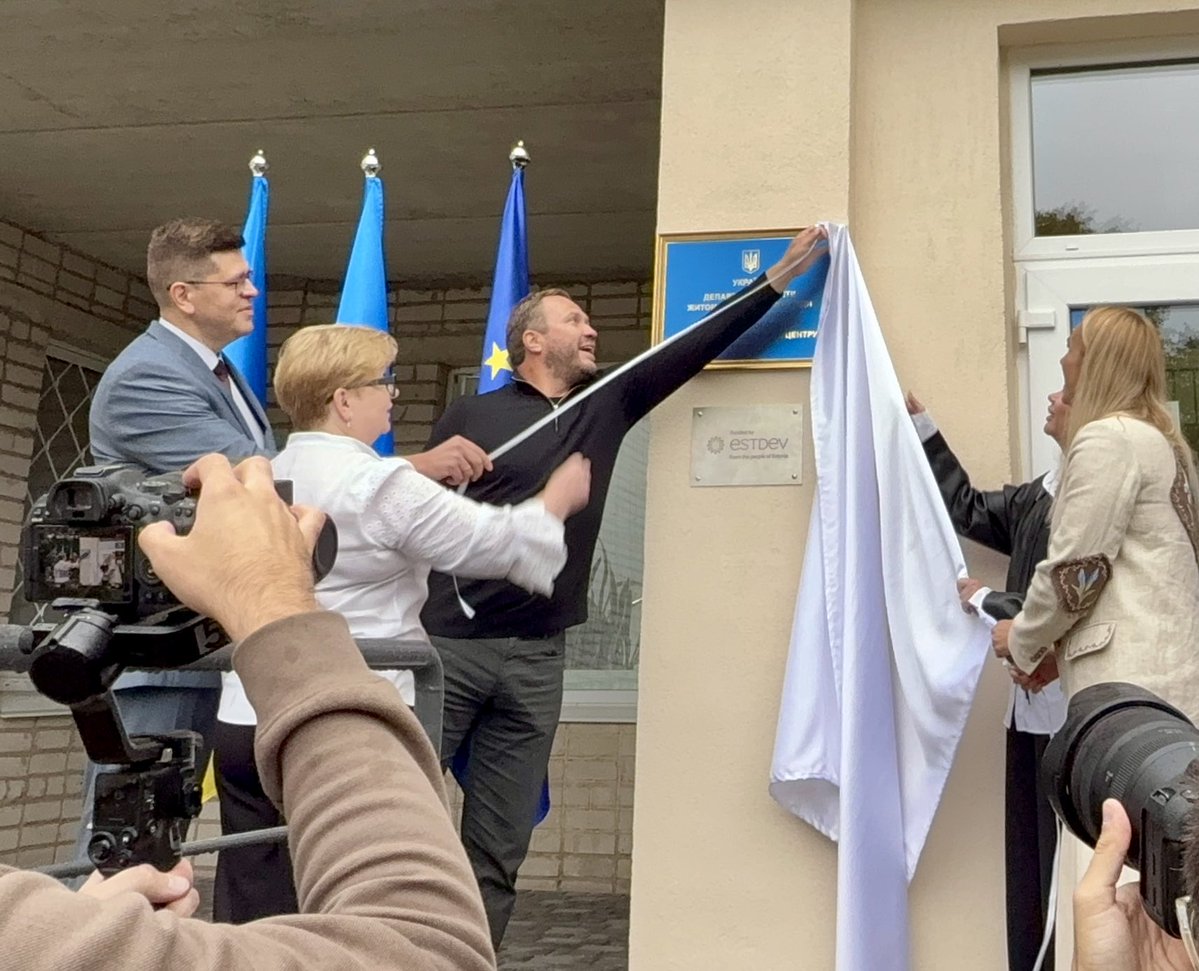
Investing in education is one of the strongest ways to lay the foundations for Ukraine’s future. Today in Zhytomyr, we opened EDUHUB, created by @ESTDEVEstonia with the support of our partners to help early childhood educators develop their skills and give children the best https://t.co/aaiE66olmw #InvestInEducation #UkraineFuture #EDUHUB #UA #EE

116
Eurosport IT 4w

Il grande cuore di Jannik 🧡 La Fondazione Jannik Sinner e l’UNICEF Italia hanno firmato un accordo biennale di collaborazione per sostenere il diritto all’istruzione di quasi 100.000 bambine e bambini che vivono in contesti di crisi umanitarie e conflitti 💝🏫 Questa partnership - cita il comunicato di @unicef - ha l’obiettivo di rafforzare la capacità dell’UNICEF di rispondere rapidamente alle emergenze, in particolare per il settore dell’istruzione, attraverso l’allestimento di spazi temporanei per l’apprendimento nelle aree in cui le infrastrutture scolastiche sono state danneggiate o distrutte e rendendo disponibili kit educativi pronti per essere distribuiti anche nelle aree più remote, zone di conflitto e territori colpiti da disastri. 📚🎒 Tra i kit educativi progettati per essere utilizzati rapidamente: le School-in-a-Box contenenti quaderni, matite, righelli e tutto il necessario per organizzare le attività scolastiche di circa 40 bambini e un insegnante; gli Early Childhood Development Kit che contengono giochi e materiali che favoriscono l’apprendimento e lo sviluppo cognitivo, sociale ed emotivo per la prima infanzia; i Recreation Kit che permettono di realizzare attività ludiche, motorie e di gruppo. Un'iniziativa davvero degna di nota, bravo Jannik 🎩 #JannikSinner #UNICEF #istruzione

16772
Ursula von der Leyen Sep 10

We do not have to accept childhoods shaped by algorithms. We do not have to accept a system that fails our children. Europe has the power to act. To give children the time they need in the real world. I will detail our proposal in my upcoming State of the Union address. https://t.co/IvP2RJ3TkG #ProtectOurChildren #DigitalWellbeing #StateOfTheUnion #EU

6059
💥 BlueCo Xtra® 💙 Sep 1

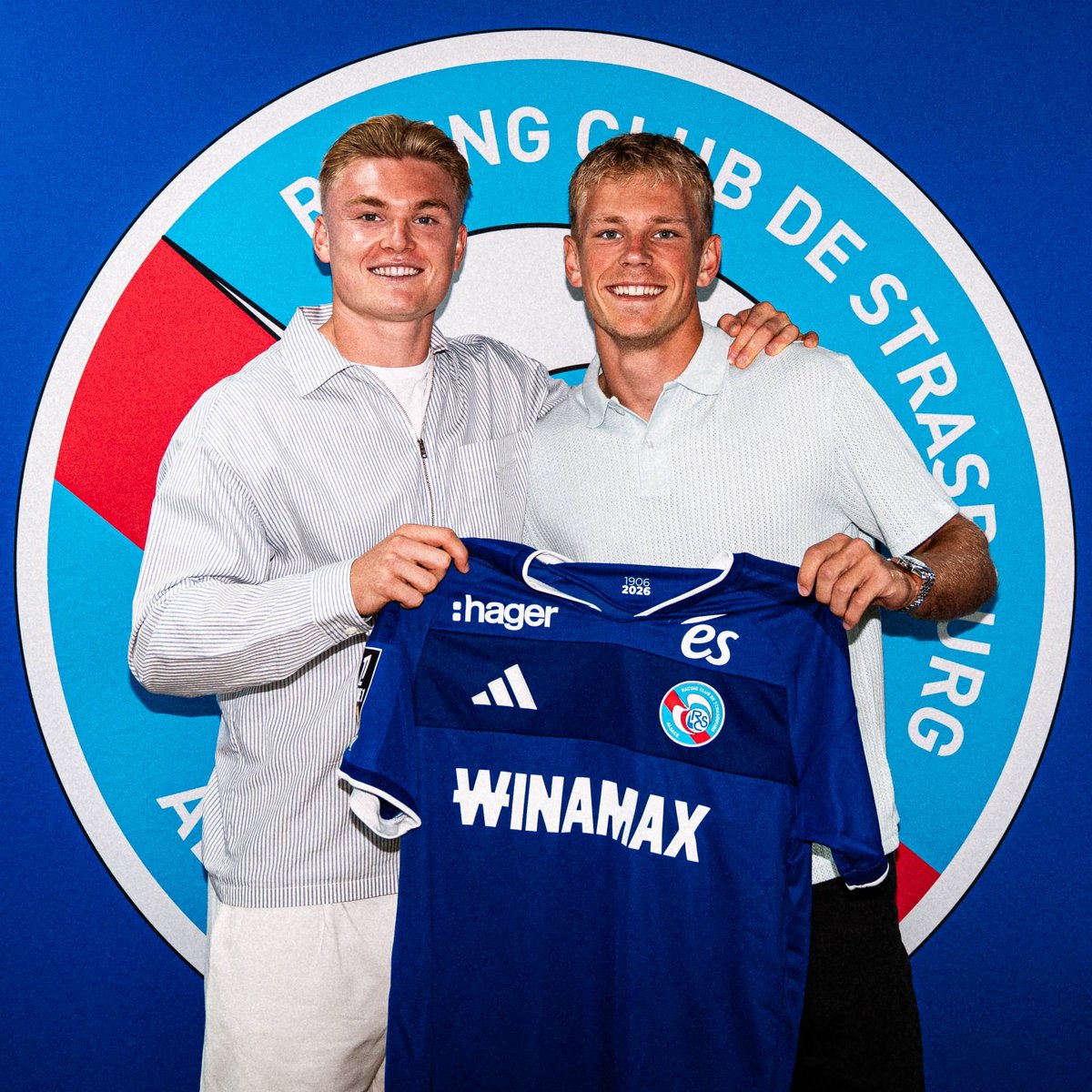
🫂 Childhood friends are back together again at RC Strasbourg: Lucas Høgsberg and Conrad Harder. #BlueCo #RCSA https://t.co/4OF4PETCcU #RCSA #Strasbourg #Football

16502
Wojtek Kopczuk 🇵🇱🇺🇦 and 🇺🇲 Aug 31

Yep, people won, it made lives of tens of millions of people better, and I'm still mad about not having lived my childhood in a normal country. Museums that cover this history are useful to counter the ignorance about how it all looked and worked #HistoryMatters #CulturalAwareness #ChildhoodMemories #Thetweetdoesnotmentionanyspecificcountrynames.Therefore #therearenocountrycodestoreturn.

468
S
Sandfeen Aug 28

Why Weak Societies Choose Tyranny The pinnacle of tyranny would be a system that allows politicians, elites, and bureaucrats to control a population without force or coercion because the people love their servitude. Aldous Huxley wrote Brave New World, an eerily relatable dystopian novel, with this idea at the forefront. Unlike Orwell’s 1984, there is no overt oppression. The state does not have to stamp on human faces with its jackboots or erect an inescapable surveillance state. Rather, the people of Brave New World happily chain themselves with meaningless pleasure and distractions. The authorities do not rule through terror and rage, the central elements of 1984, but instead give the people everything they ever wanted. A pharmaceutical called Soma becomes the opiate of the masses. Mustapha Mond, the World Controller, likens it to Christianity without tears. While religion requires years of moral training, Soma allows citizens to achieve peace simply by swallowing tablets. It is the perfect escape from reality, a holiday from the facts. Lenina, the female counterpart to the protagonist Bernard, cannot comprehend why he refuses Soma, preferring discomfort to something that can remove it. When Bernard states, “I’d rather be myself, myself and nasty, not somebody else, however jolly,” Lenina sees this as a sort of pathology and repeatedly encourages him to take the wonder drug. Bernard explains, “I want to know what passion is.” He understands that there is more to life than merely being content, craving genuine experience, including suffering and intensity, rather than being emotionally regulated by the World State. Lenina’s bewilderment stems from her conditioning to regard unhappiness as a technical problem, encapsulated in the society’s common saying that “a gram is better than a damn.” The people of Brave New World are not captives but satisfied customers. Children are produced by the scientific state, relieving people of the responsibility of parenthood. This grants them the ability to engage in promiscuity, where everyone belongs to everyone else, while filling their free time with cheap entertainment and endless sporting events—what would be referred to as slop today. As Neil Postman observed, Orwell saw totalitarianism through the lens of fear, while Huxley saw it through pleasure. There was no need to ban a book in Brave New Worldbecause there was no one who wanted to read one. An abundance of low-quality information rendered censorship unnecessary because no one could hear the truth through all the noise. Huxley threw shade at civil libertarians who passionately opposed tyranny because they failed to take into account man’s almost infinite appetite for distractions. Humanity in its rawest form is portrayed by John the Savage, an outsider free from the World State’s conditioning. Upon coming face-to-face with this spiritually neutered society, he completely rejects it: “I don’t want comfort, I want God, I want poetry, I want real danger, I want freedom, I want goodness, I want sin.” Huxley’s dystopia is not imposed on an unwilling population but instead requested by a hollow one. Which leads us to the question: How do people become so weak that they get on their knees and beg for totalitarianism? Good times make bad times possible. Once a certain level of luxury and safety is achieved, people start to resemble the hobbits from the Shire. They are so far removed from evil that they forget it even exists and become defenseless in the face of it. Andrew Lobaczewski, who studied the psychology of totalitarianism from inside Poland’s communist takeover, wrote: “During good times, people progressively lose sight of the need for profound reflection. They lose the capacity to differentiate human nature, and emotion begins to dominate intellect. Once a critical mass starts operating on the pleasure principle, any excess mental effort seems like pointless labor.” Lobaczewski warned that it is not as simple as some people losing the ability to think rationally. It is worse, because those people then shame anyone capable of doing so. A clever, liberal, and merry individual is a good sport. A more far-sighted person predicting dire results becomes a wet blanket, a killjoy. The ability to have uncomfortable conversations without emotion taking over is, in Lobaczewski’s view, an indicator of whether a society’s future will be good or bad. It is easier to think about pleasant things. This leads people to eliminate any data or facts that cause them discomfort. That becomes a habit and eventually a custom accepted by society at large. Once the general populace accepts that inconvenient truths should be left unsaid, it becomes incapable of reaching correct conclusions. After all, how could you ever describe a picture that you refuse to look at? “Catastrophe waits in the wings of the communities that lose the capacity for psychological reason and moral criticism,” Lobaczewski wrote. “It is on the other side of this weakening of thought that the processes of the generation of evil are intensified at every social scale until they give rise to bad times.” It is precisely man’s dreams of happiness that can lead to chaos and suffering. This hedonistic view of happiness contains the seeds of misery, feeding the eternal cycle whereby good times give birth to bad times. Friedrich Nietzsche viewed socialism as demanding comfort for the greatest number of people possible. To question whether it is good for the masses to live in comfort has become a form of heresy. This reveals the spiritual atrophy that so many suffer from. Considering only the weak believe comfort to be a virtue, it is what Carl Jung would describe as the infantile dream state of mass dependency: the desire to gently slip back into the kingdom of childhood, into the paradise of parental care. Except this lack of friction has consequences. The perfect state destroys the soil in which great intellect grows. Genius, struggle, passion, strength, and wisdom are required to build a safe and abundant society. Yet once a certain level of comfort is achieved, it can destroy the very virtues required to obtain it. Nietzsche observed that it is the warmest heart that aims to alleviate suffering and hardship but fails to realize that it thereby wills the destruction of its own foundation. Comfort breeds mediocrity, which is then called good. Small people want one thing above all: that no one hurt them. We have taken this pathology to such a degree that we now obsess over hurt feelings and call this virtue. Pleasure, in its proper place, is a byproduct of meaningful goals, not a goal in itself. Aristotle saw that pleasure and comfort distort perception and proper judgment. While they do not cause us to misjudge something like geometry or mathematics, they can destroy our ability to decide what is worth pursuing and, therefore, what to do. Consider The Odyssey. Homer depicts Odysseus’ men on the island of the Lotus-Eaters, where they taste the fruit and lose all desire to go home. Much like Huxley’s Brave New World, they are not imprisoned. Rather, they simply stop wanting anything more. Odysseus has to drag his men back to the ships while they weep to stay. This is what comfort can do to men. It empties them of purpose. We intuitively understand this but fail to apply it to our own lives. We must make the same choice as Odysseus when he refuses Calypso’s offer of endless comfort and immortality. He knows she is more beautiful than his wife Penelope waiting at home. He knows that he and Penelope will grow old and die, a fate he could avoid by staying with Calypso. No one who reads these stories wishes he had stayed. We want him to choose the hard way home because if he took the offer, he would stop being admirable. Yet staying is exactly what our modern society asks of us. We are told that the island is the good life. But what happens to the man who caves to this temptation? In Thus Spoke Zarathustra, Nietzsche imagines a risk-averse society taken to its logical endpoint. The elimination of all struggle produces a man so diminished that he fails to possess even self-contempt or higher aspiration. Safety and sameness become the highest goals, creating “no shepherd in one herd.” Anyone who seeks to be anything more than normal becomes an aberration to be dealt with. Or, as Nietzsche puts it, they have “made the wolf a dog in man himself, man’s best domestic animal.”

1055
Federico Viticci Aug 27

Cancer sucks. Childhood cancer fucking sucks even more. Help my friends end it with their annual campaign for @StJude. Since 2019, they have raised almost $5 million (!) for this cause. Every bit helps: https://t.co/FWOMsXXCIQ #ChildhoodCancer #StJude #CancerAwareness #Nospecificcountrycodescanbeidentifiedfromthetweet.

1290
Luka Updates Aug 26

Luka Dončić is recording some promotional material today in Ljubljana on his childhood court. 📸 /@24ur_com https://t.co/SgIw6MbV1z #LukaDoncic #Ljubljana #Basketball

14545