WRLD

Search

#commentator
NOS 2d

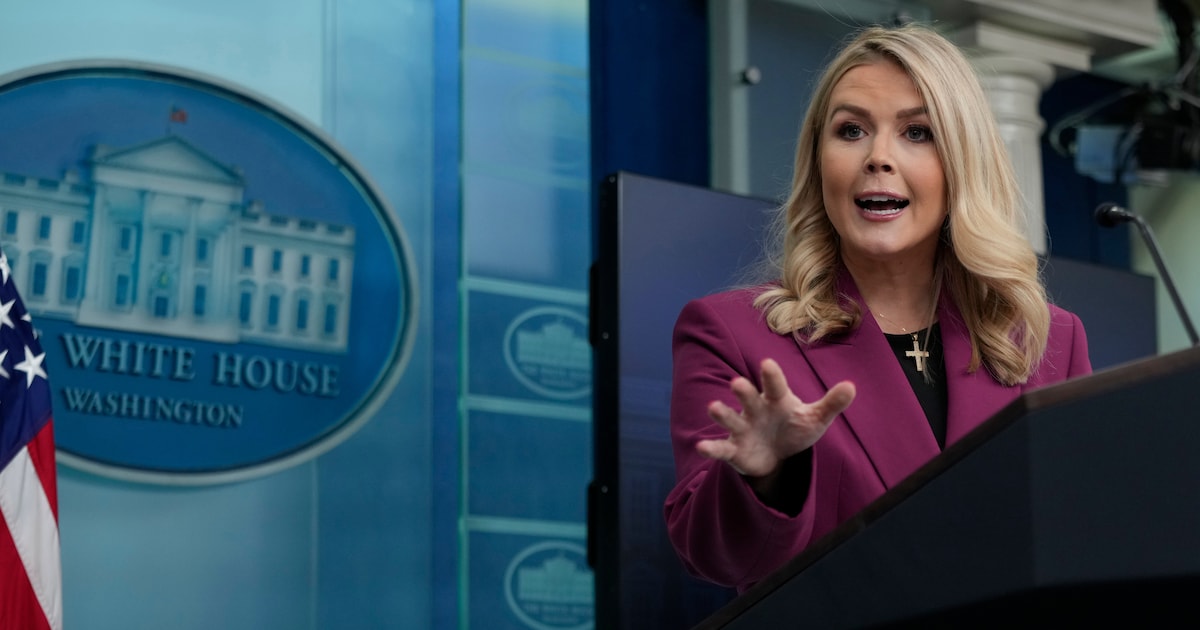
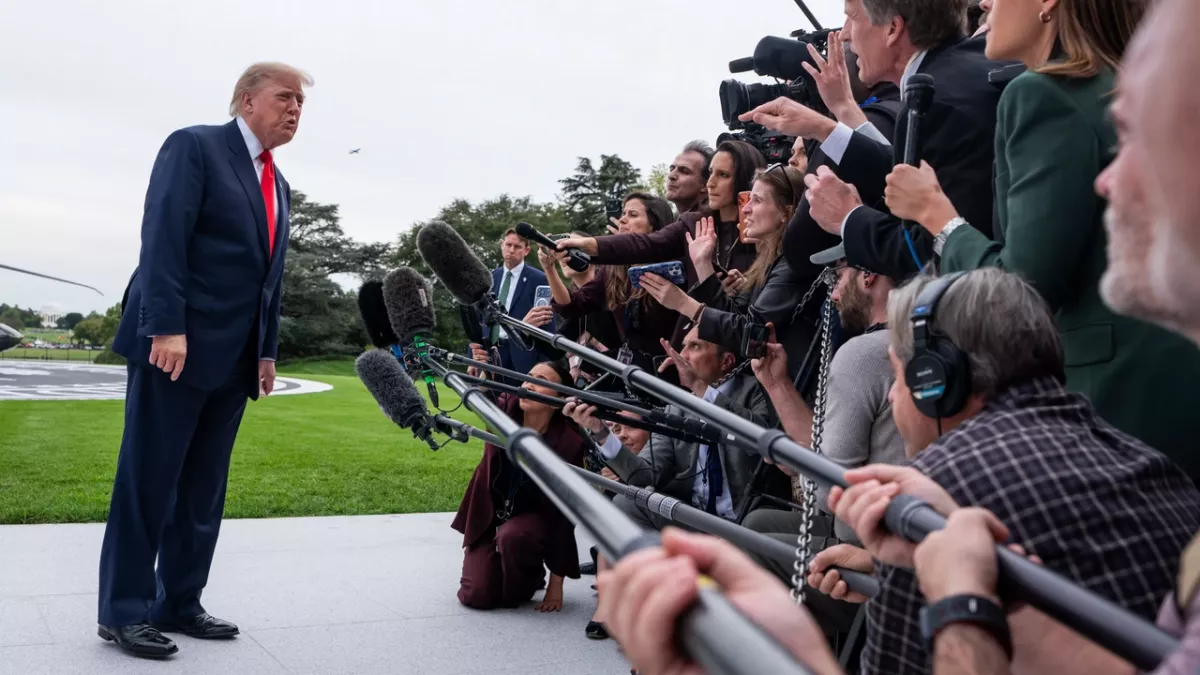
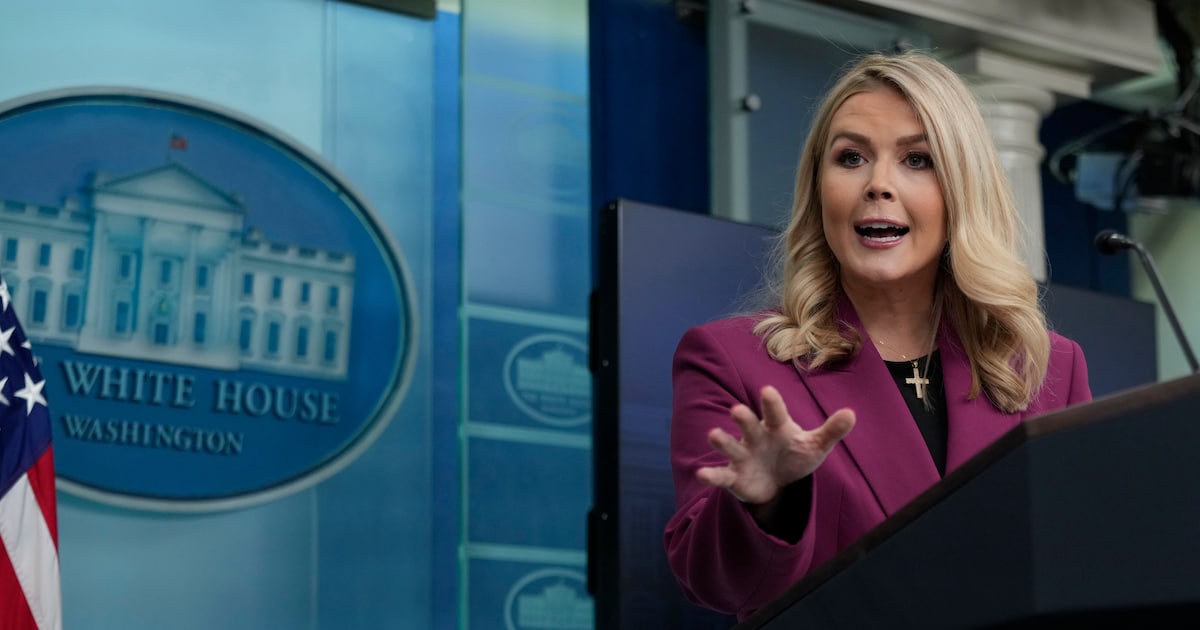
Donald Trump has appointed the right-wing political commentator Katie Zacharia as the new press chief of the White House, replacing Karoline Leavitt, as she must navigate low approval ratings for the president and the upcoming midterm elections. #KatieZacharia #WitteHuis #Trump (translated)
nos.nl
Rechtse politiek commentator Katie Zacharia nieuwe perschef van het Witte Huis
3120
A
AD 3d

The Trump administration has appointed conservative commentator Katie Zacharia as the possible successor to former press secretary Karoline Leavitt. #Trump #WitteHuis #Perschef (translated)

www.ad.nl
Regering-Trump vindt opvolger van voormalig perschef Karoline Leavitt
2563
A
AD 3d

The Trump administration has appointed conservative commentator Katie Zacharia as the likely successor to former press chief Karoline Leavitt. #Trump #WitteHuis #KatieZacharia (translated)

www.ad.nl
Regering-Trump vindt opvolger voor voormalig perschef Karoline Leavitt
2566
BBC 3d

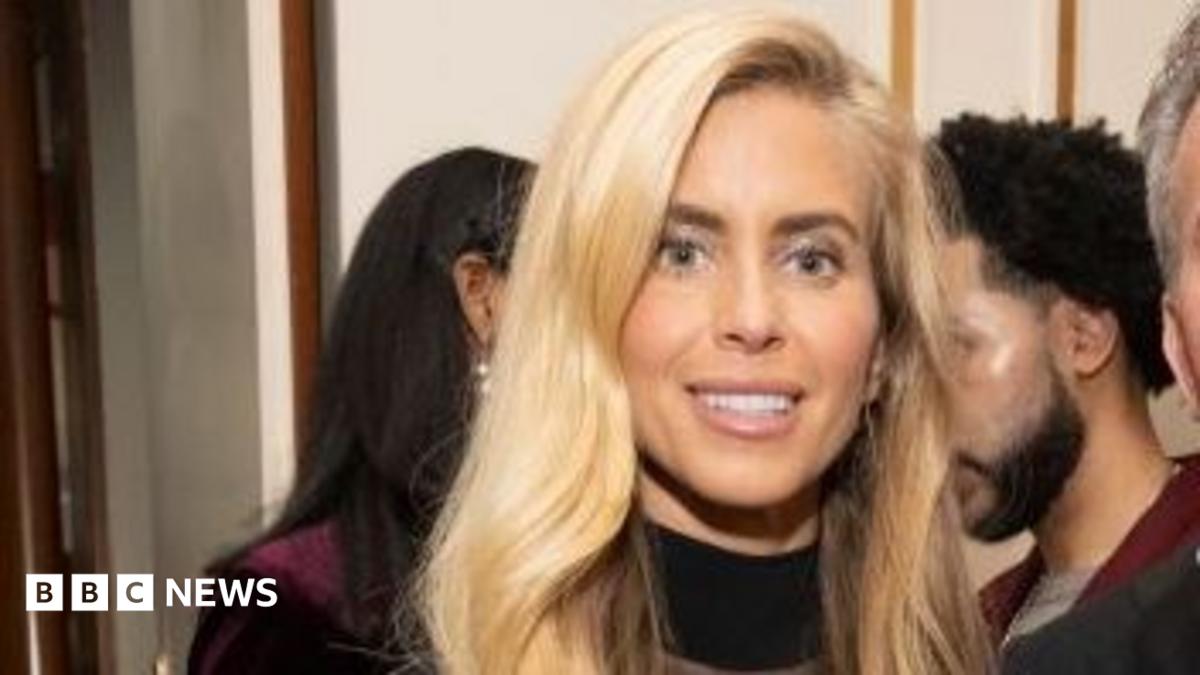
The conservative commentator currently works as a communications adviser at Trump Media & Technology Group. #WhiteHouse #PressSecretary #USPolitics

www.bbc.co.uk
Commentator Katie Zacharia picked as new White House press secretary
3013
Michele Boldrin 5d

The post accused the government, the opposition, and some commentators of being united against the Italian economy. It was argued that they made people believe that stimulating the economy meant resorting to clientelistic spending financed with loans; according to the post, neither the Superbonus 110% nor the PNRR had been enough. The author added that those people needed to be stopped and addressed Ora Italia. #Economia #Italia #Politica #IT (translated)

2934
Bonifacio Castellane 5d

Bonifacio Castellane observed that those who hoped immigrants would set schools on fire and those who wondered why such episodes did not happen in Italy, in his view, were calling for a huge electoral boost for Giorgia Meloni. He argued that no one on the right wished for such events, even knowing they would favor the right. He justified this difference with two reasons he defined as anthropological: he said that a person on the right would prefer to avoid damage to the Trevi Fountain or the loss of votes, while a person on the left would prioritize the release of their emotions, trusting that the "Gramscian Parastate" would then remedy the consequences. #Immigrazione #Politica #Elettorale (translated)

3274
Krzysztof Graj 5d

Nigeria – how pro-Russian influence networks sell military rule as the answer When Nigerians took to the streets in August 2024 to protest soaring living costs and frustration with government, some demonstrations acquired an unexpected symbol: the Russian flag. In Kano, Kaduna and other northern cities, protesters were filmed carrying Russian colours and calling for Moscow’s intervention. Some demanded a military takeover. What initially looked like an unusual expression of anger has since become part of a much larger picture. A September 2026 assessment by the Africa Center for Strategic Studies describes Nigeria as a major target of overlapping foreign information operations, with Russia the most active external actor in its information space. The report does not identify a single centrally controlled campaign. Instead, it maps an ecosystem in which genuine dissatisfaction over insecurity, corruption and living standards is repeatedly redirected towards a broader proposition: democratic government has failed, while the military-led regimes of the Sahel offer a more effective alternative. Turning a real protest into a pro-Russian message The clearest example emerged during the 2024 #EndBadGovernance protests. Nigerian investigative reporting found that a Kano-based TikTok influencer with more than 100,000 followers had been paid through a Telegram channel associated with African Initiative, a Moscow-based media operation linked by researchers to Russian influence activity in Africa. The influencer said the channel supplied photographs, videos and talking points for redistribution on TikTok and Instagram. Among the messages provided were phrases such as “Putin please come and save Nigeria” and “The army is the answer for Nigeria”. Influencers were encouraged to use Hausa-language hashtags including #Zangazanga – “protest” – alongside references to Putin and Russia. Investigators identified 38 accounts circulating similar pro-Russian and pro-military narratives during the demonstrations. Russian flags subsequently appeared among protesters in several northern cities. This does not mean the protests themselves were created by Russia. They were driven by genuine economic and political grievances, and Nigerian protesters gave different reasons for carrying Russian flags. The important feature of the influence activity was precisely that it did not need to manufacture the original anger. It could attach a geopolitical message to an existing domestic crisis. From frustration to the idea of military government The narrative fits a wider pattern seen across West Africa. Russia has developed close relations with the military governments of Mali, Burkina Faso and Niger, while pro-Russian media ecosystems routinely portray those states as examples of sovereignty, stability and resistance to Western influence. Nigeria, by contrast, has remained under constitutional civilian government since 1999. Africa Center researchers say information networks targeting Nigerians increasingly contrast these two models. Recurring messages depict elections as wasteful or predetermined, civilian institutions as incapable of protecting citizens and military governments as more decisive on security and development. Some content portrays the Sahelian juntas as delivering better roads, lower prices and stronger security even where available evidence points to continuing or worsening instability. Language is central to the strategy. Hausa is spoken across northern Nigeria and neighbouring Niger, allowing political narratives to travel across borders that are far less important online than they are on maps. HumAngle documented efforts involving Nigerien state-linked actors to cultivate Hausa-speaking journalists and distribute material favourable to Niger’s junta and hostile to France and Western influence. The Russian and Sahelian-junta information ecosystems are not identical, but their narratives frequently reinforce one another. Fake journalists inside real Nigerian media The campaign environment extends beyond social media. A 2026 investigation by Graphika and Code for Africa identified 44 ghost reporters and fake experts whose identities were used to place Russia-aligned narratives in African media. Thirty-eight were assessed with high confidence to be fabricated. Their articles or quotations appeared across 138 websites and were amplified by at least 113 Facebook accounts and Pages. Nigeria was one of the most heavily targeted countries. According to the Africa Center’s analysis of the research, Daily Post Nigeria carried 39 articles involving 14 identified ghost authors. Once published by a genuine Nigerian outlet, such material could then be cited by other websites, social-media accounts or even Russian official channels as though it had originated independently in Africa. This is information laundering rather than simple propaganda: the most valuable asset being borrowed is the credibility of the local newsroom. Generative AI added another layer. OpenAI and Meta separately disrupted a Russia-origin network that produced Africa-focused political content and operated Facebook Pages posing as local media organisations. One fabricated commentator, “Dr Manuel Godsin”, was presented as a European-trained geopolitical expert although investigators found no evidence supporting his academic biography. ChatGPT had been used to generate articles under the persona’s name, while Meta removed 37 Facebook accounts and 29 Pages connected to the broader network. Different networks, similar strategic direction It would be misleading to merge all these activities into a single Russian command structure. The African Initiative-linked influencer campaign, the ghost-reporter network and the AI-enabled operation disrupted by OpenAI and Meta were uncovered separately and used different infrastructure. Public evidence does not demonstrate that every actor reported to the same organisation. What connects them is a recurring set of themes and methods: portraying Western partnerships as exploitative, presenting Russia as an alternative security partner, amplifying failures of civilian government, and giving military-led rule greater legitimacy. Investigative reporting on leaked Russian documents has meanwhile described a much wider influence apparatus operating across Africa, involving political consultants, paid journalists, influencers and locally tailored campaigns intended to reduce Western influence and expand Moscow’s position. The underlying technique is less about inventing dissatisfaction than redirecting it. Nigeria faces real security threats, economic pressure and public frustration. Influence operators do not need to persuade Nigerians that those problems exist. They need only influence the explanation for why they exist – and which political model appears to offer the answer. That is what makes the Nigerian case significant. The most effective propaganda does not necessarily introduce a completely false reality. It takes a real crisis and changes where the audience is encouraged to look for the solution. Sources Africa Center for Strategic Studies — The Raging Information Battle in Nigeria https://africacenter.org/spotlight/the-raging-information-battle-in-nigeria/ Graphika — Umbrae Ex Machina https://www.graphika.com/reports/umbrae-ex-machina OpenAI — Operation “No Bell” https://openai.com/index/disrupting-malicious-uses-of-ai-no-bell/ TheCable — Ghost reporters in African media https://www.thecable.ng/ghost-reporters-how-fabricated-african-voices-carried-pro-russia-narratives/ HumAngle — Nigeria Is Facing an Information War in Its Own Language https://www.humanglemedia.com/nigeria-is-facing-an-information-war-in-its-own-language DAIDAC / CJID — Russian influence during #EndBadGovernance https://daidac.thecjid.org/how-telegram-tiktok-aided-russian-disinformation-that-led-to-incarceration-of-nigerian-minors/ FactCheckHub — How Nigeria’s hunger protest took a radical turn https://factcheckhub.com/from-economic-protests-to-coup-agitation-how-nigerias-hunger-march-took-a-radical-turn/ News24 — Fake Kremlin-linked analyst planted stories in African media https://www.news24.com/southafrica/news/ai-expert-exposed-fake-kremlin-linked-analyst-planted-stories-in-african-media-20260318-0560 Vanguard — AI ‘expert’ exposed https://www.vanguardngr.com/2026/03/ai-expert-exposed-fake-kremlin-linked-analyst-planted-stories-in-african-media/ Africa Confidential — How Moscow wages social media war https://www.africa-confidential.com/article/id/15961/how-moscow-wages-social-media-war Keywords #DISINFORMED #Episode15 #Nigeria #Russia #RussianInfluence #RussianDisinformation #Africa #WestAfrica #Disinformation #InformationWarfare #InfluenceOperations #ForeignInterference #FIMI #Propaganda #MilitaryRule #MilitaryGovernment #Democracy #PoliticalManipulation #NarrativeManipulation #AfricanInitiative #EndBadGovernance #Hausa #LocalInfluencers #GhostReporters #FakeExperts #ArtificialIntelligence #AI #AIPersonas #SyntheticMedia #AIPropaganda #Astroturfing #SocialMediaManipulation #Telegram #TikTok #DigitalInfluence #SourceLaundering #NarrativeLaundering #MediaManipulation #Sahel #Geopolitics #OSINT #WRLD

africacenter.org
The Raging Information Battle in Nigeria
903
M
Michael Tracey 7d

After the controversial political commentator Michael Tracey called last week for the release of Jane Doe's information, women have been rising up in large numbers. #WeAreJaneDoe #SurvivorSupport #MeToo (translated)

Na heropening van verkrachtingszaak op universiteit staat achter Jane Doe een digitaal leger van Amerikaanse vrouwen klaar
www.nrc.nl
1815
S
Sandfeen 1w

God knows I can’t stand football. This ridiculous and degenerate excuse for a sport is a hideous symbol of the pervasive human idiocy I have witnessed throughout my life. It wouldn’t be so bad if I hadn’t also followed the professional career of my friend Cristiano Ronaldo—whom commentators yesterday described as “past it” and “a grumpy old man.” If you ask me, football fans ought to undergo psychiatric evaluations. The treatment Cristiano Ronaldo has received throughout his professional career has been utterly unacceptable, and I have therefore decided to punish football in Portugal. It is sad that the Portuguese people will now witness the slow decline of football in their country, but that is simply how it is: when giants clash, it is the little people who get trampled. Cristiano Ronaldo will be the last great thing Portugal produces in football.

1143
Gunther Fehlinger-Jahn 2w

Steve Deace is sounding a major alarm for Republicans ahead of the 2026 midterms. In his September 25 column, the conservative Iowa commentator says polling relayed to Iowa House Republicans suggests even districts Donald Trump previously carried by around 10–15 points could now https://t.co/O66mRGJlEV #Midterms2026 #Republicans #Election2024 #US

Claudio Borghi A. 2w

La tristezza della mattinata è vedere l'accapigliamento dei commentatori per il 2,9 o 3.1 % di deficit. Ma benedetti figlioli, stiamo parlando DELL'ANNO SCORSO. Se una spesa non fosse stata comunicata adesso sarebbe stata comunicata prima e non sarebbe cambiato nulla. Se invece quella spesa NON SI FOSSE FATTA allora sarebbe calato il pil con impatto negativo su tutto. La verità è che quel numerino NON VUOLE DIRE NULLA e che la nostra priorità deve essere crescita e sostegno alle famiglie. Ci sono DIECI paesi in infrazione e noi siamo quelli con il deficit più basso. Basta FREGARSENE e non dico di fare come la Francia che andrà se va bene al 5,4% nonostante il suo nucleare ma basta stare nella media. Non mancherò di ribadire la posizione ai partiti di maggioranza perché non mi pare che questa cosa sia chiara. Forse ci scrivo un pezzo ad hoc così mettiamo numeri e dettagli ma il concetto è semplice. I margini per (uso le parole di Salvini) una legge di bilancio coraggiosa ci sono, basta volerlo. #economia #debito pubblico #crescita

12682
Paolo Bertolucci 2w

«Il 12 luglio la nostra ultima finale. Ciao Elena»Così Paolo Bertolucci, colonna del tennis italiano e commentatore Sky Sport proprio con Elena Pero, dà l'ultimo saluto alla collega e voce autorevole della racchetta, morta oggi dopo una malattia fulminante che però non le aveva impedito di seguire la finale di Wimbledon vinta da Jannik Sinner. #ElenaPero #SkySport #Tennis

Elena Pero, morta la giornalista voce del tennis di Sky Sport: era malata da tempo. L'ultima telecronaca nella vittoria di Sinner a Wimbledon
www.ilmessaggero.it
1499
Rebe 🥟 3w

Il commentatore di DAZN: “L’ha messa lì nostro padre” C’È SOLO UN CAPITANO 🇮🇹 #italvolley https://t.co/w9nPoeloK9 #volley #sport #Italia

14086
Michael Walsh 3w

‘If the world was a bar, America would be the angry drunk waving around a loaded gun. Yeah, the other people in the bar might be afraid of him, but they sure as hell don’t respect him.’ ~ American commentator.

694
Ed Sheeran HQ 3w

«Nella mia carriera ho provato a non fare il commentatore politico, perché voglio che la mia musica e i miei concerti servano a unire, non a dividere, ma questa è una questione umanitaria e non posso più nascondere cosa provo»

Cosa ha detto Ed Sheeran al primo concerto del suo tour da cui è stato escluso Macklemore
www.ilpost.it
8686
Francesca Donato 3w

“C'è un'isteria assoluta in corso in questo momento riguardo alla Russia che starebbe preparando la guerra sul territorio europeo della NATO, originata da una varietà di leader e politici europei fino a commentatori casuali su X. Tra tutti i momenti negli ultimi quattro anni e #Russia #Guerra #NATO #RU

116
Il Post 3w

È morto all'età di 83 anni Sandro Mazzola, uno dei più grandi calciatori italiani e storica bandiera dell'Inter, con la quale ha conquistato numerosi trofei e ha anche avuto una carriera da dirigente e commentatore. #SandroMazzola #Inter #calcio

www.ilpost.it
È morto Sandro Mazzola
8114
Krzysztof Graj 3w

Mali – a war where some of the people fighting do not exist In Mali's war, an apparently simple question is becoming increasingly difficult to answer: who exactly is speaking to us? A real person? A rebel organisation? A Russian influence operation? A supporter of the military junta? Or somebody who has never existed at all? In September 2026, the Dakar-based Timbuktu Institute published Des algorithmes en guerre, a report examining the use of generative artificial intelligence by actors involved in the Malian conflict. Its researchers describe the country as a potential laboratory for AI-assisted information warfare. Separatist networks are deploying synthetic fighters on TikTok. Jihadist propagandists are experimenting with AI-generated imagery. Pro-government accounts are producing large quantities of content celebrating the Malian armed forces. Russia, meanwhile, operates the most developed influence infrastructure of all: pseudo-media outlets, inauthentic accounts, AI-generated text, images and video, and systems designed to artificially amplify their visibility. Artificial intelligence did not create Mali's conflict. The war has been under way since 2012, and its participants have always fought with propaganda as well as weapons. What AI has changed is the economics of that struggle. A new “witness”, commentator, fighter, poster or video can now be produced in minutes. For audiences watching from a phone, distinguishing between genuine documentation, propaganda and material created entirely by an algorithm is becoming progressively harder. Azzghim – the fighter who cannot be killed or interrogated The most striking case documented by the Timbuktu Institute involves accounts associated with supporters of the Azawad Liberation Front, or FLA, a Tuareg separatist movement fighting the authorities in Bamako. A figure called “Azzghim” appeared on TikTok. He looks like a Tuareg fighter and regularly features in videos attacking Mali's government and Russia's Africa Corps, commenting on the conflict and promoting the cause of Azawad. There is one problem: Azzghim does not exist. Analysis of the videos identified anomalies characteristic of generative AI, including unnatural body movements, visual inconsistencies, irregular colouring and problems with audio synchronisation. According to the Timbuktu Institute, Azzghim is a synthetic character being used as the digital face of a political narrative. The propaganda advantages are considerable. An organisation no longer needs to expose a real spokesman. A synthetic personality can be designed to look exactly as its creators require, speak the appropriate language and appeal to a particular audience. Different characters could potentially be created for younger viewers, traditional communities or different ethnic and social groups. There is another advantage: a synthetic spokesman cannot be arrested, identified or interrogated. Researchers also identified accounts amplifying the material. At the time of the study, TikTok account @tawri.n.azawad had around 207,000 followers and was almost entirely devoted to publishing or repackaging content involving Azzghim. Another account, @asnan831, used a similar synthetic teenage character. An important distinction is necessary. Researchers describe these profiles as belonging to supporters or individuals associated with the FLA. The available evidence does not establish that every account is part of an operation centrally directed by the Front's leadership. The information effect, however, remains significant: a digital community can be constructed around the Azawad cause in which some of the apparent participants may not be real people at all. The jihadists are learning too The picture is different for Jama'at Nusrat al-Islam wal-Muslimin, or JNIM, the al-Qaeda-affiliated coalition that has become one of the most powerful armed groups in the Sahel. Its confirmed use of generative AI remains considerably less sophisticated. In June 2026, JNIM's Az-Zallaqa media apparatus published AI-generated posters promoting material about previous attacks. The images showed fighters in combat but contained familiar generative artefacts: buildings and vegetation merging unnaturally, blurred details and unnaturally smooth surfaces. More important than JNIM's current capabilities is what AI could add to an already sophisticated propaganda apparatus. The organisation already tailors communications to different audiences. UN reporting has documented its use of media channels for broader propaganda while other outlets increasingly distribute material in local languages, including Bambara. Generative AI could dramatically reduce the cost of this strategy, translating material into Fulfulde, Hausa, Zarma or Tamasheq, generating synthetic dubbing and producing multiple versions of the same message. The Timbuktu Institute also considers the future possibility of AI chatbots being used to personalise recruitment. That should not be presented as a capability JNIM has already demonstrated. At present, it is a risk scenario rather than a confirmed operation. Russia has the most sophisticated machine At the other end of the spectrum lies Russia's influence ecosystem. Here, AI is not an isolated experiment but another component of an infrastructure previously developed by Wagner-linked networks, Russian media operations and influence organisations operating across Africa. After Wagner's withdrawal from Mali in 2025, its military role was taken over by the Russian state-controlled Africa Corps. The information infrastructure evolved alongside it. Of particular importance is African Initiative, which presents itself as a news agency but has been identified by France's VIGINUM, the UK's Foreign, Commonwealth & Development Office and the European External Action Service as an important component of Russia's newer influence architecture in Africa. One of the most interesting elements of this ecosystem is a network researchers call AI-Freak. The operation uses generative AI to produce text, images and videos, places them on fake or apparently independent news websites and distributes them through inauthentic accounts. This is supplemented by so-called Black Hat SEO – techniques intended to artificially increase the visibility of content in search engines. Elements of this infrastructure have previously been identified by Meta and OpenAI. In 2024, OpenAI disrupted Russian accounts using ChatGPT to generate articles and comments in English, French and Russian. Some of the French-language content targeted audiences in West Africa. In a later iteration of the operation, AI models were also used to draft scripts for short videos praising the Russian Africa Corps, translate them into French and generate descriptions optimised for social media. This illustrates an important difference between the Russian approach and Azzghim. The separatist ecosystem uses AI primarily to manufacture convincing digital personalities. The Russian model increasingly resembles an industrial production line: text, image, video, pseudo-news website, distribution account, search optimisation and additional channels amplifying the narrative. The objective is not merely to convince someone of a single claim. It is to occupy as much of the information environment as possible with narratives advantageous to Moscow: Russia as an effective security partner, the West as a neo-colonial aggressor, France as a source of instability and Russian forces as defenders of African sovereignty. Yet VIGINUM also warns against equating technological sophistication with actual impact. Some Russian influence channels still attract relatively small audiences. A sophisticated operation is not automatically a successful one. The junta is building its own digital reality Mali's military authorities operate within the same contested information environment. Since breaking with France and moving closer to Moscow, Bamako has increasingly restricted independent media space while promoting a narrative built around restored sovereignty, military success and the benefits of its Russian partnership. The Timbuktu Institute highlights the TikTok account @6tm_officiel. At the time of the study, it had more than 436,000 followers and published substantial amounts of AI-generated material presenting Mali's armed forces, the FAMa, and the Africa Corps in a favourable light. One video concerning the battle for Kidal accumulated around 4.7 million views. Again, attribution requires care. Researchers describe the account as being operated by an individual based in Bamako; they do not provide evidence that it is officially managed by the Malian government. It is better understood as part of a wider pro-government information ecosystem in which the boundaries between state communications, supporters and co-ordinated propaganda can be difficult to establish. The Africa Center for Strategic Studies has previously identified the military regimes in Mali and Burkina Faso as important sources of disinformation campaigns in West Africa. Recurring narratives target France, the United Nations, ECOWAS, human-rights organisations and independent media, while presenting criticism of the authorities as part of a foreign conspiracy. Generative AI allows such narratives to be produced faster, more cheaply and in far more variations. Everyone is fighting over a different version of the same war What makes Mali particularly revealing is that multiple actors are using similar technology for very different objectives. FLA-linked networks need digital faces capable of humanising the Azawad cause and attacking Russia's presence. JNIM needs propaganda material and increasingly localised communications. The pro-government ecosystem seeks to portray Mali's armed forces as victorious and reinforce the junta's legitimacy. Russia possesses the broadest infrastructure, in which AI is merely one component of a larger system involving media outlets, websites, local partners, social-media profiles and technical amplification. The result is a war taking place simultaneously in two realities. In the first, soldiers and civilians are killed, towns change hands and the army, separatists and jihadists fight for territory. In the second, every side is trying to determine what the first reality will look like on a smartphone screen. Generative AI does not need to create a perfect deepfake to be effective. It merely needs to increase the number of competing versions of events until an ordinary viewer can no longer easily determine which one deserves to be trusted. That is why Mali matters. It is not showing us the future of information warfare. It is showing us its present. One TikTok video may feature a real soldier. Another may feature a propagandist. A third may feature a fighter who has never existed. And all three can tell completely different stories about the same war. Sources Timbuktu Institute – Des algorithmes en guerre: Comment l'IA générative rebat les cartes du conflit malien https://timbuktu-institute.org/index.php/toutes-l-actualites/item/1731-rapport-des-algorithmes-en-guerre-comment-l-ia-generative-rebat-les-cartes-du-conflit-malien AfricaNews/AFP – “Mali's information war is increasingly being shaped by AI” https://www.africanews.com/2026/09/09/malis-information-war-is-increasingly-being-shaped-by-ai/ OpenAI – research on Russia-origin influence activity and Operation Stop News https://openai.com/index/disrupting-malicious-uses-of-ai-stop-news-2024/ VIGINUM / FCDO / EEAS – technical report on African Initiative and the AI-Freak network https://www.sgdsn.gouv.fr/files/files/Publications/20250612_TLP-CLEAR_VIGINUM_FCDO_EEAS_Technical_Report_African_Initiative_EN.pdf Africa Center for Strategic Studies – Mapping a Surge of Disinformation in Africa https://africacenter.org/spotlight/mapping-a-surge-of-disinformation-in-africa/ Timbuktu Institute – analysis of AI use by JNIM https://timbuktu-institute.org/index.php/toutes-l-actualites/item/1735-artificial-intelligence-a-new-propaganda-lever-for-jnim-in-mali?print=1&tmpl=component #Disinformation #Mali #Sahel #Africa #ArtificialIntelligence #AI #GenerativeAI #AIPropaganda #InformationWarfare #InfluenceOperations #Propaganda #Deepfakes #SyntheticMedia #Azawad #FLA #JNIM #AfricaCorps #Russia #RussianInfluence #TikTok #DigitalWarfare #MediaManipulation #WRLD

timbuktu-institute.org
Rapport - DES ALGORITHMES EN GUERRE : Comment l'IA générative rebat les cartes du conflit malien
1624
Wierd Duk ܦܝܪܬ ܕܘܟ 4w

Jort vindt dat 'rechtse' commentatoren heel veel / te veel aanschuiven bij allerlei talkshows, onder meer bij ''dat Telegraaf-tv, ja hoe heet dat ook alweer, zo rond 6 uur 's avonds, ja ik zie het nooit". Hij staat zelf niet op de lijst want hij zit zelf 'godzijdank exclusief bij Eva Jinek': : https://t.co/UWB516m9a9 #media #politiek #talkshows

12999
Hans van Dommelen 4w

Gunhild Carling (born 7 May 1975) is a Swedish jazz musician and multi-instrumentalist. She plays the trombone, trumpet and many other instruments. Carling became known for her performance at Allsång på Skansen on 20 July 2010. The same year, she became an expert commentator for Dansbandskampen at SVT. Gunhild plays trombone, bagpipes, trumpet, recorder, string instruments (such as banjo, ukulele and harp), and will often showcase all of her skills in one song, sometimes casually breaking into a tap dance or singing. https://hvdommelen.nl/jazz/Carling.html

116