WRLD

Search

#contractor
Krzysztof Graj 2d

AFRICA DAILY REPORT — 10 OCTOBER 2026 Key developments of past 24 hours 1. ETHIOPIA–ERITREA — Addis Ababa alleges an “all-out invasion” Ethiopia told UN Security Council members that Eritrean troops had advanced as far as 60 km into northern Ethiopia and asserted a right to self-defence. Eritrea rejected the accusations. The scale of the alleged incursion remains independently unverified. Source: https://www.reuters.com/world/africa/ethiopia-says-it-must-defend-itself-against-eritreas-all-out-invasion-2026-10-09/ 2. SOUTH AFRICA — Government withdraws asylum-processing directive after violence The government withdrew a directive implementing a Constitutional Court ruling on access to asylum procedures after violent anti-migrant protests in Durban and Soweto. Authorities reported 24 vehicles burned and looting of foreign-owned businesses. Source: https://www.reuters.com/world/africa/south-africa-withdraws-asylum-directive-after-anti-migrant-violence-2026-10-09/ 3. MOROCCO–SPAIN — King says migration-cooperation model has reached its limits King Mohammed VI said the current migration-cooperation model with Spain was inadequate and called for a broader partnership following a migration crisis involving Ceuta. The remarks point to possible changes in bilateral arrangements. Source: https://www.reuters.com/world/europe/moroccan-king-says-migration-cooperation-model-with-spain-hit-limit-2026-10-09/ 4. DR CONGO — Reuters reports deadly ambush involving Erik Prince-linked contractors Reuters sources reported at least 20 people killed or wounded in a September 17 ambush in South Kivu involving forces linked to Erik Prince. The alleged role of Rwanda-backed forces was not independently established. Source: https://www.reuters.com/world/africa/erik-princes-forces-suffer-battlefield-loss-congo-former-ufc-fighter-among-2026-10-09/ 5. DR CONGO — African Union mediators arrive in Kinshasa AU mediators, including former presidents Uhuru Kenyatta, Sahle-Work Zewde and Mokgweetsi Masisi, visited Kinshasa after meetings in Goma and Kigali, seeking progress on the eastern Congo peace process. No new agreement was announced. Source: https://fr.allafrica.com/stories/202610090393.html 6. SOUTH AFRICA — Navi Pillay wins the 2026 Nobel Peace Prize IMPORTANCE: 9/10 — VERY HIGH South African jurist Navi Pillay received the Nobel Peace Prize for her work in international law, human rights and accountability for serious international crimes. Source: https://www.reuters.com/world/navanethem-navi-pillay-wins-2026-nobel-peace-prize-2026-10-09/ 7. AFRICA–UNITED STATES — DFC plans expanded equity investments IMPORTANCE: 8/10 — HIGH The US International Development Finance Corporation plans to expand direct equity investment in Africa, focusing on critical minerals and infrastructure. It reports over $14 billion in investment commitments across the continent. Source: https://www.reuters.com/world/africa/us-agency-do-more-equity-investing-africa-official-says-2026-10-09/ 8. PAN-AFRICAN BANKING — Ecobank moves to join China's yuan payment system IMPORTANCE: 8/10 — HIGH Ecobank plans to join China's CIPS payments network to facilitate yuan settlement for Africa–China commerce, reflecting interest in diversified cross-border payment channels. Source: https://www.reuters.com/world/asia-pacific/ecobank-join-chinas-cips-payments-platform-yuan-settlement-2026-10-09/ 9. KENYA — Cabinet approves $350 million financing for Kenya Airways IMPORTANCE: 8/10 — HIGH Kenya's cabinet approved $350 million in shareholder financing for Kenya Airways to meet urgent obligations. Further debt restructuring and investor discussions are planned. Source: https://www.reuters.com/world/africa/kenya-approves-350-million-shareholder-financing-kenya-airways-2026-10-09/ 10. CAMEROON — Military court sentences 66 after post-election unrest A Yaoundé military court convicted 66 people detained after unrest following Cameroon's 2025 presidential election. Defence lawyers indicated plans to appeal, with further cases pending. Source: https://fr.allafrica.com/stories/202610090290.html #Africa #AfricaNews #AfricaDailyReport #TopNewsOfAfrica #AfricaToday #SouthAfrica #NaviPillay #NobelPeacePrize2026 #NobelPeacePrize #HumanRights #InternationalLaw #InternationalJustice #PeaceAndSecurity #UnitedNations #AfricaUSA #UnitedStates #USDFC #DevelopmentFinance #EquityInvestment #ForeignDirectInvestment #CriticalMinerals #InfrastructureInvestment #AfricanEconomy #EconomicDevelopment #AfricaInvestment #DRCongo #EasternCongo #SouthKivu #ErikPrince #PrivateMilitaryContractors #SecurityContractors #ArmedConflict #MilitaryAmbush #M23 #Rwanda #AfricanUnion #Ethiopia #Eritrea #Tigray #HornOfAfrica #RegionalSecurity #SouthAfricaProtests #MigrationCrisis #Xenophobia #Morocco #Spain #MigrationPolicy #Ecobank #ChinaAfrica #YuanPayments #CIPS #Kenya #KenyaAirways #Cameroon #PoliticalUnrest #AfricanPolitics #Geopolitics #AfricaSecurity #WRLDorg


331
Stefania Maurizi 1w

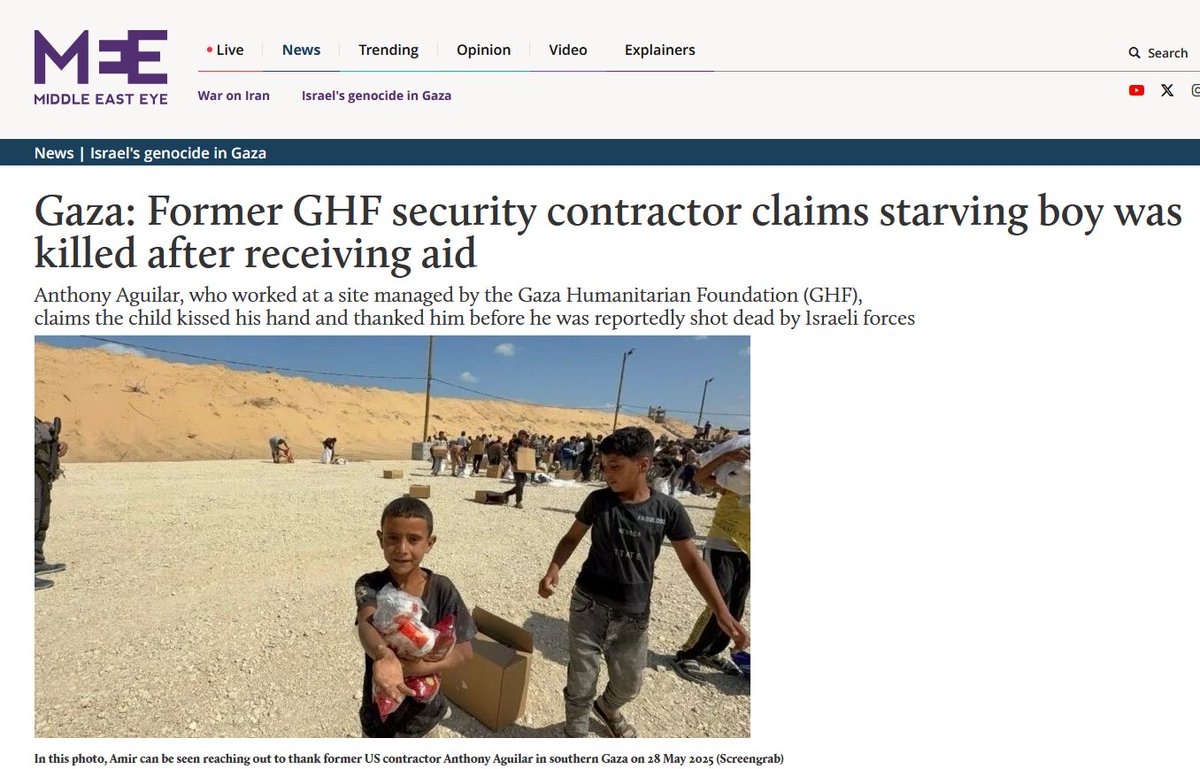
The author of the post wrote that the statements of Anthony Aguilar, who had worked as a contractor for the Gaza Humanitarian Foundation, described Palestinians, including children, being killed while searching for food. He said that those testimonies evoked in him a horror comparable to that provoked by Nazi brutality. https://t.co/W5YaLnonPC #Gaza #DirittiUmani #Solidarietà #PS #GA (translated)

Krzysztof Graj 2w

Africa Daily Report — 30 September 2026 Major developments reported during the previous 24 hours. 1. Morocco — Fatima Ezzahra El Mansouri appointed first woman prime minister. King Mohammed VI appointed El Mansouri following the September 23 parliamentary election. Her Authenticity and Modernity Party won the largest number of seats, and she now has to form a coalition. The appointment is historic, while the next government will also inherit major economic reforms and preparations for the 2030 World Cup. Direct source: https://www.reuters.com/world/africa/moroccos-king-appoints-first-woman-pm-following-sept-23-election-2026-09-29/ 2. Ethiopia — Fighting intensifies around Tigray amid wider regional accusations. Fighting between federal and Tigrayan forces has escalated, with territorial shifts and concern that the conflict could again spread across northern Ethiopia. Ethiopian officials have accused regional rivals of supporting armed groups, while communications disruptions and displacement are complicating independent assessment and humanitarian access. The renewed conflict threatens the fragile post-2022 settlement. Direct source: https://www.aljazeera.com/news/2026/9/29/fighting-in-ethiopia-intensifies-whats-the-latest 3. Somalia/Puntland — Five tanker crew members killed in piracy incident. Puntland authorities said Somali pirates killed five crew members of the petroleum-products tanker MT Honour 25 before security forces rescued the hijacked vessel. The incident is a serious reminder that piracy remains an operational security threat off the Horn of Africa despite years of international maritime-security efforts. Importance: HIGH — maritime security and Red Sea/Indian Ocean trade routes. Direct source: https://www.reuters.com/world/africa/somali-pirates-killed-5-crew-members-hijacked-tanker-before-rescue-mission-2026-09-29/ 4. Kenya/Nigeria — Dangote advances $16 billion Lamu refinery. Dangote is moving ahead with the planned 700,000-barrel-per-day refinery at Lamu. The project is intended to reduce East Africa's dependence on imported refined fuels and could generate more than 50,000 jobs, but it faces infrastructure, environmental and land-rights challenges. A Kenyan court dispute could restrict some site activity pending an October 14 hearing. Importance: VERY HIGH — potentially transformative for East African energy supply, fuel imports, logistics and industrial development. Direct source: https://www.reuters.com/business/energy/dangote-begin-construction-16-billion-east-africa-refinery-kenya-2026-09-30/ 5. South Africa — Foreign direct investment more than doubles in Q2. South Africa's central bank reported FDI inflows of 49.8 billion rand in the second quarter, up from 20.3 billion rand in Q1. The increase is an encouraging investment signal, although it needs to be considered alongside the country's broader growth, fiscal and structural indicators. Importance: HIGH — investment flows are a key indicator for Africa's most industrialised economy. Direct source: https://www.reuters.com/world/africa/south-africas-foreign-direct-investment-inflows-pick-up-q2-2026-09-29/ 6. Ghana — Environmental regulator intensifies mining-sector enforcement. Ghana's Environmental Protection Authority issued a pre-closure notice to Chinese-owned Cardinal Namdini Mining over an alleged unreported incident and is reviewing an inspection of Gold Fields' Tarkwa operation. The regulator says it is moving from periodic inspections toward continuous monitoring and enforcement as Ghana seeks stronger environmental compliance, state revenue and local participation in its gold industry. Importance: HIGH — regulatory tightening can materially affect major international mining investors and Ghana's gold industry. Direct source: https://kfgo.com/2026/09/29/exclusive-ghanas-environmental-authority-targets-chinese-owned-cardinal-and-others-in-mining-crackdown/ 7. DR Congo — Annual audits of major miners planned from 2027. The DRC plans annual audits of major mining companies' subcontracting practices and compliance with local-content requirements beginning in 2027. The world's largest cobalt producer and Africa's leading copper producer is tightening oversight to direct more procurement and contracts toward Congolese-owned businesses. Importance: HIGH — potentially significant for global copper/cobalt supply chains and mining contractors operating in DRC. Direct source: https://ca.marketscreener.com/news/congo-to-audit-major-miners-annually-from-2027-as-part-of-local-content-drive-regulator-says-ce785adddc81f221 8. Tunisia/Mediterranean — Migrant shipwreck leaves at least two dead. Sea-Watch said it rescued 28 people after a shipwreck off Tunisia and recovered two bodies, including a child. Survivors reported at least six people missing, including three children. More than 1,970 people have died or gone missing attempting Mediterranean crossings in 2026, according to Sea-Watch, even as arrivals in Italy have fallen sharply from 2025. Importance: HIGH — migration, humanitarian protection and EU–North Africa policy remain closely linked. Direct source: https://www.straitstimes.com/world/europe/migrant-shipwreck-off-tunisia-leaves-at-least-two-dead-six-reported-missing 9. Guinea-Bissau — Ousted president plans return ahead of December election. Former president Umaro Sissoco Embalo, removed in the November 2025 coup, plans to return on October 4 and seek the presidency in elections scheduled for December 6, according to a source cited by Reuters. A recently approved constitutional residency requirement could become relevant to his eligibility. The military-led authorities have reportedly said he is welcome to return. Direct source: https://kfgo.com/2026/09/29/ousted-guinea-bissau-leader-to-run-in-december-election-source-says/ 10. Sudan — Currency collapse brings fuel queues back to Khartoum. Long fuel queues have returned in Khartoum and several other areas as the Sudanese pound reportedly weakened beyond 8,000 to the US dollar on the parallel market. The currency deterioration is adding to transport and commodity pressures in an economy already devastated by war and disrupted production and trade. Importance: VERY HIGH — the currency/fuel shock compounds Sudan's humanitarian and economic crisis. Direct source: https://sudantribune.com/article/319408 #TopNewsOfAfrica #Africa #AfricaNews #AfricaDaily #Morocco #FatimaEzzahraElMansouri #WomenInLeadership #FirstWomanPrimeMinister #MoroccanPolitics #NorthAfrica #Kenya #Nigeria #Dangote #LamuRefinery #EastAfrica #EnergySecurity #RefineryProject #IndustrialDevelopment #Infrastructure #Investment #Somalia #Puntland #Piracy #MaritimeSecurity #HornOfAfrica #ShippingSecurity #IndianOcean #RedSea #AfricanEconomy #AfricanSecurity #Geopolitics #wrldorg

802
Krzysztof Graj 2w

Fake NV – how a cloned newsroom turned an AI video into a $140 million corruption scandal For two days in September, a website that looked almost indistinguishable from one of Ukraine’s best-known news organisations carried an extraordinary corruption story. It claimed that Ukraine’s National Anti-Corruption Bureau had raided former defence procurement chief Arsen Zhumadilov and discovered more than $140 million in cash packed inside refrigerator boxes. One box supposedly carried the words “For the Servant of the People” – an apparent reference to President Volodymyr Zelenskyy’s political party. The raid never happened. The photographs and video presented as evidence were fabricated, and the news organisation reporting the story was not the New Voice of Ukraine but a cloned version of it. The episode is a compact example of an increasingly effective disinformation technique. Rather than inventing a new propaganda outlet and trying to build its credibility from scratch, an operator can simply steal the identity of an established newsroom and place fabricated material inside an otherwise convincing copy of its editorial environment. A newsroom copied almost in full The counterfeit site appeared at nvukraine.com, while the authentic New Voice of Ukraine operates at nv.ua and english.nv.ua. Registration records examined by fact-checkers show that the false domain was created on 21 September 2026, two days before the fabricated article appeared. According to NV’s own investigation, the imitation went much further than copying a logo: the operators reproduced the site’s visual design, sections, branding, contact information and genuine editorial material. A snapshot of legitimate NV content from 23 September appears to have been copied onto the counterfeit site, into which the operators inserted a single false article. That article claimed that NABU had searched premises connected to Zhumadilov, who had headed Ukraine’s Defence Procurement Agency until August, and seized $140 million in cash. The story was published in several languages, including Ukrainian and English, suggesting that the operation was intended not only for Ukraine’s domestic information space but also for foreign audiences following the war and Western support for Kyiv. AI supplied the supposed evidence The false article was supported by a video purportedly showing the money discovered during the raid. NABU said no such search or procedural action had taken place and identified the footage as fabricated using artificial intelligence. Independent fact-checker Lead Stories found no credible Ukrainian or international reporting confirming either the raid or the alleged seizure, while searches of NABU’s own published material produced no evidence supporting the claim. The operation therefore combined two separate forms of synthetic credibility. The AI-generated footage supplied what looked like visual proof, while the cloned NV website supplied institutional proof: an apparently reputable Ukrainian newsroom supposedly confirming that the event had happened. Neither element needed to withstand close scrutiny for long. Together, they only needed to appear credible enough to be copied, quoted and redistributed before the deception was exposed. From a fake Ukrainian source into the Russian information ecosystem On 24 September, the story began moving through large pro-Russian Telegram channels. Ukraine’s Center for Strategic Communications traced early amplification to Golos Mordora, with roughly 149,000 subscribers, and Militarist, with around 277,000. Within less than an hour, other channels including VOBLA, Rossiya Seychas and Ostashko! Vazhnoye were circulating versions of the same claim. It subsequently appeared on X and on Russian-language websites including e-news.su and pressa24.ru. Babel calculated that posts carrying the fabrication had accumulated approximately 370,000 views by the morning of 25 September. The story also moved beyond the Russian-language ecosystem. English-language versions appeared in online communities including Lemmy and Hexbear, while accounts on X shared direct links to the counterfeit NV article. NV later reported that larger Russian media and propaganda outlets, including RIA Novosti, Life, Vesti, Ukraina.ru and Mail.ru, had reproduced or discussed the claim. Kirill Dmitriev, head of the Russian Direct Investment Fund and a Kremlin representative involved in contacts with the United States, also shared it on 25 September. This amplification is significant, but it should not be confused with proof of authorship. Publicly available evidence shows how the false story entered and spread through a Russian and pro-Russian information ecosystem. It does not establish which organisation registered the cloned domain, generated the video or directed the operation from the outset. Why copy NV? The operation relied on source laundering. A claim originating directly from a Russian Telegram channel that Ukraine’s defence procurement system had concealed $140 million would immediately carry an obvious political context. A claim apparently uncovered by an established Ukrainian newsroom looks very different. Once the fabricated NV article existed, subsequent accounts could cite what appeared to be an independent Ukrainian source rather than present the allegation as their own. Each repost moved the story another step away from its manufactured origin. The use of an English-language version strengthened that mechanism for audiences outside Ukraine. The underlying narrative was also carefully chosen. Corruption in Ukrainian defence procurement is a genuine subject of public scrutiny and investigative reporting, so the fabricated story did not require audiences to accept an entirely unfamiliar premise. It inserted a false event into a real area of political concern. That mixture of authentic context and fabricated evidence can be more persuasive than a completely invented story because much of the surrounding information feels recognisable. What can – and cannot – be attributed Ukrainian authorities and NV describe the episode as a Russian information operation, and its distribution can be documented extensively across pro-Russian and Russian media channels. The available public evidence, however, does not identify the organisation that created the counterfeit website, nor does it link the operation forensically to a named Russian intelligence service, military unit or state contractor. The most precise description is therefore a Russian-aligned disinformation operation whose fabricated material was systematically amplified through the Russian information ecosystem. That distinction matters. Distribution can be observed directly; command-and-control is harder to establish and should not be inferred without evidence. The newsroom itself becomes the deepfake The most important feature of the operation was not the $140 million figure or even the AI-generated video. It was the counterfeit newsroom surrounding them. The operators copied a real publication, populated it largely with genuine material and inserted a single false story, allowing the fabrication to borrow the accumulated credibility of journalists who had nothing to do with it. This points to a broader evolution in synthetic media. AI can fabricate an image, a voice or a video, but an influence operation can now fabricate something larger: the source that supposedly verified the evidence. In the Fake NV operation, the article, the video and the website reinforced one another, creating not simply a false story but a manufactured chain of credibility. Sources The New Voice of Ukraine — investigation into the cloned website https://english.nv.ua/nation/nv-discovers-fake-copy-of-website-with-planted-story-cites-russian-links-50644601.html The New Voice of Ukraine — Russian amplification of the $140 million fabrication https://english.nv.ua/russia-spreads-fake-140-million-ukraine-corruption-story-during-dmitriev-u-s-talks-50644647.html Lead Stories — independent fact-check https://leadstories.com/hoax-alert/2026/09/fact-check-fake-story-claims-140-million-found-at-home-of-ukraines-zhumadilov-marked-servant-of-the-people-nv-website-originated-it.html Babel — AI video and distribution analysis https://babel.ua/en/news/130469-a-video-is-sharing-online-about-140-million-found-in-the-possession-of-the-ex-head-of-the-defense-procurement-agency-this-is-an-ai-video-distributed-by-a-clone-of-ukrainian-media Center for Strategic Communications and Information Security — initial debunk https://spravdi.org/en/ai-fake-about-140-million-amid-us-talks-how-russians-impose-the-image-of-corrupt-ukraine-on-the-west/ Center for Strategic Communications and Information Security — NABU confirmation https://spravdi.org/u-merezhi-poshyryuyut-shi-fejk-pro-nibyto-obshuky-nabu-v-eksgolovy-agencziyi-oboronnyh-zakupivel/ Detector Media — distribution and NABU response https://detector.media/infospace/article/252806/2026-09-25-u-merezhi-pidrobyly-sayt-nv-dlya-poshyrennya-feyku-pro-obshuky-v-eksochilnyka-agentsii-oboronnykh-zakupivel/ Keywords #DISINFORMED #Episode10 #FakeNV #NewVoiceOfUkraine #Ukraine #Russia #RussianDisinformation #RussianInfluence #Disinformation #InformationWarfare #InfluenceOperations #ForeignInterference #FIMI #MediaImpersonation #ClonedMedia #FakeMedia #FakeNews #ArtificialIntelligence #AI #AIGeneratedContent #SyntheticMedia #AIVideo #SourceLaundering #NarrativeLaundering #CorruptionNarrative #UkraineCorruption #DefenceProcurement #NABU #ArsenZhumadilov #Telegram #SocialMediaManipulation #DigitalInfluence #Propaganda #OSINT #MediaManipulation #WRLD

1151
Krzysztof Graj 3w

Russia’s fake African newsrooms – propaganda designed to look local A Facebook user in Nairobi, Accra, Johannesburg or Luanda encounters what appears to be a local news page. It publishes stories about African politics, Western influence and relations with Russia. The language is tailored to an African audience and the page presents itself not as a foreign broadcaster, but as part of the local information landscape. Behind some of these outlets, however, Meta found operators based in Russia. In its 2026 threat research, the company disclosed a Coordinated Inauthentic Behaviour network targeting audiences in Angola, Ghana, Kenya and South Africa. Meta removed 37 Facebook accounts and 29 Pages connected to the operation. Around 30,000 users followed at least one of the Pages, while the operators spent approximately $7,000 on Facebook and Instagram advertising, mostly in euros and US dollars. The numbers are relatively modest. The method is considerably more important. Rather than openly distributing Russian state messaging, the network posed as local African news sources and grassroots organisations, promoting narratives about Western colonialism and political interference while presenting Russia as a credible economic and political alternative. It was an old geopolitical message delivered through a much more effective identity: not Moscow speaking to Africa, but Africans apparently speaking to one another. A news outlet that was actually an influence operation Meta's investigation found that the network attempted to conceal its Russian origin while creating media brands that appeared indigenous to the countries they targeted. Its content amplified historical grievances against former colonial powers, criticised Western involvement in Africa and promoted closer relations with Russia. One example helps illustrate how the infrastructure was assembled. A Facebook Page targeting Kenya was called Kenya Watchtower. According to OpenAI's subsequent investigation, Facebook transparency records showed that the Page had previously been named “Farmtown5”. It appears to have been acquired or repurposed rather than built from scratch as a Kenyan news organisation. Some Pages also exposed administrator locations in Russia and Ukraine. Other elements of the network had previously targeted audiences in Zambia and Namibia. This use of apparently local identities is particularly important in the African information environment. A story published by RT or another identifiable Russian outlet arrives with an obvious geopolitical provenance. The same narrative presented by something resembling an independent Kenyan, Ghanaian or South African newsroom carries a different kind of credibility. The source appears closer to the reader, and the geopolitical interest behind the message becomes less visible. Then investigators found Dr Manuel Godsin The Facebook operation was only one part of a broader information ecosystem. OpenAI investigated related activity after receiving information from Meta and subsequently banned a ChatGPT account it assessed as likely originating in Russia. OpenAI called the campaign Operation No Bell. The account was being used to generate long-form articles and social-media posts about African geopolitics. Prompts were primarily written in English, but OpenAI also observed Russian-language instructions that the user described as coming from a manager. The operator sometimes explicitly asked the model to make the material appear less AI-generated – including requests to avoid stylistic features associated with machine-generated text and to write more like a human journalist. Many articles appeared under the name “Dr Manuel Godsin”, presented as an academic with a PhD from the University of Bergen and an affiliation with an organisation called the International Centre for Political and Strategic Studies. OpenAI could find no credible evidence that Godsin existed. Searches of Norway's National Research Information Repository and the University of Bergen library produced no record of him. Investigators subsequently discovered that a photograph used to represent Godsin had appeared years earlier on a Russian professional networking site and apparently belonged to a law student in St Petersburg. The fabricated academic identity was nevertheless remarkably productive. OpenAI identified 53 online articles carrying the Godsin byline. The fiction had moved beyond fake social-media pages and into the real media ecosystem. When propaganda enters genuine newsrooms This is the most consequential aspect of the operation. The articles were not confined to websites controlled by the influence network. Some were published by genuine African news organisations, including established South African outlets. The content mixed local political issues with broader geopolitical narratives. Some pieces criticised the United States and Britain or defended Russia's role in Africa. One accused the British NGO Crisis Action of fomenting protests in South Africa. Another praised Russia's presence in the Central African Republic. Other material addressed Kenya, Angola and relations between African governments and Washington. The mechanism represents a significant evolution from the classic troll-farm model. Instead of building an audience entirely on its own platforms, an influence operator can manufacture an apparently credible expert, generate articles in his name and persuade genuine news organisations to publish them. Once this happens, the propaganda acquires something a fake Facebook Page cannot provide: the institutional credibility of a real newsroom. OpenAI assessed No Bell's social-media impact as limited. One Facebook Page had around 3,000 followers before Meta removed it, while several others had very small audiences. But the operation was more successful in placing material in established media. In OpenAI's impact framework, it approached the level at which an influence operation breaks into mainstream media. For information operators, a single article published by a recognised outlet can potentially be more valuable than thousands of impressions generated by an obviously artificial account. A much larger network of ghost journalists Subsequent research suggests that Manuel Godsin was not an isolated experiment. In August 2026, Graphika, working with Code for Africa and with support from Meta, published a much broader investigation into Russian ghostwriting operations across African media. Researchers identified 44 ghost writers and fake experts, 38 of them assessed as high-confidence fabricated personas, operating between 2021 and 2026. Their material appeared or was quoted across 138 websites and was subsequently republished through at least 113 Facebook accounts and Pages, including authentic users, coordinated inauthentic networks and official Russian communication channels. The narratives were strikingly consistent. They included criticism of France, Ukraine and the United States; attacks on organisations such as ECOWAS and the International Criminal Court; positive portrayals of Russian involvement in Africa; praise for Russian paramilitary forces; and support for sovereignty-oriented political projects such as the Alliance of Sahel States. The operation therefore extends beyond creating fake news websites. It attempts to insert Russian-aligned narratives into the legitimate African media ecosystem using identities that appear African, independent or academically authoritative. This also explains why measuring reach through the original Facebook network alone is misleading. A fabricated article may begin with an influence operator, appear in a genuine African publication, be republished elsewhere and eventually circulate without any visible connection to Russia. At that point, the provenance of the narrative has effectively been laundered. An old Russian strategy with increasingly local faces Russia's use of local intermediaries in Africa is not new. Meta documented Russian networks using African nationals as early as 2019. In 2020 it dismantled another operation involving people in Ghana and Nigeria working on behalf of individuals in Russia, with links to previous activity associated with the Internet Research Agency. More recent Meta investigations suggest that this model has continued to evolve. Networks have increasingly relied on local freelancers, social-media managers and authentic media outlets rather than exclusively operating armies of obviously fake Russian-controlled accounts. This decentralisation offers several advantages. Local operators understand language, political sensitivities and cultural references. Authentic accounts are harder to identify than newly created synthetic personas. Local media brands can also deliver narratives without immediately triggering the scepticism associated with Russian state outlets. There is no evidence that every African journalist, freelancer or publication carrying such material knowingly participates in Russian influence activity. Meta explicitly notes in its investigations that some local contractors may not know who ultimately commissioned their work. That distinction is essential. The operation's effectiveness partly depends on precisely this ambiguity between deliberate participation, commercial content placement and unwitting amplification. The objective is to make Russian narratives look African The significance of this network is therefore not its 30,000 Facebook followers or its $7,000 advertising budget. Those figures are small compared with the audiences of major African media organisations. What matters is the distribution model. Traditional foreign propaganda asks an audience to trust a foreign source. These operations attempt to remove the foreign source from the equation altogether. A Russian geopolitical narrative can be generated with AI, attributed to an expert who does not exist, published by a media organisation that does, amplified through a Facebook Page presenting itself as local, and then rediscovered elsewhere as apparently independent African analysis. By the time the reader encounters it, Moscow may have disappeared completely from the chain of attribution. The resulting information operation is therefore less about making Russian propaganda more persuasive than about making it look as though it is no longer Russian propaganda at all. In an increasingly fragmented African media environment, that may be the more important evolution to watch. SOURCES: Meta Threat Research https://threatresearch-team.github.io/indicators/meta-h1-2026-russia-based-cib-network-1/ OpenAI — Operation “No Bell” https://openai.com/index/disrupting-malicious-uses-of-ai-no-bell/ Graphika — Umbrae Ex Machina https://www.graphika.com/reports/umbrae-ex-machina News24 https://www.news24.com/southafrica/news/ai-expert-exposed-fake-kremlin-linked-analyst-planted-stories-in-african-media-20260318-0560 Vanguard https://www.vanguardngr.com/2026/03/ai-expert-exposed-fake-kremlin-linked-analyst-planted-stories-in-african-media/ Meta — Russian Coordinated Inauthentic Behaviour, 2019 https://about.fb.com/news/2019/10/removing-more-coordinated-inauthentic-behavior-from-russia/ Meta — Russian Coordinated Inauthentic Behaviour, 2020 https://about.fb.com/news/2020/03/removing-coordinated-inauthentic-behavior-from-russia/ Meta Threat Research — Russian Use of Authentic Operators in Sub-Saharan Africa https://threatresearch-team.github.io/indicators/meta-h2-2025-russia-based-cib-network-2/ KEYWORDS: #DISINFORMED #Episode7 #Russia #Africa #RussianDisinformation #RussianInfluence #Disinformation #InformationWarfare #InfluenceOperations #ForeignInterference #FIMI #CoordinatedInauthenticBehaviour #CIB #FakeNews #FakeMedia #FakeNewsrooms #MediaImpersonation #GrassrootsManipulation #Astroturfing #ArtificialIntelligence #AI #AIPropaganda #SyntheticMedia #FakeInfluencers #SocialMediaManipulation #Facebook #Meta #OperationNoBell #AfricanMedia #MediaManipulation #Propaganda #DigitalInfluence #Angola #Ghana #Kenya #SouthAfrica #OSINT #WRLD

threatresearch-team.github.io
Russia-Based Influence Operation Network Targeting Sub-Saharan Africa
1041
Kim Dotcom 3w

Told ya. D2 continues and the Destiny franchise has a future. Sony cleaned house, got rid of most Bungie employees, rehiring some as contractors, reducing cost. Most of Destiny will now be developed by AI. Less bugs, new game engine, more content, better cut scenes. Congrats. #Destiny2 #Bungie #GameDevelopment #Nospecificcountrycodescanbeidentifiedinthetweetprovided.

1041
Krzysztof Graj 3w

The Ghosts of Zaolzie – how a cyberattack tried to manufacture a conflict between Poland and Czechia At around 5pm on 16 August 2026, an alarming article appeared on the website of Radio PiK, a genuine Polish regional broadcaster. Its headline claimed that Poland was preparing to seize Czech territory and that the Czech Foreign Ministry had received a document outlining Warsaw's demands. Radio PiK had published no such story. An attacker had compromised an employee's credentials, gained access to the station's content management system and replaced a legitimate article with fabricated material. The newsroom quickly removed it and informed the authorities. But the intrusion was only one element of a much larger operation. Investigators subsequently uncovered forged diplomatic documents, accounts impersonating Polish and Czech officials, a cloned Czech news site, AI-generated material, a fictitious local activist and advertising for a demonstration that apparently did not exist. Together, these elements attempted to manufacture the appearance of a new territorial conflict between Poland and Czechia over Zaolzie. A false crisis built around a real territorial issue The operation worked because it did not start entirely with fiction. Poland and Czechia do have an unresolved technical issue concerning approximately 368.44 hectares of territory, originating in post-war changes to the Polish-Czechoslovak border. It is commonly described as the Czech “territorial debt” to Poland. But this is not a Polish claim to Zaolzie and there is no evidence that Warsaw is seeking to annex Czech territory. The operation fused this real issue with a much more powerful historical memory. Zaolzie – the part of Cieszyn Silesia west of the Olza River – was disputed by Poland and Czechoslovakia after the First World War. In 1938, during the crisis created by the Munich Agreement, Poland seized the territory from Czechoslovakia. The manipulation therefore followed a simple logic: a real territorial debt became an alleged Polish territorial demand, which was then transformed into a supposed attempt to reclaim Zaolzie. Fake accounts impersonating Poland's Deputy Foreign Minister Artur Harazim and Czech ambassador Břetislav Dančák helped reinforce the story. Fabricated diplomatic documents circulated alongside them. One early version referred incorrectly to 638.44 hectares; the fake Harazim account then “corrected” the number to the genuine figure of 368.44 hectares. It was an effective form of reverse fact-checking: correcting one false detail could make the larger fabrication appear authentic. Fake media – and one real newsroom The operators also created a website designed to resemble Czech public broadcaster iRozhlas. It published material supporting the same narrative, including claims that Czech residents near the border were becoming concerned about Polish intentions. The result was a manufactured information loop. Forged documents could support fake media reports; impersonated officials could comment on those reports; social-media accounts could then cite both as confirmation. But the Radio PiK hack added something much more valuable: the credibility of a real media organisation. Instead of merely cloning a newsroom, the attackers briefly inserted their fabrication into an authentic one. A familiar domain, logo and established broadcaster could therefore appear to confirm a story manufactured elsewhere. The cyberattack was not simply an accompanying technical incident. It was part of the information operation itself – a way of manufacturing credibility for false information. From a synthetic activist to a real demonstration The operation then attempted to move from the digital world into the physical one. A Facebook account under the name “Adam Sikora” promoted a demonstration in the Czech border city of Třinec under slogans including “Cieszyn Silesia is Czech” and “Here we live, here we stay”. Paid Facebook advertising was reportedly used to promote the event. Yet Třinec authorities said no demonstration had been properly notified. Promotional material used the logo of the Czech KOVO trade union, which denied any involvement. Investigators also identified indications that Sikora's profile photograph and other imagery were AI-generated. The persona even advertised a supposed house for sale in the border region, reinforcing the impression that frightened residents wanted to leave because of Polish territorial ambitions. The property could not be verified and its images also showed signs of artificial generation. This reveals the architecture of the operation: forged document → fake official → cloned media → compromised real media → synthetic local activist → advertised protest → appearance of social tension. The final stage is particularly significant. Had real people attended the demonstration, photographs of an authentic crowd could potentially have been presented as evidence that Czech citizens genuinely feared Polish territorial ambitions. A fabricated online conflict could therefore have begun generating real-world evidence of its own existence. Why Zaolzie? Historical grievances are valuable material for influence operations because the underlying facts are real. Poland and Czechoslovakia genuinely disputed Cieszyn Silesia. Poland genuinely occupied Zaolzie in 1938. A Polish minority genuinely lives in Czechia. And the 368.44-hectare territorial issue genuinely exists. The operator did not need to invent that history. It only needed to suggest that the history was repeating itself. PISM assessed that the operation sought to revive the image of Poland as a revisionist state willing to challenge European borders. Such a narrative could serve a broader purpose: damaging Polish-Czech relations, weakening confidence between NATO and EU allies and portraying Central Europe as a region where historical territorial conflicts remain unresolved. Russia is the leading attribution – but not a proven one The attribution requires more caution than the mechanics of the operation. PISM assessed Russia as the most likely perpetrator, while NASK identified similarities between the campaign and previously observed Russian influence methods. Russian-linked information infrastructure had also shown earlier interest in the Polish-Czech territorial issue. The techniques are familiar: cloned media, forged documents, impersonated officials, synthetic identities, historical grievances and the combination of cyber intrusion with information manipulation. But these indicators are not the same as definitive attribution. As of mid-September 2026, no publicly disclosed forensic evidence had conclusively connected the Radio PiK compromise, fake domains, accounts and financing to a specific Russian intelligence service, government organisation or contractor. Russia can therefore reasonably be described as the leading analytical attribution, but claims that the operation was definitively conducted by the GRU or another named Russian structure go beyond the publicly available evidence. The operation failed. The model remains important The campaign did not create a Polish-Czech diplomatic crisis. Both governments rejected the narrative, the fictitious protest was exposed, journalists reconstructed much of the operation and Radio PiK detected the intrusion quickly. Its observable impact appears to have been limited. But Zaolzie illustrates a broader evolution in information warfare. Modern operations do not have to rely on a single viral fake. They can construct an entire artificial information environment in which different elements appear to confirm one another. A forged document creates the claim. A fake diplomat authenticates it. A cloned newsroom reports it. A hacked real newsroom lends it credibility. An AI-generated citizen reacts to it. Advertising creates the appearance of a grassroots movement. And if real people eventually respond, fiction begins producing genuine events. The objective is no longer simply to persuade people that something happened. It is to create the conditions in which something real starts happening because enough people believed that it did. Sources: Polish Institute of International Affairs (PISM) https://pism.pl/publikacje/dezinformacja-o-relacjach-polsko-czeskich Euronews Polska — Radio PiK cyberattack https://pl.euronews.com/2026/08/20/polska-planuje-zajecie-terytorium-czech-wlamali-sie-na-strone-radia-i-opublikowali-falszyw Demagog https://demagog.org.pl/na-biezaco/skoordynowana-operacja-uderza-w-polsko-czeskie-relacje-czy-stoi-za-nia-rosja/ Robert Lansing Institute https://lansinginstitute.org/2026/08/27/zaolzie-as-an-instrument-of-influence-an-attempt-to-revive-a-polish-czech-territorial-conflict/ Institute for European Security Studies (IESS) https://www.iess.org.ua/analytics/ghosts-of-zaolzie iDNES.cz https://www.idnes.cz/ostrava/zpravy/tesinsko-kampan-lzi-demonstrace-trinec-primatorka-palkovska.A260826_963356_ostrava-zpravy_jog Radio Zachód / PAP https://zachod.pl/1539751/niedzielny-atak-hakerski-na-radio-pik-redaktor-naczelny-podjelismy-niezwloczne-dzialania/ Euronews — territorial debt / NASK assessment https://de.euronews.com/my-europe/2026/08/21/polen-plant-besetzung-tschechischen-gebiets-fake-news TVP World https://tvpworld.com/95036191/-warsaw-warns-against-division-amid-czech-border-disinformation Keywords: #DISINFORMED #Episode5 #GhostsOfZaolzie #Zaolzie #Poland #Czechia #CieszynSilesia #Disinformation #InformationWarfare #InfluenceOperations #ForeignInterference #FIMI #Cyberattack #CyberSecurity #HybridWarfare #FakeNews #MediaImpersonation #FakeMedia #ForgedDocuments #DigitalImpersonation #ArtificialIntelligence #AI #Deepfakes #SyntheticMedia #Astroturfing #RussianInfluence #Propaganda #OSINT #NATO #CentralEurope #MediaManipulation #WRLD

1274
Krzysztof Graj 4w

Hanover Institute – propaganda designed for artificial intelligence For decades, influence operations had one primary target: people. Propaganda was designed to reach newspaper readers, television audiences or users scrolling through Facebook and TikTok. The Hanover Institute for Public Policy suggests that this model is beginning to change. In August 2026, an organisation presenting itself as an American think tank appeared online and, within just nine days, produced an enormous library of pseudo-academic research on Israel, Palestine and the war in Gaza. Yet the intended audience may not have been people at all. The material appears to have been designed, at least in part, to reach systems such as ChatGPT, Gemini, Claude and Perplexity. The Hanover Institute looked professional. It published lengthy “data reports” complete with methodologies, footnotes, tables and references to sources including the World Bank, United Nations agencies, Amnesty International and the Genocide Convention. What was considerably harder to find were the things normally associated with a genuine think tank: named experts, identifiable report authors, a physical headquarters or a clearly defined legal entity. There was, however, a much more revealing trail. Documents filed with the US Department of Justice under the Foreign Agents Registration Act link Piro Inc., via Havas Media Germany, to Israel's Government Advertising Agency, known as LaPam. Hanover itself now states that its material is distributed by Piro on behalf of Havas Media Germany, acting for LaPam. 124 reports in nine days The rate of production was extraordinary, even by the standards of online publishing. Between 6 and 14 August, the Hanover Institute released 124 reports containing more than 560,000 words – an average of roughly 4,500 words per publication. On 12 and 13 August alone, 73 reports appeared, totalling almost 354,000 words. More revealing than the volume was the way the material was structured. Many titles were framed as questions remarkably similar to those a user might ask an AI assistant: “Is anti-Zionism antisemitism?”, “Did Israel expel Palestinians from their land?”, “Is Israel committing genocide in Gaza?”, “Is there a starvation policy in Gaza?” or “Is the IDF the world's most moral army?” This did not resemble the conventional publishing schedule of a research institute. It looked more like the systematic construction of answers to as many contentious questions about Israel and Palestine as possible. The presentation mattered too. These were not crude propaganda leaflets. They were written in restrained, analytical language and packaged with data, references and methodological sections. To a search engine or an AI retrieval system, they could therefore resemble legitimate expert analysis. How to write for a chatbot Some of the most revealing evidence came from the site's technical architecture. Hanover maintained an llms.txt file – a mechanism intended to make website content easier for AI systems to interpret. Reporters also identified signs of technology associated with optimising content for generative search. Piro's own marketing is equally significant. The company advertised an “AI Story Optimization” service concerned with how large language models assess information and construct answers. Its co-founder Daniel Rosenberg has written about understanding how systems such as ChatGPT, Gemini and Perplexity formulate responses – and how to ensure that an AI system knows the story a client wants to tell. The principle resembles traditional search-engine optimisation, but the target has changed. SEO tries to make a webpage rank highly in Google. Generative Engine Optimisation, or GEO, attempts to make information discoverable, credible and useful to an AI system when it constructs an answer. The chain is potentially straightforward. A user asks a chatbot a question about Israel or Gaza. The system searches for information, encounters a professionally presented Hanover report and uses it as one of the sources from which it builds its response. Propaganda no longer has to reach the user directly. It can first reach the machine, which then delivers the information to a human audience in its own apparently neutral voice. Did it actually work? This is where an important qualification is necessary. There is no evidence that the Hanover Institute “reprogrammed ChatGPT”, altered the underlying parameters of OpenAI, Google or Anthropic models, or permanently poisoned their training data. Describing the operation simply as “poisoning AI” therefore risks overstating what can currently be demonstrated. There is, however, evidence of something more specific. In neutral tests conducted by POLITICO, both ChatGPT and Perplexity cited Hanover Institute material in answers concerning Gaza, anti-Zionism and antisemitism. That suggests the operation achieved at least one of its apparent objectives: in some circumstances, AI systems treated Hanover as a source from which information could be retrieved. What remains unknown is how often this happened, how long the effect persisted and whether it meaningfully altered answers for large numbers of users. It is therefore more accurate to describe Hanover as an attempt to manipulate the retrieval and citation layer of generative AI, rather than as evidence that the underlying models themselves were permanently compromised. The money trail leads back to the Israeli state Unlike many influence operations, attribution here does not depend solely on technical clues. There is a documented financial trail. Piro Inc. registered its US activities under FARA registration number 7732. Filings identify Havas Media Germany as a contractor acting on behalf of the Israel Government Advertising Agency, LaPam. An agreement dated 30 April included $900,000 for a “Digital Storytelling Pilot”, while subsequent documentation referred to a separate $100,000 information initiative. Precision matters. The available documents do not establish that the entire $900,000 was spent specifically on the Hanover Institute. They do, however, show that Piro was conducting communications activity financed through the Israeli state apparatus and aimed at American audiences, while Hanover materials were submitted to the Department of Justice under the same FARA registration. Following scrutiny of the project, Hanover also became considerably more explicit about its funding. Its website now identifies Piro, Havas Media Germany and LaPam. From propaganda for people to propaganda for machines The significance of the Hanover Institute does not depend on proving that the operation was enormously successful. Its importance lies in what it reveals about the changing architecture of influence. The internet is increasingly moving away from a model in which users open ten webpages and compare sources themselves. Instead, they ask ChatGPT, Gemini, Claude or Perplexity a question and receive a synthesised answer. That creates a new point at which the information environment can be manipulated. The traditional model looked something like this: create a misleading article, use accounts or advertising to increase its reach, and place it in front of human users. Hanover suggests another model: build a professional-looking source, publish hundreds of articles structured around questions people ask AI, optimise those materials for generative systems, and allow the chatbot to potentially incorporate them into its own answers. The most consequential feature of this mechanism is that the user may never visit the Hanover Institute website. They may never even know that the organisation exists. Its content only needs to become one ingredient in an answer generated by a system the user trusts. In the age of search engines, governments, companies and campaigners fought over what people would see in Google results. In the age of generative artificial intelligence, an increasingly important battle will be fought over something else: which sources machines use to construct the answers we accept as knowledge. Sources The Guardian – “Fake US thinktank set up and funded by Israel sought to game AI for propaganda” https://www.theguardian.com/world/2026/aug/26/fake-thinktank-israel-ai-propaganda POLITICO – “Israeli PR wants to answer your ChatGPT questions” https://archive.ph/xF7sZ US Department of Justice – FARA documentation for Piro Inc., registration no. 7732 https://efile.fara.gov/docs/7732-Exhibit-AB-20260602-0.pdf Hanover Institute – funding and organisational disclosure https://hanoverinstitute.com/about Responsible Statecraft – “Israel creates fake think tank in likely attempt to dupe AI chatbots” https://responsiblestatecraft.org/israel-influence-chatgpt/ AIthropology Lab – “Manufacturing the source to manufacture the answer” https://aithropologylab.org/en/radar/2026-09-02/ #Disinformation #ArtificialIntelligence #AI #HanoverInstitute #Israel #Gaza #Palestine #ChatGPT #Claude #Gemini #GenerativeAI #AIPropaganda #Propaganda #InfluenceOperations #InformationWarfare #GenerativeEngineOptimization #GEO #LLM #MediaManipulation #DigitalInfluence #WRLD

www.theguardian.com
Fake US thinktank set up and funded by Israel sought to game AI for propaganda
814
Dyab Abou Jahjah Sep 6

The destruction of Gaza was not just carried out by soldiers, but by an entire industrial complex of death, including civilian contractors paid to erase Palestinian lives from the map. Sali Israel Hazut did not hide what he did. He broadcast it, celebrated it, and mocked the #Gaza #Palestine #WarCrimes #IL #PS

584
Peadar Tóibín TD Sep 5

As diesel tops €2 a litre, it is shocking that €60 million of the government's fuel support package for farmers & ag contractors, has NOT been given to them. https://t.co/Q8hEVDXCia #DieselPrices #FuelSupport #Farmers #Nospecificcountrycodesarementionedinthetweet.

117
adevarul.ro Jul 24

Un grup de hackeri ruși a spionat timp de un an cercetători americani din domeniul nuclear și contractori din apărare, utilizând tehnici testate inițial în Ucraina, pentru a obține informații strategice care ar putea sprijini efortul de război al Rusiei. #SUA #hackeriRusi #spionajCibernetic

adevarul.ro
Avertisment al SUA: Hackeri ruși au spionat cercetători din domeniul nuclear și contractori din Apărare. Atacurile au fost testate mai întâi în Ucraina
11247
Adham Hasanin Jul 21

| JULY 2026 | The Guard State How the largest Arab nation became a security contractor at the gates of its own people By Adham Hasanin Egyptian journalist and political writer, based in the Netherlands In June 2025, hundreds of activists from forty countries landed at Cairo airport. Doctors from France, lawyers from Australia, students from the United States, pensioners from the Netherlands. They carried no weapons and no banned slogans; they carried backpacks, walking shoes, and a single intention: to march from Arish to the Rafah crossing — entirely on Egyptian soil — to demand that food be allowed through to a people starving behind the gate. Not one of them reached Rafah. More than two hundred were detained before the march could begin. Around five hundred foreign nationals were deported from airports, hotels, and checkpoints. Passports were confiscated, activists were pulled out of downtown Cairo cafés, and the Global March to Gaza was cancelled on 16 June without taking its first step. And the world watched. This was no secret operation in a dark basement; it happened in the open, documented by the deportees’ own phone cameras, carried by every international news agency. The world watched an Arab state arrest Europeans, Americans, and Africans for wanting to walk towards Palestine. A state guarding the gate of a siege — from the side that was supposed to be the side of rescue. Hold that image, because it is the key to everything that follows. This was not an aberration in Egyptian policy, nor an isolated security decision. It is the function — the complete function around which the Egyptian state has been redefined over the past decade, and which it is time to call by its proper name: the Guard State. I. The Name — What Do We Mean by the Guard State? Political economy has long described states that live off the rent of their location rather than the production of their people. But what has crystallised in Egypt over the past decade goes beyond traditional geographic rent — the Suez Canal, say — into something far graver: the conversion of sovereignty itself into a commodity for hire. The Guard State does not sell its location; it sells its function. It collects its wages not for what it produces, but for what it prevents: it prevents the refugee from reaching Europe, the activist from reaching Gaza, its own people from reaching politics, and the resistance’s weapons from reaching their destination. Four gates, guarded by a single machine, whose wages are paid in loans, deposits, and perpetually renewed rescue packages. This is not a rhetorical metaphor; it is an economic structure with numbers attached. When the Egyptian economy collapsed in 2024, it was rescued not by productive reform but by a single deal whose subject was location: Ras el-Hekma — thirty-five billion dollars for a stretch of coastline. And whenever negotiations with the IMF stall, the tranches are unlocked by explicit European pressure whose subject is migration: nine billion euros from the European Union in the 2024 “Strategic Partnership,” whose own documents place “migration management” at its core. Europe does not pay Egypt to prosper. It pays Egypt to guard. Thus the model is complete: income in exchange for prevention, external legitimacy in exchange for guarding, and international silence about domestic tyranny in exchange for keeping the gates controlled. To see how the model works on the ground, consider the bloodiest gate of all: the gate of Gaza. II. The Gaza Gate — The Guard Who Is Himself Searched The first paradox must be nailed down with facts: Egypt is not a sovereign guard of its own crossing; it is a searched guard. Egyptian relief trucks — ninety-two thousand food parcels in a single convoy this month — are subject to Israeli inspection before entering the Strip: from Egyptian soil, through a crossing that bears an Egyptian name. The state that guards the gate does not hold its key. It owns the threshold, but not the door. Then the October 2025 truce added a new layer to the function. Under the fifteen-point roadmap sponsored by the international envoy together with the “guarantor states” — Egypt foremost among them — Cairo is to train the civilian police force that will replace Hamas in administering the Strip, under the slogan of “one authority, one law, one weapon.” Let us call things by their names: the state that could not — or would not — deliver a loaf of bread without Israeli permission is now qualifying to graduate the security apparatus that will oversee the disarming of the resistance. From guarding the siege to administering what comes after the siege — a promotion within the same project. And meanwhile, what is happening behind the guarded gate? Since the truce, more than one thousand one hundred Palestinians have been killed by Israeli fire — the latest, just two days ago, a ten-year-old boy named Motaz Abu Shaar, carried to his grave in Khan Younis by his mother, Warda. A United Nations commission of inquiry has concluded that Israel is “deliberately targeting children in an ongoing genocide.” This is what the guarantors’ official language calls a “ceasefire.” What meaning is left in the word “guarantor”? A guarantor that the gate stays firmly shut — however high the dead pile up behind it. III. The Mediterranean Gate — The Guard Europe Pays For The second gate faces north. Since 2016, Cairo has boasted — through its officials at every European forum — that “not a single irregular migration boat has departed from Egyptian shores.” This is very nearly true. But the forbidden question is: at what political price has this “efficiency” become an instrument of mutual blackmail? Europe — which condemns Egypt’s human rights record in its parliamentary resolutions — is the same Europe that signed the nine-billion-euro partnership, and the same Europe that stays silent about sixty thousand political prisoners because the alternative, in its calculations, is boats that never stop. And Cairo understands the game and has mastered it: whenever human rights pressure intensifies, the official discourse turns up the volume on “Egypt hosts millions of refugees” and “the last line of defence.” The result is a perfect structure of mutual blackmail: Europe buys its conscience’s silence, the regime sells its location, and the people — Egyptian and refugee alike — are the commodity in the transaction. The democracies that lecture on values are financing the guard who keeps the victims from knocking on their doors. This is not passing hypocrisy; it is a structural partnership in the Guard State model — one that makes Brussels and Berlin shareholders in everything this state produces, from domestic repression to external siege. IV. The Interior Gate — Guarding the People Against Politics But the most dangerous gate is not on any border; it is inside. The Guard State cannot perform its external function unless it first guards an internal gate: the people’s gate to politics. The function requires a people that does not ask: why are we guarding the siege of our brothers? Why are our trucks searched on our own soil? Why are guests deported for coming to walk in peace? To guarantee the question is never asked, the largest silencing machine in the country’s history was built: sixty thousand prisoners of opinion, a press ranked 166th out of 180 worldwide, and a state security case number waiting for anyone who writes. I write these lines from experience, not from reading reports. When I continued writing from my Dutch exile, the machine reached me across continents: accounts shut down by coordinated mass-reporting campaigns, documented threats, a family harassed inside Egypt as leverage — and my name entered into Case 1282 of 2024, not for any act I committed, but for opinions written from free European soil. This is not a personal complaint; it is a job description: the Guard State guards even beyond its borders, because the free word — wherever it is written — threatens the entire contract of guardianship. The logic is perfectly self-consistent: a regime that sells “stability” abroad cannot tolerate a voice revealing that the stability on offer is the stillness of graveyards. This is why the arrest of the foreign activists in June 2025 was inevitable, not incidental: a peaceful march reaching Rafah would have revealed, before the world’s cameras, that the gate opens when it is wanted open — and that the one keeping it shut is a partner, not a mediator. V. What Has Egypt Lost? — The Guard’s Bill An apologist might argue: what is the harm? A state monetising its location as Norway monetises its oil. The answer lies in the essential difference: Norway sells a resource; Egypt leases its will. And the difference between the two is the difference between trade and bondage. Let us tally what Egypt has paid for this model, in bare facts. It lost its water sovereignty: the Renaissance Dam was completed and filled without the state — owner of “the largest defence headquarters in the world” — daring anything beyond statements of concern; for the guard does not make trouble for the international order that employs him. It lost its regional standing: in the Iran–America war halted just weeks ago, Cairo was neither party nor mediator nor even consultant — Pakistan brokered the deal, while Egypt absorbed the economic shrapnel of Hormuz’s closure like a bystander caught in a battle whose parties it does not know. It lost its place in the conscience of its nation: the state that liberated its land in 1973 and led the Arab world for a century has become, in the eyes of the Arab street from the Atlantic to the Gulf, the gatekeeper of the siege. This loss, specifically, no loan or deposit can repay — because it is the only capital that cannot be printed. And it lost — here is the crux — the very national security in whose name the guarding is justified. The model proved its fragility at the moment of testing: when Israel feared an Iranian response last year, it cut off Egypt’s gas by unilateral decision within hours. The guard who believed himself a partner discovered he was merely a hireling whose wages stop the moment danger arrives. VI. The Alternative Is Not a Slogan — It Is the Recovery of the Original Function I will not close with an essay on “the solution lies in Arab unity”; worn-out words kill more surely than silence. The alternative is specific, and it begins with redefining the function. The state is not a guard; the state is the agent of its people’s will. Every foreign policy not derived from that will is — by definition — functional servitude, however it is wrapped in the language of wisdom and moderation. And the Egyptian will is known and needs no referendum: no people in this region accepts that its country serve as warden of the siege of Gaza, or as Europe’s border post. Practically, the recovery begins with three measurable steps. Open the Rafah crossing fully and sovereignly, by purely Egyptian decision — that alone would overturn the equation of the siege. Break the negotiating bondage by linking any cooperation on migration to concrete European positions on Palestine, not statements of concern. And open the interior gate — release the prisoners and lift the hand from the written word — because a state that fears an article will never dare face an occupier. I know the current regime will do none of this; guarding is its founding contract and its financial artery. But this article is not written for the regime. It is written for memory, and for the generation that will inherit the gates — so that it knows that what is presented to it today as “the fate of geography” is no fate at all. It is an employment contract, signed by a regime without a mandate from its people. And contracts, however long they run, end when one of their parties does. And the world — I return to where I began — is a witness that requires no further proof. It watched the deportees at Cairo airport; it watched the searched trucks; it watched Warda Abu Shaar carry her son to his grave behind a firmly guarded gate. The question is no longer: what is happening? The only question left is: who dares to name it? This article is a naming. Adham Hasanin is an Egyptian journalist and political writer based in the Netherlands, covering Arab and European political affairs.

474
Observador Jul 13

Luís Neves, minister of Internal Administration, paid €5,000 to contractor João Carvalho for petty expenses related to personal renovations, amid controversy over hiring a friend with previous ties to the Police Judiciária, while Neves stated he would consider revealing invoices if deemed necessary. #MinistérioAdministraçãoInterna #LuísNeves #Empreiteiro

observador.pt
Neves pagou 5 mil euros a empreiteiro para "fundo de maneio"
15424
Observador Jul 12

Luís Neves, ministrul Administrației Interne, a declarat că procesul de selecție pentru contractorul lucrărilor de construcții la proprietatea sa din Odemira a fost transparent, în ciuda presiunilor și a acuzațiilor legate de relațiile anterioare cu acest antreprenor, în timp ce noul lider al partidului Livre, Isabel Mendes Lopes, a promis un plan pentru îmbunătățirea vieții cetățenilor și a criticat guvernul pentru reformele sale neadecvate. #Noticiário #Livre #Política

observador.pt
As notícias das 20h
15425
Stefania Maurizi Jul 8

I recommend this article by the American journalist #JackPoulson on the military contractor behind #GazaHumanitarianFoundation (exposed by the whistleblower #AnthonyAguilar) https://t.co/pn7RLa78cr https://t.co/GIryoCaQ8z #JackPoulson #GazaHumanitarianFoundation #AnthonyAguilar #US #PS

356
Sabrina F. Jun 21

#Putin parla per ​12 minuti. 12 minuti in cui Vladimir Putin si è messo davanti ai vertici militari russi e ha sparato cinque avvertimenti diretti alla #NATO. #Russia #Ucraina #Europa ​Non discorsi diplomatici, non giri di parole. Un briefing operativo. E mentre i media occidentali lo dipingono come l'ennesima minaccia di un pazzo isolato, la verità è un'altra. ​Mosca sta mettendo nero su bianco quello che accadrà se l'Occidente continua a fingere che l'Ucraina sia una guerra per procura e non un confronto diretto. ​ PRIMO AVVERTIMENTO: NESSUN COMPROMESSO ​Putin non negozia sugli obiettivi. Gli scopi dell'operazione speciale verranno raggiunti, che vi piaccia o no. Preferibilmente con la diplomazia, ma se Kiev e i suoi padroni stranieri continuano a rifiutare colloqui sostanziali, allora sarà guerra fino alla liberazione completa di quelle che Mosca chiama "terre storiche russe". ​E qui casca il primo pezzo: niente conflitto congelato, niente linee di cessate il fuoco provvisorie. Controllo territoriale permanente, zone cuscinetto di sicurezza che verranno ampliate finché non si sentono al sicuro. ​Per la NATO, questo significa che qualsiasi futuro accordo di sicurezza per l'Ucraina dovrà fare i conti con mappe completamente ridisegnate. E indovinate chi ha in mano le matite? ​Ma facciamo un passo indietro. Perché arriviamo a questo punto? Putin lo dice chiaramente: dietro il regime di Kiev c'è la potenza della più grande alleanza militare del mondo. Assistenza militare su larga scala che non si ferma mai: consiglieri, istruttori, mercenari, dati di intelligence in tempo reale. ​La Russia guarda l'Ucraina e non vede Zelensky; vede i server della NATO, i satelliti americani, i contractor britannici. Vede un proxy armato fino ai denti per fare quello che l'Occidente non ha il coraggio di fare direttamente: mettere i missili a pochi minuti di volo da Mosca. ​E quando ti senti accerchiato, quando per trent'anni ti hanno promesso che la NATO non si sarebbe espansa di un centimetro a est e poi ti ritrovi basi missilistiche ai confini, cosa fai? Aspetti che ti colpiscano per primi? No, reagisci. E Putin sta reagendo. ​ SECONDO AVVERTIMENTO: LA DETERRENZA NUCLEARE INARRESTABILE ​Deterrenza nucleare. E qui la faccenda si fa seria davvero. Putin annuncia test riusciti di due sistemi che hanno un nome che suona già come un incubo: Burevestnik, il missile da crociera a raggio illimitato, e Poseidon, il veicolo subacqueo senza pilota. Entrambi alimentati da reattori nucleari. ​Sentite bene: illimitato. Significa che possono girare per giorni, settimane, aggirare qualsiasi sistema di difesa missilistica, colpire da angolazioni impossibili. ​La NATO ha speso miliardi per costruire scudi antimissile in Polonia, Romania, Alaska. Putin gli sta dicendo: inutili. I vostri sistemi sono progettati per intercettare traiettorie balistiche prevedibili; questi arrivano da sotto, da sopra, da dove non ve lo aspettate, e garantiscono a Mosca la parità strategica per i primi decenni. ​Non è una minaccia vuota, è ingegneria operativa. E mentre l'Occidente continua a vendere la storia della Russia isolata e in ginocchio per le sanzioni, Putin sta dispiegando sistemi d'arma che gli Stati Uniti non hanno. ​Pensateci: chi è davvero isolato qui? Un paese che testa armi nucleari a propulsione infinita, o uno che deve convincere gli alleati europei a comprare gas americano a prezzi triplicati per punire Mosca? ​ Continua sotto nel primo commento ⤵️ #Putin #NATO #Russia

14764
Il Fatto Quotidiano Jun 13

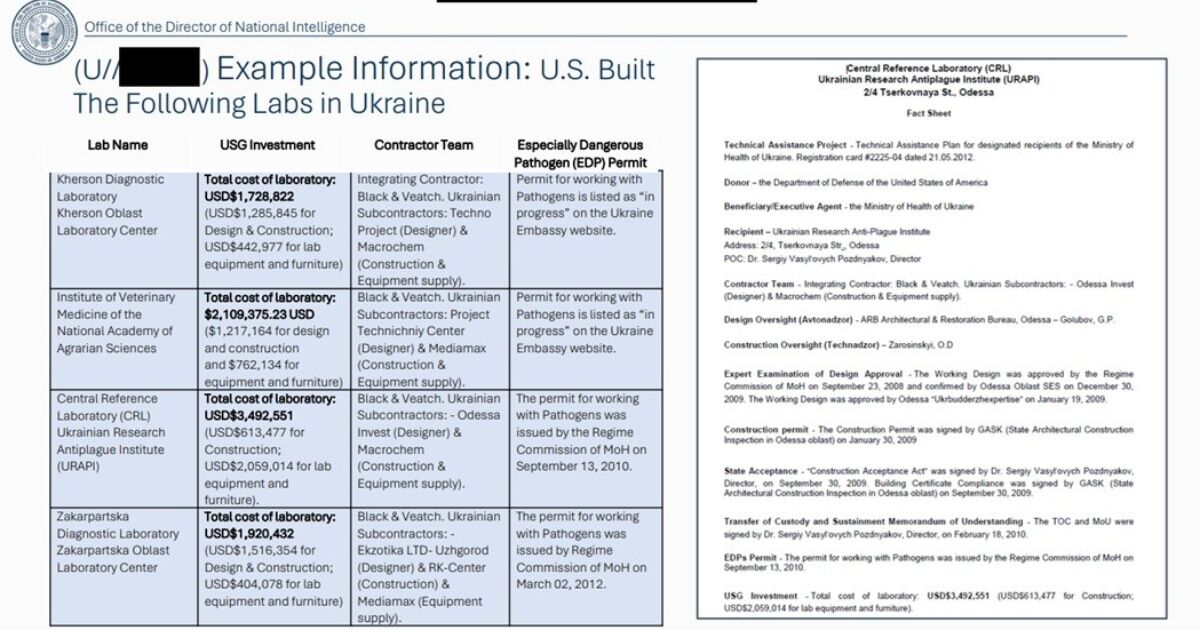
Un dossier declassificato da Tulsi Gabbard rivela che gli Stati Uniti hanno finanziato oltre 40 laboratori biologici in Ucraina, collegando il contractor Black & Veatch al programma di ricerca su patogeni pericolosi e accennando a legami con Hunter Biden, riaccendendo così polemiche sulla trasparenza dei progetti biologici americani all’estero. #Ucraina #Biden #laboratoribiologici

www.ilfattoquotidiano.it
Usa, declassificati i dossier sui laboratori biologici ucraini: la mappa dei fondi di Washington (e rispunta l’ombra di Biden jr)
12517