The article examines the financial consequences of public finance deviations on real estate, taxes, and credit in France. #immobilier #finances #économie (translated)
Athletiko wrote that the protagonist of the post was excited after his victory in his first "eternal" derby and shared a video from Olympiakos' YouTube. #olypao https://t.co/5RyYIhKE3E #αθλητισμός #ποδόσφαιρο #νίκη (translated)
Real estate magnate Richard Morávek sold part of his projects to the investment group Creditas before his death, which took over three companies owning land in Prague, Brno, and Olomouc from Redstone, including the highly valued project New Velkomoravská. #Creditas #Redstone #investice (translated)

Fede Sturzenegger stated that a tweet from Flor Carignano about DNU 70/23 showed, in his opinion, that Kirchnerism was against the benefits that the norm had granted to Argentines. He described it as a force protecting the "elite" and claimed that its proposals would lead to stagnation and poverty. In defending the decree, Sturzenegger said that after the repeal of the Rental Law, four times more apartments were being published and that prices had dropped by more than 30% in real terms. He also stated that, since the DNU, the prices of medications had fallen by 20% in real terms; domestic tickets by 51%; and tourist packages by 40%. He added that in 2025 there were 33 million passengers and that international connections from cities in the interior increased by 70%. Regarding foreign trade, he attributed part of the 63% drop in appliance prices and the 43% drop in textiles to the changes in the decree. He also said that more than 750,000 satellite internet connections allowed access for almost 3 million people in the interior, and that tourism reforms had increased the number of agencies by almost 40% and employment in the sector by more than 10%. Sturzenegger pointed out that some labor and land provisions had been taken to Congress, while others had been challenged in court. He stated that the DNU had removed trade restrictions, reduced paperwork, and allowed contracts in the chosen currency, among other changes. He concluded that the debate about the decree should be kept in mind in the elections of the following year. #DNU70 #Kirchnerismo #Argentina (translated)
SCCP News reported that Clarence Seedorf took over as the technical commander of Corinthians and said he considered it an honor and a great responsibility to face the challenge. According to the publication, the coach stated that he would give his best to form a team willing to fight for every ball, minute, and victory. #Corinthians #Seedorf #Futebol (translated)
Dr. Laetitia Muadi called for not influencing labor inspectors in the Democratic Republic of the Congo. She introduced Finance Minister LikundeR as a loyal executor of President Félix Tshisekedi's directives. Muadi stated that no category of civil servants was currently receiving their full salary scale, specifically citing university professors, teachers, doctors, and nurses. According to her, the government was gradually adjusting salaries based on the state budget and treasury. She denied that the president ordered, during the 94th Cabinet meeting, the payment of 100% of their salary scale to labor inspectors and controllers. She indicated that presidential instructions were instead focused on accelerating the reform of the General Labor Inspection (IGT), the monthly payment of salaries, and the administrative and financial autonomy of the agency. Muadi stated that these measures had been implemented: a new IGT had been established, salaries had been integrated into the liquidation state for the fourth quarter, and operating and installation credits were included in the 2027 finance bill. She specified that inspectors and controllers were receiving 30% of their salary scale and were demanding 100%. According to her, the government had opted to increase remuneration in phases, as it had done for other categories of civil servants, depending on budgetary means. #RDC #Travail #Syndicats (translated)
Rosario Aitala, deputy president of the International Criminal Court, told Corriere della Sera that the sanctions announced by the United States were preventing judges from carrying out both public and private activities, and that for many of them, the effects were already in place. He reported that they were subjected to measures similar to those reserved for terrorists: revoked credit cards, closed bank accounts, and canceled insurance contracts, with some companies refusing to reimburse medical expenses. According to Aitala, many apps on their phones had stopped working and it was forbidden to book hotels or flights through platforms. As an example, he recounted that Alexa no longer responded to a colleague after he asked her to play blues music. Another European colleague, he added, had booked a room in his own country through a European platform and, after half an hour, received an email ordering him not to try again. #Giustizia #Sanzioni #DirittiUmani (translated)
The author noted that Pedro Passos Coelho would give an interview to Maria João Avillez on SIC Notícias, between 9 PM and 10 PM, and argued that his governance should be reassessed in light of the financial conditions he encountered. According to the author, Portugal had already requested external assistance when Passos Coelho arrived at the Government in 2011, and the adjustment program of 78 billion euros had been negotiated before he took office. He maintained that during the legislature, exports rose from about one-third of GDP to nearly 40% in 2015, including tourism, and that the tourism sector gained strategic momentum. Regarding privatizations, he acknowledged that some operations were questionable and warranted scrutiny but argued that they allowed the collection of billions of euros, the amortization of public debt, and reduce financing needs and interest burdens. He also considered that cuts in the public sector were painful but questioned what the alternatives would have been when the State could no longer finance itself normally. The author further highlighted that Portugal completed the financial assistance program in 2014 and returned to market financing without a precautionary program, recovering, in his view, decision-making leeway. He stated that Passos Coelho was the most relevant politician of the century in Portugal for having made unpopular decisions and contributed to an economic change whose effects surpassed his Government. #Portugal #Política #Economia (translated)
Operation Dark Clark – Russia built a real organisation around a false identity Most influence operations create fake people, fake websites or fake news stories. Operation Dark Clark appears to have gone considerably further: Russian operators built what looked like a functioning research organisation in Latin America, employed real people to produce genuine research and concealed from those employees who was ultimately directing their work. OpenAI disclosed the operation on 8 October after banning a cluster of accounts originating in Russia. The actors used ChatGPT while targeting countries across Latin America, principally to damage Ukraine’s reputation, manipulate domestic political debates and manage a self-described research organisation called the Social Research Center, or SRC. OpenAI assessed Dark Clark as Category Five on the six-level Breakout Scale, the first operation it has disrupted since beginning its influence-operation reporting to reach that level. A front organisation with real employees The SRC presented itself as a research platform studying subjects including Latin America’s relationship with India and the Indian diaspora. OpenAI found more than 60 articles on its website, most of them apparently original rather than plagiarised. Internal reports produced by the Russian operators discussed hiring, dismissals, salary scales, staffing and unfinished research projects, strongly suggesting that the operators controlled the organisation rather than merely collaborating with it. At the centre of the structure was “Mia Clark”, a fictitious identity reportedly used to manage social-media activity and communicate with staff. According to OpenAI, the available evidence indicates that employees working for SRC in Latin America were probably unaware that the organisation was being directed by Russian actors. They interviewed experts, conducted research and wrote papers in what appears to have been good faith. The deception therefore existed primarily at the organisational level: much of the work was real, but the identity and strategic purpose of the institution commissioning it were not. OpenAI This is one reason Dark Clark differs from the familiar model of a troll farm. A reader encountering an SRC paper might be looking at research genuinely written by a Latin American employee based on genuine interviews. The manipulation lies further upstream, in who built the institution, selected its direction and controlled its infrastructure. From forged emails to real events The operation also appears to have attempted something more ambitious than online persuasion: inducing real people to produce events that could later be turned into propaganda. In May 2026, according to the operators’ internal reports, they created an email address impersonating Lima’s regional education authorities and instructed schools to organise activities about Ukraine for a cultural-diversity event. The instructions included references to Stepan Bandera, whose historical legacy remains particularly contentious in Poland and parts of Eastern Europe. The operators claimed that some schools complied, replied to the false address and sent photographs of the events. OpenAI could not independently verify every claim contained in the operators’ reports. It did, however, find Peruvian reporting matching the story, followed by publications in Poland and an English-language outlet in Hungary. Some coverage included comments from a Polish MEP calling for people displaying what he described as anti-Polish attitudes to be declared persona non grata. OpenAI therefore concluded that the fabricated starting point appears to have entered genuine political debate across national borders. The mechanism is unusually effective because the final photographs need not themselves be fabricated. If people can be tricked into staging a real event on the basis of a forged instruction, the operation creates authentic visual evidence of something that was artificially initiated. The same method in Ecuador and Bolivia Dark Clark’s internal reports describe similar efforts elsewhere. In Ecuador, the operators claimed they used a fake education email to encourage schools to stage ceremonies involving President Daniel Noboa and Erik Prince, the former head of Blackwater. Ecuadorian media subsequently covered a matching controversy, and the country’s education minister issued a detailed denial. Other Ecuador-focused material included fabricated audio attributed to Ukraine’s consul and a false television report alleging that Noboa’s government was recruiting Ecuadorians to fight in Ukraine. Local fact-checker Lupa found that the supposed Teleamazonas report had never been broadcast, that images had been taken from Instagram, that the audio was AI-generated and that a company named in a supposed recruitment contract did not exist in Ecuador’s corporate registry. In Bolivia, an internal report described a fake audio recording supposedly made by an employee of state water company EPSAS during anti-government protests. It claimed that water supplies to La Paz would be cut and a state of emergency declared. The allegation produced a fact-check and an official denial. OpenAI says the operators explicitly described their objective as worsening the political crisis surrounding the demonstrations. Possible links to the post-Wagner influence machine Dark Clark did not emerge in a vacuum. The operators repeatedly asked ChatGPT about Politology and La Compania, names associated in previous investigations with the Russian influence apparatus that developed from structures once connected to Yevgeny Prigozhin. Forbidden Stories and its partners obtained 1,431 pages of internal documents describing a network known as “The Company”, which they reported had grown to almost 100 operatives and was conducting influence projects across roughly 30 Global South countries. Their investigation found that the organisation moved under the supervision of Russia’s Foreign Intelligence Service, the SVR, after Prigozhin’s death. Its documented budget for ten months of activity in 2024 was approximately €7.3 million. Two older Argentina campaigns claimed in Dark Clark’s internal reports — a false story about Javier Milei buying Cartier collars for his dogs and the staging of anti-Milei graffiti — had already been independently attributed by investigative journalists to Politology/La Compania. That is significant corroboration, but it is not enough to prove that every Dark Clark activity was run by the same organisational structure. AI was the back office, not the mastermind Perhaps the most important finding concerns artificial intelligence itself. In most documented cases, the Russians were not using ChatGPT to generate the propaganda seen by the public. Their principal use was administrative: drafting reports for an unknown superior, summarising operations, translating material and recording the supposed success of campaigns. Those reports also expose a weakness in the operators’ own measurement. OpenAI found instances in which they tried to claim credit for developments they had probably not caused, suggesting that they were not only attempting to manipulate Latin American audiences but also presenting an inflated picture of their effectiveness to whoever was supervising them. Dark Clark nevertheless broke further into the real world than any influence operation OpenAI had previously disrupted. Under the Brookings framework, Category Five means that an operation has escaped its original network and been amplified by high-profile individuals such as politicians. Dark Clark crossed that threshold because fabricated narratives appear to have provoked governmental denials, mainstream reporting and political comment in several countries. Its most important innovation was therefore not a particularly convincing deepfake. It was the construction of a partly genuine institution around a concealed foreign controller. The research could be real. The employees could be real. The interviews could be real. What was false was who they were ultimately working for. Sources OpenAI — Disrupting AI-enabled “false front” operations https://openai.com/index/disrupting-ai-enabled-false-front-operations/ Forbidden Stories — Propaganda Machine: Russia’s foreign influence strategy across three continents https://forbiddenstories.org/propaganda-machine-secret-documents-reveal-russias-foreign-influence-strategy-across-three-continents/ Forbidden Stories — Ghost Journalists, Cash and Kremlin Scripts: Argentina https://forbiddenstories.org/ghost-journalists-cash-and-kremlin-scripts-how-russian-operatives-tried-to-influence-argentinian-media/ openDemocracy — Russian influence operation in Bolivia https://www.opendemocracy.net/en/russia-bolivia-south-america-putin-evo-morales-wagner-prigozhin-covert-operations-propaganda-disinformation-foreign-interference/ Lupa Media — Fake Teleamazonas report about recruiting Ecuadorians for Ukraine https://lupa.com.ec/verificaciones/noboa-mercenarios-ucrania-ecuador/ Brookings Institution — The Breakout Scale https://www.brookings.edu/articles/the-breakout-scale-measuring-the-impact-of-influence-operations/ Keywords: #DISINFORMED #Episode17 #OperationDarkClark #DarkClark #Russia #LatinAmerica #RussianInfluence #RussianDisinformation #Disinformation #InformationWarfare #InfluenceOperations #ForeignInterference #FIMI #FalseFront #FrontOrganisation #FakeInstitution #SocialResearchCenter #SRC #ArtificialIntelligence #AI #GenerativeAI #ChatGPT #OpenAI #NarrativeManipulation #SourceLaundering #InstitutionalManipulation #ForgedDocuments #FakeAudio #PoliticalInfluence #CovertInfluence #Peru #Ecuador #Bolivia #Argentina #Ukraine #Politology #LaCompania #TheCompany #SVR #WagnerLegacy #PropagandaMachine #GlobalSouth #BreakoutScale #OSINT #MediaManipulation #WRLD
Leandro Ruschel stated that a reporter from Veja considered that the attention given to the recording published by the magazine would be diverting focus from more serious allegations based on messages found on Daniel Vorcaro's cell phone. According to Ruschel, the reporter said that messages from 2024 and 2025 would indicate a collusion with executives from the pension funds of Banco do Brasil, Caixa, Petrobras, and Correios to raise R$ 10 billion, of which R$ 1 billion would be destined to the PT as a bribe. The account also mentioned more than 450 messages with an operator linked to the office of Minister Alexandre Padilha. Ruschel said that, according to the report, Banco Master entered in May 2024 a government list that would allow it to receive investments from the funds, despite having low credit ratings and being under investigation for fraud. During the same period, the bank reportedly negotiated R$ 500 million in credit letters with Caixa; the operation retreated after O Globo reported, in July 2024, the removal of two managers who had issued a negative opinion. The report also claimed that Padilha had said, in a meeting at the Palácio do Planalto, that agreements made with Olavo Noleto would count as agreements with the minister himself, and that, after dinner at Vorcaro's house in October 2024, the banker received a message saying that Lula would meet him and had liked the conversation. According to Ruschel, the reporter stated that Lula received Vorcaro in December and that messages from lawyer Walfrido Warde suggested pressure on the Central Bank to save Master. He added that Vorcaro would have presented the account to the Attorney General's Office (PGR), which had refused to receive the material, and that there would be evidence involving PGR members who had contact with the defense. Ruschel said that the reporter argued that Vorcaro should be heard and warned of the risk of diverting workers' resources to save the bank. #Corrupção #Política #Justiça (translated)
The European Commissioner for Defense and Space, Andrius Kubilius, announced yesterday the granting to Spain of a long-term, low-interest loan of 1 billion euros for the acquisition of defense material. #DefensaEuropea #UniónEuropea #FinanciamientoDefensa (translated)
For the South, Undersecretary Luigi Sbarra asks to refinance the tax credit with about 4 billion over three years. #Manovra2027 #Condono #Zes (translated)
I returned home and Alexa no longer spoke to me. Canadian judge Kimberly Prost, affected by sanctions in August 2025, recounted in an interview with the U.S. radio station NPR that she suddenly lost access to several services that were part of her daily life, from credit cards to cloud accounts. #CortePenaleInternazionale #SanzioniUSA #GiustiziaInternazionale (translated)
Felipe Moura Brasil shared the transcription of a reporter from Veja who defended a report amid the reactions to the publication of a recording. The journalist stated that, in addition to the audio, the article was based on messages found on Daniel Vorcaro's cell phone before he formalized a plea deal proposal. According to the reporter, Vorcaro had already presented a third proposal to the PGR, but the agency did not want to listen to him. In the transcription, the reporter claimed that messages from 2024 and 2025 indicated that Vorcaro had intermediaries at the Palácio do Planalto who were working with executives from the pension funds of Banco do Brasil, Caixa Econômica, Petrobras, and Correios. He asserted that the objective was to raise 10 billion reais from these funds, with 1 billion reais earmarked for bribes to the PT, as part of an agreement to save Banco Master. He also said that an operator linked to the office of Minister Alexandre Padilha sought fund executives and that meetings had been organized to facilitate the bank's operations. The reporter further stated that, in May 2024, Banco Master entered the so-called "exhaustive list," which, according to him, allowed the funds to invest in the institution. At the same time, he said, the bank was negotiating credit letters worth 500 million reais with Caixa Econômica. According to the journalist, the operation did not progress after the newspaper O Globo reported, in July 2024, that two managers from Caixa had been removed for issuing a negative opinion. He added that Vorcaro had reported, in a plea deal proposal to which the report had access, that Padilha and other PT members backed down after the case was disclosed. #Lula #Corrupção #Política (translated)
Thought I would share and hopefully make your day. The credit goes to the Danish artist, who made the sculpture "The Orange Plague" 🇩🇰 THE ORANGE PLAGUE: With his eyes closed and scales in hand, the Orange Plague proclaims: I am sitting on the back of a man. He is sinking under my burden. I will do anything to help him. Except stepping down from his back. #orangeplague You can print one yourself: https://makerworld.com/en/models/2344231-the-orange-plague-djt-donald-trump-statue#profileId-2562840 The artist encourages you to make copies and take pictures. Tag the pictures #orangeplague and tell where you took the picture
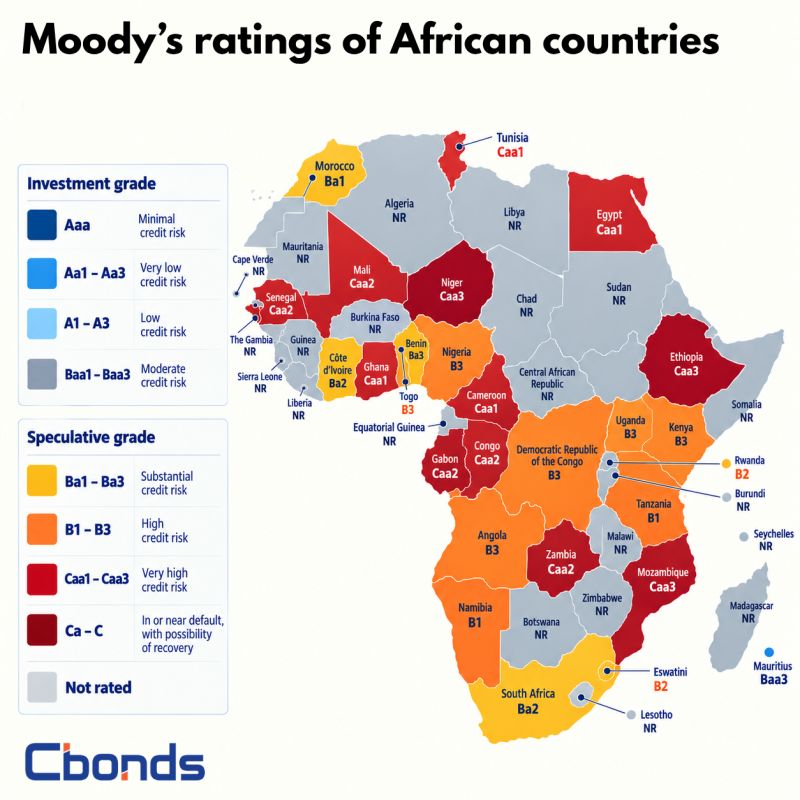
The author of the entry reported that African governments are launching their own rating agency, Africa Credit Rating Agency (AfCRA). He wrote that it is set to end the "African premium" that policymakers attributed to the actions of Moody’s, S&P Global, and Fitch. He also mentioned that Ghana and Zambia argued regarding the rating downgrades. https://t.co/Ft0T18htHz #Afryka #Rating #Gospodarka #GH #ZM (translated)
Miriam González reported that a post of hers about the limits of artificial intelligence reached people at Anthropic, who quickly got in touch with her. She thanked them for the promotion and said she had requested to participate in the company's AI for Science program. During the early morning, she received acceptance of her project, and the usage credits for Claude appeared in her account. She added that she would continue to develop it and share updates. #IA #Ciencia #Éxito (translated)
Fraudsters in real estate credit in Île-de-France caused a loss of 7 million euros for the banks. #arnaques #immobilier #banques (translated)
"The global economy is caught between a negative energy supply shock and a positive demand impact linked to artificial intelligence. The combined impact of these two forces is very uneven," Georgieva summarized. "To harness the transformational power of AI, it is crucial that access to it becomes widespread around the world. In a world as interconnected as ours, countries collaborate not out of charity but out of their own interest," Georgieva emphasized. "We have gone through a series of shocks: the COVID pandemic, the war in Ukraine, the inflation shock, a brutal rise in interest rates, and now, the energy shock. Each time, governments have come to the aid of households and businesses by resorting to credit and deepening the deficit," Georgieva recalled. #InteligenciaArtificial #FMI #CooperaciónInternacional (translated)
It is the estimate of expenses that is communicated to the government, and these are the funds that the government plans to allocate for the restoration of electronic voting. Stéphane Hazée questions the cost of these 31.35 million euros for three electoral deadlines and the lifespan of the equipment. #VoteÉlectronique #Wallonie #Sécurité (translated)