The article explores the impressive ascent of Charlie O’Shea, a young talent playing No 10 for Munster, capturing the curiosity and admiration of fans and analysts alike. #Cookies #WebSecurity #AccessBlocked
NASA has released an impressive panorama of the sunrise on Mars captured by the Curiosity rover, showing real colors and an unusual geological formation known as the yardang layer. #Marte #Curiosity #NASA (translated)

NASA published an impressive image of dawn on the planet Mars, capturing the geological formations called "yardangs" from the camera of the Curiosity rover. #Άρης #NASA #Curiosity (translated)
MSN ITALIA - ANSA ITALIA: "THE TEATRO-EDICOLA FEATURED IN STANFORD UNIVERSITY'S REVIEW" SOURCE: https://www.msn.com/.../il-teatro-edicola-del.../ar-AA2cyMWR (ANSA) - FOGGIA, 19 SEPT - The idea of the newspaper-kiosk theatre in San Severo, in the province of Foggia, renamed the smallest theatre in the world, has become a case study for Stanford University. The article "The Six-Seat Revolution" by the Foggian researcher Luciano Magaldi, supervised by editor David V. Johnson, has been published in Ssir (an award-winning publication covering multi-sectoral solutions to global problems). The article is in the "Dispatches" section of the "Stanford Social Innovation Review". "It is a result that rewards our work - emphasises Francesco Gravino, artistic director of the theatre company Foyer 97 - . Requests to replicate the model have come from other areas of Italy, such as Lucca and Rome. We thought of creating a cultural activity from a place that was disused and in a state of abandonment. There ought to be a regional law that allows for the reconversion of these disused places in which numerous activities could be created. Veritable cultural outposts". Gravino and the actors of the company are preparing the new programme. "Next year our company will be 30 years old - he said - , an important milestone which we shall celebrate with some new developments". Six chairs, less than two square metres, performances every 15 minutes and a sold-out audience of young people and adults. An experiment that has aroused curiosity and interest in the world of entertainment as well. Between the end of July and the beginning of August, during the tour in Lucera (Foggia), Biagio Antonacci made a surprise stop at the newspaper-kiosk theatre and sang his Iris. "It was truly a wonderful encounter which captured the attention of passers-by," concludes Gravino. (ANSA). (translated)
The author marked World Teachers’ Day by praising teachers for inspiring, encouraging and shaping generations. They said they had begun their own career as a teacher and had never forgotten how much the experience taught them. They described teaching as sharing knowledge and nurturing curiosity.
The author congratulated Karl Deisseroth, Peter Hegemann and Georg Nagel on the 2026 Nobel Prize in Physiology or Medicine, saying their work in optogenetics had transformed the study of the brain. The author described it as a reminder of what scientific curiosity and breakthrough research could achieve for medicine and health.
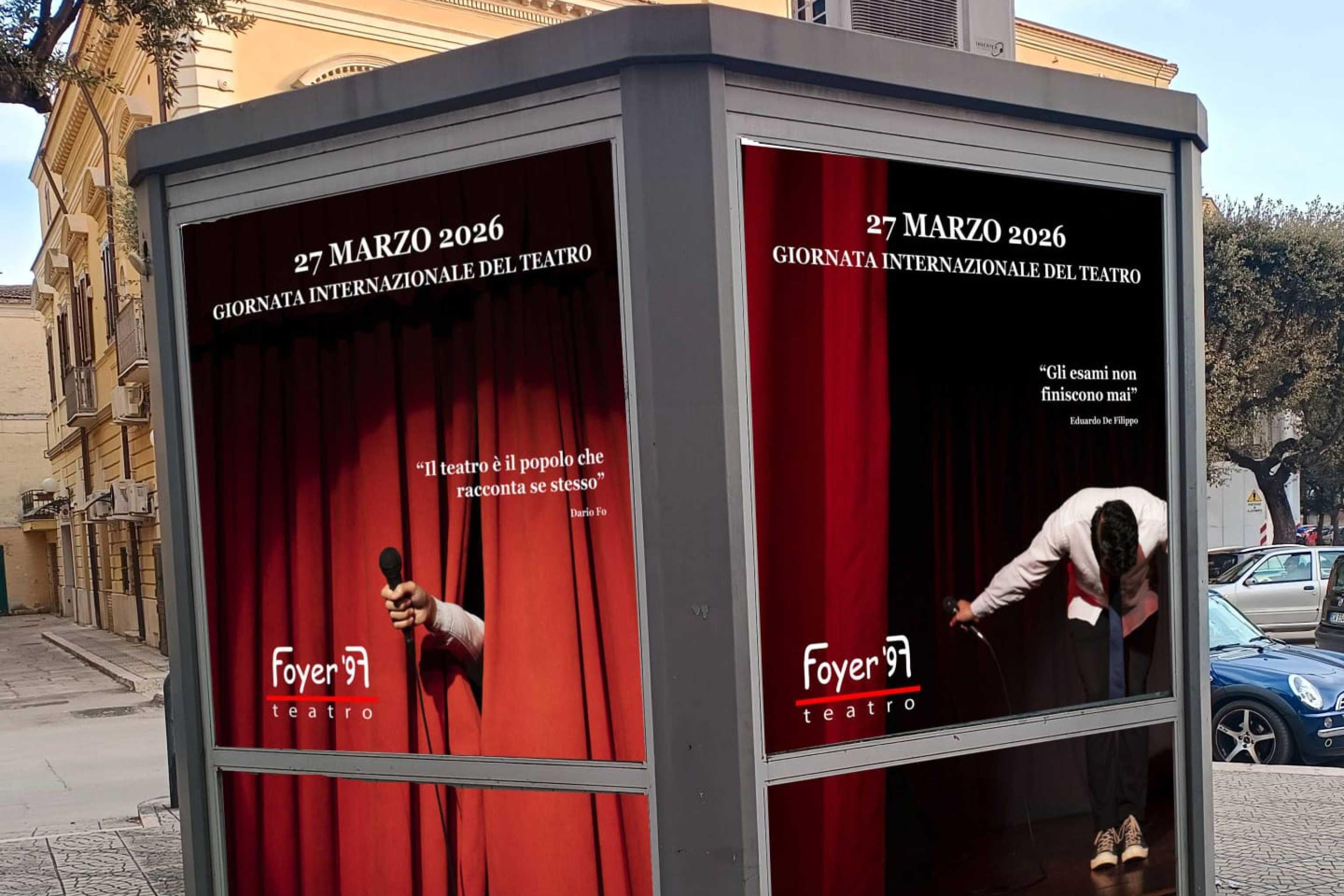
Mitico Magazine - The Teatro Edicola of San Severo: A Model of Cultural Revolution for Stanford University as Well Source: https://www.miticomagazine.com/territorio-e-sociale/teatro-edicola-di-san-severo-un-modello-di-rivoluzione-culturale-anche-per-la-stanford-university/ The Teatro Edicola in Via Tondi In San Severo, a singular metamorphosis has taken place: a newsstand abandoned for at least six years has found a new function and a new identity, transforming into one of the smallest and most unusual theatre stages in the world. An experiment born in the heart of the town which, in just a few months, has moved beyond local boundaries, attracting attention even overseas. It is called Teatro Edicola and it is a project conceived by the company Foyer '97, artistically directed by Francesco Gravino, which has brought the old newsstand in Via Tondi back to life through a formula that is both essential and surprising. Foyer '97 Foyer '97 APS was established as a formally constituted association active in the cultural sector in San Severo in 1997, born from the vocation of a group of actors, directors and theatre enthusiasts, with the aim of building a "living" and accessible theatre in the town. Over the years the company has developed a repertoire that includes texts from the classical tradition, contemporary dramaturgy, comedy and experimental projects, not limiting itself to the mere production of theatre shows, but also organising theatre courses and workshops and educational and cultural projects characterised by a strong inclusive ethos, particularly in schools. Foyer '97 does not always have a fixed artistic ensemble, but works with different performers and collaborators depending on the project; the only indispensable presence is that of Francesco Guido Gravino himself, actor, director and artistic director of the theatre company. The distinctive feature of Foyer '97 is certainly the value of social and cultural promotion attributed to theatre, the extremely close relationship with the audience and the search for a type of theatre outside conventional spaces, with cemeteries, trains, bell towers, and now a newsstand, as its backdrop. Six spectators, a few minutes and a minimal distance between stage and audience The project was launched on 27 March 2026, on the occasion of World Theatre Day, offering a theatrical experience built around a radical reduction of the conventional spaces and times of performance. The idea was born not only from the search for unconventional spaces, but also from "Edicola Fiore", the morning press review with a strongly ironic tone presented by Rosario Fiorello and Stefano Meloccaro, which was broadcast first only on Fiorello's social channels between 2011 and 2014, and then also on radio and television between 2016 and 2018. The review took its name from the diminutive of its founder, Fiore, and from the newsstand of a friend of Fiorello's in Via Flaminia Nuova in Rome, where the showman would meet early in the morning with a group of friends to read the newspapers. The San Severo newsstand was granted free of charge by its owner Pino Frau to the theatre group which, after obtaining temporary authorisation and institutional support from the Municipality of San Severo, refurbished it within two weeks at a cost of less than €3,000. Just six seats, a total surface area of 4 sq m, of which only 2 are for the stage area, less than a metre between actors and audience, a curtain, a lectern, two lights, performances lasting between 5 and 15 minutes, audience rotation every quarter of an hour: apparently minimal elements that end up subverting the usual relationship between stage and auditorium. Spectators, in fact, find themselves immersed in the stage action, in such proximity to the actors that every gesture, expression and word becomes immediately perceptible. In this way, theatre abandons its traditional spaces and insinuates itself into the everyday life of the street, becoming an intimate, concentrated and almost participatory experience. During the inaugural period admission was free with a subsequent voluntary donation from spectators; in the event of a more stable and longer-term concession, which could lead to seasonal theatre performances, the proposed ticket price would be €5. Audiences reward the experiment Foyer '97's gamble met with public interest right from the start: over 60 people attended the shows in a single afternoon, while the three days that inaugurated the season sold out. From a singular local experiment, the Teatro Edicola thus began to arouse curiosity even outside the province of Foggia, gradually transforming into a case of cultural and social interest, until it reached the American continent. From the province of Foggia to the "Stanford Social Innovation Review" The San Severo experience has now come under the international spotlight: in September 2026, the Stanford Social Innovation Review, an international journal and platform dedicated to social innovation published by the Stanford Center on Philanthropy and Civil Society at Stanford University in California, published on its website and in the Fall 2026 print edition the reportage "The Six-Seat Revolution", written by Dr Luciano Magaldi Sardella, independent journalist and researcher affiliated with the European Open University, and editorially supervised by deputy editor David V. Johnson. In the article, it is argued that the Teatro Edicola attracted attention overseas because the project concentrates cultural innovation, urban regeneration and proximity theatre into just a few square metres: starting from a real urban problem, it recovers an abandoned place with a modest investment, brings performance directly into public space and experiments with a much closer relationship between actors and spectators. From the point of view of theatrical representation, it also highlights how the format, based on micro-stories of five to twelve minutes, taken from great classics such as Goldoni, Chekhov, Ibsen, Euripides and Benni, and on audience rotation every fifteen minutes, transforms the physical limitations of the space into a precise dramaturgical choice, proving to be extremely innovative. All of this makes it possible to address some of the main critical issues in the sector: falling audience numbers, an exclusively elderly audience, reduced resources and distance from traditional cultural venues. The journal also highlights, however, the potential problems: economic sustainability, the need for stable institutional support and the difficulty of replicating the model, which is closely linked to the community and territory of San Severo. A model looking beyond San Severo Despite the difficulties, initial requests for information have already arrived from Lucca and Rome, where there is curiosity about the possibility of getting to know the model more closely and the steps needed to replicate it. The replicability formula, in fact, does not seem to require particularly costly infrastructure: an unused space, a targeted intervention, a cultural idea, in-depth knowledge of the surrounding area and a willingness to return that place to the community can be enough to trigger a new urban function. It is precisely in the disproportion between the modesty of the resources employed and the resonance generated by the initiative that perhaps the most original feature of the Teatro Edicola lies, certainly unique of its kind; there are, however, other examples in Italy of newsstands reused for other purposes: "Edicola 518", a twentieth-century kiosk abandoned in the centre of Perugia, now dedicated to independent publishing, art and cultural production; and in Rome itself, the abandoned newsstand in Piazza Testaccio used temporarily as a stage for a show by Fabio Morgan and the Erno newsstand in the Prati district, which almost every month offers a calendar of events, exhibitions, pop-ups and collaborations with artists and creative enterprises. Small revolutions, therefore, that tell stories of the reappropriation of urban spaces, of creativity and social innovation. And which, it is hoped, will take root in order to look ever further afield.

Mitico Magazine - The Teatro Edicola of San Severo: A Model of Cultural Revolution for Stanford University as Well Source: https://www.miticomagazine.com/territorio-e-sociale/teatro-edicola-di-san-severo-un-modello-di-rivoluzione-culturale-anche-per-la-stanford-university/ The Teatro Edicola in Via Tondi In San Severo, a singular metamorphosis has taken place: a newsstand abandoned for at least six years has found a new function and a new identity, transforming into one of the smallest and most unusual theatre stages in the world. An experiment born in the heart of the town which, in just a few months, has moved beyond local boundaries, attracting attention even overseas. It is called Teatro Edicola and it is a project conceived by the company Foyer '97, artistically directed by Francesco Gravino, which has brought the old newsstand in Via Tondi back to life through a formula that is both essential and surprising. Foyer '97 Foyer '97 APS was established as a formally constituted association active in the cultural sector in San Severo in 1997, born from the vocation of a group of actors, directors and theatre enthusiasts, with the aim of building a "living" and accessible theatre in the town. Over the years the company has developed a repertoire that includes texts from the classical tradition, contemporary dramaturgy, comedy and experimental projects, not limiting itself to the mere production of theatre shows, but also organising theatre courses and workshops and educational and cultural projects characterised by a strong inclusive ethos, particularly in schools. Foyer '97 does not always have a fixed artistic ensemble, but works with different performers and collaborators depending on the project; the only indispensable presence is that of Francesco Guido Gravino himself, actor, director and artistic director of the theatre company. The distinctive feature of Foyer '97 is certainly the value of social and cultural promotion attributed to theatre, the extremely close relationship with the audience and the search for a type of theatre outside conventional spaces, with cemeteries, trains, bell towers, and now a newsstand, as its backdrop. Six spectators, a few minutes and a minimal distance between stage and audience The project was launched on 27 March 2026, on the occasion of World Theatre Day, offering a theatrical experience built around a radical reduction of the conventional spaces and times of performance. The idea was born not only from the search for unconventional spaces, but also from "Edicola Fiore", the morning press review with a strongly ironic tone presented by Rosario Fiorello and Stefano Meloccaro, which was broadcast first only on Fiorello's social channels between 2011 and 2014, and then also on radio and television between 2016 and 2018. The review took its name from the diminutive of its founder, Fiore, and from the newsstand of a friend of Fiorello's in Via Flaminia Nuova in Rome, where the showman would meet early in the morning with a group of friends to read the newspapers. The San Severo newsstand was granted free of charge by its owner Pino Frau to the theatre group which, after obtaining temporary authorisation and institutional support from the Municipality of San Severo, refurbished it within two weeks at a cost of less than €3,000. Just six seats, a total surface area of 4 sq m, of which only 2 are for the stage area, less than a metre between actors and audience, a curtain, a lectern, two lights, performances lasting between 5 and 15 minutes, audience rotation every quarter of an hour: apparently minimal elements that end up subverting the usual relationship between stage and auditorium. Spectators, in fact, find themselves immersed in the stage action, in such proximity to the actors that every gesture, expression and word becomes immediately perceptible. In this way, theatre abandons its traditional spaces and insinuates itself into the everyday life of the street, becoming an intimate, concentrated and almost participatory experience. During the inaugural period admission was free with a subsequent voluntary donation from spectators; in the event of a more stable and longer-term concession, which could lead to seasonal theatre performances, the proposed ticket price would be €5. Audiences reward the experiment Foyer '97's gamble met with public interest right from the start: over 60 people attended the shows in a single afternoon, while the three days that inaugurated the season sold out. From a singular local experiment, the Teatro Edicola thus began to arouse curiosity even outside the province of Foggia, gradually transforming into a case of cultural and social interest, until it reached the American continent. From the province of Foggia to the "Stanford Social Innovation Review" The San Severo experience has now come under the international spotlight: in September 2026, the Stanford Social Innovation Review, an international journal and platform dedicated to social innovation published by the Stanford Center on Philanthropy and Civil Society at Stanford University in California, published on its website and in the Fall 2026 print edition the reportage "The Six-Seat Revolution", written by Dr Luciano Magaldi Sardella, independent journalist and researcher affiliated with the European Open University, and editorially supervised by deputy editor David V. Johnson. In the article, it is argued that the Teatro Edicola attracted attention overseas because the project concentrates cultural innovation, urban regeneration and proximity theatre into just a few square metres: starting from a real urban problem, it recovers an abandoned place with a modest investment, brings performance directly into public space and experiments with a much closer relationship between actors and spectators. From the point of view of theatrical representation, it also highlights how the format, based on micro-stories of five to twelve minutes, taken from great classics such as Goldoni, Chekhov, Ibsen, Euripides and Benni, and on audience rotation every fifteen minutes, transforms the physical limitations of the space into a precise dramaturgical choice, proving to be extremely innovative. All of this makes it possible to address some of the main critical issues in the sector: falling audience numbers, an exclusively elderly audience, reduced resources and distance from traditional cultural venues. The journal also highlights, however, the potential problems: economic sustainability, the need for stable institutional support and the difficulty of replicating the model, which is closely linked to the community and territory of San Severo. A model looking beyond San Severo Despite the difficulties, initial requests for information have already arrived from Lucca and Rome, where there is curiosity about the possibility of getting to know the model more closely and the steps needed to replicate it. The replicability formula, in fact, does not seem to require particularly costly infrastructure: an unused space, a targeted intervention, a cultural idea, in-depth knowledge of the surrounding area and a willingness to return that place to the community can be enough to trigger a new urban function. It is precisely in the disproportion between the modesty of the resources employed and the resonance generated by the initiative that perhaps the most original feature of the Teatro Edicola lies, certainly unique of its kind; there are, however, other examples in Italy of newsstands reused for other purposes: "Edicola 518", a twentieth-century kiosk abandoned in the centre of Perugia, now dedicated to independent publishing, art and cultural production; and in Rome itself, the abandoned newsstand in Piazza Testaccio used temporarily as a stage for a show by Fabio Morgan and the Erno newsstand in the Prati district, which almost every month offers a calendar of events, exhibitions, pop-ups and collaborations with artists and creative enterprises. Small revolutions, therefore, that tell stories of the reappropriation of urban spaces, of creativity and social innovation. And which, it is hoped, will take root in order to look ever further afield.

Inspiring future generations is a key part of ESA’s mission. Through the #PokemonxESA collaboration, we are taking space exploration beyond traditional settings, hoping to ignite curiosity, spark a sense of wonder about our Universe and encourage people of all ages to discover #SpaceExploration #Inspiration #PokemonxESA #Thetweetdoesnotmentionanyspecificcountries.Therefore #theresultis:
"RTL 102.5": THE KIOSK-THEATRE FEATURED IN STANFORD UNIVERSITY'S REVIEW SOURCE: https://l.facebook.com/l.php?u=https%3A%2F%2Fwww.instagram.com%2Fp%2FDdeEUnXiKMT%2F%3Ffbclid%3DIwcGRvZgFleHRuA2FlbQIxMABicmlkETB1OU02c2NZUzNkeWVpb2ZJc3J0YwZhcHBfaWQQMjIyMDM5MTc4ODIwMDg5MgABHhWTgrXrSOqSpbqd0NlmkWW4gNxVEDa-2BmQGWsVUhQQoqC4_J55glcV6Fzu_aem_zWbIIMpp66X9FxYrdVcTmg&h=AUDX8FniZvleWSVlN4ngwxrSLu1IeEzRJGb1DHFgsznthttLc9QR-ahTowPSBcj7rf_yYePu1vaPUXc34NqwzN3m-FtFuy-KM33ftfPsEeZaaYwWOXktve-A-NW0TY9CLHcritIH__2rbzUD5w&__tn__=-UK-R&c[0]=AUCpozNMTPma15kUqGpGsKv6GwFtuWcQmfK3Oj0VtFFsM0cj9rhdH6l9Y-6SLIz8vG2VBro_6pSGTiplv6br8YJx7ZZQnAPeuivIBI0eX8NPUol4JadoLFkhbxd949RZixQc7l2aWhHEkWT6kEVC92069Lsd2AymBya1pXHVw4UabsmzYz1s SAN SEVERO (FG) - The concept of the kiosk-theatre of San Severo, in the province of Foggia, dubbed the smallest theatre in the world, has become a case study for Stanford University. The article The "Six-Seat Revolution", by the Foggia-born researcher Luciano Magaldi Sardella, supervised by Deputy Editor David V. Johnson, has been published in "Stanford Social Innovation Review (SSIR)" - the multi-award-winning publication covering cross-sector solutions to global problems. The article appears in the "Dispatches" section of the "Stanford Social Innovation Review". "This is an achievement that rewards our work," emphasizes Francesco Gravino, Artistic Director of the theatre company Foyer 97. "Requests to replicate the model have come from other parts of Italy, such as Lucca and Rome. We thought of creating a cultural activity from a place that was disused and in a state of abandonment. There ought to be a regional law that makes it possible to convert these disused premises into places where numerous activities can be brought to life. Genuine cultural outposts." Gravino and the company's actors are preparing the new programme. "Next year our company will be 30 years old," he said, "an important milestone that we shall celebrate with a number of new developments." Six chairs, less than two square metres, performances repeated every 15 minutes, and sold-out audiences of young people and adults. An experiment that has aroused curiosity and interest in the world of entertainment as well. Between late July and early August, during his tour in Lucera (Foggia), Biagio Antonacci made a surprise stop at the kiosk-theatre and sang his Iris. "It was truly a wonderful encounter that attracted the attention of passers-by," Gravino concludes.
"RAINEWS - TGR PUGLIA": THE NEWSSTAND THEATRE FROM FOGGIA FEATURED IN STANFORD UNIVERSITY'S REVIEW ACTIVITY OF THE WORLD'S SMALLEST THEATRE TO RESUME IN OCTOBER SOURCE: https://www.rainews.it/tgr/puglia/articoli/2026/09/il-teatro-edicola-del-foggiano-finisce-sulla-rivista-della-stanford-university-1fa44018-e792-4bbe-b469-8ceb4dde825f.html?fbclid=IwY2xjawUcvbdwZG9mAWV4dG4DYWVtAjEwAGJyaWQRMHU5TTZzY1lTM2R5ZWlvZklzcnRjBmFwcF9pZBAyMjIwMzkxNzg4MjAwODkyAAEeJu765F3ygz0yxQ1zf6z27DM21yeKjBzL3eUBCVg0fk0ULdT4tnicXACUltw_aem_RkZlY9URH16w3f7zdL3AOQ SAN SEVERO (FG) - The idea of the newsstand theatre in San Severo, in the province of Foggia, dubbed the smallest theatre in the world, has become a case study for Stanford University. The article "The Six-Seat Revolution", by the researcher from Orta Nova in the Province of Foggia, Luciano Magaldi Sardella, supervised by editor David V. Johnson, has been published in "Stanford Social Innovation Review (SSIR)" - an award-winning publication covering cross-sectoral solutions to global problems. The piece appears in the "Dispatches" section of the "Stanford Social Innovation Review". The article describes how a rusted newsstand in San Severo was transformed into a radically new theatrical experience. "It is an achievement that rewards our work," emphasizes Francesco Gravino, artistic director of the theatre company Foyer 97. "Requests to replicate the model have come from other parts of Italy, such as Lucca and Rome. We thought of creating a cultural activity from a place that had long been disused and abandoned." "What we need is a regional law that makes it possible to repurpose these disused spaces where numerous activities could be organized. Genuine cultural outposts." Gravino and the actors of the company are preparing the new programme. "Next year our company will be 30 years old," he said, "an important milestone which we shall celebrate with some new initiatives." Six chairs, less than two square metres, performances repeated every 15 minutes, and sold-out audiences of young people and adults. An experiment that has aroused curiosity and interest in the world of entertainment as well. Between late July and early August, during the tour in Lucera (Foggia), Biagio Antonacci made a surprise stop at the newsstand theatre and sang his Iris. "It was truly a wonderful encounter that captured the attention of passers-by," Gravino concludes.

"ANSA NAZIONALE CULTURA": THE NEWSSTAND THEATRE FROM FOGGIA FEATURED IN STANFORD UNIVERSITY'S REVIEW ACTIVITY OF THE WORLD'S SMALLEST THEATRE TO RESUME IN OCTOBER SOURCE: https://www.ansa.it/sito/notizie/cultura/teatro/2026/09/19/il-teatro-edicola-del-foggiano-finisce-sulla-rivista-della-stanford-university_7b986fd6-267e-41ed-9c7b-a0c74aad9dea.html SAN SEVERO (FG) - The idea of the newsstand theatre in San Severo, in the province of Foggia, dubbed the smallest theatre in the world, has become a case study for Stanford University. The article "The Six-Seat Revolution", by the researcher from Orta Nova in the Province of Foggia, Luciano Magaldi Sardella, supervised by editor David V. Johnson, has been published in "Stanford Social Innovation Review (SSIR)" - an award-winning publication covering cross-sectoral solutions to global problems. The piece appears in the "Dispatches" section of the "Stanford Social Innovation Review". The article describes how a rusted newsstand in San Severo was transformed into a radically new theatrical experience. "It is an achievement that rewards our work," emphasizes Francesco Gravino, artistic director of the theatre company Foyer 97. "Requests to replicate the model have come from other parts of Italy, such as Lucca and Rome. We thought of creating a cultural activity from a place that had long been disused and abandoned." "What we need is a regional law that makes it possible to repurpose these disused spaces where numerous activities could be organized. Genuine cultural outposts." Gravino and the actors of the company are preparing the new programme. "Next year our company will be 30 years old," he said, "an important milestone which we shall celebrate with some new initiatives." Six chairs, less than two square metres, performances repeated every 15 minutes, and sold-out audiences of young people and adults. An experiment that has aroused curiosity and interest in the world of entertainment as well. Between late July and early August, during the tour in Lucera (Foggia), Biagio Antonacci made a surprise stop at the newsstand theatre and sang his Iris. "It was truly a wonderful encounter that captured the attention of passers-by," Gravino concludes.

"BLOG QC24": THE FOGGIAN NEWSSTAND THEATRE FEATURES IN STANFORD UNIVERSITY'S REVIEW SOURCE: https://blogcq24.com/italia/puglia/il-teatro-edicola-del-foggiano-finisce-sulla-rivista-della-stanford-university/100188322/ SAN SEVERO (FG) - The idea of the newsstand theatre in San Severo, in the province of Foggia, dubbed the smallest theatre in the world, has become a case study for Stanford University. The article "The Six-Seat Revolution" by Foggian researcher Luciano Magaldi Sardella, supervised by editor David V. Johnson, has been published in Stanford Social Innovation Review (SSIR), an award-winning publication covering cross-sector solutions to global problems. The article appears in the Dispatches section of the Stanford Social Innovation Review. "It is a result that rewards our work," emphasizes Francesco Gravino, artistic director of the theatre company Foyer 97. "Requests to replicate the model have come from other areas of Italy, such as Lucca and Rome. We thought of creating a cultural activity out of a place that was by then disused and in a state of abandonment. What is needed is a regional law that provides for the possibility of reconverting these disused premises into places where numerous activities can be brought to life. Real cultural strongholds." Gravino and the actors of the company are preparing the new programme. "Next year our company will be 30 years old," he said, "an important milestone that we will celebrate with some new initiatives." Six chairs, less than two square metres, performances repeated every 15 minutes and sold-out audiences of both young people and adults. An experiment that has aroused curiosity and interest in the world of entertainment as well. Between late July and early August, during the tour in Lucera (Foggia), Biagio Antonacci made a surprise stop at the newsstand theatre and sang his Iris. "It was truly a wonderful encounter that captured the attention of passers-by," Gravino concludes.

"IL MATTINO DI PADOVA": THE FOGGIAN NEWSSTAND THEATRE FEATURES IN STANFORD UNIVERSITY'S REVIEW SOURCE: https://www.mattinopadova.it/italia/il-teatro-edicola-del-foggiano-finisce-sulla-rivista-della-stanford-university-q402gcxu SAN SEVERO (FG) - The idea of the newsstand theatre in San Severo, in the province of Foggia, dubbed the smallest theatre in the world, has become a case study for Stanford University. The article "The Six-Seat Revolution" by Foggian researcher Luciano Magaldi Sardella, supervised by editor David V. Johnson, has been published in Stanford Social Innovation Review (SSIR), an award-win ning publication covering cross-sector solutions to global problems. The article appears in the Dispatches section of the Stanford Social Innovation Review. "It is a result that rewards our work," emphasizes Francesco Gravino, artistic director of the theatre company Foyer 97. "Requests to replicate the model have come from other areas of Italy, such as Lucca and Rome. We thought of creating a cultural activity out of a place that was by then disused and in a state of abandonment. What is needed is a regional law that provides for the possibility of reconverting these disused premises into places where numerous activities can be brought to life. Real cultural strongholds." Gravino and the actors of the company are preparing the new programme. "Next year our company will be 30 years old," he said, "an important milestone that we will celebrate with some new initiatives." Six chairs, less than two square metres, performances repeated every 15 minutes and sold-out audiences of both young people and adults. An experiment that has aroused curiosity and interest in the world of entertainment as well. Between late July and early August, during the tour in Lucera (Foggia), Biagio Antonacci made a surprise stop at the newsstand theatre and sang his Iris. "It was truly a wonderful encounter that captured the attention of passers-by," Gravino concludes.

"LA GAZZETTA DI MANTOVA": THE FOGGIAN NEWSSTAND THEATRE FEATURES IN STANFORD UNIVERSITY'S REVIEW SOURCE: https://www.gazzettadimantova.it/argomenti/spettacoli/spettacoli-nazionali/il-teatro-edicola-del-foggiano-finisce-sulla-rivista-della-stanford-university-1.13128998/amp SAN SEVERO (FG) - The idea of the newsstand theatre in San Severo, in the province of Foggia, dubbed the smallest theatre in the world, has become a case study for Stanford University. The article "The Six-Seat Revolution" by Foggian researcher Luciano Magaldi Sardella, supervised by editor David V. Johnson, has been published in Stanford Social Innovation Review (SSIR), an award-winning publication covering cross-sector solutions to global problems. The article appears in the Dispatches section of the Stanford Social Innovation Review. "It is a result that rewards our work," emphasizes Francesco Gravino, artistic director of the theatre company Foyer 97. "Requests to replicate the model have come from other areas of Italy, such as Lucca and Rome. We thought of creating a cultural activity out of a place that was by then disused and in a state of abandonment. What is needed is a regional law that provides for the possibility of reconverting these disused premises into places where numerous activities can be brought to life. Real cultural strongholds." Gravino and the actors of the company are preparing the new programme. "Next year our company will be 30 years old," he said, "an important milestone that we will celebrate with some new initiatives." Six chairs, less than two square metres, performances repeated every 15 minutes and sold-out audiences of both young people and adults. An experiment that has aroused curiosity and interest in the world of entertainment as well. Between late July and early August, during the tour in Lucera (Foggia), Biagio Antonacci made a surprise stop at the newsstand theatre and sang his Iris. "It was truly a wonderful encounter that captured the attention of passers-by," Gravino concludes.
"BRESCIA OGGI": THE FOGGIAN NEWSSTAND THEATRE FEATURES IN STANFORD UNIVERSITY'S REVIEW SOURCE: https://www.bresciaoggi.it//argomenti/spettacoli/spettacoli-nazionali/il-teatro-edicola-del-foggiano-finisce-sulla-rivista-della-stanford-university-1.13128998/amp SAN SEVERO (FG) – The idea of the newsstand theatre in San Severo, in the province of Foggia, dubbed the smallest theatre in the world, has become a case study for Stanford University. The article "The Six-Seat Revolution" by Foggian researcher Luciano Magaldi Sardella, supervised by editor David V. Johnson, has been published in Stanford Social Innovation Review (SSIR), an award-winning publication covering cross-sector solutions to global problems. The article appears in the Dispatches section of the Stanford Social Innovation Review. "It is a result that rewards our work," emphasizes Francesco Gravino, artistic director of the theatre company Foyer 97. "Requests to replicate the model have come from other areas of Italy, such as Lucca and Rome. We thought of creating a cultural activity out of a place that was by then disused and in a state of abandonment. What is needed is a regional law that provides for the possibility of reconverting these disused premises into places where numerous activities can be brought to life. Real cultural strongholds." Gravino and the actors of the company are preparing the new programme. "Next year our company will be 30 years old," he said, "an important milestone that we will celebrate with some new initiatives." Six chairs, less than two square metres, performances repeated every 15 minutes and sold-out audiences of both young people and adults. An experiment that has aroused curiosity and interest in the world of entertainment as well. Between late July and early August, during the tour in Lucera (Foggia), Biagio Antonacci made a surprise stop at the newsstand theatre and sang his Iris. "It was truly a wonderful encounter that captured the attention of passers-by," Gravino concludes
"IL GIORNALE DI VICENZA": THE FOGGIAN NEWSSTAND THEATRE FEATURES IN STANFORD UNIVERSITY'S REVIEW SOURCE: https://www.ilgiornaledivicenza.it/argomenti/spettacoli/spettacoli-nazionali/il-teatro-edicola-del-foggiano-finisce-sulla-rivista-della-stanford-university-1.13128998/amp SAN SEVERO (FG) - The idea of the newsstand theatre in San Severo, in the province of Foggia, dubbed the smallest theatre in the world, has become a case study for Stanford University. The article "The Six-Seat Revolution" by Foggian researcher Luciano Magaldi Sardella, supervised by editor David V. Johnson, has been published in Stanford Social Innovation Review (SSIR), an award-winning publication covering cross-sector solutions to global problems. The article appears in the Dispatches section of the Stanford Social Innovation Review. "It is a result that rewards our work," emphasizes Francesco Gravino, artistic director of the theatre company Foyer 97. "Requests to replicate the model have come from other areas of Italy, such as Lucca and Rome. We thought of creating a cultural activity out of a place that was by then disused and in a state of abandonment. What is needed is a regional law that provides for the possibility of reconverting these disused premises into places where numerous activities can be brought to life. Real cultural strongholds." Gravino and the actors of the company are preparing the new programme. "Next year our company will be 30 years old," he said, "an important milestone that we will celebrate with some new initiatives." Six chairs, less than two square metres, performances repeated every 15 minutes and sold-out audiences of both young people and adults. An experiment that has aroused curiosity and interest in the world of entertainment as well. Between late July and early August, during the tour in Lucera (Foggia), Biagio Antonacci made a surprise stop at the newsstand theatre and sang his Iris. "It was truly a wonderful encounter that captured the attention of passers-by," Gravino concludes.
"L'ARENA": THE FOGGIAN NEWSSTAND THEATRE FEATURES IN STANFORD UNIVERSITY'S REVIEW SOURCE: https://www.larena.it/argomenti/spettacoli/spettacoli-nazionali/il-teatro-edicola-del-foggiano-finisce-sulla-rivista-della-stanford-university-1.13128998/amp SAN SEVERO (FG) - The idea of the newsstand theatre in San Severo, in the province of Foggia, dubbed the smallest theatre in the world, has become a case study for Stanford University. The article "The Six-Seat Revolution" by Foggian researcher Luciano Magaldi Sardella, supervised by editor David V. Johnson, has been published in Stanford Social Innovation Review (SSIR), an award-winning publication covering cross-sector solutions to global problems. The article appears in the Dispatches section of the Stanford Social Innovation Review. "It is a result that rewards our work," emphasizes Francesco Gravino, artistic director of the theatre company Foyer 97. "Requests to replicate the model have come from other areas of Italy, such as Lucca and Rome. We thought of creating a cultural activity out of a place that was by then disused and in a state of abandonment. What is needed is a regional law that provides for the possibility of reconverting these disused premises into places where numerous activities can be brought to life. Real cultural strongholds." Gravino and the actors of the company are preparing the new programme. "Next year our company will be 30 years old," he said, "an important milestone that we will celebrate with some new initiatives." Six chairs, less than two square metres, performances repeated every 15 minutes and sold-out audiences of both young people and adults. An experiment that has aroused curiosity and interest in the world of entertainment as well. Between late July and early August, during the tour in Lucera (Foggia), Biagio Antonacci made a surprise stop at the newsstand theatre and sang his Iris. "It was truly a wonderful encounter that captured the attention of passers-by," Gravino concludes.
"ALTO ADIGE": THE FOGGIAN NEWSSTAND THEATRE FEATURES IN STANFORD UNIVERSITY'S STANFORD SOURCE: https://www.altoadige.it/viaggiart/il-teatro-edicola-del-foggiano-finisce-sulla-rivista-della-stanford-university-et26ujjc SAN SEVERO (FG) - The idea of the newsstand theatre in San Severo, in the province of Foggia, dubbed the smallest theatre in the world, has become a case study for Stanford University. The article "The Six-Seat Revolution" by Foggian researcher Luciano Magaldi Sardella, supervised by editor David V. Johnson, has been published in Stanford Social Innovation Review (SSIR), an award-winning publication covering cross-sector solutions to global problems. The article appears in the Dispatches section of the Stanford Social Innovation Review. "It is a result that rewards our work," emphasizes Francesco Gravino, artistic director of the theatre company Foyer 97. "Requests to replicate the model have come from other areas of Italy, such as Lucca and Rome. We thought of creating a cultural activity out of a place that was by then disused and in a state of abandonment. What is needed is a regional law that provides for the possibility of reconverting these disused premises into places where numerous activities can be brought to life. Real cultural strongholds." Gravino and the actors of the company are preparing the new programme. "Next year our company will be 30 years old," he said, "an important milestone that we will celebrate with some new initiatives." Six chairs, less than two square metres, performances repeated every 15 minutes and sold-out audiences of both young people and adults. An experiment that has aroused curiosity and interest in the world of entertainment as well. Between late July and early August, during the tour in Lucera (Foggia), Biagio Antonacci made a surprise stop at the newsstand theatre and sang his Iris. "It was truly a wonderful encounter that captured the attention of passers-by," Gravino concludes.

"CORRIERE DELLE ALPI": THE FOGGIAN NEWSSTAND THEATRE FEATURES IN STANFORD UNIVERSITY'S REVIEW SOURCE: https://www.corrierealpi.it/italia/il-teatro-edicola-del-foggiano-finisce-sulla-rivista-della-stanford-university-q402gcxu SAN SEVERO (FG) - The idea of the newsstand theatre in San Severo, in the province of Foggia, dubbed the smallest theatre in the world, has become a case study for Stanford University. The article "The Six-Seat Revolution" by Foggian researcher Luciano Magaldi Sardella, supervised by editor David V. Johnson, has been published in Stanford Social Innovation Review (SSIR), an award-winning publication covering cross-sector solutions to global problems. The article appears in the Dispatches section of the Stanford Social Innovation Review. "It is a result that rewards our work," emphasizes Francesco Gravino, artistic director of the theatre company Foyer 97. "Requests to replicate the model have come from other areas of Italy, such as Lucca and Rome. We thought of creating a cultural activity out of a place that was by then disused and in a state of abandonment. What is needed is a regional law that provides for the possibility of reconverting these disused premises into places where numerous activities can be brought to life. Real cultural strongholds." Gravino and the actors of the company are preparing the new programme. "Next year our company will be 30 years old," he said, "an important milestone that we will celebrate with some new initiatives." Six chairs, less than two square metres, performances repeated every 15 minutes and sold-out audiences of both young people and adults. An experiment that has aroused curiosity and interest in the world of entertainment as well. Between late July and early August, during the tour in Lucera (Foggia), Biagio Antonacci made a surprise stop at the newsstand theatre and sang his Iris. "It was truly a wonderful encounter that captured the attention of passers-by," Gravino concludes.