
Pedro Tófani Mídias wrote that Pedro received the award for Best Short Film at the Rio Festival 2026 alongside the cast and crew of *Santo*. https://t.co/mbIMEjwd5k #FestivalDoRio #MelhorCurta #CinemaBrasileiro (translated)

Pedro Tófani Mídias wrote that Pedro received the award for Best Short Film at the Rio Festival 2026 alongside the cast and crew of *Santo*. https://t.co/mbIMEjwd5k #FestivalDoRio #MelhorCurta #CinemaBrasileiro (translated)

Jamesons stated that Meta reactivated its Instagram page after removing it in July, when it had more than 30,000 followers. According to the author, the company informed via email that the account did not violate Community Standards and could be used normally again. He said the page was deactivated for more than three months, including the entire first round of elections, and that the absence caused losses in reach, engagement, events, and content opportunities. Jamesons stated that he turned to the courts and that the process would continue, as the reactivation would not compensate for the damages. The author also alleged that Meta had been arbitrarily banning left-wing accounts while reducing their reach. He thanked those who followed the project during the period and asked for support to rebuild the page's presence on Instagram, with likes, comments, shares, and other interactions. #CulturaPop #LiberdadeDeExpressão #Justiça (translated)
Verônica Domingues stated that she never advocated for nudity as empowering or revolutionary and said that, as a Marxist, she did not consider any individual action capable of promoting a revolution. For her, showing breasts was an expression of sexuality or part of her work with adult content, and no work would be empowering under capitalism. The author said that blaming women for their objectification for wearing short clothes or posting nude photos was misogynistic, and emphasized the importance of consent. Regarding publishing images with a Lula sticker during the campaign, she assessed that this would probably not change votes, but argued that art did not need to have only a utilitarian purpose. Domingues also stated that she used other social networks, including Instagram and TikTok, to raise awareness and bring the left closer to Marxism. She criticized radical feminists who, according to her, treated sex as immoral and scrutinized the bodies of women who consented to appear nude. She also said that the revolution depended on the collective organization of the working class, not on showing or covering breasts. #Feminismo #Marxismo #DireitosDasMulheres (translated)

Tsuki found it "sensational" that the magazine Veja had directly accused Lula's campaign of spreading false news against the publication. He then summarized the arguments from a response by the magazine regarding its report about Vorcaro. According to the text from Veja reproduced by Tsuki, Vorcaro's lawyer would have confirmed the authenticity of the audio, and the magazine stated that it removed five short statements — 15 seconds in total — to protect the source. The publication also clarified that it did not say that the audio was included in the plea bargain nor that the confession was made to the Federal Police. Regarding the PGR, the magazine claimed that Vorcaro, through his lawyers, presented an account regarding the funding of a documentary about Lula and promised to deliver documents if the plea bargain was accepted, which did not happen. Tsuki also stated that some outlets were using "jurists" in their headlines to conceal, according to his assessment, that the coordination of Lula's presidential campaign was spreading false news against Veja's cover story. #PolíticaBR #FakeNews #Eleições2022 (translated)


Pedro Palhares wrote that the short film SANTO would premiere the next day in the Selection of the Rio Festival and would be screened in theaters with his participation. He attributed the direction to Maria Luis Alves. https://t.co/dxKpcwg0UQ #FestivaldoRio #Curta #Cinema (translated)

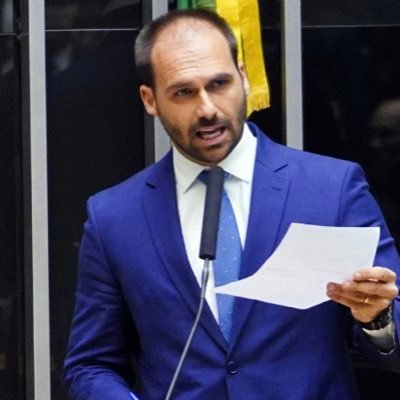
Eduardo Bolsonaro announced that an exclusive interview with Flávio Bolsonaro and the president of Colombia, Abelardo de la Espriella, was now available. He described the interview as "historic" and asked people to like, watch, and share the content. https://t.co/qGuj6lNrBb https://t.co/eftOuhuGCZ #Entrevista #Colômbia #Política (translated)

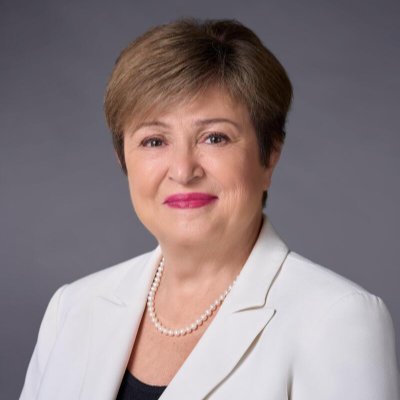
The author said the global economy was facing three powerful pressures: artificial intelligence, high energy prices and record public debt. In a speech in Singapore ahead of next week’s IMF Meetings in Bangkok, they outlined what they said was at stake and argued that action could not wait. https://t.co/YVPLgYHI1U https://t.co/itBc1Y5tu4 #GlobalEconomy #AI #PublicDebt #SG #TH


Alfred Newmann wrote that Flávio Dino would go down in history as the minister of the Supreme Court with the shortest term in office. #STF #FlávioDino #História (translated)

Neymar Jr wrote that it would be Leo Messi's last game for the Argentine national team and wished that he enjoyed every moment and felt happy with the tributes. He stated that, besides Argentina, the world was grateful for what Messi had done for football. Neymar also said that Messi had made him love the sport even more and that it was an honor to play against him and make history alongside him. #Futebol #Messi #ÚltimoJogo (translated)
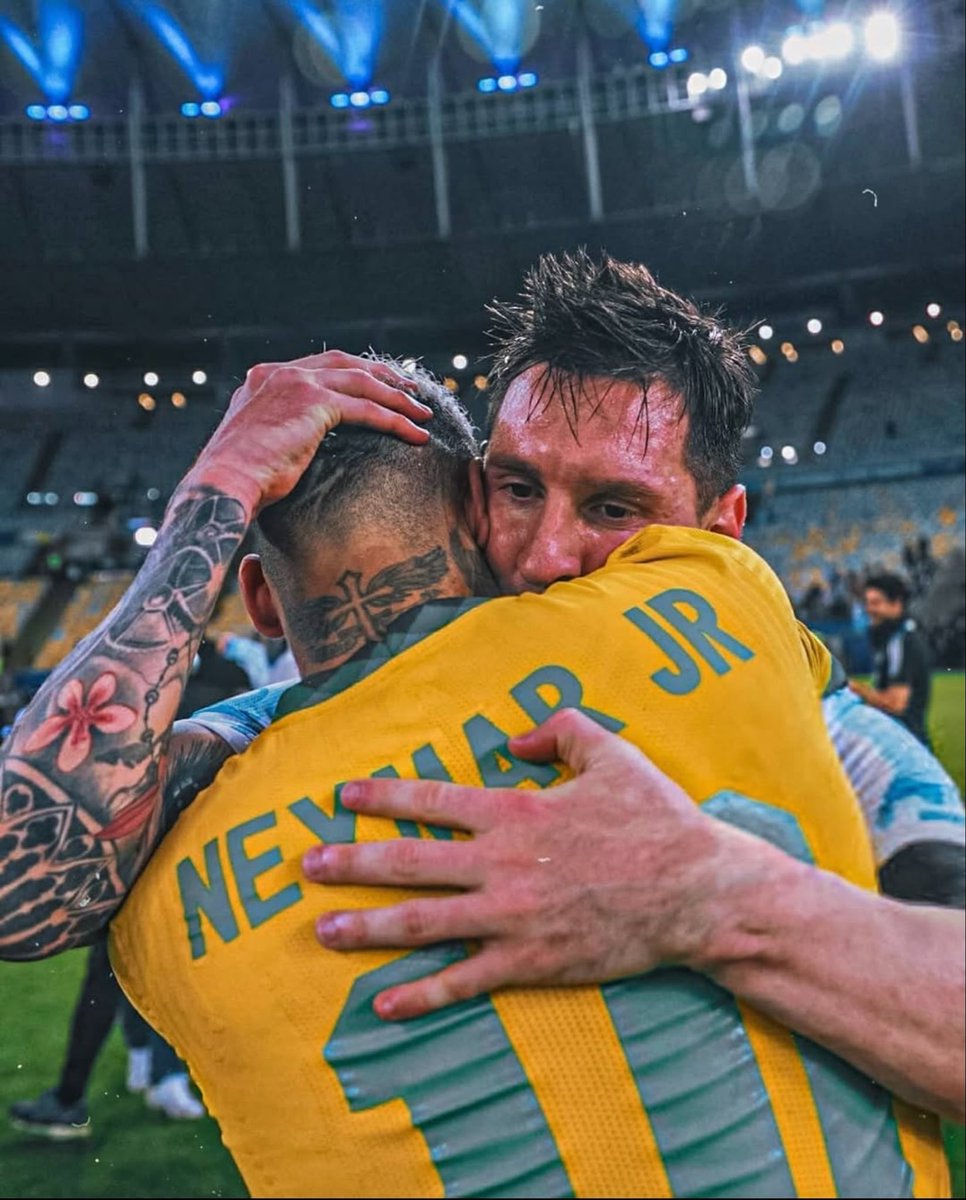

Kerline said that her brief participation in BBB changed her life, but she attributed public policies as the conditions for her to reach that opportunity. She mentioned the scholarships she earned, her mother's effort in abusive work shifts, her father being a teacher, and the Bolsa Família program, which she said fed and still feeds many relatives. Kerline argued that it was worth voting and fighting for rights and stated that remaining neutral at that moment could close paths capable of saving lives. #DireitosHumanos #PolíticasPúblicas #VotoConsciente (translated)

JH Fonseca stated that, in his assessment, the "judicial dictators" would be desperate and could take radical measures to provoke external intervention. He asked for patience and said he hoped that the global right would not fall into what he considered a trap. #Ditadura #Política #Direita (translated)
Julio Schneider congratulated Curtaramiro and published verses that defended courage and perseverance in a war described as impious and unjust, stating that the deeds should serve as an example for all of Earth. https://t.co/CIiedBCZ8v #Brasil #Guerreiros #Coragem (translated)


POPTime stated that the first round of the 2026 elections was taking place on that October 4 and asked those who would vote for Lula for president to like the post. https://t.co/adt29BOM4i #Eleições2026 #Lula #Votação (translated)


Milena wrote that she found out that day there would be a "Milena Day" and asked people to support the project starting at noon by liking, commenting, and sharing. She said that the initiative represented the realization of a dream. #MilenaDay #Projeto #SonhoRealizado (translated)

From the moment MBL focuses on helping Lula (with the null vote and only aiming to undermine Flávio), thinking only of its own growth. They are trusting too much in the short memory of Brazilians; it is up to us to always remember and never let them try to change history, as they attempt to do all the time. #Lula #MBL #VotoNulo (translated)


Mitico Magazine - The Teatro Edicola of San Severo: A Model of Cultural Revolution for Stanford University as Well Source: https://www.miticomagazine.com/territorio-e-sociale/teatro-edicola-di-san-severo-un-modello-di-rivoluzione-culturale-anche-per-la-stanford-university/ The Teatro Edicola in Via Tondi In San Severo, a singular metamorphosis has taken place: a newsstand abandoned for at least six years has found a new function and a new identity, transforming into one of the smallest and most unusual theatre stages in the world. An experiment born in the heart of the town which, in just a few months, has moved beyond local boundaries, attracting attention even overseas. It is called Teatro Edicola and it is a project conceived by the company Foyer '97, artistically directed by Francesco Gravino, which has brought the old newsstand in Via Tondi back to life through a formula that is both essential and surprising. Foyer '97 Foyer '97 APS was established as a formally constituted association active in the cultural sector in San Severo in 1997, born from the vocation of a group of actors, directors and theatre enthusiasts, with the aim of building a "living" and accessible theatre in the town. Over the years the company has developed a repertoire that includes texts from the classical tradition, contemporary dramaturgy, comedy and experimental projects, not limiting itself to the mere production of theatre shows, but also organising theatre courses and workshops and educational and cultural projects characterised by a strong inclusive ethos, particularly in schools. Foyer '97 does not always have a fixed artistic ensemble, but works with different performers and collaborators depending on the project; the only indispensable presence is that of Francesco Guido Gravino himself, actor, director and artistic director of the theatre company. The distinctive feature of Foyer '97 is certainly the value of social and cultural promotion attributed to theatre, the extremely close relationship with the audience and the search for a type of theatre outside conventional spaces, with cemeteries, trains, bell towers, and now a newsstand, as its backdrop. Six spectators, a few minutes and a minimal distance between stage and audience The project was launched on 27 March 2026, on the occasion of World Theatre Day, offering a theatrical experience built around a radical reduction of the conventional spaces and times of performance. The idea was born not only from the search for unconventional spaces, but also from "Edicola Fiore", the morning press review with a strongly ironic tone presented by Rosario Fiorello and Stefano Meloccaro, which was broadcast first only on Fiorello's social channels between 2011 and 2014, and then also on radio and television between 2016 and 2018. The review took its name from the diminutive of its founder, Fiore, and from the newsstand of a friend of Fiorello's in Via Flaminia Nuova in Rome, where the showman would meet early in the morning with a group of friends to read the newspapers. The San Severo newsstand was granted free of charge by its owner Pino Frau to the theatre group which, after obtaining temporary authorisation and institutional support from the Municipality of San Severo, refurbished it within two weeks at a cost of less than €3,000. Just six seats, a total surface area of 4 sq m, of which only 2 are for the stage area, less than a metre between actors and audience, a curtain, a lectern, two lights, performances lasting between 5 and 15 minutes, audience rotation every quarter of an hour: apparently minimal elements that end up subverting the usual relationship between stage and auditorium. Spectators, in fact, find themselves immersed in the stage action, in such proximity to the actors that every gesture, expression and word becomes immediately perceptible. In this way, theatre abandons its traditional spaces and insinuates itself into the everyday life of the street, becoming an intimate, concentrated and almost participatory experience. During the inaugural period admission was free with a subsequent voluntary donation from spectators; in the event of a more stable and longer-term concession, which could lead to seasonal theatre performances, the proposed ticket price would be €5. Audiences reward the experiment Foyer '97's gamble met with public interest right from the start: over 60 people attended the shows in a single afternoon, while the three days that inaugurated the season sold out. From a singular local experiment, the Teatro Edicola thus began to arouse curiosity even outside the province of Foggia, gradually transforming into a case of cultural and social interest, until it reached the American continent. From the province of Foggia to the "Stanford Social Innovation Review" The San Severo experience has now come under the international spotlight: in September 2026, the Stanford Social Innovation Review, an international journal and platform dedicated to social innovation published by the Stanford Center on Philanthropy and Civil Society at Stanford University in California, published on its website and in the Fall 2026 print edition the reportage "The Six-Seat Revolution", written by Dr Luciano Magaldi Sardella, independent journalist and researcher affiliated with the European Open University, and editorially supervised by deputy editor David V. Johnson. In the article, it is argued that the Teatro Edicola attracted attention overseas because the project concentrates cultural innovation, urban regeneration and proximity theatre into just a few square metres: starting from a real urban problem, it recovers an abandoned place with a modest investment, brings performance directly into public space and experiments with a much closer relationship between actors and spectators. From the point of view of theatrical representation, it also highlights how the format, based on micro-stories of five to twelve minutes, taken from great classics such as Goldoni, Chekhov, Ibsen, Euripides and Benni, and on audience rotation every fifteen minutes, transforms the physical limitations of the space into a precise dramaturgical choice, proving to be extremely innovative. All of this makes it possible to address some of the main critical issues in the sector: falling audience numbers, an exclusively elderly audience, reduced resources and distance from traditional cultural venues. The journal also highlights, however, the potential problems: economic sustainability, the need for stable institutional support and the difficulty of replicating the model, which is closely linked to the community and territory of San Severo. A model looking beyond San Severo Despite the difficulties, initial requests for information have already arrived from Lucca and Rome, where there is curiosity about the possibility of getting to know the model more closely and the steps needed to replicate it. The replicability formula, in fact, does not seem to require particularly costly infrastructure: an unused space, a targeted intervention, a cultural idea, in-depth knowledge of the surrounding area and a willingness to return that place to the community can be enough to trigger a new urban function. It is precisely in the disproportion between the modesty of the resources employed and the resonance generated by the initiative that perhaps the most original feature of the Teatro Edicola lies, certainly unique of its kind; there are, however, other examples in Italy of newsstands reused for other purposes: "Edicola 518", a twentieth-century kiosk abandoned in the centre of Perugia, now dedicated to independent publishing, art and cultural production; and in Rome itself, the abandoned newsstand in Piazza Testaccio used temporarily as a stage for a show by Fabio Morgan and the Erno newsstand in the Prati district, which almost every month offers a calendar of events, exhibitions, pop-ups and collaborations with artists and creative enterprises. Small revolutions, therefore, that tell stories of the reappropriation of urban spaces, of creativity and social innovation. And which, it is hoped, will take root in order to look ever further afield.


Mitico Magazine - The Teatro Edicola of San Severo: A Model of Cultural Revolution for Stanford University as Well Source: https://www.miticomagazine.com/territorio-e-sociale/teatro-edicola-di-san-severo-un-modello-di-rivoluzione-culturale-anche-per-la-stanford-university/ The Teatro Edicola in Via Tondi In San Severo, a singular metamorphosis has taken place: a newsstand abandoned for at least six years has found a new function and a new identity, transforming into one of the smallest and most unusual theatre stages in the world. An experiment born in the heart of the town which, in just a few months, has moved beyond local boundaries, attracting attention even overseas. It is called Teatro Edicola and it is a project conceived by the company Foyer '97, artistically directed by Francesco Gravino, which has brought the old newsstand in Via Tondi back to life through a formula that is both essential and surprising. Foyer '97 Foyer '97 APS was established as a formally constituted association active in the cultural sector in San Severo in 1997, born from the vocation of a group of actors, directors and theatre enthusiasts, with the aim of building a "living" and accessible theatre in the town. Over the years the company has developed a repertoire that includes texts from the classical tradition, contemporary dramaturgy, comedy and experimental projects, not limiting itself to the mere production of theatre shows, but also organising theatre courses and workshops and educational and cultural projects characterised by a strong inclusive ethos, particularly in schools. Foyer '97 does not always have a fixed artistic ensemble, but works with different performers and collaborators depending on the project; the only indispensable presence is that of Francesco Guido Gravino himself, actor, director and artistic director of the theatre company. The distinctive feature of Foyer '97 is certainly the value of social and cultural promotion attributed to theatre, the extremely close relationship with the audience and the search for a type of theatre outside conventional spaces, with cemeteries, trains, bell towers, and now a newsstand, as its backdrop. Six spectators, a few minutes and a minimal distance between stage and audience The project was launched on 27 March 2026, on the occasion of World Theatre Day, offering a theatrical experience built around a radical reduction of the conventional spaces and times of performance. The idea was born not only from the search for unconventional spaces, but also from "Edicola Fiore", the morning press review with a strongly ironic tone presented by Rosario Fiorello and Stefano Meloccaro, which was broadcast first only on Fiorello's social channels between 2011 and 2014, and then also on radio and television between 2016 and 2018. The review took its name from the diminutive of its founder, Fiore, and from the newsstand of a friend of Fiorello's in Via Flaminia Nuova in Rome, where the showman would meet early in the morning with a group of friends to read the newspapers. The San Severo newsstand was granted free of charge by its owner Pino Frau to the theatre group which, after obtaining temporary authorisation and institutional support from the Municipality of San Severo, refurbished it within two weeks at a cost of less than €3,000. Just six seats, a total surface area of 4 sq m, of which only 2 are for the stage area, less than a metre between actors and audience, a curtain, a lectern, two lights, performances lasting between 5 and 15 minutes, audience rotation every quarter of an hour: apparently minimal elements that end up subverting the usual relationship between stage and auditorium. Spectators, in fact, find themselves immersed in the stage action, in such proximity to the actors that every gesture, expression and word becomes immediately perceptible. In this way, theatre abandons its traditional spaces and insinuates itself into the everyday life of the street, becoming an intimate, concentrated and almost participatory experience. During the inaugural period admission was free with a subsequent voluntary donation from spectators; in the event of a more stable and longer-term concession, which could lead to seasonal theatre performances, the proposed ticket price would be €5. Audiences reward the experiment Foyer '97's gamble met with public interest right from the start: over 60 people attended the shows in a single afternoon, while the three days that inaugurated the season sold out. From a singular local experiment, the Teatro Edicola thus began to arouse curiosity even outside the province of Foggia, gradually transforming into a case of cultural and social interest, until it reached the American continent. From the province of Foggia to the "Stanford Social Innovation Review" The San Severo experience has now come under the international spotlight: in September 2026, the Stanford Social Innovation Review, an international journal and platform dedicated to social innovation published by the Stanford Center on Philanthropy and Civil Society at Stanford University in California, published on its website and in the Fall 2026 print edition the reportage "The Six-Seat Revolution", written by Dr Luciano Magaldi Sardella, independent journalist and researcher affiliated with the European Open University, and editorially supervised by deputy editor David V. Johnson. In the article, it is argued that the Teatro Edicola attracted attention overseas because the project concentrates cultural innovation, urban regeneration and proximity theatre into just a few square metres: starting from a real urban problem, it recovers an abandoned place with a modest investment, brings performance directly into public space and experiments with a much closer relationship between actors and spectators. From the point of view of theatrical representation, it also highlights how the format, based on micro-stories of five to twelve minutes, taken from great classics such as Goldoni, Chekhov, Ibsen, Euripides and Benni, and on audience rotation every fifteen minutes, transforms the physical limitations of the space into a precise dramaturgical choice, proving to be extremely innovative. All of this makes it possible to address some of the main critical issues in the sector: falling audience numbers, an exclusively elderly audience, reduced resources and distance from traditional cultural venues. The journal also highlights, however, the potential problems: economic sustainability, the need for stable institutional support and the difficulty of replicating the model, which is closely linked to the community and territory of San Severo. A model looking beyond San Severo Despite the difficulties, initial requests for information have already arrived from Lucca and Rome, where there is curiosity about the possibility of getting to know the model more closely and the steps needed to replicate it. The replicability formula, in fact, does not seem to require particularly costly infrastructure: an unused space, a targeted intervention, a cultural idea, in-depth knowledge of the surrounding area and a willingness to return that place to the community can be enough to trigger a new urban function. It is precisely in the disproportion between the modesty of the resources employed and the resonance generated by the initiative that perhaps the most original feature of the Teatro Edicola lies, certainly unique of its kind; there are, however, other examples in Italy of newsstands reused for other purposes: "Edicola 518", a twentieth-century kiosk abandoned in the centre of Perugia, now dedicated to independent publishing, art and cultural production; and in Rome itself, the abandoned newsstand in Piazza Testaccio used temporarily as a stage for a show by Fabio Morgan and the Erno newsstand in the Prati district, which almost every month offers a calendar of events, exhibitions, pop-ups and collaborations with artists and creative enterprises. Small revolutions, therefore, that tell stories of the reappropriation of urban spaces, of creativity and social innovation. And which, it is hoped, will take root in order to look ever further afield.

Pitchfork elege Madonna como a melhor da noite do #VMA "Com cinco apresentações no currículo antes desta noite — incluindo a cerimônia inaugural em 1984 — Madonna é praticamente sinônimo de VMAs. Vamos voltar ao início do milênio. A pergunta que não saía da boca de ninguém: Quem seria a próxima a assumir o trono? Britney ou Christina? Então, é claro, Madonna fez com que ambas beijassem o anel (metafórico). Agora, 23 anos depois, a Rainha do Pop escolheu decisivamente suas próximas damas de companhia. Como ato de abertura da noite, ela não poupou esforços para um medley elaborado inspirado em seu curta-metragem Confessions II, com vários convidados especiais. Madonna trouxe Sabrina Carpenter para cantar Bring Your Love (Hattie: “ela não vai tocar piano, rsrs”) e Charli XCX para o remix de Danceteria Afterhours. Aí a coisa ficou estranha. Dá um zoom; amplia: É… Sombr? Julia Garner vestida como a Madonna da época de Blonde Ambition? Seth Rogen vestido de Mapplethorpe? Keith Haring falso? Debi Mazar de verdade? Parece que, até segunda ordem, a casa ainda é da Madonna, as regras são da Madonna." #Madonna #VMA #RainhaDoPop

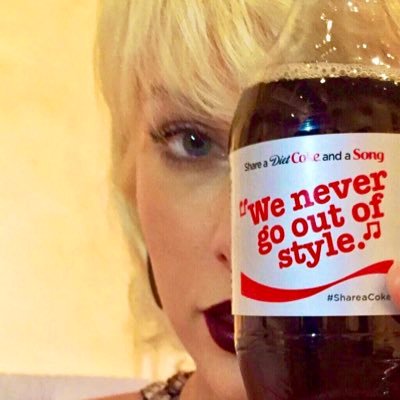
“a vida é curta. tenha aventuras. eu me trancar em casa por muitos anos eu nunca vou recuperar esse tempo. estou mais confiante agora do que estava há seis anos” - taylor para a time (2023) https://t.co/vQ1AujUPli #vida #aventura #confiança

A mentira tem perna curta O lugar de mentirosos é na lata do lixo da história! https://t.co/ycEnGsDv6h #verdade #mentira #história






