WRLD

Search

#difficulties
Kyriakos Pierrakakis 4d

The author wrote that Europe faced a dual challenge, citing elevated energy prices and rising inflation that they said were creating difficulties for citizens and businesses, while financial markets were also reacting. They said the response should focus on protecting and preserving. https://t.co/PSdcg5auad #Energie #Inflation #Finanzen #EU

2695
Krzysztof Graj 1w

Africa Daily Report — 3 October 2026 Major developments reported during the previous 24 hours. 1. Ethiopia / Eritrea — Fighting advances toward Mekelle as regional-war fears intensify Ethiopian federal forces and allied militias advanced toward Mekelle amid renewed fighting with the TPLF-led rebel alliance. The military escalation comes alongside the rupture of diplomatic relations between Ethiopia and Eritrea, while the African Union has urged Ethiopia, Eritrea and Egypt to exercise maximum restraint. The combination of battlefield escalation, diplomatic expulsions and regional rivalries makes this the continent's most consequential security development today. Source: https://www.reuters.com/world/africa/ethiopian-forces-near-tigray-capital-fears-grow-wider-conflict-2026-10-02/ 2. DR Congo — Ebola death toll passes 4,000 as response is disrupted Importance: 10/10 — Critical DR Congo's Ebola outbreak has reached about 8,300 confirmed cases and more than 4,000 deaths. Containment is being undermined by insecurity, destruction of treatment infrastructure, difficulties tracing displaced contacts and health-worker payment disputes. The outbreak is now the deadliest Ebola episode in DRC's history. Source: https://apnews.com/article/4c79b59ec81a08675d2506c9e176d125 3. Sierra Leone / EU — Aid dispute linked to wanted cocaine trafficker Importance: 9/10 — Very High The EU has suspended €18 million in financial support to Sierra Leone, according to the Dutch government, amid a dispute over Freetown's cooperation in efforts to arrest and extradite convicted cocaine trafficker Jos Leijdekkers. Sierra Leone disputes the characterization of the funding delay as punishment over the fugitive case, saying procedural financing issues are involved. Source: https://www.reuters.com/world/eu-cuts-aid-sierra-leone-over-its-help-convicted-cocaine-kingpin-netherlands-2026-10-01/ 4. Guinea-Bissau — Military authorities block former president Embalo's return Guinea-Bissau's military leadership has barred ousted former president Umaro Sissoco Embalo from returning from exile, citing security concerns. Embalo had announced plans to return ahead of the 6 December presidential election and says he intends to contest it. The decision adds uncertainty to the country's political transition and electoral process. Source: https://www.reuters.com/world/africa/guinea-bissau-military-leaders-bar-ousted-presidents-return-2026-10-02/ 5. Cameroon / Central African Republic — $391 million World Bank-backed corridor financing Importance: 8/10 — High Cameroon's President Paul Biya authorized a €347.5 million ($390.9 million) World Bank loan agreement for the Douala–Bangui Economic Corridor project. The investment is intended to improve infrastructure and economic connectivity between Cameroon and the Central African Republic, making it an important regional trade and logistics project. Source: https://www.reuters.com/world/africa/cameroon-authorises-391-million-world-bank-loan-2026-10-02/ 6. South Africa — Political killings reach record level ahead of local elections At least 43 people were reported killed in suspected politically connected attacks in South Africa from January through September, according to research published ahead of the 4 November local elections. KwaZulu-Natal has been particularly affected. The violence adds a serious security dimension to the election. Source: https://www.africanews.com/programmes/news/ 7. Kenya — $16 billion Lamu refinery faces another legal challenge Importance: 8/10 — High The planned $16 billion Dangote refinery at Lamu, one of East Africa's largest prospective industrial investments, faces another legal challenge. Consumer-rights group COFEK is seeking disclosure of details surrounding the Kenyan government's planned participation, adding to an existing land-related court dispute. Source: https://www.okayafrica.com/today-in-africa-october-2-2026-ethiopia-eritrea-rift-raises-regional-war-fears-eu-suspends-aid-to-sierra-leone/1440442 8. Botswana — Elephant cull for independence celebrations triggers conservation controversy Importance: 7/10 — High Botswana authorized the killing of 23 elephants and dozens of antelope to provide meat during its 60th independence celebrations, reopening debate over elephant management and hunting. The government argues that controlled hunting helps manage its exceptionally large elephant population and benefits communities exposed to human-wildlife conflict; conservationists have criticized the decision. Source: https://apnews.com/article/4f85f8d5c144a464eae2fc721135213e 9. Algeria — Parliament backs death penalty for deliberate forest arson Algeria's parliament approved legislation providing for the death penalty for deliberately setting fire to forests, woods or fields, following deadly wildfire seasons. Algeria retains capital punishment in law but has not carried out an execution since 1993. The legislation still requires further institutional review before final ratification. Source: https://www.al-monitor.com/originals/2026/10/algeria-moves-restore-death-penalty-arson-what-know 10. Sudan — Rights groups warn of widespread sexual violence against women and girls Importance: 9/10 — Very High Sudanese women's-rights organizations are warning that sexual violence, exploitation, detention and torture remain widespread amid the war, with many cases likely undocumented because of insecurity and fear of retaliation. Displaced women and girls are especially vulnerable as conflict, hunger and the collapse of livelihoods compound protection risks. Source: https://allafrica.com/stories/202610020092.html #Africa #AfricaNews #TopNewsOfAfrica #SierraLeone #EuropeanUnion #EU #AidDispute #CocaineTrafficking #JosLeijdekkers #Diplomacy #Cameroon #CentralAfricanRepublic #WorldBank #DoualaBanguiCorridor #Infrastructure #RegionalTrade #Logistics #AfricanEconomy #Ethiopia #Eritrea #Tigray #Mekelle #HornOfAfrica #RegionalConflict #RegionalSecurity #AfricanSecurity #Geopolitics #AfricaToday #wrldorg

570
Luciano Magaldi Sardella (PhD) 2w

Mitico Magazine - The Teatro Edicola of San Severo: A Model of Cultural Revolution for Stanford University as Well Source: https://www.miticomagazine.com/territorio-e-sociale/teatro-edicola-di-san-severo-un-modello-di-rivoluzione-culturale-anche-per-la-stanford-university/ The Teatro Edicola in Via Tondi In San Severo, a singular metamorphosis has taken place: a newsstand abandoned for at least six years has found a new function and a new identity, transforming into one of the smallest and most unusual theatre stages in the world. An experiment born in the heart of the town which, in just a few months, has moved beyond local boundaries, attracting attention even overseas. It is called Teatro Edicola and it is a project conceived by the company Foyer '97, artistically directed by Francesco Gravino, which has brought the old newsstand in Via Tondi back to life through a formula that is both essential and surprising. Foyer '97 Foyer '97 APS was established as a formally constituted association active in the cultural sector in San Severo in 1997, born from the vocation of a group of actors, directors and theatre enthusiasts, with the aim of building a "living" and accessible theatre in the town. Over the years the company has developed a repertoire that includes texts from the classical tradition, contemporary dramaturgy, comedy and experimental projects, not limiting itself to the mere production of theatre shows, but also organising theatre courses and workshops and educational and cultural projects characterised by a strong inclusive ethos, particularly in schools. Foyer '97 does not always have a fixed artistic ensemble, but works with different performers and collaborators depending on the project; the only indispensable presence is that of Francesco Guido Gravino himself, actor, director and artistic director of the theatre company. The distinctive feature of Foyer '97 is certainly the value of social and cultural promotion attributed to theatre, the extremely close relationship with the audience and the search for a type of theatre outside conventional spaces, with cemeteries, trains, bell towers, and now a newsstand, as its backdrop. Six spectators, a few minutes and a minimal distance between stage and audience The project was launched on 27 March 2026, on the occasion of World Theatre Day, offering a theatrical experience built around a radical reduction of the conventional spaces and times of performance. The idea was born not only from the search for unconventional spaces, but also from "Edicola Fiore", the morning press review with a strongly ironic tone presented by Rosario Fiorello and Stefano Meloccaro, which was broadcast first only on Fiorello's social channels between 2011 and 2014, and then also on radio and television between 2016 and 2018. The review took its name from the diminutive of its founder, Fiore, and from the newsstand of a friend of Fiorello's in Via Flaminia Nuova in Rome, where the showman would meet early in the morning with a group of friends to read the newspapers. The San Severo newsstand was granted free of charge by its owner Pino Frau to the theatre group which, after obtaining temporary authorisation and institutional support from the Municipality of San Severo, refurbished it within two weeks at a cost of less than €3,000. Just six seats, a total surface area of 4 sq m, of which only 2 are for the stage area, less than a metre between actors and audience, a curtain, a lectern, two lights, performances lasting between 5 and 15 minutes, audience rotation every quarter of an hour: apparently minimal elements that end up subverting the usual relationship between stage and auditorium. Spectators, in fact, find themselves immersed in the stage action, in such proximity to the actors that every gesture, expression and word becomes immediately perceptible. In this way, theatre abandons its traditional spaces and insinuates itself into the everyday life of the street, becoming an intimate, concentrated and almost participatory experience. During the inaugural period admission was free with a subsequent voluntary donation from spectators; in the event of a more stable and longer-term concession, which could lead to seasonal theatre performances, the proposed ticket price would be €5. Audiences reward the experiment Foyer '97's gamble met with public interest right from the start: over 60 people attended the shows in a single afternoon, while the three days that inaugurated the season sold out. From a singular local experiment, the Teatro Edicola thus began to arouse curiosity even outside the province of Foggia, gradually transforming into a case of cultural and social interest, until it reached the American continent. From the province of Foggia to the "Stanford Social Innovation Review" The San Severo experience has now come under the international spotlight: in September 2026, the Stanford Social Innovation Review, an international journal and platform dedicated to social innovation published by the Stanford Center on Philanthropy and Civil Society at Stanford University in California, published on its website and in the Fall 2026 print edition the reportage "The Six-Seat Revolution", written by Dr Luciano Magaldi Sardella, independent journalist and researcher affiliated with the European Open University, and editorially supervised by deputy editor David V. Johnson. In the article, it is argued that the Teatro Edicola attracted attention overseas because the project concentrates cultural innovation, urban regeneration and proximity theatre into just a few square metres: starting from a real urban problem, it recovers an abandoned place with a modest investment, brings performance directly into public space and experiments with a much closer relationship between actors and spectators. From the point of view of theatrical representation, it also highlights how the format, based on micro-stories of five to twelve minutes, taken from great classics such as Goldoni, Chekhov, Ibsen, Euripides and Benni, and on audience rotation every fifteen minutes, transforms the physical limitations of the space into a precise dramaturgical choice, proving to be extremely innovative. All of this makes it possible to address some of the main critical issues in the sector: falling audience numbers, an exclusively elderly audience, reduced resources and distance from traditional cultural venues. The journal also highlights, however, the potential problems: economic sustainability, the need for stable institutional support and the difficulty of replicating the model, which is closely linked to the community and territory of San Severo. A model looking beyond San Severo Despite the difficulties, initial requests for information have already arrived from Lucca and Rome, where there is curiosity about the possibility of getting to know the model more closely and the steps needed to replicate it. The replicability formula, in fact, does not seem to require particularly costly infrastructure: an unused space, a targeted intervention, a cultural idea, in-depth knowledge of the surrounding area and a willingness to return that place to the community can be enough to trigger a new urban function. It is precisely in the disproportion between the modesty of the resources employed and the resonance generated by the initiative that perhaps the most original feature of the Teatro Edicola lies, certainly unique of its kind; there are, however, other examples in Italy of newsstands reused for other purposes: "Edicola 518", a twentieth-century kiosk abandoned in the centre of Perugia, now dedicated to independent publishing, art and cultural production; and in Rome itself, the abandoned newsstand in Piazza Testaccio used temporarily as a stage for a show by Fabio Morgan and the Erno newsstand in the Prati district, which almost every month offers a calendar of events, exhibitions, pop-ups and collaborations with artists and creative enterprises. Small revolutions, therefore, that tell stories of the reappropriation of urban spaces, of creativity and social innovation. And which, it is hoped, will take root in order to look ever further afield.

www.miticomagazine.com
Teatro Edicola di San Severo: un modello di rivoluzione culturale anche per la Stanford University
1032
Luciano Magaldi Sardella (PhD) 2w

Mitico Magazine - The Teatro Edicola of San Severo: A Model of Cultural Revolution for Stanford University as Well Source: https://www.miticomagazine.com/territorio-e-sociale/teatro-edicola-di-san-severo-un-modello-di-rivoluzione-culturale-anche-per-la-stanford-university/ The Teatro Edicola in Via Tondi In San Severo, a singular metamorphosis has taken place: a newsstand abandoned for at least six years has found a new function and a new identity, transforming into one of the smallest and most unusual theatre stages in the world. An experiment born in the heart of the town which, in just a few months, has moved beyond local boundaries, attracting attention even overseas. It is called Teatro Edicola and it is a project conceived by the company Foyer '97, artistically directed by Francesco Gravino, which has brought the old newsstand in Via Tondi back to life through a formula that is both essential and surprising. Foyer '97 Foyer '97 APS was established as a formally constituted association active in the cultural sector in San Severo in 1997, born from the vocation of a group of actors, directors and theatre enthusiasts, with the aim of building a "living" and accessible theatre in the town. Over the years the company has developed a repertoire that includes texts from the classical tradition, contemporary dramaturgy, comedy and experimental projects, not limiting itself to the mere production of theatre shows, but also organising theatre courses and workshops and educational and cultural projects characterised by a strong inclusive ethos, particularly in schools. Foyer '97 does not always have a fixed artistic ensemble, but works with different performers and collaborators depending on the project; the only indispensable presence is that of Francesco Guido Gravino himself, actor, director and artistic director of the theatre company. The distinctive feature of Foyer '97 is certainly the value of social and cultural promotion attributed to theatre, the extremely close relationship with the audience and the search for a type of theatre outside conventional spaces, with cemeteries, trains, bell towers, and now a newsstand, as its backdrop. Six spectators, a few minutes and a minimal distance between stage and audience The project was launched on 27 March 2026, on the occasion of World Theatre Day, offering a theatrical experience built around a radical reduction of the conventional spaces and times of performance. The idea was born not only from the search for unconventional spaces, but also from "Edicola Fiore", the morning press review with a strongly ironic tone presented by Rosario Fiorello and Stefano Meloccaro, which was broadcast first only on Fiorello's social channels between 2011 and 2014, and then also on radio and television between 2016 and 2018. The review took its name from the diminutive of its founder, Fiore, and from the newsstand of a friend of Fiorello's in Via Flaminia Nuova in Rome, where the showman would meet early in the morning with a group of friends to read the newspapers. The San Severo newsstand was granted free of charge by its owner Pino Frau to the theatre group which, after obtaining temporary authorisation and institutional support from the Municipality of San Severo, refurbished it within two weeks at a cost of less than €3,000. Just six seats, a total surface area of 4 sq m, of which only 2 are for the stage area, less than a metre between actors and audience, a curtain, a lectern, two lights, performances lasting between 5 and 15 minutes, audience rotation every quarter of an hour: apparently minimal elements that end up subverting the usual relationship between stage and auditorium. Spectators, in fact, find themselves immersed in the stage action, in such proximity to the actors that every gesture, expression and word becomes immediately perceptible. In this way, theatre abandons its traditional spaces and insinuates itself into the everyday life of the street, becoming an intimate, concentrated and almost participatory experience. During the inaugural period admission was free with a subsequent voluntary donation from spectators; in the event of a more stable and longer-term concession, which could lead to seasonal theatre performances, the proposed ticket price would be €5. Audiences reward the experiment Foyer '97's gamble met with public interest right from the start: over 60 people attended the shows in a single afternoon, while the three days that inaugurated the season sold out. From a singular local experiment, the Teatro Edicola thus began to arouse curiosity even outside the province of Foggia, gradually transforming into a case of cultural and social interest, until it reached the American continent. From the province of Foggia to the "Stanford Social Innovation Review" The San Severo experience has now come under the international spotlight: in September 2026, the Stanford Social Innovation Review, an international journal and platform dedicated to social innovation published by the Stanford Center on Philanthropy and Civil Society at Stanford University in California, published on its website and in the Fall 2026 print edition the reportage "The Six-Seat Revolution", written by Dr Luciano Magaldi Sardella, independent journalist and researcher affiliated with the European Open University, and editorially supervised by deputy editor David V. Johnson. In the article, it is argued that the Teatro Edicola attracted attention overseas because the project concentrates cultural innovation, urban regeneration and proximity theatre into just a few square metres: starting from a real urban problem, it recovers an abandoned place with a modest investment, brings performance directly into public space and experiments with a much closer relationship between actors and spectators. From the point of view of theatrical representation, it also highlights how the format, based on micro-stories of five to twelve minutes, taken from great classics such as Goldoni, Chekhov, Ibsen, Euripides and Benni, and on audience rotation every fifteen minutes, transforms the physical limitations of the space into a precise dramaturgical choice, proving to be extremely innovative. All of this makes it possible to address some of the main critical issues in the sector: falling audience numbers, an exclusively elderly audience, reduced resources and distance from traditional cultural venues. The journal also highlights, however, the potential problems: economic sustainability, the need for stable institutional support and the difficulty of replicating the model, which is closely linked to the community and territory of San Severo. A model looking beyond San Severo Despite the difficulties, initial requests for information have already arrived from Lucca and Rome, where there is curiosity about the possibility of getting to know the model more closely and the steps needed to replicate it. The replicability formula, in fact, does not seem to require particularly costly infrastructure: an unused space, a targeted intervention, a cultural idea, in-depth knowledge of the surrounding area and a willingness to return that place to the community can be enough to trigger a new urban function. It is precisely in the disproportion between the modesty of the resources employed and the resonance generated by the initiative that perhaps the most original feature of the Teatro Edicola lies, certainly unique of its kind; there are, however, other examples in Italy of newsstands reused for other purposes: "Edicola 518", a twentieth-century kiosk abandoned in the centre of Perugia, now dedicated to independent publishing, art and cultural production; and in Rome itself, the abandoned newsstand in Piazza Testaccio used temporarily as a stage for a show by Fabio Morgan and the Erno newsstand in the Prati district, which almost every month offers a calendar of events, exhibitions, pop-ups and collaborations with artists and creative enterprises. Small revolutions, therefore, that tell stories of the reappropriation of urban spaces, of creativity and social innovation. And which, it is hoped, will take root in order to look ever further afield.

www.miticomagazine.com
Teatro Edicola di San Severo: un modello di rivoluzione culturale anche per la Stanford University
1032
Krzysztof Graj 3w

AFRICA DAILY REPORT — 22 SEPTEMBER 2026 Key developments reported during the previous 24 hours 1. ETHIOPIA — Seven armed opposition groups form a new anti-government alliance — 10/10 (Critical) Seven Ethiopian armed groups, including factions from Tigray, Amhara, Oromia, Afar and Benishangul-Gumuz, announced the Ethiopian Peoples' Forces Alliance for Survival. The coalition brings together groups that previously fought on opposing sides, including the TPLF and Amhara Fano elements. Its stated aim is to challenge Prime Minister Abiy Ahmed's government. The development is particularly significant amid renewed clashes and tensions around the 2022 Pretoria peace framework. Sources: Reuters: https://www.reuters.com/world/africa/seven-ethiopian-armed-groups-announce-anti-government-alliance-2026-09-21/ AP: https://apnews.com/article/d348643aa604ebc074d8aade25c97efe 2. MALI — Sources say more than 100 soldiers were killed in JNIM's Dioura attack — 10/10 (Critical) Reuters reports that the September 10 assault by al-Qaeda-linked JNIM on the Dioura military camp killed more than 100 Malian soldiers, substantially above earlier reported figures. Sources cited estimates of roughly 120–130 soldiers killed and more than 100 captured. JNIM has also maintained pressure around Sévaré and Konna, underscoring the deteriorating security position of Mali's military government and its Russian Africa Corps partners. Source: Reuters: https://www.reuters.com/world/africa/al-qaeda-linked-militants-kill-more-than-100-malian-soldiers-attack-this-month-2026-09-21/ 3. DR CONGO — Amnesty accuses M23 of abuses and mineral trafficking at rebel-controlled mines — 9.5/10 (Very High) Amnesty International says M23 fighters committed abuses including torture, forced labour and killings at artisanal mining sites in eastern DRC and trafficked gold and coltan through Rwanda. The allegations are strategically important because control of mineral production and trade is central to the economics of the eastern Congo conflict. M23 and Rwanda had not responded to the allegations in the reports reviewed. Sources: AP: https://apnews.com/article/5b3ab989adbac990144fed20ca0a5c5e Amnesty International: https://www.amnesty.org/en/latest/news/2026/09/drc-m23-fighters-abused-miners-and-trafficked-gold-and-coltan-to-rwanda/ 4. NIGERIA — Survivors describe circumstances surrounding deaths of 37 detainees in Minna — 9/10 (Very High) Reuters interviewed survivors of the detention incident in Niger State in which 37 detainees, many reportedly teenage artisanal gold miners, died after being held in an overcrowded cell. Survivors alleged that an unidentified substance was sprayed inside before detainees developed breathing difficulties and began collapsing. Authorities have not established the cause of death. President Bola Tinubu has ordered an investigation and officials have been suspended. Source: Reuters: https://www.reuters.com/world/africa/one-after-another-they-started-dying-survivors-recount-deaths-detention-nigeria-2026-09-22/ 5. DR CONGO — Ebola crisis remains a major health emergency as vaccination research expands — 9/10 (Very High) Health authorities are expanding vaccination efforts while research continues into protection against the Bundibugyo strain driving the current outbreak. WHO has reported some progress in the response, but the epidemic remains far from over. CARE warned on September 21 that the Ebola emergency is intersecting with humanitarian pressures and the threat of El Niño-related disruption. Sources: WHO: https://www.who.int/emergencies/disease-outbreak-news/item/2026-DON617 CARE: https://www.care.org/media-and-press/as-ebola-spreads-and-el-nino-looms-urgent-investment-is-needed-in-the-drc/ 6. SUDAN — US diplomatic push for a permanent settlement intensifies at UN meetings — 8.5/10 (Very High) Senior US presidential adviser Massad Boulos held talks in New York with Sudanese and Egyptian foreign ministers as diplomatic efforts continue to seek a permanent settlement to Sudan's war. The discussions come amid the UN General Assembly and renewed international attention to Sudan's territorial integrity, humanitarian emergency and the need for a negotiated settlement. Source: Sudan Tribune: https://sudantribune.com/article/319088 7. SUDAN — Another deadly gold-mine collapse highlights wartime mining risks — 8/10 (High) At least 11 miners were reported killed and around 30 injured after a mine shaft collapsed in northeastern Sudan. It was the second major informal-mine disaster reported within a week. Sudan's largely informal gold sector suffers from weak safety regulation, while gold production and smuggling also intersect with the financing of armed actors in the country's civil war. Source: AP: https://apnews.com/article/cc669999ff89b8eb6aca66540100ec97 8. AFRICAN UNION / UNITED NATIONS — Africa pushes institutional reform and greater representation at UNGA — 8/10 (High) African leaders enter UN General Assembly high-level week with institutional reform high on the agenda, including demands for greater African representation in global governance. AU and UN leaders also discussed debt sustainability, critical-mineral value chains, peace and security mechanisms, and conflicts in Sudan, South Sudan, Somalia, Libya, the Sahel and DRC. Sources: Africanews: https://www.africanews.com/2026/09/22/african-union-to-push-for-bigger-voice-on-world-stage-at-un-meeting/ AllAfrica: https://allafrica.com/stories/202609210255.html 9. SOUTH AFRICA — Three suspects arrested as investigation into killings of women continues — 7.5/10 (High) South African police arrested three suspects in connection with one of a series of killings of women around Ekurhuleni, east of Johannesburg. Investigators are examining whether multiple cases are connected. The investigation has intensified public concern over femicide and violent crime in South Africa. Source: ABC News / AP: https://abcnews.com/International/wireStory/3-suspects-arrested-relation-series-killings-women-south-136613059 10. EGYPT / SOMALIA — Cairo and CIA leadership reaffirm support for Somalia's territorial integrity — 7/10 (Significant) Egyptian President Abdel Fattah el-Sisi met CIA Director John Ratcliffe in Cairo, with discussions covering Somalia, Sudan, maritime security and wider regional crises. Egypt reiterated support for Somalia's sovereignty and territorial integrity, reflecting Cairo's growing security role in the Horn of Africa. Source: Radio Dalsan via AllAfrica: https://allafrica.com/stories/202609210230.html #Africa #AfricaNews #TopNewsOfAfrica #Ethiopia #EthiopianPolitics #ArmedOpposition #PoliticalAlliance #TPLF #Amhara #Oromia #Tigray #AbiyAhmed #PretoriaPeaceAgreement #HornOfAfrica #Mali #Sahel #Dioura #JNIM #AlQaeda #JihadistViolence #Terrorism #Counterterrorism #MalianArmy #SahelSecurity #DRCongo #M23 #AmnestyInternational #HumanRights #HumanRightsAbuses #MineralTrafficking #ConflictMinerals #Gold #Coltan #CriticalMinerals #Rwanda #EasternCongo #AfricanSecurity #RegionalStability #Geopolitics #AfricaToday #wrldorg

1503
S
Sandfeen Sep 9

€800 Billion of Central Planning Europe’s defence problem illustrates a lesson politicians repeatedly refuse to learn: You cannot spend your way out of a supply problem. Ursula von der Leyen’s Commission has announced an €800 billion rearmament programme with the confidence of a central planner who has discovered that shortages can be eliminated by increasing the budget. The European Court of Auditors appears considerably less impressed. Its warning is devastating: insufficient coordination, fragmented funding, bottlenecks in materials and critical components, shortages of skilled personnel and serious difficulties in achieving readiness by 2030. Notice what is missing from the solution: more bureaucracy. The fundamental error is confusing financial resources with real resources. Governments can create euros with a stroke of a pen. They cannot create factories, engineers, semiconductors, explosives, machine tools, rare materials or production capacity by decree. Worse, the EU is attempting to coordinate what politicians cannot possibly know well enough to coordinate from Brussels: which technologies should be developed, which weapons should be produced, where capacity should be expanded, and how scarce resources should be allocated. That is precisely the information problem identified by Friedrich Hayek. Knowledge is dispersed throughout millions of individual decisions. Prices communicate that knowledge. Central planners replace those signals with political priorities, committees and funding programmes. The result is predictable: fragmentation, duplication, lobbying, distorted incentives and expensive procurement. Europe does need to rearm. But that does not prove that Europe needs an €800 billion bureaucratic spending programme. In fact, the opposite may be true. If defence is genuinely urgent, Europe should remove the obstacles preventing private capital, competition and production from responding to demand. Let companies compete. Let governments buy what actually works. Let prices reveal scarcity. Let inefficient producers fail. The question is not whether Europe can spend €800 billion. Of course it can. The question is whether Brussels can transform €800 billion of political spending into €800 billion of actual military capability. The Court of Auditors has just reminded us that money is not knowledge, bureaucracy is not coordination, and spending is not production. And history has never been kind to economies that confuse the three.

700
S
Sandfeen Aug 28

Daycare Governance and the Tyranny of Compassion Something sinister can hide behind compassion. Caring is virtuous, but it becomes pathological when institutions gain power by expanding the number of people who need care. Munchausen syndrome by proxy shows how: a caregiver fabricates or induces illness in a dependent person, then gains sympathy by performing devotion. The sickness is manufactured, but the care is real. The claim: modern society can scale this into governance. Call it the daycare governance model: (1) victims to protect, (2) caregivers to provide protection, (3) dissenters to remove. Health, therapy, NGOs, academia, media, and bureaucracy gain prestige, funding, and moral authority by managing ever-expanding categories of suffering. It unfolds in two stages. First, the victim class expands: “trauma” drifts from specific, severe harms to everyday experiences, lowering the threshold for suffering until demand is nearly limitless. Second, the perpetual patient forms: ordinary difficulties are medicalized—strength as toxicity, sadness as disorder, restlessness as pathology—creating a cycle where caretakers and victims gain status or protection. This drives a crisis of competence. Victimhood can shield accountability, and institutions are rewarded for treating problems rather than eliminating the need for themselves. Plato warned against doing for people what they can do for themselves: removing every burden removes the reason to grow stronger. True care aims to make itself unnecessary. That’s the difference between a good mother and a poisoning one: one allows appropriate hardship to build independence; the other denies it. Failing to distinguish these forms of care makes the pathology hard to recognize—and easy to applaud.

938
Adham Hasanin Aug 11

A Crown Instead of the Barracks: An Idea From Outside the Box Could Egypt’s exiled opposition use constitutional monarchy to dismantle the legitimacy of the 1952 coup? By Adham Hasanin Egyptian journalist and political writer, based in the Netherlands To understand what follows, a reader unfamiliar with Egypt needs one basic fact: since 1952, Egypt has never been governed by anyone who did not first wear a military uniform. Gamal Abdel Nasser, Anwar Sadat, Hosni Mubarak, and today Abdel Fattah el-Sisi four men, four eras, one common origin. All rose through the armed forces. All inherited a state built by a coup that year, when a group of officers calling themselves the "Free Officers" overthrew King Farouk I and, within a year, abolished the monarchy altogether and declared a republic. For seventy-three years, the underlying equation has not changed: the army rules, power passes from one officer to the next, and legitimacy is drawn from the barrel of a gun rather than the ballot box. Every conceivable form of opposition has been tried legal parties and banned ones, Islamist movements, liberal and leftist coalitions, the 2011 popular uprising, and the 2013 elections whose result was overturned by force within a year. All of them hit the same wall: a military institution that reproduces itself under different names, while the core of the system remains untouched. So what if the problem, all along, has not simply been who rules, but the constitutional framework that makes military rule possible in the first place? And what if the answer lies not in swapping one president for another, but in dismantling the underlying equation itself, through a framework Egyptian opposition movements have never seriously tried: a purely ceremonial constitutional monarchy, on the model of Belgium, the Netherlands, or Spain where the head of state becomes a symbol above the political fray, while the army is permanently expelled from politics and returned to its barracks. This is not a call to revive a particular family, nor nostalgia for a golden age that never quite existed. It is a proposal for a political and strategic tool that has not yet been used in the intellectual arsenal of Egypt’s opposition in exile a tool that deserves serious discussion, regardless of whether it is ever literally realised or simply serves to expand the boundaries of what is politically thinkable. I. Why 1952, Not 2013 or 2011, Is the Root The strategic error made by most Egyptian opposition movements from the Muslim Brotherhood to the April 6 Youth Movement to the various civil opposition parties has been treating each political crisis as an isolated case: Mubarak was corrupt and had to be toppled; Sisi staged a coup that must be condemned; the interim military council was a transitional phase to be endured. This piecemeal approach treats the symptoms while leaving the original illness untouched. That original illness is the very structure of legitimacy established by the coup of 23 July 1952. The Egyptian republican system, from Nasser to today, has never built its legitimacy on a genuine democratic social contract. Instead, it has rested on a fixed trinity: the rhetoric of "revolution against feudalism and colonialism," charismatic individual leadership, and military protection of the regime framed as the guarantor of stability. This trinity has repeated itself from Nasser to Sadat to Mubarak to Sisi, with only cosmetic variations. Each new president was never a break from the system he was its continuation. When the opposition says "let us return to the constitutional framework that preceded the coup," it is not criticising a particular policy. It is declaring that the legal foundation of everything that came after 1952 was illegitimate from the start. Here lies the rhetorical power of "returning to the pre-1952 order": it does not merely demand swapping one ruler for another. It withdraws historical legitimacy from the entire republican military system including today’s regime, which draws its own declared legitimacy from that same "1952 legacy." II. Why a "Ceremonial Crown," Not "the Return of a Ruling Family" Here is the most important distinction anyone advocating this idea seriously must grasp: the project does not rest on restoring any particular individual from the Muhammad Ali dynasty, nor on nostalgia for King Farouk or his ancestors. The real power of the idea lies in the constitutional form, not in the person who happens to sit on the throne. Three successful European democracies illustrate the model clearly. Belgium, where King Philippe is a purely constitutional symbol with no real executive power, while the state is run through an elected parliament and a complex coalition government reflecting the country’s linguistic and political diversity. The Netherlands, where King Willem-Alexander formally opens the parliamentary year and signs laws, but where actual decision-making rests with the prime minister and the elected parliament. And Spain, where the king represents symbolic continuity of the state above party politics, while the military and security services answer entirely to civilian authority a transition achieved after the death of the dictator Francisco Franco in 1975, when King Juan Carlos I voluntarily relinquished the extensive executive powers he had inherited and backed free elections, most dramatically in February 1981, when he personally ordered the armed forces to remain loyal to the constitution during an attempted military coup, causing it to collapse within hours. The common thread across these three models is not "the presence of an ancient royal family." It is the principle of separating symbol from power. The monarch in these countries does not rule; he represents. He issues no political decisions; he provides the continuity and symbolic stability that allows party political competition to revolve beneath him, without every transfer of power becoming an existential crisis of legitimacy. This is precisely what Egypt’s military republican system lacks: a neutral mechanism for guaranteeing state continuity that does not depend on the person of the ruler or his security apparatus. When Egypt’s military-republican president is absent, it is always the army that fills the vacuum, because it is the only institution built to be the "guarantor of stability." Under a ceremonial monarchical model, by contrast, it is the king not the army who represents that symbolic guarantee, genuinely opening the door to removing the military institution from the political equation altogether. III. Egypt’s Standing Under the Monarchy: An Honest Reckoning, Not Blind Nostalgia For a Western reader with little prior knowledge of Egypt’s monarchical period (1922–1952), it helps to know this: Egypt was nominally independent under its own king from 1922, but Britain retained enormous informal control over the country’s foreign policy, military bases, and the Suez Canal throughout the period a reality that shaped everything that follows. Any honest invocation of "Egypt’s standing under the monarchy" must avoid the trap of mythologised nostalgia that many advocates of this idea fall into. Egypt in that era was no lost paradise, and any honest article must say so plainly. The Egyptian pound, for instance, often invoked as a symbol of "national currency strength" in that period, was not strong because of independent Egyptian monetary policy. It was pegged to the British pound sterling as part of Egypt’s complete colonial financial dependency until 1947, with Egypt exercising no independent oversight of its own currency whatsoever. The pound’s strength, in other words, was not a sovereign Egyptian achievement it was a reflection of British imperial power ruling Egypt from behind the throne. But this does not mean Egypt lacked a genuine regional standing worth studying. Cairo, in the 1930s and 1940s, was the undisputed cultural capital of the entire Arab world: the Egyptian film industry produced more than half of all Arabic-language cinema; its theatre scene, led by figures like Youssef Wahbi and Naguib al-Rihani, and its music, with Umm Kulthum and Mohammed Abdel Wahab, set the standard across the region; Cairo University was the first modern university in the Arab world; and the Egyptian press was the reference point for Arab public opinion from the Atlantic to the Gulf. Cairo was, quite simply, to the Arab world what Paris was to Francophone Europe: an unrivalled centre of cultural and intellectual gravity. This standing was not necessarily a product of monarchy itself, so much as a product of a relative space of political and press pluralism that allowed Egyptian civil society to flourish, despite all the flaws of the political system and the interference of both palace and occupier. The lesson here is not "bring back the king and the standing will return." It is: when even a limited margin of civic freedom exists, Egypt flourishes culturally and intellectually almost by its own nature. And that margin is precisely what has been entirely absent across the past seven decades of unchallenged military rule. IV. What Reform Would Actually Require Not Repeating the Old Mistakes Any serious advocacy of this model must include, even briefly, a clear vision for avoiding the flaws of the old monarchical system itself otherwise the proposal collapses into simply replacing one form of authoritarianism with another wearing a different crown. First, the armed forces would need to be placed fully under a civilian ministry of defence, with its budget subject to transparent parliamentary oversight the exact opposite of its current status as a state-within-a-state, and equally opposed to its role under the monarchy, when it often served as an instrument of British influence. Second, a judiciary fully independent of both palace and government alike, unlike the old model, which saw direct royal interference in political life as when King Fuad I dismissed the elected government of Prime Minister Saad Zaghloul’s successor, Mustafa al-Nahhas, in 1928, in one of the clearest "constitutional coups" in modern Egyptian history. Third, a parliament that genuinely represents the people rather than landowners and the aristocracy, as was the case before 1952, when membership in the Senate was effectively conditional on the ability to pay land taxes meaning political representation was, by law, restricted to the wealthy. Fourth, genuine economic sovereignty, with a truly independent national currency rather than one pegged to a foreign power’s currency, unlike the historical dependency of the Egyptian pound on sterling. These four principles are enough to clarify that the project on offer is not a literal "return to the past," but a borrowing of the constitutional form (symbolic monarchy) combined with an explicit rejection of its old substance (colonial dependency, palace interference, parliamentary feudalism). V. The Role of Egyptian Movements in Exile: Between Goal and Instrument This raises the most practical question of all: how might Egypt’s opposition abroad actually adopt this idea, and in what capacity? The honest answer is that the power of this proposal does not necessarily lie in its literal fulfilment, but in its dual strategic function. On one hand, it can be advanced as a genuine political goal adopted by broad coalitions of Egyptian movements coalitions that might include Islamists, liberals, leftists, and traditional monarchists, united around a single shared premise: rejecting the legitimacy of the 1952 order and everything that followed from it, even if they later disagree over the precise final shape of the state. On the other hand and this matters more in practice the idea can be deployed as a rhetorical instrument of pressure to widen a Egyptian political debate currently trapped between two false choices: "continued military rule" or "no alternative, chaos awaits." When the opposition puts forward a clearly defined third model a European-style constitutional monarchy it breaks this false binary and opens new intellectual space in Egyptian public discourse, even if the project is never realised in its literal form. This kind of "leverage idea" is common in the history of political movements worldwide: it is not necessarily proposed to be fulfilled immediately in full, but to redraw the boundaries of the politically possible, and to force the existing regime to defend its legitimacy rather than simply assume it. Conclusion: An Invitation to Debate, Not a Ready-Made Prescription This article does not claim that restoring a monarchical form would magically resolve Egypt’s chronic crisis of legitimacy, nor does it ignore the immense difficulties facing any transformative project under a military institution as economically and securitywise entrenched as Egypt’s is today. But it raises a question that deserves serious debate among Egypt’s opposition in exile, rather than automatic dismissal simply for being unfamiliar: Has the Egyptian opposition exhausted every available tool for dismantling the legitimacy of 1952, or has it remained trapped in the same old binary swapping one ruler for another while the framework that makes military rule possible remains untouched? The idea is on the table now, not as a finished solution, but as an overdue invitation to think outside the box.

354
Rus.Postimees.ee Aug 5

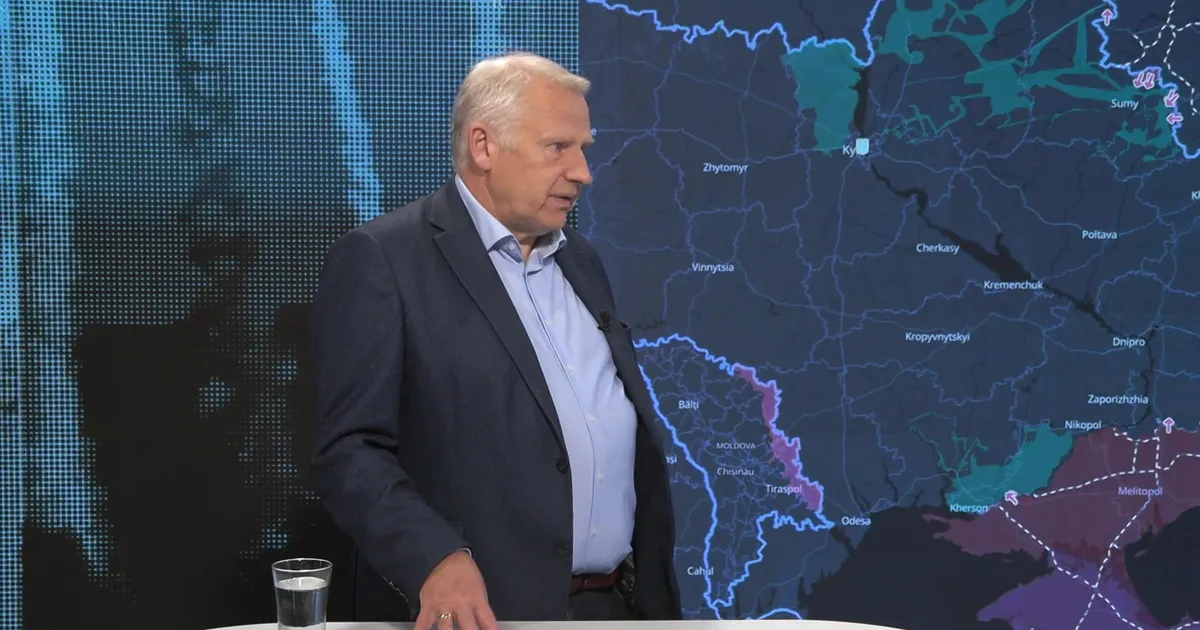
Expert warns that if Russia increases its ballistic missile production, Ukraine will face serious difficulties, as mobile Iskander launch systems pose a significant threat to major Ukrainian cities, despite Ukraine's recent successes in limiting missile launches from occupied Crimea. #Искандер #Украина #дроны

pmo.ee
Эксперт: если Россия сможет увеличить производство баллистических ракет, Украине придется очень тяжело
10034
David Rangl Jul 28

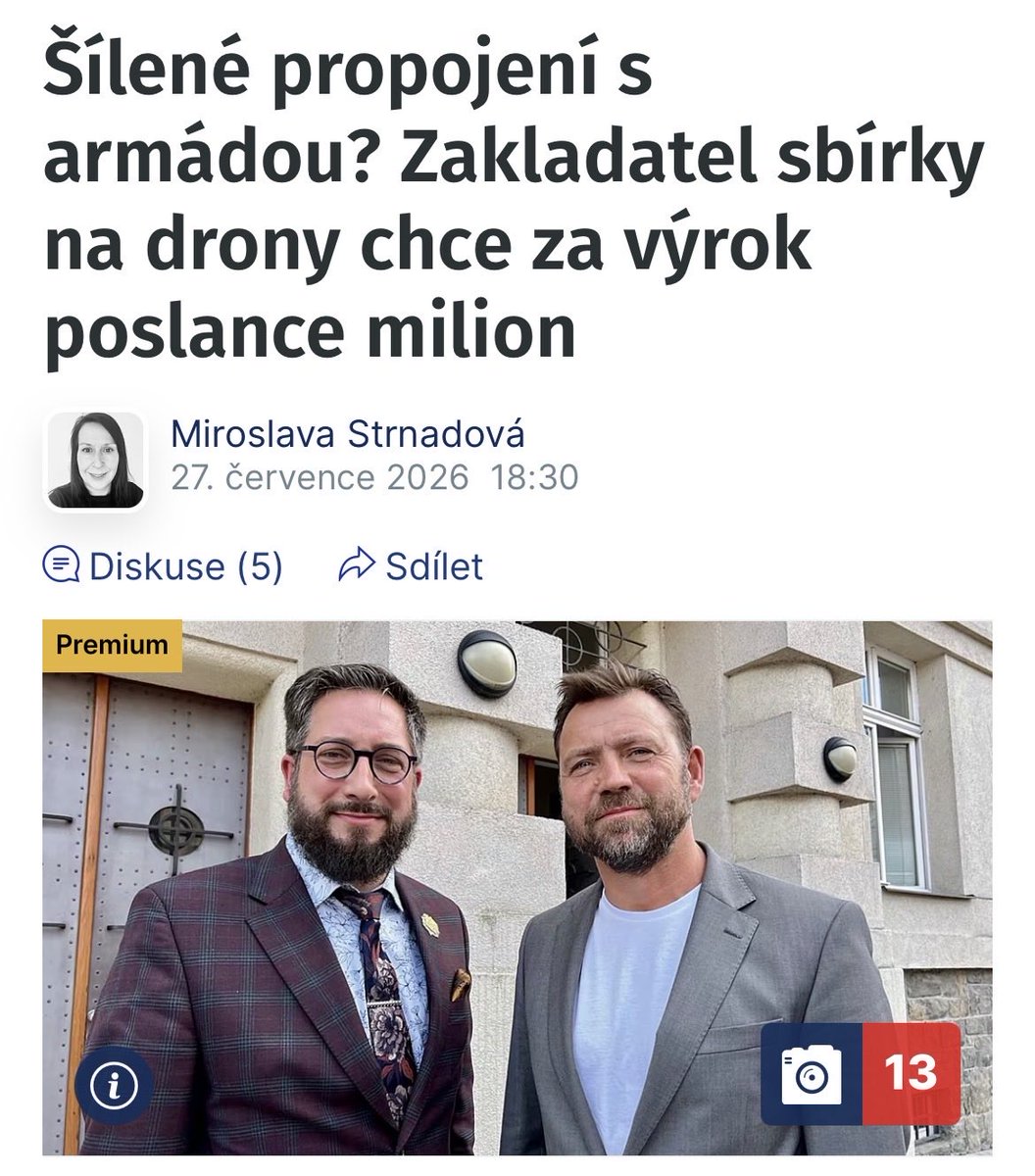
Zdá se, že zde lidově řečeno “padla kosa na kámen” a pan poslanec Růžička může začít sbírat milion do štrozoku 😇😅 Ne všichni si nechají jeho pomluvy líbit. Uvidíme, zda bude i u soudu máchat počmáranými papíry jak ve studiu v @CzechTV Hodně štěstí pánové z @DronyNemesis 👍 https://t.co/Fej94lGXvh #politika #právo #difficulties

13129
Euronews English Jun 8

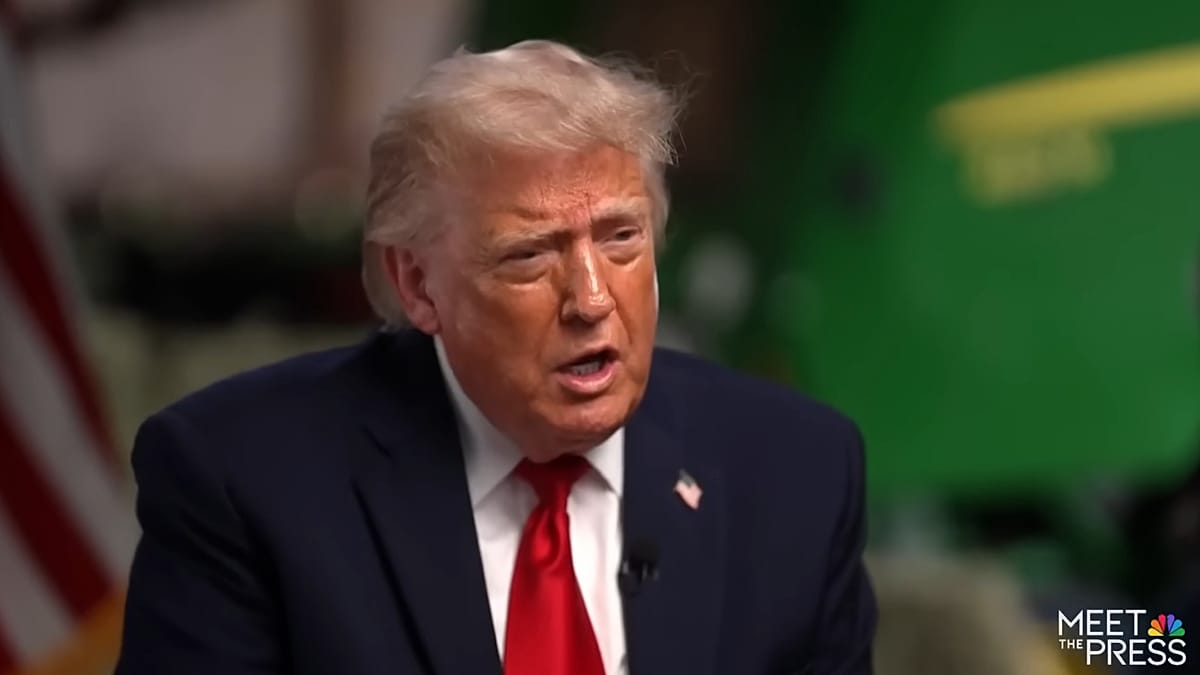
Donald Trump abruptly walked out of an NBC interview after clashing with host Kristen Welker over his unfounded claims of election fraud in the 2020 presidential race, labeling the network as crooked and one-sided despite ongoing technical difficulties posed by torrential rain. #TrumpInterview #ElectionFraud #Journalism

www.euronews.com
Donald Trump storms out of tense NBC interview after 'rigged election' clash
8947
Marián Sekerák May 27

"some leaders may consider armed conflict as an effective way of diverting attention from domestic problems and a cynical tool for managing difficulties." MH, 208 #Leadership #ArmedConflict #DomesticIssues #Nospecificcountrycodescanbeidentifiedinthetweet.

119
BBC May 26

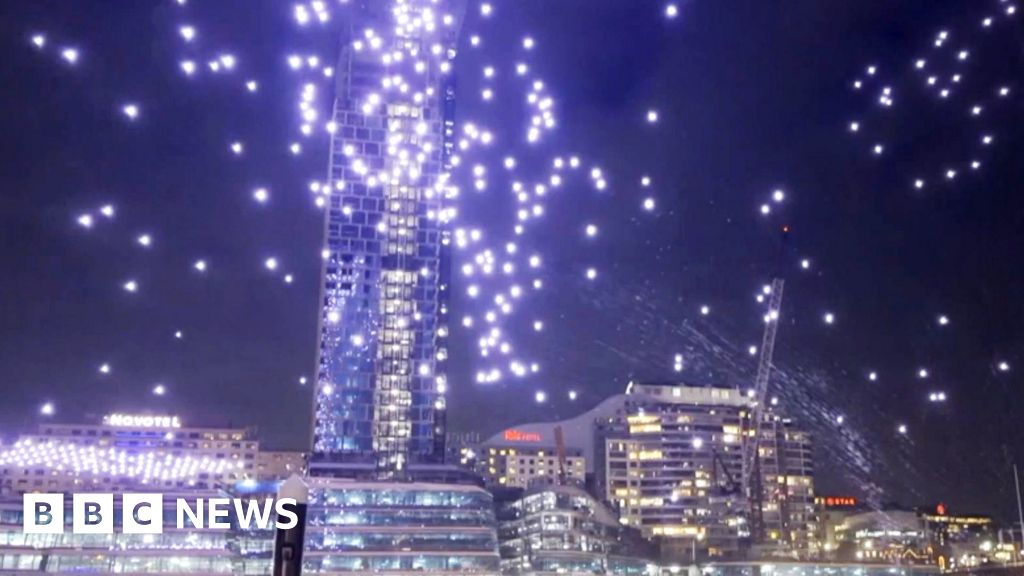
During a light festival in Sydney, nearly 90 drones malfunctioned and fell into Darling Harbour due to unforeseen technical difficulties, prompting the cancellation of two upcoming aerial displays and an apology from Vivid Sydney's organizers for the inconvenience caused to attendees. #SydneyDrones #VividSydney #DroneMalfunction

www.bbc.com
Watch: Light drones fall into water after malfunction in Sydney show
8364
BBC May 18

The article discusses the current Ebola outbreak in the Democratic Republic of Congo, highlighting the challenges posed by a rare strain without a vaccine, its spread in conflict-affected areas, and the difficulties in identifying and treating infected individuals, despite efforts by health organizations to contain the situation. #EbolaOutbreak #PublicHealth #DRCongo

www.bbc.com
What is Ebola and why is stopping this outbreak so difficult?
10165
BBC May 16

Israel announced the killing of Hamas commander Izz ad-Din al-Haddad in a Gaza City airstrike, labeling him a key figure in the October 7 massacre, as the strikes continued despite a ceasefire, with witnesses reporting significant difficulties in rescuing the wounded amidst ongoing conflict and accusations of ceasefire violations by both sides. #GazaConflict #IsraelHamas #MilitaryStrike #IL #PS #US #IR

www.bbc.com
Israel says it has killed Hamas commander in Gaza air strike
10168
BBC May 16

Palestinian President Mahmoud Abbas, addressing a party conference amid calls for reform and elections—the first in 20 years—highlighted the extensive humanitarian crisis following the recent Hamas-led conflict and the growth of illegal Israeli settlements, while facing increasing pressure from international actors and significant financial difficulties within the Palestinian Authority. #Palestine #Elections #Reform #PS #IL

www.bbc.co.uk
Palestinian leaders hold rare party meeting as polls show rising discontent
10168
BBC May 15

In Akola, extreme temperatures exceeding 44 degrees Celsius have made life unbearable for the working class, as highlighted by the struggles of residents like Seema Pandhare, who describe the difficulties of sleeping in a metal house without adequate cooling while managing their daily responsibilities amidst the heat wave. #HeatWave #ClimateChange #WorkersRights #IN

www.bbc.com
अकोला : 'पत्र्याच्या घरात कुलर काम करत नाही जीव घाबरतो, उलट्या होतात', सर्वाधिक तापमानात हातावर पोट असणारे कसे जगतात?
10169
BBC May 15

The "Great British People" Facebook page, run by someone in Sri Lanka, has gained millions of views with AI-generated videos promoting anti-immigration narratives and portraying a dystopian vision of the UK, amidst concerns over the rising influence of misinformation and the difficulties in discerning fact from fiction in today's media landscape. #Disinformation #SocialMedia #AIImpact #UK #LK #US #VN #MV #IR #AE #RU #CN #IN #PK #SG #AU #NZ

www.bbc.com
'Patriotic' UK anti-immigration social media accounts traced to Sri Lanka and Vietnam
10169
村越弘明 May 14

Harry: We are facing financial difficulties due to high costs and uncertain income.

14956
Donald J. Trump May 14

Donald Trump: We have always gotten along, when there are difficulties we solve them. I call you and you call me. People don't know, but whenever we have had a problem, we solved it very quickly. It's great — a great place. Incredible. China is beautiful.

www.faz.net
Zehn Jahre danach: Wie Frankfurt vom Brexit profitiert
17588