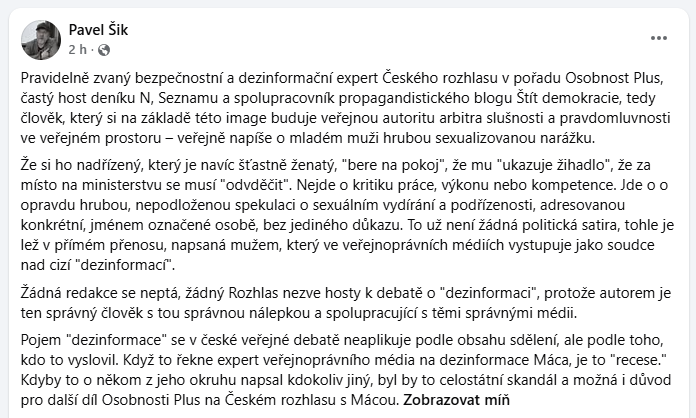
Martin Bartkovský stated that when he shared the statement from forty editors-in-chief, he did not expect the reaction it would provoke. He criticized that the journalistic community he addressed, according to him, was unable to unanimously agree even on rejecting violence in their relationship with politicians and on equal access to sharing information. He added that he expressed his personal judgment about those who repeatedly refused to stand up for their colleagues in an indirect manner. For that, he claimed to have received a number of insults and comparisons to communists; one of the people who signed the Anticharta wrote to him that he had never seen anything more disgusting. Bartkovský clarified that not signing the statement did not harm anyone and would not harm anyone, and he rejected the idea that he wanted to dismiss, threaten, or create lists of uncomfortable people. He thanked the remaining 39 editors-in-chief for their support for colleagues from the entire field and apologized to them for the discussion veering in a different direction due to his contribution. He then made a series of apologies that he delivered ironically: among other things, to podcast entrepreneurs for reminding him of something other than Chinese communism, to a former colleague for criticizing journalism at a time when they both worked in the same media for six years, and to a Czech writer for reminding him of his signature on the Anticharta. He also apologized to those who labeled him a "svazák" (a term for a member of the youth organization during the communist regime) and to a former Member of the European Parliament regarding his judgment about Bartkovský's character. He added that he also apologizes to the media outlets Euro, Info, Zdopravy, Okraj, and Chiptron, which, according to him, were not addressed, even though the text had been discussed for a month. He offered to connect interested parties with the organizers of the statement so that they could join him. #žurnalistika #komunikace #mediálníetiketa (translated)