WRLD

Search

#metál
John 6h

John Boreout wrote that he had heard that his first childhood love, whom he had met at a metal concert, had died due to drug use. They had been together for thirteen years. Her mother had told him that she often talked about him. Boreout said he would have liked to help her if she had let him know how she was doing. #jeugdliefde #verlies #drugs (translated)


1982
Dr. Daniel Stelter 19h

The author wrote that the metal and electrical industries face a strong downturn in employment. According to his assessment, the current collective bargaining dispute is not only about wages and salaries, but also about the future of the entire industry. #Metallindustrie #Löhne #Tarifverhandlungen #DE (translated)

2547
Onet.pl 20h

The article discusses the potential for discovering new resource deposits in Poland, emphasizing that geologists are confident that significant resources, such as copper, accompanying metals, and hydrocarbons, may still exist in the country, despite the global race for critical raw materials. #złoża #geologia #surowce (translated)

businessinsider.com.pl
Trwa wyścig o surowce. Geolodzy mówią nam o skarbach Polski
2232
Brèves de presse 20h

Press Briefs reported nearly 7,000 police custody cases, 86% of which involved minors, and indicated that the majority had not led to legal proceedings at this stage. The account described these arrests as a massive and unprecedented measure aimed at containing the mobilization of young people. Several cited observers viewed this as a form of intimidation, while Press Briefs believed this practice infringed on the right to protest and risked normalizing disproportionate police and judicial responses. The account added that the preventive use of police custody had already been documented during the Yellow Vests movement. Relying on independent press articles, Press Briefs relayed testimonies from high school students reporting violent detention conditions, symptoms of post-traumatic stress, forced undressings, and physical or psychological violence. A 15-year-old reportedly recounted being slammed against a concrete bed and hit on the head by police and then insulted. A complaint had been filed, according to the account, which also indicated that the police prefecture had not responded to Mediapart's questions about the reported statements. Mohammed, a 16-year-old high school student in Saint-Denis, reportedly stated that police had hit the bars of his cell during the night to wake up the detainees and had targeted him with a racist insult. The mother of Noham, also 16, claimed that her son had been hit in the liver and face after asking why he had been arrested. Adam's mother also denounced violence against young protesters. Press Briefs added that several teenage girls and boys reported sexist and racist remarks from police, and complaints had been filed. Anne Savinel-Barras, president of Amnesty International France, expressed her concern over the repression of the student movement, believing that the young people's demands for education and health were met with prohibitions on demonstrations and disproportionate police violence. The NGO stated that it would support people peacefully protesting and defend the right to demonstrate. The United Nations High Commissioner for Human Rights also expressed concern about the situation in France and notably called for a proportional use of force. #jeunesse #manifestation #répression (translated)

2581
Vecernji.hr 2d

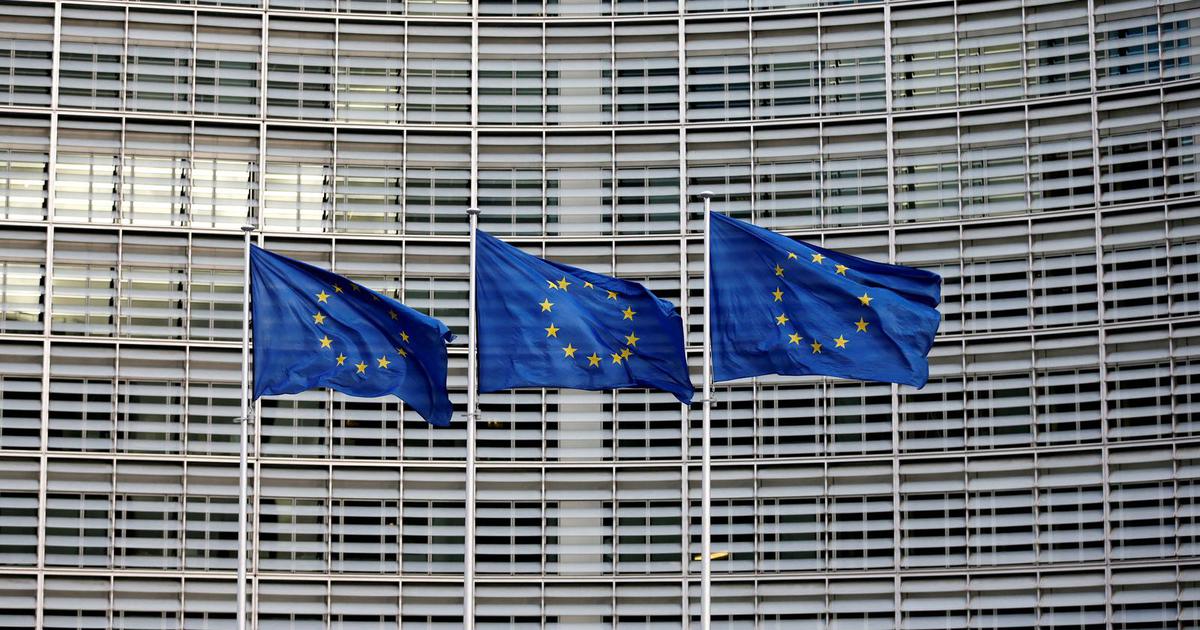
Estonia has requested the removal of a Russian state metal producer and its director from the EU sanctions list due to their key role in supplying raw materials for the European industry, despite Estonia being one of the loudest supporters of sanctions against Russia. #Estonija #sankcije #Rusija (translated)

www.vecernji.hr
Estonija maknula ruskog državnog proizvođača metala i njegovog direktora s popisa sankcija EU
2786
C
Christian Friedrich 3d

The production is to be discontinued according to the company in the fiscal year 2027. Christian Friedrich (53), managing director of the IG Metall office Ludwigsburg/Waiblingen, confirms to BILD: "The production is to be discontinued according to the company in the fiscal year 2027." #Jobverlust #Autoindustrie #Nidec (translated)

So viele Jobs gehen verloren - Motoren-Riese macht deutsches Werk dicht
www.bild.de
2341
Postimees 3d

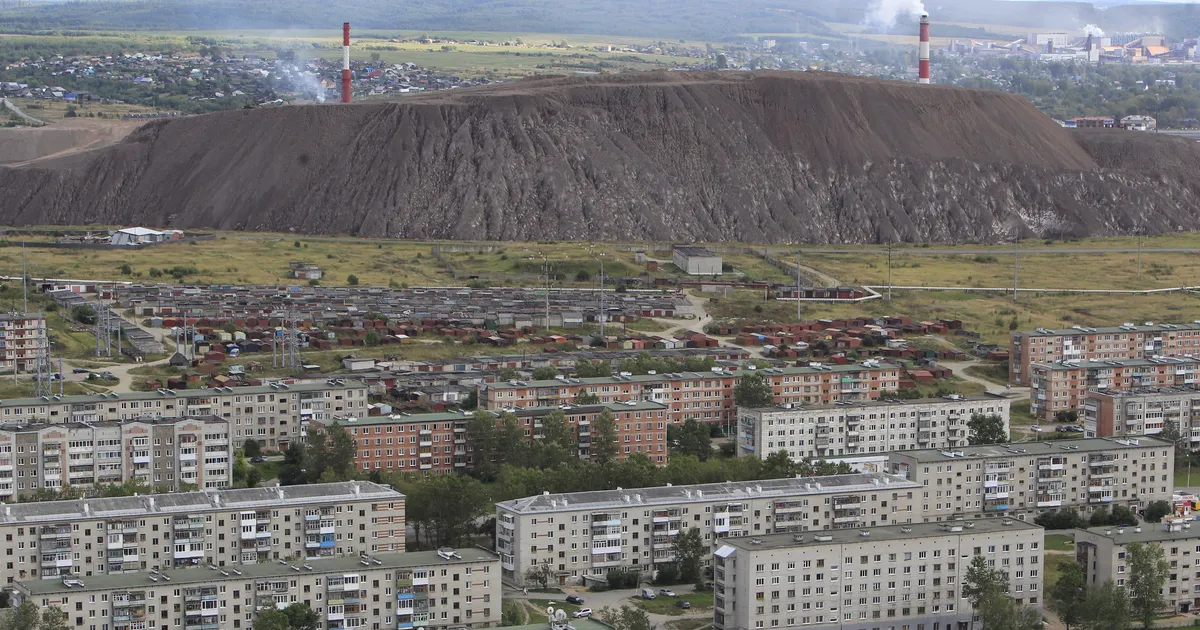
Foreign Minister Margus Tsahkna explains that there was no discussion in the government regarding the selection of Silmet's business partner in relation to the proposal for EU sanctions, although broader discussions on critical metals and strategic dependency issues have taken place. #Eesti #Solikamsk #sanktsioonid (translated)

pmo.ee
Välisminister Margus Tsahkna selgitab sanktsioonierandit: viimane sõna oli minul
2676
Policja Mazowsze 3d

The Mazovian Police reported that officers were present in every school today. This morning, a knife was found in the backpack of a 14-year-old student at one of the schools in Płock; the teenager had brought it to the facility in a sports bag. The police secured the item, and materials related to the incident were to be sent to the Family and Juvenile Department of the District Court in Płock. As reported by the police, in Radom, officers received information that a student at a secondary school might have a dangerous tool in his backpack. During the inspection, they found a gun that fires metal pellets. A 17-year-old was detained and taken to the station, and the item was secured. The police stated that further actions were being taken in this matter. #Policja #bezpieczeństwo #szkoła (translated)

2899
Die Presse 3d

In the autumn wage round, which is initiated by the railway workers and takes place this year without the metalworkers, the question arises of who can assert themselves in times of high inflation and low growth. #Herbstlohnrunde #Lohnverhandlungen #InflationÖsterreich (translated)

www.diepresse.com
Gewerkschaft gegen Arbeitgeber: Wer gewinnt die Herbstlohnrunde?
2790
We Don't Have Time 3d

The author wrote that Argentina was emerging as a new copper frontier as demand for the metal grew alongside the energy and digital transitions. They said dozens of projects were advancing in the Andes, drawing increasing interest from China, Europe and the United States, and directed readers to an article by The Energy Pioneer. https://t.co/uO0X07cdQA #Cobre #Energía #Minería #AR #CN #EU #US

3125
Krzysztof Graj 3d

Russia’s war propaganda gets a soundtrack – how AI-generated songs reached global streaming platforms Russian war propaganda is no longer confined to television broadcasts, Telegram channels or political videos. A study by the Ukrainian threat-intelligence organisation Terrecon has identified 981 songs combining signs of AI generation with pro-Russian military narratives, distributed through an ecosystem that reaches YouTube, Spotify, Apple Music, Deezer and SoundCloud. The songs range from sentimental ballads to rock and heavy metal. Their recurring themes are familiar from conventional Russian wartime propaganda: the heroisation of Russian soldiers, romanticisation of the war, mobilisation, the “Russian world”, commemoration of fallen troops and attacks on Ukraine and its armed forces. Some contain derogatory or dehumanising references to Ukrainians. What is new is not necessarily the message, but the production and distribution model: generative AI allows propagandistic music to be produced rapidly, cheaply and in quantities that would previously have required musicians, studios and producers. Nearly 1,000 tracks identified Terrecon examined 3,725 tracks collected from YouTube, YouTube Music, SoundCloud and the AI music platform Suno. After manual review, researchers classified 981 as showing both indications of AI generation and pro-Russian war propaganda. In 681 tracks they identified 728 propaganda-related keywords or phrases. The largest category was the glorification of the Russian military, followed by romanticised treatment of Moscow’s so-called “special military operation”, mobilisation appeals, narratives about the “Russian world”, and the cult of fallen soldiers and the state. The reach was not merely theoretical. Listening or viewing statistics were available for 608 of the identified tracks; together they had accumulated 86.8 million plays and views, according to Terrecon. A smaller group of 13 high-performing songs accounted for more than 53 million YouTube views and more than 67 million when YouTube Music was included. Among the better-known examples is “Power of Artillery”, a Russian-language rock song praising artillery weapons that passed two million views on YouTube. Most of the tracks for which publication dates could be established appeared after 2024, broadly coinciding with the rapid expansion of consumer AI music generators such as Suno and Udio. That correlation does not prove that AI alone caused the increase, but it illustrates how drastically the economics of production have changed. A propaganda song for as little as $11 Terrecon also tested how difficult it would be to commission such material. Researchers approached 25 creators producing AI-assisted militaristic music; 15 agreed to take commissions. Prices ranged from approximately $11 to $330, while delivery times ranged from two hours to three days. According to Terrecon, some were prepared to produce highly aggressive anti-Ukrainian material, including content intended for audiences involving children from occupied Ukrainian territories. Some creators used Russian intermediary services that provided access to Western AI tools such as Suno and Udio despite restrictions. The researchers then tested several AI generators themselves. Across 40 prompts submitted to Suno, Udio, Mureka, Google Flow Music and ElevenLabs, 25 resulted in successful generations, while safeguards were circumvented in 15 cases. Terrecon reported that four of the five services tested produced Russian-language material containing wartime narratives, although technical problems prevented comparable testing on some systems. In one Udio experiment, the researchers said the model itself introduced more explicit violent language than had appeared in the original promp These tests do not demonstrate that the commercial platforms knowingly support Russian propaganda. They show something narrower: existing safeguards can be inconsistent when political messaging is packaged as music. From generation to Spotify The distribution experiment may be the most revealing part of Terrecon’s research. The team deliberately uploaded test tracks containing explicit hostile language to YouTube, SoundCloud, Spotify and Deezer. Terrecon says none was blocked during the experiment. On SoundCloud, researchers used an account identifying its location as Moscow, disclosed the use of AI and added markers including references to the Russian military and the war. The platform accepted the upload and subsequently offered paid promotional and distribution tools. This does not prove that streaming recommendation systems systematically promote pro-war music. There is currently insufficient public evidence to make that claim. It does demonstrate that material can enter the same commercial distribution infrastructure as ordinary music and, once there, potentially benefit from playlists, searches, sharing and recommendation mechanisms available to other releases. That distinction is important. Propaganda no longer has to announce itself as political communication. On a streaming platform it can look like another song. Culture as a delivery mechanism Music has always been used in wartime propaganda. What generative AI changes is scale. Instead of investing heavily in a limited number of patriotic performers or officially commissioned productions, creators can generate variations across styles, audiences and emotional registers at very low cost. Terrecon found material ranging from war rock to sentimental songs and content styled for younger audiences. Some creators also experimented with cloned celebrity voices and stylistic imitation of established musicians. The format also offers a different relationship with the audience. A political video asks a viewer to consume an argument. Music can accompany commuting, exercise or entertainment and may be encountered outside explicitly political spaces. This does not automatically make it more persuasive, and Terrecon’s research does not establish measurable effects on political attitudes. It does, however, place wartime narratives inside a cultural environment where users may not initially perceive themselves as consuming political messaging. An ecosystem, not a proven Kremlin command structure The strongest evidence supports describing this as a growing AI-assisted pro-Russian propaganda-music ecosystem, not a single operation controlled from Moscow. Terrecon did not establish that the Russian government created, financed or coordinated all 981 tracks. Reporting on the study likewise notes that the extent of direct state involvement remains unclear. There is broader evidence that the Russian state finances cultural projects and digital content supporting the war, including through state-backed funding bodies. That context matters, but it does not allow individual songs in Terrecon’s dataset to be attributed to the Kremlin without additional evidence. The significance of the case lies elsewhere. AI has reduced the cost of producing ideological content, intermediaries can help creators access generation tools, and global platforms can provide distribution. The result is a pipeline in which wartime propaganda no longer has to resemble propaganda at all. It can simply appear in a playlist. Sources Terrecon / Ukrainska Pravda — Daria Verbytska on the research https://www.pravda.com.ua/columns/2026/10/05/8056229/ Suspilne Culture — detailed breakdown of Terrecon findings https://suspilne.media/culture/1417933-rosijsku-voennu-propagandu-maskuut-pid-anime-karaoke-ta-rok-doslidzenna-si-pisen-vid-terrecon/ The Insider — AI-generated Russian war propaganda music https://theins.ru/news/297839 Institute of Mass Information — summary of New York Times reporting https://imi.org.ua/en/news/doslidzhennya-rf-masovo-stvoryu%D1%94-propagandistski-pisni-za-dopomogoyu-shi The Bridge Media — AI-generated songs and Russian military propaganda https://thebridgemedia.com.ua/en/ai-generated-songs-russian-military-propaganda/ Center for Strategic Communication — cost and production of AI propaganda music https://spravdi.org/propaganda-za-11-yak-rosiya-shtampuye-shi-pisni-z-miljonamy-prosluhovuvan/ Times of India — AI-generated Russian war songs https://timesofindia.indiatimes.com/world/europe/ai-sings-russias-war-story-inside-the-rise-of-generative-songs-about-ukraine-conflict/articleshow/134650594.cms EU Council / EUR-Lex — Presidential Foundation for Cultural Initiatives https://eur-lex.europa.eu/legal-content/EN/TXT/?uri=CELEX:32026D1351 Human Rights Watch — Russian state funding of digital and patriotic content https://www.hrw.org/report/2025/07/30/disrupted-throttled-and-blocked/state-censorship-control-and-increasing-isolation #DISINFORMED #Episode16 #Russia #Ukraine #RussianPropaganda #WarPropaganda #MusicPropaganda #AIMusic #ArtificialIntelligence #AI #GenerativeAI #SyntheticMedia #AIPropaganda #Disinformation #InformationWarfare #InfluenceOperations #CulturalPropaganda #DigitalInfluence #NarrativeManipulation #PropagandaMusic #StreamingPlatforms #Spotify #AppleMusic #YouTube #YouTubeMusic #Deezer #SoundCloud #Suno #Udio #RussianWorld #RusskiyMir #MilitaryPropaganda #WarNarratives #Mobilisation #AlgorithmicDistribution #RecommendationAlgorithms #MusicStreaming #PlatformManipulation #Terrecon #OSINT #MediaManipulation #WRLD

112
Adam Kościelak 3d

Adam Kościelak ironically predicted that the next step would be the introduction of metal detectors at entrances, although — as he pointed out — they have not been effective in the United States. He wrote that it would be necessary to investigate the environments in which the children were involved, whether they shared their plans, and what conclusions could be drawn from this. However, he argued that it is easier to stage a “theater of security,” and added that there are still no “Giertych-style trios.” (translated)

2690
Kultur 4d

Kultur stated that GTA 6 would offer the most diverse selection of radios in the history of the franchise, including Cocoteo FM for Latin music, Back Country Radio for country, AfroBank FM for African music, The Chamber 106.6 for metal, Flash FM for pop, and Dirty South Classics for hip-hop. He also indicated that podcasts would make their first appearance and that players could listen to music while walking with headphones. #GTA6 #JeuxVidéo #Musique (translated)

3476
Jean Marc Morandini 4d

The author indicated that a bill aimed at limiting the population's exposure to cadmium, a toxic heavy metal, would be examined in the Senate on October 22. https://t.co/EvQ7TOwcPy #cadmium #santé #environnement #FR (translated)

2916
ERR 4d

A solar panel recycling unit is being established in Tartu to find ways to effectively recycle valuable metals and glass, although the recycling of most panels in Estonia is still in the distant future. #päikesepaneelid #taaskäitlemine #metallid (translated)

www.err.ee
Tartusse tuleb päikesepaneelide taaskäitlemise üksus
3028
ERR 4d

Tartu's waste management company Epler & Lorenz plans to establish a recycling unit for solar panels, for which nearly half a million euros have been obtained from the European Union Cohesion Fund to separate and recycle up to 1,600 tons of glass, aluminum, and valuable metals annually. #päikesepaneelid #taaskäitlus #energeetika (translated)

www.err.ee
Ettevõte tahab hakata Tartus päikesepaneele taaskäitlema
3252
NotPalo 4d

NotPalo wrote that Rockstar Games had revealed six radio stations for GTA VI and their descriptions: Cocotero FM, featuring modern Latin music and El Martillo and La Gata; Back Country Radio, dedicated to outlaw country and hosted by MW and Delta Dawne; and Afro Bank FM, focused on amapiano, African classics, and 3-Step, with Burna and Palmsy. He also mentioned The Warcry 106.6, with metal from the 80s to the present and DJs Kerry and DJ Tom; Flash FM, with pop and hits from Vice City, hosted by Robyn and Alex; and Dirty South Classics, featuring southern rap and hip-hop classics, presented by Trick and Trina. He added that previews of the six stations could already be heard. https://t.co/X9KPh1L8sK #GTAVI #RockstarGames #Videojuegos (translated)

3365
Noticias PlayStation 4d

PlayStation News reported that Rockstar Games had revealed the first six radio stations of GTA 6 and claimed that the game would have the largest musical variety in the franchise. According to the publication, Cocoteo FM would include reggaeton, bachata, merengue, and dembow; Back Country Radio, country music; AfroBank FM, African music such as amapiano; The Chamber 106.6, classic metal from the 80s; Flash FM would return with pop music, and Dirty South Classics would feature southern rap and hip-hop. The publication added that GTA 6 would incorporate podcasts for the first time in the franchise and that music and podcasts could be listened to both in vehicles and on foot, through headphones connected to Jason and Lucía's smartphones. #GTA6 #RockstarGames #Videojuegos (translated)

3140
Latvian public media 4d

At the request of Estonia, a Russian company that supplies rare earth metals to the Estonian company Silmet, which is essential to the European manufacturing sector, was removed from the European Union sanctions list. #Igaunija #Krievija #sankcijas (translated)

www.lsm.lv
Pēc Igaunijas prasības no ES sankciju saraksta svītro Krievijas retzemju metālu piegādātāju
1796
Kasjopea 4d

Cassiopeia asked Magda Biejat, who — as she wrote — had participated the day before in the inauguration of the Days of Memory of Pawiak, whether the Days of Memory of Mokotów are also planned. She claimed that in Mokotów, Poles who had previously avoided the crimes of the Gestapo, NKVD, and Banderites were killed. Among those she mentioned were Capt. Witold Pilecki, Gen. August Emil Fieldorf "Nil," Maj. Zygmunt Szendzielarz "Łupaszka," Maj. Hieronim Dekutowski "Zapora," and Col. Łukasz Ciepliński "Pług." She added that there were hundreds of victims. Cassiopeia called for reminding the perpetrators and accomplices of the crimes in Mokotów during such commemorations. She mentioned, in this context, among others, Józef Goldberg, Izydor Kurc, Adam Umer, Anatol Fejgin, Izaak Fleischfarb, Józef Dusza, Jerzy Kaskiewicz, and Jerzy Kędziora, referring to them as UB officers. To support her post, she cited the account of Maria Hattowska, a lieutenant of the AK and WiN and a cipher clerk, who described her interrogation and brutal beating. According to the cited testimony, Hattowska suffered serious injuries, and after the beating, she could not have children. Cassiopeia wrote that in the UB torture house in Mokotów, the Gestapo could have "taken lessons." The author of the post warned that the truth may be forgotten when people are afraid to look at it. She asked the audience to share the post, comment, and support the person she indicated who deals with history. https://t.co/uYX0ELCMFj #Pamięć #Historia #Mokotów (translated)

3039