WRLD

Search

#orche
Luciano Magaldi Sardella (PhD) 3h

LETTERE MERIDIANE — “TEATRO-EDICOLA” OF SAN SEVERO CONQUERS THE WORLD SOURCE: https://www.letteremeridiane.org/2026/10/il-teatro-edicola-di-san-severo-conquista-il-mondo/?fbclid=IwY2xjawU4oqFleHRuA2FlbQIxMQBwZG9mAXNydGMGYXBwX2lkEDIyMjAzOTE3ODgyMDA4OTIAAR5rVEwYs6UUXg7v-P0SyIQ_DRb_F6ZiY58OcseYoV4J7atcTiERnhWaqKM2pw_aem_Njle1jq1XLzHr93KLBUcVA After “Broadway World”, the “Los Angeles Journal”, “The Psychologist (British Psychological Association)” and Hollywood Beat Magazine, its “academic consecration” has now arrived courtesy of Stanford University. As I have already emphasised in my article on the revival of the GIO Festival in Foggia, celebrated by BroadwayWorld for the world stage premiere of the Giordano’s opera Marina (1888), the province of Foggia has long ceased to be peripheral. It happens when it finds an idea that shifts the coordinates: well, in San Severo, 40 kilometres from Foggia, it has happened again. Only this time an orchestra was not needed; six chairs were enough. The celebrated Teatro-Edicola of San Severo artistic director Francesco Gravino of the theatre company Foyer ’97 has been featured in the academic journal “Stanford Social Innovation Review (SSIR)” as an academic case study. The news, relayed on 19 September 2026 by ANSA Nazionale, looked like a misprint. Then it became clear that it was not. SSIR, an award-winning publication covering multisectoral solutions to global problems, included the project in its Dispatches section with the reportage “The Six-Seat Revolution”. It is the inverse trajectory to that of the GIO Festival: not a forgotten opera returning to a grand historic Italian horseshoe theatre, but an entire theatre reborn inside a disused place, forgotten by man. There are moments when past and future intertwine to create something visionary, innovative, artistically “revolutionary”: San Severo experienced one of those moments on the morning of 27 March 2026, during World Theatre Day, when the shutter of a newsstand closed for six years in Via Matteo Tondi was reopened “not to sell newspapers, but to offer stirring stories”, to quote Gravino’s motto. The idea of the visionary Francesco Gravino, artistic director, stage director and actor of the San Severo company Foyer ’97, active for at least 30 years in Capitanata, centred on the kiosk, hexagonal in metal and glass, granted free of charge by its owner Pino Frau, by now an urban relic created by the publishing crisis of the early 2000s: today in Italy active newsstands have fallen from about 35,000 in 2005 to about 20,000 in 2024, a decline of 42.8%. Gravino and eleven other actors restructured it in two weeks of work, without institutional funding, and transformed it into what is now under examination by the London commission of Guinness World Records as the “world’s smallest theatre”. The formula is deliberately austere: six spectators at a time outside, actors inside at less than a metre’s distance, 15-minute performances, continuous rotation from 11:00 to 20:45, texts ranging from Goldoni to Chekhov, from Ibsen to Dacia Maraini. On the door a QR code with an original theatrical warning: “Warning! This QR code transforms passers-by into actors. Scan only if ready.” The numbers immediately showed that it was no boutade: more than 60 people in a single afternoon, three inaugural days that sold out. But above all a positive echo that went beyond the borders of San Severo. “Broadway World” (just as in the previous case of the GIO Festival), the world’s most influential theatre criticism outlet with over 5.5 million monthly views, devoted exclusive coverage to it on 27 April 2026: “An Abandoned Italian Newsstand Just Became the World’s Smallest Theatre”. Not a mere listing, but an analysis: “There is no foyer, there is no balcony, there is no grid. There is barely a wing. What there is is something almost unrecognisable as an evening at the theatre, and for that very reason it is all the more powerful.” “Broadway World” captured Gravino’s manifesto idea: “This is a theatre of proximity. In an era of digital distance, we are putting human contact back at the centre,” framing it as “More than a clever exercise in site-specific theatre. It is a reappropriation.” All of this, in a Mezzogiorno of Italy often narrated only in terms of organised crime and marginalisation. To that seal of approval was added another, even more disorienting for a newsstand in San Severo: the “Los Angeles Journal”, one of the most influential publications on the West Coast for the performing arts. On 12 May 2026, it headlined thus: “San Severo’s Teatro-Edicola as an Innovative Model for Los Angeles Theaters?” opening as follows: “In a city in southern Italy that Hollywood has never heard of, a theatre director has just built the smallest stage in the world: six seats, fifteen minutes, zero distance. Los Angeles should pay attention.” The “Los Angeles Journal” does not indulge in folklore, but places the kiosk in Via Matteo Tondi alongside the prestigious 1,600-seat Ahmanson Theatre in Los Angeles, the Pantages of Broadway in Hollywood, the 99-seat plan of Rogue Machine, the Odyssey, the Victory Theatre and the Hollywood Fringe. It even recalls Ethan Marks’s Electrical Box Theatre, a veritable electrical box lined with red velvet in downtown Los Angeles, to argue that Gravino has taken to the extreme the question Los Angeles has been asking itself for decades: How small can a stage become before it ceases to be a stage? And it recognizes the San Severo urban model: almost zero cost, two weeks of work and six chairs, in return for immediate provincial, regional and national media coverage, recognition by the San Severo’s Municipal Administration, and a format exportable anywhere. Then, the third American piece came from “Hollywood Beat Magazine” on 20 April 2026: Six seats. Fifteen minutes. One actor. No stage. The magazine recounts the kiosk in Via Tondi left disused for almost six years, the contemporary six-seat cultural outpost, placing Francesco Gravino in a distinguished genealogy: Richard Schechner and environmental theatre, Jerzy Grotowski and poor theatre, Nicolas Bourriaud and relational aesthetics. But it closes with pragmatism: it is not a thesis, it is fixing a street corner, that is, repairing an urban street corner by asking not how large a theatre can become, but how small it must become again to recover its original power. And finally, the celebrated London-based “The Psychologist”, the journal of the “British Psychological Society (BPS)”, the oldest psychological society in the world, transformed the Teatro-Edicola into a scientific case study: on 30 July 2026 it published “The world’s smallest theatre — and Psychologists’ next act”, starting from the same detail, the morning of 27 March when the metal shutter of the hexagonal kiosk in Via Tondi reopened after six years, six people inside, an actor at less than a metre’s distance beginning Chekhov. It describes the formula: six spectators, 15 minutes, 11 actors over 10 hours, from Goldoni to Euripides, inside a kiosk where the fourth wall does not break because architecturally it never existed. But the BPS goes a step further: it cites the 2025 studies by Damien Gabriel in IBRO Neuroscience Reports, that live performance generates measurably stronger emotional and physiological activation than video, and introduces Edward Hall’s proxemics: below one metre is intimate space, reserved for doctors, close friends, lovers. In that one-square-metre space, the actor’s breath is audible, micro-expressions legible, the self-other boundary becomes permeable. The Teatro-Edicola “does not make theatre better, it makes it inevitable”. And it is here that one understands why Stanford is studying it as an academic case study in social innovation, not as a case of artistic originality. In Italy, meanwhile, the national media circuit had already picked up the phenomenon: RaiNews — TG2 Storie brought it to RaiDue at midnight on 19 April. RTL 102.5 devoted space to the format conceived by Gravino and developed by Foyer ’97 in the heart of San Severo in Via Tondi, defining it as a permanent micro-stage capable of bringing theatre into public space. ANSA.it, Gazzetta del Mezzogiorno, La Repubblica, TG2000, Radio Capital, Swiss RSI, ANSA Brazil and many others followed. And for the record: Fiorello praised it in La Pennicanza as an artistic case inspired by his Edicola Fiore, and Biagio Antonacci, on his tour in the Augustan amphitheatre of Lucera, made a “fact-finding” stop at the Teatro-Edicola singing the celebrated and nostalgic Iris in front of an audience certainly larger than the “six seats”. Francesco Gravino’s theatre company Foyer ’97 was not born yesterday: behind it lie the Teatro-Cantina of 2016, the underground theatre, and in 2011 a performance on the bell tower of a church in the centre of San Severo at 45 metres high. The Teatro-Edicola completes, in Gravino’s words, “the entire vertical extension of theatre: underground, street level, rooftop”. And it is preparing for its thirtieth anniversary in 2027 aiming to purchase the kiosk to make it permanent, exporting the “San Severo Model” to Rome, Lucca, and to the festivals of Santarcangelo and Todi. As with the GIO Festival, someone might dare to claim that it is merely a stunt, but when BroadwayWorld places you alongside the Los Angeles Opera House, the “Los Angeles Journa”l proposes you as a model for Hollywood, “Hollywood Beat Magazine” reads you through Grotowski and the “British Psychological Society” uses you to explain mirror neurones, it is no longer a stunt but an excellent artistic and academic positioning. To those who still whisper that Foggia and Capitanata are provincial, the answer is now written on two opposite and complementary fronts: on 5 June in Foggia a 138-year-old opera found the stage again at the Giordano ending up on BroadwayWorld; on 27 March in San Severo a 4-square-metre kiosk invented a stage that did not exist, ending up at Stanford, in Los Angeles, in Hollywood and in London. The periphery, when it has a precise idea, becomes the centre. Even with six chairs. Luciano Magaldi Sardella

www.letteremeridiane.org
Il teatro-edicola di San Severo conquista il mondo
57
Luciano Magaldi Sardella (PhD) 3h

LETTERE MERIDIANE — IL TEATRO-EDICOLA DI SAN SEVERO CONQUISTA IL MONDO SOURCE: SOURCE: https://www.letteremeridiane.org/2026/10/il-teatro-edicola-di-san-severo-conquista-il-mondo/?fbclid=IwY2xjawU4oqFleHRuA2FlbQIxMQBwZG9mAXNydGMGYXBwX2lkEDIyMjAzOTE3ODgyMDA4OTIAAR5rVEwYs6UUXg7v-P0SyIQ_DRb_F6ZiY58OcseYoV4J7atcTiERnhWaqKM2pw_aem_Njle1jq1XLzHr93KLBUcVA Dopo Broadway World, Los Angeles Journal, The Psychologist (British Psychological Association) ed Hollywood Beat Magazine, ora è arrivata la sua “consacrazione accademica” a cura della Stanford University. Come ho già sottolineato nel mio articolo sulla rivincita del GIO Festival a Foggia, celebrata dal BroadwayWorld per la prima mondiale scenica della giordaniana Marina (1888), la provincia di Foggia ha smesso ormai di essere periferia. Accade quando trova un’idea che sposta le coordinate: ebbene, a San Severo, a 40 chilometri da Foggia, è successo di nuovo. Solo che questa volta non serviva un’orchestra, ma sono bastate sei sedie. Il celebre Teatro-Edicola del sanseverese direttore artistico Francesco Gravino della Compagnia Teatrale Foyer’97 è finito sulla rivista accademica Stanford Social Innovation Review (SSIR) in qualità di caso di studio accademico. La notizia, rilanciata il 19 settembre 2026 da ANSA Nazionale, sembrava un refuso. Poi si è capito che non lo era. La SSIR, pubblicazione pluripremiata che copre soluzioni multisettoriali ai problemi globali, ha inserito il progetto nella sezione Dispatches con il reportage The Six-Seat Revolution. È il percorso inverso rispetto a quello del GIO Festival: non un’opera dimenticata che torna in un grande teatro storico italiano a ferro di cavallo, ma un teatro intero che rinasce dentro un luogo dismesso, dimenticato dall’uomo. Ci sono momenti in cui il passato e il futuro si intrecciano per creare qualcosa di visionario, innovativo, artisticamente “rivoluzionario”: San Severo ha vissuto uno di questi momenti la mattina del 27 marzo 2026, durante la Giornata Mondiale del Teatro, quando la saracinesca di un’edicola chiusa da sei anni in Via Matteo Tondi è stata riaperta “non per vendere giornali, ma per offrire emozionanti storie”, citando il motto graviniano. L’idea del visionario Francesco Gravino (nella foto sopra), direttore artistico, regista e attore della compagnia sanseverese Foyer ’97, attiva da almeno 30 anni in Capitanata si è basata sull’edicola, esagonale in metallo e vetro, concessa a titolo gratuito dal proprietario Pino Frau, ormai un relitto urbano creato dalla crisi dell’editoria degli inizi anni 2000: oggi in Italia le edicole attive sono scese da circa 35.000 nel 2005 a circa 20.000 nel 2024, con un calo del 42,8%. Gravino e altri undici attori l’hanno ristrutturata in due settimane di lavoro, senza fondi istituzionali, e l’hanno trasformata in quello che oggi è sotto esame della commissione londinese del Guinness World Record come “teatro più piccolo del mondo”. La formula è volutamente austera: sei spettatori alla volta fuori, attori dentro a meno di un metro, spettacoli di 15 minuti, rotazione continua dalle 11 alle 20.45, testi da Goldoni a Čechov, da Ibsen a Dacia Maraini. Sulla porta un QR code con un originale avvertimento teatrale: “Attenzione! Questo codice QR trasforma i passanti in attori. Scansionate solo se pronti.” I numeri hanno sùbito detto che non era una boutade: più di 60 persone in un solo pomeriggio, tre giornate inaugurali che hanno registrato il tutto esaurito. Ma soprattutto un’eco positiva che è andata oltre i confini sanseveresi. BroadwayWorld (proprio come il previo caso del GIO Festival) la più influente testata mondiale di critica teatrale con oltre 5,5 milioni di visualizzazioni mensili, il 27 aprile 2026 gli ha dedicato una copertura esclusiva: An Abandoned Italian Newsstand Just Became the World’s Smallest Theatre. Non una segnalazione, ma un’analisi: “Non c’è foyer, non c’è balconata, non c’è graticcia. C’è a malapena una quinta. Quello che c’è è qualcosa di quasi irriconoscibile come serata a teatro, e proprio per questo è ancora più potente.” BroadwayWorld ha colto l’idea manifesto di Gravino: “Questo è un teatro di prossimità. In un’epoca di distanza digitale, stiamo rimettendo il contatto umano al centro,” incorniciandolo come “Più che un abile esercizio di teatro site-specific. È una riappropriazione.”. Il tutto, in un Mezzogiorno d’Italia spesso raccontato solo per criminalità organizzata e marginalizzazione. A quel sigillo se ne è aggiunto un altro, ancora più spiazzante per un’edicola di San Severo: il Los Angeles Journal, una delle testate più influenti della West Coast per le arti performative. Il 12 maggio 2026, titola in questo modo: San Severo’s Teatro Edicola as an Innovative Model for Los Angeles Theaters? aprendo così: “In una città del Sud Italia di cui Hollywood non ha mai sentito parlare, un regista teatrale ha appena costruito il palcoscenico più piccolo del mondo: sei posti, quindici minuti, zero distanza. Los Angeles dovrebbe prestare attenzione.” Il Los Angeles Journal non fa folklore, ma mette il chiosco di via Matteo Tondi accanto al presigioso teatro losangelino Ahmanson da 1600 posti, al Pantages di Broadway in Hollywood, ai 99-seat plan di Rogue Machine, all’ Odyssey, al Victory Theatre e all’ Hollywood Fringe. Rievoca persino l’Electrical Box Theatre di Ethan Marks, una vera e propria scatola elettrica foderata di velluto rosso in downtown Los Angeles, per dire che Gravino ha portato all’estremo la domanda che Los Angeles si fa da decenni: Quanto piccolo può diventare un palco prima di smettere di essere un palco? E riconosce il modello urbano sanseverese: costo quasi zero, due settimane di lavoro e una sestina di sedie, a fronte di una immediata copertura mediatica provinciale, regionale e nazionale, riconoscimento dell’ Amministrazione Comunale sanseverese, e un format esportabile (quasi) ovunque. Dopodiché, il terzo tassello americano è arrivato dall’ Hollywood Beat Magazine il 20 aprile 2026: Six seats. Fifteen minutes. One actor. No stage. Il magazine racconta il chiosco di Via Tondi rimasto dismesso per quasi sei anni, il presidio culturale contemporaneo da sei posti, inserendo Francesco Gravino nella genealogia alta: Richard Schechner e l’environmental theatre, Jerzy Grotowski e il teatro povero, Nicolas Bourriaud e l’estetica relazionale. Ma chiude con concretezza: non è una tesi, è fixing a street corner, ovvero aggiustare un angolo di strada urbana chiedendosi non quanto grande può diventare un teatro, ma quanto piccolo deve tornare per recuperare il suo potere originario. E infine, il celebre londinese The Psychologist, la rivista della British Psychological Society (BPS), la più antica società di psicologia al mondo, ha trasformato il Teatro-Edicola in caso di studio scientifico: il 30 luglio 2026 pubblica The world’s smallest theatre — and Psychologists’ next act, partendo dallo stesso dettaglio, la mattina del 27 marzo in cui la saracinesca metallica del chiosco esagonale di Via Tondi si riapre dopo sei anni, sei persone dentro, un attore a meno di un metro che inizia Chekhov. Descrive la formula: sei spettatori, 15 minuti, 11 attori su 10 ore, da Goldoni a Euripide, dentro un chiosco dove la quarta parete non si rompe perché architettonicamente non è mai esistita. Ma la BPS fa un passo oltre: cita gli studi del 2025 di Damien Gabriel su IBRO Neuroscience Reports, la performance live genera attivazione emotiva e fisiologica misurabilmente più forte del video e introduce la prossemica di Edward Hall: sotto il metro è spazio intimo, riservato a medici, amici stretti, amanti. In quello spazio da un metro quadrato, il respiro dell’attore è udibile, le microespressioni leggibili, il confine sé-altro diventa permeabile. Il Teatro-Edicola “non rende il teatro migliore, lo rende inevitabile”. Ed è qui che si capisce perché Stanford lo studia come caso di studio accademico di innovazione sociale, non come caso di originalità artistica. In Italia, nel frattempo, il circuito mediatico nazionale aveva già intercettato il fenomeno: RaiNews — TG2 Storie lo porta su RaiDue alla mezzanotte del 19 aprile. RTL 102.5 dedica spazio al format ideato da Gravino e sviluppato da Foyer’97 nel cuore di San Severo in Via Tondi, definendolo micro-palcoscenico permanente capace di portare teatro nello spazio pubblico. ANSA.it, Gazzetta del Mezzogiorno, La Repubblica, TG2000, Radio Capital, RSI svizzera, ANSA Brasile e tanti altri seguono. E per diritto di cronaca: Fiorello lo ha elogiato in La Pennicanzacome caso artistico ispirato al suo Edicola Fiore, nonché Biagio Antonacci, nel suo tour nell’anfiteatro augusteo di Lucera, ha fatto tappa “conoscitiva” nel Teatro-Edicola cantando la celebre e nostalgica Iris davanti ad un pubblico sicuramente maggiore dei “sei posti”. La Compagnia Teatrale Foyer ’97 di Francesco Gravino non è nata ieri: ha alle spalle il Teatro-Cantina del 2016, il teatro sottoterra, e nel 2011 una performance sulla torre campanaria di una chiesa del centro di San Severo a 45 metri d’altezza. Il Teatro Edicola completa, nelle parole di Gravino, “l’intera estensione verticale del teatro: sottoterra, piano strada, tetto”. E si prepara al trentennale del 2027 puntando ad acquistare l’edicola per renderla permanente esportando il “Modello San Severo” a Roma, Lucca, nei festival di Santarcangelo e Todi. Come per il GIO Festival, qualcuno potrebbe osare di affermare che si tratta solo di un exploit ma, quando BroadwayWorld ti mette accanto alla Los Angeles Opera House, il Los Angeles Journal ti propone come modello per Hollywood, Hollywood Beat Magazine ti legge con Grotowski e la British Psychological Society ti usa per spiegare i neuroni specchio, non è più un exploit ma un eccellente posizionamento artistico ed accademico. A chi ancora sussurra che Foggia e la Capitanata siano provincia, la risposta ora è scritta su due fronti opposti e complementari: il 5 giugno a Foggia un’opera di 138 anni ha ritrovato la scena al Giordano finendo su BroadwayWorld; il 27 marzo a San Severo un’edicola di 4 metri quadrati ha inventato una scena che non esisteva, finendo a Stanford, a Los Angeles, a Hollywood e a Londra. La periferia, quando ha un’idea precisa, diventa centro. Anche con sei sedie. Luciano Magaldi Sardella

www.letteremeridiane.org
Il teatro-edicola di San Severo conquista il mondo
57
La Libre.be 4h

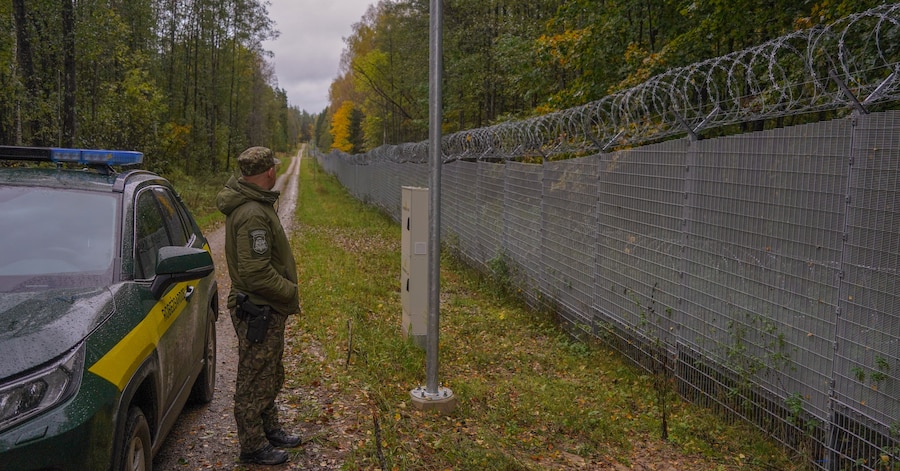
Moscow is using migrants to destabilize the Baltic countries, orchestrating incursions through Belarus as part of a hybrid warfare strategy, according to Latvian authorities. #Ukraine #Biélorussie #GuerreHybride (translated)

www.lalibre.be
Comment Moscou utilise les migrants pour déstabiliser les pays Baltes : “C’est une guerre hybride”
1496
L
Le Soir 16h

Kevin De Bruyne, by reclaiming his role as conductor in Naples, scored a decisive double that allowed the Italian team to win against Frosinone, while preparing for a crucial match in the Champions League. #KevinDeBruyne #Naples #SerieA (translated)

www.lesoir.be
Un doublé attendu depuis 30 mois et un rôle différent à Naples : Kevin De Bruyne poursuit sur sa lancée
2036
Maxim Röder 23h

Maxim Röder wrote that he sees no long-term reasons for concern about ServiceNow and has already explained his assessment in detail this year. Corporations do not only buy software, but also certifications, liability, support guarantees, audit trails, and a data model that has received millions of customizations over the years. Therefore, the switching barrier is very high. According to Röder, a clone created with Vibe Coding does not offer these safeguards. In case of errors in productive operation, the liability question arises, and no CIO will risk their neck for that. Additionally, large corporations have different approval processes, security standards, and regulatory requirements than small companies. According to Röder, ServiceNow positions itself as a deeply integrated platform that connects various AI models and data sources and orchestrates processes in companies securely. For investors, the question is not whether AI scripts will replace enterprise software, but how quickly and effectively ServiceNow will monetize new AI licenses. #Software #KI #ServiceNow (translated)

2397
BFMTV 2d

Wall Street banks are facing explosive demand for specialists in artificial intelligence orchestration, with salaries reaching 13,100 euros per month, and a 1,721% increase in job postings in this field over the past year. #IntelligenceArtificielle #WallStreet #Recrutement (translated)

www.bfmtv.com
Il est à l'IA ce que le contremaître était à l'usine et il gagne 13.000 euros par mois: ce nouveau métier dont la demande bondit de 1.700% à Wall Street
2632
Il Fatto Quotidiano 3d

The article explores how the live-streamed execution of Nidal Malik Hasan, orchestrated by Secretary of Defense Pete Hegseth, reflects an interpretation of the death penalty that intertwines faith, justice, and spectacle in Trump's neo-evangelical vision of the nation under God. #PenaDiMorte #Trump #Fede (translated)

www.ilfattoquotidiano.it
Pena di morte in streaming – Dalla “Città sulla collina” al patibolo digitale: così la “nazione sotto Dio” di Trump uccide a fucilate un uomo in diretta web
2008
Louis Fouché 3d

Louis Fouché stated that the operation he referred to as social engineering around the "student chaos" aimed, in his opinion, to present Édouard Philippe as respectable. He contested this image and believed that the former Prime Minister should be imprisoned for the crimes he attributed to him during the Yellow Vests movement and the Covid-19 pandemic. He called for keeping these events in memory and reminding others of them. #Justice #Mémoire #GiletsJaunes (translated)

2904
Stirile ProTV 3d

Former Venezuelan president Nicolas Maduro and his wife are facing serious charges of torture and narcoterrorism in the US after being captured by American forces, being accused of orchestrating violence and abuses against American citizens detained in Venezuela. #Maduro #SUA #DrepturileOmului (translated)

stirileprotv.ro
Noi acuzații grave pentru fostul președinte venezuelean, Nicolas Maduro, și soția sa la câteva luni după ce au fost capturaţi de forţele americane
3019
Prof. Dr. Dr. Olaf Gierhake 3d

Prof. Dr. Dr. Olaf Gierhake wrote that the wall of silence and cover-up of alleged Corona crimes in Germany, which he referred to as orchestrated, will collapse. He mentioned Angela Merkel, Jens Spahn, Karl Lauterbach, and Christian Drosten. He expected similar outcomes for the USA and cited Anthony Fauci, Bill Gates, and other individuals whom he accused of serious crimes. In conclusion, he wished them success. #Corona #Transparenz #Gerechtigkeit (translated)

2915
Auguste Bardamu 4d

Auguste Bardamu claimed that Karl Marx never paid Helene Demuth a regular salary, who had worked for over forty years for his family in exchange for lodging and food. He wrote that she took care of the laundry, meals, and children. According to Bardamu, Marx had gotten Demuth pregnant in 1851 and refused to acknowledge their son, Frederick. The author argued that Friedrich Engels publicly endorsed the paternity of the child at Marx's request, and then Frederick was placed in a poor foster family in London. He also claimed that Marx never gave her money and prohibited her from entering through the main door during visits to her mother. Bardamu added that Engels only revealed the true identity of the father on his deathbed. He concluded that Marx wrote "Capital" while Demuth worked in his home without payment. #Marx #Exploitation #LutteDesClasses (translated)

3373
L'Obs 5d

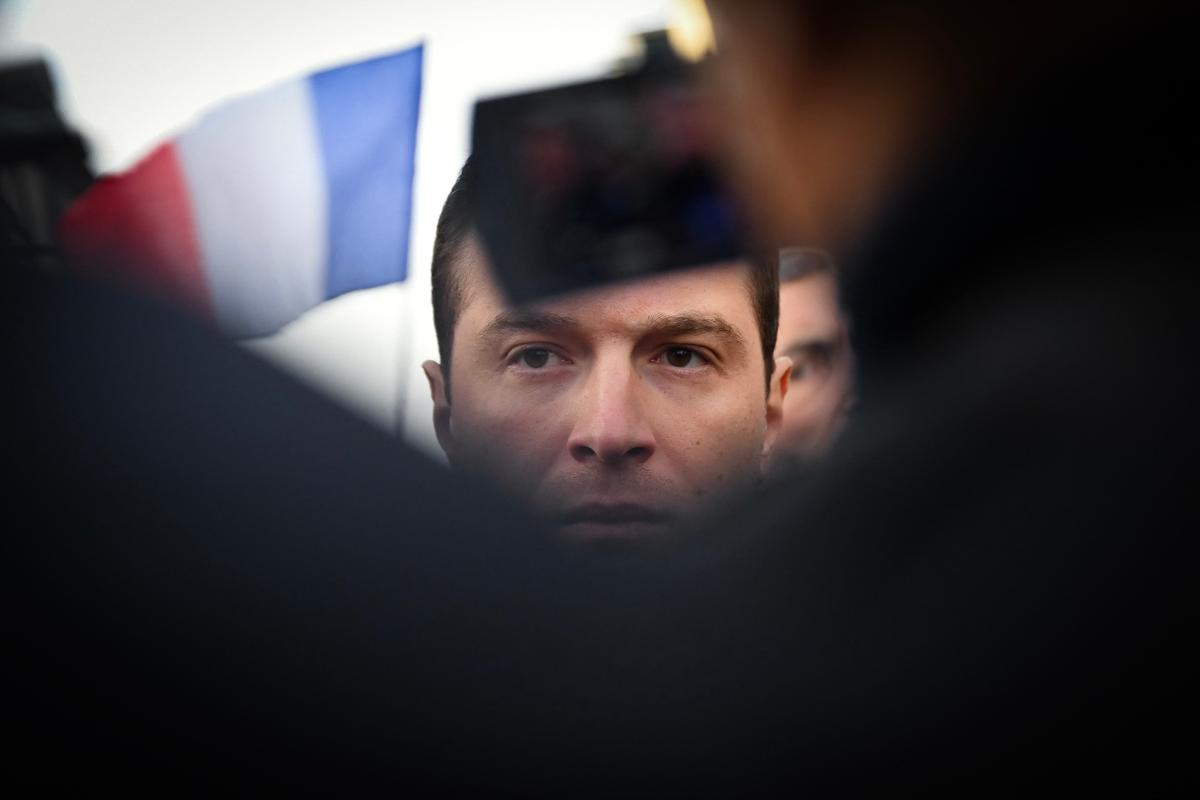
In light of the new revelations about antisemitic writings by Jordan Bardella, the National Rally is trying to maintain its denial and safeguard the "de-demonization" operation orchestrated by Marine Le Pen, despite the potential consequences for its electoral campaign. #RassemblementNational #Antisémitisme #Dédiabolisation (translated)

www.nouvelobs.com
Face aux accusations d’antisémitisme visant Bardella, le RN fait bloc dans le déni : « Il n’y a aucune demi-mesure possible »
2252
BestOf4K & Tiakola #26 5d

WpointM from Tiakola indicated that Tiakola would hold a concert accompanied by a symphonic orchestra in Paris on November 19, 2026. https://t.co/X3WV9EcSSS #Concert #Musique #Paris (translated)

3158
DKLS. 5d

DKLS announced that Tiakola would perform with a symphony orchestra at the Philharmonie de Paris on November 19, 2026. https://t.co/qSDZJARNTi #Concert #PhilarmonieDeParis #Musique (translated)

3158
Thomas Astruc ⏚ 7d

The author argued that democracy depended on people being educated and informed enough to make considered choices, and claimed that big capital had deliberately contributed to the decline of education and the media.

3402
Luciano Magaldi Sardella (PhD) 7d

CIVICO 33 - "ORTA NOVA SOUND LAB": FROM CAPITANATA TO "BROADWAY WORLD", THE "COMMUNITY BAND" PROJECT CONQUERS NEW YORK The social laboratory promoted by ANBG and the Ministry of Culture lands on the largest theatrical network in the world thanks to the article co-written by Chris Rabinowitz and the Orthese author Luciano Magaldi Sardella. There is a brass thread connecting Piazza Mario Frasca to Broadway. "Orta Nova Sound Lab" is the Community and Social Regeneration Band through Music, the project officially presented on September 21 at the C-Lab MAO FM 19.77 by brothers Luca and Erminio Ferrandina, which is experiencing unprecedented media attention for a band initiative born in the province of Foggia. The journalistic success is marked by its appearance on September 28 in Broadway World, the most authoritative global portal dedicated to theater and live performance, based in New York with over 1.5 million monthly global visits. This is not an insignificant result, projecting a story from the Apulian periphery into the realm of international cultural information. The article, titled "Orta Nova Sound Lab Launches Youth Community Band in Southern Italy," is co-authored by New York editor Chris Rabinowitz, a journalist for the American publication, and his Italian co-author Luciano Magaldi Sardella, an international author originally from Orta Nova, an engineer, academic journalist, and researcher active between Italy and abroad. The dual Italian-American signature symbolizes how a "good local practice" can become global news when told with expertise and roots. The Project: the Band as Social Regeneration "Orta Nova Sound Lab" is promoted by the National Association of Marching Bands (ANBG), chaired by Benedetto Grillo, and has been approved for funding under the public notice of the Ministry of Culture as per D.D.G. April 7, 2026, rep. n. 149, aimed at "Enhancing research and dissemination of musical practices in peripheral and areas of high social vulnerability." It is realized with the support of the Municipality of Orta Nova and with the collaboration of a solid civic network: the A.P.S. MAO FM 19.77, the "A. Olivetti" Higher Education Institute, the "Sandro Pertini" Comprehensive Institute, the Music Art association, and the C.I.S.A. of Foggia. As highlighted by "Broadway World," this is the first initiative in Italy to reinterpret the distinctive tradition of marching bands and youth orchestras within a ministry grant dedicated to urban peripheries and social vulnerability. A model that explicitly dialogues with the spirit of the so-called "Caivano Decree" (D.L. 123/2023) for combating youth discomfort, educational poverty, and juvenile delinquency. The idea, in its disarming simplicity, was summarized by the project director for ANBG, Antonella Spagnoletti: "The band is aggregation! The band is cohesion. Bringing these kids together to learn and live differently from the social world is among the primary objectives of our association." This concept was reiterated by the Mayor of Orta Nova, Ing. Domenico Di Vito: "This is an important project that can definitely make a difference compared to the past because it has all the ingredients to connect the entire world of culture and social issues that exists in Orta Nova and needs to be valued. The administration's commitment is to ensure sustainability, structure, and continuity over time." At the press conference presentation, moderated by journalist Giuseppe Di Bisceglie, participated alongside President Grillo, Director Spagnoletti, and Mayor Di Vito, Regional Councillor Grazia Maria Starace, Councillor for relationships with the third sector Sebastiano Battista, Councillor for Culture Vittoria Mastrogiacomo, and educational professor Alfredo Coppola, delegate of the Olivetti Institute. Why the News Became International The "Orta Nova Sound Lab" marching band project demonstrates that when a project has anti-mafia roots, pedagogical value, and a credible institutional network, the press responds. From local and national outlets like Cassa Armonica, Ansa Puglia, TGNorba, Corriere della Sera Bari, RaiNews TGR Puglia, La Gazzetta del Mezzogiorno, Amica9TV, Brindisi In, Blasting News Italia, TRM Network, Secolo XIX, FoggiaToday, PlayNews24, Stato Quotidiano, and many others that well-documented the conference, it reached BroadwayWorld, which viewed the Orthese experience as a "social laboratory" capable of responding to the mafia with music. This leap in scale comes from joint efforts and the bridging work done by Luciano Magaldi Sardella, who managed to translate for the English-speaking audience alongside New York editor Chris Rabinowitz the deep meaning of a village band that in Apulia is not folklore, but a civil presence, a concrete alternative to screens and disintegration. In a South often narrated only for its emergencies, Orta Nova chooses to be told for its ability to generate community. And this time, the news has made its way around the world, starting from a square in Daunia. The Schedule The path, entirely free, includes instrumental workshops for brass and percussion, ensemble music lessons, and collective rehearsals with qualified teachers and conductors, open to aspiring musicians, families, schools, and citizens. The program that attracted the attention of national and now international press is organized as follows: October 2026: parade of bands marching through the streets and public spaces of Orta Nova, to recover the historical value of the band as a popular and identity expression. November-December 2026: high-profile concert season with the Grand Band Concert of Conversano and the Grand Band Concert "Biagio Abbate" City of Bisceglie, artistic training for the young students. Focus on inclusion: a special evening dedicated to female music with the Orchestra Note di Puglia, a formation composed entirely of professionals, to reinforce the values of equal opportunities. January 2027: first official concert of the newly formed Community Band of Orta Nova, a foundational act and public restitution of the work done. (translated)

www.civico93.it
"ORTA NOVA SOUND LaAB": DALLA CAPITANATA A "BROADWAYWORLD", IL PROGETTO “BANDA DI COMUNITA’ CONQUISTA NEW YORK - Civico93 | Be original
567
Luciano Magaldi Sardella (PhD) 7d

CIVICO 33 — “ORTA NOVA SOUND LAB”: FROM CAPITANATA TO “BROADWAYWORLD”, THE “COMMUNITY BAND” PROJECT CONQUERS NEW YORK SOURCE: https://www.civico93.it/orta-nova-sound-laab-dalla-capitanata-a-broadwayworld-il-progetto-banda-di-comunita-conquista-new-york/ The social laboratory promoted by ANBG and the Ministry of Culture has landed on the world’s largest theatre network, thanks to the article co-authored by Chris Rabinowitz and the Orta Nova-born author Luciano Magaldi Sardella. There is a brass thread linking Piazza Mario Frasca to Broadway. It is called “Orta Nova Sound Lab” — the Community and Social Regeneration Band through Music — the project officially presented on 21 September last at the C-Lab MAO FM 19.77 of brothers Luca and Erminio Ferrandina, which is enjoying unprecedented media coverage for a band-cultural initiative born in the Province of Foggia. Its journalistic success was sealed on 28 September last by its arrival on BroadwayWorld, the world’s most authoritative portal dedicated to theatre and live performance, based in New York with over 1.5 million global monthly visits. A result that was by no means a foregone conclusion, which projects a story from the Apulian periphery into the international cultural news circuit. The article, entitled Orta Nova Sound Lab Launches Youth Community Band in Southern Italy, is jointly by-lined by New York editor Chris Rabinowitz, journalist for the American publication, and his Italian co-author Luciano Magaldi Sardella, an international author originally from Orta Nova, engineer, academic journalist, and researcher active between Italy and abroad. The dual Italo-American by-line symbolises how a “local good practice” can become global news when it is recounted with expertise and rootedness. The Project: The Band as Social Regeneration “Orta Nova Sound Lab” is promoted by the Associazione Nazionale Bande da Giro (ANBG), chaired by Benedetto Grillo, and was admitted for funding under the public call of the Ministry of Culture pursuant to Director General Decree of 7 April 2026, reg. no. 149, aimed at the “Strengthening of research activities and dissemination of musical practices in peripheries and in areas of high social vulnerability”. It is realized with the support of the Comune di Orta Nova and with the collaboration of a solid civic network: A.P.S. MAO FM 19.77, the Istituto di Istruzione Superiore “A. Olivetti”, the Istituto Comprensivo “Sandro Pertini”, the Music Art association, and the C.I.S.A. of Foggia. As BroadwayWorld itself emphasised, this is the first initiative in Italy to reinterpret the distinctive tradition of touring bands (bande da giro) and youth orchestras within a ministerial call dedicated to urban peripheries and social vulnerability. A model that dialogues explicitly with the spirit of the so-called “Caivano Decree” (Law Decree 123/2023) for combating youth distress, educational poverty, and juvenile crime. The idea, in its disarming simplicity, was summarised by the project director for ANBG, Antonella Spagnoletti: “The band is aggregation! The band is cohesion. Bringing these youngsters together, educating them, and enabling them to live in a manner different from the social-media world is among the primary objectives of our association.” A concept reiterated by the Mayor of Orta Nova, Eng. Domenico Di Vito: “This is an important project that can certainly make a difference compared with the past, because all the ingredients are there to network the entire cultural and social world that exists in Orta Nova and that must be valorised. The administration’s commitment is to ensure sustainability, structure, and continuity over time.” Taking part in the launch press conference, moderated by journalist Giuseppe Di Bisceglie, in addition to President Grillo, Director Spagnoletti, and Mayor Di Vito, were Regional Councillor Grazia Maria Starace, Councillor for relations with the third sector Sebastiano Battista, Councillor for Culture Vittoria Mastrogiacomo, and educational professor Alfredo Coppola, contact person for the Olivetti Institute. Why the Story Went International The “Orta Nova Sound Lab” band project demonstrates that when a project has anti-mafia roots, pedagogical value, and a credible institutional network, the press responds. From local and national titles such as Cassa Armonica, Ansa Puglia, TGNorba, Corriere della Sera Bari, RaiNews TGR Puglia, La Gazzetta del Mezzogiorno, Amica9TV, Brindisi In, Blasting News Italia, TRM Network, Secolo XIX, FoggiaToday, PlayNews24, Stato Quotidiano, and many others, which thoroughly documented the conference, the coverage reached “Broadway World”, which read the Orta Nova experience as a “social laboratory” capable of answering the mafia with music. This change of scale derives from joint work and also from the liaison work carried out by Luciano Magaldi Sardella, who, together with New York editor Chris Rabinowitz, succeeded in translating for an Anglophone audience the profound meaning of a town band which, in Apulia, is not folklore, but a civil garrison, a concrete alternative to the screen and to social disintegration. In a South often narrated only for its emergencies, Orta Nova chooses to be recounted for its capacity to generate community. And this time, the news has travelled around the world, starting from a piazza in the Daunia. The Calendar The pathway, which is entirely free of charge, provides instrumental workshops for wind and percussion, ensemble music lessons, and collective rehearsals with qualified teachers and conductors, open to aspiring musicians, families, schools, and citizens. The programme that has attracted the attention of the national and now international press is structured as follows: October 2026: parade of marching bands through the streets and public spaces of Orta Nova, to recover the historic value of the band as a popular and identity-based expression. November–December 2026: high-profile concert season with the Gran Concerto Bandistico di Conversano and the Gran Concerto Bandistico “Biagio Abbate” Città di Bisceglie, an artistic training ground for young pupils. Inclusion Focus: a special evening dedicated to women in music with the Orchestra Note di Puglia, an ensemble composed entirely of professional women musicians, to reinforce the values of equal opportunities. January 2027: first official concert of the newborn Community Band of Orta Nova, a foundational act and public restitution of the work accomplished. (translated)

www.civico93.it
"ORTA NOVA SOUND LaAB": DALLA CAPITANATA A "BROADWAYWORLD", IL PROGETTO “BANDA DI COMUNITA’ CONQUISTA NEW YORK - Civico93 | Be original
908
Franceinfo 7d

The trial of Rohan Rane, a 29-year-old man accused of sexual extortion, torture, and acts of barbarism against teenage girls, is opening in Paris, revealing terrifying abuses orchestrated via the Discord platform. #Justice #ViolencesEnLigne #Discord (translated)

www.franceinfo.fr
Mutilations, croix gammées gravées sur la peau, victimes mineures… Le procès de Rohan Rane, "masculiniste" et "fasciste" revendiqué de Discord, s'ouvre à Paris
1930
Emanuel Boeminghaus 1w

Emanuel Boeminghaus stated that new layoffs plans affecting a total of around 11,300 jobs have been announced in Germany this week. The job cuts are picking up speed, he explained. The biggest projects mentioned by Boeminghaus include Galeria Kaufhof, which plans to close about 30 of its remaining 83 branches during its fourth bankruptcy; approximately 4,000 jobs will be affected. BioNTech plans to close three plants in Tübingen, Marburg, and Idar-Oberstein by the end of 2027 or 2028, resulting in 1,800 job cuts. At VW's software subsidiary Cariad in Wolfsburg and Berlin, 1,000 positions are at stake, and at Bosch in Nuremberg, 900 jobs will be affected—half of the positions there are expected to be eliminated by 2029. Boeminghaus also cited further announced closures and cuts at Bohai Automotive in Harzgerode with 550 positions by January 31, 2027, Schmitz Cargobull in Horstmar with 500 jobs by 2030, and the city of Paderborn with 390 full-time positions in administration. The foundry in Uckermünde is set to cost 320 jobs, including those of temporary workers. The St. Elisabeth Hospital in Salzgitter-Bad will cease operations on September 30, 2026, affecting around 250 people. In Saxony-Anhalt, according to Boeminghaus, the Schlote Group in Harzgerode and Wenigerode are set to close by January 31, 2027, affecting 180 positions, and Getriebe- und Antriebstechnik Wenigerode will close at the end of January 2027, affecting around 130 jobs. The recycling plant of TRIMET Aluminium in Harzgerode is expected to close by November 30, 2026, affecting 64 positions. Westlake intends to close its PVC plant in Cologne in the first quarter of 2027 and cut 150 jobs. Kodi plans to close 43 of its 143 branches instead of 19, which, according to Boeminghaus, will affect around 150 additional positions. Up to 150 jobs are affected at Aldi Süd in Mülheim. The cessation of granulation at K+S in Sehnde by the end of 2028, affecting around 130 positions, the closure of the Wolters brewery in Braunschweig on December 31, 2026, after nearly 400 years, affecting around 125 jobs, as well as two waves of layoffs at Moldtecs in Sonneberg by the end of 2027, affecting 120 positions were also mentioned. Avo Carbon in Frankfurt-Kalbach is set to close in 2027, affecting 94 jobs, the machinery manufacturer Paul Köster in Medebach plans to cut 90 positions, and Gruber Polstermöbel in Sonnefeld will close after 100 years, affecting 85 positions. Pilkington plans to close its Wesel location in 2027, affecting 68 positions. The Bonn orchestra will be dissolved following bankruptcy, affecting 60 musicians. #Jobabbau #Deutschland #Wirtschaft (translated)

22642
Gabriel Attal 1w

The author accused Jean-Luc Mélenchon of participating in the harassment of Nathanaël Combary, president of the governing board of Renouveau lycéen. He stated that this campaign had been conducted since the morning by supporters of LFI and reminded that Mélenchon was a candidate for the presidential election. #Politique #Harcelement #Elections2022 #FR (translated)

7746