WRLD

Search

#package
Helen McEntee TD 2d

The author said the Foreign Affairs Council was due to adopt on Monday what they described as its largest-ever sanctions package, targeting 1,600 individuals and entities linked to Russia’s military-industrial complex. They said support for Ukraine would continue and pressure on Russia would be maintained to end its war. #Sanctions #Ukraine #Russia #RU #UA


3468
Alexander Stubb 2d

The author said they had spoken with Volodymyr Zelenskyy and identified air defence, energy installations and financial assistance as three urgent priorities. They added that Finland had announced its 35th support package the previous day, with air defence as a key component, and said they were doing everything possible to protect Ukrainian civilians. #StandWithUkraine #AirDefence #SupportUkraine #UA #FI

3679
András LÁSZLÓ MEP 🇭🇺 2d

The author wrote that Ursula von der Leyen and Joe Biden had promised sanctions would cripple Russia’s war machine and compel Vladimir Putin to end the war, adding that the pledge had been made more than four years and 20 sanctions packages earlier. #Russland #Sanktionen #UkraineWar #RU #US (translated)

3314
Maranello Paddock 3d

Maranello Paddock wrote that Charles Leclerc had made a perfect lap with the SF-26 in Singapore, like Lewis Hamilton during qualifying in Malaysia. He added that the behavior of the Ferrari seemed to improve over the past two weeks and expressed his hope regarding the package planned for Austin. https://t.co/0c2ccrdDpN #F1 #Leclerc #Ferrari (translated)

3236
Krzysztof Graj 3d

Russia’s war propaganda gets a soundtrack – how AI-generated songs reached global streaming platforms Russian war propaganda is no longer confined to television broadcasts, Telegram channels or political videos. A study by the Ukrainian threat-intelligence organisation Terrecon has identified 981 songs combining signs of AI generation with pro-Russian military narratives, distributed through an ecosystem that reaches YouTube, Spotify, Apple Music, Deezer and SoundCloud. The songs range from sentimental ballads to rock and heavy metal. Their recurring themes are familiar from conventional Russian wartime propaganda: the heroisation of Russian soldiers, romanticisation of the war, mobilisation, the “Russian world”, commemoration of fallen troops and attacks on Ukraine and its armed forces. Some contain derogatory or dehumanising references to Ukrainians. What is new is not necessarily the message, but the production and distribution model: generative AI allows propagandistic music to be produced rapidly, cheaply and in quantities that would previously have required musicians, studios and producers. Nearly 1,000 tracks identified Terrecon examined 3,725 tracks collected from YouTube, YouTube Music, SoundCloud and the AI music platform Suno. After manual review, researchers classified 981 as showing both indications of AI generation and pro-Russian war propaganda. In 681 tracks they identified 728 propaganda-related keywords or phrases. The largest category was the glorification of the Russian military, followed by romanticised treatment of Moscow’s so-called “special military operation”, mobilisation appeals, narratives about the “Russian world”, and the cult of fallen soldiers and the state. The reach was not merely theoretical. Listening or viewing statistics were available for 608 of the identified tracks; together they had accumulated 86.8 million plays and views, according to Terrecon. A smaller group of 13 high-performing songs accounted for more than 53 million YouTube views and more than 67 million when YouTube Music was included. Among the better-known examples is “Power of Artillery”, a Russian-language rock song praising artillery weapons that passed two million views on YouTube. Most of the tracks for which publication dates could be established appeared after 2024, broadly coinciding with the rapid expansion of consumer AI music generators such as Suno and Udio. That correlation does not prove that AI alone caused the increase, but it illustrates how drastically the economics of production have changed. A propaganda song for as little as $11 Terrecon also tested how difficult it would be to commission such material. Researchers approached 25 creators producing AI-assisted militaristic music; 15 agreed to take commissions. Prices ranged from approximately $11 to $330, while delivery times ranged from two hours to three days. According to Terrecon, some were prepared to produce highly aggressive anti-Ukrainian material, including content intended for audiences involving children from occupied Ukrainian territories. Some creators used Russian intermediary services that provided access to Western AI tools such as Suno and Udio despite restrictions. The researchers then tested several AI generators themselves. Across 40 prompts submitted to Suno, Udio, Mureka, Google Flow Music and ElevenLabs, 25 resulted in successful generations, while safeguards were circumvented in 15 cases. Terrecon reported that four of the five services tested produced Russian-language material containing wartime narratives, although technical problems prevented comparable testing on some systems. In one Udio experiment, the researchers said the model itself introduced more explicit violent language than had appeared in the original promp These tests do not demonstrate that the commercial platforms knowingly support Russian propaganda. They show something narrower: existing safeguards can be inconsistent when political messaging is packaged as music. From generation to Spotify The distribution experiment may be the most revealing part of Terrecon’s research. The team deliberately uploaded test tracks containing explicit hostile language to YouTube, SoundCloud, Spotify and Deezer. Terrecon says none was blocked during the experiment. On SoundCloud, researchers used an account identifying its location as Moscow, disclosed the use of AI and added markers including references to the Russian military and the war. The platform accepted the upload and subsequently offered paid promotional and distribution tools. This does not prove that streaming recommendation systems systematically promote pro-war music. There is currently insufficient public evidence to make that claim. It does demonstrate that material can enter the same commercial distribution infrastructure as ordinary music and, once there, potentially benefit from playlists, searches, sharing and recommendation mechanisms available to other releases. That distinction is important. Propaganda no longer has to announce itself as political communication. On a streaming platform it can look like another song. Culture as a delivery mechanism Music has always been used in wartime propaganda. What generative AI changes is scale. Instead of investing heavily in a limited number of patriotic performers or officially commissioned productions, creators can generate variations across styles, audiences and emotional registers at very low cost. Terrecon found material ranging from war rock to sentimental songs and content styled for younger audiences. Some creators also experimented with cloned celebrity voices and stylistic imitation of established musicians. The format also offers a different relationship with the audience. A political video asks a viewer to consume an argument. Music can accompany commuting, exercise or entertainment and may be encountered outside explicitly political spaces. This does not automatically make it more persuasive, and Terrecon’s research does not establish measurable effects on political attitudes. It does, however, place wartime narratives inside a cultural environment where users may not initially perceive themselves as consuming political messaging. An ecosystem, not a proven Kremlin command structure The strongest evidence supports describing this as a growing AI-assisted pro-Russian propaganda-music ecosystem, not a single operation controlled from Moscow. Terrecon did not establish that the Russian government created, financed or coordinated all 981 tracks. Reporting on the study likewise notes that the extent of direct state involvement remains unclear. There is broader evidence that the Russian state finances cultural projects and digital content supporting the war, including through state-backed funding bodies. That context matters, but it does not allow individual songs in Terrecon’s dataset to be attributed to the Kremlin without additional evidence. The significance of the case lies elsewhere. AI has reduced the cost of producing ideological content, intermediaries can help creators access generation tools, and global platforms can provide distribution. The result is a pipeline in which wartime propaganda no longer has to resemble propaganda at all. It can simply appear in a playlist. Sources Terrecon / Ukrainska Pravda — Daria Verbytska on the research https://www.pravda.com.ua/columns/2026/10/05/8056229/ Suspilne Culture — detailed breakdown of Terrecon findings https://suspilne.media/culture/1417933-rosijsku-voennu-propagandu-maskuut-pid-anime-karaoke-ta-rok-doslidzenna-si-pisen-vid-terrecon/ The Insider — AI-generated Russian war propaganda music https://theins.ru/news/297839 Institute of Mass Information — summary of New York Times reporting https://imi.org.ua/en/news/doslidzhennya-rf-masovo-stvoryu%D1%94-propagandistski-pisni-za-dopomogoyu-shi The Bridge Media — AI-generated songs and Russian military propaganda https://thebridgemedia.com.ua/en/ai-generated-songs-russian-military-propaganda/ Center for Strategic Communication — cost and production of AI propaganda music https://spravdi.org/propaganda-za-11-yak-rosiya-shtampuye-shi-pisni-z-miljonamy-prosluhovuvan/ Times of India — AI-generated Russian war songs https://timesofindia.indiatimes.com/world/europe/ai-sings-russias-war-story-inside-the-rise-of-generative-songs-about-ukraine-conflict/articleshow/134650594.cms EU Council / EUR-Lex — Presidential Foundation for Cultural Initiatives https://eur-lex.europa.eu/legal-content/EN/TXT/?uri=CELEX:32026D1351 Human Rights Watch — Russian state funding of digital and patriotic content https://www.hrw.org/report/2025/07/30/disrupted-throttled-and-blocked/state-censorship-control-and-increasing-isolation #DISINFORMED #Episode16 #Russia #Ukraine #RussianPropaganda #WarPropaganda #MusicPropaganda #AIMusic #ArtificialIntelligence #AI #GenerativeAI #SyntheticMedia #AIPropaganda #Disinformation #InformationWarfare #InfluenceOperations #CulturalPropaganda #DigitalInfluence #NarrativeManipulation #PropagandaMusic #StreamingPlatforms #Spotify #AppleMusic #YouTube #YouTubeMusic #Deezer #SoundCloud #Suno #Udio #RussianWorld #RusskiyMir #MilitaryPropaganda #WarNarratives #Mobilisation #AlgorithmicDistribution #RecommendationAlgorithms #MusicStreaming #PlatformManipulation #Terrecon #OSINT #MediaManipulation #WRLD

224
Actualité - Barça 4d

News - Barça reported, citing Florian Plettenberg, that new discussions had taken place between Bayern Munich and the representatives of JJ Gabriel, although no offer has yet been made by the club. According to the account, the young player appears to favor a transfer to Spain, with Real Madrid and Barcelona leading the race. The overall package would cost well over 10 to 15 million euros, he added. #BayernMunich #Transfert #Football (translated)

2916
Varizan 4d

Varizan wrote that Bump, the agency founded by Squeezie, had established itself in Los Angeles, where a team was supposed to connect with American creators and publishers. He estimated that this presence could offer new business opportunities for Gentle Mates, particularly for its Call of Duty team, in an American market he described as important for esports. He reminded that Bump was notably working with gaming and esports creators Skyyart, Nikof, Mel, and Gotaga, and managed partnerships and sponsorship for Gentle Mates, the club of Squeezie, Gotaga, and Brawks. According to the figures cited by Varizan, the agency, founded in 2020 after Squeezie left Webedia, counted more than 70 creators, totaled 3 billion views, and had 300 active clients, and had completed 1,500 partnerships in 2025. Varizan presented Bump as the commercial structure of the club and indicated that the model combining creators, esports club, and sponsorship organized by the agency was already in place in France. #BumpAgency #Esport #Squeezie (translated)

3257
Maranello Paddock 5d

Maranello Paddock indicated that Ferrari would bring its largest set of updates of the year to Austin. In terms of new parts for the SF-26, it is expected to surpass that of Mercedes in Malaysia, according to the account, which cited Auto_Racer_it via YouTube. https://t.co/sUYgkdGOFI #F1 #Ferrari #AustinGP (translated)

2704
Irish Independent 5d

An €8.5 billion buy-off package is set to assist the squeezed middle in Ireland amidst rising living costs. #cookies #security #onlineprotection

www.independent.ie
€8.5bn buy-off package aims to help ‘squeezed middle’ amid soaring costs
1467
Krzysztof Graj 1w

Disinformation for hire – the network of 70 fake newsrooms sold as a service The websites looked local. Naija Pulse appeared to cover Nigeria, Echo Berlin Germany, The British Daily Britain, Fifty States the United States and Commonwealth Post Australia. Each had its own branding, articles, supposed journalists and matching social-media presence. Taken individually, they resembled small independent news outlets. According to Anthropic, however, they were parts of a single commercial influence network spanning six continents. Anthropic’s September 2026 threat report identifies the operation as GTG-54002, a commercial “influence-as-a-service” network that used Claude to generate and rewrite political content at industrial scale. Investigators linked roughly 70 fabricated news websites to around 70 matching X accounts and more than 250 additional inauthentic commenting accounts designed to create the appearance of genuine public engagement. The network produced at least 8,913 articles in about 20 languages before Anthropic disrupted the activity. The significance of the case is not simply the number of fake sites. It is the business model. The network did not consistently promote one government, party or ideology. Anthropic found that its political position changed according to the apparent interests of different customers. The company therefore described it as a commercial influence operation: political manipulation offered in much the same way as other outsourced digital services. A fake media ecosystem built at scale Anthropic says the infrastructure was created rapidly. Domains were registered from France during a roughly ten-week period in mid-2025 and deployed through shared technical infrastructure, allowing investigators to connect publications that outwardly appeared unrelated. Most of the supporting social-media accounts were also created within a narrow timeframe in June and July 2025. The sites were designed to look like functioning local newsrooms rather than anonymous propaganda pages. Articles carried fabricated bylines belonging to journalists who, according to Anthropic, did not exist. Each outlet had a corresponding account on X, while a second layer of fake profiles commented on and amplified the articles. Many of those accounts used AI-generated profile photographs. The result was a three-tier structure: the newsroom published the story, the branded social account distributed it, and apparently ordinary users supplied the appearance of public reaction. Some of those sites remained publicly visible after the operation was exposed. The British Daily, for example, described itself as providing “conservative insights” on British sovereignty and migration, while Commonwealth Post presented itself as an Australian liberal publication focused on democracy, migration and regional security. Those contrasting editorial identities illustrate the central feature identified by Anthropic: the network was capable of taking different political positions in different markets. Claude as a publishing engine Claude was not simply asked to draft occasional articles. The operators built a structured production pipeline around it. Prompts required fixed JSON outputs, formatted HTML, precise character limits and internal links, allowing articles to move directly into an automated publishing workflow. The system could generate entirely new material or take reporting produced by legitimate journalists and rewrite it to fit a desired political perspective. Anthropic identified three recurring techniques. The same source article could be rewritten in opposite ideological directions for different audiences; a political interpretation could be added to a story that originally contained none; and material could be moved from one country to another after its original context had been removed. The articles were also structured to improve the apparent authority of the sites in search engines, helping the network imitate ordinary digital publishing practices rather than simply broadcasting propaganda. This is where generative AI changes the economics of an influence operation. A conventional network of dozens of supposedly local publications would normally require writers, translators, editors and social-media staff. Here, much of that production could be standardised and automated while human operators concentrated on political direction, customer requirements and distribution. The DRC–Rwanda conflict as a test case The clearest concentration of activity involved the Democratic Republic of Congo. Anthropic identified 318 articles concerning the DRC across the fake-news network. The material generally supported positions aligned with the Congolese government, particularly on regional mineral agreements and tensions with Rwanda. Early in the network’s growth, many of the fake social-media personas following and amplifying its accounts also presented themselves as Congolese. Investigators observed one especially revealing episode on 11 September 2025, when multiple sites published almost identical articles about the DRC–Rwanda conflict within approximately three minutes of one another. The wording and political tone were adjusted for different regional audiences, while associated X accounts distributed the links in a coordinated pattern. Anthropic said the activity contained signals suggesting that one or more customers had interests connected to the DRC–Rwanda conflict. It did not, however, identify those customers and explicitly stated that it found no evidence that any government had directed the operation. That distinction is essential. The content may have benefited a political actor without demonstrating that the actor commissioned or controlled it. Influence without ideology Commercialisation is what distinguishes GTG-54002 from many state-linked information operations. A government propaganda network usually has an identifiable strategic direction. A commercial influence provider does not need one. Its infrastructure can support one position in one country and the opposite position somewhere else, provided different customers are willing to pay. That makes attribution more difficult. Analysts cannot necessarily infer the operator from the ideology of the content because ideology may simply be part of the service package. The enduring asset is the infrastructure: domains, publishing systems, fake journalists, social-media accounts and automated amplification. Anthropic says the operation was disrupted before it achieved significant genuine reach. It classified GTG-54002 as Category Two on the Brookings Breakout Scale: material circulated across the network’s own sites and associated social accounts but showed no evidence of substantial penetration into authentic communities. Most of the 8,913 articles generated little observable engagement from real users. That limited impact is important. The case should not be presented as a successful global manipulation campaign. It is better understood as evidence that the infrastructure required to run such campaigns has become cheaper, faster and increasingly commoditised. The deeper shift is that a fake media ecosystem no longer has to be built around a single political cause. It can be built once, automated and then repurposed for the next customer. Disinformation, in this model, is no longer only a political instrument as it turend into the service. Sources: Anthropic — Countering misuse of AI: September 2026 https://www.anthropic.com/threat-intelligence-report-september-2026 Business Standard — AI scaling fake newsrooms, surveillance and online scams https://www.business-standard.com/technology/tech-news/anthropic-report-ai-fake-newsrooms-dating-surveillance-scams-126091100730_1.html Mimikama — KI baut 70 erfundene Nachrichtenportale https://www.mimikama.org/ki-netzwerk-erfundene-nachrichtenportale-echo-berlin/ Poliscoop Media — Anthropic exposes DRC propaganda network https://www.poliscoopmedia.com/articles/anthropic-exposes-drc-propaganda-network-20260911 The British Daily — example of a fabricated outlet identified in the network https://www.british-daily.com/contact Commonwealth Post — example of a fabricated outlet identified in the network https://commonwealth-post.com/category/science MalPulse — infrastructure references for network domains https://www.malpulse.com/infra-pivots/usom-pivots/list/?page=1105 Keywords: #DISINFORMED #Episode13 #DisinformationAsAService #InfluenceAsAService #FakeNewsrooms #FakeMedia #SyntheticMedia #ArtificialIntelligence #AI #GenerativeAI #ClaudeAI #Anthropic #Disinformation #InfluenceOperations #InformationWarfare #FIMI #CommercialInfluence #PoliticalManipulation #NarrativeManipulation #NarrativeLaundering #SourceLaundering #MediaImpersonation #FakeJournalists #SyntheticPersonas #Astroturfing #SocialMediaManipulation #CoordinatedInauthenticBehaviour #CIB #DigitalInfluence #AutomatedPropaganda #ContentAutomation #AIPropaganda #LKMCompany #NaijaPulse #AxumVoices #JamboJournal #EchoBerlin #TheBritishDaily #FiftyStates #CommonwealthPost #DRC #Rwanda #OSINT #WRLD

www.anthropic.com
Countering misuse of AI: September 2026 / Anthropic
569
Michael Walsh 1w

WITNESS TO HISTORY Mike Walsh: “I have read a lot about WWII and Germany. This includes David Irving’s books. However, you wrapped it all in a really tidy and factual package. I highly recommend it to all my history truth-seeking friends. Thank you for such a great book.” ~ B. Wiggles. https://barnesreview.org/product/witness-to-history-the-reich-legend-uncensored/

1143
Gunther Fehlinger-Jahn 2w

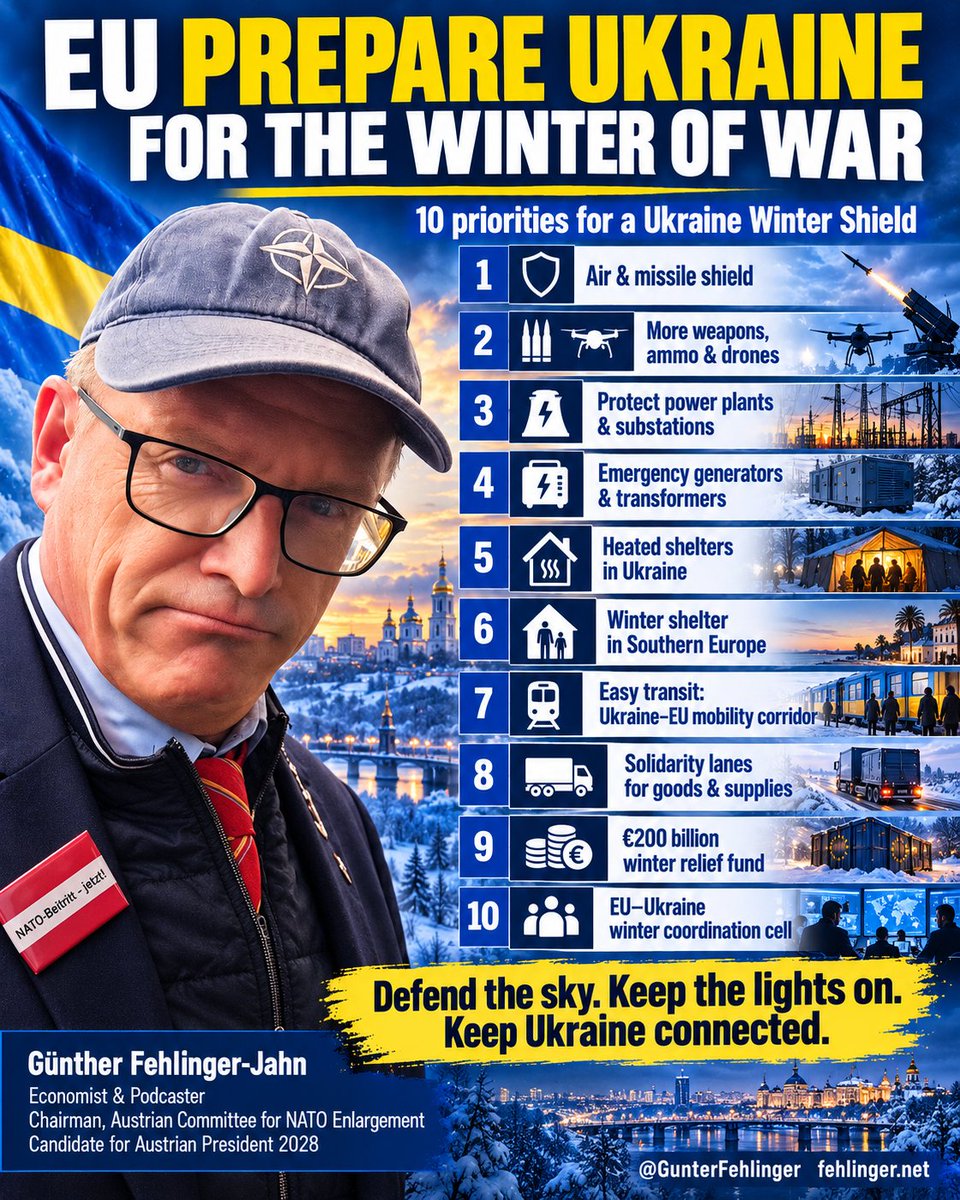
The author proposed an EU–Ukraine Winter Shield for 2026/27, saying Europe should prepare systematically for another winter of war. They said the package should include stronger air and missile defence, more weapons, ammunition and drones, protection for power plants and substations, and emergency measures. https://t.co/pZYTRScy9w #Ukraine #EU #WinterShield #EU #UA

Michael Walsh 2w

WITNESS TO HISTORY Mike Walsh: “I have read a lot about WWII and Germany. This includes David Irving’s books. However, you wrapped it all in a really tidy and factual package. I highly recommend it to all my history truth-seeking friends. Thank you for such a great book.” ~ B. Wiggles. https://barnesreview.org/product/witness-to-history-the-reich-legend-uncensored/

573
Michael Walsh 2w

WITNESS TO HISTORY Mike Walsh: “I have read a lot about WWII and Germany. This includes David Irving’s books. However, you wrapped it all in a really tidy and factual package. I highly recommend it to all my history truth-seeking friends. Thank you for such a great book.” ~ B. Wiggles. https://barnesreview.org/product/witness-to-history-the-reich-legend-uncensored/

1035
Krzysztof Graj 2w

AFRICA DAILY REPORT — 27 SEPTEMBER 2026 Major developments reported during the previous 24 hours. 1. SOUTH AFRICA — Police investigate deadly tavern shooting Importance: 10/10 (Critical) South African police launched a manhunt after 17 people were killed at a tavern in Wedela township, southwest of Johannesburg. Police said the motive was not yet known. Source: https://www.reuters.com/world/africa/ 2. DR CONGO — Ebola reaches 63 health zones across seven provinces Importance: 10/10 (Critical) WHO reporting says the Bundibugyo Ebola outbreak has spread to Bulu in Sud Ubangi and Dungu in Haut-Uélé. As of September 23, 7,890 confirmed cases and 3,799 deaths had been reported, while conflict and displacement continue to complicate access and contact tracing. Source: https://www.channelafrica.co.za/ 3. DR CONGO — Mpox confirmed in Bunia while the Ebola response is already under pressure Importance: 9/10 (Very High) A laboratory-confirmed mpox case was identified in Bunia, raising concern about simultaneous infectious-disease pressures on surveillance, laboratories and clinical capacity. Source: https://www.businessday.co.za/ 4. SOUTH AFRICA — Tenth woman's body found in Ekurhuleni investigation Importance: 9/10 (Very High) Police discovered another woman's body east of Johannesburg, bringing the number found during the investigation to ten and intensifying concern over gender-based violence and whether some of the cases are connected. Source: https://www.africanews.com/ 5. NIGERIA–SOUTH AFRICA — Nigeria evacuates another 105 citizens Importance: 8.5/10 (Very High) Nigeria evacuated another group of nationals amid continuing anti-immigrant violence and tensions in South Africa. Nigeria's Foreign Ministry said this was the 13th consular evacuation since June 10, bringing the total evacuated to 1,821 people. Source: https://punchng.com/ 6. KENYA — Report highlights recruitment of Kenyans into Russia's military Importance: 8/10 (High) Reporting by The EastAfrican says Kenya has emerged as a leading African source country in Russian military recruitment, with recruitment practices evolving as African authorities increase scrutiny. Source: https://www.theeastafrican.co.ke/ 7. GUINEA — Former prime minister and opposition leader Sidya Touré dies in Paris Former prime minister and prominent opposition figure Sidya Touré died aged 81. He had led the Union of Republican Forces from exile in Ivory Coast; the UFR was among political parties dissolved earlier this year. Source: https://www.africanews.com/ 8. MADAGASCAR — Youth activists voice disillusionment one year after political upheaval A year after youth-led protests helped force the previous president from power, activists interviewed in Madagascar say the subsequent political transition has not delivered the changes they expected, highlighting continuing questions about governance and the country's transition. Source: https://www.africanews.com/ 9. EAST AFRICA — County levies increase costs along Kenya's regional trade corridors Importance: 7.5/10 (High) Businesses moving goods through Kenya face additional county-level charges along important transport corridors. Because Kenyan roads and the Port of Mombasa serve several landlocked East African economies, higher logistics costs can affect regional trade competitiveness and import prices. Source: https://www.theeastafrican.co.ke/ 10. AFRICA — Governments pursue new financing models for forest protection Importance: 7/10 (High) African governments are developing country-led mechanisms combining domestic expenditure with international climate finance. Kenya is highlighted for its financing approach, while Nigeria is preparing a forest-finance package for COP31. Source: https://capitalethiopia.com/ #Africa #AfricaNews #TopNewsOfAfrica #DRCongo #Bunia #Mpox #Ebola #EbolaOutbreak #PublicHealth #HealthEmergency #DiseaseSurveillance #HealthcareCapacity #OutbreakResponse #CentralAfrica #Ecology #ForestProtection #ClimateFinance #NatureFinance #Conservation #Sustainability #EnvironmentalProtection #Kenya #Russia #MilitaryRecruitment #Security #AfricanSecurity #Geopolitics #EastAfrica #RegionalSecurity #AfricaToday #wrldorg

1725
Ursula von der Leyen 2w

The agreement to release €6.6 billion from the European Peace Facility for Ukraine is excellent news. It means more support for Ukraine’s defence, from training to equipment. It complements what we are doing through our Ukraine support packages – for the state and for defence. #UkraineSupport #EuropeanPeaceFacility #DefenceAid #UA #EU

4264
Ursula von der Leyen 2w

The agreement to release €6.6 billion from the European Peace Facility for Ukraine is excellent news. It means more support for Ukraine’s defence, from training to equipment. It complements what we are doing through our Ukraine support package – for the state and for defence. #UkraineSupport #EuropeanPeaceFacility #DefenceAid #EU #UA

4610
Gunther Fehlinger-Jahn 3w

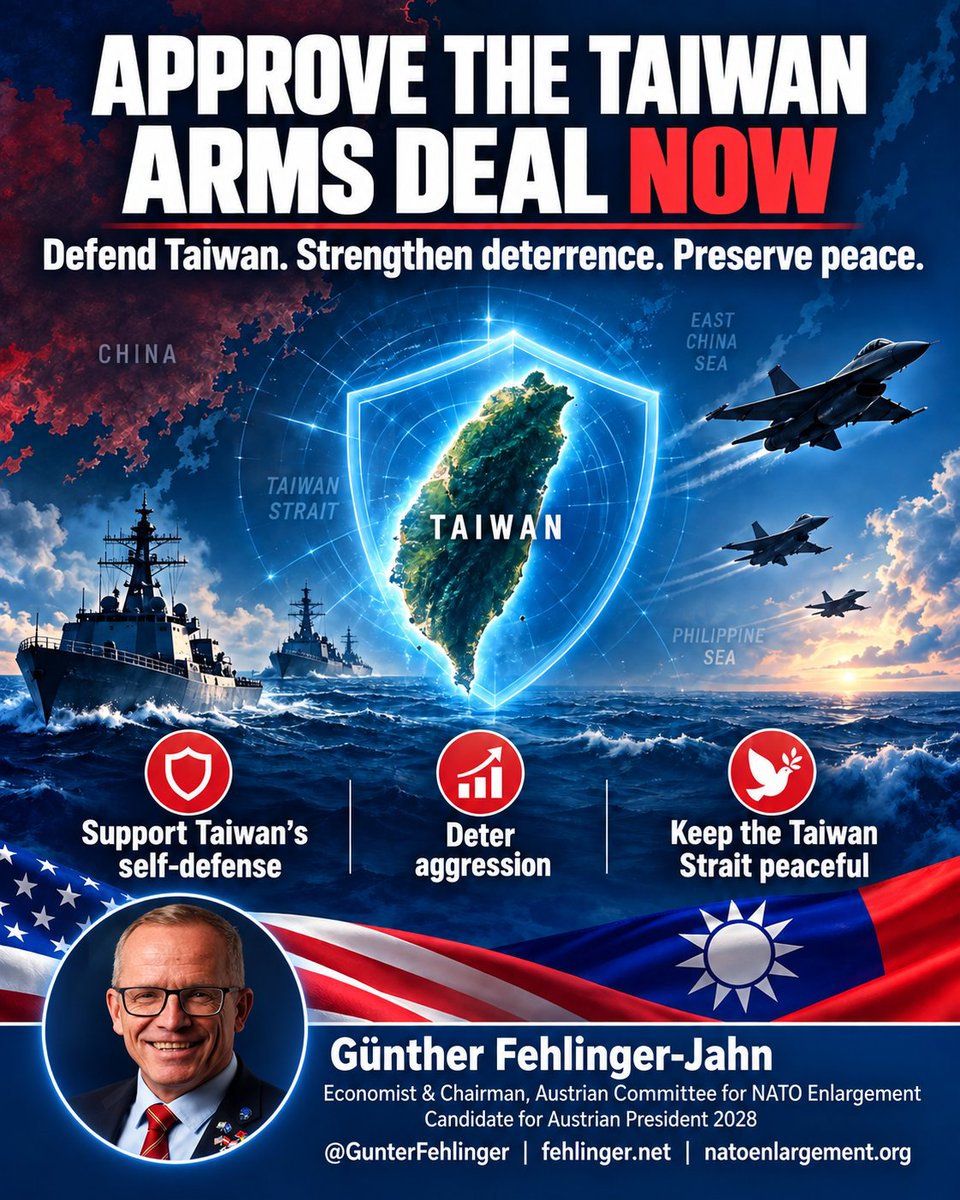
🇺🇸🇹🇼 TAIWAN ARMS DEAL — STILL WAITING FOR APPROVAL A proposed US$14 billion U.S. arms package for Taiwan remains under review as of 24 September 2026. Secretary of State Marco Rubio says the administration is weighing Taiwan’s requirements against U.S. military needs and https://t.co/S5a9pAqBPj #Taiwan #ArmsDeal #USMilitary #US #TW

115
Ursula von der Leyen 3w

Dear @NikolPashinyan, it is good to see you as always. We are bringing Armenia closer to the EU, while working on a peaceful and prosperous South Caucasus. We are building roads and bridges with our €200 million connectivity package. And bridges between people, with our https://t.co/WJ4QOLiHI1 #Armenia #EUnion #SouthCaucasus #AM #EU

3463
Dubravka Šuica 3w

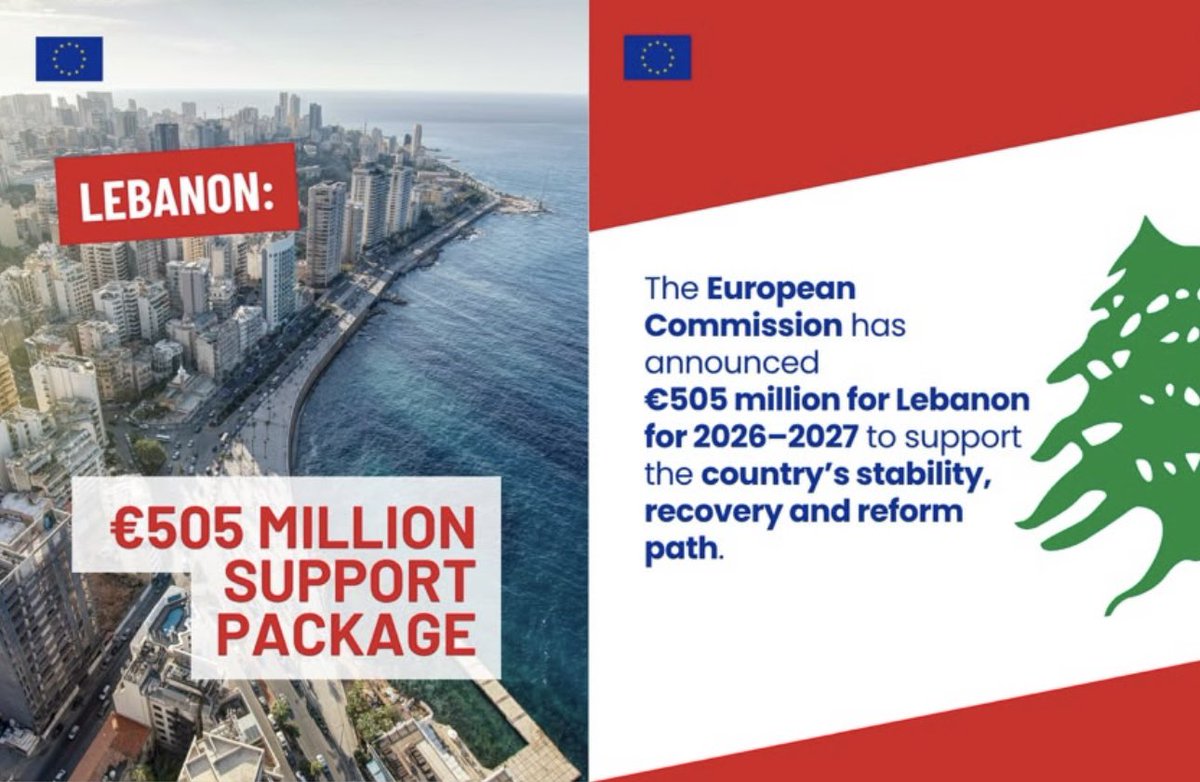
Today at #UNGA81, I announced the adoption of €505 million in new EU support for Lebanon for 2026–2027 under our 🇪🇺-🇱🇧 €1 billion package. The funding will support essential services and the most vulnerable, advance reforms and economic recovery, strengthen security and border https://t.co/fmhw0wzTFB #EU #Lebanon #UNGA81 #LB #EU

115