WRLD

Search

#society
Constelación Mercurio 1d

Constellation Mercury said that they joined several communities to donate to the Teletón by auctioning a sweatshirt from Aarón Mercury. They stated that the initiative reflected the union and commitment of its members, and that solidarity could help change lives. They mentioned Programa Hoy and Aarón Mercury, and noted that Team Noche, Mercurials Independientes, Las Tías de Aarón, Mercury Cowgirls & Cowboys, Las Poderosas de Aarón, Team Lobonito, Mercurials Ignoradas, Mercurys VIP, Teresas, Hotcurys, Team Mafia Aldron, Team Cebollitas, Team Mercury Secret Society, Team Harcury, Team Horchata Mercurial, Mercury Republic, Intibias de Aarón Mercury, Berrinchudos de Elite, Team Humbertitas de X, and Élite Mercurial participated. They also linked the initiative with Hoy Teletón 2026. #Teletón #Solidaridad #Unión (translated)

2900
Stanisław Żaryn 2d

The author said Russia had attacked a kindergarten and a playground, claiming the aim was to kill children and intimidate Ukrainian society. They described the video as evidence that Russia was a terrorist state waging a genocidal war against Ukraine. https://t.co/OTvuemt89M #StandWithUkraine #StopRussianAggression #JusticeForUkraine #RU #UA

3788

The author argued that elites they described as predatory were gaining political seats around the world, blaming post-Cold War “leftist” parties for paving the way. They said those elites had turned what they called Israel’s genocide in Gaza into a model and profitable business, while global civil society was organising on an unprecedented scale to demand accountability. #Gaza #Israel #Accountability #IL #PS

3351
We Don't Have Time 4d

The author argued that “clean versus cheap” was a false choice, saying a post-fossil society would involve not only reducing emissions but also enabling abundant clean energy. The post directed readers to an article for further reading.

2694
David Kirichenko 5d

"a strong message to Moscow and Kyiv's partners: the highly innovative Ukrainian army is still capable of defeating Russia on the battlefield," it still conveys "a strong message to Moscow and Kyiv's partners: the highly innovative Ukrainian army is still capable of defeating Russia on the battlefield," according to David Kirichenko, an associate researcher at the Henry Jackson Society, a British think tank specializing in national security. #Ucraina #RoboțiMilitari #OperațiuneaVivaldi (translated)

Ofensiva-surpriză a roboților ucraineni expune o vulnerabilitate a mașinii de război a lui Putin
adevarul.ro
2258
Samo Burja 5d

The author wrote that AI forecasting had encountered clear limits, particularly in modelling societies that differed from one’s own, such as China, which they described as a challenge for the rationalist approach. #AI #Forecasting #Society #CN

2938
Novinky 5d

According to California Attorney General Rob Bonta, part of the agreement includes the relocation of a larger portion of film production to the United States. #UměláInteligence #RegulaceAI #Bezpečnost (translated)

www.novinky.cz
Přínosy převažují. Svět musí přijmout rizika AI, prohlásil Altman
1808
Paweł Usiądek 6d

Paweł Usiądek wrote that the "Bridges of Ukraine" project was supposed to prepare at least 20 Ukrainian activists in Poland for appearances in Polish media. According to him, the initiative was led by the Ukrainian organization Hołka together with the Warsaw Foundation of the Alliance of Ukrainian Youth "August 24". The program was to include training on the Polish socio-political context, mentoring, and advocacy campaigns, as well as the development of joint messages regarding security, European integration, history, and countering disinformation. Usiądek claimed that the project received support from the International "Renaissance" Fund, which is part of the Open Society Foundations network founded by George Soros. He cited the results of the "Bridges of Solidarity with Ukraine" contest from June 2026, in which — as he wrote — support for the Hołka project was supposed to be described as an action in favor of Ukrainian communities in Poland. He added that an earlier phase of the project operated as an information platform, and funding emerged during the construction of a network of advocates. The author noted that the Foundation of the Alliance of Ukrainian Youth has been operating in Warsaw since September 2025, and its president was Artur Koldomasov. He also pointed out that among the foundation's goals, promoting the interests of Ukrainian youth and increasing the role of Ukrainians in European activism was recorded, and the organization conducted a "Hatred Observatory," monitoring Polish-language statements deemed hostile towards Ukrainians. Usiądek assessed that the project was supposed to serve to promote a common message in Polish media and linked it to the appeal of former Ukrainian Foreign Minister Dmytro Kuleba, who — according to the author — called on Ukrainians abroad to engage in politics and hold influential positions. Finally, he called for a ban on foreign funding for politicized non-governmental organizations in Poland. #Ukraina #Media #Propaganda (translated)

3053
Yanis Varoufakis 6d

The author said conversations revealed in the Cornel rape case, involving men at a prestigious university, showed how so-called elites helped enable the rise of the manosphere. They described the case as reflecting a broader shift towards what they called “the thinly veiled”, but the post ended mid-sentence.

3168
Paul Murphy 🇵🇸 6d

The author argued that the rising cost of living offered private companies and society’s wealthiest people an opportunity to profit, describing it as a transfer of wealth from the majority to a very rich minority.

3400
French Carcan 7d

French Carcan reported that Charles Consigny had estimated that the same people were behind the urban riots, and he had opposed them to the young people present at the Pope's mass. Consigny had also denounced a recurring problem with young people whom he had derogatorily referred to as hoodlums from the city. French Carcan had presented RMC Info and the show *Les Grandes Gueules*, hosted by Alain Marschall and Olivier Truchot, as "the target of the moment." #Émeutes #ProblèmesSociaux #Society (translated)

12589
S
Sandfeen 1w

“You cannot preach self-government and liberty to people in a starving land. Only a well-fed, well-housed, well-schooled people can enjoy the blessings of liberty.” — Fiorello La Guardia, former mayor of New York La Guardia was making a simple argument: people cannot fully enjoy liberty if they lack the basic conditions that make independence possible. That should make Danes stop and think. Denmark is not a starving land. We are wealthy, highly educated and protected by one of the world’s most extensive welfare states. And yet, look at the direction of travel. The cost of living and housing have become increasingly burdensome. Educational performance has deteriorated. And more and more decisions about how we live, work, raise our children, run our businesses and spend our own money are made through an ever-growing web of rules and regulations. So perhaps Denmark faces a different version of La Guardia’s warning. The question is no longer simply: Are Danes well-fed, well-housed and well-schooled? It is: Are Danes still being made capable of governing themselves? Because there is a difference between being provided for and being free. A prosperous welfare state can give people security. It can provide housing, education, healthcare and income protection. But it cannot manufacture the habits that liberty requires: independent thought, personal responsibility, courage, competence and a willingness to govern ourselves rather than continually asking the state to govern us. La Guardia warned that you cannot build liberty on hunger. Perhaps Denmark should ask whether security without sufficient independence can preserve it. A free society needs more than citizens who are taken care of. It needs citizens capable of taking responsibility for themselves. That is the real meaning of self-government” - ChatGPT

797
Alfons López Tena 🦇 1w

The author wrote that rent controls appeared to slow rent increases for homes covered by the policy, but also led to a wide range of adverse effects across society.

ERR 1w

Loone Ots argues that elderly individuals should be regarded as valuable contributors to society rather than marginalized, advocating for their inclusion and support in various aspects of life, including the workforce, to combat stereotypes and improve their well-being. #eakad #vaesus #kaasamine

www.err.ee
Loone Ots: kuldne iga pole puue
1710
Jozef Síkela 1w

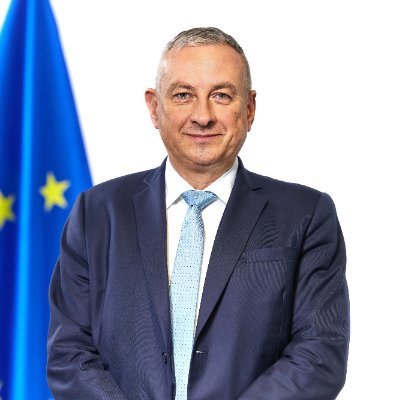
The author said they had used a speech in Bratislava to stress that civil society was an important part of the EU’s offer of partnerships abroad. At the Ambrela Development Forum, they also met with NGOs to discuss ways to work together more effectively through Global Gateway. https://t.co/QaJy4oYR5j #EUPartnership #CivilSociety #GlobalGateway #SK #EU (translated)

114
Violet 1w

Violet described rural Scandinavia in comparison to the Federal Republic of Germany as a society with extraordinarily high trust and wrote that she wanted to stay there. #Trust #Skandinavien #Landleben (translated)

12213
Gerd Leonhard 1w

The author praised Albhy Galuten’s Royal Society of Arts article, “The AI Diversity Deficit,” describing it as a strong piece on AI and humanity.

Glenn Greenwald 1w

That the US government and many other governments are trying to influence the election in Brazil is obvious. The US and others do this in most elections around the world. I have always been and continue to be against this, as I said two weeks ago in São Paulo with former president Rafael Correa from Ecuador. 👇 That said, it's a bit bizarre to see the Brazilian left screaming about how much they hate American influence in Brazilian politics, considering that the current president of one of their favorite sites -- @TheInterceptBr -- is American, was founded by 2 Americans (me and Jeremy Scahill), was funded for years entirely with American money and, after I left, continues to receive foreign funding (including from Open Society, the main funding mechanism of American/Hungarian billionaire George Soros). Maybe a little consistency would help, right? #EleiçõesBrasil #InfluênciaEstrangeira #Coerência (translated)

16232
Il Fatto Quotidiano 2w

The Elephant Protection Society opposes the decision of the Botswana government to cull 23 elephants during the celebrations for the sixtieth anniversary of independence, arguing that such killings will have serious consequences for the surviving elephants. #Elefanti #ProtezioneAnimale #Botswana (translated)

www.ilfattoquotidiano.it
“Quando uno elefante viene ucciso, il resto diventa difensivo”: l’associazione Elephant Protection Society contro una decisione del governo
1486
Luciano Magaldi Sardella (PhD) 2w

Mitico Magazine - The Teatro Edicola of San Severo: A Model of Cultural Revolution for Stanford University as Well Source: https://www.miticomagazine.com/territorio-e-sociale/teatro-edicola-di-san-severo-un-modello-di-rivoluzione-culturale-anche-per-la-stanford-university/ The Teatro Edicola in Via Tondi In San Severo, a singular metamorphosis has taken place: a newsstand abandoned for at least six years has found a new function and a new identity, transforming into one of the smallest and most unusual theatre stages in the world. An experiment born in the heart of the town which, in just a few months, has moved beyond local boundaries, attracting attention even overseas. It is called Teatro Edicola and it is a project conceived by the company Foyer '97, artistically directed by Francesco Gravino, which has brought the old newsstand in Via Tondi back to life through a formula that is both essential and surprising. Foyer '97 Foyer '97 APS was established as a formally constituted association active in the cultural sector in San Severo in 1997, born from the vocation of a group of actors, directors and theatre enthusiasts, with the aim of building a "living" and accessible theatre in the town. Over the years the company has developed a repertoire that includes texts from the classical tradition, contemporary dramaturgy, comedy and experimental projects, not limiting itself to the mere production of theatre shows, but also organising theatre courses and workshops and educational and cultural projects characterised by a strong inclusive ethos, particularly in schools. Foyer '97 does not always have a fixed artistic ensemble, but works with different performers and collaborators depending on the project; the only indispensable presence is that of Francesco Guido Gravino himself, actor, director and artistic director of the theatre company. The distinctive feature of Foyer '97 is certainly the value of social and cultural promotion attributed to theatre, the extremely close relationship with the audience and the search for a type of theatre outside conventional spaces, with cemeteries, trains, bell towers, and now a newsstand, as its backdrop. Six spectators, a few minutes and a minimal distance between stage and audience The project was launched on 27 March 2026, on the occasion of World Theatre Day, offering a theatrical experience built around a radical reduction of the conventional spaces and times of performance. The idea was born not only from the search for unconventional spaces, but also from "Edicola Fiore", the morning press review with a strongly ironic tone presented by Rosario Fiorello and Stefano Meloccaro, which was broadcast first only on Fiorello's social channels between 2011 and 2014, and then also on radio and television between 2016 and 2018. The review took its name from the diminutive of its founder, Fiore, and from the newsstand of a friend of Fiorello's in Via Flaminia Nuova in Rome, where the showman would meet early in the morning with a group of friends to read the newspapers. The San Severo newsstand was granted free of charge by its owner Pino Frau to the theatre group which, after obtaining temporary authorisation and institutional support from the Municipality of San Severo, refurbished it within two weeks at a cost of less than €3,000. Just six seats, a total surface area of 4 sq m, of which only 2 are for the stage area, less than a metre between actors and audience, a curtain, a lectern, two lights, performances lasting between 5 and 15 minutes, audience rotation every quarter of an hour: apparently minimal elements that end up subverting the usual relationship between stage and auditorium. Spectators, in fact, find themselves immersed in the stage action, in such proximity to the actors that every gesture, expression and word becomes immediately perceptible. In this way, theatre abandons its traditional spaces and insinuates itself into the everyday life of the street, becoming an intimate, concentrated and almost participatory experience. During the inaugural period admission was free with a subsequent voluntary donation from spectators; in the event of a more stable and longer-term concession, which could lead to seasonal theatre performances, the proposed ticket price would be €5. Audiences reward the experiment Foyer '97's gamble met with public interest right from the start: over 60 people attended the shows in a single afternoon, while the three days that inaugurated the season sold out. From a singular local experiment, the Teatro Edicola thus began to arouse curiosity even outside the province of Foggia, gradually transforming into a case of cultural and social interest, until it reached the American continent. From the province of Foggia to the "Stanford Social Innovation Review" The San Severo experience has now come under the international spotlight: in September 2026, the Stanford Social Innovation Review, an international journal and platform dedicated to social innovation published by the Stanford Center on Philanthropy and Civil Society at Stanford University in California, published on its website and in the Fall 2026 print edition the reportage "The Six-Seat Revolution", written by Dr Luciano Magaldi Sardella, independent journalist and researcher affiliated with the European Open University, and editorially supervised by deputy editor David V. Johnson. In the article, it is argued that the Teatro Edicola attracted attention overseas because the project concentrates cultural innovation, urban regeneration and proximity theatre into just a few square metres: starting from a real urban problem, it recovers an abandoned place with a modest investment, brings performance directly into public space and experiments with a much closer relationship between actors and spectators. From the point of view of theatrical representation, it also highlights how the format, based on micro-stories of five to twelve minutes, taken from great classics such as Goldoni, Chekhov, Ibsen, Euripides and Benni, and on audience rotation every fifteen minutes, transforms the physical limitations of the space into a precise dramaturgical choice, proving to be extremely innovative. All of this makes it possible to address some of the main critical issues in the sector: falling audience numbers, an exclusively elderly audience, reduced resources and distance from traditional cultural venues. The journal also highlights, however, the potential problems: economic sustainability, the need for stable institutional support and the difficulty of replicating the model, which is closely linked to the community and territory of San Severo. A model looking beyond San Severo Despite the difficulties, initial requests for information have already arrived from Lucca and Rome, where there is curiosity about the possibility of getting to know the model more closely and the steps needed to replicate it. The replicability formula, in fact, does not seem to require particularly costly infrastructure: an unused space, a targeted intervention, a cultural idea, in-depth knowledge of the surrounding area and a willingness to return that place to the community can be enough to trigger a new urban function. It is precisely in the disproportion between the modesty of the resources employed and the resonance generated by the initiative that perhaps the most original feature of the Teatro Edicola lies, certainly unique of its kind; there are, however, other examples in Italy of newsstands reused for other purposes: "Edicola 518", a twentieth-century kiosk abandoned in the centre of Perugia, now dedicated to independent publishing, art and cultural production; and in Rome itself, the abandoned newsstand in Piazza Testaccio used temporarily as a stage for a show by Fabio Morgan and the Erno newsstand in the Prati district, which almost every month offers a calendar of events, exhibitions, pop-ups and collaborations with artists and creative enterprises. Small revolutions, therefore, that tell stories of the reappropriation of urban spaces, of creativity and social innovation. And which, it is hoped, will take root in order to look ever further afield.

www.miticomagazine.com
Teatro Edicola di San Severo: un modello di rivoluzione culturale anche per la Stanford University
1032