WRLD

Search

#transplant
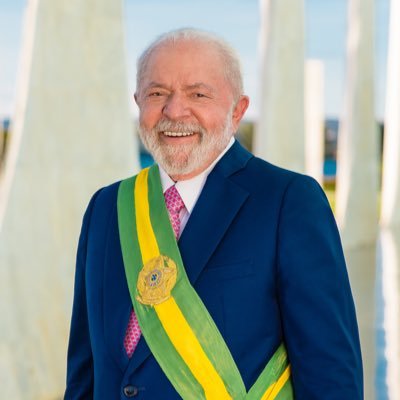
Lula 2d

Lula lamented the death of three military police officers in an airplane accident that occurred the previous day in Santana do Paraíso (MG): Lieutenant Colonel Luis Fernando Silvestre and Lieutenants Alice dos Santos Almeida and Gabriela Emília Soares Resende. According to him, the three were pilots and participated in organ transport missions for transplants. Lula stated that their work helped save many lives and brought relief to many families, and expressed solidarity with the families, colleagues from the Military Police of Minas Gerais, and friends of the military personnel. #Luto #PolíciaMilitar #Solidariedade (translated)
2888
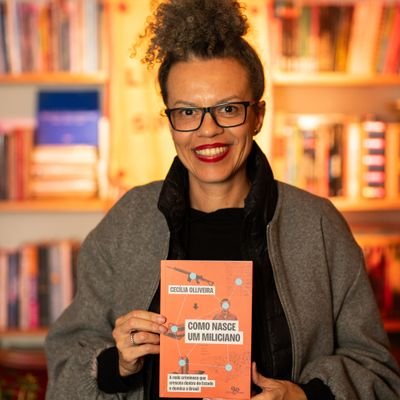
Cecília Olliveira 7d

Cecília Olliveira stated that, with 90% of the votes counted, Doctor Luizinho was the most voted federal deputy in Rio and was involved in the HIV transplant scandal. According to her, people received organs after tests showed false negative results. https://t.co/hzxDfAkR0x #politica #scandal #transplantes (translated)

17372
Mediafax.ro 1w

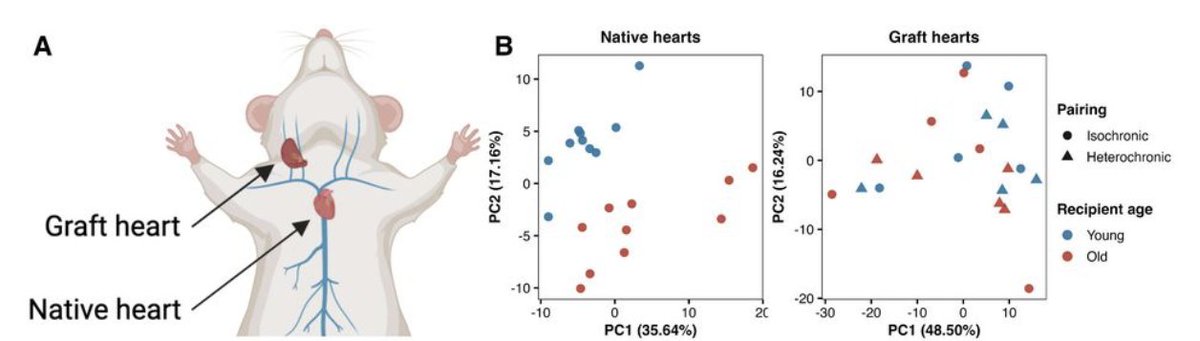
Researchers have discovered that aged organs can biologically rejuvenate depending on the age of the host organism, suggesting new perspectives on the aging process and the possibility of its reversibility. #Știință #Îmbătrânire #Transplant (translated)

www.mediafax.ro
„Elixirul tinereții” ar putea exista? Cercetătorii au observat ceva neașteptat la organele îmbătrânite
1936
Bartosz Fiałek 2w

The author asked whether an older heart might become biologically younger after being transplanted into a younger recipient. They wrote that an organ’s ageing may be influenced by the recipient’s biological environment rather than occurring entirely independently of the rest of the body.

João Pedro de Magalhães 2w

Given the recent interest in organ transplantation and aging, I thought I'd mention our 2018 paper on the topic, where we analysed human data on donors and recipients of different ages and how age affected survival. In a nutshell, older donor age was a poor predictor of survival https://t.co/1YW9ePL8QP #OrganTransplantation #Aging #SurvivalAnalysis #Nospecificcountrycodesarementionedinthetweet.

115
João Pedro de Magalhães 2w

Fascinating study @gladyshev_lab performing heart transplants between donor and recipient mice of different ages. According to epigenetic and transcriptomic clocks, transplanted organs then become younger or older depending on the age of the recipient mouse. It highlights the #HeartTransplants #AgeingResearch #Epigenetics #Thetweetdoesnotmentionanyspecificcountries.Therefore #therearenocountrycodestoreturn.

115
tagesschau.de 3w

Im Bundestag wird über die umstrittene Widerspruchslösung zur Organspende debattiert, um die unzureichende Verfügbarkeit von Organen zu verbessern, während Befürworter und Gegner unterschiedliche Argumente zu Ethik und Selbstbestimmung vorbringen. #Organspende #Widerspruchslösung #Transplantationsgesetz

www.tagesschau.de
Organspende: Argumente für und gegen die Widerspruchslösung
1731
Seznam Zprávy 3w

Letos Český národní registr dárců dřeně a Český registr dárců krvetvorných buněk zaznamenaly historicky nejvyšší počet dárců, což ukazuje na rostoucí veřejný zájem o pomoc pacientům trpícím závažnými onemocněními krvetvorby. #Dárcovství #Krevotok #Transplantace

www.seznamzpravy.cz
Letos se našlo nejvíc dárců pro lidi, kteří potřebují krvetvorné buňky
9245
Luciano Magaldi Sardella (PhD) 3w

"FOGGIA SERA": FROM SAN SEVERO TO STANFORD UNIVERSITY: THE "SIX-SEAT REVOLUTION" OF THE TEATRO EDICOLA SOURCE: https://foggiasera.it/2026/09/19/da-san-severo-alla-stanford-university-la-rivoluzione-a-sei-posti-del-teatro-edicola-by-luciano-magaldi-sardella/ SAN SEVERO (FG) - The Stanford Social Innovation Review (SSIR), the scholarly journal published by the Stanford Center on Philanthropy and Civil Society of the prestigious Stanford University - ranked second in the world in the Shanghai Ranking of World Universities - and recognised as the pre-eminent global reference for researchers, policy-makers, and practitioners of innovative entrepreneurship and philanthropy, hath published the reportage "The Six-Seat Revolution" upon the Teatro Edicola of San Severo, the smallest theatre in the world by dimension and capacity, born of the intuition of Francesco Gravino, Artistic Director of the Foyer '97 company. Its author is Luciano Magaldi Sardella, independent researcher and international journalist, native of Orta Nova and of maternal Sanseverese extraction, hitherto author of studies published in international academic journals. The piece appeared in the September (Fall 2026) edition of the academic review, within the section devoted to Arts & Culture. A presence that projects San Severo, and more broadly the Capitanata, into the international élite of research upon cultural and urban innovation. The Theatre Is Born of a Disused Newsstand It all commenced on 27 March 2026, World Theatre Day, in Piazza Municipio at San Severo. A news-kiosk, disused for years in Via Matteo Tondi, raised its shutter to reveal, in lieu of newspapers and cigarettes, an actor upon the stage. Within: six chairs. At intervals of fifteen minutes, a new audience took its place. Drawing inspiration from the televisual format of Edicola Fiore by the noted Sicilian presenter of radio and television, there was born the Teatro Edicola, a structure now recognised in the media as the smallest theatre in the world for dimensions and capacity: four square metres in aggregate, with a scenic space of less than two metres. Gravino hath led Foyer '97 for nigh on thirty years, forging a most exacting artistic trajectory in a context - that of southern Italy - historically penalised in respect of public financing for culture. And yet, upon beholding that vacant kiosk, he elected the path of provocation: to transfigure the bare minimum into a manifesto concerning the very meaning of theatre. The Model and its Measurable Effects The inaugural season endured for three days. All performances were sold out. In a single afternoon, upwards of sixty persons attended the representations. The cost of the entire pilot operation was less than three thousand dollars. The formula is radical in its constitutive elements: performances of five to twelve minutes' duration, conceived expressly for the space; rotation of the audience every fifteen minutes; direct and inescapable visual contact betwixt actor and spectator; no architectural or psychological distance betwixt stage and auditorium; ticket proposed at five euros per person, within a hybrid economic model comprising municipal support, local sponsorship, and box-office receipts. According to the analysis published in the Stanford Social Innovation Review, the Teatro Edicola represents a replicable model of low-cost, high-impact urban regeneration, capable of reactivating abandoned commercial spaces (newsstands, tobacconists, telephone kiosks) without recourse to large infrastructural investment. The Voice of Him who Built it All Francesco Gravino entertaineth no doubt as to the import of the enterprise: "Grand theatres are not requisite to transform a fragment of a city. What is requisite is a sound idea and the courage to restore to the collectivity a space that hath lost its function." And upon the import of international recognition: "Teatro Edicola was born to demonstrate that a place of encounter and culture may arise wheresoever, even within two square metres. That this work should today be studied at an international level and that enquiries should arrive from cities such as Lucca and Rome is confirmation that the path pursued is the right one." The director hath further explicated the symbolic choice of place: the newsstand was the locus wherein each morn one paused, informed oneself, and recognised oneself as a community. Its disappearance rent a precise social fabric. To restore unto it a cultural function is to re-stitch that tissue at the very point wherefrom it was torn. The Challenges: Scalability, Institutional Recognition, Entrenchment The SSIR reportage doth not confine itself to celebration of the project but analyseth also the critical junctures. The first is sustainability over time: an activation of three days, howsoever successful, doth not yet constitute a stable programme, a veritable seasonal repertory (weekends from spring to autumn) with a rotating roster of local and regional companies. The second juncture concerneth replicability without loss of identity: the Teatro Edicola functioneth also by virtue of the profound roots of Foyer '97 in the Sanseverese territory. To transplant the model elsewhere requireth not merely a physical kit, but an entire process of community-building. The third obstacle is institutional: in a system of public funding that rewardeth organisations with consolidated premises and predictable output metrics, a project deliberately experimental, hyperlocalist, and by its very nature impermanent strugglest to gain access to the ordinary channels of the Fondo Nazionale per lo Spettacolo dal Vivo (FNSV) of the Ministry of Culture. A Lesson that Travels beyond Puglia In the Stanford Social Innovation Review the author concludeth that the intuitions of the Teatro Edicola transcend the Sanseverese context: in any community wherein cultural institutions struggle to reach youthful, diverse, or economically marginal publics, the principle of proximity proveth disruptive: to encounter people where they already find themselves, in the spaces they inhabit quotidianly. From the populous centre of Daunia to the pages of Stanford University: San Severo and its kiosk demonstrate that six chairs, four square metres, and a vision suffice to alter the manner in which a city conceiveth of itself. And to offer unto the world a model that costeth less than one might credit, yet is worth far more than one might imagine.

1158
Luciano Magaldi Sardella (PhD) 3w

"PUGLIA IN": FROM SAN SEVERO TO STANFORD UNIVERSITY: THE 'SIX-SEAT REVOLUTION' OF TEATRO EDICOLA SOURCE: https://www.pugliain.net/301723-san-severo-teatro-edicola/ SAN SEVERO (FG) - The "Stanford Social Innovation Review (SSIR)", the scholarly quarterly published by the "Stanford Center on Philanthropy and Civil Society" at the prestigious Stanford University — ranked second in the world in the Shanghai Ranking of World Universities — and universally regarded as the pre-eminent global point of reference for scholars, policy-makers and practitioners in the fields of innovative enterprise and philanthropy, hath published the reportage “The Six-Seat Revolution” concerning the Teatro Edicola of San Severo, the smallest theatre in the world, born of the intuition of Francesco Gravino, Artistic Director of the Foyer ’97 company. Its author is Luciano Magaldi Sardella, independent researcher and international journalist, a native of Orta Nova with maternal lineage rooted in San Severo, and erstwhile contributor of studies published in international academic journals. The piece appeared in the Septembertide (Fall 2026) edition of the academic review, within the section consecrated to Arts and Culture. A presence which projecteth San Severo, and more broadly the entirety of Capitanata, into the international élite of research on cultural and urban innovation. The theatre is born from a disused newsstand It all commenceth upon 27 March 2026, World Theatre Day, in the Piazza Municipio at San Severo. A newsstand long disused in Via Matteo Tondi raiseth its shutter to reveal, in lieu of newspapers and cigarettes, an actor upon the stage. Within: six chairs. At intervals of fifteen minutes, a new audience taketh its place. Drawing inspiration from the televisual format of "Edicola Fiore" of the celebrated Sicilian radio and television presenter, there was born Teatro Edicola, a structure now recognised in the media as the smallest theatre in the world by both dimension and capacity: four square metres in total, with a scenic space of less than two metres. Gravino hath led Foyer ’97 for nigh on thirty years, forging an exacting artistic trajectory in a context — that of Southern Italy — historically penalised with respect to public funding for culture. And yet, when he beheld that vacant kiosk, he chose the path of provocation: to transmute the bare minimum into a manifesto concerning the very signification of theatre. The model and its measurable effects The inaugural season endured for three days. All performances were sold out. In a single afternoon, upwards of sixty persons attended the representations. The cost of the entire pilot operation was less than three thousand dollars. The formula is radical in its constitutive elements: performances of five to twelve minutes' duration, conceived expressly for the space rotation of the audience every fifteen minutes direct and ineluctable visual contact betwixt actor and spectator no architectural or psychological distance betwixt stage and stalls ticket proffered at five euros per person, with a hybrid economic model envisaging municipal support, local sponsors and box-office receipts According to the analysis published in the "Stanford Social Innovation Review", Teatro Edicola representeth a replicable paradigm of low-cost, high-impact urban regeneration, capable of reactivating abandoned commercial spaces — newsstands, tobacconists, telephone kiosks — without the necessity of substantial infrastructural investment. The voice of him who built it all Francesco Gravino entertaineth no doubt as to the significance of the undertaking: “One doth not require grand theatres to transform a portion of a city. One requireth a sound idea and the courage to restore to the collectivity a space that hath lost its function.” And concerning the import of international recognition: “Teatro Edicola was born to demonstrate that a locus of encounter and culture may arise wheresoever, even within two square metres. That today this labour should be studied at an international level and that enquiries should arrive from cities such as Lucca and Rome is confirmation that the path is the right one.” The director hath also explicated the symbolic choice of place: the newsstand was the point at which, each morn, one paused, one apprised oneself, one recognised oneself as a community. Its disappearance lacerated a precise social fabric. To restore unto it a cultural function signifieth to re-stitch that fabric from the very point at which it was rent. Challenges: scalability, institutional recognition, rootedness The SSIR reportage doth not merely celebrate the project but analyseth also its critical nodes. The first is sustainability over time: an activation of three days, howsoever successful, doth not yet constitute a stable programme, a veritable seasonal programmation (weekends from springtide to autumn) with a rotating roster of local and regional companies. The second node concerneth replicability without loss of identity: Teatro Edicola functioneth also by virtue of the profound roots of Foyer ’97 within the San Severo territory. To transplant the model elsewhere requireth not merely a physical kit, but an entire process of community building. The third obstacle is institutional: in a system of public funding which rewardeth organisations possessed of consolidated premises and predictable output metrics, a project deliberately experimental, hyper-localist and by its very nature impermanent struggleth to gain access to the ordinary channels of the Fondo Nazionale per lo Spettacolo dal Vivo (FNSV) of the Ministry of Culture. A lesson which travelled beyond Puglia In the Stanford Social Innovation Review the author concludeth that the intuitions of Teatro Edicola transcend the San Severo context: in any community wherein cultural institutions struggle to reach youthful, diverse, or economically marginal publics, the principle of proximity proveth disruptive: to meet people where they already are, in the spaces they inhabit quotidianly. From the populous centre of Daunia to the pages of Stanford University: San Severo and its diminutive kiosk demonstrate that six chairs, four square metres, and a vision sufficeth to alter the manner in which a city conceiveth itself. And to proffer unto the world a model which costeth less than one might suppose yet is worth far more than one might imagine.

www.pugliain.net
Da San Severo alla Stanford University: la “Rivoluzione a Sei Posti” del Teatro Edicola
927
Luciano Magaldi Sardella (PhD) 3w

"CIVICO 93": FROM SAN SEVERO TO STANFORD UNIVERSITY: THE 'SIX-SEAT REVOLUTION' OF TEATRO EDICOLA" SOURCE: https://www.civico93.it/da-san-severo-alla-stanford-university-la-rivoluzione-a-sei-posti-del-teatro-edicola/ SAN SEVERO (FG) - The scholarly reportage by Luciano Magaldi Sardella on the micro-theatre of Francesco Gravino has appeared in the most authoritative journal in the world in the field of social innovation: six chairs and four square metres that are transforming the manner in which we conceive theatre and the city. The "Stanford Social Innovation Review (SSIR)", the academic review published by the Stanford Center on Philanthropy and Civil Society of the prestigious Stanford University, ranked second in the world in the Shanghai Ranking of World Universities, constitutes the global point of reference for researchers, policy-makers and practitioners of innovative enterprise and philanthropy. It has published the reportage "The Six-Seat Revolution" on the Teatro Edicola of San Severo, the smallest theatre in the world by dimension and capacity, born from the intuition of Francesco Gravino, artistic director of the company Foyer '97. Its author is Luciano Magaldi Sardella, an independent researcher and international journalist, a native of Orta Nova with maternal roots in San Severo, already the author of studies published in international academic journals. The piece appeared in the autumnal edition [Fall 2026] of the academic review, within the section dedicated to Arts and Culture. A presence that projects San Severo, and more generally the Capitanata, into the international élite of research on cultural and urban innovation. The theatre originates from a disused newsstand It all began on 27th March 2026, World Theatre Day, in the Piazza Municipio in San Severo. A newsstand disused for years in Via Matteo Tondi raised its shutter to reveal, in place of newspapers and cigarettes, an actor upon the stage. Within: six chairs. Every fifteen minutes, a new audience takes its place. Taking inspiration from the televisual format of Edicola Fiore by the well-known Sicilian radio and television presenter, there was born the Teatro Edicola, a structure now recognised in the media as the smallest theatre in the world by dimension and capacity: four square metres in total, with a stage area of less than two metres. Gravino has led Foyer '97 for almost thirty years, constructing a rigorous artistic trajectory within a context, that of southern Italy, historically penalised from the standpoint of public funding for culture. And yet, when he beheld that empty newsstand, he chose the path of provocation: to transform the bare minimum into a manifesto on the very meaning of theatre. Gravino has led Foyer '97 for almost thirty years, constructing a rigorous artistic trajectory within a context, that of southern Italy, historically penalised from the standpoint of public funding for culture. And yet, when he beheld that empty newsstand, he chose the path of provocation: to transform the bare minimum into a manifesto on the very meaning of theatre. The model and its measurable effects The inaugural season lasted three days. All performances were sold out. In a single afternoon, more than sixty persons attended the representations. The cost of the entire pilot operation was less than three thousand dollars. The formula is radical in its constitutive elements: ● performances of five to twelve minutes' duration, conceived expressly for the space ● rotation of the audience every fifteen minutes ● direct and ineluctable visual contact between actor and spectator ● no architectural or psychological distance between stage and auditorium ● ticket offered at five euros per person, with a hybrid economic model providing for municipal support, local sponsors, and box-office receipts. According to the analysis published in the "Stanford Social Innovation Review", the Teatro Edicola represents a replicable model of urban regeneration at low cost and high impact, capable of reactivating abandoned commercial spaces [newsstands, tobacconists, telephone boxes] without the necessity for major infrastructural investment. The voice of him who built it all Francesco Gravino has no doubt as to the meaning of the undertaking: "One does not need grand theatres to change a fragment of a city. What is needed is a good idea and the courage to restore to the community a space that has lost its function." And on the import of the international recognition: "Teatro Edicola was born to demonstrate that a place of encounter and culture may come into being anywhere, even in two square metres. That today this work should be studied at an international level and that requests for information should arrive from cities such as Lucca and Rome is confirmation that we are upon the right path." The director has also explicated the symbolic choice of the site: the newsstand was the point at which each morning one would pause, catch up on news, recognise oneself as a community. Its disappearance lacerated a precise social fabric. To restore to it a cultural function is to mend that tissue at the very point where it was torn. The challenges: scalability, institutional recognition, rootedness The SSIR reportage does not confine itself to celebrating the project but analyses also the critical nodes. The first is sustainability over time: an activation of three days, however successful, does not yet constitute a stable programme, a veritable seasonal programme (at weekends from spring to autumn) with a rotating roster of local and regional companies. The second node concerns replicability without loss of identity: the Teatro Edicola functions also by virtue of the profound roots of Foyer '97 in the territory of San Severo. To transplant the model elsewhere requires not merely a physical kit, but an entire process of community building. The third obstacle is institutional: in a system of public funding that rewards organisations with consolidated premises and predictable output metrics, a project deliberately experimental, hyper-localist and by its very nature impermanent struggles to gain access to the ordinary channels of the National Fund for Live Performance (Fondo Nazionale per lo Spettacolo dal Vivo - FNSV) of the Ministry of Culture. A lesson that travels beyond Puglia In the Stanford Social Innovation Review the author concludes that the intuitions of the Teatro Edicola transcend the context of San Severo: in any community wherein cultural institutions struggle to reach youthful, diverse, or economically marginal publics, the principle of proximity proves disruptive: to meet people where they already are, in the spaces they inhabit daily. From the populous centre of Daunia to the pages of Stanford University: San Severo and its newsstand demonstrate that six chairs, four square metres, and a vision are sufficient to alter the way in which a city conceives itself. And to offer the world a model that costs less than one might suppose but is worth a great deal more than one might imagine.

www.civico93.it
DA SAN SEVERO ALLA STANFORD UNIVERSITY: LA “RIVOLUZIONE A SEI POSTI” DEL TEATRO EDICOLA - Civico93 | Be original
1159
Novinky 3w

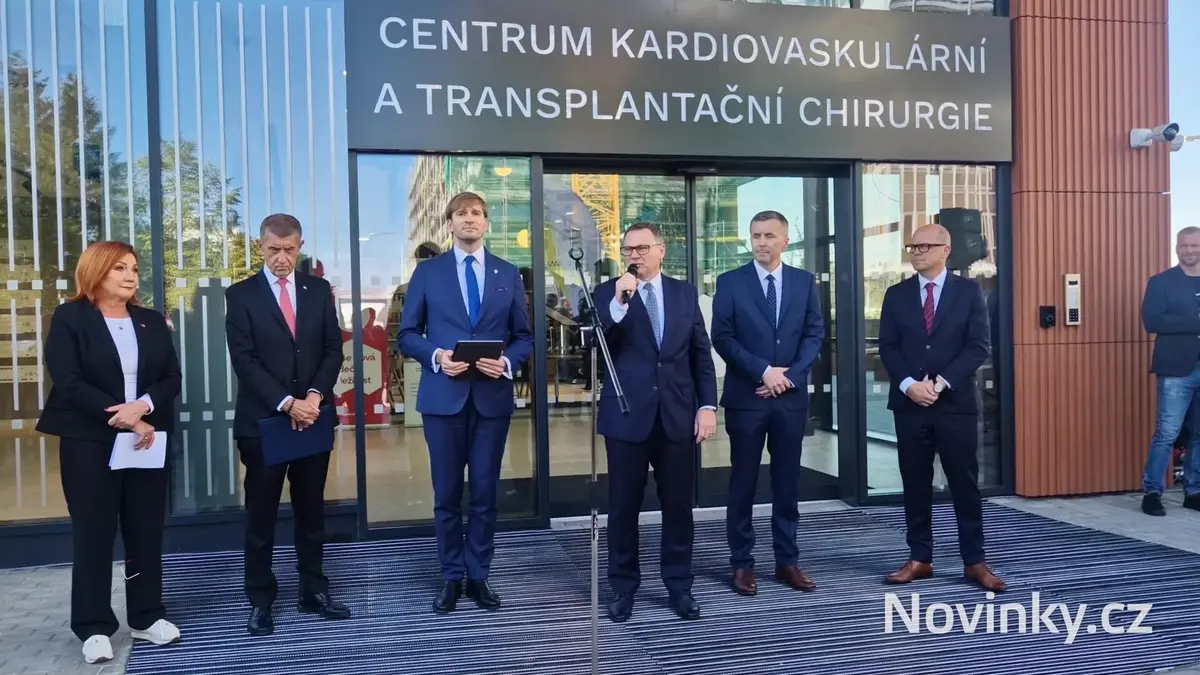
V Brně byla otevřena nová budova Centra kardiovaskulární a transplantační chirurgie, která zvýší počet operací a zkrátí čekací doby díky novým prostorám a rozšířeným kapacitám. #zdravotnictví #transplantace #stavba

www.novinky.cz
Více operací, kratší čekací doby. V Brně je nová budova Centra kardiovaskulární a transplantační chirurgie
7536
Kurier 3w

Der Artikel beleuchtet die Bedeutung von Wangenabstrichen zur Stammzellenspende, erklärt die Herausforderungen bei der Suche nach passenden Spendern und betont, wie wichtig die genetische Übereinstimmung für erfolgreiche Transplantationen ist. #Stammzellenspende #Blutkrebs #Gesundheit

kurier.at
Wangenabstrich rettet Leben: Die wichtigsten Fakten zur Stammzellenspende
9855
Spiegel Online 4w

Wissenschaftler haben menschliche Hirnzellen in Mäusegehirne transplantiert, um die Erforschung von Krankheiten wie Autismus und Epilepsie zu verbessern, was jedoch ethische Bedenken aufwirft. #Tierversuche #Hirnforschung #Ethik

www.spiegel.de
Hirnforschung: Menschliche Hirnzellen in Mäusegehirnen sollen Krankheiten erklären
15662
Radiožurnál 4w

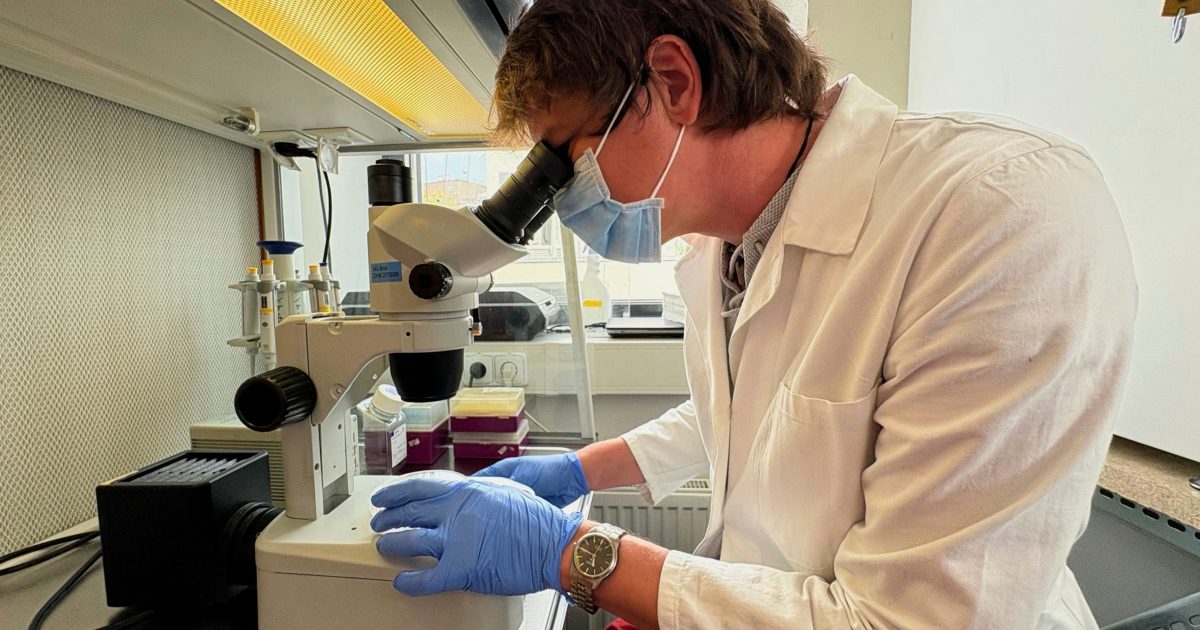
Brněnští vědci úspěšně vypěstovali mini sítnice z kmenových buněk, které po vystavení světlu lépe dozrávají a více se podobají lidské sítnici, což otevírá nové možnosti pro výzkum očních onemocnění a budoucí transplantace. #věda #sítnice #kmenové_buňky

radiozurnal.rozhlas.cz
Vědci vypěstovali mini sítnice a „naučili je vidět“. Díky světlu se víc podobají lidskému oku
16826
Stirile ProTV 4w

Cercetătorii de la Universitatea Stanford, coordonați de profesorul român Sergiu Pașca, au creat șoareci cu jumătate de creier uman pentru a studia boli neurologice precum schizofrenia și demența, prin transplantul de celule cerebrale umane în animale modifycate genetic. #Cercetare #Neuroscience #Etica

stirileprotv.ro
Un profesor român de la Stanford, în spatele unui experiment fără precedent: șoareci cu jumătate de creier uman
19728
D
der Standard 4w

Forscher haben menschliches Gehirngewebe in Mäuse verpflanzt, wodurch die transplantierten Organoide mit dem Nervensystem der Tiere interagieren und eigene Aktivität zeigen, während die Auswirkungen auf das Verhalten der Mäuse noch unklar sind. #Chimärenforschung #Gehirntransplantation #Organoidforschung

www.derstandard.at
Menschliches Gehirngewebe in Mäuse verpflanzt
13929
adevarul.ro 4w

Cercetătorii de la Universitatea Stanford, coordonați de un român, au creat șoareci cu țesut cerebral uman prin transplantarea de organoizi cerebrali, având scopul de a studia dezvoltarea timpurie a creierului și diverse afecțiuni neurologice. #Știință #Cercetare #Organoizi

adevarul.ro
Cercetătorii au creat șoareci cu țesut cerebral uman. Experimentul, coordonat de un român de la Universitatea Stanford
18572
HotNews.ro 4w

O echipă de cercetători de la Universitatea Stanford, condusă de românul Sergiu Pașca, a realizat un transplant de țesut cerebral uman în creierul de șoareci, deschizând noi perspective pentru înțelegerea și tratarea bolilor neurologice grave. #SergiuPașca #CercetareȘtiințifică #TransplantCerebral

hotnews.ro
O echipă de cercetători de la Stanford, condusă de un român, a transplantat țesut cerebral uman la șoareci: „Deschide calea către vindecarea unor boli grave”
18572
Radiožurnál 4w

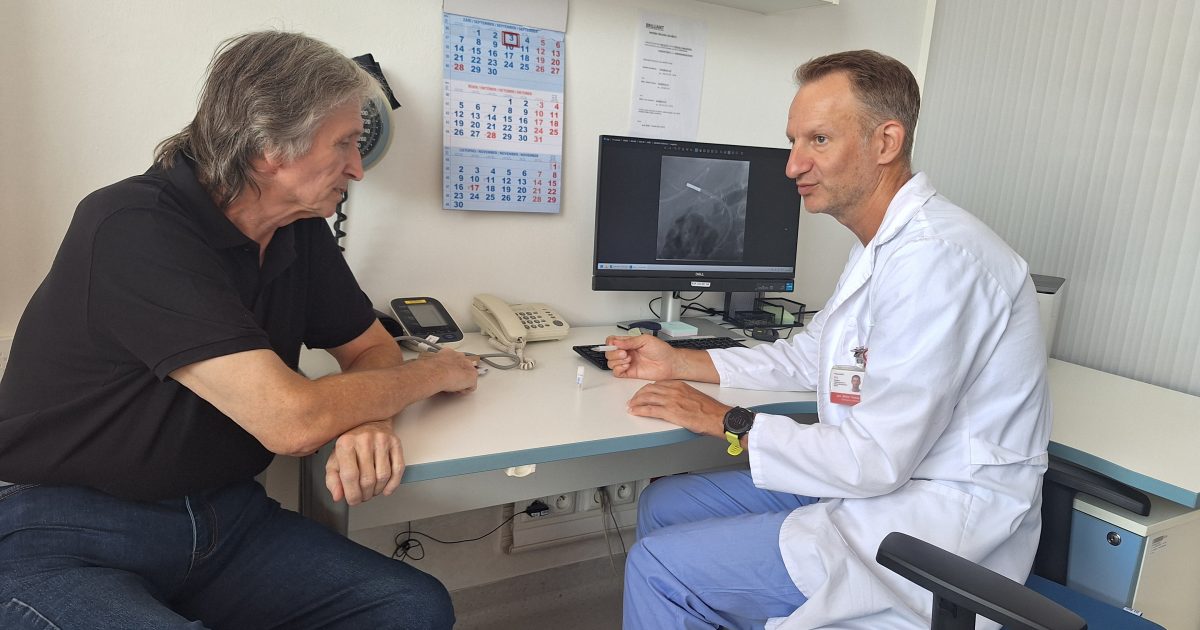
Lékaři z pražského IKEM úspěšně zprůchodnili uzavřené žlučové cesty pacientovi po transplantaci jater pomocí inovativní metody dvou magnetů, čímž se vyhnuli náročné chirurgické operaci. #zdravotnictví #inovace #žlučovécesty

radiozurnal.rozhlas.cz
Dva magnety místo náročné operace. Lékaři z IKEM zprůchodnili pacientovi uzavřené žlučové cesty
18010