WRLD

Henri Vanhanen

Henri Vanhanen

HenriVanhanen dev.wrld.org
Mentions and quotes
4 followers
Mention
Henri Vanhanen 6h

Henri Vanhanen criticized Donald Trump's actions in the Ukraine war, noting that he declared agreements about which there was uncertainty, while pressuring Ukraine in a way that benefited Vladimir Putin. As a recent example, Vanhanen pointed to Trump’s announced energy ceasefire. According to him, Volodymyr Zelensky heard about it practically for the first time from the media, Russia had not confirmed the agreement, and continued, according to Zelensky, attacks on Ukraine's power plants. Vanhanen asked what kind of ceasefire it was if the other party did not know what had been agreed upon. He suggested that Zelensky had to be cautious of Trump’s criticism to avoid being blamed for obstructing peace. Vanhanen referred to the Financial Times reporting that the United States threatened to cut off arms and intelligence supplies to Ukraine unless the country stopped attacks on Russian energy infrastructure. He also wrote that Trump agreed to buy Russian diesel, demanded Ukraine to cease attacks on Russian oil refineries, and encouraged a change of leadership in Ukraine. Vanhanen estimated that the war in Iran and the resulting fuel prices, the upcoming midterm elections, and the need to show results might explain Trump’s urgency to secure an agreement. According to him, Trump aimed for cheaper diesel and a visible peace political achievement, while Putin would benefit from a decrease in attacks on Russia’s energy sector. Vanhanen noted that the alignment of these goals seemed to occur at Ukraine’s expense. Vanhanen stated that he did not oppose a ceasefire if it protected Ukrainians and also bound Russia. However, he observed that for Trump, merely declaring an agreement seemed to suffice, even without information about its terms or Russia's commitment. Vanhanen assessed that Russia would benefit from a situation in which the United States sought a quick agreement and Ukraine was cautious not to offend Trump. In such conditions, he believed Putin could gain concessions from Trump without Russia needing to win against Ukraine at the negotiating table. #Ukraina #Trump #Venäjä (translated)

1996
Henri Vanhanen 10h

Henri Vanhanen wrote that Finland should take seriously Russia's alleged plans to assassinate leaders of the European defense industry. According to him, European intelligence services had warned that Russia had intensified its assassination plots targeting business executives. Possible targets included not only large arms manufacturers but also smaller defense technology companies, especially manufacturers of drones and their components. Vanhanen referred to a plan revealed in 2024 to assassinate Armin Papperger, CEO of the German company Rheinmetall. He wrote that more recent intelligence data indicated broader and more systematic actions beyond individual cases. According to Vanhanen, Russia's intention was to undermine the European defense industry, intimidate its business leaders, complicate support for Ukraine, and disrupt the strengthening of Europe's defense capabilities. Vanhanen urged an urgent assessment of whether the protection of key personnel in Finland's defense industry is adequate. He suggested that the security police, police, and defense administration work together with companies to identify individuals at special risk and ensure preemptive action against threats. He proposed, if necessary, strengthening personal protection, enhancing counterintelligence efforts against companies, and improving information sharing among authorities. According to Vanhanen, Finland should not wait for the first attack on its territory before preparing. https://t.co/xVZMYe1R7e #Puolustusteollisuus #Venäjä #Suomi (translated)

2269
Henri Vanhanen 11h

Henri Vanhanen wrote that Volodymyr Zelensky was ready to hold elections in Ukraine if Vladimir Putin agreed to a 60-day ceasefire. Vanhanen noted that this was not a new concession, as Zelensky had made the same proposal in February and required sufficient security guarantees to hold the elections. Vanhanen interpreted the proposal as a message to Donald Trump, who, in his view, had repeatedly questioned Zelensky’s position and called for elections in Ukraine. According to Vanhanen, holding elections would require the United States to get Russia to stop hostilities for a sufficient period. He found it contradictory that Ukraine was being asked to hold elections in the midst of an invasion, while Russia had not agreed to a ceasefire that would allow for it. Vanhanen also pondered how strong Trump’s pressure on Zelensky had become, referring to Trump’s recent statements regarding Ukrainian leadership. He believed that the replacement of the Ukrainian president should not become a substantive goal of peace negotiations, but rather that Ukrainians should choose their own leader. According to Vanhanen, Trump should have used his influence to promote a ceasefire rather than forcing Ukraine to defend the legitimacy of its democracy. #Ukraina #Zelenskyi #Trump (translated)

2416
Henri Vanhanen 1d

Henri Vanhanen wrote that Donald Trump's Russia policy may not have been guided by a coherent strategy. According to him, Trump made decisions one by one, seeking quick political gains, and then had to fix the consequences. In his assessment, Vanhanen linked Trump's diminished commitment to arming Ukraine, the energy price increases resulting from the war in Iran, and the recent diesel trade with Russia. He believed that trade could bolster the Russian economy and give Vladimir Putin a means to pressure Ukraine into halting strikes on Russia's oil refineries. Vanhanen also criticized Trump for condemning strikes that he claimed weakened Russia's war economy. Vanhanen noted that Trump’s administration had not sought significant new funding from Congress for arming Ukraine. According to him, previously agreed deliveries had continued, and European countries had purchased American weapons for Ukraine. He stated that Trump was not fundamentally on the side of Ukraine or Europe but was primarily pursuing his own interests. According to Vanhanen, Finland's security should not be built on the assumption that there is a plan behind Trump's decisions that would turn in favor of Europe. He urged preparedness for the possibility that U.S. aid could be delayed or smaller than expected, to strengthen the availability of defense equipment and air defense, and to deepen cooperation with Sweden, Norway, Denmark, Britain, Poland, and the Baltic countries. He also believed that Europe should be able to support Ukraine and maintain economic pressure on Russia by its own means. #Trump #Venäjä #Ukraina (translated)

2925
Henri Vanhanen 1d

Henri Vanhanen wrote that Finland had paid billions of euros because, in his opinion, the geopolitical risks posed by Russia were not taken seriously in time. He referred to Fortum's Uniper transactions, in which he claimed nearly six billion euros were lost, as well as Rosatom's assertion that it had won the arbitration concerning the Hanhikivi nuclear power project against Fennovoima. Vanhanen noted that the final resolution and possible compensation were still unclear. Vanhanen said the losses were in the billions and had also been a detriment to taxpayers. According to him, lessons should have been learned from these cases that geopolitics and security policy could not be separated from economic decision-making. He wrote that warnings about Russia's aggression had been issued for years, but economic interests often outweighed them, and he felt that Finland could no longer afford to ignore the realities of global politics until the billion-euro bill arrived. https://t.co/Omv0fRGsLq #geopolitiikka #turvallisuuspolitiikka #Suomi (translated)

2830
Henri Vanhanen 2d

Henri Vanhanen wrote that the agreement announced by Donald Trump with Vladimir Putin to bring millions of tons of Russian diesel to the global market would be very bad news for Ukraine. According to Vanhanen, the arrangement would give Russia new opportunities to earn from energy exports, even though its war of aggression in Ukraine would continue. Vanhanen assessed that the agreement could help Russia mitigate the economic impacts of the strikes on Ukraine's oil refineries. He wrote that the strikes had caused problems and fuel shortages for Russia. In his view, facilitating Russia's energy exports would also reduce the pressure on Putin to negotiate an end to the war. Vanhanen considered it possible that the promised deliveries might not materialize, as he claimed Russia's refining capacity had suffered from the strikes. Vanhanen speculated that Trump was aiming for lower fuel prices in the United States before the midterm elections, but questioned the agreement's impact on prices. He also found the political message of the agreement concerning: in his view, the Kremlin could present it as evidence that Russia is not isolated and that the U.S. president is willing to do business with it. According to Vanhanen, the agreement could place Ukraine's strikes on Russia's oil industry in conflict with Washington's fuel price objectives. He urged Europe to prepare for greater responsibility in supporting Ukraine and pressuring Russia, and maintained that Russia's war economy should not be helped to recover. https://t.co/gpRe9acHoW #Ukraina #Venäjä #Trump (translated)

3303
Henri Vanhanen 2d

Henri Vanhanen wrote that the Ilta-Sanomat news about Jaakko Laakso's communication with the Turkish foreign minister reminded him of his trip to Ankara with Mika Aaltola in February 2023. Vanhanen said they had discussed at that time the obstacles and opportunities regarding Finland's NATO membership ratification. Vanhanen stated that based on their assessments from the discussions, Turkey was clearly more positive towards Finland's membership than Sweden's, and that a separate pathway could be opened for Finland. They had made their assessment public and raised the possibility that Finland could advance if necessary before Sweden. According to Vanhanen, the assessment turned out to be correct. He noted that at that time they were not aware that Laakso had already met with the Turkish foreign minister the previous spring and expressed his opposition to Finland's NATO membership. Vanhanen wrote that Laakso's actions raised serious questions: in his view, opposing NATO membership was the right of every Finn, but conveying anti-membership views directly to the Turkish foreign minister was a different matter. Vanhanen believed that the events related to Finland's NATO membership deserved clarification, especially when they raised difficult questions about Finnish actions. https://t.co/XGptAqzYmF #Suomi #Nato #Turkki (translated)

3213
Henri Vanhanen 3d

Henri Vanhanen recalled working in the parliament in February 2022 when Russia launched its full-scale attack on Ukraine. According to him, Finland had not yet sent defense aid to Ukraine at that time. Vanhanen stated that he had suggested to the National Coalition Party’s parliamentary group that the government should be required to provide military assistance. Vanhanen wrote that Finland was sending its 35th defense assistance package to Ukraine and had delivered defense materials worth approximately 3.6 billion euros to the country. He described the support as a long-term national commitment that had been continued across government terms and party lines. According to Vanhanen, supporting Ukraine's defense was also necessary for Finland's security. He assessed that the repelled Russian attacks in Ukraine would reduce Russia's ability to threaten other countries in Europe. Vanhanen wrote that Finland's support should continue for as long as it was needed. https://t.co/SGRsbSx53P #Ukraina #Suomi #Puolustusapu (translated)

3679
Henri Vanhanen 4d

Henri Vanhanen warned about Finland's security and wrote that according to Denmark's Security and Intelligence Service PET, Russia had begun sabotage operations against Danish defense companies. According to him, companies supplying weapons and equipment to Ukraine were particularly targeted. Vanhanen stated that PET assessed that Moscow had aimed to reduce European support for Ukraine through intimidation and harassment and was now trying to harm weapons production and supply chains. Vanhanen wrote that perpetrators of the strikes were recruited via social media and were first paid for photographing and gathering intelligence on targets, and later for sabotage. According to him, this allowed operations without the direct involvement of Russian intelligence officers. He warned that Russia aimed to extend the effects of the war to NATO countries and also assessed that Finland's defense industry's production facilities, subcontractors, personnel, and supply chains could be targets. Vanhanen believed that protecting them required cooperation between companies and authorities, and urged NATO to assess when individual sabotage attacks would constitute a systematic campaign against the alliance's defense capability. https://t.co/CgjnDAjDhY #Turvallisuus #Ukraina #Venäjä (translated)

3478
Henri Vanhanen 4d

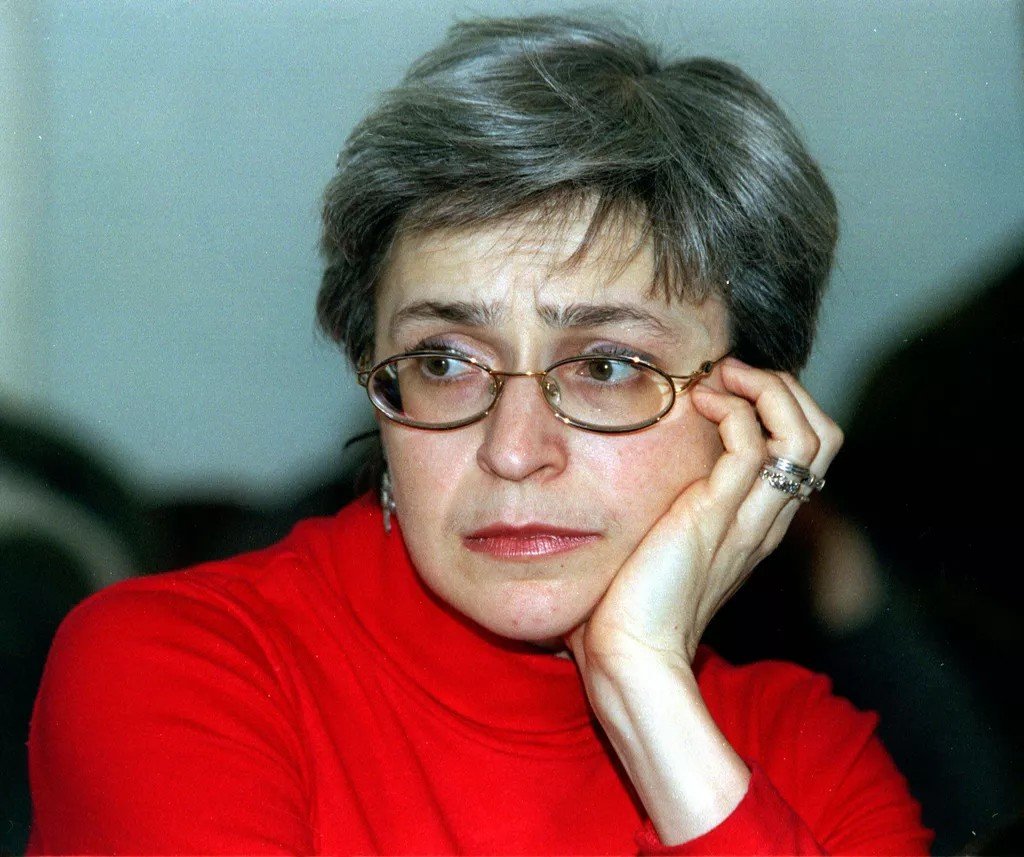
Henri Vanhanen wrote that Vladimir Putin turned 74 today and reminded that journalist Anna Politkovskaya was shot in the elevator of her apartment building in Moscow on Putin's birthday, October 7, 2006. According to Vanhanen, Politkovskaya had documented the atrocities of Russian troops in Chechnya, torture, and abuses of power, and was one of the sharpest critics of Putin's Russia. Vanhanen assessed that Politkovskaya's murder on Putin's birthday could have been a message or a grotesque gift from the mafia state he described to the pinnacle of power. He wrote that the murder reminded of the system that Putin built: power became concentrated, violence became a tool of politics, and those defined as enemies of power could pay for their resistance with their lives. Vanhanen urged to remember also those who tried to tell the world what kind of Russia Putin was building, according to him. #Putin #Politkovskaja #Venäjä (translated)

3378
Henri Vanhanen 5d

Henri Vanhanen wrote that an armed group had crossed the border from Belarus into Latvia and caused destruction. He described the actions as very aggressive toward NATO and EU countries and wondered why Belarus had still been allowed to come legally to Finland to play football. #ValkoVenäjä #Latvia #Nato (translated)

2929
Henri Vanhanen 5d

Henri Vanhanen wrote that an armed and masked group had infiltrated Latvia, a NATO member, from Belarus. According to him, the armed men had first attempted to force about 20 migrants across the border and threatened Latvian soldiers. Later, masked individuals had damaged border infrastructure and taken surveillance cameras before returning to Belarus. Vanhanen stated that Latvian authorities had confirmed the events, but the identity of the infiltrators and any possible connection to the Belarusian or Russian state were still under investigation. Vanhanen regarded the events as a reminder that the next crisis at Finland's eastern border could differ from the events of 2023. He called for preparation against armed provocations, sabotage, and deliberate border crossings, and highlighted the resources available at the border, the operations of the Border Guard, and the speed of decision-making in the Defense Forces. He wrote that the integrity of the national border could not be negotiable and that there must be an immediate response to deliberate border crossings. https://t.co/8BnhxJJ5jb #Latvia #Nato #kriisi (translated)

3381
Henri Vanhanen 5d

Henri Vanhanen demanded the publication of Tiitinen's list. He stated that he had supported its release before and assessed that the secrecy maintained for over 30 years had generated mystique around the list that was no longer beneficial. Vanhanen pointed out that the names on the list would not prove anyone guilty, in his opinion. He believed that publishing it would help distinguish known facts from the speculation that had arisen over the decades. Vanhanen also connected the issue to the open handling of Finland's Cold War history. He wrote that transparency was important in the current discussion on security policy, influence, and the actions of foreign powers. https://t.co/j8CXiiVumh #TiitisenLista #Avoimuus #Historia (translated)

3503
Henri Vanhanen 6d

Henri Vanhanen wrote that the head of Germany's foreign intelligence had warned that Russia was waging a shadow war against Germany. According to him, the head of Germany's domestic intelligence had said that Russia was preparing sabotage and even assassinations on German territory. Vanhanen assessed that in Finland, it was sometimes assumed that Russian intelligence activities had some sort of invisible boundary of politeness that would prevent actions at people's doorsteps or overly brazen acts. He wrote that, in his opinion, Russian intelligence services did not operate according to the boundaries that Finns consider acceptable, but rather based on what works and where they are given space. According to Vanhanen, naivety was not a strong security policy. https://t.co/gjetkWxfTV #Venäjä #tiedustelu #turvallisuuspolitiikka (translated)

3278
Henri Vanhanen 6d

Henri Vanhanen wrote that he had been calling for a clearer situational picture of Russia's intelligence and influence activities towards Finland for some time. He viewed positively that, according to him, the message from the Security Police and the Defense Forces about the situation was now serious: Russian intelligence operations against Finland had intensified, cyber intelligence was active, and the interest was particularly focused on the defense industry. Vanhanen noted that the chief of the intelligence department of the General Staff had assessed that the intelligence operations targeting society and critical systems could be preparation for sabotage. According to him, Finland could thus become a target of Russian sabotage activities. He also wrote that, according to the Security Police, at least one small Finnish technology company had already been subject to verifiably increased intelligence activities. Vanhanen assessed that Russia aimed to weaken Ukraine's ability to continue the war by also influencing countries, businesses, and supply chains related to Western support. He warned that problems arising for companies supporting Ukraine could raise questions in Finland about the risks of support and serve Russia's objectives. Vanhanen suggested that the security of defense and technology companies should be proactively strengthened. He urged companies to check, among other things, their cybersecurity, the protection of their facilities, approaches to personnel, data access rights, supply chains, and unusual cooperation, recruitment, and investor contacts. He stated that especially small companies should be provided with easily accessible government support for identifying threats and improving security. According to Vanhanen, Russia's goal was to get Western countries to reduce their support for Ukraine. He believed that Finland should respond to possible pressure by better protecting the people and companies enabling support rather than changing its policies. https://t.co/f0INfDq1Zf #Venäjä #Suomi #Kyberturvallisuus (translated)

3506
Henri Vanhanen 6d

The author stated that he had spoken on Yle's morning show about Ukraine's new weapon systems and robotization. According to him, humanoid robots would hardly solve the war in Ukraine, but robots and autonomous systems would already be commonplace in the next war. He added that it was easy to laugh at the current clumsy robots. https://t.co/EVRBr71spg #Ukraina #robotit #teknologia #FI #UA (translated)

2941
Henri Vanhanen 1w

Henri Vanhanen wrote that Finland's security leadership should clearly tell Finns how the threat posed by Russia may have changed. According to him, in Europe, sabotage linked to Russia had become more dangerous, while in Finland there had been warnings about new threats and the self-reinforcing effects of public debate. Vanhanen considered an updated overall assessment of changes in Russian actions and their significance for Finland to be timely. He asked how likely it was that sabotage seen elsewhere in Europe and the recruitment of local actors were considered in Finland, as well as what aspects of the security situation had not changed. He wrote that Finns did not need more reasons to fear Russia but a clearer picture of what was known, what was considered possible, and what had no evidence. https://t.co/pVVdY68NoX #Suomi #Venäjä #turvallisuus (translated)

12053
Henri Vanhanen 1w

Henri Vanhanen wrote that Ukraine had announced the use of its own FP-7 ballistic missile in battle for the first time. According to him, President Volodymyr Zelensky had reported on the first combat use and stated that the next phase would be production. Vanhanen noted that the missile manufacturer, Fire Point, claimed the FP-7 had a range of about 200 kilometers, a warhead weight of 150 kilograms, and a speed of up to 1,500 meters per second. He stated that the missile could target command posts, air defense systems, air bases, and ammunition depots, for example. Vanhanen pointed out that there had been no information on the first launch about what it struck or whether the missile hit its target. He wrote that the military significance of the system would depend on whether the missiles could be produced sufficiently, affordably, and accurately. According to him, approximately seven months had passed since the first known test launch. Vanhanen mentioned that Fire Point was also developing the FP-9 missile, which aimed for a range of over 800 kilometers and a warhead of up to 800 kilograms. He emphasized that the FP-9 was not yet an operational weapon. According to Vanhanen, the significance of the FP-7 would ultimately depend on whether it could be put into production. https://t.co/MWd1JlMbu8 #Ukraina #ohjukset #sota (translated)

11523
Henri Vanhanen 1w

Henri Vanhanen wrote that he wanted to correct the interpretations of an article by Helsingin Sanomat that dealt with nuclear weapons and said he remained uncertain about what the article ultimately claimed regarding Finland's security. According to him, Finland did not join the NATO nuclear deterrent with little discussion or unnoticed, but rather joined an alliance whose deterrence and defense had been based on nuclear weapons for decades. He described the strategic nuclear forces of the United States as a key basis for NATO's nuclear deterrent. Vanhanen considered that the bombing of Nagasaki was not an example of the current type of nuclear deterrent because Japan did not have a nuclear weapon nor the ability to respond to a U.S. strike. In his view, Nagasaki demonstrated the destructiveness of nuclear weapons and the human risks of their use, whereas the current deterrent was based on the assumption that an attacker had to consider the possibility of retaliation and uncontrolled escalation. Vanhanen assessed that Trump had increased uncertainty regarding the United States' commitment to the conventional defense of Europe and believed Europe would have to bear more responsibility for it. However, he distinguished this from the claim that the U.S. nuclear deterrent had weakened. According to him, the U.S. ability to use nuclear weapons had not diminished, NATO was not dismantling its nuclear plans or arrangements, systems were being modernized, and F-35 aircraft were being introduced into NATO's nuclear missions. Vanhanen stated that the NATO Nuclear Planning Group had confirmed in June that strategic nuclear forces, particularly U.S. forces, remained the ultimate guarantee of the allies' security and had decided to continue strengthening and modernizing the nuclear deterrent. Vanhanen considered it a central uncertainty whether Moscow would believe that the U.S. president would be willing to use nuclear weapons to defend an ally in an extreme situation. He reminded that the question of the U.S. willingness to endanger its own cities for the sake of Europe had been a concern throughout the history of the extended nuclear deterrent and there had been no complete certainty during the Cold War or at the present time. According to him, Finland's option was not a nuclear deterrent or a nuclear-free security environment, as Russia would have its nuclear weapons in any case. Vanhanen wrote that the crucial issue for the deterrent was that the Russian leadership could not be certain that the United States would defend Finland. https://t.co/3C8aAkuMwj #ydinaseet #Nato #Suomi (translated)

11984
Henri Vanhanen 2w

The press conference today clarified the suspicions related to parliamentarians' homes. According to Speaker Halla-aho, there is a significant number of cases. It is suspected that residences have been entered in the absence of the representatives. No signs of forced entry have been found, and nothing has been stolen, but traces have been left in the homes. The suspicions involve members of different parties, and the first case may go back as far as a year. There is currently no confirmed information about the perpetrator or motive. The background may involve criminal activity, harassment or stalking targeted at individual politicians, domestic extremist groups, or the actions of a foreign state. Not all reported cases may necessarily be related to each other. Now, it is the police's task to distinguish real intrusions from other observations and investigate possible connections between them. The possibility of a state actor must still be taken seriously. An especially interesting detail is the marks left in the homes. If the intention were solely to obtain information secretly, a successful intrusion would fundamentally be attempted to be concealed. If, instead, traces are deliberately left behind, being noticed may itself be part of the operation. In that case, intelligence is combined with psychological influence. Such methods are known in the history of Russian security services. There have been intrusions into the homes of diplomats, officials, and other individuals deemed interesting, with deliberate traces left behind. This does not prove anything about the perpetrators of these cases. It indicates why the possibility of a foreign state’s action must be thoroughly investigated. If it ultimately turns out to be state influence, the selection of targets would in itself be significant. Parliamentarians decide on Finland's defense policy, NATO cooperation, support for Ukraine, relations with Russia, and numerous other decisions in which foreign states may have strong interests. Coercion does not have to mean an attempt to change one vote in a single ballot. The aim could also be to gather information, map networks and vulnerabilities, or generate uncertainty about whether the consequences of political decisions extend to an individual's own home and loved ones. That is why Finland now needs a more open discussion about the kind of foreign intelligence, influence, and pressure directed at it. Confidential information should not be disclosed, but Finns should have a realistic understanding of the security environment in which we live and whether its change requires anything from decision-makers, companies, or ordinary people. And above all, keep a cool head. If the purpose of such acts turns out to be to generate fear and uncertainty in Finland, that is precisely the effect that should not be allowed. Serious suspicions will be investigated, efforts will be made to identify the perpetrators, and appropriate action will be taken if necessary. Finland's decisions will continue to be made in Finland, without fear and pressure. #turvallisuus #politiikka #tiedustelu (translated)

11661