The article highlights that issues related to dignity and respect account for over half of the complaints received by a patient advocacy service. #Ciberseguridad #BloqueoDeAcceso #Cookies
“Between 1979 and April 2024, we recorded 66,872 Islamist attacks worldwide. These attacks caused the deaths of at least 249,941 people. • 1979-2000: 2,194 attacks and 6,817 deaths. • 2001-2012: 8,265 attacks and 38,187 deaths. • 2013-April 2024: 56,413 attacks” - Islamist terrorist attacks in the world 1979-2024 “The military is the main target (34%) of Islamist terrorists, ahead of civilians (27.7%) and police forces (15.3%). • 1979-2000: military (343 attacks, 15.6%), civilians (530 attacks, 24.1%), police forces (408 attacks, 18.6%). • 2001-2012: military (1,410 attacks, 17.1%), civilians (2,506 attacks, 30.3%), police forces (1,424, 17.2%). • 2013-April 2024 : military (20,556) - Islamist terrorist attacks in the world 1979-2024 “Most (86.3%) of Islamist terrorist attacks have occurred in Muslim countries1. Similarly, the vast majority of deaths from Islamist terrorist attacks (88.9%) occurred in Muslim countries” - Islamist terrorist attacks in the world 1979-2024 “Number of Islamist terrorist attacks in Muslim countries: 57,726 attacks (86.3% of Islamist terrorist attacks worldwide). Number of deaths caused by Islamist terrorist attacks in Muslim countries: 222,236 deaths (88.9% of deaths caused by Islamist terrorist attacks worldwide)” - Islamist terrorist attacks in the world 1979-2024 “In this study, we define “terrorism” as political acts that meet the principle and criteria of the National Consortium for the Study of Terrorism and Responses to Terrorism (START). In this context, a terrorist act is presented as “the threat of the effective use or use of unlawful force and violence by a non-state actor in order to achieve political, economic, religious or social objectives, through fear, coercion or intimidation”8. This definition is extended to the enumeration of a set of characteristics specifying the nature of the terrorist act: – it must be intentional and result from a conscious calculation by the perpetrator; – it must include some level of violence or threat of imminent violence, whether physical or material; – the perpetrators of the incident must be non-state actors” - Islamist terrorist attacks in the world 1979-2024 “To complete without unduly complicating matters, one can refer in particular to the definition proposed by Edward Walker, because of its relative clarity and conciseness: “By ‘Islamism’, I mean the normative political ideology that has as its core program the establishment of Islam as a state religion and the implementation of Islamic law (shari’a). Militant Islamism, then, is any form of Islamism that advocates the use of violence to achieve Islamist objectives. This same distinction is made by Islamists themselves, who refer to ‘Parties of the Islamic Call’, or al-da’wa al Islamiyya (i.e., Islamist groups that do not advocate violence) on the one hand, and ‘Parties of the Muslim Revolution’, or al-thawra al-Islamiyya (i.e., Islamist groups that do advocate violence) on the other hand14. Acknowledging that there are no universally accepted definitions of Islamism and terrorism, some researchers characterise it as an ideology whose key tenets include: – Belief that Islam is not only a religion, but also a holistic sociopolitical system; – Advocacy of shari’a (Islamic) law as divine state law; – Belief that a transnational Muslim community, known as the Ummah, should unite as a political bloc; – Advocacy of an ‘Islamic’ state, or Caliphate, within which sovereignty belongs to God” - Islamist terrorist attacks in the world 1979-2024 “We have recorded 66,872 Islamist terrorist attacks that killed at least 249,941 people between 1979 and April 2024. Number of attacks: 66,872 Number of wounded: 192,598 Number of deaths: 249,941” - Islamist terrorist attacks in the world 1979-2024 “The possible estimate” should be between 300,000 and 400,000 deaths considering the victims of Islamist terrorism in Algeria, according to the hypotheses based on the best-known sources and the most reliable studies” - Islamist terrorist attacks in the world 1979-2024
The Psychologist – The British Psychological Society – When Walls Become Wellness SOURCE: https://www.linkedin.com/pulse/psychologist-british-psychological-society-when-walls-sardella-ph-d--pu8sf/ Dr Luciano Magaldi Sardella and Professor Matteo Mantuano on how ‘Stramurales Participatory Street Art’ transforms urban mental health. Link: https://www.bps.org.uk/psychologist/when-walls-become-wellness The Psychologist, The British Psychological Society by esteemed Dr. Joe Sutton, Head of Science Communication at BPS Contenuto dell’articolo On a sweltering afternoon in June 2018, we stood in the central square of Stornara, a small agricultural town in Puglia, Southern Italy, watching something extraordinary unfold. Local artist Lino Lombardi was facilitating a heated discussion among residents about which mural designs should adorn their town's crumbling walls. What struck us wasn't the art itself, but the transformation we witnessed in the eyes of people who, just months before, had described their hometown as a place to escape. These were individuals reclaiming their narrative, voting on their future, literally painting over decades of decline. We are environmental and community psychologists who have spent over a decade studying how built environments shape mental health outcomes. Dr Luciano Magaldi Sardella's research focuses on participatory arts interventions in declining rural communities, while Professor Matteo Mantuano specialises in the psychological mechanisms of community empowerment and collective agency. When we first learned about the Stramurales festival in early 2018, we recognised it as a rare opportunity to observe participatory urban art as a potential tool for addressing the mental health crisis plaguing Southern Italy's depopulating towns. Over the past seven years, we have conducted extensive fieldwork in Stornara – interviewing residents, documenting the festival's evolution, and analysing its psychological and social impacts. What we found in Stornara was something far more significant than an innovative community-led arts initiative. It was environmental psychology in action – reshaping how we understand the relationship between built environments, participatory arts, and mental health. The Crisis Hiding in Plain Sight Recent research reveals an alarming convergence of environmental and mental health crises that remains curiously underexamined in psychological discourse. Mental health research receives a mere 2.3 per cent of overall National Institute of Health funding. We cannot know how much of that concerns our environments – both natural and built – which fundamentally shape our psychological wellbeing. The newly proposed field of 'EnvironMental Health' emphasises that deteriorating built environments correlate significantly with elevated stress, social isolation, and worsening mental health outcomes. Southern Italy's rural communities embody this crisis. Between 2002 and 2017, South Italy region lost approximately two million residents to migration, predominantly young adults aged 15-34. This exodus created what Johan Galtung described as 'structural violence' – systematic arrangements preventing communities from realising their potential. The mental health toll manifests not just in individual diagnoses, but in collective despair, eroded social capital, and communities watching their futures literally emigrate. Stornara exemplified this trajectory. By 2017, this municipality of 6,000 residents faced the familiar spiral: economic contraction precipitating youth emigration, accelerating infrastructure deterioration, driving further decline. Walls crumbled. Businesses shuttered. Hope evaporated. Then something changed. The Stramurales Revolution: Democracy through Design What emerged in Stornara transcends conventional cultural tourism. The Stramurales International Street Art Festivalworks through three foundational democratic mechanisms that distinguish it from superficial beautification projects. Organised through Stornara Life APS – an open-membership association founded by Maestro Lino Lombardi – the festival prevents elite capture through voluntary property owner participation ensuring no coercion; democratic content selection through annual community voting on festival themes and mural proposals; and transparent, inclusive governance that gives all residents a voice in the festival's direction. This participatory architecture facilitates what the World Health Organization describes as 'community empowerment' – processes enabling communities to increase control over determinants affecting their health. Recent field studies in Vienna demonstrate that urban art interventions reduce stress and anxiety while improving mood states, but Stramuralesgoes further by embedding art creation within democratic decision-making structures. When residents voluntarily offer walls and vote on content, they perform acts of material and psychological investment. This restoration of collective agency – the belief that residents can shape their hometown's future rather than merely witnessing decline – directly addresses the structural violence that erodes mental health. Between 2020 and 2025, Stornara experienced a huge increase in tourism revenue despite pandemic disruption. New businesses opened. A Stornara-born emigrant who returned reluctantly in 2017 to provide parental care, now works as a tour guide and describes Stornara as 'the coolest town in Italy'. These aren't just economic indicators. They're mental health outcomes. The Science behind the Transformation Contemporary research across multiple disciplines validates what Stornara residents experience viscerally. A 2024 systematic review examining 79 peer-reviewed articles identified how arts places – from permanent museums to temporary public installations – stimulate community engagement, enhance cultural identity, and foster social cohesion. Community-driven mural projects specifically strengthen local identity and pride, creating new routines for individuals to interact and build relationships. Recent experimental research in Berlin found that sidewalk-level art exhibitions significantly altered visitors' connection to and satisfaction with their neighbourhoods, improving overall wellbeing. This aligns with emerging theories on art viewing's impact on mental health, which identifies five key mechanisms: affective processes regulating emotions and stress; cognitive processes providing sensory stimulation and learning; social processes creating shared experiences; self-transformation through reflection; and resilience building for coping with challenges. Environmental psychology research demonstrates that built environments operate as therapeutic interventions. Studies on mental health inpatient facilities reveal that design elements affecting privacy, control, daylight access, and particularly the inclusion of artwork significantly impact patient outcomes. If hospital walls matter therapeutically, how much more do the walls we encounter daily in our communities? The Stramurales model harnesses these mechanisms through the recent concept of 'visual health activism'. Several murals explicitly engage health and human rights themes: Alaniz Niz's 'Refuge for All Migrants' represents exploited African agricultural workers; Sabotaje al Montaje's 'Turning Our Backs on Migration' challenges exclusionary policies; Devil Art Design's 'African Child at Sunset' portrays migrant youth seeking dignified futures. These works address social determinants of health through human rights advocacy. Migration policies denying basic rights create health vulnerabilities – including restricted healthcare access, hazardous working conditions, and psychological trauma from discrimination. The murals perform dual public health functions, in addressing residents' mental health while advocating for populations whose health rights face systematic violation. Place Attachment and Community Resilience The relationship between environmental perception, cultural identity, and community resilience has received substantial scholarly attention in 2024-2025. Research in rural China demonstrates that environmental perception of public spaces influences community resilience through chain mediating effects of cultural identity and place attachment. When communities transform their physical environments through participatory processes, they simultaneously strengthen the psychological bonds that underpin resilience. This explains why Stramurales succeeds where traditional economic development approaches falter. The festival doesn't just create economic value – though over 150 murals by international artists now attract thousands of visitors annually. It fundamentally reshapes residents' relationship with their environment, transforming narratives of decline into evidence of vitality. Each democratically selected mural becomes what resilience researchers call an 'anchor of hope' – tangible proof contradicting despair. Contemporary resilience theory emphasises that strength resides not merely in physical infrastructure but in social cohesion. A recent analysis of resilient urban design in marginalised American neighbourhoods found that residents' message – 'We like our neighbours, we like the character of where we live' – revealed that resilience is fundamentally about people and community. Design interventions succeed when they preserve and strengthen these social bonds, rather than imposing external visions. Stramurales embodies this principle. The democratic voting mechanisms ensure art reflects genuine community values rather than artist or curator preferences. This prevents the cultural displacement often accompanying urban regeneration, where improvements benefit newcomers while alienating existing residents. By centering resident agency, Stramuralesbuilds what researchers describe as 'critical resilience' – capacity addressing underlying inequalities rather than merely adapting to them. The Participation Gap and Universal Access These findings resonate profoundly with longstanding concerns about arts accessibility. The 2015 Warwick Commission documented that the wealthiest, most educated 8 per cent of the UK population accounted for 44 per cent of live music attendance and 28 per cent of visual art visits. This participation gap particularly affects communities that would benefit most from arts engagement for health and wellbeing. But Stramurales challenges this narrative. Street art as public health infrastructure requires no admission fees, no advance booking, no cultural capital to appreciate. It exists where people live, transforming daily commutes into encounters with beauty and meaning. The democratic selection process ensures accessibility extends beyond consumption to co-creation – residents don't just view art, they determine what appears on their walls. Recent research on participatory arts and social cohesion emphasises that successful interventions share common features: delivery in local communities, non-stigmatising approaches, flexibility, promoting social engagement, involvement of exhibitions, and delivery within specific timeframes. Stramurales incorporates all these elements while adding genuine democratic governance. This matters urgently. Mental health conditions among young people globally are rising, and traditional mental health services remain chronically underfunded. If we cannot scale clinical interventions to meet demand, we must invest in preventive public health approaches targeting social determinants. From Stornara to the World: Implications for Practice The Stramurales model offers a replicable template requiring modest financial investment but substantial community participation. Essential elements include voluntary engagement, democratic decision-making, strategic social media use for marketing, and integration of local narratives with global artistic practices. Several cities have implemented variations with promising results. Research on artistic interventions in urban spaces across Europe and Asia demonstrates that participatory art projects can serve as 'social prescribing', improving psychological resilience and enhancing public engagement. Tactical urbanism approaches – small-scale, low-cost interventions improving public spaces – increasingly incorporate art as core rather than supplementary elements. The implications extend beyond individual communities. International frameworks including the International Covenant on Economic, Social and Cultural Rights enshrine rights to health and cultural participation. State obligations to conserve, develop and diffuse culture should support community-driven cultural initiatives demonstrably impacting health outcomes. As pandemic governance analyses emphasise, future health policy reforms must address not only biomedical preparedness but underlying vulnerabilities in community resilience and social cohesion. Street art operating through participatory structures directly strengthens these dimensions. What Psychologists Can Do We have roles to play at multiple levels. First, we must conduct research documenting the mental health impacts of participatory arts interventions. While promising evidence exists, methodologically rigorous studies with adequate sample sizes and long-term follow-up remain scarce. We need experimental designs, not just observational studies, examining mechanisms through which environmental transformations affect psychological outcomes. Second, we should advocate for policy recognising arts engagement as health intervention. This means supporting public health funding for community arts initiatives, particularly in economically deprived areas where traditional development approaches have failed. We should work with urban planners, architects, and artists to integrate participatory arts into neighbourhood regeneration from inception, not as afterthoughts. Third, we must ensure interventions embody genuine participation rather than tokenistic consultation. The Stramuralesmodel succeeds because residents hold real power. Without this, arts interventions risk replicating existing power structures and potentially accelerating gentrification that displaces the communities they ostensibly serve. Fourth, we should employ arts-based research methods that centre community voices. Collaborative approaches like participatory theatre, photovoice, and collaborative poetics enable communities to articulate their experiences and aspirations in ways traditional psychological assessments cannot capture. These methods acknowledge that communities possess expertise about their own needs and potential solutions. Finally, we must situate arts interventions within broader frameworks addressing social justice. Art should not function as a 'sticking plaster' masking underlying inequalities. Instead, we should harness arts' disruptive potential to promote what researchers term 'critical resilience' – capacity challenging systemic injustices rather than merely helping people adapt to them. This means addressing not just symptoms (mental distress) but causes (structural violence, economic abandonment, policy failures). Reimagining Health Infrastructure The Stramurales case compels fundamental reconsideration of what constitutes health infrastructure. We typically envision clinics, hospitals, pharmacies – biomedical institutions delivering treatments for diagnosed conditions. But what if the most effective mental health intervention for a declining community isn't a new psychiatric facility, but democratic processes enabling residents to transform their visual environment? Walls covered with democratically selected art, created through genuine community participation, demonstrably improve community mental health while operationalising cultural rights described in international law. The modest financial investment required pales beside costs of clinical services treating preventable distress. For communities experiencing decline where traditional economic development has failed, participatory street art may offer the most cost-effective, accessible, and sustainable mental health intervention available. This isn't about romanticising art or dismissing serious mental illness requiring clinical care. It's about acknowledging that population mental health requires addressing social determinants – and that participatory arts targeting built environments, social capital, and collective agency directly address these determinants. The question facing psychology isn't whether art can function as health intervention – Stramurales and growing evidence demonstrate it can. Rather, the question is whether we possess imagination to rethink health infrastructure, recognising that effective mental health promotion may require democratic decision-making and community participation as much as clinical expertise. As we watched Stornara residents voting on murals that June afternoon, we witnessed people exercising a fundamental human capacity too often denied in our field: the power to shape their own environments and, through that shaping, to heal. Perhaps that's the most vital lesson Stramurales offers psychology – that sometimes the most therapeutic intervention isn't administered by professionals, but created by communities reclaiming their agency… one democratically selected wall at a time. Dr Luciano Magaldi Sardella holds a PhD in Cognitive Leadership at Aspire Institute, Harvard Business School. Professor Matteo Mantuano is Professor of Social Sciences and Psychoeducational Health, Unitré University of Milan, Italy. Photo: 'Kid trapped in a box' mural by Leticia Mandragora References: All-Party Parliamentary Group on Arts, Health and Wellbeing (2017). Creative Health: The Arts for Health and Wellbeing (2nd ed.). Belfiore, E. & Bennett, O. (2024). The social impact of the arts: An intellectual history. London: Palgrave Macmillan. Bone, J.K., Bu, F., Fluharty, M.E., Paul, E., Sonke, J.K. & Fancourt, D. (2024). Who engages in the arts in the United States? A comparison of several types of engagement using data from The General Social Survey. PLOS ONE, 19(1), e0296743. doi:10.1371/journal.pone.0296743 Chatterjee, H.J. & Noble, G. (2024). Museums, health and well-being: A preliminary report for Phase I. UCL Museums & Public Health Research Group. Cohen, G.D., Perlstein, S., Chapline, J., Kelly, J., Firth, K.M. & Simmens, S. (2006). The impact of professionally conducted cultural programs on the physical health, mental health, and social functioning of older adults. The Gerontologist, 46(6), 726–734. Daykin, N., Mansfield, L., Meads, C., Julier, G., Tomlinson, A., Payne, A., Grigsby Duffy, L., Lane, J., D'Innocenzo, G., Burnett, A., Kay, T., Dolan, P., Testoni, S. & Victor, C. (2024). What works for wellbeing? A systematic review of wellbeing outcomes for music and singing in adults. Perspectives in Public Health, 138(1), 39–46. doi:10.1177/1757913917740391 Fancourt, D. & Finn, S. (2019). What is the evidence on the role of the arts in improving health and well-being? A scoping review. World Health Organization, Health Evidence Network Synthesis Report 67. Flores González, L.M. & Rodríguez Sánchez, I. (2024). The transformative power of art in marginalized communities: Case studies from Latin America. International Journal of Community Well-Being, 7(2), 145–167. Galtung, J. (1969). Violence, peace, and peace research. Journal of Peace Research, 6(3), 167–191. Hart, A., Gagnon, E., Eryigit-Madzwamuse, S., Cameron, J., Aranda, K., Rathbone, A. & Heaver, B. (2016). Uniting resilience research and practice with an inequalities approach. Sage Open, 6(4), 1–13. Johnson, H., Carson-Apstein, E., Banderob, S. & Macualay-Rettino, X. (2017). 'You kind of have to listen to me': Researching discrimination through poetry. Forum Qualitative Sozialforschung/Forum Qualitative Social Research, 18(2). doi:10.17169/fqs-18.3.2864 Kaplan, S. (1995). The restorative benefits of nature: Toward an integrative framework. Journal of Environmental Psychology, 15(3), 169–182. Kim, J. (2017). Effects of community-based group music therapy for children exposed to ongoing child maltreatment and poverty in South Korea: A block randomized controlled trial. Arts Psychotherapy, 54, 69–77. doi:10.1016/j.aip.2017.01.001 Li, Y., Zhang, H. & Chen, T. (2024). Environmental perception, cultural identity and community resilience: Chain mediating effects of place attachment in rural China. Journal of Rural Studies, 98, 103– 115. Marmot, M., Atkinson, T., Bell, J., Black, C., Broadfoot, P., Cumberlege, J., Diamond, I., Gilmore, I., Ham, C., Meacher, M. & Mulgan, G. (2010). Fair society, healthy lives: The Marmot Review. Strategic Review of Health Inequalities in England Post-2010. Mulligan, M., Scanlon, C. & Welch, N. (2008). Renegotiating community life: Arts, agency, inclusion and wellbeing. Gateways: International Journal of Community Research and Engagement, 1, 99–115. doi:10.5130/ijcre.v1i0.591 Neelands, J., Belfiore, E., Firth, C., Hart, N., Perrin, L., Brock, S., Holdaway, D. & Woddis, J. (2015). Enriching Britain: Culture, creativity and growth. The 2015 Report by the Warwick Commission for the Future of Cultural Value. Packer, J. & Ballantyne, R. (2024). The role of museums and art galleries in promoting wellbeing: Insights from the United Kingdom and Australia. International Journal of Heritage Studies, 30(3), 234–251. Papies, E.K., Best, M., Gelibter, E. & Stroebe, W. (2024). The role of mental simulation in desire and motivation: A systematic review. Motivation Science, 10(1), 1–18. Pykett, A.A., Osborne, T., Resch, B., Nielek, R., Krukar, J. & Malleson, N. (2024). From smart to sustainable cities: The role of environmental psychology in urban transformation. Cities, 144, 104644. Roe, J. & Aspinall, P. (2024). The restorative benefits of walking in urban and rural settings in adults with good and poor mental health. Health & Place, 71, 102654. Stuckey, H.L. & Nobel, J. (2010). The connection between art, healing, and public health: A review of current literature. American Journal of Public Health, 100(2), 254–263. Theorell, T. (2024). Psychological health effects of musical experiences: Theories, studies and reflections in music health science. Stockholm: Springer Nature. Ulrich, R.S., Simons, R.F., Losito, B.D., Fiorito, E., Miles, M.A. & Zelson, M. (1991). Stress recovery during exposure to natural and urban environments. Journal of Environmental Psychology, 11(3), 201–230. Van den Berg, A.E., Wesselius, J.E., Maas, J. & Tanja-Dijkstra, K. (2024). Green space as a buffer between stressful life events and health: A longitudinal analysis. Social Science & Medicine, 310, 115270. WHO (2019). WHO housing and health guidelines. Geneva: World Health Organization. Zarobe, L. & Bungay, H. (2024). The role of arts activities in developing resilience and mental wellbeing in children and young people: A rapid review of the literature. Perspectives in Public Health, 137(6), 337–347. doi:10.1177/1757913917712283.
.@georgegalloway is one of the very few politicians from this part of the world with global name recognition, owing to his relentless advocacy for the oppressed and voiceless. He also just happens to be the finest orator of his generation. The British state's treatment of him and #GeorgeGalloway #Politics #Oratory #GB
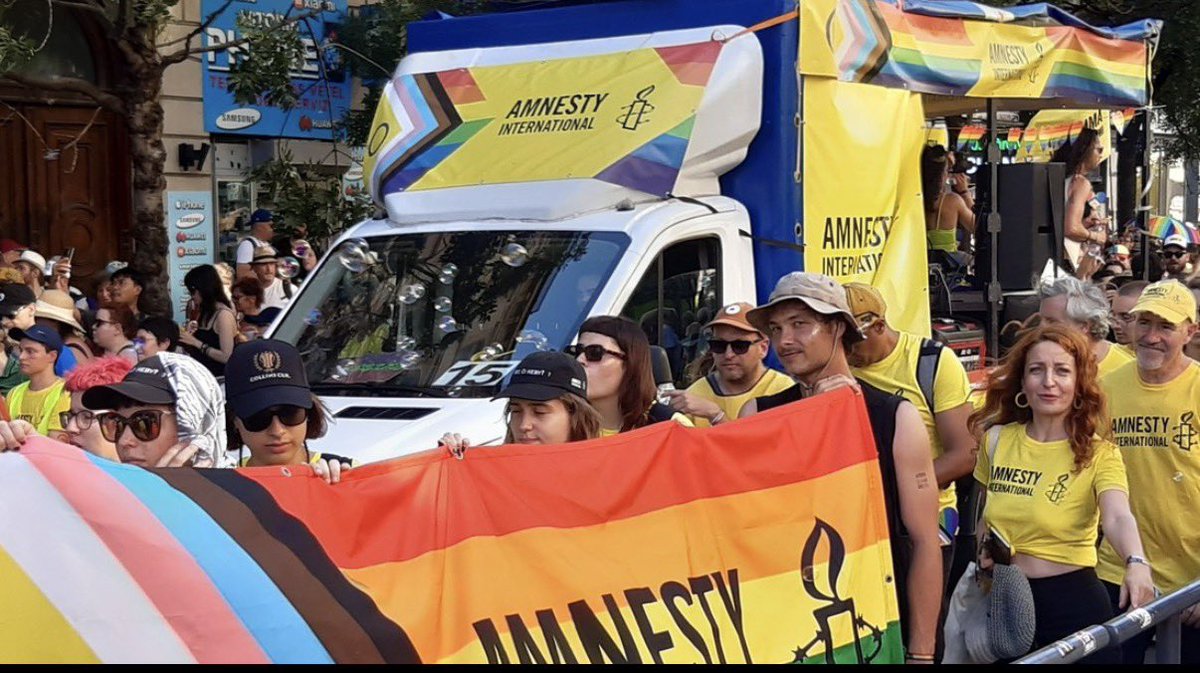
Hungary’s new government is reopening schools to gender activist NGOs previously kept out of classrooms. Among them are Amnesty International Hungary, Labrisz Lesbian Association and Háttér Society, two of Hungary’s leading LGBTQ and gender advocacy organisations, as well as https://t.co/HbKbiT26nF #Hungary #LGBTQ #GenderEquality #HU
8/17/2026: FORMAL COMPLAINT — VERBAL AGGRESSION & INTIMIDATION IN FINLAND COURT — On behalf of PM Simon Ekpa supporters in Finland Date: 17 August 2026 Location: Itä-Suomen hovioikeus, Istuntosali 2, Finland (Appeal from Lahti Magistrate Court — Päijät-Häme District Court) Purpose of Attendance: A delegation of Biafran supporters, attended court peacefully on 17.08.2026 in solidarity as PM Simon Ekpa's appeal continues. Incident Reported: Two individuals engaged in verbal aggression and intimidation directed at members of the delegation who had come to support PM. The individuals identified by witnesses as: Individual 1: Mary Ike Lasuba aka Adadioranma (France-based) Individual 2: Madam NkyNky @deborahsal82 (Evidences and Exhibits attached) The alleged conduct included insulting , demeaning languages, verbal aggression, crossing boundaries, intimidating remarks toward innocent Biafran supporters inside/near the courthouse area. Impact: The supporters felt harassed, unsafe and discouraged. Such conduct, if confirmed, undermines safety, unity and peaceful advocacy required during an active appeal, especially if confirmed that one of the women involved has verbally attacked our PM Simon Ekpa in the past (exhibits attached). Requested Action by USB Administration for; - Impartial fact-finding — obtain witness statements, camera exhibits from those present in Istuntosali 2 and the court house - Whom these 2 women represents and Caution to them to refrain from aggressive conduct during PMs court process moving forward. Assurance from Finland government of safety and respect for all supporters who travel for court solidarity. Resolution and commitment to non-violence and rule of law. Dr Ngozi Orabueze DPM USB/Head of BRGIE/DEFACTO @alexstubb @yleuutiset @Huuhkajat @MobilePunch @channelstv @SaharaReporters #HumanRights #Justice #PeacefulProtest
For too long, adults with intellectual disabilities and their parents have faced the future with dread, not knowing what will happen after their parents pass away. The successive cruel FF & FG governments will never act unless they are forced to by campaigns like this. #IntellectualDisabilities #DisabilityRights #Advocacy #Therearenospecificcountriesmentionedinthetweet.
A Crown Instead of the Barracks: An Idea From Outside the Box Could Egypt’s exiled opposition use constitutional monarchy to dismantle the legitimacy of the 1952 coup? By Adham Hasanin Egyptian journalist and political writer, based in the Netherlands To understand what follows, a reader unfamiliar with Egypt needs one basic fact: since 1952, Egypt has never been governed by anyone who did not first wear a military uniform. Gamal Abdel Nasser, Anwar Sadat, Hosni Mubarak, and today Abdel Fattah el-Sisi four men, four eras, one common origin. All rose through the armed forces. All inherited a state built by a coup that year, when a group of officers calling themselves the "Free Officers" overthrew King Farouk I and, within a year, abolished the monarchy altogether and declared a republic. For seventy-three years, the underlying equation has not changed: the army rules, power passes from one officer to the next, and legitimacy is drawn from the barrel of a gun rather than the ballot box. Every conceivable form of opposition has been tried legal parties and banned ones, Islamist movements, liberal and leftist coalitions, the 2011 popular uprising, and the 2013 elections whose result was overturned by force within a year. All of them hit the same wall: a military institution that reproduces itself under different names, while the core of the system remains untouched. So what if the problem, all along, has not simply been who rules, but the constitutional framework that makes military rule possible in the first place? And what if the answer lies not in swapping one president for another, but in dismantling the underlying equation itself, through a framework Egyptian opposition movements have never seriously tried: a purely ceremonial constitutional monarchy, on the model of Belgium, the Netherlands, or Spain where the head of state becomes a symbol above the political fray, while the army is permanently expelled from politics and returned to its barracks. This is not a call to revive a particular family, nor nostalgia for a golden age that never quite existed. It is a proposal for a political and strategic tool that has not yet been used in the intellectual arsenal of Egypt’s opposition in exile a tool that deserves serious discussion, regardless of whether it is ever literally realised or simply serves to expand the boundaries of what is politically thinkable. I. Why 1952, Not 2013 or 2011, Is the Root The strategic error made by most Egyptian opposition movements from the Muslim Brotherhood to the April 6 Youth Movement to the various civil opposition parties has been treating each political crisis as an isolated case: Mubarak was corrupt and had to be toppled; Sisi staged a coup that must be condemned; the interim military council was a transitional phase to be endured. This piecemeal approach treats the symptoms while leaving the original illness untouched. That original illness is the very structure of legitimacy established by the coup of 23 July 1952. The Egyptian republican system, from Nasser to today, has never built its legitimacy on a genuine democratic social contract. Instead, it has rested on a fixed trinity: the rhetoric of "revolution against feudalism and colonialism," charismatic individual leadership, and military protection of the regime framed as the guarantor of stability. This trinity has repeated itself from Nasser to Sadat to Mubarak to Sisi, with only cosmetic variations. Each new president was never a break from the system he was its continuation. When the opposition says "let us return to the constitutional framework that preceded the coup," it is not criticising a particular policy. It is declaring that the legal foundation of everything that came after 1952 was illegitimate from the start. Here lies the rhetorical power of "returning to the pre-1952 order": it does not merely demand swapping one ruler for another. It withdraws historical legitimacy from the entire republican military system including today’s regime, which draws its own declared legitimacy from that same "1952 legacy." II. Why a "Ceremonial Crown," Not "the Return of a Ruling Family" Here is the most important distinction anyone advocating this idea seriously must grasp: the project does not rest on restoring any particular individual from the Muhammad Ali dynasty, nor on nostalgia for King Farouk or his ancestors. The real power of the idea lies in the constitutional form, not in the person who happens to sit on the throne. Three successful European democracies illustrate the model clearly. Belgium, where King Philippe is a purely constitutional symbol with no real executive power, while the state is run through an elected parliament and a complex coalition government reflecting the country’s linguistic and political diversity. The Netherlands, where King Willem-Alexander formally opens the parliamentary year and signs laws, but where actual decision-making rests with the prime minister and the elected parliament. And Spain, where the king represents symbolic continuity of the state above party politics, while the military and security services answer entirely to civilian authority a transition achieved after the death of the dictator Francisco Franco in 1975, when King Juan Carlos I voluntarily relinquished the extensive executive powers he had inherited and backed free elections, most dramatically in February 1981, when he personally ordered the armed forces to remain loyal to the constitution during an attempted military coup, causing it to collapse within hours. The common thread across these three models is not "the presence of an ancient royal family." It is the principle of separating symbol from power. The monarch in these countries does not rule; he represents. He issues no political decisions; he provides the continuity and symbolic stability that allows party political competition to revolve beneath him, without every transfer of power becoming an existential crisis of legitimacy. This is precisely what Egypt’s military republican system lacks: a neutral mechanism for guaranteeing state continuity that does not depend on the person of the ruler or his security apparatus. When Egypt’s military-republican president is absent, it is always the army that fills the vacuum, because it is the only institution built to be the "guarantor of stability." Under a ceremonial monarchical model, by contrast, it is the king not the army who represents that symbolic guarantee, genuinely opening the door to removing the military institution from the political equation altogether. III. Egypt’s Standing Under the Monarchy: An Honest Reckoning, Not Blind Nostalgia For a Western reader with little prior knowledge of Egypt’s monarchical period (1922–1952), it helps to know this: Egypt was nominally independent under its own king from 1922, but Britain retained enormous informal control over the country’s foreign policy, military bases, and the Suez Canal throughout the period a reality that shaped everything that follows. Any honest invocation of "Egypt’s standing under the monarchy" must avoid the trap of mythologised nostalgia that many advocates of this idea fall into. Egypt in that era was no lost paradise, and any honest article must say so plainly. The Egyptian pound, for instance, often invoked as a symbol of "national currency strength" in that period, was not strong because of independent Egyptian monetary policy. It was pegged to the British pound sterling as part of Egypt’s complete colonial financial dependency until 1947, with Egypt exercising no independent oversight of its own currency whatsoever. The pound’s strength, in other words, was not a sovereign Egyptian achievement it was a reflection of British imperial power ruling Egypt from behind the throne. But this does not mean Egypt lacked a genuine regional standing worth studying. Cairo, in the 1930s and 1940s, was the undisputed cultural capital of the entire Arab world: the Egyptian film industry produced more than half of all Arabic-language cinema; its theatre scene, led by figures like Youssef Wahbi and Naguib al-Rihani, and its music, with Umm Kulthum and Mohammed Abdel Wahab, set the standard across the region; Cairo University was the first modern university in the Arab world; and the Egyptian press was the reference point for Arab public opinion from the Atlantic to the Gulf. Cairo was, quite simply, to the Arab world what Paris was to Francophone Europe: an unrivalled centre of cultural and intellectual gravity. This standing was not necessarily a product of monarchy itself, so much as a product of a relative space of political and press pluralism that allowed Egyptian civil society to flourish, despite all the flaws of the political system and the interference of both palace and occupier. The lesson here is not "bring back the king and the standing will return." It is: when even a limited margin of civic freedom exists, Egypt flourishes culturally and intellectually almost by its own nature. And that margin is precisely what has been entirely absent across the past seven decades of unchallenged military rule. IV. What Reform Would Actually Require Not Repeating the Old Mistakes Any serious advocacy of this model must include, even briefly, a clear vision for avoiding the flaws of the old monarchical system itself otherwise the proposal collapses into simply replacing one form of authoritarianism with another wearing a different crown. First, the armed forces would need to be placed fully under a civilian ministry of defence, with its budget subject to transparent parliamentary oversight the exact opposite of its current status as a state-within-a-state, and equally opposed to its role under the monarchy, when it often served as an instrument of British influence. Second, a judiciary fully independent of both palace and government alike, unlike the old model, which saw direct royal interference in political life as when King Fuad I dismissed the elected government of Prime Minister Saad Zaghloul’s successor, Mustafa al-Nahhas, in 1928, in one of the clearest "constitutional coups" in modern Egyptian history. Third, a parliament that genuinely represents the people rather than landowners and the aristocracy, as was the case before 1952, when membership in the Senate was effectively conditional on the ability to pay land taxes meaning political representation was, by law, restricted to the wealthy. Fourth, genuine economic sovereignty, with a truly independent national currency rather than one pegged to a foreign power’s currency, unlike the historical dependency of the Egyptian pound on sterling. These four principles are enough to clarify that the project on offer is not a literal "return to the past," but a borrowing of the constitutional form (symbolic monarchy) combined with an explicit rejection of its old substance (colonial dependency, palace interference, parliamentary feudalism). V. The Role of Egyptian Movements in Exile: Between Goal and Instrument This raises the most practical question of all: how might Egypt’s opposition abroad actually adopt this idea, and in what capacity? The honest answer is that the power of this proposal does not necessarily lie in its literal fulfilment, but in its dual strategic function. On one hand, it can be advanced as a genuine political goal adopted by broad coalitions of Egyptian movements coalitions that might include Islamists, liberals, leftists, and traditional monarchists, united around a single shared premise: rejecting the legitimacy of the 1952 order and everything that followed from it, even if they later disagree over the precise final shape of the state. On the other hand and this matters more in practice the idea can be deployed as a rhetorical instrument of pressure to widen a Egyptian political debate currently trapped between two false choices: "continued military rule" or "no alternative, chaos awaits." When the opposition puts forward a clearly defined third model a European-style constitutional monarchy it breaks this false binary and opens new intellectual space in Egyptian public discourse, even if the project is never realised in its literal form. This kind of "leverage idea" is common in the history of political movements worldwide: it is not necessarily proposed to be fulfilled immediately in full, but to redraw the boundaries of the politically possible, and to force the existing regime to defend its legitimacy rather than simply assume it. Conclusion: An Invitation to Debate, Not a Ready-Made Prescription This article does not claim that restoring a monarchical form would magically resolve Egypt’s chronic crisis of legitimacy, nor does it ignore the immense difficulties facing any transformative project under a military institution as economically and securitywise entrenched as Egypt’s is today. But it raises a question that deserves serious debate among Egypt’s opposition in exile, rather than automatic dismissal simply for being unfamiliar: Has the Egyptian opposition exhausted every available tool for dismantling the legitimacy of 1952, or has it remained trapped in the same old binary swapping one ruler for another while the framework that makes military rule possible remains untouched? The idea is on the table now, not as a finished solution, but as an overdue invitation to think outside the box.
AfD-Gutachten: Wer prüft eigentlich die Prüfer? Das neue, rund 1.500 Seiten starke AfD-Gutachten stammt nicht von einem Gericht, einer Behörde oder einem parlamentarischen Wissenschaftlichen Dienst. Erstellt wurde es von einem achtköpfigen Team der Gesellschaft für Freiheitsrechte e. V. (GFF) – einer politisch operierenden NGO, die das Ergebnis nun ausdrücklich als Grundlage für ein AfD-Verbotsverfahren vermarktet. Zur Finanzierung erklärt die GFF: ermöglicht durch rund 20.000 Einzelspender. Campact bestätigt zugleich, dass auch die Demokratie-Stiftung Campact „bei der Finanzierung geholfen“ habe. Eine projektgenaue Aufschlüsselung – welcher institutionelle Akteur wie viel zahlte – ist bislang nicht veröffentlicht. Und dann wird es interessant: Die GFF führt die Open Society Foundations ausdrücklich als institutionelle Geldgeberin auf – für eine Verfassungsbeschwerde und „allgemeine Förderung“. Zusätzlich nennt sie das Foundation Open Society Institute, die Open Society Initiative for Europe und die Open Society Foundations für Arbeiten zu zivilgesellschaftlichen Handlungsspielräumen und Whistleblowing. Open Society ist keine nebulöse Verschwörungsformel, sondern das von George Soros aufgebaute internationale Stiftungsnetzwerk. Soros hat nach eigenen Angaben der Organisation mehr als 32 Milliarden Dollar dafür bereitgestellt; Vorsitzender ist heute sein Sohn Alex Soros. Journalistisch sauber muss man unterscheiden: Bislang ist nicht belegt, dass Open Society unmittelbar das konkrete AfD-Gutachten bezahlt hat. Belegt ist aber, dass die herausgebende Organisation institutionell und allgemein aus dem Soros-Stiftungsnetzwerk gefördert wurde. Gerade deshalb wäre eine vollständige, projektbezogene Finanzierungsaufstellung zwingend. Denn hier arbeitet ein geschlossenes Advocacy-Ökosystem: GFF erstellt das Gutachten. Campact hilft bei der Finanzierung und fordert anschließend den „Startschuss“ für das Verbotsverfahren. Der RAV, bereits Unterstützer der Gutachtenkampagne, organisiert danach den offenen Brief von inzwischen mehr als 1.000 Juristen und beruft sich auf das GFF-Gutachten. Das beweist nicht, dass das Gutachten juristisch falsch ist. Es widerlegt aber die Inszenierung einer politisch und institutionell voraussetzungslosen Expertise. Wer mit einem privat finanzierten NGO-Gutachten das schärfste Instrument des Parteienrechts legitimieren will, muss Autoren, Geldflüsse, Unterstützer und personelle Netzwerke maximal transparent machen. Ich prüfe deshalb jetzt sämtliche Unterzeichner: RAV, GFF, VDJ, ECCHR, Amnesty, Refugee Law Clinics, „Kritische Jurist*innen“, Parteien, Ministerien, Hochschulen, staatliche Prüfungsausschüsse, Stiftungsförderungen sowie Studienstiftung des deutschen Volkes und DAAD. Nicht, um anwaltliches Engagement zu skandalisieren – sondern um sichtbar zu machen, ob hier tatsächlich mehr als 1.000 unabhängige Einzelstimmen sprechen oder ein seit Jahren personell und finanziell verflochtenes juristisch-politisches Milieu mobilisiert wurde. Analyse aller Anwälte: in the making. Follow the money. Follow the careers. Follow the network. #AfD #Transparenz #NGOs
Bistanden på 23 mia. kr. årligt er venstrefløjes private hæveautomat. Her er således Groks oversigt over Trine Pertou Machs (Enh.) hovedpositioner i NGO'ere og NGO-lignende organisationer baseret på hendes officielle CV fra Folketinget og andre biografier: - WWF (Verdensnaturfonden) – Project manager (2003-2004) - Mellemfolkeligt Samvirke (MS) – Middle East adviser (2004-2006) + tidligere programkoordinator + forkvinde/bestyrelsesmedlem (2007-2013/14) - Folkekirkens Nødhjælp – Middle East programme officer (2006-2007) - Institut for Menneskerettigheder – Programme officer (2007-2009) - International Media Support (IMS) – Konsulent (2009) - International Alert (London) – Leder af “Economic Development for Peace” (2018-2020) - Oxfam Ibis / Oxfam Danmark – Director of Policy, Advocacy and Media / politisk chef (2020-2022) Derudover har hun haft bestyrelsesposter, bl.a. i ActionAid International og som forkvinde for MS. #dkpol #NGO #menneskerettigheder #socialretfærdighed
“Fossil fuel subsidies must end”👩⚖️ Mariana Paoli, Global Policy & Advocacy Climate Lead at @Oxfam, talks about the climate winnings in taxing fossil fuel companies. Watch more from @london_climate on @WeDontHaveTime https://t.co/fPpPTlQ06b #FossilFuels #ClimateAction #TaxTheRich #Therearenospecificcountrymentionsinthetweetprovided.
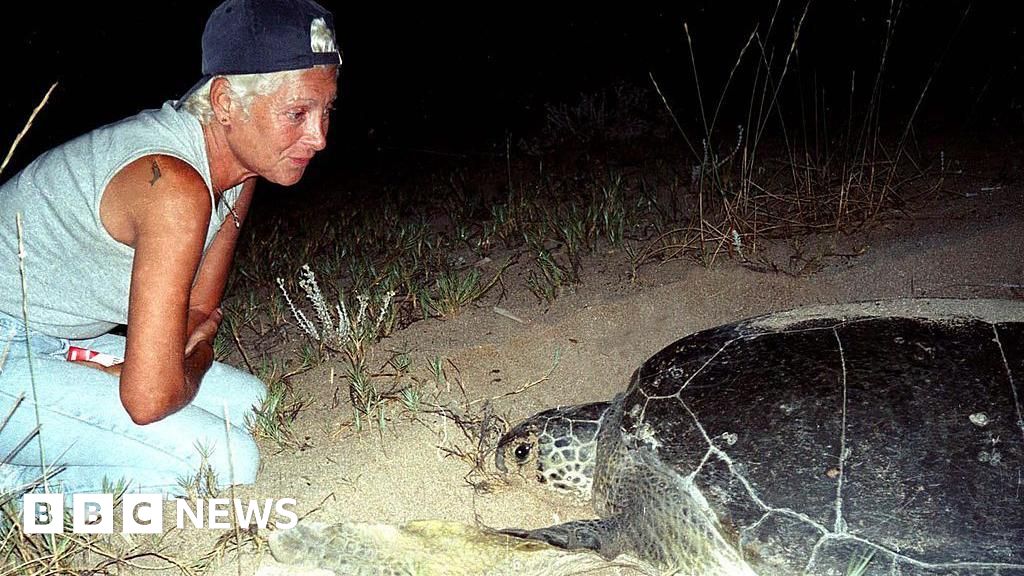
Lebanese turtle conservationist Mona Khalil, known for her dedication to protecting endangered sea turtles along Lebanon's southern coast, died from injuries sustained in an Israeli strike that hit her home, highlighting the ongoing violence in the region despite her lifelong commitment to environmental conservation and community advocacy. #EnvironmentalActivism #ConservationLegacy #SeaTurtleProtection

Princess Bajrakitiyabha of Thailand, renowned for her advocacy for women's rights and justice, passed away at the age of 47 after a three-year struggle with a mycoplasma infection that had left her reliant on medical devices for lung and kidney support. #Thailand #PrincessBajrakitiyabha #DomesticViolence
Sul sito della Reichman University (l’ex Idc Herzliya) la nuova app si presenta con un linguaggio aziendale levigato: «risposte verificate da esperti» per le «discussioni sui social media», advocacy proattiva, sostegno alle comunità ebraiche nordamericane. Si chiama RiseApp e #RiseApp #ReichmanUniversity #Ebraiche #IL #US
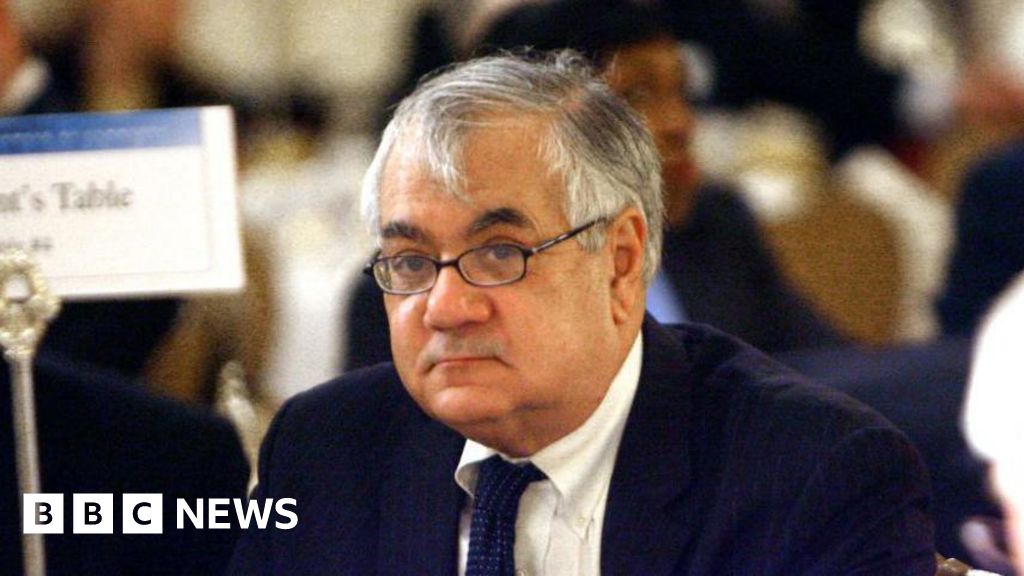
Barney Frank, a pioneering openly gay former US congressman known for his advocacy for LGBT rights and significant role in crafting the Dodd-Frank Act following the 2008 financial crisis, passed away at 86 while in hospice care in Maine. #LGBTQrights #BarneyFrank #USpolitics

On Saturday, a gathering on the Edmund Pettus Bridge in Selma, Alabama, served as a poignant reminder of the ongoing struggle for civil rights, as activists, clergy, and community members expressed outrage over a recent Supreme Court decision weakening the Voting Rights Act while reaffirming their commitment to civic engagement and moral advocacy in the face of political setbacks. #CivilRights #VotingRights #SocialJustice #US #LA #AL
Claire Brosseau, a 49-year-old Canadian woman with severe mental illnesses, is advocating for access to medically assisted dying (MAID) after exhausting all treatment options, as current laws exclude psychiatric patients and she believes this reflects societal stigma against mental illness. #MentalHealth #Euthanasia #Advocacy #CA #NL #BE #LU