WRLD

Search

#Belief
Emanuel Boeminghaus 22h

Emanuel Boeminghaus wrote that the eco-friendly energy provider Grüüün will cease supply to around 200,000 private customers nationwide by October 31, 2026. The company only started in 2024 and had advertised price guarantees of up to ten years. Affected customers will need to find a new provider. Grüüün cited planned changes to the Renewable Energy Sources Act and new regulations for power grid expansion as reasons. The company fears that this will lead to fewer wind power and solar installations in the future, making it impossible to maintain long-term price guarantees. Negotiations with the federal government have been unsuccessful, Boeminghaus wrote, referring to a BILD report from October 10, 2026. He explained that this case illustrates how political and regulatory uncertainty can jeopardize long-term business models in the energy sector. https://t.co/NINMEcNkUS #Energiewende #Strompreise #Deutschland (translated)
2552
Bruno Maçães 1d

The author questioned why people had come to view intelligence as a mysterious, content-free property just as machine intelligence was being understood as the processing of vast amounts of data. They suggested that intelligence might instead come down to access to large datasets.

2486
Maarten Boudry 1d

The author said they were Belgian, had some North African ancestry and were not Jewish, but described themselves as a proud Zionist. They argued that Zionism had historically been among the world’s most benign, inclusive and progressive nationalisms, and added that a people had earned a country. https://t.co/QArNi8tXFe #Zionism #Nationalism #BeliefSystem #BE #MA

2411
Anna 2d

Anna wrote that Donald Trump announced on Truth Social the delivery of 4.8 million tons of Russian diesel. The agreement was made during a phone call with Vladimir Putin, whose army is bombing Kyiv. The price of diesel is over $6, also due to Trump's Iran war, Anna wrote. This became a problem for him before the midterms. In September, Trump blamed Volodymyr Zelenskyy for attacking Russian refineries; now he is catering to Putin, according to her account. Russia imposed its diesel export ban because of exactly these attacks. Putin said eight days earlier that the diesel could not be sold abroad due to sanctions. Trump did not mention the sanctions in his announcement; whether the Kremlin confirms the stated amounts is unclear, Anna wrote. She contrasted this with the original justification for the Iran war: saving Iranians and making the world safer. Meanwhile, nobody talks about the Iranians anymore, while North Korea flatters Trump and Russia supplies him. Anna asked what a president fights for who flatters Kim Jong Un, bombs Iran, demands the largest island from Denmark, and orders diesel from Putin. In her assessment, the USA is currently dancing at all weddings at the same time. Anna cited AP and The Hill from October 9 and CNN from September 15 as sources. #Trump #Putin #Dieselpreise (translated)

3562

The author argued that autarky had never been, and would never be, a solution to problems including energy. They said it was saddening to see EU officials embrace that approach, adding that the EU was founded on the belief that greater integration, rather than self-reliance, would bring peace and prosperity. #EU #Energiewende #Integration #EU

2901
Otherland Bookshop Berlin 5d

The Art of Uncertainty: How to Navigate Chance, Ignorance, Risk and Luck by David Spiegelhalter From the UK’s ‘statistical national treasure’, a clever and data-driven guide to how we can live with risk and uncertainty Life is uncertain. We are all the result of an unforeseen and unforeseeable sequence of small occurrences. But what underlies this fragile chain of events? Is it random or just complex? And what role does luck play in our lives? David Spiegelhalter has spent his career crunching data in order to help understand uncertainty and assess the chances of what might happen. In The Art of Uncertainty, he gives readers a window onto how we can all do this better. Uncertainty, he argues, is a relationship between the observer and an object in the outside world. He shows us how we can express it numerically, and then update our beliefs about the future in the face of constantly changing experience. In crystal-clear prose, he takes us through the principles of probability, a field that informs everything from annuities to pandemics and climate change, while also examining the limitations of statistical modelling and arguing we need to have the humility to admit our ignorance. Drawing on a wide range of real-world examples, this is an essential guide to navigating uncertainty in a world that makes it inevitable.

904
Gerd Leonhard 6d

The author wrote that the observation challenged the belief that greater AI capability would resolve misalignment, arguing that past evidence and theoretical reasoning suggested it could instead intensify unwanted behaviour by making systems more effective at pursuing the wrong goals.

3399
Kurier 2w

Serbia and Russia have extended their gas agreement by three months, with Serbia continuing to be supplied at a significantly reduced price of 318 euros per 1000 cubic meters, instead of paying the current market price of 868 euros. #Serbien #Russland #Erdgas (translated)

kurier.at
Serbien und Russland verlängern Gas-Abkommen
1374
🇩🇪LilitThyra🩶 2w

Nur mal zu Erinnerung, wie einfach es wäre! Trotz der Sabotage ist noch eine Pipeline von Nordstream 2 völlig intakt! Wir könnten direkt mit Gas aus Russland beliefert werden, aber unsere Regierung will das nicht! https://t.co/JGPNayXFBr #Nordstream2 #Energiepolitik #RussischesGas

13529
Otherland Bookshop Berlin 2w

Solace House by Will Maclean In the summer of 1993, broke student Alex Lane joins a team clearing out Solace House, a Victorian mansion bequeathed to the university by a reclusive hoarder called Flayne. The other students are a mixed bunch, but Alex quickly falls into a close friendship with the lively, redheaded Ella. When the crew begins sorting through piles of junk, they stumble upon Flayne's journals, in which he details his obsession with his missing mother, his discovery of a place called Bewise, and - most mysteriously - his belief in another realm lying parallel to ours, along with coded instructions as to how it might be reached. As the students delve deeper into the house's secrets, one of them becomes obsessed with deciphering Flayne's strange opus and its promise of another world... and they may be willing to sacrifice everything, and everyone, to get there.

690
Paul Murphy 🇵🇸 2w

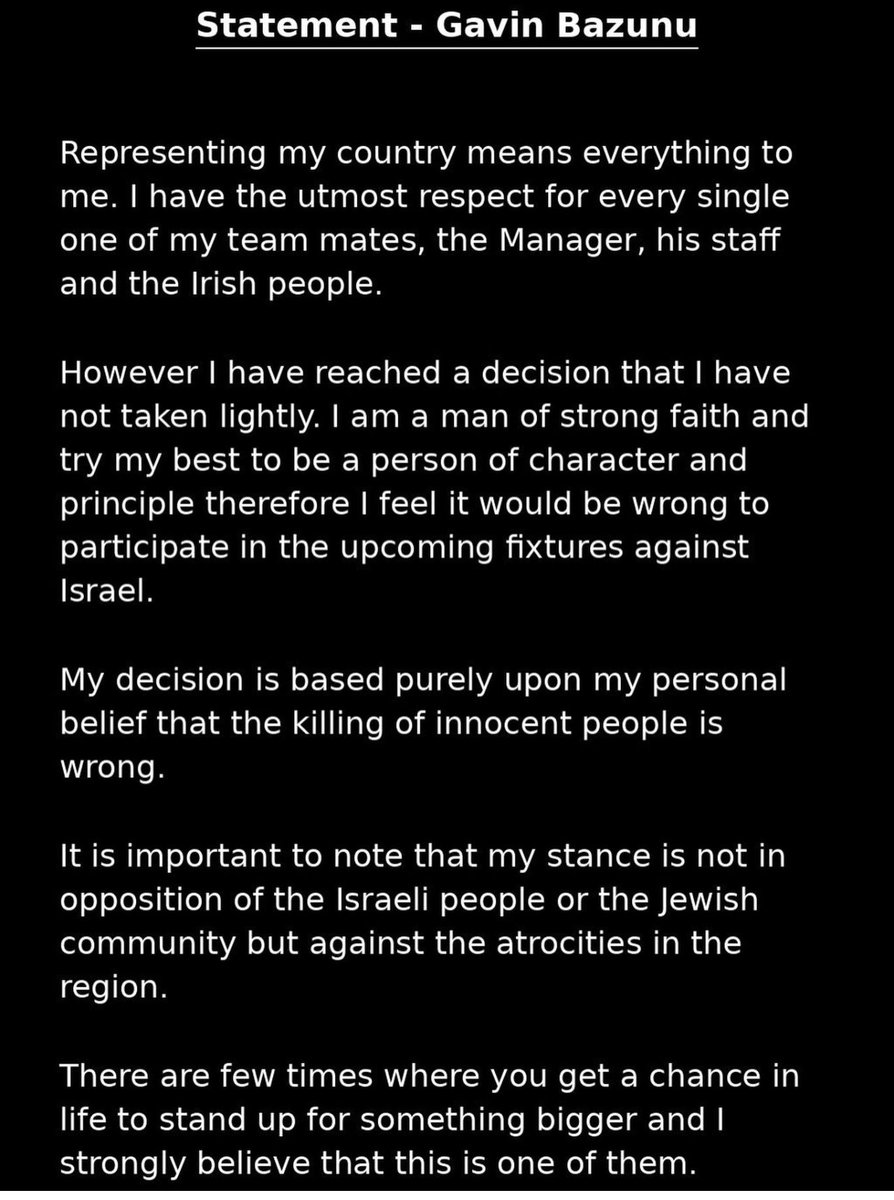
Incredible statement from Gavin Bazunu. "My decision is based purely upon my personal belief that the killing of innocent people is wrong." Sometimes it's just that simple. A hero. https://t.co/frQBabpk8c #GavinBazunu #InnocenceMatters #HeroicStand #Thetweetdoesnotmentionanyspecificcountries.Therefore #therearenocountrycodestoreturn.

4833
S
Sandfeen 2w

“Between 1979 and April 2024, we recorded 66,872 Islamist attacks worldwide. These attacks caused the deaths of at least 249,941 people. • 1979-2000: 2,194 attacks and 6,817 deaths. • 2001-2012: 8,265 attacks and 38,187 deaths. • 2013-April 2024: 56,413 attacks” - Islamist terrorist attacks in the world 1979-2024 “The military is the main target (34%) of Islamist terrorists, ahead of civilians (27.7%) and police forces (15.3%). • 1979-2000: military (343 attacks, 15.6%), civilians (530 attacks, 24.1%), police forces (408 attacks, 18.6%). • 2001-2012: military (1,410 attacks, 17.1%), civilians (2,506 attacks, 30.3%), police forces (1,424, 17.2%). • 2013-April 2024 : military (20,556) - Islamist terrorist attacks in the world 1979-2024 “Most (86.3%) of Islamist terrorist attacks have occurred in Muslim countries1. Similarly, the vast majority of deaths from Islamist terrorist attacks (88.9%) occurred in Muslim countries” - Islamist terrorist attacks in the world 1979-2024 “Number of Islamist terrorist attacks in Muslim countries: 57,726 attacks (86.3% of Islamist terrorist attacks worldwide). Number of deaths caused by Islamist terrorist attacks in Muslim countries: 222,236 deaths (88.9% of deaths caused by Islamist terrorist attacks worldwide)” - Islamist terrorist attacks in the world 1979-2024 “In this study, we define “terrorism” as political acts that meet the principle and criteria of the National Consortium for the Study of Terrorism and Responses to Terrorism (START). In this context, a terrorist act is presented as “the threat of the effective use or use of unlawful force and violence by a non-state actor in order to achieve political, economic, religious or social objectives, through fear, coercion or intimidation”8. This definition is extended to the enumeration of a set of characteristics specifying the nature of the terrorist act: – it must be intentional and result from a conscious calculation by the perpetrator; – it must include some level of violence or threat of imminent violence, whether physical or material; – the perpetrators of the incident must be non-state actors” - Islamist terrorist attacks in the world 1979-2024 “To complete without unduly complicating matters, one can refer in particular to the definition proposed by Edward Walker, because of its relative clarity and conciseness: “By ‘Islamism’, I mean the normative political ideology that has as its core program the establishment of Islam as a state religion and the implementation of Islamic law (shari’a). Militant Islamism, then, is any form of Islamism that advocates the use of violence to achieve Islamist objectives. This same distinction is made by Islamists themselves, who refer to ‘Parties of the Islamic Call’, or al-da’wa al Islamiyya (i.e., Islamist groups that do not advocate violence) on the one hand, and ‘Parties of the Muslim Revolution’, or al-thawra al-Islamiyya (i.e., Islamist groups that do advocate violence) on the other hand14. Acknowledging that there are no universally accepted definitions of Islamism and terrorism, some researchers characterise it as an ideology whose key tenets include: – Belief that Islam is not only a religion, but also a holistic sociopolitical system; – Advocacy of shari’a (Islamic) law as divine state law; – Belief that a transnational Muslim community, known as the Ummah, should unite as a political bloc; – Advocacy of an ‘Islamic’ state, or Caliphate, within which sovereignty belongs to God” - Islamist terrorist attacks in the world 1979-2024 “We have recorded 66,872 Islamist terrorist attacks that killed at least 249,941 people between 1979 and April 2024. Number of attacks: 66,872 Number of wounded: 192,598 Number of deaths: 249,941” - Islamist terrorist attacks in the world 1979-2024 “The possible estimate” should be between 300,000 and 400,000 deaths considering the victims of Islamist terrorism in Algeria, according to the hypotheses based on the best-known sources and the most reliable studies” - Islamist terrorist attacks in the world 1979-2024

691
S
Sandfeen 2w

The Deconstructionists and the Preservers The average person assumes that everyone wants the same things and merely disagrees about how to achieve them. But the social fracture we are living through is deeper: people no longer agree on what they want at all. Consider the conflicts dominating the news—crime, the border, online speech, and who raises children. Beneath each is a question rarely acknowledged: Does society corrupt human beings, or does it elevate them above their animal nature? If social constructs are oppressive, then every institution becomes suspect. Hierarchy, cultural norms, the family, and the nation appear to be cages designed to restrain a free creature. The only honest response, in this view, is to tear them down. The belief that society corrupts the individual is not fringe doctrine. It is the creed of much of the elite class governing the West. From Rousseau, who argued that man was born free until society placed him in chains, through Marx, who identified those chains as capital and class, to the postmodernists, who reduced institutions to masks for power, the thread remains unbroken. It is the philosophy of universities, the cultural industry, and the bureaucrats shaped by both. Opposing it is the older conviction of Hobbes and Hegel: that a person stripped of structure is not free, but frightened and dangerous, and that order is what improves him. Hobbes saw that without order, life becomes a war of all against all. Hegel believed that people become fully themselves through family, community, and the rational state. The divide, then, is not simply left against right. It is the deconstructionists against the preservers. The irony the demolishers never grasp is that freedom does not remain after every structure is cleared away. It requires personal responsibility as a cultural habit. When order is destroyed in the name of liberty, society begins to collapse. Something must bear the weight, and the state eventually fills the void—without moving gently. Liberty pursued through demolition produces, with grim reliability, the conditions of slavery. The deconstructionist imagines himself a liberator striking mankind’s chains. In truth, he is the architect of the cage.

921
Christopher Wright 2w

Am Rande der UN-Generalversammlung erklärte Wright, die USA müssten die globalen Märkte weiter beliefern und zugleich den Anstieg der Inlandspreise bremsen. #Energiekrise #Dieselpreise #Trump

Preis-Ängste: EU kämpft um Diesellieferungen aus USA
kurier.at
1728
Rahul Gandhi 3w

I find the footage deeply disturbing. I believe this reflects a patriarchal belief that men could police a girl's body, movements and choices. I say: 'This is not culture. It is patriarchy.'

Outrage in India over viral video of teen molested and her friend beaten
www.bbc.co.uk
9824
marc friedrich 3w

Ohoh BREAKING: Laut Bloomberg wird Saudi-Arabien europäische Raffinerien den Rest des Jahres nicht mit Rohöl beliefern. Damit fehlen ca 570-580.000 Barrel pro Tag Winter is coming 🥶 Energiekrise Dazu passend mein Video von gestern: https://t.co/qemfuaRgGS #Energiekrise #Ölpreise #SaudiArabien

14259
Kolja Barghoorn 4w

Die Bundesregierung ist wirklich dermaßen hohl, dass sie Preissteigerungen an der Zapfsäule als "Preistreiberei" bezeichnet. Wenn die jetzt ernsthaft so unfassbar DUMM sind, die Mineralölkonzerne dafür zu bestrafen, dass die einen Gewinn machen, statt einfach die Steuern zu senken, dann wird im Zweifelsfall eine Angebotknappheit in Deutschland entstehen, da die dann einfach den Deutschen Markt weniger beliefern. Und dann können die so viele Preisdeckel einführen wie sie wollen 😁 #Bundesregierung #Preise #Mineralölkonzerne

15907
Krzysztof Graj 4w

AFRICA DAILY REPORT — 15 SEPTEMBER 2026 Coverage: key developments identified in the latest 24-hour news cycle 1. SUDAN — WFP funding collapse threatens food aid Importance: 10/10 — CRITICAL The World Food Programme says its Sudan budget has fallen to roughly $206 million this year from $645 million last year, while nearly 20 million people face hunger. WFP says it needs almost $300 million more to sustain current operations. Funding constraints have forced the agency to concentrate assistance on about five million of the most vulnerable people, with roughly four million currently receiving partial rations. The funding shock risks deepening what is already one of the world's largest humanitarian emergencies. Source: Reuters, 14 Sep 2026 https://www.reuters.com/world/africa/world-food-programme-funding-sudan-plummets-more-go-hungry-head-says-2026-09-14/ 2. RED SEA / HORN OF AFRICA — Houthi advances increase pressure around Bab el-Mandeb Importance: 9.5/10 — CRITICAL Fighting in Yemen is intensifying along the Red Sea coast, with Houthi territorial gains creating additional risk around the Bab el-Mandeb shipping corridor. More than 82,000 people have reportedly been displaced since early September, and over 2,000 have crossed to Djibouti. For Africa, the significance extends beyond the humanitarian impact: disruption around Bab el-Mandeb threatens trade, fuel costs and shipping links serving East Africa, the Horn and the Suez route. Sources: Reuters/AP, 14 Sep 2026 https://www.reuters.com/world/middle-east/yemens-displaced-long-loved-ones-stability-houthis-advance-2026-09-14/ https://apnews.com/article/90dc86201ef51410ebcdd913837d741d 3. GLOBAL ENERGY / AFRICA — Saudi pipeline damage raises oil-price risk for African importers Importance: 9/10 — VERY HIGH Saudi Arabia's strategically important East-West oil pipeline is expected to remain largely out of service for three to five weeks after a drone attack. Oil prices rose as markets assessed the disruption alongside instability around Gulf and Red Sea routes. The consequences are especially important for oil-importing African economies, where higher crude prices can quickly feed into fuel costs, inflation, currencies and transport prices. Source: AP, 14 Sep 2026 https://apnews.com/article/8c18d82c109a8ea91347ce53c0096c53 4. SOUTH AFRICA — Rand falls sharply as oil prices surge Importance: 8.5/10 — VERY HIGH The South African rand fell around 1.1% against the dollar during Monday trading as rising oil prices increased pressure on Africa's most industrialised economy. South Africa is a major net oil importer and therefore particularly exposed to the current energy shock. The JSE Top-40 also weakened, while government bond yields moved higher. The development illustrates how the Middle East/Red Sea crisis is transmitting directly into African financial markets. Source: Reuters, 14 Sep 2026 5. DR CONGO — Ebola outbreak remains a continental-level health emergency Importance: 10/10 — CRITICAL The Ebola epidemic remains one of Africa's most serious current risks. The outbreak has spread to seven Congolese provinces, including Sud-Ubangi in western DRC, raising concern about further cross-border transmission toward the Republic of Congo and Central African Republic. Latest reported figures exceed 7,000 cases and 3,300 deaths. Conflict, displacement, health-worker strikes and population movement continue to obstruct containment. Sources: AP / public-health reporting, latest updates through 14 Sep 2026 https://apnews.com/article/58a2b25c752eaa8344ff16564a8e3547 6. EASTERN DR CONGO — Bukavu mourns 27 students killed in school fires Importance: 8/10 — HIGH Hundreds gathered in Bukavu for a mass funeral after fires at two neighbouring schools killed 27 students. The tragedy is particularly significant because it occurred in an already severely stressed city: Bukavu is controlled by the M23/AFC movement and local medical capacity is simultaneously under pressure from conflict and the Ebola epidemic. The disaster highlights the fragility of civilian infrastructure in eastern Congo. Source: AP, 14 Sep 2026 https://apnews.com/article/fd1aea4738a9a686fc6f0d45997a2be3 7. SOUTH AFRICA — Major road disaster kills at least 21 people in Western Cape Importance: 7.5/10 — HIGH At least 21 people were killed in a multi-vehicle collision on the N1 between Prince Albert and Leeu-Gamka in Western Cape. Two minibus taxis collided head-on before an SUV struck the wreckage. Together with another fatal accident near Ermelo, at least 29 people died on South African roads over the weekend, renewing scrutiny of road and minibus-taxi safety. Source: AP, 14 Sep 2026 https://apnews.com/article/9ae8e6beeb75cc307be24e15e9ec1fad 8. SUDAN — International leverage constrained as humanitarian needs rise Importance: 8.5/10 — VERY HIGH The widening humanitarian funding gap comes as diplomatic pressure on Sudan's belligerents remains limited. The UN Security Council recently extended the Darfur arms embargo only temporarily while members continue debating a U.S. proposal for a nationwide ban. Russia and China have raised objections to expanding the restrictions. The combination of weak humanitarian financing and diplomatic deadlock increases the risk of further deterioration. Sources: Reuters/AP https://apnews.com/article/fde2c6880c80343bebffb83c243fd3f4 9. UGANDA / SOUTH SUDAN — Climate stress is fuelling violence against traditional rainmakers Importance: 6.5/10 — SIGNIFICANT AP reports growing violence against traditional rainmakers in parts of Uganda and South Sudan as increasingly erratic rainfall damages subsistence agriculture. Farmers facing droughts, floods and crop losses have sometimes blamed spiritual practitioners for failed rains. The story is locally focused but illustrates a broader African security issue: climate disruption increasingly interacts with poverty, social tension and traditional belief systems. Source: AP, 15 Sep 2026 https://apnews.com/article/6080fa9dbc838ba75b9bab29cfd48fc9 10. AFRICA'S ECONOMIC OUTLOOK — Oil shock becomes the key near-term macro risk Importance: 8/10 — HIGH The combination of damaged Saudi export infrastructure, instability around Bab el-Mandeb and elevated crude prices is becoming an important macroeconomic risk for African oil-importing states. South Africa's currency reaction is an early indicator. If elevated prices persist, Kenya, Ethiopia, Morocco, Senegal and other net importers could face renewed inflation and balance-of-payments pressure, while African oil exporters could receive a revenue boost. This is a cross-cutting issue to watch closely over the coming days. Sources: Reuters/AP, 14 Sep 2026 TODAY'S ASSESSMENT The three developments with the greatest strategic significance are: (1) the sharp deterioration in humanitarian financing for Sudan; (2) the continuing Ebola emergency in DR Congo; and (3) the expanding Red Sea/Middle East energy shock, which is increasingly transmitting into African currencies, inflation and trade risks. #Africa #AfricaNews #TopNewsOfAfrica #Sudan #SudanCrisis #HumanitarianCrisis #WFP #WorldFoodProgramme #FoodSecurity #HungerCrisis #HumanitarianAid #RedSea #HornOfAfrica #BabElMandeb #Houthis #MaritimeSecurity #Shipping #GlobalTrade #EnergySecurity #OilPrices #OilMarket #AfricanEconomies #AfricanMarkets #EconomicRisk #Geopolitics #MiddleEast #EastAfrica #GlobalSouth #AfricaToday #wrldorg

930
Margus Tsahkna 4w

There is a dangerous 1991 “Chicken Kyiv” vibe in the air again. A fear of rocking the boat with Russia. A fear of Russia losing. A belief that Russia must always be given a way out. We need to get rid of that fear. Fear is exactly what Putin uses to paralyse us, divide our https://t.co/PzScjvOrIU #Ukraine #Russia #Putin #UA #RU

4186
S
Sandfeen 4w

The Erosion of Truth in Feminized Institutions Human beings developed the scientific process to observe reality and uncover fundamental truths about the universe. However, the increasing feminization of academia has, in some cases, shifted its priorities, with social equity taking precedence over truth. A study titled *“Taboos and Self-Censorship Among U.S. Psychology Professors”* asked professors whether they prioritized scientific truth or social equity when the two appeared to conflict. According to the study, 66.4% of male professors chose truth, compared with 43% of female professors—a 23.4-point gap. This suggests that some individuals are willing to set aside truth in favor of ideology. The study also found that professors feared social sanctions for expressing their empirical beliefs, while younger, more left-leaning, and female faculty members were more likely to oppose controversial scholarship. Psychology faculty are reportedly 56% women and 44% men. Based on the study’s figures, approximately 53.3% of professors would rank truth first. Women account for roughly 71–75% of newly awarded psychology doctorates. If the field reaches 73% women, only about 49.3% of psychologists would rank truth first. The broader implications are significant. As academic institutions increasingly prioritize diversity, equity, and inclusion, research and data may be ignored when they conflict with political goals. Science influences education, medicine, human resources, therapy, the media, and nearly every other field concerned with human behavior. These studies shape legislation, psychological diagnoses, corporate policies, pharmaceutical prescriptions, and popular advice. Truth is not necessarily losing to lies. Rather, as institutions become increasingly feminized, they may gradually stop valuing truth itself.

466