WRLD

Search

#Citizenship
Gunther Fehlinger-Jahn 1w

The author proposed a peaceful post-Nigeria settlement consisting of 12 free, federal and democratic republics, with no ethnic cleansing or expulsions, one citizenship, open markets and regional cooperation. They also said Biafra should be free and democratic. https://t.co/jDRNHGc7tY #Biafra #Democracy #Peace #NG #BJ (translated)


Gunther Fehlinger-Jahn 1w

The author argued that Europe needed legal clarity rather than historical amnesia over the Beneš decrees, describing them as part of Czechoslovakia’s post-war history. They wrote that measures associated with the decrees included property confiscations and loss of citizenship affecting many ethnic Germans and Hungarians. https://t.co/QuCOv8va7M #BenešDecrees #EuropeanHistory #LegalClarity #CZ #DE #HU

114
Gunther Fehlinger-Jahn 2w

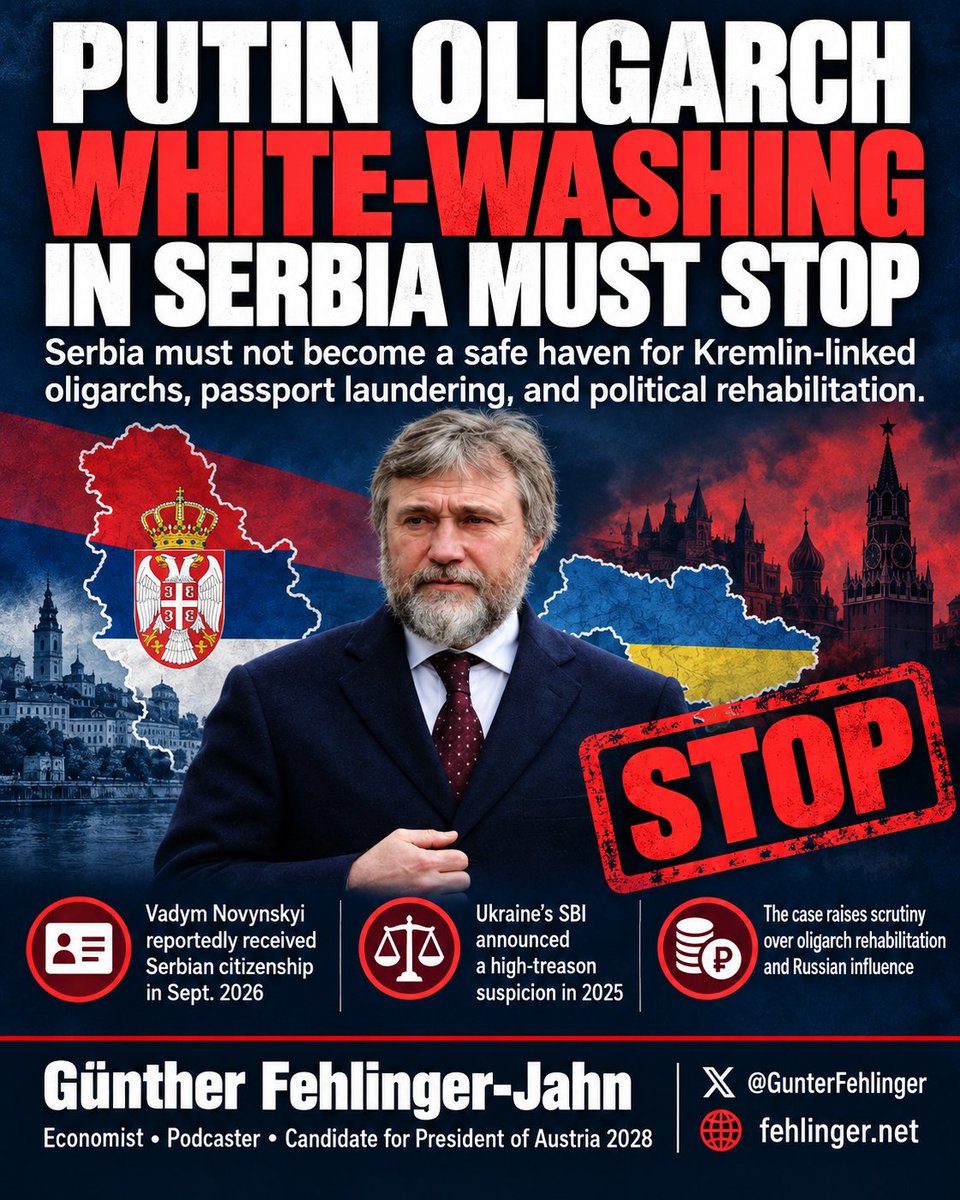
PUTIN OLIGARCH WHITE-WASHING IN SERBIA MUST STOP. Serbia has reportedly granted citizenship to Vadym Novynskyi, the former Ukrainian MP and billionaire. Ukraine’s State Bureau of Investigation announced a high-treason suspicion against him in 2025, alleging pro-Russian influence https://t.co/q7zG4NToc3 #Putin #Serbia #Oligarchs #RS #UA

BBC 2w

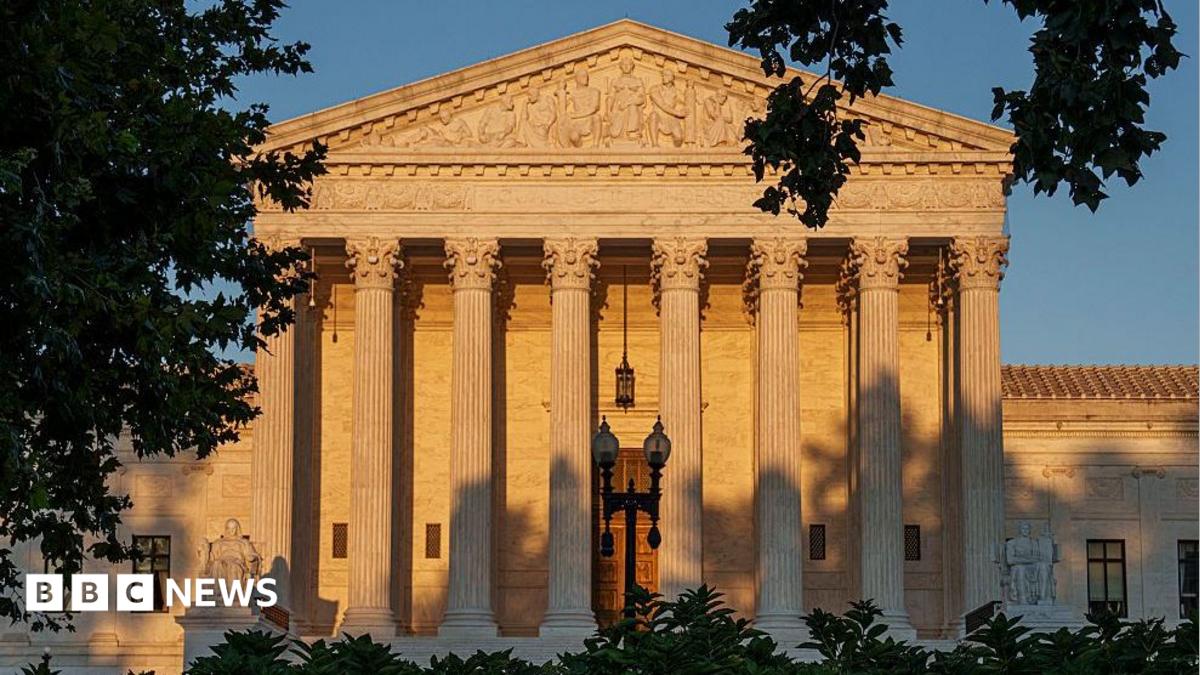
The system uses citizenship information and other sensitive data to filter alleged non-citizen voting. #SupremeCourt #VotingRights #DataPrivacy

www.bbc.co.uk
Supreme Court revives controversial US data system for citizenship checks
1843
Achyuta Samanta 3w

I am very happy and deeply honoured to receive two special honours from two beautiful cities of Romania—Milișăuți and Bârlad. I was conferred the Honorary Citizenship of Milișăuți. I was also honoured by the Municipality of Bârlad with the prestigious title, “Key to the City of Bârlad”, a very special honour, symbolising that the doors of Bârlad will always remain open to me. It was a very special moment for me to receive these honours from the respected Mayors in the presence of the council members and many eminent people. I accept them with all humility as recognition of my lifelong service to education, humanity and society. I am grateful to the Honourable Ambassador of India to Romania for being present on both occasions. My heartfelt thanks to the Mayors and all the council members of the municipalities of Milișăuți and Bârlad for their warmth, affection and respect. I will always cherish the love and honour given to me by the people of Romania. #Onoruri #Romania #CetățenieHonorifică

13869
Gunther Fehlinger-Jahn 4w

I call for a publicly funded smartphone for every European child from the age of 8. Digital participation is no longer a luxury — it is part of education, communication and modern citizenship. Every child in Europe should have access to a secure modern smartphone, high-quality https://t.co/JEIOsYSafi #DigitalInclusion #SmartphoneForAll #EducationAccess #EU

116
Gérard Araud Sep 8

In the West Bank, it has nothing to do with their religion and everything to do with their citizenship. Even if they were Buddhists, Israelis couldn’t modify the demographics of a territory where they are the occupying power : 4th Geneva convention confirmed by the ICJ. #WestBank #Occupation #HumanRights #IL #PS

233
Luciano Magaldi Sardella (PhD) Sep 5

Freeman of the City of London: An Ordinary Honour for All, an Honorary One for Few SOURCE: https://www.linkedin.com/pulse/freeman-city-london-ordinary-honour-all-honorary-one-sardella-ph-d--m1alf/ Abstract The Freedom of the City of London is an institution of mediaeval origin, attested as far back as 1237, originally conceived to afford freeborn citizens protection from feudal obligations, the right to trade, and the ownership of property within the bounds of the Square Mile — the territory of the City of London proper. Having evolved progressively from a concrete economic privilege into a civic and symbolic distinction, it has preserved its relevance over the centuries through successive legislative reforms — most notably the extension of eligibility to all nationalities in 1996 — and today records approximately 1,800 to 2,000 new admissions annually. The present article examines the historical and juridical evolution of the title, sets out the several routes of access provided by current regulation (by servitude through apprenticeship, by patrimony, by redemption through direct nomination, by presentation through the Livery Companies, and by registration on the electoral roll), and analyses the contemporary profile of the Freemen in the light of recent admissions of prominent figures from the worlds of finance, culture, sport, and public life. Contrary to the elitist image surrounding many British honours, the ordinary Freedom proves accessible to any person whatsoever, regardless of nationality or financial standing, upon the satisfaction of minimal requirements and the payment of an administrative fee of £180–185. The article concludes by reflecting upon the contemporary significance of the institution: not in the residual privileges, now largely ceremonial, but in its identity-forming, civic-participatory function and its connection to the long history of the oldest and most venerable city in Europe. Keywords: Freedom of the City of London; Livery Companies; City of London Corporation; British honours; urban civic identity. Contenuto dell’articolo Introduction Amongst the historic honours of Britain, few institutions evoke an imaginative world as rich as the Freedom of the City of London. Cited in films, novels, and articles on manners and custom with tones of exclusivity and mystery, it is frequently associated with figures of the very highest standing: sovereigns, heads of state, military commanders returning from the wars. Yet, upon closer and more methodical scrutiny, a markedly different picture emerges: that of a title which, in its ordinary and non-honorary dimension, is today accessible to a considerable number of persons each year, without the requirement of extraordinary merit or elevated financial means. The present contribution aims to examine the institution in its twofold aspect, historical and contemporary, with the object of dispelling the most prevalent misconception: that which confounds the ordinary Freedom with the Honorary Freedom — the latter genuinely rare and reserved for figures of international standing. This article traces the mediaeval origins and legislative evolution (§ 2), sets out the current routes of access (§ 3), discusses requirements, costs, and procedure (§ 4), analyses the contemporary composition of the body of Freemen (§ 5), examines rights, privileges, and obligations (§ 6), reviews the most distinguished recipients of recent decades (§ 7), and concludes with some reflections upon the contemporary significance of the institution (§ 8). Origins and Historical Development of the Institution The Freedom of the City of London is attested from 1237, during the reign of Henry III, as a form of civic status designating individuals not subject to a feudal lord, and therefore entitled to the protections guaranteed by the City's charters. In this original sense, the term freeman denoted the free man in the fullest sense of the word: one who might trade freely within the perimeter of the Square Mile, hold property, and join the trade guilds without external interference. The practical privileges were of concrete scope and directly functional to the mediaeval economy: exemption from certain tolls, including the celebrated right to drive flocks of sheep across London Bridge without payment — a concession rooted in the wool trade that dominated the English economy — protection against arbitrary arrest beyond the jurisdiction of the City, and access to the markets regulated by the guilds. As confirmed by the subsequent reissues of Magna Carta by Henry III in 1225, such liberties were intrinsically bound to the self-governance of the City, which defended them against royal and baronial interference. The progressive codification of the institution took place through royal ordinances from the fourteenth century onwards. In 1319, Edward II issued constitutions restricting access to the Freedom to members of the trade guilds, prohibiting the admission of unaffiliated outsiders, and thereby formalising servitude through apprenticeship as the principal route for new entrants, whilst the patrimonial route ensured continuity for established families. Subsequent monarchs, from Edward III onwards, repeatedly confirmed the civic liberties through charters granted often in exchange for financial loans, consolidating the City's autonomy and its role as creditor to the Crown. In the nineteenth century, with industrialisation and the demographic expansion of London, corporate control over trade proved increasingly unenforceable. The Municipal Corporations Act of 1835 extended eligibility to any person living, working in, or having a significant connection with London, partially detaching the title from corporate membership and progressively transforming it into an honorary distinction of a civic character. During the twentieth century, further reforms rendered access more inclusive. Women, already admitted informally as widows by inheritance in earlier periods but formally excluded from the standard routes, saw their right to ordinary admission recognised — Angela Burdett-Coutts having already received the Honorary Freedom in 1872, and Florence Nightingale in 1908 — while formal equality was consolidated in the twentieth century. Finally, in 1996, the requirement of British or Commonwealth citizenship was abolished, opening the title to any nationality whatsoever. Routes of Access: The Current Regulatory Framework The current regulations, administered by the Court of the Lord Chamberlain of the City of London Corporation, provide for five principal modes of access to the Freedom of the City of London, each reflecting different historical ties between the individual and the City's institutions. By servitude confers the title upon the completion of a formal apprenticeship under the Custom of London, traditionally of seven years' duration, under a master freeman of a Livery Company. This route, the oldest and of the greatest historical significance, verifies merit through practical competence and loyalty to the guild. Completing apprentices are admitted without the need for approval by the Court of Common Council, provided they have been registered on the City's electoral roll for at least one year, and in such cases no financial contribution is required. By patrimony confers automatic eligibility upon the children of Freemen, provided the parent held the title at the time of the candidate's birth and appropriate documentation is furnished. Historically restricted to sons, it was extended to daughters by the Municipal Corporations Act of 1835. The candidate must have attained the age of eighteen, must not be an undischarged bankrupt, and must not have relevant unspent criminal convictions. By redemption constitutes the route open to any person whatsoever. The candidate submits an application to the Court of the Lord Chamberlain, supported by two sponsors — Common Councillors, Aldermen, or Liverymen of at least one year's standing who attest to their reputation — and the matter is examined by the Freedom Applications Sub-Committee and approved by the Court of Common Council. The administrative fee (the Freedom Fine) amounts to £180 following the tariff revision of 1 April 2024 (£185 in the case of direct nomination). For candidates registered on the Ward List, the City's electoral roll, the procedure is free of charge. By presentation through a Livery Company is the route most frequently taken in contemporary practice. The candidate first becomes a member of their relevant guild, following a procedure that varies amongst each of the 113 Livery Companies currently active, and subsequently submits an online application to the Court of the Lord Chamberlain for admission to the Freedom of the City, with approval in the vast majority of cases being a matter of routine. Requirements, Costs, and Procedure The requirements for access to the ordinary Freedom are of a simplicity that may well surprise, given the aura of exclusivity surrounding the title. The candidate must have attained the age of eighteen, must not be an undischarged bankrupt, and must not have unspent criminal convictions within the meaning of the Rehabilitation of Offenders Act of 1974. No requirement of nationality, residence, educational attainment, or financial standing is imposed. The documentation required is of a standard biographical character: a full birth certificate, a marriage certificate or name-change document where applicable, and, where admission is by presentation, the certificate of membership issued by the relevant Livery Company. The application is submitted online through the City of London Corporation's portal. The admission ceremony is held at the Guildhall in London, in the Court Room of the Lord Chamberlain, on every working day between 10.30 and 12.00, and between 14.00 and 15.30. The newly admitted Freeman is invited to read aloud the Declaration of a Freeman and to sign the Admissions' Book, receiving upon its conclusion a calligraphed certificate on vellum and a copy of the Rules for the Conduct of Life — the eighteenth-century document of moral guidance that enjoins the holder to lead a life of rectitude, compassion, and social engagement. For those unable to attend in person, the City Corporation has retained the option of conducting the ceremony virtually, a facility introduced during the pandemic and subsequently preserved. The Contemporary Composition of the Body of Freemen One significant empirical datum serves to diminish the elitist dimension of the title: between 1,800 and 2,000 new persons are admitted each year, within a body that counts over 300,000 documented admissions across the centuries. As the City of London Corporation itself observes, contemporary Freemen comprise 'a broad cross-section of the population', encompassing professionals, students, craftspeople, entrepreneurs, military personnel, and foreign nationals. The growing contribution of university students, frequently presented in groups by their academic institutions, and of international professionals, has further broadened the demographic base. The group ceremony of 2024, in which 40 individuals drawn from fields ranging from science and medicine to entrepreneurship and diversity initiatives received the title simultaneously, is illustrative of this openness. A fundamental distinction must, however, be emphasised. The Honorary Freedom of the City of London constitutes an entirely separate institution of radically different scope. Granted by the Court of Common Council by special resolution, it is reserved for figures of exceptional international stature — typically fewer than a dozen conferred annually — and represents, in the words of the City Corporation itself, the highest honour it is able to bestow. It is this Freedom that has been enjoyed by Winston Churchill, Her Majesty Queen Elizabeth II, and, more recently, the television presenter Rachel Riley (October 2025), in recognition of her commitment to Holocaust education and the combating of antisemitism. The confusion between the two forms is the principal source of the distorted public perception of the institution. The Contemporary Significance: Between Identity and Participation While the great majority of the practical privileges once associated with the condition of Freeman have today disappeared or been reduced to solemn ceremonial form, what persists is the powerful symbolic and identity-forming value of the title. The ceremony retains elements of ritual solemnity — the reading of the Declaration, the signing of the historic Admission Register, the receipt of the calligraphed certificate on vellum — which inscribe the new Freeman within a chain of continuity of nearly eight centuries, linking diverse figures through a shared bond with the history of the Square Mile. This venerable London institution also performs a cohesive function within the ecosystem of the City and the Livery Companies. The 113 active guilds collectively disbursed over £81 million in charitable activities in 2024, through programmes of vocational training, scholarships, and technical apprenticeships that preserve specialist skills in economically significant sectors. Being a Freeman constitutes a formal prerequisite for advancement to Liveryman, and therefore for the exercise of voting rights in the governance of the City: a vestige of corporate democracy which, however distant from the models of universal suffrage, retains its own institutional logic within the unique legal architecture of the London Square Mile. Critics of a progressive persuasion have observed that the system favours established networks and access by hereditary or professional routes, potentially excluding broader strata of the London population, with the pool of living Freemen well below one per cent of the nine million residents of Greater London. Nevertheless, the data on recent admissions — encompassing recognition spanning African entrepreneurship, community sport, broadcasting, and medicine — suggest a trajectory of progressive opening which, whilst falling short of full demographic representativeness, attests to the institutional will to maintain the institution as a living tradition rather than an exclusive relic. Conclusions The foregoing analysis permits the formulation of several concluding observations. The Freedom of the City — the ordinary Freedom — is today an honour accessible to a far wider audience than the collective imagination suggests. The admission requirements are minimal, the costs modest, the procedures relatively streamlined and open to any nationality. The persistent confusion with the Honorary Freedom, reserved for figures of exceptional international eminence, is the principal source of a distorted perception that merits correction. The contemporary value of the title resides not in the residual privileges, now largely solemn and ceremonial, but in three complementary dimensions: the identity-forming, which connects the holder to nearly eight centuries of institutional history; the civic-participatory, which through access to the Livery Companies and the City's electoral system inserts the Freeman into genuinely operative networks; and the communitarian, which through the mechanisms of honorary recognition celebrates contributions of an ever more varied scope and provenance. In this respect, the Freedom represents an instructive case study in how historic institutions may reinvent themselves without losing authenticity, preserving their significance through inclusion rather than exclusion. References and Sources: City of London Corporation. (2024). Freedom of the City of London. https://www.cityoflondon.gov.uk/about-us/law-historic-governance/freedom-of-the-city Guild of Freemen of the City of London. (2025). Freedom of the City. https://www.guild-freemen-london.co.uk/freedom-of-the-city Livery Committee. (2025). Freedom of the City. https://liverycommittee.org/about/membership-freedom-and-livery-clothing/freedom-of-the-city/ Municipal Corporations Act 1835. UK Parliament. Rehabilitation of Offenders Act 1974. UK Parliament. Grokipedia. (2025). Freedom of the City of London. https://grokipedia.com/page/Freedom_of_the_City_of_London City Solicitors' Educational Trust. (2025). Applying for the Freedom of the City of London. LondradaVivere.com. (2025). La 'Freedom of the City of London': un'antica libertà ancora viva. City of London Corporation. (2023). Livery Companies: Charitable Activities Report 2024. ONS / City of London Corporation. (2023). Financial Services Contribution to UK GDP.

www.linkedin.com
Freeman of the City of London: An Ordinary Honour for All, an Honorary One for Few
934
Peadar Tóibín TD Sep 4

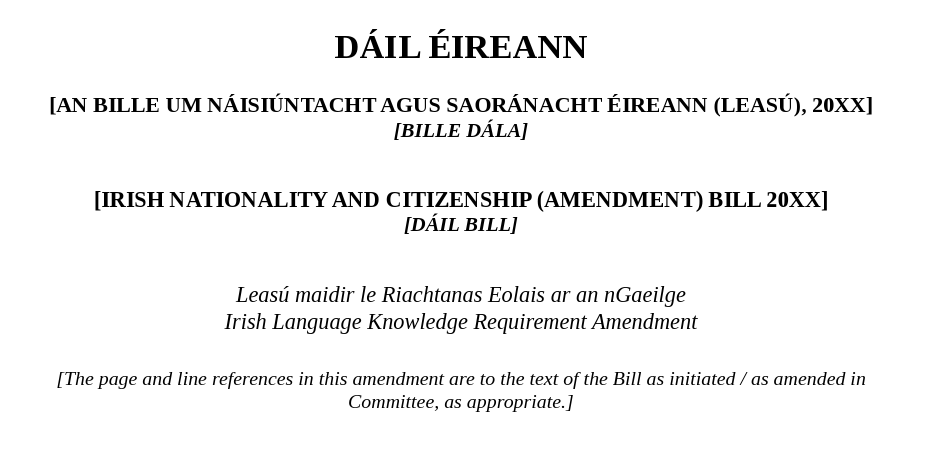
Aontú is working on a Bill seeking a rudimentary knowledge of the Irish language for those applying for Irish citizenship. Irish is our first language. Its an enormous part of our heritage & identity. Its important that new citizens have respect for Irish values & culture. https://t.co/rjkB2HUnY5 #IrishLanguage #Citizenship #CulturalHeritage #IE

4441
Greg Lukianoff Aug 30

FIRE won a huge First Amendment victory today. And before anyone mischaracterizes it: This ruling does NOT say the government must admit anyone, issue anyone a visa, or grant anyone citizenship. It says that once a person is lawfully here, the government cannot deport them #FirstAmendment #FIRERules #ImmigrationLaw #Nospecificcountrycodesarementionedinthetweet.

463626
Gunther Fehlinger-Jahn Aug 29

ISRAEL IN NATO & THE EU — ONE UNITED ISRAEL, ONE EUROPEAN FUTURE 🇮🇱🇪🇺 My Fehlinger Peace Plan for the Middle East is based on one simple idea: stop building peace around permanent division and start building it around citizenship, federalism, security and integration. I propose https://t.co/EmFOY6QW2h #Israel #NATO #PeacePlan #IL #EU

234
Gunther Fehlinger-Jahn Aug 29

NO TO PALESTINIAN STATEHOOD. YES TO FULL CITIZEN RIGHTS. 🇮🇱 My Fehlinger Peace Plan rejects another partition of the land. Instead, I propose one united, federal and democratic Israel in which Israel, Gaza, the West Bank and the Golan Heights are part of one constitutional https://t.co/C8JLhlzSXG #OneIsrael #PeacePlan #CitizenshipRights #IL #PS

S
Sandfeen Aug 28

Why Leftist Activists and Revolutionaries Can Never Declare Victory Leftist movements face a paradox: they use oppression narratives to gain institutional power, then keep claiming victimhood as that power grows. Instead of disappearing, activism “shapeshifts” inside bureaucracy, media, academia, corporations, and the arts. Even when DEI is challenged, its structures often remain under new names—diversity becomes “belonging” or “inclusive culture.” The logic is permanent revolution: influence depends on the struggle never ending. Goals shift, new categories of oppression are defined, and intersectionality divides people into ever finer oppressor/oppressed groups, creating an endless hierarchy of grievances. If activists declared victory, the justification for ongoing mobilization would collapse. The risk is social atomization: identities replace shared citizenship, and the state shifts from neutral protector to an instrument for redistributing power between designated victims and oppressors. Bureaucracy and propaganda can replace community and argument. History shows recurring purges—once the revolution’s machinery turns inward, yesterday’s enforcers become today’s targets. The result is also a ressentiment psychology: identity forms around an “enemy,” not one’s own strength. This dynamic helps sustain the consultancy model—identify the guilty, define the aggrieved, and perpetuate conflict. Equality with a finish line is manageable; equality of outcomes is not, so there is always another disparity, injustice, or enemy. The movement fears completion less than failure, because ending would make its power machinery unnecessary.

1055
toomas hendrik ilves Aug 27

https://t.co/DsgGuI1RVs Russians falsifying citizenship exams. OK, twelve were caught. But how did Timchenko, Putin's best buddy and head of Gunvor get Finnish citizenship? #Russia #Citizenship #Putin #RU #FI

235
Rick Falkvinge 🌻 Aug 24

Kuwait revokes voting rights from naturalized migrants with citizenship. What do you know, apparently this is a thing you can... just do? https://t.co/jzt2l68tLP #Kuwait #VotingRights #Citizenship #KW

Chidimma Vanessa Onwe Adetshina Aug 19

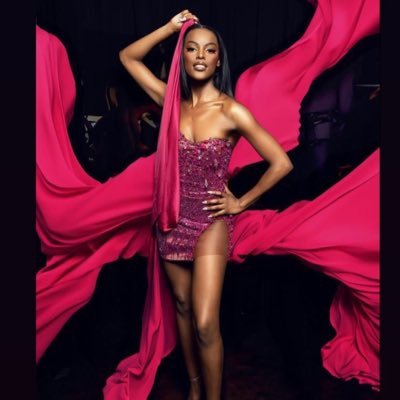
I remind everyone that I was born in South Africa. I have applied through the proper legal channels to have my status and citizenship determined.

'I was born in South Africa', says beauty queen facing legal bid to deport her
www.bbc.co.uk
8230