Africa Daily Report — 30 September 2026 Major developments reported during the previous 24 hours. 1. Morocco — Fatima Ezzahra El Mansouri appointed first woman prime minister. King Mohammed VI appointed El Mansouri following the September 23 parliamentary election. Her Authenticity and Modernity Party won the largest number of seats, and she now has to form a coalition. The appointment is historic, while the next government will also inherit major economic reforms and preparations for the 2030 World Cup. Direct source: https://www.reuters.com/world/africa/moroccos-king-appoints-first-woman-pm-following-sept-23-election-2026-09-29/ 2. Ethiopia — Fighting intensifies around Tigray amid wider regional accusations. Fighting between federal and Tigrayan forces has escalated, with territorial shifts and concern that the conflict could again spread across northern Ethiopia. Ethiopian officials have accused regional rivals of supporting armed groups, while communications disruptions and displacement are complicating independent assessment and humanitarian access. The renewed conflict threatens the fragile post-2022 settlement. Direct source: https://www.aljazeera.com/news/2026/9/29/fighting-in-ethiopia-intensifies-whats-the-latest 3. Somalia/Puntland — Five tanker crew members killed in piracy incident. Puntland authorities said Somali pirates killed five crew members of the petroleum-products tanker MT Honour 25 before security forces rescued the hijacked vessel. The incident is a serious reminder that piracy remains an operational security threat off the Horn of Africa despite years of international maritime-security efforts. Importance: HIGH — maritime security and Red Sea/Indian Ocean trade routes. Direct source: https://www.reuters.com/world/africa/somali-pirates-killed-5-crew-members-hijacked-tanker-before-rescue-mission-2026-09-29/ 4. Kenya/Nigeria — Dangote advances $16 billion Lamu refinery. Dangote is moving ahead with the planned 700,000-barrel-per-day refinery at Lamu. The project is intended to reduce East Africa's dependence on imported refined fuels and could generate more than 50,000 jobs, but it faces infrastructure, environmental and land-rights challenges. A Kenyan court dispute could restrict some site activity pending an October 14 hearing. Importance: VERY HIGH — potentially transformative for East African energy supply, fuel imports, logistics and industrial development. Direct source: https://www.reuters.com/business/energy/dangote-begin-construction-16-billion-east-africa-refinery-kenya-2026-09-30/ 5. South Africa — Foreign direct investment more than doubles in Q2. South Africa's central bank reported FDI inflows of 49.8 billion rand in the second quarter, up from 20.3 billion rand in Q1. The increase is an encouraging investment signal, although it needs to be considered alongside the country's broader growth, fiscal and structural indicators. Importance: HIGH — investment flows are a key indicator for Africa's most industrialised economy. Direct source: https://www.reuters.com/world/africa/south-africas-foreign-direct-investment-inflows-pick-up-q2-2026-09-29/ 6. Ghana — Environmental regulator intensifies mining-sector enforcement. Ghana's Environmental Protection Authority issued a pre-closure notice to Chinese-owned Cardinal Namdini Mining over an alleged unreported incident and is reviewing an inspection of Gold Fields' Tarkwa operation. The regulator says it is moving from periodic inspections toward continuous monitoring and enforcement as Ghana seeks stronger environmental compliance, state revenue and local participation in its gold industry. Importance: HIGH — regulatory tightening can materially affect major international mining investors and Ghana's gold industry. Direct source: https://kfgo.com/2026/09/29/exclusive-ghanas-environmental-authority-targets-chinese-owned-cardinal-and-others-in-mining-crackdown/ 7. DR Congo — Annual audits of major miners planned from 2027. The DRC plans annual audits of major mining companies' subcontracting practices and compliance with local-content requirements beginning in 2027. The world's largest cobalt producer and Africa's leading copper producer is tightening oversight to direct more procurement and contracts toward Congolese-owned businesses. Importance: HIGH — potentially significant for global copper/cobalt supply chains and mining contractors operating in DRC. Direct source: https://ca.marketscreener.com/news/congo-to-audit-major-miners-annually-from-2027-as-part-of-local-content-drive-regulator-says-ce785adddc81f221 8. Tunisia/Mediterranean — Migrant shipwreck leaves at least two dead. Sea-Watch said it rescued 28 people after a shipwreck off Tunisia and recovered two bodies, including a child. Survivors reported at least six people missing, including three children. More than 1,970 people have died or gone missing attempting Mediterranean crossings in 2026, according to Sea-Watch, even as arrivals in Italy have fallen sharply from 2025. Importance: HIGH — migration, humanitarian protection and EU–North Africa policy remain closely linked. Direct source: https://www.straitstimes.com/world/europe/migrant-shipwreck-off-tunisia-leaves-at-least-two-dead-six-reported-missing 9. Guinea-Bissau — Ousted president plans return ahead of December election. Former president Umaro Sissoco Embalo, removed in the November 2025 coup, plans to return on October 4 and seek the presidency in elections scheduled for December 6, according to a source cited by Reuters. A recently approved constitutional residency requirement could become relevant to his eligibility. The military-led authorities have reportedly said he is welcome to return. Direct source: https://kfgo.com/2026/09/29/ousted-guinea-bissau-leader-to-run-in-december-election-source-says/ 10. Sudan — Currency collapse brings fuel queues back to Khartoum. Long fuel queues have returned in Khartoum and several other areas as the Sudanese pound reportedly weakened beyond 8,000 to the US dollar on the parallel market. The currency deterioration is adding to transport and commodity pressures in an economy already devastated by war and disrupted production and trade. Importance: VERY HIGH — the currency/fuel shock compounds Sudan's humanitarian and economic crisis. Direct source: https://sudantribune.com/article/319408 #TopNewsOfAfrica #Africa #AfricaNews #AfricaDaily #Morocco #FatimaEzzahraElMansouri #WomenInLeadership #FirstWomanPrimeMinister #MoroccanPolitics #NorthAfrica #Kenya #Nigeria #Dangote #LamuRefinery #EastAfrica #EnergySecurity #RefineryProject #IndustrialDevelopment #Infrastructure #Investment #Somalia #Puntland #Piracy #MaritimeSecurity #HornOfAfrica #ShippingSecurity #IndianOcean #RedSea #AfricanEconomy #AfricanSecurity #Geopolitics #wrldorg
Proposal: EU-funded Starlink access for Palestinian households. The goal should be simple: reliable internet, direct access to multiple sources of information, and the ability for civilians to communicate independently. Any program should include transparent eligibility rules, https://t.co/xecSsSjeDD #Starlink #Palestine #DigitalAccess #PS
Freeman of the City of London: An Ordinary Honour for All, an Honorary One for Few SOURCE: https://www.linkedin.com/pulse/freeman-city-london-ordinary-honour-all-honorary-one-sardella-ph-d--m1alf/ Abstract The Freedom of the City of London is an institution of mediaeval origin, attested as far back as 1237, originally conceived to afford freeborn citizens protection from feudal obligations, the right to trade, and the ownership of property within the bounds of the Square Mile — the territory of the City of London proper. Having evolved progressively from a concrete economic privilege into a civic and symbolic distinction, it has preserved its relevance over the centuries through successive legislative reforms — most notably the extension of eligibility to all nationalities in 1996 — and today records approximately 1,800 to 2,000 new admissions annually. The present article examines the historical and juridical evolution of the title, sets out the several routes of access provided by current regulation (by servitude through apprenticeship, by patrimony, by redemption through direct nomination, by presentation through the Livery Companies, and by registration on the electoral roll), and analyses the contemporary profile of the Freemen in the light of recent admissions of prominent figures from the worlds of finance, culture, sport, and public life. Contrary to the elitist image surrounding many British honours, the ordinary Freedom proves accessible to any person whatsoever, regardless of nationality or financial standing, upon the satisfaction of minimal requirements and the payment of an administrative fee of £180–185. The article concludes by reflecting upon the contemporary significance of the institution: not in the residual privileges, now largely ceremonial, but in its identity-forming, civic-participatory function and its connection to the long history of the oldest and most venerable city in Europe. Keywords: Freedom of the City of London; Livery Companies; City of London Corporation; British honours; urban civic identity. Contenuto dell’articolo Introduction Amongst the historic honours of Britain, few institutions evoke an imaginative world as rich as the Freedom of the City of London. Cited in films, novels, and articles on manners and custom with tones of exclusivity and mystery, it is frequently associated with figures of the very highest standing: sovereigns, heads of state, military commanders returning from the wars. Yet, upon closer and more methodical scrutiny, a markedly different picture emerges: that of a title which, in its ordinary and non-honorary dimension, is today accessible to a considerable number of persons each year, without the requirement of extraordinary merit or elevated financial means. The present contribution aims to examine the institution in its twofold aspect, historical and contemporary, with the object of dispelling the most prevalent misconception: that which confounds the ordinary Freedom with the Honorary Freedom — the latter genuinely rare and reserved for figures of international standing. This article traces the mediaeval origins and legislative evolution (§ 2), sets out the current routes of access (§ 3), discusses requirements, costs, and procedure (§ 4), analyses the contemporary composition of the body of Freemen (§ 5), examines rights, privileges, and obligations (§ 6), reviews the most distinguished recipients of recent decades (§ 7), and concludes with some reflections upon the contemporary significance of the institution (§ 8). Origins and Historical Development of the Institution The Freedom of the City of London is attested from 1237, during the reign of Henry III, as a form of civic status designating individuals not subject to a feudal lord, and therefore entitled to the protections guaranteed by the City's charters. In this original sense, the term freeman denoted the free man in the fullest sense of the word: one who might trade freely within the perimeter of the Square Mile, hold property, and join the trade guilds without external interference. The practical privileges were of concrete scope and directly functional to the mediaeval economy: exemption from certain tolls, including the celebrated right to drive flocks of sheep across London Bridge without payment — a concession rooted in the wool trade that dominated the English economy — protection against arbitrary arrest beyond the jurisdiction of the City, and access to the markets regulated by the guilds. As confirmed by the subsequent reissues of Magna Carta by Henry III in 1225, such liberties were intrinsically bound to the self-governance of the City, which defended them against royal and baronial interference. The progressive codification of the institution took place through royal ordinances from the fourteenth century onwards. In 1319, Edward II issued constitutions restricting access to the Freedom to members of the trade guilds, prohibiting the admission of unaffiliated outsiders, and thereby formalising servitude through apprenticeship as the principal route for new entrants, whilst the patrimonial route ensured continuity for established families. Subsequent monarchs, from Edward III onwards, repeatedly confirmed the civic liberties through charters granted often in exchange for financial loans, consolidating the City's autonomy and its role as creditor to the Crown. In the nineteenth century, with industrialisation and the demographic expansion of London, corporate control over trade proved increasingly unenforceable. The Municipal Corporations Act of 1835 extended eligibility to any person living, working in, or having a significant connection with London, partially detaching the title from corporate membership and progressively transforming it into an honorary distinction of a civic character. During the twentieth century, further reforms rendered access more inclusive. Women, already admitted informally as widows by inheritance in earlier periods but formally excluded from the standard routes, saw their right to ordinary admission recognised — Angela Burdett-Coutts having already received the Honorary Freedom in 1872, and Florence Nightingale in 1908 — while formal equality was consolidated in the twentieth century. Finally, in 1996, the requirement of British or Commonwealth citizenship was abolished, opening the title to any nationality whatsoever. Routes of Access: The Current Regulatory Framework The current regulations, administered by the Court of the Lord Chamberlain of the City of London Corporation, provide for five principal modes of access to the Freedom of the City of London, each reflecting different historical ties between the individual and the City's institutions. By servitude confers the title upon the completion of a formal apprenticeship under the Custom of London, traditionally of seven years' duration, under a master freeman of a Livery Company. This route, the oldest and of the greatest historical significance, verifies merit through practical competence and loyalty to the guild. Completing apprentices are admitted without the need for approval by the Court of Common Council, provided they have been registered on the City's electoral roll for at least one year, and in such cases no financial contribution is required. By patrimony confers automatic eligibility upon the children of Freemen, provided the parent held the title at the time of the candidate's birth and appropriate documentation is furnished. Historically restricted to sons, it was extended to daughters by the Municipal Corporations Act of 1835. The candidate must have attained the age of eighteen, must not be an undischarged bankrupt, and must not have relevant unspent criminal convictions. By redemption constitutes the route open to any person whatsoever. The candidate submits an application to the Court of the Lord Chamberlain, supported by two sponsors — Common Councillors, Aldermen, or Liverymen of at least one year's standing who attest to their reputation — and the matter is examined by the Freedom Applications Sub-Committee and approved by the Court of Common Council. The administrative fee (the Freedom Fine) amounts to £180 following the tariff revision of 1 April 2024 (£185 in the case of direct nomination). For candidates registered on the Ward List, the City's electoral roll, the procedure is free of charge. By presentation through a Livery Company is the route most frequently taken in contemporary practice. The candidate first becomes a member of their relevant guild, following a procedure that varies amongst each of the 113 Livery Companies currently active, and subsequently submits an online application to the Court of the Lord Chamberlain for admission to the Freedom of the City, with approval in the vast majority of cases being a matter of routine. Requirements, Costs, and Procedure The requirements for access to the ordinary Freedom are of a simplicity that may well surprise, given the aura of exclusivity surrounding the title. The candidate must have attained the age of eighteen, must not be an undischarged bankrupt, and must not have unspent criminal convictions within the meaning of the Rehabilitation of Offenders Act of 1974. No requirement of nationality, residence, educational attainment, or financial standing is imposed. The documentation required is of a standard biographical character: a full birth certificate, a marriage certificate or name-change document where applicable, and, where admission is by presentation, the certificate of membership issued by the relevant Livery Company. The application is submitted online through the City of London Corporation's portal. The admission ceremony is held at the Guildhall in London, in the Court Room of the Lord Chamberlain, on every working day between 10.30 and 12.00, and between 14.00 and 15.30. The newly admitted Freeman is invited to read aloud the Declaration of a Freeman and to sign the Admissions' Book, receiving upon its conclusion a calligraphed certificate on vellum and a copy of the Rules for the Conduct of Life — the eighteenth-century document of moral guidance that enjoins the holder to lead a life of rectitude, compassion, and social engagement. For those unable to attend in person, the City Corporation has retained the option of conducting the ceremony virtually, a facility introduced during the pandemic and subsequently preserved. The Contemporary Composition of the Body of Freemen One significant empirical datum serves to diminish the elitist dimension of the title: between 1,800 and 2,000 new persons are admitted each year, within a body that counts over 300,000 documented admissions across the centuries. As the City of London Corporation itself observes, contemporary Freemen comprise 'a broad cross-section of the population', encompassing professionals, students, craftspeople, entrepreneurs, military personnel, and foreign nationals. The growing contribution of university students, frequently presented in groups by their academic institutions, and of international professionals, has further broadened the demographic base. The group ceremony of 2024, in which 40 individuals drawn from fields ranging from science and medicine to entrepreneurship and diversity initiatives received the title simultaneously, is illustrative of this openness. A fundamental distinction must, however, be emphasised. The Honorary Freedom of the City of London constitutes an entirely separate institution of radically different scope. Granted by the Court of Common Council by special resolution, it is reserved for figures of exceptional international stature — typically fewer than a dozen conferred annually — and represents, in the words of the City Corporation itself, the highest honour it is able to bestow. It is this Freedom that has been enjoyed by Winston Churchill, Her Majesty Queen Elizabeth II, and, more recently, the television presenter Rachel Riley (October 2025), in recognition of her commitment to Holocaust education and the combating of antisemitism. The confusion between the two forms is the principal source of the distorted public perception of the institution. The Contemporary Significance: Between Identity and Participation While the great majority of the practical privileges once associated with the condition of Freeman have today disappeared or been reduced to solemn ceremonial form, what persists is the powerful symbolic and identity-forming value of the title. The ceremony retains elements of ritual solemnity — the reading of the Declaration, the signing of the historic Admission Register, the receipt of the calligraphed certificate on vellum — which inscribe the new Freeman within a chain of continuity of nearly eight centuries, linking diverse figures through a shared bond with the history of the Square Mile. This venerable London institution also performs a cohesive function within the ecosystem of the City and the Livery Companies. The 113 active guilds collectively disbursed over £81 million in charitable activities in 2024, through programmes of vocational training, scholarships, and technical apprenticeships that preserve specialist skills in economically significant sectors. Being a Freeman constitutes a formal prerequisite for advancement to Liveryman, and therefore for the exercise of voting rights in the governance of the City: a vestige of corporate democracy which, however distant from the models of universal suffrage, retains its own institutional logic within the unique legal architecture of the London Square Mile. Critics of a progressive persuasion have observed that the system favours established networks and access by hereditary or professional routes, potentially excluding broader strata of the London population, with the pool of living Freemen well below one per cent of the nine million residents of Greater London. Nevertheless, the data on recent admissions — encompassing recognition spanning African entrepreneurship, community sport, broadcasting, and medicine — suggest a trajectory of progressive opening which, whilst falling short of full demographic representativeness, attests to the institutional will to maintain the institution as a living tradition rather than an exclusive relic. Conclusions The foregoing analysis permits the formulation of several concluding observations. The Freedom of the City — the ordinary Freedom — is today an honour accessible to a far wider audience than the collective imagination suggests. The admission requirements are minimal, the costs modest, the procedures relatively streamlined and open to any nationality. The persistent confusion with the Honorary Freedom, reserved for figures of exceptional international eminence, is the principal source of a distorted perception that merits correction. The contemporary value of the title resides not in the residual privileges, now largely solemn and ceremonial, but in three complementary dimensions: the identity-forming, which connects the holder to nearly eight centuries of institutional history; the civic-participatory, which through access to the Livery Companies and the City's electoral system inserts the Freeman into genuinely operative networks; and the communitarian, which through the mechanisms of honorary recognition celebrates contributions of an ever more varied scope and provenance. In this respect, the Freedom represents an instructive case study in how historic institutions may reinvent themselves without losing authenticity, preserving their significance through inclusion rather than exclusion. References and Sources: City of London Corporation. (2024). Freedom of the City of London. https://www.cityoflondon.gov.uk/about-us/law-historic-governance/freedom-of-the-city Guild of Freemen of the City of London. (2025). Freedom of the City. https://www.guild-freemen-london.co.uk/freedom-of-the-city Livery Committee. (2025). Freedom of the City. https://liverycommittee.org/about/membership-freedom-and-livery-clothing/freedom-of-the-city/ Municipal Corporations Act 1835. UK Parliament. Rehabilitation of Offenders Act 1974. UK Parliament. Grokipedia. (2025). Freedom of the City of London. https://grokipedia.com/page/Freedom_of_the_City_of_London City Solicitors' Educational Trust. (2025). Applying for the Freedom of the City of London. LondradaVivere.com. (2025). La 'Freedom of the City of London': un'antica libertà ancora viva. City of London Corporation. (2023). Livery Companies: Charitable Activities Report 2024. ONS / City of London Corporation. (2023). Financial Services Contribution to UK GDP.
Not every election needs the same level of identity verification. With the new Votari, an election can be open to anyone with the link, restricted by email domain, require passport verification—or combine eligibility rules. The organiser decides what the election requires. One #Votari #ElectionAccess #IdentityVerification #Nocountrycodesarementionedinthetweet.
Big update from @VotariApp 🚀 Elections can now be: 🌍 Open — anyone with the QR code can vote 📧 Email domain-based — ideal for universities and organisations 🛂 Passport-verified — for stronger voter eligibility Votari is also now localised for Brazil, Portugal, Spain and #VotariApp #Elections #VotingInnovation #BR #PT #ES
🚨⚠️ OFFICIAL: Belgian Federation inform US Soccer they will contest Balogun’s eligibility after the game, if selected. “The RBFA has informed the United States Soccer Federation that it contests the eligibility of the player, should the player be listed on the referee's team https://t.co/ybcaLRBjXx #Balogun #Eligibility #USSoccer #BE #US
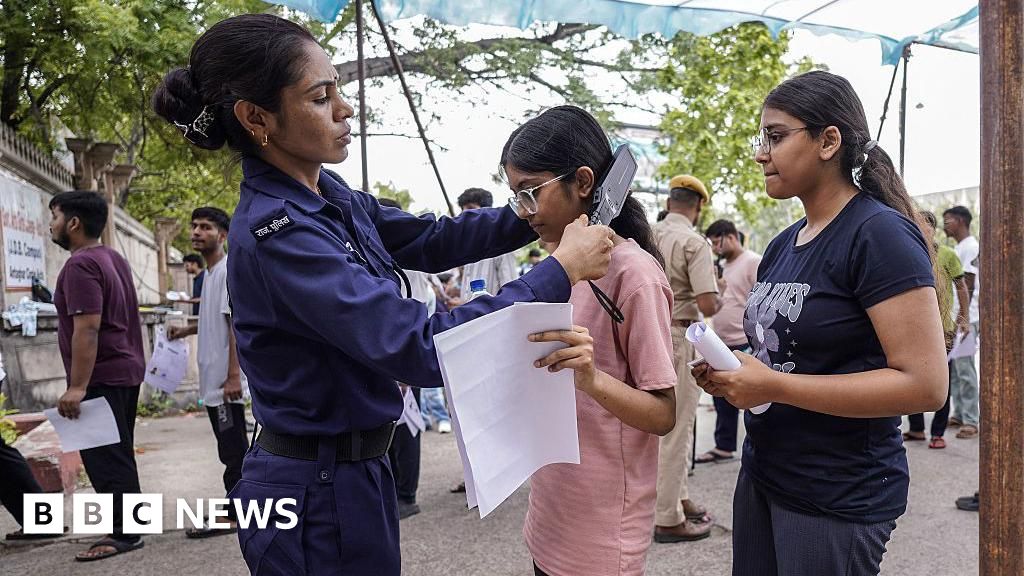
In India, millions of medical students are resitting the National Eligibility cum Entrance Test (NEET-UG) under heightened security measures following the cancellation of the original exam due to a paper leak, with extensive protocols including biometric checks, metal detectors, and the involvement of the Indian Air Force for secure transport of new test papers. #MedicalExams #SecurityMeasures #PaperLeak

🚨🇦🇺 Cristian Volpato has decided to switch eligibility from Italy to Australia ahead of joining the Socceroos squad before the World Cup. https://t.co/zOHCVFCxrN #Socceroos #CristianVolpato #WorldCup #AU #IT
RT @Miroandrej: After the IOC @iocmedia announced its new policy re eligibility in the female category (no male advantage permitted) there… #IOC #GenderEquality #SportsPolicy #Nospecificcountrycodesarementionedinthetweetyouprovided.
A charity has urged for an expanded rollout of meningitis vaccines following the death of a teenage boy in Oxfordshire from the disease, highlighting the need for improved protection for young people as the Joint Committee on Vaccination and Immunisation reviews eligibility for routine Meningitis B vaccination. #Meningitis #Vaccination #PublicHealth #GB
A charity is advocating for an expanded availability of meningitis vaccines following the death of a teenage boy in Oxfordshire from the disease, as concerns grow over the safety of young individuals amidst rising cases of meningitis B (MenB), prompting the DHSC to review vaccination eligibility for teens and young adults. #Meningitis #Vaccination #PublicHealth #GB
GLP-1 weight loss injections, which have revolutionized obesity treatment with around 100 million users worldwide, are facing challenges in accessibility on the NHS due to strict eligibility criteria and high costs, despite their efficacy highlighted by clinical trials showing substantial weight loss in patients. #WeightLoss #ObesityCrisis #GLP1 #GB #US #DK
Texas Tech quarterback Brendan Sorsby, currently in a residential treatment program for gambling addiction, is facing NCAA investigations for alleged betting violations during his time with Indiana and has retained legal counsel to expedite his eligibility resolution, while also potentially considering a lawsuit against the NCAA if deemed ineligible. #CollegeAthletics #GamblingAddiction #NCAAEthics #US #IN #OH #TX #KY #CN
The Justice Department informed a federal judge that citizenship lists ordered by the Trump administration for state election officials are likely to be incomplete and unreliable for determining voter eligibility, amidst a lawsuit challenging the executive order aimed at creating these registries and involving the U.S. Postal Service in regulating mail-in voting, raising concerns about potential voter purges and the order's constitutionality. #VotingRights #ElectionIntegrity #TrumpAdministration #USA
The Justice Department informed a federal judge that the citizenship lists mandated by the Trump administration for state election officials are likely to be incomplete and unreliable, heightening concerns over the executive order's potential legal challenges and its implications for voter eligibility and election integrity. #Elections #VoterRegistration #LegalChallenges #USA
The Justice Department informed a federal judge that citizenship lists ordered by the Trump administration for state election officials this year are likely incomplete and unreliable for determining voter eligibility, raising concerns about potential legal challenges and the implications for upcoming elections. #VotingRights #ElectionIntegrity #LegalChallenges #US #TX #NY

The Justice Department informed a federal judge that citizenship lists ordered by the Trump administration for state election officials are likely to be incomplete and unreliable for assessing voter eligibility, raising concerns over the executive order aimed at creating state registries and regulating mail-in voting, amid ongoing legal challenges from Democratic organizations citing constitutional and privacy violations. #VotingRights #ElectionIntegrity #GovernmentTransparency #US