WRLD

Search

#Expression
Franceinfo 5h

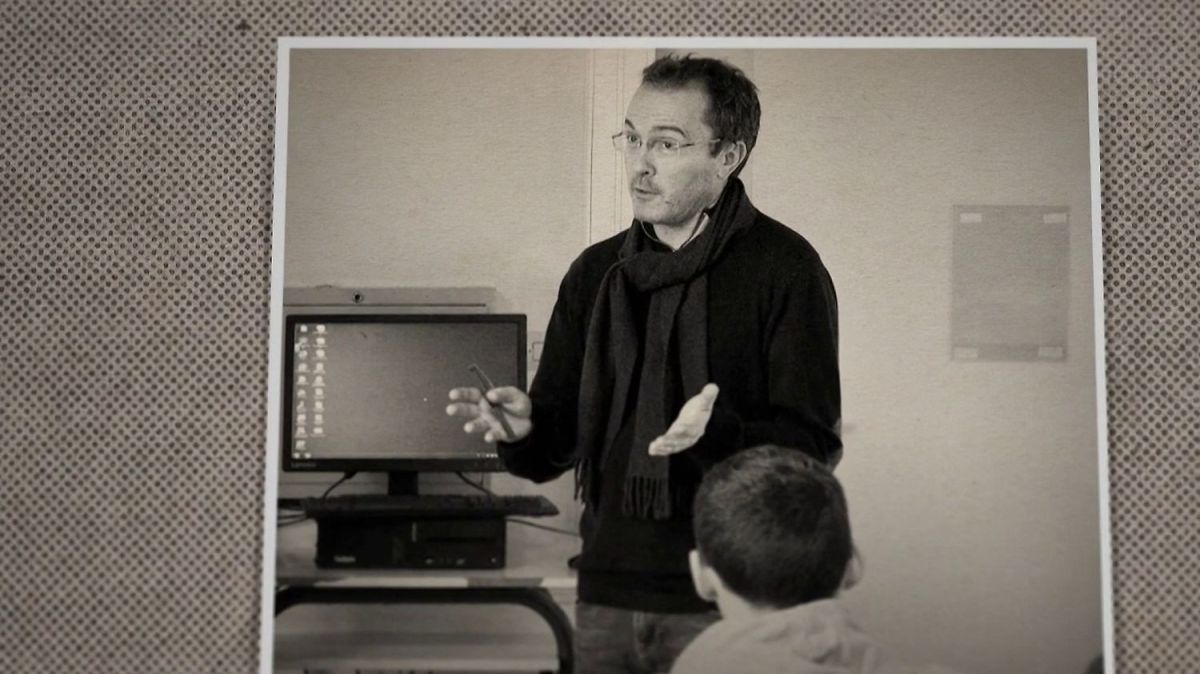
The Generation Paty project allows high school students who attended the trial for the assassination of Samuel Paty to share their experiences and raise awareness among middle school students in Conflans-Sainte-Honorine about the issues of freedom of expression and the consequences of rumors. #SamuelPaty #LibertéDéexpression #GénérationPaty (translated)
www.franceinfo.fr
"Génération Paty" : quand les lycéens racontent le procès de l'assassinat de Samuel Paty aux collégiens actuels de Conflans-Sainte-Honorine
1653
Bally Bagayoko 19h

Bally Bagayoko presented the launch of the Hip-Hop and Urban Cultures Festival of the New Town of Saint-Denis–Pierrefitte-sur-Seine as an evening focused on creation, commitment, and hope. He said that the city aimed to maintain a strong cultural ambition despite a difficult political and social context, which weakened local communities and tested cultural policies. He described culture as a right and a means of emancipation, and hip-hop and urban cultures as spaces for expression, encounter, and solidarity. According to him, the evening also allowed for affirming support for the mobilization of high school students on October 17. Bagayoko advocated for a convergence of struggles and generations around social justice, equality, dignity, and access to culture. #HipHop #CulturesUrbaines #SaintDenis #PierrefitteSurSeine #CulturePourToutesEtTous #Jeunesse #ConvergenceDesLuttes #FaireRenaîtreLEspoir #HipHop #CulturesUrbaines #Culture (translated)

2710
Brèves de presse 19h

Press Briefs reported nearly 7,000 police custody cases, 86% of which involved minors, and indicated that the majority had not led to legal proceedings at this stage. The account described these arrests as a massive and unprecedented measure aimed at containing the mobilization of young people. Several cited observers viewed this as a form of intimidation, while Press Briefs believed this practice infringed on the right to protest and risked normalizing disproportionate police and judicial responses. The account added that the preventive use of police custody had already been documented during the Yellow Vests movement. Relying on independent press articles, Press Briefs relayed testimonies from high school students reporting violent detention conditions, symptoms of post-traumatic stress, forced undressings, and physical or psychological violence. A 15-year-old reportedly recounted being slammed against a concrete bed and hit on the head by police and then insulted. A complaint had been filed, according to the account, which also indicated that the police prefecture had not responded to Mediapart's questions about the reported statements. Mohammed, a 16-year-old high school student in Saint-Denis, reportedly stated that police had hit the bars of his cell during the night to wake up the detainees and had targeted him with a racist insult. The mother of Noham, also 16, claimed that her son had been hit in the liver and face after asking why he had been arrested. Adam's mother also denounced violence against young protesters. Press Briefs added that several teenage girls and boys reported sexist and racist remarks from police, and complaints had been filed. Anne Savinel-Barras, president of Amnesty International France, expressed her concern over the repression of the student movement, believing that the young people's demands for education and health were met with prohibitions on demonstrations and disproportionate police violence. The NGO stated that it would support people peacefully protesting and defend the right to demonstrate. The United Nations High Commissioner for Human Rights also expressed concern about the situation in France and notably called for a proportional use of force. #jeunesse #manifestation #répression (translated)

2540
Assel 1d

Assel wrote that starting this evening, singing, theater, dance, and stage expression would be part of her area of expertise, referring to #StarAcademy. #StarAcademy https://t.co/J8c9RqSeSF #StarAcademy #chant #expressionartistique (translated)

2810
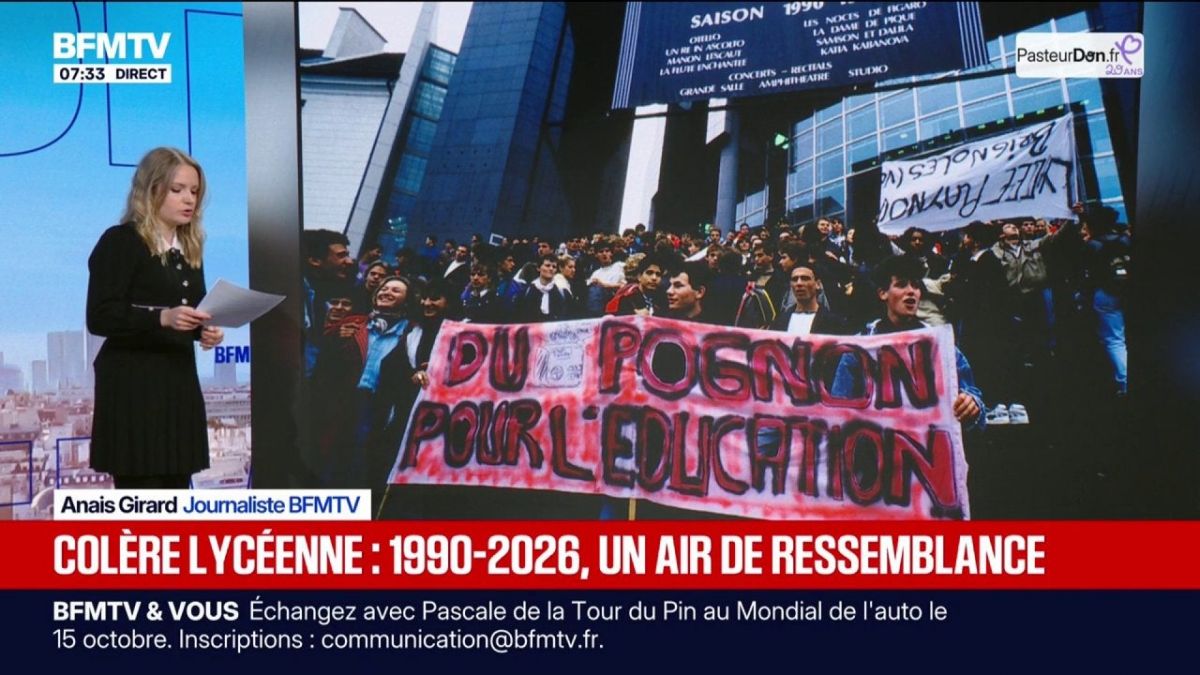
BFMTV 2d

The BFM-Société article compares the high school protests of 1990 and 2026, highlighting significant similarities in the expression of student anger. #MobilisationLycéenne #ColèreLycéenne #HistoireÉducative (translated)

www.bfmtv.com
Colère lycéenne: 1990-2026, un air de ressemblance
2607
Raquel Garrido 2d

"The government has dealt with the expression of a deep movement concerning the youth as that of rioters," analyzes Raquel Garrido, former deputy. #MobilisationLycéenne #Éducation #Austérité (translated)

Mobilisation lycéenne: "C'est le revers de toutes les politiques de rigueur et d'austérité", explique Olivier Besancenot, membre du NPA
www.bfmtv.com
2782
Raquel Garrido 2d

"The government has treated the expression of a profound movement concerning the youth as rioters," analyzes Raquel Garrido, former deputy. #MobilisationLycéenne #CriseVeRépublique #Éducation (translated)

Mobilisation lycéenne: "J'y vois un élément de crise supplémentaire, une crise de la Ve République", observe Olivier Besancenot, membre du NPA
www.bfmtv.com
2782
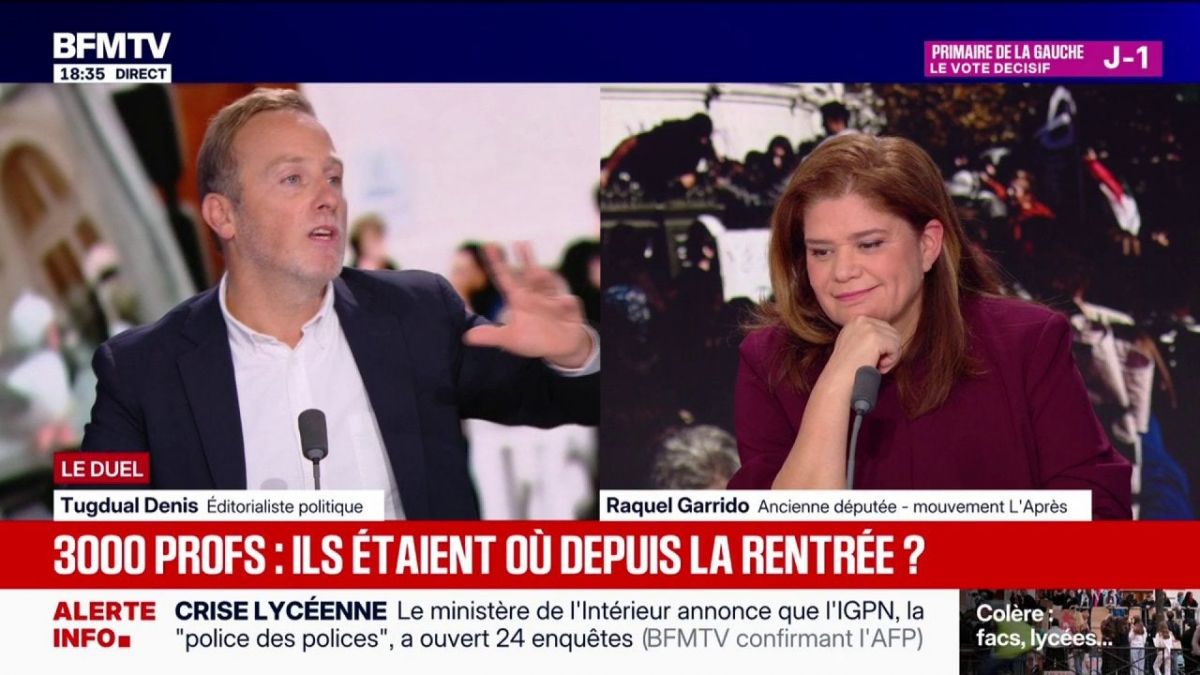
BFMTV 2d

Raquel Garrido analyzes the way the government has treated the student movement, labeling it as rioters while it is a legitimate expression of the concerns of young people, in a context where 3,000 substitute teachers are going to be assigned to ease the anger of high school students. #MouvementLycéen #Education #RaquelGarrido (translated)

www.bfmtv.com
Mouvement lycéen : "le gouvernement a traité en émeutiers l'expression d'un mouvement profond qui concerne les jeunes", analyse Raquel Garrido, ancienne députée
2894
Raquel Garrido 2d

"The government treated the expression of a profound movement concerning young people as a riot," analyzes Raquel Garrido, former deputy. #MobilisationLycéenne #Révendications #ExtrêmeGauche (translated)

Mobilisation lycéenne : "Leurs revendications, qui sont légitimes, sont balayées par l'ultraviolence de l'extrême gauche", estime Guilhem Carayon, vice-président de l'UDR
www.bfmtv.com
2671
Le Parisien 3d

The police in Paris confiscated students' signs at the entrance of the demonstrations, sparking criticism over a violation of freedom of expression. #LibertéDExpression #Paris #Manifestation (translated)

www.leparisien.fr
« Une entrave à la liberté d’expression » : à Paris, les forces de l’ordre ont confisqué des pancartes de lycéens à l’entrée des manifestations
2229
Florian Philippot 3d

The author expressed joy at the decline in the digital audience of the press, which he referred to as a "system." He stated that the French had had enough of subsidized propaganda and wanted more free debate and freedom of expression. https://t.co/MQqMBNYBiI #LibertéDExpression #Démocratie #Presse #FR (translated)

2679
Edwy Plenel 3d

The author denounced police censorships that he qualified as illegal. He recalled that freedom of expression, including the right to contest, is a fundamental right and indicated that it is also stated and guaranteed to young people by the UN Convention on the Rights of the Child (1989) and the French Education Code (2021). https://t.co/NWFGdlPZsw #LibertéDExpression #DroitsHumains #Jeunesse #FR #ONU (translated)

3136
SR 3d

"Freedom of political expression is particularly protected in France by law," specifies Sebastian Roché, research director at the CNRS, a specialist in comparative policing. #LibertéDExpression #Manifestations #Pancartes (translated)

Colère des lycéens : La police a-t-elle vraiment le droit de confisquer les pancartes des manifestants ?
www.20minutes.fr
2577
Gilbert Collard 4d

The author called for defending freedom of expression in the face of what he described as the violence of an extreme left totalitarianism, which he believed heralded dark days for freedom of thought. (translated)

2917
Fdesouche.com est une revue de presse 4d

Fdesouche.com shared the remarks of Louis Montangon (UNI) on the GG of RMC. He stated that, in public higher education, individuals who openly expressed their right-wing opinions faced compromised career paths. (translated)

2917
Le Parisien 4d

The article explores the reasons why athletes are hesitant to express themselves on political issues before presidential elections, fearing negative consequences for their careers. #sport #politique #expression (translated)

www.leparisien.fr
« Si on le fait, on se fait massacrer » : pourquoi les sportifs rechignent à s’exprimer sur la politique avant la présidentielle
1572
Messiah Yaniss 🇨🇵🇩🇿🇸🇳 4d

Messiah Yaniss wrote that 17-year-old Elwan had earned his respect after causing a stir two days earlier, despite his lack of experience on television. According to him, his opponents had sought to belittle him and dismiss his opinion because of his age. He added that they had failed to refute his arguments and then focused on his facial expressions. He congratulated Elwan and stated that he was making the entire right-wing panic. #Respect #Jeunesse #Débat (translated)

3486
Franceinfo 5d

According to sociologist Fabien Truong, the mobilization of high school students currently is not a short-term revolt, but the expression of long-standing and deeply rooted educational demands. #MobilisationLycéenne #Éducation #Sociologie (translated)

www.franceinfo.fr
La mobilisation des lycéens "n'est pas du tout une révolte de court terme", analyse le sociologue Fabien Truong
1915
Didier Maïsto 5d

Didier Maïsto indicated that he had heard from Ritchy Thibault through his lawyer David, a mutual friend. He believed that, even if Thibault could be described as excitable, radicalized, or provocative, nothing justified his incarceration for his statements. According to Maïsto, Thibault was to remain in pre-trial detention and in isolation until his trial, scheduled for December 9 in Bobigny, where he said many people would come to support him. Maïsto added that he had known Thibault since childhood, when he participated in the acts of the Yellow Vests, and described him as brilliant, kind, and people-oriented. He said he felt anger and sadness at what he considered to be the degradation of the country after ten years of Macron's rule. #LibertéDExpression #Justice #Démocratie (translated)

3494
Krzysztof Graj 5d

Nigeria – how pro-Russian influence networks sell military rule as the answer When Nigerians took to the streets in August 2024 to protest soaring living costs and frustration with government, some demonstrations acquired an unexpected symbol: the Russian flag. In Kano, Kaduna and other northern cities, protesters were filmed carrying Russian colours and calling for Moscow’s intervention. Some demanded a military takeover. What initially looked like an unusual expression of anger has since become part of a much larger picture. A September 2026 assessment by the Africa Center for Strategic Studies describes Nigeria as a major target of overlapping foreign information operations, with Russia the most active external actor in its information space. The report does not identify a single centrally controlled campaign. Instead, it maps an ecosystem in which genuine dissatisfaction over insecurity, corruption and living standards is repeatedly redirected towards a broader proposition: democratic government has failed, while the military-led regimes of the Sahel offer a more effective alternative. Turning a real protest into a pro-Russian message The clearest example emerged during the 2024 #EndBadGovernance protests. Nigerian investigative reporting found that a Kano-based TikTok influencer with more than 100,000 followers had been paid through a Telegram channel associated with African Initiative, a Moscow-based media operation linked by researchers to Russian influence activity in Africa. The influencer said the channel supplied photographs, videos and talking points for redistribution on TikTok and Instagram. Among the messages provided were phrases such as “Putin please come and save Nigeria” and “The army is the answer for Nigeria”. Influencers were encouraged to use Hausa-language hashtags including #Zangazanga – “protest” – alongside references to Putin and Russia. Investigators identified 38 accounts circulating similar pro-Russian and pro-military narratives during the demonstrations. Russian flags subsequently appeared among protesters in several northern cities. This does not mean the protests themselves were created by Russia. They were driven by genuine economic and political grievances, and Nigerian protesters gave different reasons for carrying Russian flags. The important feature of the influence activity was precisely that it did not need to manufacture the original anger. It could attach a geopolitical message to an existing domestic crisis. From frustration to the idea of military government The narrative fits a wider pattern seen across West Africa. Russia has developed close relations with the military governments of Mali, Burkina Faso and Niger, while pro-Russian media ecosystems routinely portray those states as examples of sovereignty, stability and resistance to Western influence. Nigeria, by contrast, has remained under constitutional civilian government since 1999. Africa Center researchers say information networks targeting Nigerians increasingly contrast these two models. Recurring messages depict elections as wasteful or predetermined, civilian institutions as incapable of protecting citizens and military governments as more decisive on security and development. Some content portrays the Sahelian juntas as delivering better roads, lower prices and stronger security even where available evidence points to continuing or worsening instability. Language is central to the strategy. Hausa is spoken across northern Nigeria and neighbouring Niger, allowing political narratives to travel across borders that are far less important online than they are on maps. HumAngle documented efforts involving Nigerien state-linked actors to cultivate Hausa-speaking journalists and distribute material favourable to Niger’s junta and hostile to France and Western influence. The Russian and Sahelian-junta information ecosystems are not identical, but their narratives frequently reinforce one another. Fake journalists inside real Nigerian media The campaign environment extends beyond social media. A 2026 investigation by Graphika and Code for Africa identified 44 ghost reporters and fake experts whose identities were used to place Russia-aligned narratives in African media. Thirty-eight were assessed with high confidence to be fabricated. Their articles or quotations appeared across 138 websites and were amplified by at least 113 Facebook accounts and Pages. Nigeria was one of the most heavily targeted countries. According to the Africa Center’s analysis of the research, Daily Post Nigeria carried 39 articles involving 14 identified ghost authors. Once published by a genuine Nigerian outlet, such material could then be cited by other websites, social-media accounts or even Russian official channels as though it had originated independently in Africa. This is information laundering rather than simple propaganda: the most valuable asset being borrowed is the credibility of the local newsroom. Generative AI added another layer. OpenAI and Meta separately disrupted a Russia-origin network that produced Africa-focused political content and operated Facebook Pages posing as local media organisations. One fabricated commentator, “Dr Manuel Godsin”, was presented as a European-trained geopolitical expert although investigators found no evidence supporting his academic biography. ChatGPT had been used to generate articles under the persona’s name, while Meta removed 37 Facebook accounts and 29 Pages connected to the broader network. Different networks, similar strategic direction It would be misleading to merge all these activities into a single Russian command structure. The African Initiative-linked influencer campaign, the ghost-reporter network and the AI-enabled operation disrupted by OpenAI and Meta were uncovered separately and used different infrastructure. Public evidence does not demonstrate that every actor reported to the same organisation. What connects them is a recurring set of themes and methods: portraying Western partnerships as exploitative, presenting Russia as an alternative security partner, amplifying failures of civilian government, and giving military-led rule greater legitimacy. Investigative reporting on leaked Russian documents has meanwhile described a much wider influence apparatus operating across Africa, involving political consultants, paid journalists, influencers and locally tailored campaigns intended to reduce Western influence and expand Moscow’s position. The underlying technique is less about inventing dissatisfaction than redirecting it. Nigeria faces real security threats, economic pressure and public frustration. Influence operators do not need to persuade Nigerians that those problems exist. They need only influence the explanation for why they exist – and which political model appears to offer the answer. That is what makes the Nigerian case significant. The most effective propaganda does not necessarily introduce a completely false reality. It takes a real crisis and changes where the audience is encouraged to look for the solution. Sources Africa Center for Strategic Studies — The Raging Information Battle in Nigeria https://africacenter.org/spotlight/the-raging-information-battle-in-nigeria/ Graphika — Umbrae Ex Machina https://www.graphika.com/reports/umbrae-ex-machina OpenAI — Operation “No Bell” https://openai.com/index/disrupting-malicious-uses-of-ai-no-bell/ TheCable — Ghost reporters in African media https://www.thecable.ng/ghost-reporters-how-fabricated-african-voices-carried-pro-russia-narratives/ HumAngle — Nigeria Is Facing an Information War in Its Own Language https://www.humanglemedia.com/nigeria-is-facing-an-information-war-in-its-own-language DAIDAC / CJID — Russian influence during #EndBadGovernance https://daidac.thecjid.org/how-telegram-tiktok-aided-russian-disinformation-that-led-to-incarceration-of-nigerian-minors/ FactCheckHub — How Nigeria’s hunger protest took a radical turn https://factcheckhub.com/from-economic-protests-to-coup-agitation-how-nigerias-hunger-march-took-a-radical-turn/ News24 — Fake Kremlin-linked analyst planted stories in African media https://www.news24.com/southafrica/news/ai-expert-exposed-fake-kremlin-linked-analyst-planted-stories-in-african-media-20260318-0560 Vanguard — AI ‘expert’ exposed https://www.vanguardngr.com/2026/03/ai-expert-exposed-fake-kremlin-linked-analyst-planted-stories-in-african-media/ Africa Confidential — How Moscow wages social media war https://www.africa-confidential.com/article/id/15961/how-moscow-wages-social-media-war Keywords #DISINFORMED #Episode15 #Nigeria #Russia #RussianInfluence #RussianDisinformation #Africa #WestAfrica #Disinformation #InformationWarfare #InfluenceOperations #ForeignInterference #FIMI #Propaganda #MilitaryRule #MilitaryGovernment #Democracy #PoliticalManipulation #NarrativeManipulation #AfricanInitiative #EndBadGovernance #Hausa #LocalInfluencers #GhostReporters #FakeExperts #ArtificialIntelligence #AI #AIPersonas #SyntheticMedia #AIPropaganda #Astroturfing #SocialMediaManipulation #Telegram #TikTok #DigitalInfluence #SourceLaundering #NarrativeLaundering #MediaManipulation #Sahel #Geopolitics #OSINT #WRLD

africacenter.org
The Raging Information Battle in Nigeria
789