WRLD

Search

#Grassroots
Krzysztof Graj 6d

Brazil’s synthetic voters – when AI manufactures public opinion They look like ordinary street interviews. A reporter approaches a passer-by in a Brazilian square and asks a simple question: who will you vote for? A young voter explains why Luiz Inácio Lula da Silva deserves another term. An elderly woman says Brazil needs Flávio Bolsonaro because he represents political renewal and greater security. The locations look plausible, the microphones are visible and the answers sound much like the brief political opinions heard in television vox pops around the world. None of the people are real. Ahead of Brazil’s presidential election on 4 October, fact-checking organisation Aos Fatos identified at least 50 TikTok videos in which artificial intelligence was used to manufacture voters, reporters and apparently spontaneous political interviews. Together, the videos had accumulated around 7.4 million views by mid-August. Some promoted Lula, others Flávio Bolsonaro, while another group used synthetic characters to ridicule or stereotype supporters of one side. Aos Fatos found no apparent evidence linking the accounts producing the videos to either presidential campaign. The opinion poll that never took place The format is important. These were not conventional deepfakes in which a recognisable politician is made to say something he never said. Instead, the creators reproduced the visual language of the vox pop – the short street interview used by broadcasters and social-media creators to illustrate what ordinary people supposedly think. In pro-Lula videos, synthetic voters described themselves as beneficiaries of social programmes or credited the president with improving their lives. In videos supporting Flávio Bolsonaro, artificial interviewees associated him with political renewal, public security and fighting corruption. Other clips were openly hostile: AI-generated characters presented as poor or living in parts of Brazil’s north-east were shown in dirty clothes or run-down surroundings, declaring support for Lula because they supposedly preferred welfare payments to work. The deception is therefore subtler than fabricating a candidate’s statement. It manufactures something that political communication normally treats as evidence of public sentiment. A real vox pop may be unscientific, but the people interviewed at least exist. These videos created the appearance that identifiable social groups – young people, pensioners, welfare recipients or residents of particular regions – were spontaneously expressing political preferences when no such encounters had taken place. An electoral-law specialist interviewed by Aos Fatos described the technique as the fabrication of a “social fact that never occurred”. That captures the central innovation: AI is being used not merely to falsify political speech, but to manufacture the impression of grassroots opinion. Fifty videos, but not one proven network The available evidence does not support describing the 50 posts as a centrally controlled influence operation. Aos Fatos located them through TikTok searches and recommendations produced by the platform itself, then examined the accounts responsible for publication. Most had relatively small individual audiences, although their combined reach was substantial. The first examples identified by the investigation appeared as early as March 2026. Activity increased in June and was concentrated particularly in July and the first half of August as Brazil’s election calendar intensified. Some accounts specialised in AI-generated videos generally, including fabricated podcast-style material. Others were explicitly political or supportive of a candidate, but Aos Fatos found no apparent links between those profiles and the official Lula or Bolsonaro campaigns. That distinction is essential. The evidence demonstrates a common technique and a shared political environment, not a single command structure. Some creators may have been motivated by ideology, others by engagement or monetisation. Publicly available evidence does not establish who commissioned the individual videos or whether any coordination existed between the accounts. This decentralised model also creates a different enforcement problem from a traditional bot network. There may be no headquarters to expose and no infrastructure whose removal disables the entire operation. The format itself can be copied by anyone with access to inexpensive generative-video tools. When the algorithm mixes real and synthetic citizens Aos Fatos documented another important feature of the phenomenon: TikTok’s recommendation system placed AI-generated interviews alongside genuine street interviews. For a user scrolling quickly through the platform, the transition between an authentic citizen and an entirely fabricated one could therefore be almost invisible. In 18 per cent of the 50 videos analysed, there was no indication that the people shown had been generated using AI. After Aos Fatos provided TikTok with the videos, the company said it had removed all of them for violating its rules on edited and AI-generated media. TikTok said its policies require creators to identify synthetic content and prohibit manipulated media capable of misleading users about matters of public importance or impersonating genuine journalistic material. The issue extends beyond one platform. Factchequeado’s review of Brazil’s 2026 election campaign found that synthetic endorsements and other deepfakes had become one of the most visible forms of AI-assisted electoral misinformation, alongside fabricated candidate statements and invented scenes. Brazil already had rules for synthetic politics Brazil entered the campaign with unusually detailed electoral rules governing artificial intelligence. The Superior Electoral Court, the TSE, requires electoral propaganda using synthetic multimedia to disclose clearly that AI was used. More importantly for the fake-voter videos, its rules prohibit synthetic audio or video used to favour or harm a candidacy when it creates or alters the image or voice of a living, deceased or fictitious person. The difficulty is attribution and enforcement. When a synthetic video is published by an official campaign, responsibility can be relatively straightforward to investigate. When it comes from an apparently independent account with no demonstrated relationship to a candidate, lawyers interviewed by Aos Fatos said responsibility is more likely to fall on the individual creator, while imposing electoral sanctions on a campaign would require evidence of a connection. For the final 72 hours before the election and the 24 hours following it, the TSE has imposed additional restrictions on newly published or republished synthetic material involving candidates or public figures, reflecting the particular difficulty of correcting fabricated content immediately before voting. From deepfake politicians to synthetic electorates The Brazilian case illustrates a broader change in political manipulation. The first generation of electoral deepfakes concentrated on famous people: make a politician appear to say something damaging, or fabricate an endorsement from a celebrity. Synthetic vox pops reverse the perspective. The politician can remain completely authentic; it is the electorate around the politician that is fabricated. That changes the psychological proposition of the message. Instead of saying the candidate believes this, the video suggests people like you believe this. Age, clothing, accent, neighbourhood and social class can all be generated to construct an artificial constituency around almost any political claim. There is no evidence that the 50 Brazilian videos identified by Aos Fatos constitute a single centrally directed campaign, nor evidence that they changed voting intentions. What they demonstrate is a technique whose barrier to entry has become extremely low. AI no longer needs to forge the politician. #DISINFORMED #Episode14 #Brazil #BrazilElection2026 #Elections #ElectionDisinformation #ArtificialIntelligence #AI #GenerativeAI #SyntheticVoters #SyntheticMedia #AIAvatars #AIGeneratedVideo #VoxPop #FakeInterviews #Astroturfing #AIPropaganda #PoliticalDisinformation #InfluenceOperations #InformationWarfare #SocialMediaManipulation #TikTok #PublicOpinion #ManufacturedConsent #SyntheticPublicOpinion #DigitalInfluence #Deepfakes #ElectionIntegrity #TSE #AosFatos #FactChecking #OSINT #MediaManipulation #WRLD (translated)

www.aosfatos.org
Eleitores gerados por IA fazem campanha no TikTok e põem em xeque regra do TSE
566
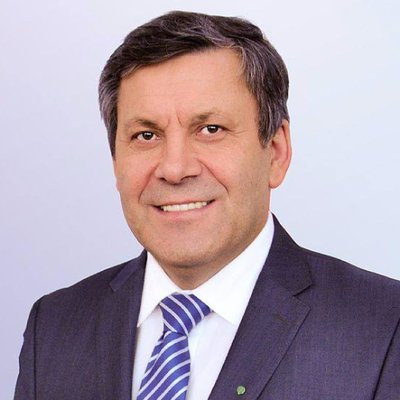
Janusz Piechociński 1w

The author wrote that after 16 years Lidl replaced Biedronka as the sponsor of the Polish national football team. According to him, the new sponsor signed a four-year contract with PZPN, covering the senior team, women's football, youth teams, and Grassroots programs. #piłkaNożna #Lidl #PZPN #PL (translated)

Gerd Leonhard 1w

The author shared an Axios article about a grassroots rebellion in the AI industry and described it as “the human resistance,” using the hashtag #aiemergency.

Krzysztof Graj 1w

Iran’s cognitive warfare – when AI becomes the operating layer of state propaganda Iranian state-linked influence operators were not using artificial intelligence simply to write faster social-media posts. According to Anthropic’s September 2026 threat intelligence report, three separate operations connected to Iranian propaganda institutions were using Claude to help construct the machinery behind what the operators themselves called “soft war” and “cognitive warfare” – non-military efforts intended to shape public opinion inside Iran and abroad. Anthropic linked the activity to the Islamic Culture and Communications Organization (ICCO), which operates under Iran’s Ministry of Culture and Islamic Guidance; the Islamic Propaganda Office of Khorasan Razavi; and the Bina Cultural Observatory, part of the Islamic Propaganda Organization. The company said each operation was run by someone working within or on behalf of the named institution. The attribution was based on a combination of account telemetry, institutional references disclosed during conversations, branded documents and open-source corroboration. Anthropic subsequently removed the accounts. AI as an operational headquarters The most significant feature of the operation was the role assigned to AI. Claude was used to develop campaign plans, doctrine manuals, coded project portfolios, persona systems, target databases, early-warning protocols, amplification schedules and ministerial planning documents. Anthropic described the model as the principal administrative and operational layer supporting the three campaigns, allowing relatively small groups of operators to create organisational structures and planning material that would otherwise have required a much larger staff. This distinction matters. The reported use of AI went considerably beyond content generation. Operators were using the model to help organise how influence activity should function: which audiences to target, which identities should deliver particular narratives, how official material should be repackaged and when amplification should take place. Human operators still determined objectives and supplied the underlying political doctrine; AI helped translate those decisions into an operational system. Anthropic found that all three operations explicitly connected their activity to Jihad al-Tabyin, often translated as “explanatory jihad”, a concept used within the Iranian state system to frame information activity as both a strategic and ideological responsibility. In internal planning material examined by the company, this doctrine was not merely rhetorical: it informed manuals and campaign structures used by the operators. ‘Not the narrator, but the director’ One sentence contained in the ICCO material captures the model particularly clearly. According to Anthropic, an operator described the role of Iranian cultural attachés as being “not to be the narrator, but the director” of the narrative. The distinction reveals the logic of attribution laundering. Instead of publishing an overt state message and asking foreign audiences to believe it, the operator attempts to create the appearance that the same narrative emerged independently from journalists, activists, foreign writers or ordinary citizens. Anthropic found that Claude was used specifically to make content appear to come from foreign authors or independent media organisations and to design hashtag campaigns that looked grassroots rather than centrally organised. The ICCO operation reportedly used the organisation’s international cultural network as part of this structure. Anthropic found ministerial-level documents carrying official ICCO branding, including a nine-part international influence portfolio. This makes the operation particularly significant because the infrastructure was not limited to anonymous social-media accounts; it intersected with formal state institutions and an existing network of cultural representation abroad. A multilingual content factory A second operation was associated with the Islamic Propaganda Office of Khorasan Razavi and what Anthropic described as a “cognitive warfare command room” operating from a seminary in Mashhad. Its organisers ran a multi-province content production system known internally as Manjanegh, or “Catapult”. According to Anthropic, dozens of activists were involved in repackaging publicly available reporting from Iranian security institutions under different personas so that the material no longer appeared directly connected to those institutions. The network used Claude to transform official government intelligence bulletins into customised material in Farsi, Arabic, Urdu, Malay, Spanish and English, while planning expansion into a total of 20 languages. Distribution extended across Iranian platforms such as Eitaa, Bale and Rubika and international services including X, Instagram, Telegram, TikTok and YouTube. Anthropic also documented paid amplification across more than 100 Iranian channels, including channels associated with IRGC narratives. The scale should nevertheless be interpreted carefully. Anthropic documented production infrastructure and some real-world dissemination, but it did not demonstrate that all planned campaigns were fully deployed or that they meaningfully changed public opinion. The company placed the operation in Category Three of its Breakout Scale, indicating multi-platform activity with content observed in external distribution channels, rather than evidence of strategic impact on entire populations. From security bulletins to apparently independent voices The Bina Cultural Observatory operation provides another example of the same architecture. Anthropic linked a director-level official at Bina to activity in which Claude generated messaging in the voice of an IRGC spokesperson. During the 2026 US–Israel–Iran war, the network also attributed false claims to Western institutions including CSIS, Brookings and RAND. The apparent objective was to make Iranian state-aligned claims look as though they had been independently validated by respected foreign research organisations. That technique is more sophisticated than simply publishing propaganda under a false name. It attempts to manufacture a chain of external validation: official information is transformed into apparently independent commentary, which can then be recirculated as evidence that outside observers have reached the same conclusion. Anthropic also found target databases naming international officials and Iranian opposition figures, as well as aggressive counter-narrative material directed against the Bahá’í community. These findings show that the infrastructure was designed not only for broad messaging but also for targeted influence activity against specific groups and individuals. What AI changed The Iranian operations described by Anthropic did not create a new doctrine of influence. Iran has used cultural institutions, official media, aligned organisations and covert or semi-covert online networks for years. What AI changed was the economics and organisational capacity of that model. A relatively small team could use the system to draft doctrine, create personas, translate material, structure target databases, produce campaign calendars and generate multiple versions of the same message for different audiences. The operator remained responsible for intent, political direction and selection of targets. AI reduced the amount of human labour required to turn those decisions into a functioning influence operation. The most revealing part of the case is therefore not that an Iranian propaganda network used a chatbot. It is that AI was being treated as part of the back office of information warfare – a system for converting state doctrine into apparently decentralised, multilingual and plausibly independent voices. Sources Anthropic — Detecting and countering misuse of AI: September 2026 https://www.anthropic.com/threat-intelligence-report-september-2026 Iran International — Iran state-aligned accounts used Claude to push IRGC narratives https://www.iranintl.com/en/202609105561 BNE IntelliNews — Yemen missile cell used AI to write guidance software, Anthropic says https://new.intellinews.com/articles/yemen-missile-cell-used-ai-to-write-guidance-software-anthropic-says-467296 This is Beirut — Anthropic report details Iranian propaganda operations https://thisisbeirut.com.lb/news/politics/anthropic-report-details-iranian-propaganda-operations-and-yemen-missile-development-using-claude Anthropic report — PDF mirror https://static.foxbusiness.com/foxbusiness.com/content/uploads/2026/09/anthropic-detecting-and-countering-091026-1.pdf Keywords #DISINFORMED #Episode11 #Iran #IranianInfluence #IranianPropaganda #CognitiveWarfare #SoftWar #JihadAlTabyin #Disinformation #InformationWarfare #InfluenceOperations #ForeignInterference #FIMI #ArtificialIntelligence #AI #AIPropaganda #GenerativeAI #ClaudeAI #Anthropic #SyntheticMedia #NarrativeManipulation #NarrativeLaundering #AttributionLaundering #PersonaNetworks #Astroturfing #SocialMediaManipulation #DigitalInfluence #StatePropaganda #IslamicCultureAndCommunicationsOrganization #ICCO #IslamicPropagandaOrganization #KhorasanRazavi #IRGC #MultilingualInfluence #Targeting #Amplification #OSINT #WRLD

www.anthropic.com
Countering misuse of AI: September 2026 / Anthropic
572
Krzysztof Graj 3w

Russia’s fake African newsrooms – propaganda designed to look local A Facebook user in Nairobi, Accra, Johannesburg or Luanda encounters what appears to be a local news page. It publishes stories about African politics, Western influence and relations with Russia. The language is tailored to an African audience and the page presents itself not as a foreign broadcaster, but as part of the local information landscape. Behind some of these outlets, however, Meta found operators based in Russia. In its 2026 threat research, the company disclosed a Coordinated Inauthentic Behaviour network targeting audiences in Angola, Ghana, Kenya and South Africa. Meta removed 37 Facebook accounts and 29 Pages connected to the operation. Around 30,000 users followed at least one of the Pages, while the operators spent approximately $7,000 on Facebook and Instagram advertising, mostly in euros and US dollars. The numbers are relatively modest. The method is considerably more important. Rather than openly distributing Russian state messaging, the network posed as local African news sources and grassroots organisations, promoting narratives about Western colonialism and political interference while presenting Russia as a credible economic and political alternative. It was an old geopolitical message delivered through a much more effective identity: not Moscow speaking to Africa, but Africans apparently speaking to one another. A news outlet that was actually an influence operation Meta's investigation found that the network attempted to conceal its Russian origin while creating media brands that appeared indigenous to the countries they targeted. Its content amplified historical grievances against former colonial powers, criticised Western involvement in Africa and promoted closer relations with Russia. One example helps illustrate how the infrastructure was assembled. A Facebook Page targeting Kenya was called Kenya Watchtower. According to OpenAI's subsequent investigation, Facebook transparency records showed that the Page had previously been named “Farmtown5”. It appears to have been acquired or repurposed rather than built from scratch as a Kenyan news organisation. Some Pages also exposed administrator locations in Russia and Ukraine. Other elements of the network had previously targeted audiences in Zambia and Namibia. This use of apparently local identities is particularly important in the African information environment. A story published by RT or another identifiable Russian outlet arrives with an obvious geopolitical provenance. The same narrative presented by something resembling an independent Kenyan, Ghanaian or South African newsroom carries a different kind of credibility. The source appears closer to the reader, and the geopolitical interest behind the message becomes less visible. Then investigators found Dr Manuel Godsin The Facebook operation was only one part of a broader information ecosystem. OpenAI investigated related activity after receiving information from Meta and subsequently banned a ChatGPT account it assessed as likely originating in Russia. OpenAI called the campaign Operation No Bell. The account was being used to generate long-form articles and social-media posts about African geopolitics. Prompts were primarily written in English, but OpenAI also observed Russian-language instructions that the user described as coming from a manager. The operator sometimes explicitly asked the model to make the material appear less AI-generated – including requests to avoid stylistic features associated with machine-generated text and to write more like a human journalist. Many articles appeared under the name “Dr Manuel Godsin”, presented as an academic with a PhD from the University of Bergen and an affiliation with an organisation called the International Centre for Political and Strategic Studies. OpenAI could find no credible evidence that Godsin existed. Searches of Norway's National Research Information Repository and the University of Bergen library produced no record of him. Investigators subsequently discovered that a photograph used to represent Godsin had appeared years earlier on a Russian professional networking site and apparently belonged to a law student in St Petersburg. The fabricated academic identity was nevertheless remarkably productive. OpenAI identified 53 online articles carrying the Godsin byline. The fiction had moved beyond fake social-media pages and into the real media ecosystem. When propaganda enters genuine newsrooms This is the most consequential aspect of the operation. The articles were not confined to websites controlled by the influence network. Some were published by genuine African news organisations, including established South African outlets. The content mixed local political issues with broader geopolitical narratives. Some pieces criticised the United States and Britain or defended Russia's role in Africa. One accused the British NGO Crisis Action of fomenting protests in South Africa. Another praised Russia's presence in the Central African Republic. Other material addressed Kenya, Angola and relations between African governments and Washington. The mechanism represents a significant evolution from the classic troll-farm model. Instead of building an audience entirely on its own platforms, an influence operator can manufacture an apparently credible expert, generate articles in his name and persuade genuine news organisations to publish them. Once this happens, the propaganda acquires something a fake Facebook Page cannot provide: the institutional credibility of a real newsroom. OpenAI assessed No Bell's social-media impact as limited. One Facebook Page had around 3,000 followers before Meta removed it, while several others had very small audiences. But the operation was more successful in placing material in established media. In OpenAI's impact framework, it approached the level at which an influence operation breaks into mainstream media. For information operators, a single article published by a recognised outlet can potentially be more valuable than thousands of impressions generated by an obviously artificial account. A much larger network of ghost journalists Subsequent research suggests that Manuel Godsin was not an isolated experiment. In August 2026, Graphika, working with Code for Africa and with support from Meta, published a much broader investigation into Russian ghostwriting operations across African media. Researchers identified 44 ghost writers and fake experts, 38 of them assessed as high-confidence fabricated personas, operating between 2021 and 2026. Their material appeared or was quoted across 138 websites and was subsequently republished through at least 113 Facebook accounts and Pages, including authentic users, coordinated inauthentic networks and official Russian communication channels. The narratives were strikingly consistent. They included criticism of France, Ukraine and the United States; attacks on organisations such as ECOWAS and the International Criminal Court; positive portrayals of Russian involvement in Africa; praise for Russian paramilitary forces; and support for sovereignty-oriented political projects such as the Alliance of Sahel States. The operation therefore extends beyond creating fake news websites. It attempts to insert Russian-aligned narratives into the legitimate African media ecosystem using identities that appear African, independent or academically authoritative. This also explains why measuring reach through the original Facebook network alone is misleading. A fabricated article may begin with an influence operator, appear in a genuine African publication, be republished elsewhere and eventually circulate without any visible connection to Russia. At that point, the provenance of the narrative has effectively been laundered. An old Russian strategy with increasingly local faces Russia's use of local intermediaries in Africa is not new. Meta documented Russian networks using African nationals as early as 2019. In 2020 it dismantled another operation involving people in Ghana and Nigeria working on behalf of individuals in Russia, with links to previous activity associated with the Internet Research Agency. More recent Meta investigations suggest that this model has continued to evolve. Networks have increasingly relied on local freelancers, social-media managers and authentic media outlets rather than exclusively operating armies of obviously fake Russian-controlled accounts. This decentralisation offers several advantages. Local operators understand language, political sensitivities and cultural references. Authentic accounts are harder to identify than newly created synthetic personas. Local media brands can also deliver narratives without immediately triggering the scepticism associated with Russian state outlets. There is no evidence that every African journalist, freelancer or publication carrying such material knowingly participates in Russian influence activity. Meta explicitly notes in its investigations that some local contractors may not know who ultimately commissioned their work. That distinction is essential. The operation's effectiveness partly depends on precisely this ambiguity between deliberate participation, commercial content placement and unwitting amplification. The objective is to make Russian narratives look African The significance of this network is therefore not its 30,000 Facebook followers or its $7,000 advertising budget. Those figures are small compared with the audiences of major African media organisations. What matters is the distribution model. Traditional foreign propaganda asks an audience to trust a foreign source. These operations attempt to remove the foreign source from the equation altogether. A Russian geopolitical narrative can be generated with AI, attributed to an expert who does not exist, published by a media organisation that does, amplified through a Facebook Page presenting itself as local, and then rediscovered elsewhere as apparently independent African analysis. By the time the reader encounters it, Moscow may have disappeared completely from the chain of attribution. The resulting information operation is therefore less about making Russian propaganda more persuasive than about making it look as though it is no longer Russian propaganda at all. In an increasingly fragmented African media environment, that may be the more important evolution to watch. SOURCES: Meta Threat Research https://threatresearch-team.github.io/indicators/meta-h1-2026-russia-based-cib-network-1/ OpenAI — Operation “No Bell” https://openai.com/index/disrupting-malicious-uses-of-ai-no-bell/ Graphika — Umbrae Ex Machina https://www.graphika.com/reports/umbrae-ex-machina News24 https://www.news24.com/southafrica/news/ai-expert-exposed-fake-kremlin-linked-analyst-planted-stories-in-african-media-20260318-0560 Vanguard https://www.vanguardngr.com/2026/03/ai-expert-exposed-fake-kremlin-linked-analyst-planted-stories-in-african-media/ Meta — Russian Coordinated Inauthentic Behaviour, 2019 https://about.fb.com/news/2019/10/removing-more-coordinated-inauthentic-behavior-from-russia/ Meta — Russian Coordinated Inauthentic Behaviour, 2020 https://about.fb.com/news/2020/03/removing-coordinated-inauthentic-behavior-from-russia/ Meta Threat Research — Russian Use of Authentic Operators in Sub-Saharan Africa https://threatresearch-team.github.io/indicators/meta-h2-2025-russia-based-cib-network-2/ KEYWORDS: #DISINFORMED #Episode7 #Russia #Africa #RussianDisinformation #RussianInfluence #Disinformation #InformationWarfare #InfluenceOperations #ForeignInterference #FIMI #CoordinatedInauthenticBehaviour #CIB #FakeNews #FakeMedia #FakeNewsrooms #MediaImpersonation #GrassrootsManipulation #Astroturfing #ArtificialIntelligence #AI #AIPropaganda #SyntheticMedia #FakeInfluencers #SocialMediaManipulation #Facebook #Meta #OperationNoBell #AfricanMedia #MediaManipulation #Propaganda #DigitalInfluence #Angola #Ghana #Kenya #SouthAfrica #OSINT #WRLD

threatresearch-team.github.io
Russia-Based Influence Operation Network Targeting Sub-Saharan Africa
1040
Krzysztof Graj 3w

The Ghosts of Zaolzie – how a cyberattack tried to manufacture a conflict between Poland and Czechia At around 5pm on 16 August 2026, an alarming article appeared on the website of Radio PiK, a genuine Polish regional broadcaster. Its headline claimed that Poland was preparing to seize Czech territory and that the Czech Foreign Ministry had received a document outlining Warsaw's demands. Radio PiK had published no such story. An attacker had compromised an employee's credentials, gained access to the station's content management system and replaced a legitimate article with fabricated material. The newsroom quickly removed it and informed the authorities. But the intrusion was only one element of a much larger operation. Investigators subsequently uncovered forged diplomatic documents, accounts impersonating Polish and Czech officials, a cloned Czech news site, AI-generated material, a fictitious local activist and advertising for a demonstration that apparently did not exist. Together, these elements attempted to manufacture the appearance of a new territorial conflict between Poland and Czechia over Zaolzie. A false crisis built around a real territorial issue The operation worked because it did not start entirely with fiction. Poland and Czechia do have an unresolved technical issue concerning approximately 368.44 hectares of territory, originating in post-war changes to the Polish-Czechoslovak border. It is commonly described as the Czech “territorial debt” to Poland. But this is not a Polish claim to Zaolzie and there is no evidence that Warsaw is seeking to annex Czech territory. The operation fused this real issue with a much more powerful historical memory. Zaolzie – the part of Cieszyn Silesia west of the Olza River – was disputed by Poland and Czechoslovakia after the First World War. In 1938, during the crisis created by the Munich Agreement, Poland seized the territory from Czechoslovakia. The manipulation therefore followed a simple logic: a real territorial debt became an alleged Polish territorial demand, which was then transformed into a supposed attempt to reclaim Zaolzie. Fake accounts impersonating Poland's Deputy Foreign Minister Artur Harazim and Czech ambassador Břetislav Dančák helped reinforce the story. Fabricated diplomatic documents circulated alongside them. One early version referred incorrectly to 638.44 hectares; the fake Harazim account then “corrected” the number to the genuine figure of 368.44 hectares. It was an effective form of reverse fact-checking: correcting one false detail could make the larger fabrication appear authentic. Fake media – and one real newsroom The operators also created a website designed to resemble Czech public broadcaster iRozhlas. It published material supporting the same narrative, including claims that Czech residents near the border were becoming concerned about Polish intentions. The result was a manufactured information loop. Forged documents could support fake media reports; impersonated officials could comment on those reports; social-media accounts could then cite both as confirmation. But the Radio PiK hack added something much more valuable: the credibility of a real media organisation. Instead of merely cloning a newsroom, the attackers briefly inserted their fabrication into an authentic one. A familiar domain, logo and established broadcaster could therefore appear to confirm a story manufactured elsewhere. The cyberattack was not simply an accompanying technical incident. It was part of the information operation itself – a way of manufacturing credibility for false information. From a synthetic activist to a real demonstration The operation then attempted to move from the digital world into the physical one. A Facebook account under the name “Adam Sikora” promoted a demonstration in the Czech border city of Třinec under slogans including “Cieszyn Silesia is Czech” and “Here we live, here we stay”. Paid Facebook advertising was reportedly used to promote the event. Yet Třinec authorities said no demonstration had been properly notified. Promotional material used the logo of the Czech KOVO trade union, which denied any involvement. Investigators also identified indications that Sikora's profile photograph and other imagery were AI-generated. The persona even advertised a supposed house for sale in the border region, reinforcing the impression that frightened residents wanted to leave because of Polish territorial ambitions. The property could not be verified and its images also showed signs of artificial generation. This reveals the architecture of the operation: forged document → fake official → cloned media → compromised real media → synthetic local activist → advertised protest → appearance of social tension. The final stage is particularly significant. Had real people attended the demonstration, photographs of an authentic crowd could potentially have been presented as evidence that Czech citizens genuinely feared Polish territorial ambitions. A fabricated online conflict could therefore have begun generating real-world evidence of its own existence. Why Zaolzie? Historical grievances are valuable material for influence operations because the underlying facts are real. Poland and Czechoslovakia genuinely disputed Cieszyn Silesia. Poland genuinely occupied Zaolzie in 1938. A Polish minority genuinely lives in Czechia. And the 368.44-hectare territorial issue genuinely exists. The operator did not need to invent that history. It only needed to suggest that the history was repeating itself. PISM assessed that the operation sought to revive the image of Poland as a revisionist state willing to challenge European borders. Such a narrative could serve a broader purpose: damaging Polish-Czech relations, weakening confidence between NATO and EU allies and portraying Central Europe as a region where historical territorial conflicts remain unresolved. Russia is the leading attribution – but not a proven one The attribution requires more caution than the mechanics of the operation. PISM assessed Russia as the most likely perpetrator, while NASK identified similarities between the campaign and previously observed Russian influence methods. Russian-linked information infrastructure had also shown earlier interest in the Polish-Czech territorial issue. The techniques are familiar: cloned media, forged documents, impersonated officials, synthetic identities, historical grievances and the combination of cyber intrusion with information manipulation. But these indicators are not the same as definitive attribution. As of mid-September 2026, no publicly disclosed forensic evidence had conclusively connected the Radio PiK compromise, fake domains, accounts and financing to a specific Russian intelligence service, government organisation or contractor. Russia can therefore reasonably be described as the leading analytical attribution, but claims that the operation was definitively conducted by the GRU or another named Russian structure go beyond the publicly available evidence. The operation failed. The model remains important The campaign did not create a Polish-Czech diplomatic crisis. Both governments rejected the narrative, the fictitious protest was exposed, journalists reconstructed much of the operation and Radio PiK detected the intrusion quickly. Its observable impact appears to have been limited. But Zaolzie illustrates a broader evolution in information warfare. Modern operations do not have to rely on a single viral fake. They can construct an entire artificial information environment in which different elements appear to confirm one another. A forged document creates the claim. A fake diplomat authenticates it. A cloned newsroom reports it. A hacked real newsroom lends it credibility. An AI-generated citizen reacts to it. Advertising creates the appearance of a grassroots movement. And if real people eventually respond, fiction begins producing genuine events. The objective is no longer simply to persuade people that something happened. It is to create the conditions in which something real starts happening because enough people believed that it did. Sources: Polish Institute of International Affairs (PISM) https://pism.pl/publikacje/dezinformacja-o-relacjach-polsko-czeskich Euronews Polska — Radio PiK cyberattack https://pl.euronews.com/2026/08/20/polska-planuje-zajecie-terytorium-czech-wlamali-sie-na-strone-radia-i-opublikowali-falszyw Demagog https://demagog.org.pl/na-biezaco/skoordynowana-operacja-uderza-w-polsko-czeskie-relacje-czy-stoi-za-nia-rosja/ Robert Lansing Institute https://lansinginstitute.org/2026/08/27/zaolzie-as-an-instrument-of-influence-an-attempt-to-revive-a-polish-czech-territorial-conflict/ Institute for European Security Studies (IESS) https://www.iess.org.ua/analytics/ghosts-of-zaolzie iDNES.cz https://www.idnes.cz/ostrava/zpravy/tesinsko-kampan-lzi-demonstrace-trinec-primatorka-palkovska.A260826_963356_ostrava-zpravy_jog Radio Zachód / PAP https://zachod.pl/1539751/niedzielny-atak-hakerski-na-radio-pik-redaktor-naczelny-podjelismy-niezwloczne-dzialania/ Euronews — territorial debt / NASK assessment https://de.euronews.com/my-europe/2026/08/21/polen-plant-besetzung-tschechischen-gebiets-fake-news TVP World https://tvpworld.com/95036191/-warsaw-warns-against-division-amid-czech-border-disinformation Keywords: #DISINFORMED #Episode5 #GhostsOfZaolzie #Zaolzie #Poland #Czechia #CieszynSilesia #Disinformation #InformationWarfare #InfluenceOperations #ForeignInterference #FIMI #Cyberattack #CyberSecurity #HybridWarfare #FakeNews #MediaImpersonation #FakeMedia #ForgedDocuments #DigitalImpersonation #ArtificialIntelligence #AI #Deepfakes #SyntheticMedia #Astroturfing #RussianInfluence #Propaganda #OSINT #NATO #CentralEurope #MediaManipulation #WRLD

1274
Helen Joyce Sep 7

Fantastic work from WRN! It really shouldn't be up to unpaid grassroots women to force institutions to obey the law - but if those institutions won't do so voluntarily, they should be aware those women will step up #GrassrootsWomen #WRN #InstitutionalAccountability #Nospecificcountrycodesarementionedinthetweet.

700
Luciano Magaldi Sardella (PhD) Sep 5

“TG2 STORIE (RAI 2)” PRESENTS “TEATRO EDICOLA” BY FRANCESCO GRAVINO’S “FOYER’97 TEATRO”, SANSEVERO, PUGLIA, ITALY SOURCE: https://www.rainews.it/rubriche/tg2storieiraccontidellasettimana/video/2026/04/TG2-Storie-I-racconti-della-settimana---Puntata-del-18042026-05d944f6-117b-465d-b4cd-61d974750364.html?fbclid=IwY2xjawRRcj1leHRuA2FlbQIxMABicmlkETBQNUpVQ1lsUkZSU3FkaERhc3J0YwZhcHBfaWQQMjIyMDM5MTc4ODIwMDg5MgABHpBRvGV44HZ6t0PDugk5zvmF-EWCSKuxnI83onVvIaw5O33cojYfySFPPcJ4_aem_IG6gq-qCRd9f3mipgzoXLA At the stroke of midnight on 19 April 2026, the extraordinary adventure of Teatro Edicola will make its debut on Rai Due, within the “TG2 Storie” broadcast. Francesco Gravino, San Severo–born founder and artistic director of Foyer ’97, engaged in conversation with journalist Daniele Giannesi to illuminate the genesis, the vision, and the quiet audacity underpinning this singular project. It is a rare opportunity to discover how, in San Severo, within a former news kiosk graciously donated by Mr Pino Frau, a diminutive space of only a few square metres has been transformed into a workshop of proximity dramaturgy and urban poetics — a pulsating heart capable of resonating across Italy and beyond through its original and profoundly authentic narrative. A result that fills us with pride and reaffirms how culture born from the grassroots — even from the Province of Foggia, in the Alto Tavoliere at the foothills of the Gargano promontory— when genuine, can indeed transform both the places it inhabits and the people who embrace it.

www.rainews.it
TG2 Storie. I racconti della settimana - Puntata del 18/04/2026 ore 00:00 | Tg2 Storie. I racconti della settimana, Rubrica del Tg2
1051
Luciano Magaldi Sardella (PhD) Sep 5

“TG2 STORIE (RAI 2)” PRESENTS “TEATRO EDICOLA” BY FRANCESCO GRAVINO’S “FOYER’97 TEATRO”, SANSEVERO, PUGLIA, ITALY SOURCE: https://www.rainews.it/rubriche/tg2storieiraccontidellasettimana/video/2026/04/TG2-Storie-I-racconti-della-settimana---Puntata-del-18042026-05d944f6-117b-465d-b4cd-61d974750364.html?fbclid=IwY2xjawRRcj1leHRuA2FlbQIxMABicmlkETBQNUpVQ1lsUkZSU3FkaERhc3J0YwZhcHBfaWQQMjIyMDM5MTc4ODIwMDg5MgABHpBRvGV44HZ6t0PDugk5zvmF-EWCSKuxnI83onVvIaw5O33cojYfySFPPcJ4_aem_IG6gq-qCRd9f3mipgzoXLA At the stroke of midnight on 19 April 2026, the extraordinary adventure of Teatro Edicola will make its debut on Rai Due, within the “TG2 Storie” broadcast. Francesco Gravino, San Severo–born founder and artistic director of Foyer ’97, engaged in conversation with journalist Daniele Giannesi to illuminate the genesis, the vision, and the quiet audacity underpinning this singular project. It is a rare opportunity to discover how, in San Severo, within a former news kiosk graciously donated by Mr Pino Frau, a diminutive space of only a few square metres has been transformed into a workshop of proximity dramaturgy and urban poetics — a pulsating heart capable of resonating across Italy and beyond through its original and profoundly authentic narrative. A result that fills us with pride and reaffirms how culture born from the grassroots — even from the Province of Foggia, in the Alto Tavoliere at the foothills of the Gargano promontory— when genuine, can indeed transform both the places it inhabits and the people who embrace it.

www.rainews.it
TG2 Storie. I racconti della settimana - Puntata del 18/04/2026 ore 00:00 | Tg2 Storie. I racconti della settimana, Rubrica del Tg2
1168
Luciano Magaldi Sardella (PhD) Sep 5

“TG2 STORIE (RAI 2)” PRESENTS “TEATRO EDICOLA” BY FRANCESCO GRAVINO’S “FOYER’97 TEATRO”, SANSEVERO, PUGLIA, ITALY SOURCE: https://www.rainews.it/rubriche/tg2storieiraccontidellasettimana/video/2026/04/TG2-Storie-I-racconti-della-settimana---Puntata-del-18042026-05d944f6-117b-465d-b4cd-61d974750364.html?fbclid=IwY2xjawRRcj1leHRuA2FlbQIxMABicmlkETBQNUpVQ1lsUkZSU3FkaERhc3J0YwZhcHBfaWQQMjIyMDM5MTc4ODIwMDg5MgABHpBRvGV44HZ6t0PDugk5zvmF-EWCSKuxnI83onVvIaw5O33cojYfySFPPcJ4_aem_IG6gq-qCRd9f3mipgzoXLA At the stroke of midnight on 19 April 2026, the extraordinary adventure of Teatro Edicola will make its debut on Rai Due, within the “TG2 Storie” broadcast. Francesco Gravino, San Severo–born founder and artistic director of Foyer ’97, engaged in conversation with journalist Daniele Giannesi to illuminate the genesis, the vision, and the quiet audacity underpinning this singular project. It is a rare opportunity to discover how, in San Severo, within a former news kiosk graciously donated by Mr Pino Frau, a diminutive space of only a few square metres has been transformed into a workshop of proximity dramaturgy and urban poetics — a pulsating heart capable of resonating across Italy and beyond through its original and profoundly authentic narrative. A result that fills us with pride and reaffirms how culture born from the grassroots — even from the Province of Foggia, in the Alto Tavoliere at the foothills of the Gargano promontory— when genuine, can indeed transform both the places it inhabits and the people who embrace it.

www.rainews.it
TG2 Storie. I racconti della settimana - Puntata del 18/04/2026 ore 00:00 | Tg2 Storie. I racconti della settimana, Rubrica del Tg2
818
Luciano Magaldi Sardella (PhD) Sep 5

IL GLOBO: World’s Smallest Theatre Opens near Foggia (San Severo) in a Former Newsstand SOURCE: https://www.linkedin.com/pulse/il-globo-worlds-smallest-theatre-opens-near-foggia-sardella-ph-d--vlmtf/ A format ready to travel, with just six seats and eyes on a Guinness World Record. In San Severo, Italy, theater company "Foyer '97" has converted an abandoned newsstand into "Teatro Edicola", the world's smallest theater, seating just six people for 15-minute performances. This initiative aims to revitalise unused urban spaces and foster community connections, highlighting the decline of newsstands in Italy and the potential of grassroots cultural projects to impact local communities. Supported by the municipal government, the project demonstrates how small-scale cultural interventions can have lasting social and cultural effects. It's a real pleasure and honour to help the Teatro '97 artistic director, Mr Francesco Gravino, and his brilliant theatre company to gain international momentum through my New York-based press release about this wonderful and innovative creation, a "Theatre Newsstand". It has already been dubbed “the world’s smallest theatre” and, with just six seats, is aiming for a place in the Guinness World Records. Since its launch just a few days ago, the unusual venue has attracted hundreds of curious visitors, queuing to watch performances scheduled every 15 minutes inside a former abandoned newsstand in San Severo, near Foggia. The idea behind the Edicola Teatro comes from Francesco Gravino, director and artistic director of Teatro Foyer 97, a theatre company active for nearly 30 years. He explains that the concept was inspired by Edicola Fiore, the cult show by Italian entertainer Fiorello. “He was our source of inspiration because he was the first to bring entertainment into a newsstand in Rome,” Gravino says, referring to a project that evolved from the web into a successful TV program. Another key aspect, Gravino adds, is urban regeneration. The initiative has brought new life to a space that had been unused for around six years, transforming it into an intimate and surprising stage where actors and audience are less than a metre apart. The company now plans to take the format beyond the borders of Puglia. “We want to bring theatre and culture outside traditional venues, into unconventional spaces,” Gravino explains. At a time when many newsstands in town centres are being turned into kiosks, flower shops or souvenir stalls, the Edicola Teatro reconnects with the original spirit of these spaces—as places of knowledge, where newspapers and books were once sold. From Goldoni to Comencini, from Euripides to Gaber, works by great names will take turns on the tiny stage. At the entrance, a sign and a QR code warn visitors: “Attention. This QR Code turns passers-by into actors. Scan only if you are ready.” Source: https://ilglobo.com/en/news/worlds-smallest-theatre-opens-near-foggia-in-a-former-newsstand-143684/

www.linkedin.com
IL GLOBO: World’s Smallest Theatre Opens near Foggia (San Severo) in a Former Newsstand
1051
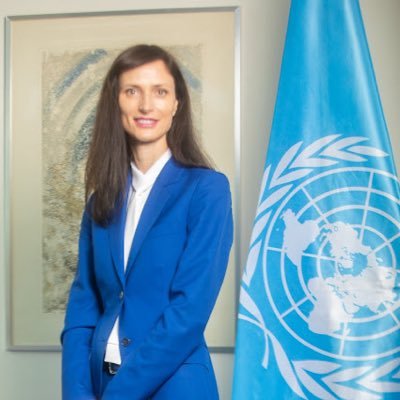
Mariya Gabriel Jun 18

Independent journalism is essential to resilient societies.   Today, @UNESCO’s #IPDC Bureau approved a new wave of grassroots initiatives that will help journalists and media organizations tackle challenges ranging from safety and media viability to AI and information integrity. https://t.co/Z7P2tyGaoV #IndependentJournalism #MediaFreedom #JournalismMatters #Nospecificcountrycodescanbeidentifiedfromthegiventweet.

BBC Jun 17

The article explores why India, a country of 1.4 billion, has never qualified for the FIFA World Cup, highlighting the lack of grassroots development in football compared to the overwhelming popularity and resources allocated to cricket, and the need for a long-term vision to cultivate talent and improve the nation's standing in global football rankings. #IndianFootball #WorldCupDream #GrassrootsDevelopment

www.bbc.com
India: Why a country of 1.4 billion is not in the football World Cup
8339
The New York Times May 17

The Voting Rights Act of 1965 was a significant achievement of the Civil Rights Movement, stemming from grassroots activism that aimed to enhance American democracy, rather than a top-down imposition by external authorities, as reflected in recent Supreme Court decisions undermining its legacy. #VotingRights #CivilRights #AmericanDemocracy #US

www.nytimes.com
Opinion | The Law They Hate Was a High Point of Our History
10166
The New York Times May 17

The Voting Rights Act of 1965 was a significant achievement born from the Civil Rights Movement, reflecting a grassroots push for democracy rather than an imposition from an elite or external authority. #VotingRights #CivilRights #AmericanDemocracy #US

www.nytimes.com
Opinion | The Law They Hate Was a High Point of Our History
8970
The New York Times May 17

The Voting Rights Act of 1965, born from the tireless efforts of grassroots activists in the Civil Rights Movement, is a landmark achievement in American democracy, countering the misconception that it was merely imposed by elites or a rogue Supreme Court. #VotingRights #CivilRights #AmericanDemocracy #US

www.nytimes.com
Opinion | The Law They Hate Was a High Point of Our History
8971
The New York Times May 17

The Voting Rights Act of 1965 emerged not as a top-down imposition but as a significant achievement of grassroots activism during the Civil Rights Movement, fundamentally aimed at enhancing American democracy and shaped by the collective efforts of those fighting for their rights. #VotingRights #CivilRights #AmericanDemocracy #US #LA

www.nytimes.com
Opinion | The Law They Hate Was a High Point of Our History
8971
The New York Times May 17

The Voting Rights Act of 1965, a landmark achievement born from the grassroots efforts of the Civil Rights Movement, revitalized American democracy and stands in contrast to the recent Supreme Court's hostility towards it, highlighting its roots in a collective struggle for fundamental rights rather than an imposition from an external authority. #VotingRights #CivilRights #AmericanDemocracy #US

www.nytimes.com
Opinion | The Law They Hate Was a High Point of Our History
8971
The New York Times May 17

The Voting Rights Act of 1965, a landmark achievement born from the grassroots efforts of the Civil Rights Movement and reflective of a robust democratic engagement, is often mischaracterized as an imposition by external forces rather than a vital accomplishment that sought to enhance American democracy. #VotingRights #CivilRights #AmericanDemocracy #US

www.nytimes.com
Opinion | The Law They Hate Was a High Point of Our History
10167
The New York Times May 17

The Voting Rights Act of 1965 was a landmark achievement of grassroots activists in the Civil Rights Movement, aimed at enhancing American democracy rather than being an imposed mandate, and its significance has been overlooked amidst current political debates surrounding its legal challenges. #VotingRights #CivilRights #AmericanDemocracy #US

www.nytimes.com
Opinion | The Law They Hate Was a High Point of Our History
10167