WRLD

Search

#FactChecking
Vatnik Soup 4d

The author claimed that Russia spent $5 billion a year on propaganda and subversion to build support for its invasions through tailored narratives, which they said were later spread by people including Marco Travaglio. They used derogatory language to describe those spreading the narratives and added that fact-based research to counter them took time and effort. #Propaganda #Disinformation #FactChecking #RU
3365
N. Dupont-Aignan 5d

The author claimed that Arcom now wanted to regulate political podcasts that were outside its control. He also accused the government of launching its own X account dedicated to fact-checking to silence critics, believing that its policy was leading to a budgetary disaster accompanied by austerity. https://t.co/vgCzoxGcUB #podcast #politique #factchecking #FR (translated)

2937
Krzysztof Graj 6d

Brazil’s synthetic voters – when AI manufactures public opinion They look like ordinary street interviews. A reporter approaches a passer-by in a Brazilian square and asks a simple question: who will you vote for? A young voter explains why Luiz Inácio Lula da Silva deserves another term. An elderly woman says Brazil needs Flávio Bolsonaro because he represents political renewal and greater security. The locations look plausible, the microphones are visible and the answers sound much like the brief political opinions heard in television vox pops around the world. None of the people are real. Ahead of Brazil’s presidential election on 4 October, fact-checking organisation Aos Fatos identified at least 50 TikTok videos in which artificial intelligence was used to manufacture voters, reporters and apparently spontaneous political interviews. Together, the videos had accumulated around 7.4 million views by mid-August. Some promoted Lula, others Flávio Bolsonaro, while another group used synthetic characters to ridicule or stereotype supporters of one side. Aos Fatos found no apparent evidence linking the accounts producing the videos to either presidential campaign. The opinion poll that never took place The format is important. These were not conventional deepfakes in which a recognisable politician is made to say something he never said. Instead, the creators reproduced the visual language of the vox pop – the short street interview used by broadcasters and social-media creators to illustrate what ordinary people supposedly think. In pro-Lula videos, synthetic voters described themselves as beneficiaries of social programmes or credited the president with improving their lives. In videos supporting Flávio Bolsonaro, artificial interviewees associated him with political renewal, public security and fighting corruption. Other clips were openly hostile: AI-generated characters presented as poor or living in parts of Brazil’s north-east were shown in dirty clothes or run-down surroundings, declaring support for Lula because they supposedly preferred welfare payments to work. The deception is therefore subtler than fabricating a candidate’s statement. It manufactures something that political communication normally treats as evidence of public sentiment. A real vox pop may be unscientific, but the people interviewed at least exist. These videos created the appearance that identifiable social groups – young people, pensioners, welfare recipients or residents of particular regions – were spontaneously expressing political preferences when no such encounters had taken place. An electoral-law specialist interviewed by Aos Fatos described the technique as the fabrication of a “social fact that never occurred”. That captures the central innovation: AI is being used not merely to falsify political speech, but to manufacture the impression of grassroots opinion. Fifty videos, but not one proven network The available evidence does not support describing the 50 posts as a centrally controlled influence operation. Aos Fatos located them through TikTok searches and recommendations produced by the platform itself, then examined the accounts responsible for publication. Most had relatively small individual audiences, although their combined reach was substantial. The first examples identified by the investigation appeared as early as March 2026. Activity increased in June and was concentrated particularly in July and the first half of August as Brazil’s election calendar intensified. Some accounts specialised in AI-generated videos generally, including fabricated podcast-style material. Others were explicitly political or supportive of a candidate, but Aos Fatos found no apparent links between those profiles and the official Lula or Bolsonaro campaigns. That distinction is essential. The evidence demonstrates a common technique and a shared political environment, not a single command structure. Some creators may have been motivated by ideology, others by engagement or monetisation. Publicly available evidence does not establish who commissioned the individual videos or whether any coordination existed between the accounts. This decentralised model also creates a different enforcement problem from a traditional bot network. There may be no headquarters to expose and no infrastructure whose removal disables the entire operation. The format itself can be copied by anyone with access to inexpensive generative-video tools. When the algorithm mixes real and synthetic citizens Aos Fatos documented another important feature of the phenomenon: TikTok’s recommendation system placed AI-generated interviews alongside genuine street interviews. For a user scrolling quickly through the platform, the transition between an authentic citizen and an entirely fabricated one could therefore be almost invisible. In 18 per cent of the 50 videos analysed, there was no indication that the people shown had been generated using AI. After Aos Fatos provided TikTok with the videos, the company said it had removed all of them for violating its rules on edited and AI-generated media. TikTok said its policies require creators to identify synthetic content and prohibit manipulated media capable of misleading users about matters of public importance or impersonating genuine journalistic material. The issue extends beyond one platform. Factchequeado’s review of Brazil’s 2026 election campaign found that synthetic endorsements and other deepfakes had become one of the most visible forms of AI-assisted electoral misinformation, alongside fabricated candidate statements and invented scenes. Brazil already had rules for synthetic politics Brazil entered the campaign with unusually detailed electoral rules governing artificial intelligence. The Superior Electoral Court, the TSE, requires electoral propaganda using synthetic multimedia to disclose clearly that AI was used. More importantly for the fake-voter videos, its rules prohibit synthetic audio or video used to favour or harm a candidacy when it creates or alters the image or voice of a living, deceased or fictitious person. The difficulty is attribution and enforcement. When a synthetic video is published by an official campaign, responsibility can be relatively straightforward to investigate. When it comes from an apparently independent account with no demonstrated relationship to a candidate, lawyers interviewed by Aos Fatos said responsibility is more likely to fall on the individual creator, while imposing electoral sanctions on a campaign would require evidence of a connection. For the final 72 hours before the election and the 24 hours following it, the TSE has imposed additional restrictions on newly published or republished synthetic material involving candidates or public figures, reflecting the particular difficulty of correcting fabricated content immediately before voting. From deepfake politicians to synthetic electorates The Brazilian case illustrates a broader change in political manipulation. The first generation of electoral deepfakes concentrated on famous people: make a politician appear to say something damaging, or fabricate an endorsement from a celebrity. Synthetic vox pops reverse the perspective. The politician can remain completely authentic; it is the electorate around the politician that is fabricated. That changes the psychological proposition of the message. Instead of saying the candidate believes this, the video suggests people like you believe this. Age, clothing, accent, neighbourhood and social class can all be generated to construct an artificial constituency around almost any political claim. There is no evidence that the 50 Brazilian videos identified by Aos Fatos constitute a single centrally directed campaign, nor evidence that they changed voting intentions. What they demonstrate is a technique whose barrier to entry has become extremely low. AI no longer needs to forge the politician. #DISINFORMED #Episode14 #Brazil #BrazilElection2026 #Elections #ElectionDisinformation #ArtificialIntelligence #AI #GenerativeAI #SyntheticVoters #SyntheticMedia #AIAvatars #AIGeneratedVideo #VoxPop #FakeInterviews #Astroturfing #AIPropaganda #PoliticalDisinformation #InfluenceOperations #InformationWarfare #SocialMediaManipulation #TikTok #PublicOpinion #ManufacturedConsent #SyntheticPublicOpinion #DigitalInfluence #Deepfakes #ElectionIntegrity #TSE #AosFatos #FactChecking #OSINT #MediaManipulation #WRLD (translated)

www.aosfatos.org
Eleitores gerados por IA fazem campanha no TikTok e põem em xeque regra do TSE
565
Manuel Bompard 6d

The author criticized government checks that, according to him, showed budget increases without taking inflation into account, and wondered if a "ministry of truth" would soon come into existence. #FactChecking #Gouvernement #Inflation #FR (translated)

2944
Le Parisien 6d

The French government has launched a fact-checking account on X to ensure the transparency of the 2027 budget, while criticizing the president of Medef. #FactChecking #Budget2027 #Gouvernement (translated)

www.leparisien.fr
« Soyons précis » : le gouvernement lance un compte de fact-checking du budget 2027 sur X, le président du Medef épinglé
1700
Cerfia 7d

Cerfia indicated that the government had launched a fact-checking account on X called "Let's Be Precise." According to the media, it was meant to address information deemed false or misleading, particularly regarding the 2027 budget, relying on facts, figures, and official sources, and to promote a debate based on verifiable data. #FactChecking #Budget2027 #Vérité (translated)

3401
Sam Pancher 2w

Luiz Fux faz uma espécie de ‘fact checking’ da decisão de Flávio Dino: “Nenhuma decisão do TSE proibiu a defesa de Nossa Senhora Aparecida ou de sua condição de Padroeira. A ordem eleitoral proibiu o contrário: a afirmação inverídica, como fato, de que o candidato pretende retirar-lhe o título. A decisão (de Dino) cassou, assim, uma proibição que não existe, e restabeleceu a circulação de uma afirmação cuja falsidade ninguém, nem mesmo o peticionário, sustentou nos autos.” #Justiça #FactChecking #Eleições

22945
Ana Pastor 🇪🇸 2w

Lo del condenas 👇🏾 Así funciona la red de ‘La Derecha Diario’ en 11 países, según una investigación de fact-checkers latinoamericanos https://t.co/2onJqOzdUB vía @Newtral #LaDerechaDiario #FactChecking #Desinformación #AR #CL #CO #MX #PE #UY #BO #EC #GT #HN #SV

115
Donald J. Trump 3w

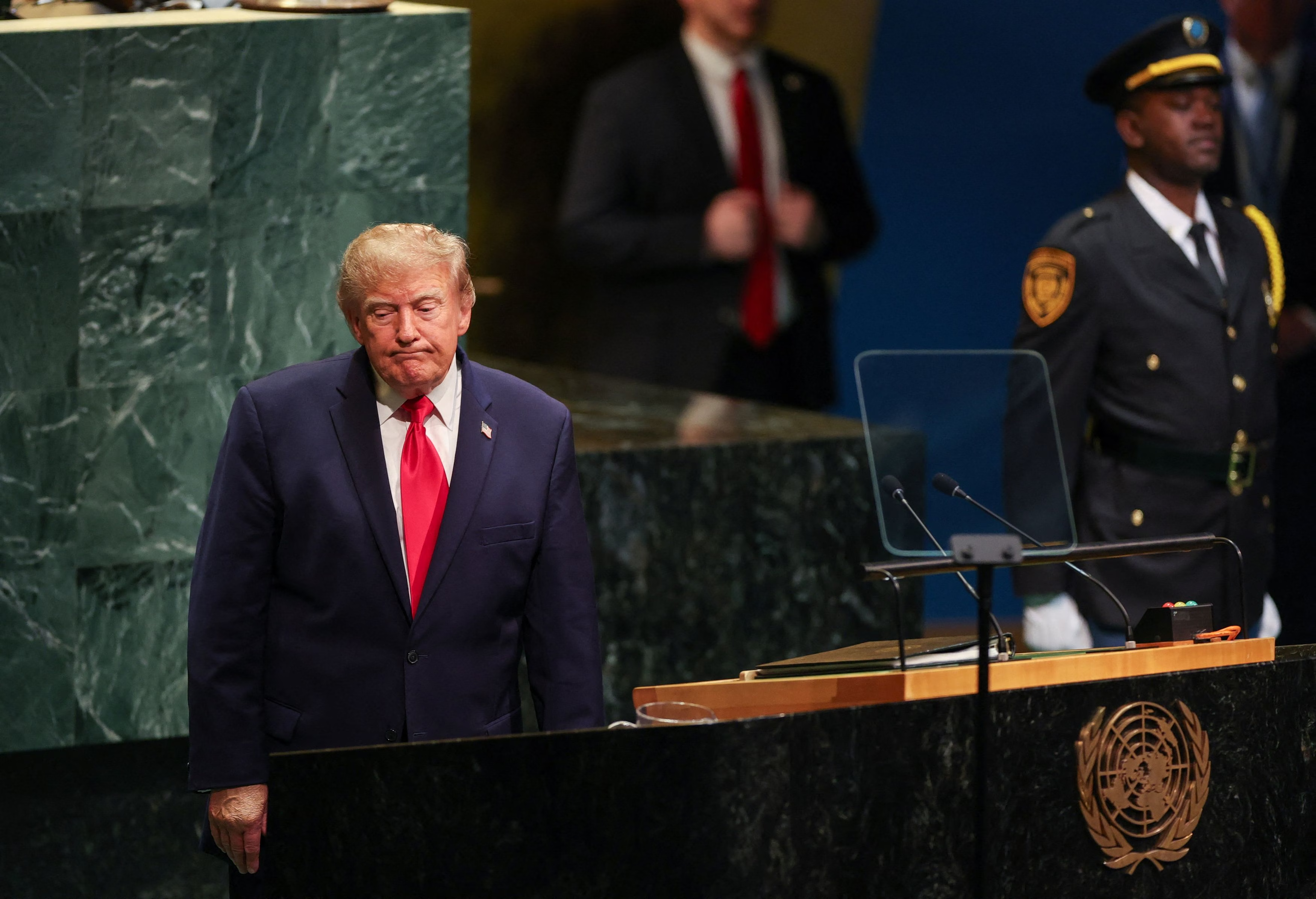
«Αν προσθέσουμε τις Ηνωμένες Πολιτείες και τη Βενεζουέλα μαζί, διαθέτουμε περισσότερο από το 60% του πετρελαίου παγκοσμίως». #Τραμπ #ΟΗΕ #FactChecking

Fact-checking στον Ντόναλντ Τραμπ: Οι ανακριβείες – υπερβολές της ομιλίας του στον ΟΗΕ
www.tovima.gr
1731

Κατά τη διάρκεια της ομιλίας του στον ΟΗΕ, ο Ντόναλντ Τραμπ επανέλαβε αμφιλεγόμενους ισχυρισμούς σχετικά με την οικονομία, τα πετρελαϊκά αποθέματα και τις στρατιωτικές δυνάμεις, οι οποίοι όμως αμφισβητήθηκαν από ανεξάρτητους αναλυτές και διεθνείς οργανισμούς ως υπερβολικοί και παραπλανητικοί. #Τραμπ #ΟΗΕ #FactChecking

www.tovima.gr
Fact-checking στον Ντόναλντ Τραμπ: Οι ανακριβείες – υπερβολές της ομιλίας του στον ΟΗΕ
1731
2
20minutes 4w

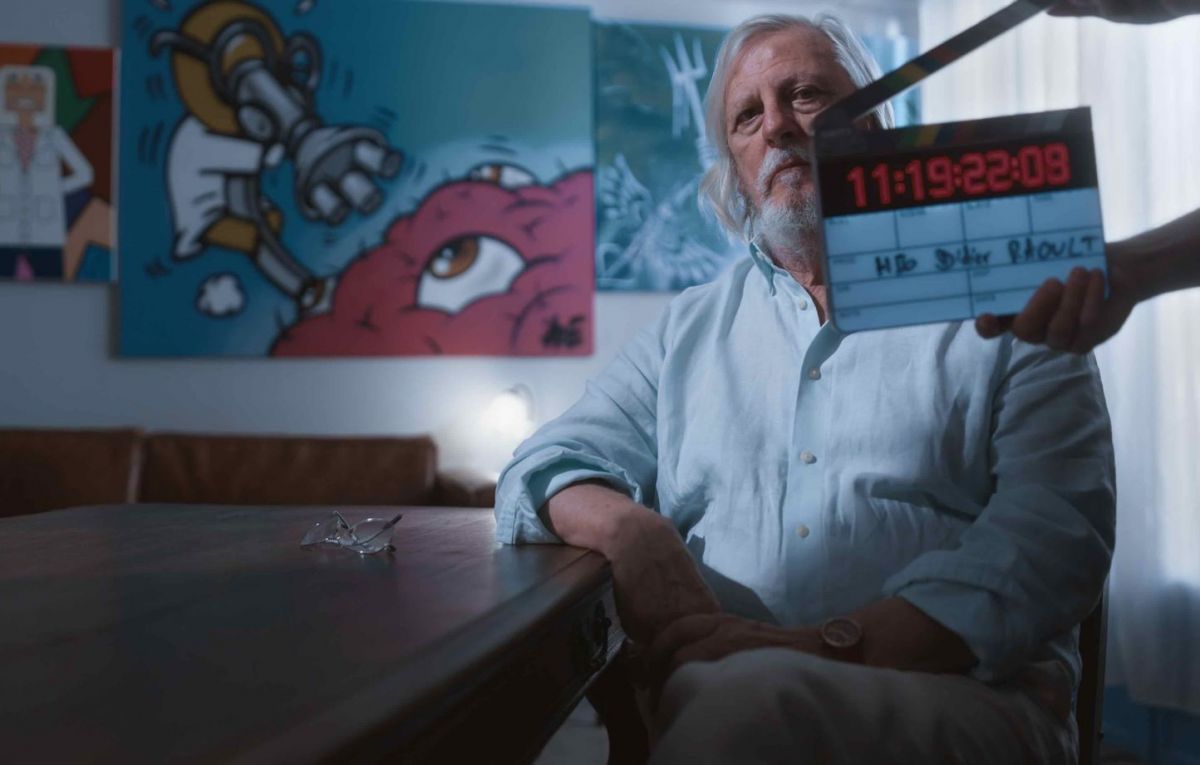
Le documentaire « Professeur Raoult vs le gang des cerises » révèle l'enquête audacieuse de six fact-checkeurs, dont la fille du professeur Raoult, qui ont travaillé pour dénoncer la fraude scientifique autour de l'hydroxychloroquine durant la pandémie de Covid-19. #DidierRaoult #Hydroxychloroquine #FactChecking

www.20minutes.fr
« Professeur Raoult vs le gang des cerises », ou l’hallucinante histoire d’une intox démasquée
16872
J. Budding 🇳🇱🎩🏴‍☠️ 4w

@NUnl Jullie geloven ook elk verhaal uit Gaza hè .... Maar is er ook maar enige moeite gedaan om het te verifiëren?? #Gaza #Factchecking #Nieuws

11872
L
Le Soir 4w

Les fact-checkeurs latino-américains ont appelé Meta à ne pas remplacer le fact-checking indépendant par les notes des internautes, exprimant des inquiétudes quant à l'efficacité de ce système face à la désinformation croissante dans la région. #FactChecking #Désinformation #LatAm

www.lesoir.be
Les fact-checkeurs latino-américains demandent à Meta de ne pas les remplacer
15145
Poslední skaut™ Sep 10

"Tyhlety informace každého jenom otravují. Já bych všechny ty fact-checkingy zakázala." Věra Pohlová, 72 let, volička SPD https://t.co/nwIPzqsyH6 https://t.co/7Gan1XSW9e #dezinformace #factchecking #politika

23771
Jean Marc Morandini Sep 10

Meta lance en phase de test des "notes de la communauté" dans 16 pays d'Amérique latine, dans le but de remplacer le fact-checking sur ses réseaux sociaux https://t.co/2rGrSZsQEa #Meta #Communauté #FactChecking #AR #BO #BR #CL #CO #CR #DO #EC #GT #HN #MX #NI #PA #PY #SR #UY #VE

117
2
20minutes Sep 9

Meta remplace le fact-checking professionnel par des « notes de la communauté » en Amérique latine, un système critiqué pour son efficacité face à la désinformation, qui a déjà suscité des inquiétudes parmi les experts en vérification. #Désinformation #RéseauxSociaux #FactChecking

www.20minutes.fr
Meta : Le fact-checking professionnel remplacé par les « notes de la communauté » en Amérique latine
11073
Idriss J. Aberkane Ph.D x3 Aug 27

Le cofondateur de wikipedia a tellement honte de leurs mensonges en bande organisée qu’il a décidé d’ouvrir un site pour debunker la pseudo-encyclopédie #Wikipedia #Désinformation #FactChecking #Thetweetdoesnotmentionanyspecificcountries.Therefore #therearenocountrycodestoreturn.

1407
2
20minutes Aug 18

Un article dénonce la diffusion sur les réseaux sociaux de chiffres erronés et obsolètes concernant le coût et le prix de l'électricité nucléaire en France, précisant que le coût actuel de production est fixé à 60,3 euros par mégawattheure, et que les précédents tarifs de vente ne sont plus valables depuis fin 2025. #ÉlectricitéNucléaire #FactChecking #Arenh

www.20minutes.fr
Electricité nucléaire vendue à « 42 euros », rachetée à « 397 euros »… C’est quoi ces chiffres erronés et anciens ?
17054
AuBonTouiteFrançais 🍾🍾🍾 Aug 12

Document exclusif. Les 3 vieillards du Puppet-Show en train de réaliser que toutes les révélations autour de Fauci sont en train de fragiliser leur business de fact-checking, à base de "consensus médical de la communauté scientifique sérieuse et responsable" https://t.co/kB6ywQTX6V #PuppetShow #Fauci #FactChecking

15317
Il Post Aug 11

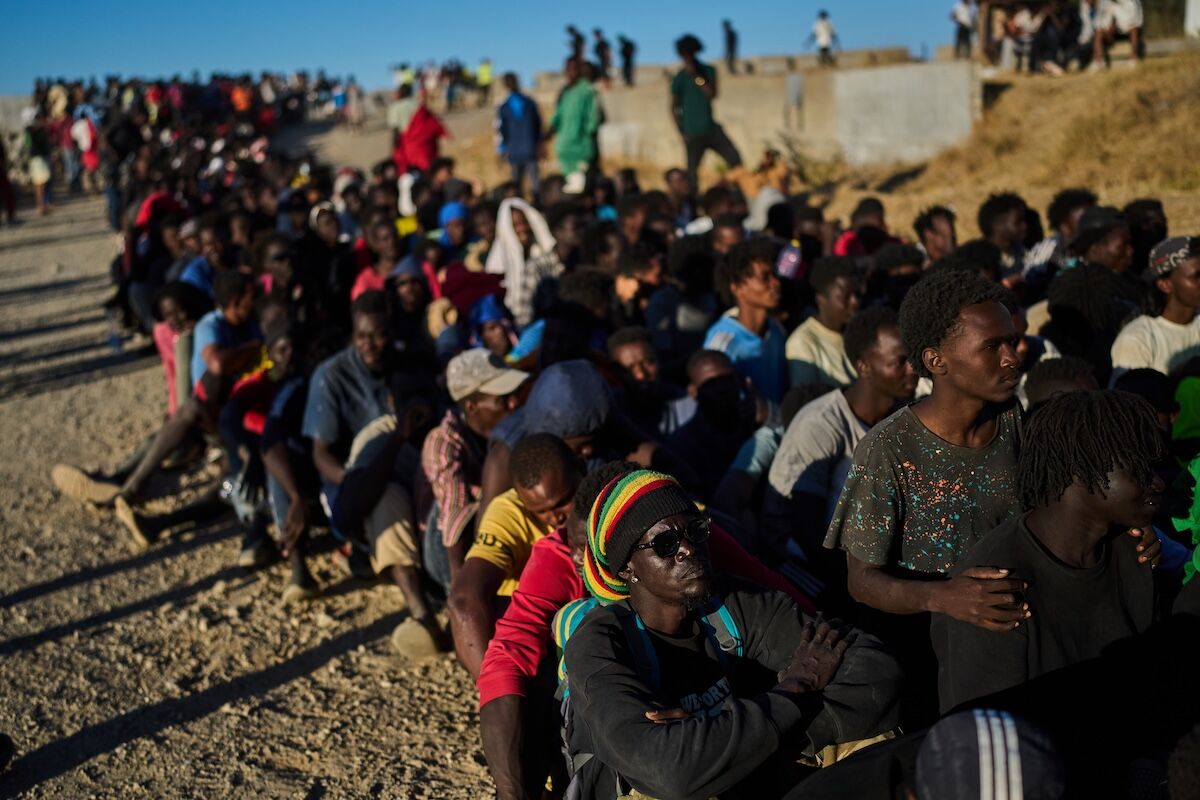
Meta e TikTok collaboreranno con l'Unione Europea per effettuare fact checking dei contenuti riguardanti la crisi migratoria a Ceuta, al fine di limitare la diffusione di informazioni false sui social network, creando un canale dedicato per facilitare la segnalazione di contenuti ingannevoli. #Ceuta #FactChecking #Disinformazione

www.ilpost.it
Meta e TikTok si sono accordate con l’Unione Europea per fare fact checking dei contenuti sulla crisi migratoria a Ceuta
11903