WRLD

Search

#Happiness
Bruno Maçães 2d

The author said they had visited Czechia and Poland in March, where think tank staff, journalists and politicians seemed very enthusiastic about the war in Iran. They wrote that those people now appeared unhappy over what the author described as a major boost to Russia’s economy and war machine, and asked how to explain the change. #Czechia #Poland #IranWar #CZ #PL #IR #RU

2743
Петър Дочев 6d

Arthur Schopenhauer: Knowing too many truths about man, I cannot expect anything good from him. Absolute proof of the truth of this statement is the contemplation and possibility of realizing the greatest crime of the destruction of the Earth and all humanity by the ruling global elite, as well as the endless wars and genocides committed by it. What negative qualities in humans did Schopenhauer discover that deeply disappointed him? A blind, irrational, and insatiable drive that governs all people and pushes them towards selfishness and suffering. Inherent selfishness and malice Selfishness is the main driving force of man. It is the desire for one's own well-being, which is often limitless. A person is willing to sacrifice the happiness of others to satisfy even the smallest whims. Malice (malevolence): The desire to cause harm or suffering to another without any personal gain, simply out of envy or sheer cruelty. Schopenhauer believes that humans are the only beings that take pleasure in the suffering of their kind. Lack of true morality. Most people do not possess true compassion. They behave "morally" or "civilized" only out of fear of the law, public opinion, or loss of reputation. If these external constraints are removed, a person quickly reveals their true, savage nature. Intellectual superficiality and stupidity. Schopenhauer was deeply disappointed by the low intellectual level of the majority. According to him, most people are: Herd animals: Prone to blindly follow fashion, authorities, and public opinion rather than think critically. Incapable of higher spiritual pleasures: Satisfied only with material goods, sensory pleasures, and empty conversations. Hypocrisy and falseness The philosopher views social rituals and etiquettes as a mask behind which people hide their hostility and selfishness. Politeness is merely "artificial skin," protecting us from mutual harm with our true intentions. Insatiability and eternal dissatisfaction Humans are doomed to an eternal cycle between desire (which brings pain until fulfilled) and boredom, devaluation, and weariness (which occur immediately after the desire is satisfied). This psychological trap makes people eternally grumbling, ungrateful, and unhappy beings. (translated)

youtu.be
ЕФРЕМОВ доказал: ПОДЛЫЕ люди живут лучше ЧЕСТНЫХ. Спустя 40 лет учёные ПРИЗНАЛИ его правоту!
679
S
Sandfeen 2w

“If everything you offered wasn’t enough, offer your absence” - Mario Benedetti “The 15 Million Men America Has Lost to Marriage America has a problem that is remarkably difficult to discuss without changing the subject: young men are disappearing from marriage. In 2000, there were 20.7 million unmarried men aged 20–39 and 18.1 million married men—a gap of 2.6 million. By 2025, there were 30.4 million unmarried men but only 15.4 million married men. The gap had exploded to roughly 15 million. That is not a minor cultural adjustment. It is a demographic earthquake. The explanation cannot simply be that men have become unwilling to “grow up.” Economic and educational changes matter. Unpartnered men have lower education, employment and earnings than partnered men. In 2019, 26% of unpartnered prime-working-age men had a bachelor’s degree, compared with 37% of partnered men. Meanwhile, women have made enormous gains in education and economic independence. Marriage is therefore no longer an economic necessity for women to the same extent it once was. The consequences are visible. In 1980, 63% of Americans aged 25 were married; by 2021, only 22% were. The share with a child fell from 39% to 17%. By 2021, one quarter of 40-year-olds had never married, compared with 6% in 1980. And 39.5% of U.S. births in 2024 occurred outside marriage. None of this proves that marriage guarantees happiness, or that being unmarried makes someone dysfunctional. Nor does the 15-million figure mean 15 million men will never marry. But pretending that family formation is irrelevant is equally absurd. A society cannot manufacture spouses for people. Nor should it. But it can create conditions in which work, competence, responsibility, commitment and family formation are attainable—and respected. Instead, we have increasingly normalised economic dependence, digital isolation and permanent adolescence while treating personal choice as though it has no social consequences. The 15-million gap is therefore more than a marriage statistic. It is a warning that millions of young men are failing to make the transition into the responsibilities of adult life” - ChatGPT

921
Harry Loco Sep 7

Happiness....maybe just for one moment ...there is no political solution.... https://open.spotify.com/album/0hIL8UqWZdud1YdQW03LOD

open.spotify.com
Hop on the bus! - Single by Harry Loco | Spotify
700
Петър Дочев Sep 7

Животът не е това, което си мислите. Шастието не е в това, което си мислите. То е в производството на хормони на щастие в мозъка при високо снабдяване с кислород. Животът е в моментните преживявания добри или лоши. Кислородната недостатъчност най-много ощетява съществуванието на човека. Същността на старостта е в отслабената сърдечна функция и кръвообращението, забавени и отслабени жизнени процеси и намалено усвояване при орално приемане на всички важни вещества. То може да падне от 100% на 5%. Движението за поддържане на кръвообращението става от съществено значение. Сърцето се нуждае от кислород. Мозъкът се нуждае от кислород. Мускулите се нуждаят от кислород. Клетките се нуждаят от кислород. Тази сутрин ми хрумна генилната мисъл, която обяснява всичко. Гениалните мисли винаги ми се появяват сутрин, защото тогава атмосферата осигурява апогей на снабдяване на организма с кислород. Гениалното мислене се нуждае от кислород. Щастието се корени в нивото на „хормоните на щастието“, произвеждани в мозъка, което зависи единствено от снабдяването на мозъка с кислород. Същото важи и за възприемането и създаването на музика. Гениалността се крие в намирането на прости решения на сложни проблеми. Здравето може да се поддържа само с прости, гениални решения. Кислородът е най-важното вещество в тялото и в жизнените процеси. Без кислород няма живот, тъй като жизнените процеси стават напълно невъзможни. Организмът без кислород е мъртва материя. Течният кислород превръща керосина и спирта в ракетно гориво. Индентична е функцията му в организма. Нивото му определя степента на жизненост в цялото тяло, във всички процеси. Това води до максимално опростяване и поддържане на здравето. Само кислородът е важен и нищо друго. Захранването с кислород зависи от правилното функциониране на дихателните органи, а усвояването на кислород от клетките зависи от ензими производни на витамин B1, който се нарича дихателен витамин. Другите витамини от група B също са много важни. При приемане през устата усвояването е само 5%. Необходим е друг метод на усвояване. Намерих единственото решение, защото съм единственият способен да реши този най-сложен проблем. Втриване на прах с мокра ръка в кожата на тялото, не в крайниците, по 5 мг витамин на всеки 3-4 дни, до края на живота. Това е процес на осмоза. Веществата за 30 минути преинават на 100% в кръвта. Усъвършенстването на дихателната система се постига чрез системни дихателни упражнения с акцент върху максимално задържане на въздух. Това е необходимо, защото кислородът се свързва по-добре с хемоглобина под налягане в белите дробове. Задържане на въздуха за 20-40 секунди, 42 вдишвания за 30 минути, всяка сутрин, до края на живота. Резултатът е перфектно усвояване на кислорода, перфектно здраве и максимална жизненост. Всички други идеи за поддържане на здравето са напълно неефективни и безполезни. Лечението е невъзможно. Само слабите организми се разболяват и те не могат да се лекуват и възстановят. Здравите организми не се разболяват и не се нуждаят от лечение. Поради всички тези причини официалната и всяка друга медицина са несъстоятелни. Life is not what you think it is. Happiness is not found in what you think. It lies in the brain's production of happiness hormones when oxygen supply is high. Life consists of momentary experiences—whether good or bad. Oxygen deficiency is what most severely impairs human existence. The essence of old age is in weakened heart function and blood circulation, slowed and weakened life processes and reduced absorption when taking all important substances orally. It can drop from 100% to 5%. The movement to maintain blood circulation becomes essential. The heart needs oxygen. The brain needs oxygen. Muscles need oxygen. Cells need oxygen. This morning, I had a brilliant idea that explains everything. Brilliant ideas always come to me in the morning because that is when the atmosphere ensures the body’s oxygen supply is at its peak. Brilliant thinking requires oxygen. Happiness lies in the level of "happiness hormones" produced in the brain, which depends solely on the brain's oxygen supply. The same applies to the perception and creation of music. Genius lies in finding simple solutions to complex problems. Health can be maintained only with simple, ingenious solutions. Oxygen is the most important substance in the body and in life processes. Without oxygen there is no life, since life processes become completely impossible. An organism without oxygen is dead matter. Liquid oxygen turns kerosene and alcohol into rocket fuel. Its function in the body is identical. Its level determines the degree of vitality in the whole body, in all processes. This leads to maximum simplification and maintenance of health. Only oxygen is important and nothing else. Oxygen supply depends on the proper functioning of the respiratory organs, and the absorption of oxygen by cells depends on enzymes derived from vitamin B1, which is called the respiratory vitamin. Other B vitamins are also very important. When taken orally, absorption is only 5%. Another method of absorption is needed. I found the only solution, because I am the only one capable of solving this most complex problem. Rubbing powder with a wet hand into the skin of the body, not the limbs, 5 mg of vitamin every 3-4 days, until the end of life. This is a process of osmosis. The substances in 30 minutes pass 100% into the blood. Improving the respiratory system is achieved through systematic breathing exercises with an emphasis on maximum air retention. This is necessary because oxygen binds better to hemoglobin under pressure in the lungs. Air retention for 20-40 seconds, 42 breaths in 30 minutes, every morning, until the end of life. The result is perfect oxygen absorption, perfect health and maximum vitality. All other ideas for maintaining health are completely ineffective and useless. Treatment is impossible. Only weak organisms get sick and they cannot be treated and recovered. Healthy organisms do not get sick and do not need treatment. For all these reasons, official and any other medicine is untenable.

467
Петър Дочев Aug 29

Life is unsolvable contradiction. The scene with Odysseus tied to the mast and experiencing the terrible impact of the sirens on him is the greatest, ingenious artistic metaphor and it will never be surpassed. This is the personification of the relationship between men and women. The enormous danger that women represent for men. The Spanish-Jewish philosopher Gratian states that women combine in themselves all possible enemies and dangers for a man, but at the same time they give him the greatest joy, happiness and satisfaction from life. This is identical to the effect of drugs and this is a narcotic experience. Odysseus experiences all the contradictions of the effect of women. He wants to go to the sirens. They are the greatest temptation he has encountered in his life. He experiences the greatest possible mental suffering and at the same time he himself ordered that he be tied to the mast, that his fellow sailors plug their ears and in no case untie him, no matter what happens. Therefore, Ulysses is the first and at the same time the greatest work, which will never be surpassed in artistic mastery and ingenious depiction of life.

1055
S
Sandfeen Aug 28

Why Weak Societies Choose Tyranny The pinnacle of tyranny would be a system that allows politicians, elites, and bureaucrats to control a population without force or coercion because the people love their servitude. Aldous Huxley wrote Brave New World, an eerily relatable dystopian novel, with this idea at the forefront. Unlike Orwell’s 1984, there is no overt oppression. The state does not have to stamp on human faces with its jackboots or erect an inescapable surveillance state. Rather, the people of Brave New World happily chain themselves with meaningless pleasure and distractions. The authorities do not rule through terror and rage, the central elements of 1984, but instead give the people everything they ever wanted. A pharmaceutical called Soma becomes the opiate of the masses. Mustapha Mond, the World Controller, likens it to Christianity without tears. While religion requires years of moral training, Soma allows citizens to achieve peace simply by swallowing tablets. It is the perfect escape from reality, a holiday from the facts. Lenina, the female counterpart to the protagonist Bernard, cannot comprehend why he refuses Soma, preferring discomfort to something that can remove it. When Bernard states, “I’d rather be myself, myself and nasty, not somebody else, however jolly,” Lenina sees this as a sort of pathology and repeatedly encourages him to take the wonder drug. Bernard explains, “I want to know what passion is.” He understands that there is more to life than merely being content, craving genuine experience, including suffering and intensity, rather than being emotionally regulated by the World State. Lenina’s bewilderment stems from her conditioning to regard unhappiness as a technical problem, encapsulated in the society’s common saying that “a gram is better than a damn.” The people of Brave New World are not captives but satisfied customers. Children are produced by the scientific state, relieving people of the responsibility of parenthood. This grants them the ability to engage in promiscuity, where everyone belongs to everyone else, while filling their free time with cheap entertainment and endless sporting events—what would be referred to as slop today. As Neil Postman observed, Orwell saw totalitarianism through the lens of fear, while Huxley saw it through pleasure. There was no need to ban a book in Brave New Worldbecause there was no one who wanted to read one. An abundance of low-quality information rendered censorship unnecessary because no one could hear the truth through all the noise. Huxley threw shade at civil libertarians who passionately opposed tyranny because they failed to take into account man’s almost infinite appetite for distractions. Humanity in its rawest form is portrayed by John the Savage, an outsider free from the World State’s conditioning. Upon coming face-to-face with this spiritually neutered society, he completely rejects it: “I don’t want comfort, I want God, I want poetry, I want real danger, I want freedom, I want goodness, I want sin.” Huxley’s dystopia is not imposed on an unwilling population but instead requested by a hollow one. Which leads us to the question: How do people become so weak that they get on their knees and beg for totalitarianism? Good times make bad times possible. Once a certain level of luxury and safety is achieved, people start to resemble the hobbits from the Shire. They are so far removed from evil that they forget it even exists and become defenseless in the face of it. Andrew Lobaczewski, who studied the psychology of totalitarianism from inside Poland’s communist takeover, wrote: “During good times, people progressively lose sight of the need for profound reflection. They lose the capacity to differentiate human nature, and emotion begins to dominate intellect. Once a critical mass starts operating on the pleasure principle, any excess mental effort seems like pointless labor.” Lobaczewski warned that it is not as simple as some people losing the ability to think rationally. It is worse, because those people then shame anyone capable of doing so. A clever, liberal, and merry individual is a good sport. A more far-sighted person predicting dire results becomes a wet blanket, a killjoy. The ability to have uncomfortable conversations without emotion taking over is, in Lobaczewski’s view, an indicator of whether a society’s future will be good or bad. It is easier to think about pleasant things. This leads people to eliminate any data or facts that cause them discomfort. That becomes a habit and eventually a custom accepted by society at large. Once the general populace accepts that inconvenient truths should be left unsaid, it becomes incapable of reaching correct conclusions. After all, how could you ever describe a picture that you refuse to look at? “Catastrophe waits in the wings of the communities that lose the capacity for psychological reason and moral criticism,” Lobaczewski wrote. “It is on the other side of this weakening of thought that the processes of the generation of evil are intensified at every social scale until they give rise to bad times.” It is precisely man’s dreams of happiness that can lead to chaos and suffering. This hedonistic view of happiness contains the seeds of misery, feeding the eternal cycle whereby good times give birth to bad times. Friedrich Nietzsche viewed socialism as demanding comfort for the greatest number of people possible. To question whether it is good for the masses to live in comfort has become a form of heresy. This reveals the spiritual atrophy that so many suffer from. Considering only the weak believe comfort to be a virtue, it is what Carl Jung would describe as the infantile dream state of mass dependency: the desire to gently slip back into the kingdom of childhood, into the paradise of parental care. Except this lack of friction has consequences. The perfect state destroys the soil in which great intellect grows. Genius, struggle, passion, strength, and wisdom are required to build a safe and abundant society. Yet once a certain level of comfort is achieved, it can destroy the very virtues required to obtain it. Nietzsche observed that it is the warmest heart that aims to alleviate suffering and hardship but fails to realize that it thereby wills the destruction of its own foundation. Comfort breeds mediocrity, which is then called good. Small people want one thing above all: that no one hurt them. We have taken this pathology to such a degree that we now obsess over hurt feelings and call this virtue. Pleasure, in its proper place, is a byproduct of meaningful goals, not a goal in itself. Aristotle saw that pleasure and comfort distort perception and proper judgment. While they do not cause us to misjudge something like geometry or mathematics, they can destroy our ability to decide what is worth pursuing and, therefore, what to do. Consider The Odyssey. Homer depicts Odysseus’ men on the island of the Lotus-Eaters, where they taste the fruit and lose all desire to go home. Much like Huxley’s Brave New World, they are not imprisoned. Rather, they simply stop wanting anything more. Odysseus has to drag his men back to the ships while they weep to stay. This is what comfort can do to men. It empties them of purpose. We intuitively understand this but fail to apply it to our own lives. We must make the same choice as Odysseus when he refuses Calypso’s offer of endless comfort and immortality. He knows she is more beautiful than his wife Penelope waiting at home. He knows that he and Penelope will grow old and die, a fate he could avoid by staying with Calypso. No one who reads these stories wishes he had stayed. We want him to choose the hard way home because if he took the offer, he would stop being admirable. Yet staying is exactly what our modern society asks of us. We are told that the island is the good life. But what happens to the man who caves to this temptation? In Thus Spoke Zarathustra, Nietzsche imagines a risk-averse society taken to its logical endpoint. The elimination of all struggle produces a man so diminished that he fails to possess even self-contempt or higher aspiration. Safety and sameness become the highest goals, creating “no shepherd in one herd.” Anyone who seeks to be anything more than normal becomes an aberration to be dealt with. Or, as Nietzsche puts it, they have “made the wolf a dog in man himself, man’s best domestic animal.”

1055
Antonio Sabato Jr Aug 13

If you’re battling addiction or feel at your lowest, trust me when I say the best is yet to come. Don’t give up—you deserve happiness and health. Keep believing and never lose faith. You’re amazing now, and you’ll be even better! 💪✨ #Hope #Recovery #Surender #Hope #Recovery #Faith #Nospecificcountrycodesarepresentinthetweet.

Geert Dales Aug 4

Vandaag begon ons 36e jaar samen. Nog steeds heel erg gelukkig met elkaar. Dit is wat we iedereen wensen, niet alleen de lhbtiq-etc's, maar iedereen. Dat wij homoseksueel zijn interesseert onszelf totaal niet. Dat 4 augustus onze grote dag is heeft ook niks met 'Gay Pride' te maken. Die/dat bestond in 1991 immers niet. Be happy, leef je leven. Wees niet bang.❤️ #LoveIsLove #Pride #Happiness

14994
Maria L Jul 20

Κι αν μπορείς να υποσχεθείς κάτι στον εαυτό σου, να είναι αυτό: Μη σου χρωστάς καλοκαίρια. Να στα χαρίζεις όλα, απλόχερα, απερίσκεπτα, λαθραία. Τα αξίζεις. Όλα! #team_summer 🌞🌊 #summerlover🌊🌞 https://t.co/Fah9sMcWzK #summer #selfcare #happiness

12084
Jens Spahn Jul 19

I have realised that my personal happiness - founding a family together with my husband and becoming a father - is not compatible with my political office.

German politician resigns over surrogacy child controversy
www.bbc.co.uk
8887
Jens Spahn Jul 18

I have realised that my personal happiness - founding a family together with my husband and becoming a father - is not compatible with my political office.

German politician resigns over surrogacy child controversy
www.bbc.co.uk
8888
Maria L Jul 17

Και εδώ βλέπετε τι ευτυχία προσφέρει ο θεός ΗΛΙΟΣ σε μία καλοκαιράκια που έβριζε για το πότε θα τελειώσει ο χειμώνας.😊🌊🌞 #summerlover #grandBeachLagonisi🌊 https://t.co/4fSSh14RMM #summer #sunshine #happiness

15409
Harmanpreet Kaur Jul 14

I really want to thank the people who thought about bringing one Test match here. These kinds of matches bring a lot of happiness and excitement. Hopefully, we'll keep getting more Test matches and keep performing the way we are doing.

How India's Lord's win echoes the legacy of its pioneering women cricketers
www.bbc.co.uk
8896
20 minutos Jul 5

Gretchen Rubin, experta en felicidad, destaca, že klíčem k trvalému blahu není úsilí o velké změny, ale každodenní rutiny a malé návyky, které tvarují naše emocionální zdraví a identitu, přičemž zdůrazňuje význam přizpůsobení těchto návyků vlastnímu životnímu stylu a hodnotám. #Happiness #Routines #Wellbeing

www.20minutos.es
Gretchen Rubin, experta en felicidad: "Lo que haces cada día importa más que lo que haces de vez en cuando"
17225
Antonio Sabato Jr Jul 4

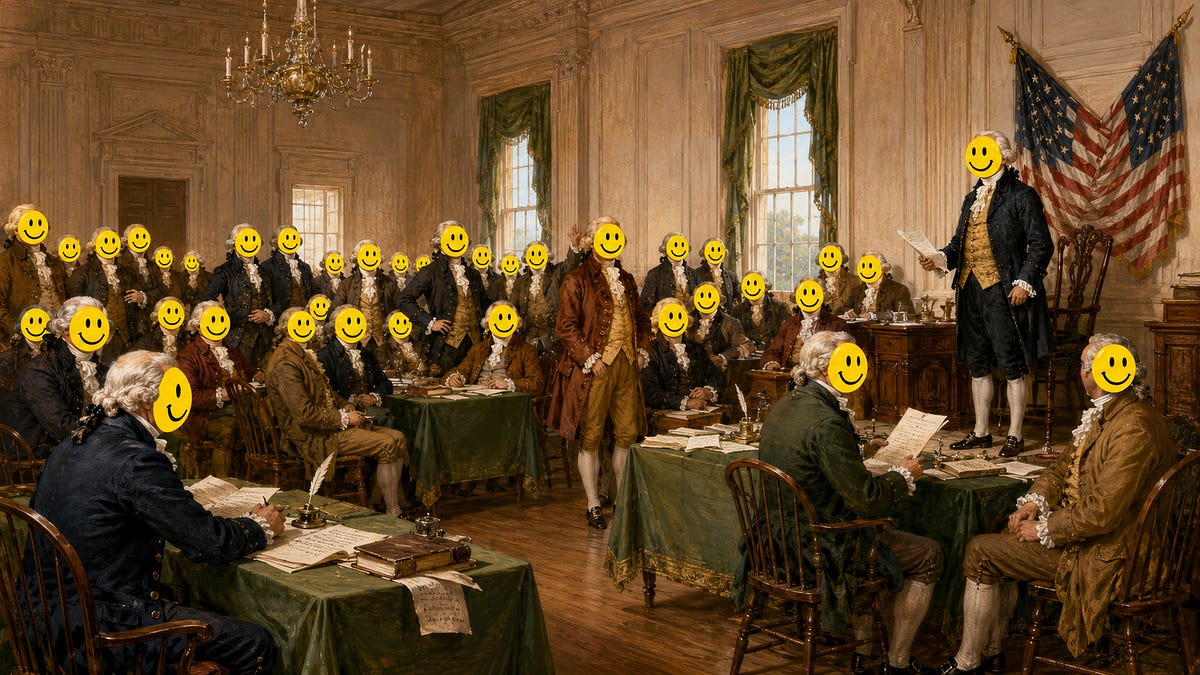
🎆 Happy 4th of July! 🇺🇸 Celebrating 250 years of freedom, unity, and the spirit of America! Let’s honor the brave souls who fought for our independence and embrace the diverse tapestry that makes our nation great. Here’s to liberty, justice, and the pursuit of happiness for all! https://t.co/0A3SWTmtNn #IndependenceDay #FourthOfJuly #Freedom #US

713
Antonio Sabato Jr Jul 4

🎆 Happy 4th of July! 🇺🇸 Celebrating 250 years of freedom, unity, and the spirit of America! Let’s honor the brave souls who fought for our independence and embrace the diverse tapestry that makes our nation great. Here’s to liberty, justice, and the pursuit of happiness for all! https://t.co/V3WXrEUFOm #FourthOfJuly #IndependenceDay #USA #US

1545