
The author called a story by Mohamed important and accused the UAE of continuing to act with impunity in the Horn of Africa and beyond. #UAE #HornOfAfrica #Impunity #AE #SO
The author called a story by Mohamed important and accused the UAE of continuing to act with impunity in the Horn of Africa and beyond. #UAE #HornOfAfrica #Impunity #AE #SO
The author wrote that the previous three years had shown the enduring power of impunity, alleging that Israel had committed and was continuing to commit genocide because it had been given “absolute impunity”. They added that they suspected Donald Trump would side fully with Russia, arguing that Europe had spent three years telling him he lived under the rule of—before the post ended mid-sentence. #Impunity #Genocide #Politics #IL #RU #EU
I have spoken with Markwayne Mullin and President Trump, and New Yorkers have witnessed far too many acts of violence by a rogue federal agency and untrained agents that operate with impunity. #ICE #Immigration #PoliceShooting
The author wrote that 20 years had passed since Anna Politkovskaya’s murder and said journalists continued to face threats, persecution and violence for their work. They argued that crimes against journalists should not go unpunished and called for press freedom to be defended. #PressFreedom #Journalism #HumanRights #RU
The author wrote that Moscow may have believed it could carry out sabotage across NATO territory, commit arson, attempt to derail trains and attack targets near Polish–Ukrainian border crossings without consequences. They said two signals should make it reconsider, citing NATO warnings about military targets. #NATO #Moscow #Security #PL #UA #RU #NATO

After Russia’s latest attacks on Ukraine, including the strike on Kyiv’s National Academy of Sciences, Council of Europe Secretary General Alain Berset vowed to keep pressing for accountability. “Impunity will not prevail.” 🇺🇦 #Ukraine #CouncilOfEurope #WarCrimes #Kyiv #Europe


The challenges before world leaders at the General Assembly: Will humanity govern power wisely? Will we uphold the law before impunity becomes normalized? Will we end wars before they consume generations? Will we tackle inequality before societies fracture? Will we #WorldLeaders #GeneralAssembly #Inequality #Therearenospecificcountryreferencesinthetweetprovided.Therefore #therearenocountrycodestoreturn.
We should not negotiate with terrorists. Letting them act with impunity will only embolden them to commit new and even more horrific crimes. #NoNegotiation #StandAgainstTerrorism #EndImpunity #Therearenospecificcountriesmentionedinthetweet.

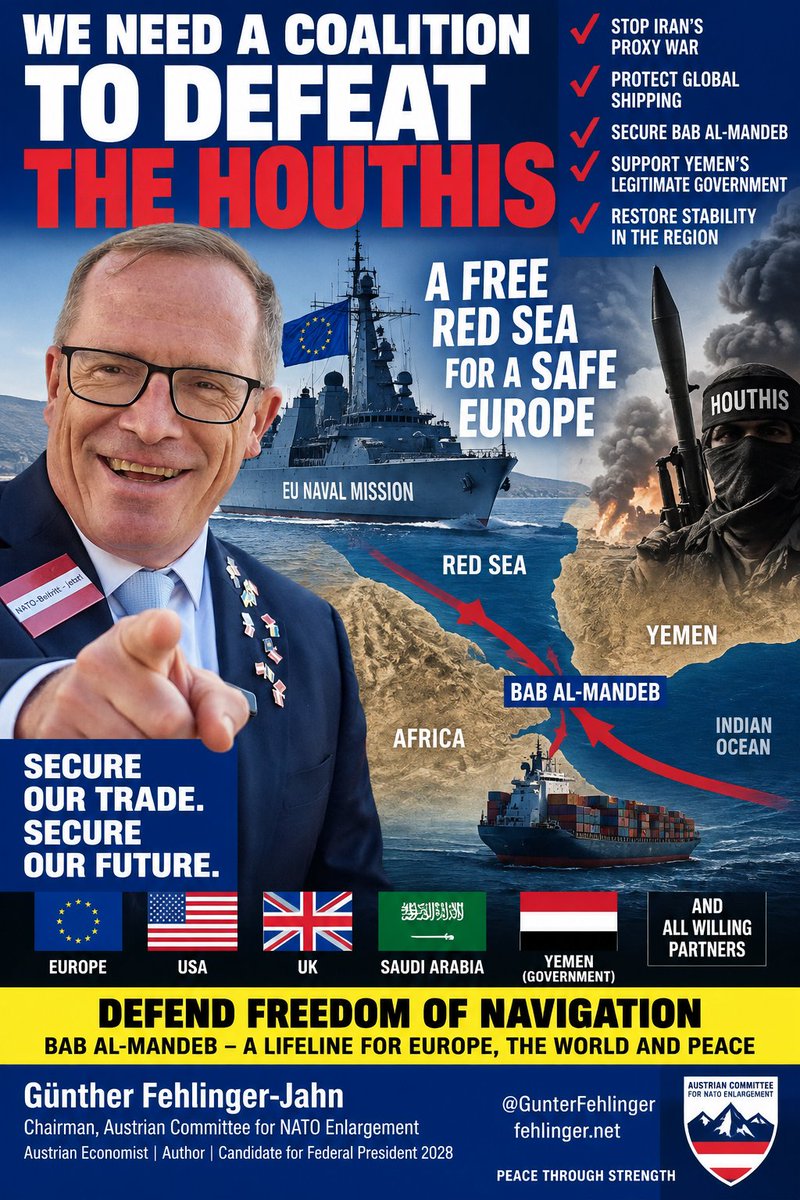
We need a coalition to defeat the Houthi threat and keep the Red Sea open. The Bab al-Mandab is not a local issue. It is one of the lifelines of European and global trade. If armed militias can threaten shipping there with impunity, every European economy pays the price. My https://t.co/myPRizUpxm #RedSea #HouthiThreat #GlobalTrade #YE #EU
don't look the other side Yes, #Israel has committed genocide, but it has not done it in a vacuum: it has done it with OUR complicity, our weapons, our logistic assistance, our impunity https://t.co/HHtpI39u1f #Israel #Genocide #Complicity #IL #US
🇲🇹 MALTA: END THE CULTURE OF IMPUNITY. Daphne Caruana Galizia was murdered by a car bomb because she investigated corruption, money and power. Nine years later, Europe still has every reason to demand answers. Former Prime Minister Joseph Muscat presided over a political https://t.co/1TQ8bKs9Dq #EndImpunity #JusticeForDaphne #MaltaCorruption #MT

don't look the other side: #Israel is doing this with OUR complicity OUR #armsExports and the impunity which the West grants to #Netanyahu and his #WarCriminals make this possible https://t.co/hEEwFnzUa3 #Israel #Netanyahu #WarCriminals #IL #US
There must be no impunity for genocide, war crimes or crimes against humanity – regardless of who commits them. https://t.co/JtDLzMyRAe #Justice #HumanRights #Accountability #Thetweetdoesnotmentionanyspecificcountries.Therefore #therearenocountrycodestoreturn.

BREAKING! More sanctions rain down from POTUS' playroom against those daring to hold a state accused of int'l crimes accountable. Clear goal: targeting a few to silence the many. Read how this architecture of impunity works and how to dismantle it: https://t.co/V53GfdTVnm #Sanctions #Accountability #Impunity #Thetweetdoesnotmentionanyspecificcountries.Therefore #therearenocountrycodestoreturn.
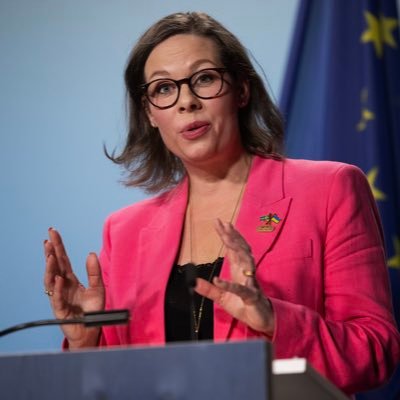
Sweden holds the same position. The @IntlCrimCourt carries out indispensable work to end impunity for the most serious international crimes, and it must be able to freely carry out its mandate. Sweden is a steadfast supporter of the ICC, including its independence and #Sweden #ICC #InternationalJustice #SE
I told Al Jazeera English why I believe Israel’s announcement that it is investigating some of its own crimes—including the killing of Hind Rajab—is nothing but a masquerade designed to deflect accountability and preserve impunity. Check the HRF statement https://t.co/ll1pmYRfit https://t.co/eOJNpghkdp #Israel #HumanRights #Accountability #IL
I told Al Jazeera English why I believe Israel’s announcement that it is investigating some of its own crimes—including the killing of Hind Rajab—is nothing but a masquerade designed to deflect accountability and preserve impunity. https://t.co/UjSdC0JmWg #Israel #Accountability #Impunity #IL
Behind every death toll is a name. A nurse. A driver. A colleague who didn't come home. On this #WorldHumanitarianDay, counting the dead is not enough. We owe them justice, accountability, and an end to impunity for attacks on humanitarians. https://t.co/0B1oo44ctx #WorldHumanitarianDay #EndImpunity #HumanRights #Nospecificcountriesarementionedinthetweet.


Rabaa: The Hour the World’s Conscience Stood Still On the anniversary of one of the largest single-day killings of protesters in modern history, one question remains unanswered: who will be held accountable? By Adham Hasanin Egyptian journalist and political writer, based in the Netherlands On 14 August, the anniversary returns of a day unlike any other in modern Egyptian history. Not simply because it was the bloodiest Egypt has known wars and massacres before and since ,but because it was the day a state chose to open fire on its own people in broad daylight, in front of the world’s cameras, and then let thirteen years pass without a single officer ever being held accountable. This article will not be a cold recitation of statistics, though the statistics exist, are documented, and are horrifying. It is an attempt to understand something deeper: how a square in the heart of Cairo, filled with tents, children, and worshippers, became the site of the largest mass killing the Arab world has witnessed in the past decade and why the echo of that day still reverberates in every Egyptian prison cell today. I. A Morning That Began Like Any Other For readers unfamiliar with the background: in July 2013, the Egyptian military, led by then-General Abdel Fattah el-Sisi, removed Mohamed Morsy Egypt’s first freely elected civilian president, a member of the Muslim Brotherhood who had taken office in 2012 following the 2011 uprising against Hosni Mubarak. In response, tens of thousands of Morsy’s supporters staged an open-ended sit-in demanding his reinstatement. By 14 August 2013, more than twenty thousand people had spent weeks camped out at two Cairo squares, Rab’a al-Adawiya and al-Nahda, in a peaceful sit-in. They were not an army, nor a uniform bloc; they were entire families men, women, and children, some affiliated with the Muslim Brotherhood, many simply ordinary citizens who saw the restoration of elected legitimacy as a cause worth the risk. There were tents for sleeping, communal kitchens feeding the demonstrators, speaking platforms, and a small field clinic that no one imagined would, within hours, become one of the most terrifying places in modern Egyptian history. In the early hours of that morning, Central Security Forces and army units, under the command of then-General Sisi, began what was officially described as a "dispersal" operation targeting both sit-ins simultaneously. It was not a dispersal in any ordinary sense of the word. According to a year-long investigation by Human Rights Watch, it was a pre-planned operation that anticipated, from the outset, thousands of deaths. II. The Numbers the Regime Refuses to Speak The Egyptian government, to this day, cites a death toll of "over 600" for that single day a figure that, even at its official lowest, is horrifying enough to warrant an independent international investigation. But the field investigation conducted by Human Rights Watch, drawing on field hospital records, survivor testimony, and analysis of video footage from dozens of angles, arrived at a far more disturbing figure: at least 817 people killed at Rab’a Square alone, with the true toll likely exceeding 1,000, plus another 87 killed at the nearby al-Nahda Square. When the deaths from the weeks surrounding 14 August are added from the dispersal of the Republican Guard sit-in on 8 July, through the Mansoura Street killings, to the dispersal of an October 6 march the combined total reaches at least 1,150 deaths in just six weeks, according to Human Rights Watch’s meticulous documentation. This figure led the organisation to use a term not deployed lightly in international law: crimes against humanity. Human Rights Watch described the Rab’a killings as "one of the world’s largest killings of demonstrators in a single day in recent history." Not in Egyptian history alone in modern history as a whole. What happened at Rab’a is cited in international reporting alongside China’s 1989 Tiananmen Square massacre. This is the true scale of what the Egyptian state has spent thirteen years trying to minimise, justify, and reduce to a mere "security incident" in a news bulletin. III. "All According to Plan" When Mass Killing Becomes Administration, Not Chaos The title Human Rights Watch chose for its detailed report on the massacre deserves lingering on: "All According to Plan." This is not an emotive headline; it is a precise legal conclusion built on field evidence. According to the investigation, what happened at Rab’a was not a dispersal operation that spiralled out of control amid chaos or panic, as the regime later tried to portray it. It was a carefully planned operation that assumed, in advance, massive casualties. Then-Interior Minister Mohamed Ibrahim admitted, in a televised interview broadcast on 31 August 2013 just weeks after the massacre that his ministry had anticipated losses of "10 percent of the people" present at the sit-in, acknowledging that the number of demonstrators exceeded twenty thousand. By simple arithmetic, this is an official admission that the state anticipated, in advance, the deaths of roughly two thousand people and proceeded with the operation regardless. This is the true horror at the heart of the Rab’a story: it was not a security operation that spun out of control, but a conscious administrative decision, made in an air-conditioned room, with advance calculations, by men who knew precisely how many human beings would die under their fire and who proceeded anyway, or perhaps because of it. According to Human Rights Watch’s analysis, the objective was to send an unambiguous message: whoever challenges the new state will pay an irreversible price. IV. Snipers, Women, and Children The Faces the Reports Do Not Tell Behind every number in the Human Rights Watch reports lies a full human story, deliberately omitted from the state’s official narrative. The investigation documented how security forces opened fire from multiple angles, and how snipers positioned themselves atop buildings surrounding the square, targeting according to survivor testimony and analysed video footage any movement in the square, regardless of whether it was an armed combatant or a nurse trying to reach a wounded person. According to documented testimony, entire families had their tents burn over their heads as fire swept through the sit-in. Doctors and paramedics were killed while trying to pull the wounded from the line of fire. Most damningly of all, the documentation shows deliberate targeting of ambulances and field medical points meaning that wounded people who survived the first bullet then faced death by bleeding out, because anyone attempting to save them was themselves a target. This detail the targeting of medics is what elevates the event from "excessive violent repression" to what human rights organisations have described as a systematic crime. When security forces target those trying to save the wounded, they are not merely dispersing a sit-in; they are preventing witnesses from surviving to tell what happened. V. Thirteen Years of Total Impunity The most painful part of the Rab’a story is not only what happened that day, but what has not happened in the years since. From 14 August 2013 to today, not a single officer, of any rank, has been held accountable for the deaths of hundreds, or thousands, of Egyptians. Quite the opposite: the state has moved to entrench impunity through the force of law itself. Egypt issued legislation granting senior military officers immunity from questioning over any violations that may have occurred following Morsy’s removal a law specifically designed to close the door on any future judicial accountability, regardless of how political circumstances might change. Even the fact-finding committee established by then-interim President Adly Mansour to investigate the June and July events concluded, in its report issued more than a year after the events, that the sit-in’s leaders bore responsibility for the deaths, on the grounds that they had allowed weapons into the square even as the same report admitted, in a glaring contradiction, that security forces had failed to target only armed individuals, meaning they had fired indiscriminately on everyone: armed and unarmed, man and woman, adult and child. This is the pattern that has repeated for over a decade: as each anniversary approaches, official statements re-narrate the events and shift blame onto the victims, while the actual perpetrators — those who planned the operation, gave the orders, and pulled the trigger — remain free. Some now occupy the highest offices of the state. VI. Why This Anniversary, Why Now? A reader might ask: why revisit this story after all these years? Has the world not moved on to newer crises? The answer lies in the very nature of impunity. When a state is never held accountable for the largest massacre of protesters in its modern history, it does not simply "forget" the crime it sets a precedent, telling every future ruler and every future security apparatus: mass killing is possible, politically profitable, and free of cost. This poisonous lesson does not remain confined within Egyptian borders; its echo reaches every Arab capital contemplating how to handle its own opposition. More dangerously, this system of impunity did not stop at Rab’a’s edges; it is the foundation on which Egypt’s entire subsequent decade of repression was built: thousands of political prisoners, grossly unfair mass trials that produced death sentences for dozens of defendants in cases linked directly to the Rab’a events themselves, laws criminalising peaceful protest, a muzzled press, and a civil society hollowed of substance. All of it traces back to the morning of 14 August 2013, when the state learned that overwhelming force succeeds, and that the world will condemn for a few days, then move on. VII. Delayed Justice Is Not Forgotten Justice Despite more than a decade of official silence and impunity, the Rab’a case remains alive in international legal memory. Human rights organisations, from Human Rights Watch to Amnesty International, continue to renew their annual calls for an independent international investigation, grounded in the legal principle that crimes against humanity are not subject to statutes of limitation: delayed justice is not forgotten justice. The victims who fell in that square were not numbers in a statistical report. They were fathers who left behind children too young, that day, to understand why their father would never return. They were mothers who, thirteen years later, are still searching for a clearly marked grave to which they can carry flowers, and young people who had decades of life ahead of them that they never got to live. Their memory does not fade with time; it grows with their children, who carry with them the same question their parents asked before they were killed: when will justice come? Conclusion: What Does This Anniversary Demand of Us? Every year, as the anniversary of 14 August returns, the same question resurfaces one the Egyptian state refuses to answer: who gave the order? Who planned the operation? Who decided that twenty thousand human beings deserved to be shot with live ammunition because they staged a peaceful sit-in? This anniversary is not a call for vengeance, nor an invocation of the past for its own sake. It is a reminder that justice, however delayed, remains a debt still owed. And that every instance of international silence over a massacre of this scale opens the door to the next one, elsewhere, under a different pretext, carrying the same lethal conviction: that the world will condemn for a week, then forget. We will not forget. And we will not stop asking the question that unsettles everyone who took part in that crime, regardless of the office they hold today: where is the accountability? Rab’a is no longer merely the name of a square in Cairo. In the conscience of everyone who believes in justice, it has become a test of the world’s conscience itself a test the world has not yet passed.

https://t.co/51zFKjmaey the police impunity is getting worse. And it starts way the top…I don’t mean the governor, either #PoliceBrutality #Accountability #JusticeForAll #Thetweetdoesnotmentionanyspecificcountries.Therefore #therearenocountrycodestoreturn.





