WRLD

Search

#Inácio
Lula 3h

Politicians from various countries, including the president of Argentina, Javier Milei, and the president of Brazil, Luiz Inácio Lula da Silva, have expressed their solidarity and wished the Pontiff a speedy recovery. #PapaLeónXIV #Operación #Salud (translated)

León XIV será hospitalizado este martes para someterse a la operación del nódulo del pulmón
www.lavanguardia.com

1656
Javier Milei 3h

Politicians from several countries, including the president of Argentina, Javier Milei, and the president of Brazil, Luiz Inácio Lula da Silva, have expressed their solidarity and wished the Pontiff a speedy recovery. #PapaLeónXIV #Operación #Salud (translated)

León XIV será hospitalizado este martes para someterse a la operación del nódulo del pulmón
www.lavanguardia.com
1656
hayy⚡️ 18h

Hayy stated that a woman suffered insults and threats during a manifestation in support of the re-election of President Luiz Inácio Lula da Silva (PT), which took place on Sunday (11) on Avenida Paulista in São Paulo. According to the author, the Military Police escorted her out of the location while the hostilities continued; he ironically referred to the protesters as the "left of love." #Lula #Manifestações #DireitosHumanos (translated)

2605
Lula 23h

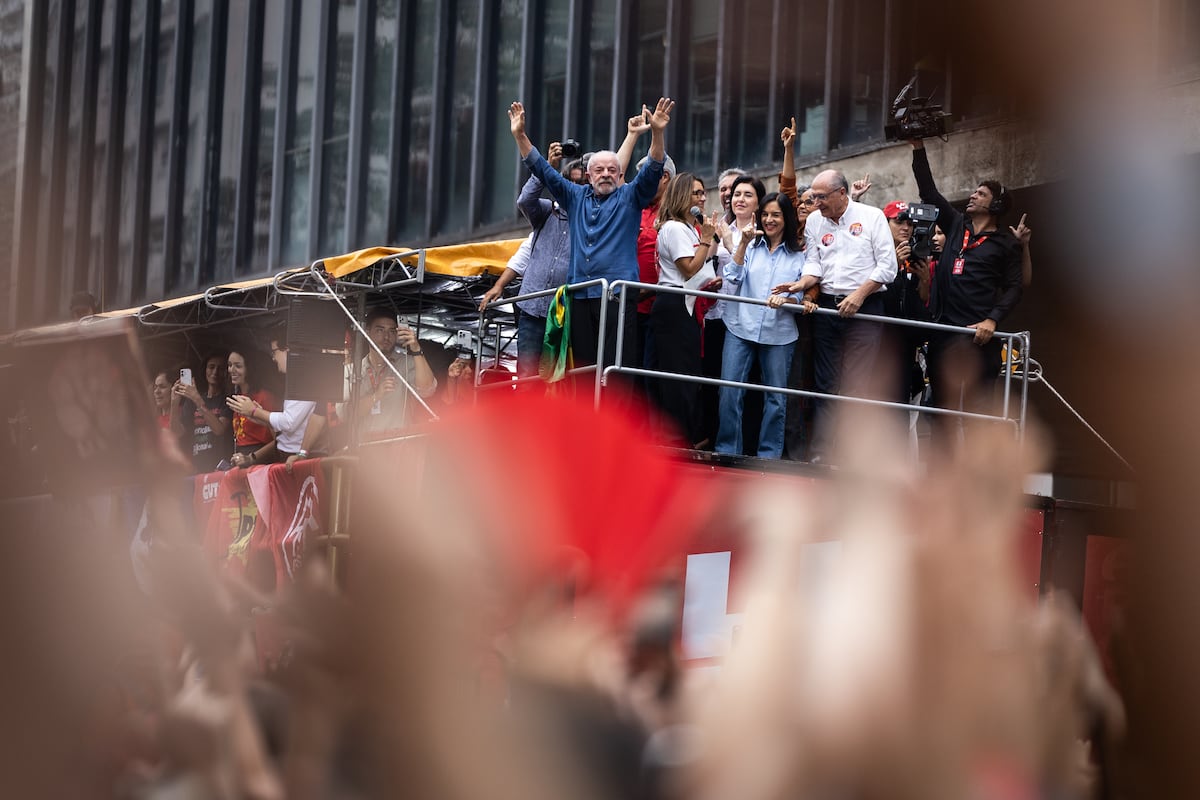
"This country cannot lose democracy," proclaimed President Luiz Inácio Lula da Silva. #EleccionesBrasil #Lula #Democracia (translated)

Lula saca a la calle una marea roja para emprender la remontada y ganar las elecciones
elpais.com
2489
EL PAÍS 23h

Luiz Inácio Lula da Silva mobilizes a crowd of young people and progressives in São Paulo to resume his electoral campaign and warn about the danger posed by a possible victory of the far-right Bolsonaro in the upcoming elections, emphasizing the importance of preserving democracy in Brazil. #EleccionesBrasil #Lula #Democracia (translated)

elpais.com
Lula saca a la calle una marea roja para emprender la remontada y ganar las elecciones
2489
SB 1d

SB asked whether President Luiz Inácio Lula da Silva should start his speech addressing "companheiros e companheiras" or thanking Brazil's fandoms for the initiative. https://t.co/jy3vPfHBb1 #Fandoms #Brasil #Lula (translated)

2549
Frankfurter Allgemeine 1d

The development discussed before the elections in Brazil on Sunday shows that the right has increased in radicalism, although not in size, with Flávio Bolsonaro as the favorite for the presidency in the second round against Luiz Inácio Lula da Silva. #Brasilien #Bolsonarismus #Wahlen2026 (translated)

www.faz.net
Wahlen in Brasilien: Brasiliens Rechte wird rechter
2728
eldiario.es 2d

Luiz Inácio Lula da Silva's campaign has brought a complaint against Meta before the Electoral Court for alleged interference in favor of his rival Flávio Bolsonaro, claiming that Lula's posts faced interruptions in views and restrictions on Instagram. #Lula #EleccionesBrasil #Meta (translated)

www.eldiario.es
La campaña de Lula denuncia ante el Tribunal Electoral una supuesta interferencia de Meta en favor de Bolsonaro
3097
Lázaro Rosa 🇧🇷 3d

Lázaro Rosa stated that Anitta had openly declared her vote for Luiz Inácio Lula da Silva and wrote "let's turn it around." https://t.co/8dUJ6KayjX #Anitta #Lula #Eleições2022 (translated)

2908
Augusto Cury 3d

"Brazil needs to learn to coexist with itself, respect its differences, and protect its institutions." The Brazilian presidential candidate Augusto Cury, defeated in the first round after finishing third, announced this Thursday his support for Flávio Bolsonaro in the second round against President Luiz Inácio Lula da Silva. #EleccionesBrasil #FlávioBolsonaro #LulaDaSilva (translated)

Tres de los cinco candidatos derrotados en la primera vuelta en Brasil anuncian su apoyo a Bolsonaro
www.elespanol.com
3024
Iane menezes 4d

Iane Menezes wrote that, according to reports from Daniel Vorcaro which the magazine VEJA claims to have accessed, the banker negotiated with the former treasurer of the PT, João Vaccari Neto, payments to facilitate access to pension funds for federal employees. Among the amounts mentioned would be a payment of R$ 30 million in cash to the Lula Institute, in addition to other undisclosed sums. According to Menezes, Vorcaro stated that the approach to the PT was orchestrated by Augusto Lima, then partner and CEO of Master, with the mediation of Jaques Wagner, who was then the leader of the Lula government in the Senate. She said that the information was included in an annex delivered to the Attorney General's Office last June, when Vorcaro's second plea proposal was dismissed. Menezes added that, according to Vorcaro, the money would be intended for expenses of a documentary about Lula filmed abroad. The banker allegedly mentioned the film *Lula*, directed by Oliver Stone and composed of testimonies from friends and allies of the president. #Lula #Corrupção #PolíticaBrasil (translated)

3364
Renato Souza 4d

Renato Souza reported that protesters demonstrated in Poços de Caldas (MG) against the extraction of rare earth minerals and in support of Luiz Inácio Lula da Silva's presidential candidacy. #Protesto #TerrasRaras #Lula2022 (translated)

3253
Renato Souza 4d

Renato Souza wrote that an event in support of President Luiz Inácio Lula da Silva's reelection gathered a crowd in downtown Curitiba. According to him, movements participated in the demonstration, which advocated for a vote shift. https://t.co/InIjzdcyYe #Lula #Reeleição #Curitiba (translated)

3479
E
EL MUNDO 4d

Flávio Bolsonaro leads the first poll prior to the second round of the presidential elections in Brazil with 49% of voter intention, followed by Luiz Inácio Lula da Silva, who has 45%, suggesting a narrow margin of competition between the two candidates. #EleccionesBrasil #Bolsonaro #Lula (translated)

www.elmundo.es
Bolsonaro lidera la primera encuesta previa a la segunda vuelta Presidencial de Brasil
3255
Observador 5d

The 2026 Brazilian presidential election revealed a deeply divided country, with Flávio Bolsonaro and Luiz Inácio Lula da Silva emerging as candidates for the runoff despite high levels of rejection, reflecting a political polarization that has consolidated over the past decade. #EleiçõesBrasil #Polarização #LulaBolsonaro (translated)

observador.pt
Uma eleição entre 2 Brasis
2141
Não é o Léo Lins 6d

It's not Léo Lins who asked Grok if the 15 deputies who voted against the final text of the 1988 Federal Constitution were all from the PT party and if the most well-known among them was Luiz Inácio Lula da Silva. #ConstituiçãoFederal #Lula #PT (translated)

2939
L'Obs 6d

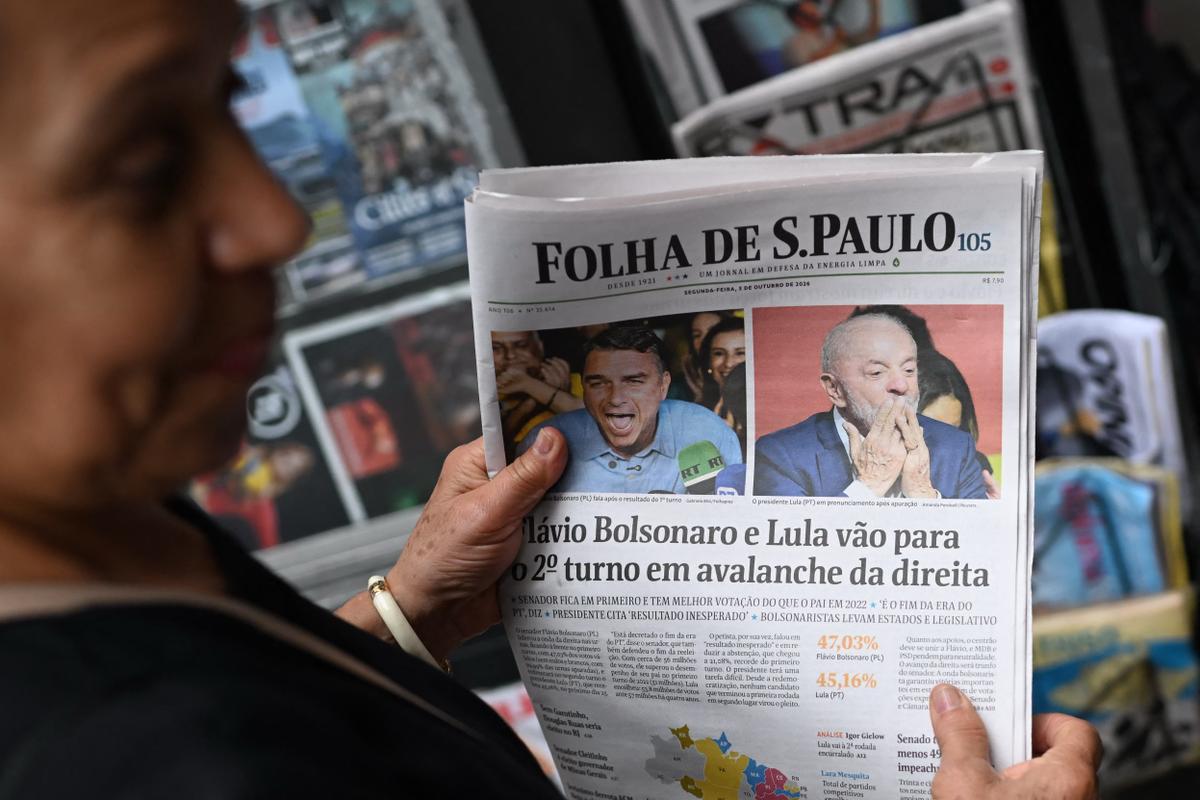
In the Brazilian presidential election, the outgoing president Luiz Inácio Lula da Silva and the far-right senator Flávio Bolsonaro will compete in the second round after receiving 45% and 47% of the votes in the first round, marking a strong return of bolsonarism. #Brésil #Présidentielle2026 #Lula (translated)

www.nouvelobs.com
Présidentielle au Brésil : « La campagne de Lula a tardé à assumer le désir de changement de l’électorat »
2150
Krzysztof Graj 6d

Brazil’s synthetic voters – when AI manufactures public opinion They look like ordinary street interviews. A reporter approaches a passer-by in a Brazilian square and asks a simple question: who will you vote for? A young voter explains why Luiz Inácio Lula da Silva deserves another term. An elderly woman says Brazil needs Flávio Bolsonaro because he represents political renewal and greater security. The locations look plausible, the microphones are visible and the answers sound much like the brief political opinions heard in television vox pops around the world. None of the people are real. Ahead of Brazil’s presidential election on 4 October, fact-checking organisation Aos Fatos identified at least 50 TikTok videos in which artificial intelligence was used to manufacture voters, reporters and apparently spontaneous political interviews. Together, the videos had accumulated around 7.4 million views by mid-August. Some promoted Lula, others Flávio Bolsonaro, while another group used synthetic characters to ridicule or stereotype supporters of one side. Aos Fatos found no apparent evidence linking the accounts producing the videos to either presidential campaign. The opinion poll that never took place The format is important. These were not conventional deepfakes in which a recognisable politician is made to say something he never said. Instead, the creators reproduced the visual language of the vox pop – the short street interview used by broadcasters and social-media creators to illustrate what ordinary people supposedly think. In pro-Lula videos, synthetic voters described themselves as beneficiaries of social programmes or credited the president with improving their lives. In videos supporting Flávio Bolsonaro, artificial interviewees associated him with political renewal, public security and fighting corruption. Other clips were openly hostile: AI-generated characters presented as poor or living in parts of Brazil’s north-east were shown in dirty clothes or run-down surroundings, declaring support for Lula because they supposedly preferred welfare payments to work. The deception is therefore subtler than fabricating a candidate’s statement. It manufactures something that political communication normally treats as evidence of public sentiment. A real vox pop may be unscientific, but the people interviewed at least exist. These videos created the appearance that identifiable social groups – young people, pensioners, welfare recipients or residents of particular regions – were spontaneously expressing political preferences when no such encounters had taken place. An electoral-law specialist interviewed by Aos Fatos described the technique as the fabrication of a “social fact that never occurred”. That captures the central innovation: AI is being used not merely to falsify political speech, but to manufacture the impression of grassroots opinion. Fifty videos, but not one proven network The available evidence does not support describing the 50 posts as a centrally controlled influence operation. Aos Fatos located them through TikTok searches and recommendations produced by the platform itself, then examined the accounts responsible for publication. Most had relatively small individual audiences, although their combined reach was substantial. The first examples identified by the investigation appeared as early as March 2026. Activity increased in June and was concentrated particularly in July and the first half of August as Brazil’s election calendar intensified. Some accounts specialised in AI-generated videos generally, including fabricated podcast-style material. Others were explicitly political or supportive of a candidate, but Aos Fatos found no apparent links between those profiles and the official Lula or Bolsonaro campaigns. That distinction is essential. The evidence demonstrates a common technique and a shared political environment, not a single command structure. Some creators may have been motivated by ideology, others by engagement or monetisation. Publicly available evidence does not establish who commissioned the individual videos or whether any coordination existed between the accounts. This decentralised model also creates a different enforcement problem from a traditional bot network. There may be no headquarters to expose and no infrastructure whose removal disables the entire operation. The format itself can be copied by anyone with access to inexpensive generative-video tools. When the algorithm mixes real and synthetic citizens Aos Fatos documented another important feature of the phenomenon: TikTok’s recommendation system placed AI-generated interviews alongside genuine street interviews. For a user scrolling quickly through the platform, the transition between an authentic citizen and an entirely fabricated one could therefore be almost invisible. In 18 per cent of the 50 videos analysed, there was no indication that the people shown had been generated using AI. After Aos Fatos provided TikTok with the videos, the company said it had removed all of them for violating its rules on edited and AI-generated media. TikTok said its policies require creators to identify synthetic content and prohibit manipulated media capable of misleading users about matters of public importance or impersonating genuine journalistic material. The issue extends beyond one platform. Factchequeado’s review of Brazil’s 2026 election campaign found that synthetic endorsements and other deepfakes had become one of the most visible forms of AI-assisted electoral misinformation, alongside fabricated candidate statements and invented scenes. Brazil already had rules for synthetic politics Brazil entered the campaign with unusually detailed electoral rules governing artificial intelligence. The Superior Electoral Court, the TSE, requires electoral propaganda using synthetic multimedia to disclose clearly that AI was used. More importantly for the fake-voter videos, its rules prohibit synthetic audio or video used to favour or harm a candidacy when it creates or alters the image or voice of a living, deceased or fictitious person. The difficulty is attribution and enforcement. When a synthetic video is published by an official campaign, responsibility can be relatively straightforward to investigate. When it comes from an apparently independent account with no demonstrated relationship to a candidate, lawyers interviewed by Aos Fatos said responsibility is more likely to fall on the individual creator, while imposing electoral sanctions on a campaign would require evidence of a connection. For the final 72 hours before the election and the 24 hours following it, the TSE has imposed additional restrictions on newly published or republished synthetic material involving candidates or public figures, reflecting the particular difficulty of correcting fabricated content immediately before voting. From deepfake politicians to synthetic electorates The Brazilian case illustrates a broader change in political manipulation. The first generation of electoral deepfakes concentrated on famous people: make a politician appear to say something damaging, or fabricate an endorsement from a celebrity. Synthetic vox pops reverse the perspective. The politician can remain completely authentic; it is the electorate around the politician that is fabricated. That changes the psychological proposition of the message. Instead of saying the candidate believes this, the video suggests people like you believe this. Age, clothing, accent, neighbourhood and social class can all be generated to construct an artificial constituency around almost any political claim. There is no evidence that the 50 Brazilian videos identified by Aos Fatos constitute a single centrally directed campaign, nor evidence that they changed voting intentions. What they demonstrate is a technique whose barrier to entry has become extremely low. AI no longer needs to forge the politician. #DISINFORMED #Episode14 #Brazil #BrazilElection2026 #Elections #ElectionDisinformation #ArtificialIntelligence #AI #GenerativeAI #SyntheticVoters #SyntheticMedia #AIAvatars #AIGeneratedVideo #VoxPop #FakeInterviews #Astroturfing #AIPropaganda #PoliticalDisinformation #InfluenceOperations #InformationWarfare #SocialMediaManipulation #TikTok #PublicOpinion #ManufacturedConsent #SyntheticPublicOpinion #DigitalInfluence #Deepfakes #ElectionIntegrity #TSE #AosFatos #FactChecking #OSINT #MediaManipulation #WRLD (translated)

www.aosfatos.org
Eleitores gerados por IA fazem campanha no TikTok e põem em xeque regra do TSE
680
newsORF.at 6d

The right-wing Brazilian presidential candidate Flavio Bolsonaro has received support from two former opponents ahead of the runoff at the end of October, while other defeated candidates refuse to support him or his left-wing challenger Luiz Inácio Lula da Silva. #BrasilienWahl #Bolsonaro #Politik (translated)

orf.at
Brasilien-Wahl: Ex-Konkurrenten unterstützen Bolsonaro
1927
eldiario.es 7d

Flávio Bolsonaro has achieved a narrow victory over Luiz Inácio Lula da Silva in the first round of the Brazilian elections, opening up an uncertain scenario for the second round, where alliances and the high abstention rate will play a crucial role in determining the next president. #EleccionesBrasil #FlávioBolsonaro #Lula (translated)

www.eldiario.es
De las posibles alianzas a la abstención: qué puede pasar en la segunda vuelta de Brasil tras la victoria de Flávio Bolsonaro
2154